
多边主义

Search documents
2025全球南方媒体智库高端论坛发布云南共识
Xin Hua She· 2025-09-06 14:27
Core Viewpoint - The forum emphasizes the importance of global South countries in maintaining peace and security, advocating for their role in global governance and the promotion of justice and cooperation [1][2] Group 1: Global South's Role in Governance - Global South countries are increasingly recognized as a constructive force in international society, advocating for true multilateralism and improved global governance [1] - The consensus calls for the promotion of shared global governance values, emphasizing unity over division and cooperation over confrontation [1][2] Group 2: Focus Areas for Development - Achieving modernization is identified as a common goal for global South countries, with a focus on poverty reduction, industrialization, agricultural modernization, and sustainable development [1] - Media think tanks from the global South are encouraged to tell compelling stories of economic integration and shared development outcomes [1] Group 3: Cultural Exchange and Technological Advancement - The consensus advocates for respect for cultural diversity and the promotion of cultural exchange, including initiatives like "World Heritage Tourism" [2] - Emphasis is placed on leveraging new information technologies to bridge the global digital divide while adhering to journalistic ethics and standards [2] Group 4: Collaboration and Future Directions - The forum aims to enhance cooperation among media think tanks from the global South in areas such as personnel training, joint interviews, and AI applications [2] - The event is supported by major organizations, with participation from over 500 representatives from 260 media, think tanks, and governmental bodies across 110 countries and regions [2]
视频丨力挺上合组织 多国代表在联大会议上发声
Yang Shi Xin Wen· 2025-09-06 13:45
当地时间9月5日下午,第79届联合国大会高票通过中国主提的"联合国同上海合作组织的合作"决议。会 上多国代表称赞上合组织是推动多边主义的关键平台,尊重国与国之间主权平等,推动开展互惠互利合 作,在世界上有很好的声誉,起到表率作用。 ...
从这些故事,感悟习近平总书记引领中国和平发展的时代启示
Xin Hua She· 2025-09-06 13:42
Group 1 - The core message emphasizes the importance of peace, as highlighted by President Xi Jinping during the 80th anniversary of the victory in the Chinese People's Anti-Japanese War and the World Anti-Fascist War, where he mentioned "peace" six times in his speech [2][4] - The sacrifices of martyrs are underscored as invaluable, with historical references to the New Fourth Army and the significance of commemorating heroes who fought for peace [5][7] - The collective memory of the Chinese people regarding the suffering caused by war reinforces their unwavering pursuit of peace, as articulated by Xi Jinping [8][9] Group 2 - Xi Jinping's reflections on the historical lessons of war highlight the deep-rooted desire for stability and peace among the Chinese people, shaped by over a century of foreign aggression [8][9] - The speech also emphasizes the unique peaceful nature of Chinese civilization, which positions China as a builder of world peace and a contributor to global development [14][16] - The commitment to a peaceful development path is framed as a continuation of the cultural tradition of cherishing peace, with historical examples such as Zheng He's voyages serving as a testament to this legacy [16][19] Group 3 - The concept of mutual respect and understanding between nations is presented as essential for peaceful coexistence, with Xi Jinping advocating for true multilateralism and cooperation [32][34] - The importance of cultural exchanges in fostering peace is highlighted, with references to historical and contemporary examples of how civilizations can learn from one another [27][28] - The narrative concludes with the assertion that development and peace are interlinked, emphasizing that without peace, development is unattainable, and vice versa [38][40]

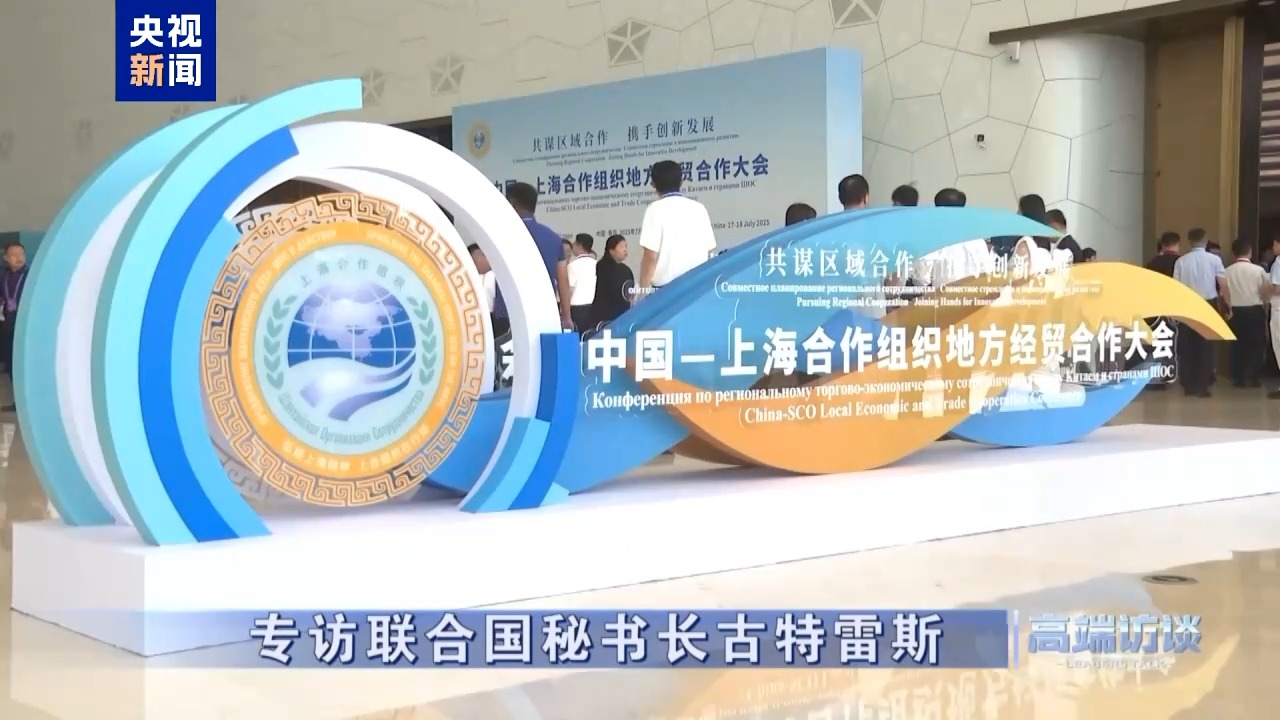
高端访谈丨专访联合国秘书长古特雷斯
Yang Shi Xin Wen Ke Hu Duan· 2025-09-06 13:11
Group 1 - The core message emphasizes the importance of China's contributions to the victory in World War II, which should be recognized globally [1][18][38] - The UN Secretary-General Antonio Guterres highlighted the significance of the Shanghai Cooperation Organization (SCO) in promoting peace and development, marking its largest summit in 24 years with over 20 foreign leaders and 10 international organization heads attending [4][38] - Guterres expressed that the current geopolitical landscape necessitates a multipolar world where all cultures and civilizations can cooperate, with the SCO playing a crucial role in this transition [9][38] Group 2 - Guterres acknowledged China's active role in various UN core areas, including peace and security, sustainable development, and human rights, emphasizing China's importance in multilateralism [15][24] - The global governance initiatives proposed by China, including the Global Development Initiative and Global Security Initiative, were welcomed by Guterres as they align with the UN's objectives [22][26][24] - Guterres called for a renewed focus on international cooperation and the need for a new global security perspective to address rising conflicts and inequalities [26][24] Group 3 - The historical context of World War II was discussed, with Guterres stressing the need for a comprehensive understanding of China's sacrifices and contributions during the war, which began with Japan's invasion in 1931 [18][38] - Guterres reiterated the importance of remembering the sacrifices made by the Chinese people in the fight against fascism, which played a decisive role in the Allied victory [18][38] - The 80th anniversary of both the victory in World War II and the founding of the United Nations serves as a reminder of the need for continued international collaboration [24][38]
全球治理倡议正逢其时——推动构建更加公正合理的全球治理体系①
Ren Min Ri Bao· 2025-09-06 07:23
Group 1 - The core viewpoint emphasizes the importance of global governance initiatives in addressing current international challenges and enhancing multilateralism, particularly in light of the 80th anniversary of significant historical events [1][2] - The global governance initiative aims to rectify the underrepresentation of the Global South in international governance, advocating for reforms that align with the principles of sovereignty, international law, and human-centered approaches [2][3] - The initiative's five core principles are designed to address pressing global governance issues, providing a framework for who governs, how governance occurs, and for whom governance is intended [2] Group 2 - The initiative seeks to enhance the effectiveness and execution of existing international systems rather than completely overhaul them, aiming for a more just and equitable global governance structure that benefits developing countries [3] - The call for reform is rooted in the historical context of the establishment of the United Nations, reflecting on the lessons learned from past global conflicts and the need for a cooperative approach to international order [1][3] - The commitment to strengthening communication and coordination among nations is highlighted as essential for the successful implementation of the global governance initiative [3]
中国是维护国际秩序的重要支柱
Ren Min Ri Bao· 2025-09-06 04:46
Core Viewpoint - The historical contributions of the Chinese people in defeating Japanese militarism and their significant role in the global anti-fascist war are often marginalized or forgotten in the Western narrative, which is considered dangerous by former Italian Prime Minister Massimo D'Alema [2] Group 1: Historical Significance - D'Alema emphasizes the importance of remembering history and educating younger generations to maintain global peace and stability in the face of increasingly complex international situations [2] - The spirit of resistance demonstrated by the Chinese during the anti-Japanese war is viewed as a vital source of strength for China's modernization efforts, enabling the country to transform into the world's second-largest economy and achieve remarkable advancements in various fields within a century [2] Group 2: China's Role in International Relations - Since the victory in the anti-fascist war, China has been a crucial pillar in maintaining international order as a permanent member of the UN Security Council, actively participating in global governance and earning widespread recognition for its role [2] - D'Alema notes that the current international landscape is undergoing profound adjustments, entering a "disordered multipolarity" phase, which poses severe challenges to the UN-centered international system [3] Group 3: Global Cooperation and Challenges - The concept of building a community with a shared future for mankind is highlighted as a strategy to address global challenges such as peace maintenance, climate change, and poverty reduction, emphasizing that no country can thrive in isolation [3] - D'Alema points out the importance of solidarity among Global South countries, reflecting the significant evolution of the international power structure and the importance of emerging forces in promoting a more just and equitable international order [3]

全球治理倡议正逢其时(和音)
Ren Min Ri Bao· 2025-09-05 22:22
Core Viewpoint - The global governance initiative proposed by President Xi Jinping is timely and aims to address the global governance deficit and respond to contemporary challenges, emphasizing the need for international cooperation and multilateralism [1][2]. Group 1: Global Governance Challenges - The current international landscape is marked by turmoil, with the United Nations and multilateralism facing significant challenges, leading to an expanding global governance deficit [2]. - There is a notable underrepresentation of the Global South in the global governance system, necessitating a correction of historical injustices and an enhancement of their representation [2]. - The principles of the UN Charter are not being effectively adhered to, with unilateral sanctions and resistance to Security Council resolutions undermining international law and order [2]. Group 2: Global Governance Initiative - The global governance initiative addresses pressing global issues and proposes five core principles: equality of sovereignty, adherence to international law, commitment to multilateralism, a people-centered approach, and an action-oriented focus [2]. - These principles are designed to tackle the questions of who governs, how governance occurs, and for whom governance is intended, making the initiative highly relevant and targeted [2]. - The initiative aligns with the expectations of the majority of countries and aims to enhance the effectiveness of the existing international system rather than completely overhaul it [3]. Group 3: Future Directions - The initiative seeks to create a more just and equitable international governance system that benefits developing countries, reflecting the collective voice of the Global South [3]. - China expresses a willingness to collaborate with various parties to implement the global governance initiative and explore pathways for reforming and improving global governance [3].
莫迪心碎!川普粉碎印度期待,对印加征关税
Sou Hu Cai Jing· 2025-09-05 18:55
Group 1 - The core argument of the articles revolves around the impact of Trump's "reciprocal tariffs" policy on global trade dynamics, particularly focusing on India and its economic vulnerabilities [1][2][4] - Trump's "reciprocal tariffs" logic highlights the disparity in tariff rates between the U.S. and India, with India's average tariff at 9.5% compared to the U.S. at 3%, which could lead to significant cost increases for Indian exports [2][4] - The potential economic fallout for India includes a projected loss of approximately $70 billion in key sectors such as automotive and agriculture, alongside a structural pressure on India's trade surplus with the U.S. [2][12] Group 2 - The unilateral nature of Trump's tariff policy has led to a breakdown of trust among allies, with countries like Canada and Mexico also facing significant tariff increases, indicating a broader strategy to reshape global trade rules [6][9] - The economic implications of these tariffs could result in increased costs for American households, estimated at $1,200 annually, and potential disruptions in supply chains that may exacerbate inflation [9][12] - India's strategic dilemma is underscored by its reliance on high tariffs to protect local farmers while facing pressure from the U.S. to open its agricultural markets, revealing a conflict between economic interests and strategic autonomy [10][12] Group 3 - The articles suggest that the ongoing trade tensions could lead to a significant economic cost, with the U.S. stock market losing $3.6 trillion in value and a shift in global supply chains towards Southeast Asia and Latin America [13] - Political responses to U.S. unilateralism are emerging, with countries like Canada and India considering collective actions to counterbalance U.S. pressures, indicating a potential revival of multilateralism [13][15] - The conclusion emphasizes that India's path forward may lie in embracing pragmatic multilateralism rather than succumbing to U.S. pressures, which could enhance its bargaining power in global trade negotiations [15]
新加坡总统公布未来五年国家施政方针
Yang Shi Xin Wen· 2025-09-05 16:02
(文章来源:央视新闻) 尚达曼表示,随着全球竞争日趋激烈,为提升新加坡作为可信赖的枢纽的地位,政府已更新经济策略、 鼓励更多人工智能转型,支持更多企业开发可持续解决方案。 5日晚,新加坡总统尚达曼在国会代表政府发表未来五年施政方针时指出,面对更加动荡的局势,新加 坡的首要任务是确保国家安全和维护新加坡在国际社会的地位,继续加强国防实力以应对新兴威胁。 尚达曼说,新加坡将继续促进东盟一体化进程,支持联合国和世界贸易组织的改革,确保多边主义,同 时深化和其他国家的合作,推动贸易投资。 ...
习近平引领中国和平发展的时代启示
Xin Hua She· 2025-09-05 15:51
Core Viewpoint - The article emphasizes the importance of peace and development as fundamental principles guiding China's future, as articulated by President Xi Jinping during the commemoration of the 80th anniversary of the victory in the Chinese People's War of Resistance Against Japanese Aggression and the World Anti-Fascist War [1][2][47]. Group 1: Historical Context - The commemoration event highlighted the sacrifices made by countless heroes during the war, reinforcing the value of peace as a hard-won achievement [2][3]. - Xi Jinping's speech reiterated the lessons learned from history, emphasizing that the remembrance of past struggles should inspire a commitment to peace rather than hatred [2][3][4]. Group 2: Cultural Significance - The article discusses how China's cultural heritage, which values peace, informs its current policies and international relations [12][15]. - Xi Jinping's references to historical figures and events illustrate the deep-rooted cultural belief in peace and harmony within Chinese civilization [11][15][22]. Group 3: Global Responsibility - The article outlines China's commitment to multilateralism and global cooperation as essential for addressing contemporary challenges, including conflicts and economic disparities [26][27][30]. - Xi Jinping's advocacy for dialogue and negotiation in resolving international disputes, such as the Ukraine crisis, underscores China's role as a peace-promoting nation [28][30]. Group 4: Future Aspirations - The vision for a shared future emphasizes collaboration among nations to achieve lasting peace and development, reflecting the aspirations of the Chinese people [38][46]. - Xi Jinping's call for a collective effort to build a community with a shared future for mankind highlights the interconnectedness of global peace and development [36][46].