出口管制

Search documents
G7外长会联合声明发表涉华言论,中方驳斥
券商中国· 2025-11-13 11:12
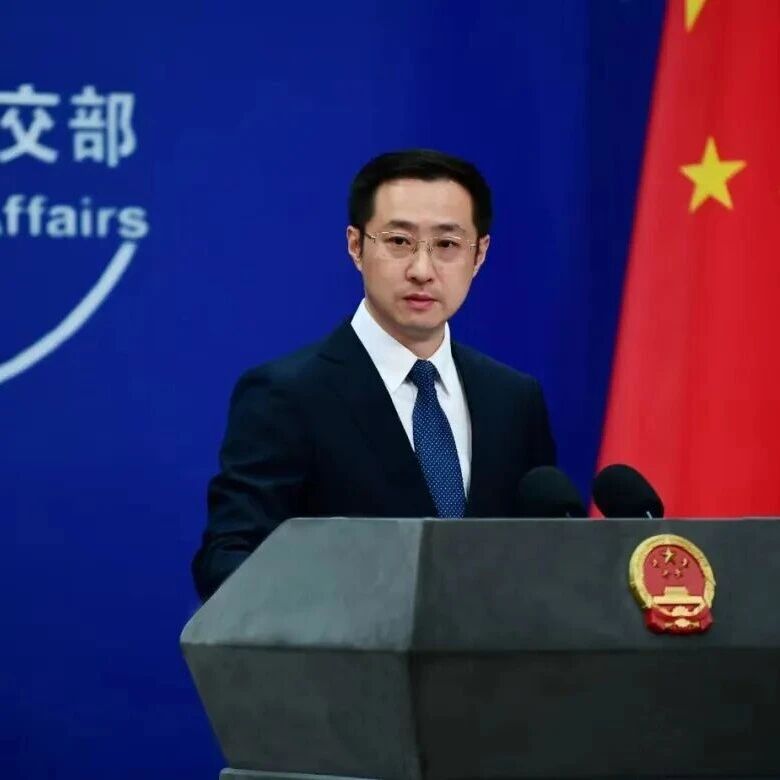
Group 1 - The spokesperson Lin Jian criticized the G7 foreign ministers' joint statement for distorting facts and interfering in China's internal affairs, particularly regarding the Taiwan issue, which is deemed a domestic matter for China [1] - Lin emphasized that the situation in the East China Sea and South China Sea remains stable, urging the G7 to stop escalating tensions and undermining regional peace [1] - China maintains a defensive national defense policy and keeps its nuclear capabilities at the minimum level necessary for national security, countering G7's accusations regarding nuclear proliferation [1] Group 2 - China is standardizing and improving its export control system to align with international practices, aiming to maintain world peace and regional stability, while rejecting claims of "overcapacity" and "non-market behavior" as unfounded [2] - The G7 is urged to cease politicizing and weaponizing economic issues to avoid disrupting the international economic order and global supply chains [2] - China calls on the G7 to abandon Cold War mentality and ideological biases, advocating for actions that promote international cooperation and unity [2]

中国如约放宽对美稀土限制,却对军用稀土一封到底?
Sou Hu Cai Jing· 2025-11-13 03:52
Core Viewpoint - The article discusses China's potential simplification of rare earth export processes to the U.S., while maintaining strict controls on military-related exports, indicating a strategic approach to balance global supply chain stability and national security [1][6]. Group 1: China's Strategy - China aims to ensure stable supply chains while tightening controls on military applications of rare earths, reflecting a dual focus on global stability and national security [1][6]. - The Chinese rare earth industry has been developed over decades, establishing a comprehensive supply chain from resource extraction to application, making it difficult for other countries to bypass China [1][8]. - China's approach to rare earth exports is not a blanket policy but rather a targeted strategy that distinguishes between civilian and military uses [6][11]. Group 2: U.S. Response and Challenges - The U.S. military heavily relies on Chinese rare earths for various technologies, including fighter jets and drones, leading to calls for reducing dependency, but progress has been slow [2][4]. - Despite efforts to rebuild its rare earth industry, the U.S. faces significant challenges, including underdeveloped domestic refining technologies and high costs, which hinder its ability to achieve independence [4][6]. - The U.S. has been vocal about its desire for independence from Chinese rare earths, but its actions have not matched its rhetoric, revealing a lack of preparedness [4][11]. Group 3: Global Implications - European countries, while advocating for risk reduction, have begun negotiating with China for long-term rare earth supply agreements, recognizing their dependence on Chinese resources for military and industrial needs [4][8]. - The article highlights that China's control over rare earths serves as a strategic leverage point in international relations, particularly in the context of U.S.-China trade tensions [8][11]. - The dynamics of the rare earth market illustrate a broader power imbalance, with China holding significant advantages in resource control and industry integration [11][13].
事关中美,商务部最新回应!
证券时报· 2025-11-11 15:33
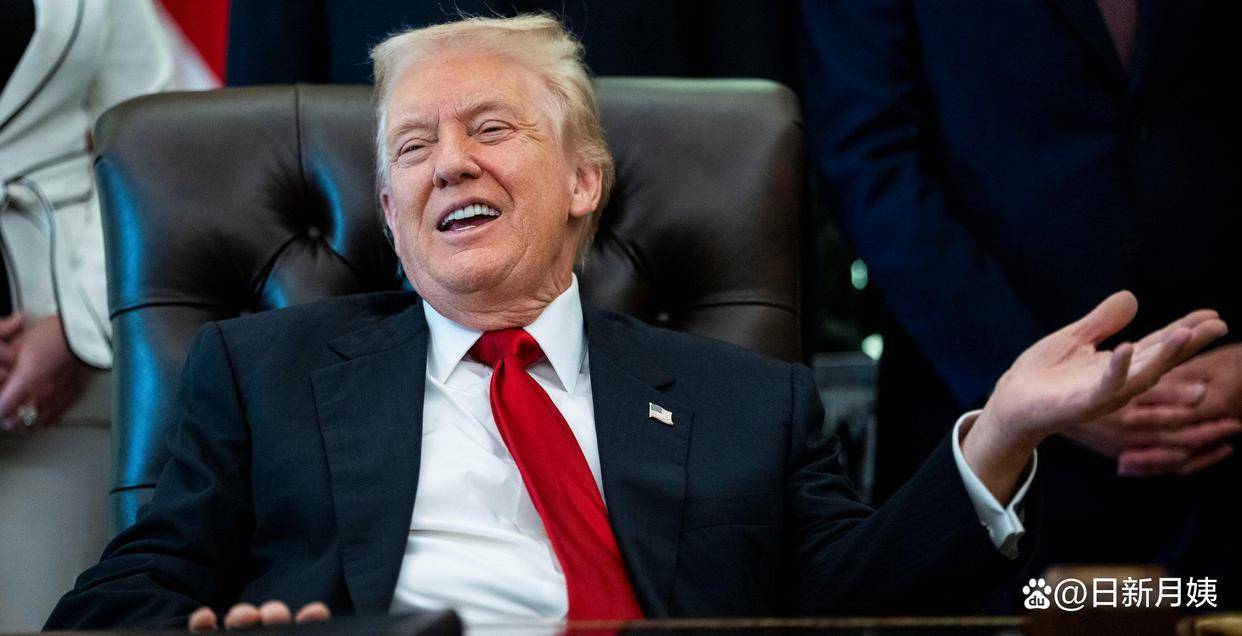
Group 1 - The U.S. Department of Commerce announced a one-year suspension of the export control penetration rules, which will not impose additional export control sanctions on companies with over 50% ownership by entities listed on the U.S. export control "entity list" during this period [2] - This suspension is seen as an important measure to implement the consensus reached during the China-U.S. Kuala Lumpur economic and trade consultations [2] - Both sides are committed to enhancing dialogue and cooperation to manage differences and promote mutual benefits in business collaboration [2] Group 2 - The outcomes of the China-U.S. Kuala Lumpur economic and trade consultations include the cancellation of the 10% "fentanyl tariff" on Chinese goods and the continuation of a one-year suspension of the 24% reciprocal tariffs on Chinese products [3] - The U.S. will also suspend the implementation of its 50% export control penetration rules for one year, while China will pause its related export control measures for the same duration [3] - Both parties agreed to extend certain tariff exclusion measures and confirmed cooperation on issues such as fentanyl control, agricultural trade expansion, and specific enterprise case handling [3]

X @外汇交易员
外汇交易员· 2025-11-11 14:05
Trade Relations - The US has temporarily suspended the export control "penetration rule" from November 10, 2025, to November 9, 2026 [1] - During this period, companies on the US export control "entity list" will not have their affiliated companies (with over 50% shareholding) subjected to the same export control sanctions [1] - This suspension is considered an important step in implementing the consensus reached during the China-US Kuala Lumpur economic and trade consultations [1] - Both parties will continue discussions regarding the arrangements after the one-year suspension [1]
龙虎榜 | 培育钻石火了,1.6亿热钱涌向四方达!佛山系大撤退
Ge Long Hui· 2025-11-11 11:19
Market Overview - On November 11, the A-share market experienced a collective adjustment, with the Shanghai Composite Index falling by 0.39% to 4002 points, the Shenzhen Component Index down by 1.03%, and the ChiNext Index decreasing by 1.4% [1] - Over 2500 stocks in the market declined, while the focus shifted to sectors such as cultivated diamonds, photovoltaic equipment, and consumer goods, with declines noted in storage chips and automotive chips [1] Stock Performance - Notable gainers included *ST Dongyi (+4.98%), ST Zhongyu (+5.05%), and HeFu China (+10.00%), with *ST Xingguang showing a significant increase of 45.19% [2] - The stock *ST Dongyi has achieved 21 trading limits in 26 days, while ST Zhongyu has maintained 18 consecutive trading limits [2] - The top three stocks by net buying on the day were Juhua Technology, Sifangda, and Dayou Energy, with net purchases of 448 million, 163 million, and 114 million respectively [5] Sector Highlights - The cultivated diamond sector is gaining attention due to advancements in semiconductor technology, particularly in the use of cultivated diamonds for high-end chip manufacturing [13] - The coal mining sector, represented by Dayou Energy, is undergoing strategic restructuring with the involvement of state-owned assets, which has positively impacted its stock performance [15][16] Institutional Activity - Institutional net buying was significant in stocks like Sifangda and Moen Electric, with net purchases of 110 million and 82 million respectively [7] - Conversely, the top net selling stocks included Snowman Group and Dayu Energy, with net sales of 281 million and 236 million respectively [6] Key Trading Stocks - Yijing Optoelectronics and Aok Group both saw significant trading activity, with Yijing Optoelectronics achieving a trading limit and a turnover rate of 38.46% [17] - The stock Sifangda, which focuses on cultivated diamonds, also saw a trading limit with a turnover rate of 22.42% and a total transaction volume of 1.48 billion [9]


中国兵不血刃,连打两场“翻身仗”,这是美国至暗时刻
Sou Hu Cai Jing· 2025-11-11 09:36
中国连续胜利,美国进入低谷时刻,中美博弈发生了深刻变化,联合国安理会也上演了一幕精彩的对决,时代的潮流似乎发生 了转变。 新加坡国立大学东亚研究所所长、美国教授希睿德曾经说过一句话:"这个世界上,除了中美以外,其他都是小 国。"作为全球最重要的双边关系,中美爆发军事冲突的可能性不大,因为没有一方愿意冒险玉石俱焚。但是这并不意味着两国 能和平共处。在经贸、科技等领域,中美之间的对抗越来越激烈,尤其是美国对全球加税和中国对稀土的重拳出击。自从特朗 普成为美国总统以来,很多人开始注意到,中国已经在没有开火的情况下,连续打了两场"翻身仗",中美的实力和影响力正在 悄悄发生变化。 一、搬石头砸脚——中国的智慧反击战术 今年9月29日,美国商务部突然发布了一项出口管制措施,规定:如果某个实体被列入 美国的"实体清单",那么它持股50%或以上的子公司也将自动受到同等制裁。这项规则被称为"50%穿透性规则"。简单来说,就 是如果某个公司被美国制裁,那么它的控股子公司也将受到制裁。于是,针对中国企业的"明抢"开始了。去年12月,闻泰科技 被美国列入了"实体清单",而安世半导体是闻泰科技的全资子公司,总部设在荷兰。今年9月底,荷 ...
移除“李逵”,保留“李鬼”!美国BIS将6家中企移出实体清单
是说芯语· 2025-11-11 05:38
Core Viewpoint - The U.S. Department of Commerce's Bureau of Industry and Security (BIS) has announced a one-year suspension of the "Affiliates Rule" related to export controls, while also removing Arrow Electronics' Chinese and Hong Kong entities from the Entity List [1][3]. Group 1: Regulatory Changes - BIS has decided to suspend the implementation of the "Affiliates Rule" for one year, starting from November 10, 2025, to November 9, 2026, after which the rule will be indefinitely extended unless further changes are made [1]. - The removal of Arrow China Electronics Trading Co., Ltd. and six associated Hong Kong entities from the Entity List indicates a significant regulatory shift [3][7]. Group 2: Company Background and Compliance - Prior to the official announcement, BIS granted Arrow Electronics a temporary license to resume normal transactions with its Chinese affiliates, effective until February 14, 2026, or the date of the official announcement [4]. - Arrow Electronics has provided detailed transaction tracking and compliance documentation to demonstrate that it is not involved in the procurement of electronic components for drone systems linked to the Houthi movement in Iran [5][6]. Group 3: Misidentification Issues - The vice president of Arrow Electronics indicated that the entity listed as "Arrow Electronics (Hong Kong) Co., Ltd." is likely a counterfeit company misusing the Arrow brand name, rather than a legitimate subsidiary [4][8]. - BIS has retained the listing of the alleged counterfeit entity while removing the legitimate Arrow entities, highlighting the complexities in regulatory identification [8].


X @外汇交易员
外汇交易员· 2025-11-11 04:14
Geopolitics and Trade - China plans to establish a "Verified End User" (VEU) system to manage the export of rare earths and other restricted materials [1] - The VEU system aims to prevent these materials from reaching companies linked to the US military [1] - The system is modeled after US laws and procedures [1] - The VEU system is intended to expedite export approvals for other companies [1]
大外交|元首会晤后中美连续释放经贸缓和信号,专家:美方勿轻易打破共识
Xin Lang Cai Jing· 2025-11-10 12:22
Core Points - The Chinese Ministry of Commerce announced a series of measures to suspend export controls and countermeasures against U.S. companies, reflecting a shift towards stabilizing U.S.-China trade relations following a summit between the two nations' leaders [2][5][6] - The suspension includes specific export controls on dual-use items and certain materials, which are crucial for various industries, indicating a potential easing of trade tensions [4][8] Group 1: Policy Adjustments - The Ministry of Commerce's decision to suspend countermeasures against five U.S. subsidiaries of Hanwha Ocean Co., Ltd. will take effect on November 10, 2025, for one year [2][5] - The suspension of the 2024 No. 46 announcement, which primarily targeted dual-use items for export to the U.S., is part of a broader strategy to enhance economic activity efficiency [3][4] - The U.S. Trade Representative's Office announced a one-year suspension of its Section 301 investigation measures against China's maritime, logistics, and shipbuilding industries, effective from November 10, 2025 [5][6] Group 2: Economic Implications - Experts suggest that these measures are intended to provide more certainty to the market and improve the efficiency of economic activities, contrasting with the targeted nature of Western export controls [2][6][11] - The adjustments are seen as a response to the recent U.S.-China summit, aiming to foster a more stable economic relationship and mitigate the impacts of previous trade tensions [5][9] Group 3: Industry Impact - The suspension of export controls on materials like gallium, germanium, and antimony, which are critical for sectors such as electronics and defense, highlights the strategic importance of these resources in the ongoing trade dynamics [8][9] - The measures are part of a broader context where both nations are navigating complex trade relationships, with export controls becoming a significant tool in bilateral negotiations [9][10]
瑞达期货集运指数(欧线)期货日报-20251110
Rui Da Qi Huo· 2025-11-10 10:32
Report Summary 1. Report Industry Investment Rating There is no information about the report industry investment rating in the provided content. 2. Core View of the Report The current freight rate market is greatly influenced by news, and the futures price is expected to fluctuate more intensely. It is recommended that investors be cautious, pay attention to the operation rhythm and risk control, and timely track geopolitical, shipping capacity, and cargo volume data [1]. 3. Summary According to Related Catalogs Futures Market Data - EC main contract closing price: 1778.200, down 33.3; EC secondary main contract closing price: 1604.9, up 17.70 [1] - EC2512 - EC2602 spread: 173.30, down 46.70; EC2512 - EC2604 spread: 612.10, down 35.30 [1] - SCFIS (European Line) (weekly): 1504.80, up 296.09; SCFIS (US West Line) (weekly): 1327.91, up 62.56 [1] - SCFI (Comprehensive Index) (weekly): 1058.17, up 36.78; CCFI (European Line) (weekly): 1366.85, up 43.04 [1] - Baltic Dry Bulk Index (daily): 2104.00, down 41.00; Panama - type Freight Index (daily): 1833.00, down 16.00 [1] - Average charter price (Panamax ship): 17564.00, unchanged; Average charter price (Cape - size ship): 28850.00, up 2368.00 [1] Industry News - China's Ministry of Commerce and General Administration of Customs announced to suspend the implementation of multiple export control measures from November 10, 2025, to November 10, 2026, covering super - hard materials, some rare - earth equipment and raw materials, lithium batteries, etc. Also, since November 10, the soybean export qualification of 3 US enterprises to China has been restored, and the import of US logs has resumed [1] - US Senate Democratic Leader Chuck Schumer proposed a new plan to end the government shutdown, but the Republicans rejected it, though the exchange of proposals is seen as a sign of a possible loosening of the negotiation deadlock [1] - Fed Vice - Chair Jefferson said the Fed should be more cautious in future policy actions. New York Fed President Williams said the Fed may need to expand its balance sheet by buying bonds, and St. Louis Fed President Musalem expects 50 - 75 basis points of policy adjustment space [1] Market Analysis - On Monday, the prices of the container shipping index (European Line) futures showed differentiation. The main contract EC2512 fell 1.81%, and the far - month contracts had varying declines [1] - The latest SCFIS European Line settlement freight rate index rose 24.5% week - on - week, which is expected to support the recovery of freight rates. However, China's manufacturing PMI in October dropped seasonally, and the new export order index declined significantly, indicating a weak foundation for the recovery of terminal transport demand [1] - Mainstream shipping companies issued price - increase notices in November, but the price increase in late November has basically failed, and the consistency of shipping companies' price - increase efforts has differentiated [1] - The Middle East situation, especially the Israel - Palestine conflict, is in a delicate and unstable stage, delaying the expectation of Red Sea resumption of navigation. Germany's new government's proposed fiscal expansion policy may boost investors' confidence in the medium - term growth of the eurozone if more details are released [1]