
多元化战略

Search documents
恒立液压(601100):工程机械企稳回升,线性驱动器项目打开成长空间
Guoxin Securities· 2025-05-16 13:24
Investment Rating - The investment rating for the company is "Outperform the Market" [5][3]. Core Views - The company is expected to achieve a revenue growth of 4.51% year-on-year in 2024, reaching 9.39 billion yuan, and a net profit growth of 0.40%, totaling 2.51 billion yuan. This growth is attributed to the stabilization of domestic engineering machinery, increased market share in hydraulic pumps and valves for excavators, continuous expansion in non-engineering machinery products, and ongoing development in overseas markets [1][2]. - The company has made significant progress in its diversification strategy, with domestic and international revenues of 7.25 billion yuan and 2.07 billion yuan respectively, reflecting year-on-year increases of 3.61% and 7.61%. The international revenue now accounts for 22.2% of total revenue, up by 0.6 percentage points [2]. - The linear actuator project is advancing steadily, with multiple products developed and entering mass production in 2024, indicating potential for future growth [2]. Financial Summary - The company's gross margin is 42.83% and net margin is 26.72% for 2024, with gross margin improving due to product structure optimization, while net margin slightly decreased due to increased expenses [1]. - The projected net profits for 2025-2027 are 2.79 billion yuan, 3.23 billion yuan, and 3.80 billion yuan respectively, with corresponding P/E ratios of 36, 31, and 26 [3][4]. - The company’s revenue and net profit forecasts for 2023 to 2027 are as follows: - Revenue: 8.99 billion yuan (2023), 9.39 billion yuan (2024), 10.51 billion yuan (2025E), 11.78 billion yuan (2026E), 13.45 billion yuan (2027E) - Net Profit: 2.50 billion yuan (2023), 2.51 billion yuan (2024), 2.79 billion yuan (2025E), 3.23 billion yuan (2026E), 3.80 billion yuan (2027E) [4][20].

恒太照明2024年业绩稳健增长 多元化战略助力未来发展
Quan Jing Wang· 2025-05-14 01:55
Core Viewpoint - 恒太照明 demonstrates strong resilience and growth potential in a complex international trade environment, as evidenced by its financial performance for 2024 and Q1 2025 [1][2]. Financial Performance - In 2024, the company achieved operating revenue of 718 million yuan, a year-on-year increase of 26.85%, while net profit slightly decreased by 9.28% to 66.39 million yuan [1]. - For Q1 2025, operating revenue reached 151 million yuan, up 27.82% year-on-year, with net profit increasing by 34.02% to 16.69 million yuan, maintaining a high gross margin of 21.73% [1][2]. Shareholder Returns - The company plans to distribute a cash dividend of 1 yuan per 10 shares (including tax), totaling approximately 21.96 million yuan, reflecting management's commitment to shareholder interests [1]. Market Strategy - The company is focusing on diversifying its market presence to reduce reliance on the North American market, with ongoing expansion in Vietnam and plans to explore European, Southeast Asian, and domestic markets [1][2]. - The company has adjusted its supply chain strategy in response to U.S. tariff policies by shifting orders to its Vietnam factory, ensuring a stable order flow and good shipping conditions [2]. Industry Context - The Chinese lighting industry faced significant pressure in Q1 2025, with export values declining by 9.5%, including a 7% drop in exports to the U.S. However, 恒太照明 achieved growth due to its focus on the commercial lighting segment [2]. - Compared to peers like 德邦照明 and 联域股份, 恒太照明's performance has been more stable amid industry fluctuations [2]. Future Outlook - The company is well-prepared for future growth through capacity expansion, market development, and product innovation, aiming to maintain steady development in a changing international trade landscape [3]. - By implementing a diversified market strategy and refined management practices, 恒太照明 is gradually building a healthier and more sustainable business model to create long-term value for investors [3].
斥巨资布局黄酒赛道,青啤寻求“增长曲线”
Qi Lu Wan Bao· 2025-05-11 21:16
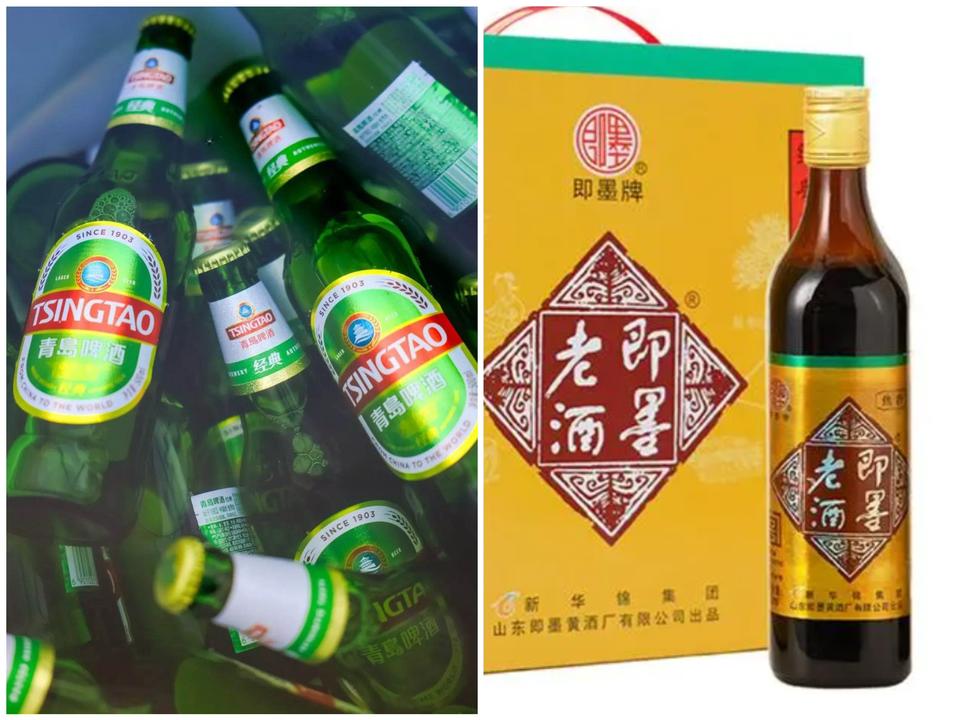
Core Viewpoint - Qingdao Beer has announced the acquisition of 100% equity in Shandong Jimo Huangjiu Brewery from Xinhua Jin Group and Lujin Group for a total consideration of RMB 66.5 million, marking the highest merger and acquisition amount in the domestic Huangjiu industry in the past five years and indicating Qingdao Beer's entry into the Huangjiu market [1] Group 1: Market Environment - The Chinese beer industry has faced a challenging market environment, with beer production declining from 38.12 million kiloliters in 2018 to 35.90 million kiloliters in 2023, and a projected further decline of 0.6% in 2024 [2] - Qingdao Beer's revenue for 2024 is reported at RMB 32.138 billion, a decrease of 5.3% year-on-year, while its net profit attributable to shareholders increased by 1.81% [2] Group 2: Strategic Rationale - The acquisition aims to diversify Qingdao Beer's product line and expand market channels, providing consumers with more diverse choices [2] - The seasonal complementary effect between beer and Huangjiu is a key rationale for the merger, as Qingdao Beer sees 65% of its revenue in the second and third quarters, while Jimo Huangjiu's peak sales occur in the fall and winter, with 38% of its revenue in the fourth quarter [2] Group 3: Growth Potential - The Huangjiu market is relatively small and fragmented, with national sales revenue of only RMB 21 billion in 2023, accounting for just 2% of the total liquor market [3] - Jimo Huangjiu's revenue in the northern market is currently less than 15%, but it has shown growth potential, with a 13.5% year-on-year increase in main business revenue to RMB 166 million in 2024 [3] - Qingdao Beer has a nationwide distribution network of 1.2 million retail outlets, which can help Jimo Huangjiu overcome its low penetration in the northern market [3][4] Group 4: Brand Recognition and Support - Huangjiu's recognition in the northern market is only 23%, compared to 98% for beer, indicating significant room for growth [4] - The acquisition is expected to enhance Jimo Huangjiu's brand recognition and market share in the northern market through Qingdao Beer's channel advantages and brand influence [4] - Qingdao Beer's logistics and supply chain will support Jimo Huangjiu in reducing costs and improving operational efficiency [4]
青岛啤酒6.65亿并购黄酒厂,能否打造业绩增长新引擎?
Sou Hu Cai Jing· 2025-05-09 15:25
Core Viewpoint - Qingdao Beer has announced a significant acquisition of Shandong Jimo Yellow Wine Factory for 665 million yuan, marking a strategic move to diversify its business beyond beer and tap into the yellow wine market [1][3]. Group 1: Acquisition Details - The acquisition involves Qingdao Beer fully acquiring Jimo Yellow Wine, a company with over 70 years of history known for its "Jimo Old Wine" and a diverse product line including yellow wine, sparkling wine, and white liquor [1]. - The investment of 665 million yuan aims to integrate Jimo Yellow Wine as a wholly-owned subsidiary, enhancing Qingdao Beer's product offerings and market reach [1]. Group 2: Industry Context - The beer industry is facing growth challenges, with domestic market saturation leading to declining sales and revenue, prompting companies like Qingdao Beer to seek new growth avenues [3]. - The seasonal sales complementarity between beer and yellow wine is seen as a potential solution to Qingdao Beer's fourth-quarter losses, as beer sales peak in summer while yellow wine performs better in spring and winter [3]. Group 3: Diversification Strategy - Qingdao Beer is accelerating its diversification efforts, as indicated by its strategic restructuring with Qingdao Beverage Group, which includes brands in various alcoholic beverage categories [4]. - The challenges of diversification are highlighted by the example of China Resources Beer, which faced difficulties in its foray into the white liquor market despite significant investment [4]. - The success of Qingdao Beer's expansion into the yellow wine sector remains uncertain, as the overall yellow wine market is experiencing a decline [3][4].


青岛啤酒 6.65 亿元跨界黄酒:主业承压下的多元化突围与协同效应考验
Xin Lang Zheng Quan· 2025-05-09 09:22
Core Viewpoint - Qingdao Beer is strategically shifting towards diversification by acquiring 100% equity of Shandong Jimo Yellow Wine Factory for 665 million yuan, in response to stagnating growth in its core beer business [1][2] Group 1: Beer Business Challenges - Qingdao Beer has faced significant growth pressure, with 2024 revenue declining by 5.3% to 32.138 billion yuan, ending three consecutive years of growth [2] - Net profit for 2024 was 4.345 billion yuan, showing only a 1.81% increase, a sharp decline from the previous year's 17.59% growth [2] - Beer sales volume dropped by 5.9% to 7.54 million tons, marking two consecutive years of negative growth, with mid-to-high-end product sales also declining for the first time [2] Group 2: Yellow Wine Acquisition - The acquisition of Jimo Yellow Wine is seen as a strategic move to enhance Qingdao Beer's product portfolio, with Jimo Yellow Wine achieving 2024 revenue of 166 million yuan and a net profit of 30.47 million yuan, both showing significant growth [3] - The complementary nature of beer and yellow wine consumption patterns is highlighted, as beer sales peak in summer while yellow wine is favored in autumn and winter [3] - However, the yellow wine industry faces regional limitations, with leading companies like Kuaijishan and Guyue Longshan deriving over 50% of their revenue from specific regions, indicating slow national expansion [3] Group 3: Synergy and Challenges - Qingdao Beer aims to leverage its extensive distribution network of 11,600 dealers covering over 90% of county-level markets to support Jimo Yellow Wine's growth [4] - The integration of Jimo Yellow Wine into Qingdao Beer's existing beverage portfolio poses challenges, including consumer perception differences and potential brand conflicts [4] - The competitive landscape is intense, with established yellow wine brands having a significant head start in national markets, raising questions about Jimo Yellow Wine's ability to differentiate itself [4] Group 4: Industry Trends - The acquisition reflects a broader trend in the beer industry, where major players are diversifying to create multi-category portfolios amid intense competition [5] - Financially, Jimo Yellow Wine's contribution to Qingdao Beer's profits is minimal, accounting for only 0.7% of total net profit, indicating that the strategic value may outweigh immediate financial benefits [5] - The move is part of a larger strategy to mitigate risks associated with the cyclical nature of the beer business and tap into the health and wellness market through yellow wine's perceived benefits [5] Group 5: Future Outlook - The acquisition signifies a shift from single-category competition to a multi-faceted ecosystem in the Chinese alcohol industry, driven by consumer trends and market dynamics [6] - The success of this transition will depend on the ability to reconstruct consumption scenarios, iterate product logic, and enhance organizational capabilities [6] - The potential for Jimo Yellow Wine to become a significant growth driver for Qingdao Beer remains uncertain, as the company navigates the complexities of this new venture [6]
贝因美2024年业绩稳健增长:营收净利双升,多元化战略成效显现
Quan Jing Wang· 2025-05-09 01:16
Core Viewpoint - Beiyinmei reported a strong financial performance in 2024, with significant growth in revenue and net profit, driven by a solid foundation in infant formula and rapid growth in new product categories [1][2]. Financial Performance - In 2024, Beiyinmei achieved a revenue of 2.773 billion yuan, a year-on-year increase of 9.7% - The net profit attributable to shareholders reached 103 million yuan, a substantial increase of 116.92% - In Q1 2025, revenue continued to grow, reaching 728 million yuan, up 1.01% year-on-year, with net profit of 43 million yuan, up 93.87% [1]. Industry Dynamics - The infant formula industry in China is experiencing increased concentration, with market share shifting towards leading companies due to new national standards [2]. - Beiyinmei has established a comprehensive industry chain covering R&D, production, and sales, supported by modern production facilities and advanced management systems [2]. Product Strategy - Beiyinmei is pursuing a diversified strategy with three main business directions: maternal and infant ecology, family nutrition, and quality living [3]. - The company is expanding its product offerings to include children's powder, adult powder, complementary foods, and maternal and infant products, with the rice powder segment showing remarkable growth of 111.09% [3]. Sales and Marketing - Beiyinmei employs a multi-channel strategy for sales, enhancing its online presence on platforms like Douyin and Xiaohongshu, while also increasing brand exposure through offline advertising [4]. - The company is focusing on penetrating lower-tier markets as infant formula consumption shifts from first and second-tier cities [4]. Future Outlook - Beiyinmei plans to strengthen R&D in specialized medical foods and functional nutrition products, optimize supply chains, and enhance brand value to address industry challenges [5]. - The company is well-positioned for long-term growth as industry concentration increases and it continues to innovate in products, channels, and branding [5].

寻找第二增长曲线? 火锅巨头海底捞跨界烘焙赛道
Zheng Quan Ri Bao· 2025-05-08 16:11
福州公孙策公关咨询有限公司合伙人詹军豪对《证券日报》记者表示:"这种性价比策略与海底捞在餐 饮领域积累的品牌影响力相结合,能否在烘焙市场掀起波澜,仍有待市场检验。" 海底捞此次跨界烘焙领域并非偶然之举,而是其"红石榴计划"战略落地的关键一步。据了解,该计划于 2024年8月份正式启动,旨在鼓励孵化和发展更多餐饮新品牌,推动公司多元化发展。截至2025年4月 份,海底捞已孵化并运营13个子品牌,覆盖烤肉、炸鸡、中式快餐、麻辣烫等多个品类。 在火锅市场竞争日趋白热化的背景下,火锅巨头海底捞国际控股有限公司(以下简称"海底捞")也在加 速多元化布局。近日,海底捞旗下全新烘焙品牌"拾耍·SCHWASUA"在杭州西湖银泰百货全国首店开 业,这也标志着这家以服务著称的火锅企业正式将业务拓展至烘焙赛道。 推进多元化战略 据悉,"拾耍·SCHWASUA"店内售卖的面包种类繁多,价格大多在10元左右,最贵的单品也不超过30 元。 艾媒咨询发布的《2024—2025年中国烘焙食品行业现状及趋势研究报告》数据显示,2023年中国烘焙食 品零售市场规模达5614.2亿元,同比增长9.2%,预计2029年市场规模可达到8595.6亿元 ...

果然财经|青啤6.65亿收购即墨老酒,头部品牌的双向奔赴?
Qi Lu Wan Bao· 2025-05-08 08:57
Core Viewpoint - Qingdao Beer has announced the acquisition of 100% equity in Shandong Jimo Huangjiu Factory from Xinhua Jin Group and Lujin Group for a total consideration of RMB 665 million, marking the highest merger and acquisition amount in the domestic Huangjiu industry in the past five years, and signifies the company's entry into the Huangjiu market [1] Group 1: Market Environment - The Chinese beer industry has faced a challenging market environment, with production declining from 38.12 million kiloliters in 2018 to 35.90 million kiloliters in 2023, and a projected further decline of 0.6% in 2024 [1] - Qingdao Beer's revenue for 2024 is reported at RMB 32.138 billion, a decrease of 5.3% year-on-year, although net profit attributable to shareholders increased by 1.81% [1] Group 2: Strategic Diversification - The acquisition of Jimo Huangjiu is a significant step in Qingdao Beer's diversification strategy, aimed at enriching its product line and expanding market channels to offer more diverse choices to consumers [2] - The seasonal sales patterns of beer and Huangjiu create a complementary effect, with Qingdao Beer’s revenue heavily concentrated in the second and third quarters, while Jimo Huangjiu's peak sales occur in the fall and winter [4] Group 3: Huangjiu Market Dynamics - The Huangjiu market is characterized by small and fragmented segments, with total sales revenue of RMB 21 billion in 2023, accounting for only 2% of the overall liquor market [5] - Jimo Huangjiu, while recognized as a leading brand in Northern China, has struggled with market penetration, achieving only 15% of its revenue from Northern markets in 2024 [5] Group 4: Growth Potential - Jimo Huangjiu has shown growth potential, with a reported revenue of RMB 166 million in 2024, reflecting a year-on-year increase of 13.5%, and a net profit of RMB 30.47 million, up 38% [5] - The acquisition is expected to enhance Jimo Huangjiu's market penetration in Northern China, leveraging Qingdao Beer's extensive distribution network of 1.2 million retail outlets [7]
Q1净利跌超6成,传音控股非洲市场增收乏力
凤凰网财经· 2025-05-07 13:02
Core Viewpoint - Transsion Holdings, known as the "King of Mobile Phones in Africa," is facing a significant decline in profitability, with a more than 60% year-on-year drop in net profit for Q1 2025, attributed to intensified competition and rising supply chain costs [1][2]. Group 1: Q1 Financial Performance - In Q1 2025, Transsion Holdings reported revenue of 13.004 billion yuan, a decrease of 25.45% year-on-year, and a net profit of 490 million yuan, down 69.87% year-on-year [2]. - The company's gross profit margin fell to 19.27%, a decline of 2.88 percentage points compared to the previous year [2]. - Cash flow from operating activities was negative 740 million yuan, a drastic decline of 583.95% year-on-year, primarily due to a decrease in cash received from sales [2]. Group 2: Global Market Position - Transsion Holdings has dropped out of the top five smartphone manufacturers globally, with its Q1 2025 shipment volume categorized under "Others" [3]. - In Q1 2024, the company shipped 28.5 million units, accounting for 9.5% of the global market, ranking fourth [3]. Group 3: Market Challenges in Africa - The African market, once a stronghold for Transsion, is increasingly competitive, with brands like Xiaomi and Realme gaining market share [5]. - In Q4 2024, Transsion held a 49% market share in Africa, but its growth was only 1% year-on-year, while Xiaomi and Realme reported significant increases in their shipments [5][6]. - Transsion's revenue in Africa for 2024 was 22.719 billion yuan, a growth of 2.97%, which is a slowdown compared to 6.74% in 2023 [6]. Group 4: Expansion Challenges in Emerging Markets - In India, Transsion's market share is only 5.7%, ranking eighth, facing strong competition from established brands [7]. - The company is experiencing greater competitive pressure in Southeast Asia, where it has yet to establish a strong brand presence [7]. - Revenue from Asia and other regions in 2024 was 44.737 billion yuan, a year-on-year increase of 13.96%, but the gross margin decreased by 2.52 percentage points to 17.66% [7]. Group 5: Ineffectiveness of Diversification Strategy - Transsion is attempting to diversify its business model by integrating mobile internet services, home appliances, and digital accessories, but the results have been underwhelming [8]. - The company has launched various applications and partnered with mobile payment services, yet it struggles to compete with rivals that have established comprehensive ecosystems [8]. - Revenue from non-mobile businesses, including home appliances and digital accessories, was only 4.259 billion yuan in 2024, accounting for less than 10% of total revenue [9].


多元化战略再迈新步伐 青岛啤酒宣布收购即墨黄酒厂100%股权
Zheng Quan Ri Bao Zhi Sheng· 2025-05-07 12:38
即墨老酒隶属于黄酒,是中国历史名酒之一。即墨黄酒厂始建于1949年,即墨黄酒厂生产的"即墨"牌即 墨老酒以独特的微苦焦香风味和深厚的历史文化底蕴,在市场上赢得了广泛的赞誉。2024年,即墨黄酒 厂实现主营业务收入1.66亿元,同比增长13.5%;实现净利润0.30亿元,同比增长38.0%。截至2024年 末,即墨黄酒厂总资产为9.08亿元,净资产为2.03亿元。 武汉京魁科技董事长、酒业资深专家肖竹青在接受《证券日报》记者采访时分析,青岛啤酒对即墨黄酒 厂的收购具有三重战略价值。一是渠道赋能层面,青岛啤酒成熟的全国性销售体系可快速承接即墨老酒 产品矩阵,通过渠道共享机制实现边际效益最大化。二是供应链整合维度,青岛啤酒完备的采购、生 产、物流体系将与即墨黄酒厂形成产业协同。三是人才战略支撑方面,青岛啤酒专业化团队将向即墨黄 酒厂输出管理经验与技术能力。从生产管理到品牌营销,从质量控制到渠道拓展,人才要素的双向流动 将加速即墨老酒标准化体系建设,助力其快速完成全国化市场布局。 青岛啤酒此次收购即墨黄酒厂,正是看中了即墨黄酒厂在黄酒行业的领先地位和品牌影响力,期望通过 产业协同,实现资源共享和优势互补,共同推动双方 ...