
数字中国建设

Search documents
踔厉奋发新征程 | 数字化点亮新生活
Zhong Yang Ji Wei Guo Jia Jian Wei Wang Zhan· 2025-08-25 00:16
Digital Economy and Services - The digital economy in China has rapidly developed over the past decade, with digital technologies empowering various industries and enhancing daily life [6] - The national data bureau reported that since the 14th Five-Year Plan, the application of digital technologies has significantly transformed production, lifestyle, and social governance, making digital services more accessible to the public [6] Smart Community Development - The "14th Five-Year Plan" emphasizes the construction of smart communities, integrating digital platforms and offline services to create a convenient service circle for residents [7] - Communities are increasingly adopting digital and intelligent upgrades to improve governance efficiency and enhance residents' quality of life [7] Smart Healthcare Innovations - The integration of AI and digital technologies in healthcare has improved patient experiences, such as AI-guided consultations and online follow-ups, significantly reducing waiting times [10][11] - The annual service volume of internet hospitals in China has exceeded 100 million, indicating a rapid expansion of digital healthcare services [12] Cultural and Tourism Digitalization - The use of VR and AR technologies in cultural tourism is creating immersive experiences, allowing visitors to engage with historical events in a more interactive manner [13][14] - The Long'an Twelve Hours theme district in Xi'an has become a popular tourist destination, attracting over 2 million visitors annually through innovative digital experiences [15] - Policies promoting the integration of technology and cultural tourism have led to the completion of digital upgrades in all 5A-level scenic spots across the country [15]


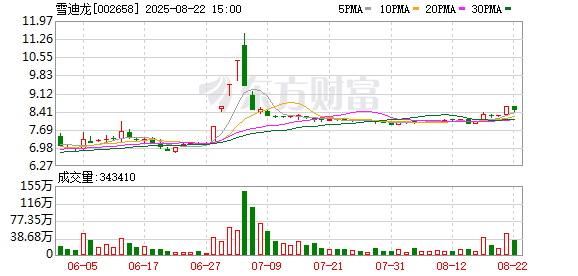
雪迪龙2025年上半年营收净利双增长
Zheng Quan Ri Bao· 2025-08-22 09:06
Group 1 - The company reported a revenue of 596 million yuan, representing a year-on-year growth of 3.70%, and a net profit attributable to shareholders of 61.97 million yuan, with a year-on-year increase of 25.51% [2] - The company focuses on environmental monitoring, carbon monitoring and measurement, and industrial process analysis, providing a comprehensive solution of "intelligent equipment + smart operation + digital application" to support environmental quality improvement and the achievement of carbon neutrality goals [2] - The industry environment is favorable, with accelerated construction of a modern industrial system and digital China, leading to new opportunities for the instrument and meter industry as digital technology integrates with the real economy [2] Group 2 - In the second half of 2025, the company will continue to implement its business strategy of "deepening customer value and achieving high-quality development," focusing on profit and optimizing resource allocation [3] - The company aims to consolidate its core competitiveness by leveraging its rich product reserves and market presence in the analysis instrument market and ecological environment monitoring industry [2] - The company has established five core technology platforms and two basic software platforms, continuously engaging in technological research and innovation to meet market demands [2]

福建发布“十四五”改革成绩单:活力迸发,多项改革成果全国领先
Zhong Guo Fa Zhan Wang· 2025-08-20 09:59
Core Viewpoint - Fujian Province is focusing on high-quality development and comprehensive reform during the "14th Five-Year Plan" period, aiming to enhance its role in China's modernization efforts [1][2]. Group 1: Reform and Innovation - Fujian is implementing bold reforms to address prominent development issues, enhancing new growth drivers and creating new competitive advantages [2]. - The province is deepening state-owned enterprise reforms and improving the environment for private enterprises, with a focus on creating a first-class business ecosystem [2][3]. - Fujian is promoting the integration of technological and industrial innovation, establishing a Provincial Science and Technology Committee, and launching policies to foster innovation [2]. Group 2: Business Environment - The province has developed its first business environment construction plan and introduced various regulations to optimize the business climate, achieving high satisfaction rates [3]. - Fujian is enhancing regional coordination and urban-rural integration, with significant progress in urbanization, achieving a projected urbanization rate of 71.8% by 2024, which is 4.8 percentage points higher than the national average [3]. Group 3: Unique Reforms - Fujian is conducting pilot reforms at the city and county levels, promoting a culture of innovation and experimentation that contributes to both local and national development [4]. - The province is advancing cross-strait integration with significant policy support, leading to a high number of new Taiwanese enterprises and investment [4]. Group 4: Environmental Initiatives - Fujian is committed to ecological development, maintaining high environmental quality and leading in forest coverage rates for 46 consecutive years [5]. - The province's ecological initiatives have gained international recognition, with successful cases in ecological restoration and sustainable practices showcased globally [5]. Group 5: Social Welfare and Quality of Life - Fujian prioritizes reforms in the social sector, focusing on employment, education, healthcare, and social security, with over 70% of provincial fiscal spending directed towards these areas [6]. - The province aims to improve public services and quality of life, with projected per capita disposable income reaching 47,857 yuan in 2024, ranking seventh nationally [6]. Group 6: Governance and Community Engagement - Fujian is enhancing governance effectiveness through innovative community engagement strategies, maintaining a high public safety perception rate of over 98% [7]. - The province's commitment to reform and openness is expected to drive further development and modernization efforts in the future [7].
机械行业周报:机械出口增长稳健,低空经济政策托底-20250820
Guoyuan Securities· 2025-08-20 06:43
Investment Rating - The report maintains a "Recommended" investment rating for the industry [7] Core Insights - The mechanical export sector shows steady growth, supported by low-altitude economic policies [2][3] - The domestic leading enterprises in the mechanical equipment sector maintain strong competitive advantages in both supply and demand [4] - The report highlights specific investment opportunities in low-altitude economy and mechanical equipment sectors [5] Weekly Market Review - From August 11 to August 15, 2025, the Shanghai Composite Index rose by 1.70%, the Shenzhen Component Index increased by 4.55%, and the ChiNext Index surged by 8.58%. The Shenwan Mechanical Equipment Index rose by 3.21%, outperforming the CSI 300 Index by 0.84 percentage points, ranking 8th among 31 Shenwan first-level industries [12] - Sub-sectors such as general equipment, specialized equipment, and automation equipment saw increases of 3.45%, 4.13%, and 5.45% respectively, while engineering machinery and rail transit equipment experienced slight declines [12][15] Key Sector Tracking Low-altitude Economy - The Yunnan provincial government has issued measures to support the healthy development of the low-altitude economy, including 15 specific initiatives aimed at enhancing safety supervision, supporting drone testing, and expanding international markets [3][21] - Shanghai plans to establish a low-altitude industry fund to encourage research institutions to set up project companies for technological breakthroughs [3] Mechanical Equipment - In July 2025, sales of various types of forklifts reached 118,605 units, a year-on-year increase of 14.4%. Domestic sales accounted for 69,700 units, up 14.3%, while exports totaled 48,905 units, up 14.5% [4] - For the first seven months of 2025, a total of 857,939 forklifts were sold, marking a 12% year-on-year increase, with domestic sales up 10.4% and exports up 15.1% [4] Investment Recommendations - For the low-altitude economy, recommended companies include Deep City Transportation, Sujiao Science and Technology, and Huasheng Group [5] - In the mechanical equipment sector, recommended companies include Sany Heavy Industry, XCMG, and Anhui Heli [5]




算力总规模全球第二,数字中国建设取得显著成就
Ren Min Ri Bao· 2025-08-19 11:16
Group 1 - The core viewpoint emphasizes China's commitment to digital transformation, leveraging opportunities in digitalization, networking, and intelligence during the 14th Five-Year Plan period [1] - As of June 2023, China has established a leading position in digital infrastructure, with 4.55 million 5G base stations and 226 million gigabit broadband users, ranking second globally in total computing power [1] - The number of internet users in China has reached 1.123 billion, with an internet penetration rate of 79.7%, indicating a significant expansion of digital services [2] Group 2 - Digital services have become more accessible, with over 1 billion people using electronic social security cards, covering more than 75% of the population [2] - The national internet hospitals have served over 100 million people annually, and the cross-province medical insurance settlement has benefited 560 million instances [2] - The digital education platform in China is the largest globally, and digital elderly care services have seen positive outcomes with the launch of a national elderly care information platform [2] Group 3 - Social governance has become more precise and efficient, with the "one network for all services" initiative enhancing public service accessibility and inter-departmental data sharing [3] - The national data bureau aims to leverage data elements to promote digital transformation in public services, digital life, and social governance [3] Group 4 - Data application scenarios are expanding, with 70 demonstration scenarios covering key sectors such as agriculture and healthcare [4] - The construction of high-quality data sets has exceeded 35,000, with ongoing efforts to enhance data resource management and utilization [5][6] Group 5 - The data market is evolving, with a 70% year-on-year increase in new data products launched in the first half of the year, totaling 3,328 products [7] - The supply of high-quality data sets in the artificial intelligence sector has surged by 280% year-on-year [7] - The national data infrastructure construction is in its early stages, focusing on high-quality standards and large-scale deployment to support digital economy development [8]
易周资讯2025(8.11—8.17)|关注行业动态,掌握前沿资讯
Sou Hu Cai Jing· 2025-08-19 04:18
Group 1: Employment and Labor Policies - The Ministry of Human Resources and Social Security will organize national vocational skills competitions from 2025 to 2028, aiming to promote skilled talent and labor spirit [2] - Various regions have established caregiving leave for only children, allowing up to 20 days of leave with salary maintained [2] - The urban unemployment rate in July was 5.2%, showing a seasonal increase of 0.2 percentage points compared to the previous month [3] Group 2: Healthcare and Medical Insurance - The National Healthcare Security Administration has issued a temporary management method for disease-based payment in medical insurance, applicable to hospital medical expenses [7] - A total of 121 drugs have passed the preliminary review for the commercial insurance innovative drug directory [5][8] - A mid-year meeting on national medical insurance work was held, focusing on empowering medical institutions and ensuring public health [9] Group 3: Digital Economy and Technology - The internet and related services sector generated revenue of 961.3 billion yuan in the first half of the year, with a year-on-year growth of 3.1% [6] - As of June, China has 4.549 million 5G base stations and ranks second globally in computing power scale [6][11] - State-owned enterprises are intensifying their investment in artificial intelligence, with over 800 application scenarios established across 16 key industries [12]

数据规模占全球26.67%!从医保码到“秧BOT”,数字中国建设加速度|“十四五”成绩单
Hua Xia Shi Bao· 2025-08-16 14:37
Group 1 - The core viewpoint highlights the rapid advancement of digital technology in China, particularly in healthcare, where facial recognition is now used for medical services, reflecting a significant shift in service accessibility and efficiency [1] - The national internet hospital service volume has exceeded 100 million visits, and over 1.2 billion users have adopted the health insurance code, indicating a substantial increase in digital healthcare adoption [1] - By 2024, China's data production is projected to reach 41.06 zettabytes, doubling from the end of the 13th Five-Year Plan, and accounting for 26.67% of the global data total [1][2] Group 2 - The internet penetration rate in China has reached 79.7%, with the number of internet users at 1.123 billion, marking a 9.3 percentage point increase since the beginning of the 14th Five-Year Plan [3] - The online retail market continues to grow, with a projected online retail sales figure of 15.5225 trillion yuan in 2024, reflecting a 7.2% year-on-year increase [3] Group 3 - China has established the world's largest and most resource-rich national smart education platform, with the largest number of MOOCs (Massive Open Online Courses) available [4] - The digital transformation of 5A scenic spots has reached 100%, enhancing the accessibility of cultural heritage through new technologies like digital twins and virtual reality [4] Group 4 - The digital infrastructure in China is leading globally, with 5G base stations increasing fivefold to 4.55 million and gigabit broadband users growing 34 times to 226 million [6] - The smart consumer device manufacturing industry saw a 10.9% increase in value added in 2024, with specific sectors like smart vehicle equipment and drones experiencing even higher growth rates of 25.1% and 53.5%, respectively [7] Group 5 - The government is focusing on technology development and innovation, as indicated by the frequent mentions of technology and innovation in recent reports, aiming to enhance new productivity and support the "Artificial Intelligence+" initiative [8] - The digital economy is recognized as a crucial driver of economic growth, with the government committed to fostering the integration of digital technology with manufacturing and market advantages [2][8]
截至6月底中国日均Token消耗量突破30万亿
Zhong Guo Xin Wen Wang· 2025-08-15 06:12
Group 1 - The core point of the news is that the consumption of Tokens in China has surged dramatically, reflecting the rapid growth of artificial intelligence applications in the country [1][3] - As of June 2023, China's daily Token consumption exceeded 30 trillion, marking a growth of over 300 times from 1 billion in early 2022 [3][4] - The Chinese government emphasizes the importance of data as a production factor and has implemented various measures to promote the development and utilization of data resources [3][4] Group 2 - China has constructed over 35,000 high-quality datasets, with a total volume exceeding 400 petabytes (PB), which is approximately 140 times the digital resources of the National Library of China [4] - The demand for data trading has increased due to the training of artificial intelligence models, with a cumulative transaction value of nearly 4 billion RMB for high-quality datasets as of June 2023 [4] - The proportion of high-quality datasets in total transactions at data trading institutions has risen from 10% last year to nearly 80% currently [4]
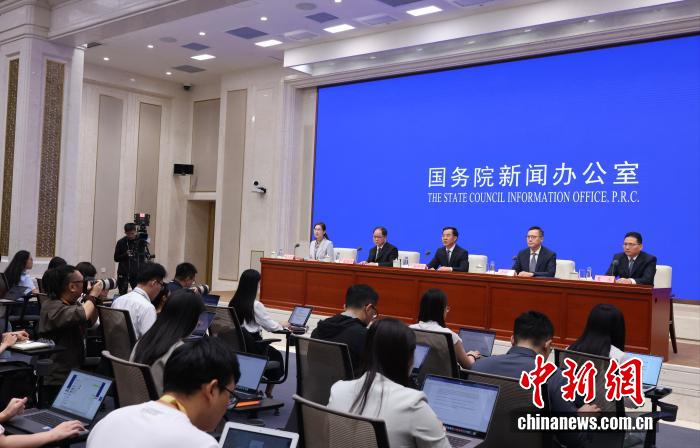
用得上、用得起、用得好,惠及百姓!透视重磅数据 解码数字中国“答卷”
Yang Shi Wang· 2025-08-15 04:11
Group 1 - The core viewpoint of the article highlights the significant progress in China's digital infrastructure and the robust development momentum of the digital economy, with a focus on the construction of a national integrated data market [1][21] - China's total computing power ranks second globally, with major computing hubs established in the western regions to leverage clean energy advantages and promote regional coordinated development [3][5] - The number of interconnected cities for digital infrastructure is expected to expand to around 50 by the end of 2025, covering 80% of provinces [5] Group 2 - Digital public services are becoming more accessible, with significant advancements in education, healthcare, social security, and elderly care, including the establishment of the world's largest national smart education platform [9][22] - The number of internet users in China has reached 1.123 billion, with an internet penetration rate of 79.7%, indicating that digital services are increasingly benefiting the population [12] - The data market ecosystem is continuously evolving, with nearly 500 new digital technology companies established by central enterprises, and the data industry scale expected to reach 58.6 trillion yuan, a 117% increase from the end of the 13th Five-Year Plan [19] Group 3 - By June 2025, over 35,000 high-quality data sets are expected to be built, further strengthening the momentum of digital economic development [21] - Smart healthcare services are expanding rapidly, with internet hospitals serving over 100 million people annually and over 1.2 billion users of the national medical insurance code [22] - The digital transformation in tourism is evident, with a 100% completion rate for the digital transformation of national 5A scenic spots, utilizing new technologies like digital twins and virtual reality [24]

“十四五”以来数字中国建设取得显著成就 数字公共服务更加可感可及
Yang Guang Wang· 2025-08-15 00:52
Group 1 - The core viewpoint of the news is that significant achievements have been made in the construction of Digital China since the start of the 14th Five-Year Plan, with enhanced accessibility to digital public services [1][2] - By June 2025, the total number of 5G base stations in China is expected to reach 4.55 million, and the number of gigabit broadband users is projected to be 226 million [1] - The total computing power in China ranks second globally, which has effectively driven the development of various sectors including integrated circuits, communication network equipment, and online services [1] Group 2 - The implementation of 21 policies related to the development and utilization of public data resources was launched last year, with over 10 more policies on data property rights expected this year [2] - The internet penetration rate in China has reached 79.7%, leading to profound changes in production, lifestyle, and social governance due to accelerated application of digital technologies [2] - The national internet hospitals have served over 100 million people, and cross-provincial medical settlements have benefited 560 million people [2]