
绿色经济

Search documents
多措并举稳住高校毕业生就业基本盘
Xin Lang Cai Jing· 2025-12-24 20:50
Core Viewpoint - The recent Central Economic Work Conference emphasizes the importance of prioritizing people's livelihoods, particularly focusing on stabilizing employment for college graduates as a direct reflection of this commitment [1] Group 1: Employment Stability for College Graduates - Stabilizing employment for college graduates is crucial for enhancing the quality of life and ensuring the future talent pool for the nation [1] - The increasing enrollment rate in higher education has led to over ten million graduates each year, raising demands for job market capacity and structural alignment [1][2] - The resilience and potential of the Chinese economy remain strong, with new industries and business models emerging, creating opportunities for graduates [1][2] Group 2: Expanding Job Demand and Opportunities - Expanding job demand and exploring new job growth areas are essential for stabilizing employment [2] - Policies such as tax reductions, financial support for industries with strong employment absorption capacity, and incentives for innovation and entrepreneurship are necessary to lower employment costs for businesses [2] - Emerging sectors like the digital economy, green economy, and silver economy are creating numerous job opportunities suitable for college graduates [2] Group 3: Enhancing Talent Supply and Market Demand Matching - Improving the matching between talent supply and market demand is key to stabilizing employment [3] - Higher education institutions should proactively align with economic and social needs, enhancing practical and forward-looking course offerings [3] - Collaboration among educational institutions, human resources departments, and businesses is vital to provide quality internships and training programs for graduates [3] Group 4: Comprehensive Employment Services and Support - A detailed and continuous employment service network is necessary to support graduates throughout their job search [4] - Digital tools have significantly improved service efficiency, enabling online recruitment and guidance activities [4] - Special attention should be given to graduates from disadvantaged backgrounds, ensuring targeted assistance and support [4] Group 5: Collaborative Efforts for Employment Promotion - Promoting employment for college graduates requires a collaborative effort from government, educational institutions, businesses, and society [5] - Governments must take responsibility for employment promotion, while educational institutions should focus on improving talent cultivation quality [5] - Businesses are encouraged to fulfill their social responsibilities by providing quality job opportunities and training platforms [5]
经济观察:中国—东盟合作迈向深度互嵌
Zhong Guo Xin Wen Wang· 2025-12-24 16:07
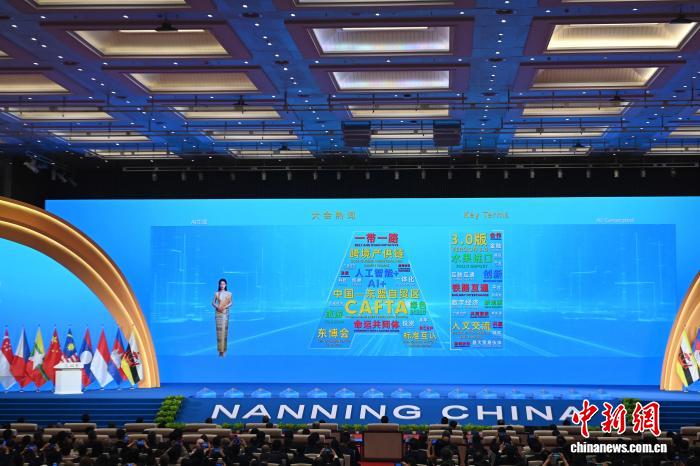
中新网南宁12月24日电 (蒋雪林 范立强 梁丽敏)年终盘点中国与东盟的经贸关系,一组数据令人印象深 刻:今年前11个月,东盟是中国第一大贸易伙伴,中国对东盟进出口6.82万亿元人民币,同比增长 8.5%。中国与东盟累计双向投资在今年7月已超过4500亿美元。 这不仅仅是数字的增长,更揭示了一种深刻的演变——双方正从以货物贸易为主的"贸易伙伴",快速迈 向价值链深度互嵌、彼此成就的"产业链共同体"。近日于广西南宁举行的中国(广西)—东盟智库对话论 坛上,这一趋势成为中外专家热议的焦点。 中国与东盟的产业合作,已不再是传统的垂直分工。中国国际发展知识中心研究员龙海波研究发现,中 国对东盟的出口中,机电产品等资本品和中间品占比突出,而东盟对华出口商品结构也呈现出从资源密 集型向制造业并重的升级趋势。黄烨菁将此概括为从"成本与产能合作"向"产业链协同与智能化、绿色 化场景拓展"的转型。中国企业带来的不仅是资金,更有技术、标准和人才培训,深度参与并助推了东 盟国家的工业化进程。李向阳强调,以共建"一带一路"框架下经济走廊的升级建设为抓手,未来有望构 建起更紧密的区域性价值链网络。 图为第22届中国—东盟博览会开幕式现 ...

王继才:东博会扮演好中国—东盟自贸区3.0版“商机孵化器”角色
Zhong Guo Xin Wen Wang· 2025-12-24 02:41
Core Viewpoint - The China-ASEAN Expo (CAEXPO) is positioned as a key platform for promoting the China-ASEAN Free Trade Area 3.0, serving as a "policy promoter" and "business incubator" to help small and medium-sized enterprises understand and utilize new rules and terms [1] Group 1: Upcoming Initiatives - The 23rd CAEXPO, scheduled for 2026, will feature a dedicated exhibition area for the China-ASEAN Free Trade Area 3.0, which will serve as a "navigation map" and "compass" to guide enterprises in identifying cooperation opportunities [3] - The CAEXPO will enhance its think tank function, with a blue paper dedicated to in-depth analysis of the 3.0 protocol by authoritative experts, along with high-level dialogue activities to provide enterprises with professional trend analysis and action recommendations [3] - Targeted industry matchmaking events and technical exchanges will be organized in key areas such as digital economy, green economy, and cross-border supply chains to support enterprises in seizing new opportunities [3][4] Group 2: Objectives and Achievements - The primary goal of the 23rd CAEXPO is to serve as a showcase and catalyst for the implementation of the Free Trade Area 3.0, contributing to a more open, inclusive, and prosperous regional integration market [4] - The CAEXPO aims to transform policy dividends into corporate momentum, focusing on practical applications of the Free Trade Area 3.0 [6] - The 22nd CAEXPO introduced specialized pavilions for AI and new productivity, showcasing approximately 1,200 exhibits, including humanoid robots and agricultural drones, to highlight cooperation potential in cutting-edge fields [6][7] Group 3: Ongoing Support - The CAEXPO has established a permanent cooperation platform, including a cloud service and two centers, to continuously support enterprises in technical exchanges, supply chain matching, and project cooperation throughout the year [7]
ALSCO Pooling Service Co., Ltd.(H0249) - Application Proof (1st submission)
2025-12-23 16:00
The Stock Exchange of Hong Kong Limited and the Securities and Futures Commission take no responsibility for the contents of this Application Proof, make no representation as to its accuracy or completeness and expressly disclaim any liability whatsoever for any loss howsoever arising from or in reliance upon the whole or any part of the contents of this Application Proof. Application Proof of 蘇州優樂賽共享服務股份有限公司 ALSCO Pooling Service Co., Ltd. (the "Company") (A joint stock company incorporated in the People's ...
“数”观河北年用电量破5000亿度背后的经济动能转换
Xin Hua Cai Jing· 2025-12-23 08:07
Core Insights - Hebei Province's total electricity consumption has surpassed 500 billion kilowatt-hours for the first time, with an expected annual total of 535 billion kilowatt-hours, representing a year-on-year growth of 7.29% [1] Group 1: Electricity Consumption Trends - From January to November, Hebei's total electricity consumption reached 483.03 billion kilowatt-hours, with a year-on-year increase of 7.42% [1] - The electricity consumption in the tertiary industry was 107.85 billion kilowatt-hours, growing by 13.08%, which was the fastest among the three industries, contributing 2.77 percentage points to the overall growth [1] - Industrial electricity consumption was 290.72 billion kilowatt-hours, with a year-on-year increase of 5.33%, including the steel industry at 88.85 billion kilowatt-hours (5.41% growth) and equipment manufacturing at 43.21 billion kilowatt-hours (6.49% growth) [1] Group 2: Sector-Specific Performance - In the tertiary sector, certain industries showed remarkable performance, with information transmission, software, and IT services electricity consumption growing over 30%, and internet data services increasing by 56.58% [2] - The charging and swapping service sector saw an impressive growth rate of 82.46% in electricity consumption [2] - The cultural and tourism-related industries, including transportation, wholesale and retail, and accommodation and catering, consumed 46.79 billion kilowatt-hours, marking a year-on-year increase of 12.94% [2] Group 3: Infrastructure and Service Enhancements - The rapid growth in electricity consumption reflects robust economic vitality and is supported by improving electricity infrastructure and service guarantees [2] - Hebei's electricity companies are utilizing the "State Grid" app for energy efficiency analysis and tailored production scheduling, optimizing high-energy-consuming processes during off-peak hours [2][3] - The establishment of a solid electricity supply system is crucial for the stable operation of the economy and various industries in Hebei Province [3]
财政部原副部长朱光耀:中国在人工智能方面有明显优势
2 1 Shi Ji Jing Ji Bao Dao· 2025-12-23 04:09
Economic Position and Growth - China's GDP is projected to be $18.27 trillion in 2024, maintaining its position as the second-largest economy globally, following the U.S. with a GDP of $110 trillion [3] - Germany ranks third with a GDP of $4.73 trillion, while India, as a BRICS nation, has a GDP of $3.98 trillion, making it the fifth-largest economy [3] High-Income Status and Future Goals - The World Bank adjusted the high-income threshold for GNI per capita to $14,005, with China's projected GNI per capita for 2024 at $13,660, indicating a shortfall of $275 to achieve high-income status [4] - China aims to transition into a high-income country by 2025 or 2026, focusing on the "14th Five-Year Plan" and "15th Five-Year Plan" to build a modern socialist nation [4] Development in AI and Renewable Energy - China's advancements in artificial intelligence and new energy sectors are seen as foundational for future economic growth, with a significant increase in power generation expected [5] - In 2024, China's total power generation is expected to exceed 10 trillion kilowatt-hours, more than double that of the U.S. [5] - China leads globally in renewable energy, with over 1 billion kilowatts of installed solar capacity, accounting for more than 50% of the world's total [5] Competitive Landscape in AI - Both China and the U.S. are leaders in AI, but China faces challenges in advanced chip production compared to the U.S. [6] - U.S. restrictions on chip exports to China may ultimately harm U.S. market share, as noted by industry leaders [6] - China's strengths in electricity production and vast application scenarios provide a solid foundation for AI development [7] Strategic Opportunities and Challenges - China is encouraged to leverage its advantages in AI while addressing its weaknesses through innovation and government support [7] - The competitive landscape is expected to remain intense during the "14th Five-Year Plan" period, necessitating a cautious approach [8] - The goal is to ensure a strong start for the "15th Five-Year Plan" in 2026, laying the groundwork for achieving socialist modernization by 2035 [8]
劳务品牌擦亮就业金字招牌
Jing Ji Ri Bao· 2025-12-21 22:52
Core Viewpoint - The construction of labor brands in China is a key strategy for achieving high-quality and full employment, showcasing innovative practices in employment promotion and economic development [1][2]. Group 1: Labor Brand Development - A total of over 2,500 labor brands have been cultivated nationwide, significantly contributing to employment for millions of workers and transforming human resource advantages into high-quality development momentum [1]. - Unique labor brands have emerged in response to talent shortages in emerging fields such as green economy and low-altitude economy, exemplified by brands like "Guangxi New Energy Vehicle Craftsman" and "Yangpu Low-altitude Flight CNC Technician" [1]. - Labor brands facilitate a virtuous cycle of "skills training + industry cultivation," as seen with the "Zheng'an Guitar Craftsman" brand, which supports the establishment of the world's largest guitar manufacturing base [1]. Group 2: Comprehensive Service Model - The government leads the integration of resources from enterprises, educational institutions, and training organizations to provide a full chain of services, including vocational standard development, labor skills training, labor organization output, and labor rights protection [2]. - This model aims to create a development ladder for key groups such as migrant workers and impoverished populations, contributing to high-quality employment in the context of a large population [2]. Group 3: Challenges and Solutions - Labor brand development faces challenges, including the prevalence of small and scattered brands and a lack of alignment with market demands and digital skills training [2]. - To address these issues, a problem-oriented approach is recommended, focusing on precise cultivation of brands and supporting established brands to extend their industrial chains [2]. - New labor brands targeting emerging sectors like robotics and low-altitude economy should be strategically planned to ensure effective alignment with talent cultivation and industry needs [2]. Group 4: Skill Training and Policy Support - A lifelong vocational skills training system should be established for labor brand workers, with dynamic updates to training content based on industry upgrades and technological changes [3]. - The government should utilize various policy tools, such as financial subsidies and tax incentives, to support labor brand cultivation and enhance the efficiency of brand development [3]. - A collaborative service mechanism across departments is essential to integrate resources for industrial planning, employment services, skills training, and rights protection, thereby providing stable and high-quality human resources for modernization efforts in China [3].
当前铜价高位下行后将进入底部甜蜜区间?
Xin Lang Cai Jing· 2025-12-21 01:12
(来源:佛山市金属材料行业协会) 需求端如火如荼持续高增。绿色能源、绿色经济的发展带来了对高性价比导电金属铜的需求—终端电气自动化水平不断提升,AI数据中心崛起,前端电 源侧绿色能源革新深化,链接用电侧及发电侧的电网扩网需求与日俱增。 全球对铜需求增速中枢在2.5%左右。2026年至2028年,全球精炼铜需求量预计分别为2813万吨、2880万吨、2945万吨,同比增长2.9%、2.4%、2.3%。 供需平衡角度,2026年至2028年持续缺口分别为16万吨,36万吨、61万吨,且远期缺口呈现扩大趋势。 陆家嘴大宗商品论坛2025年12月19日 09:48上海 来源 | Buffett读书会 编辑|陆家嘴大宗商品论坛,转载请注明出处 甜蜜的底部区间 近期全球宏观格局与大宗商品市场正经历深刻变化。当前市场的核心驱动力之一是全球主要经济体同步转向更为积极的财政与货币政策。美联储已于12月 启动降息,并开启技术性扩表,计划每月购买400亿美元短期国债,以维持流动性充裕。与此同时,德国推出9000亿欧元投资计划,美国通过"大漂亮"法 案大幅提高债务上限,日本及英国也相继推出大规模经济刺激方案,全球进入"财政主动扩张时 ...

2025年北方GDP10强城市预测:北京超5.2万亿,济南第5,唐山第8
Sou Hu Cai Jing· 2025-12-20 23:43
Core Insights - The 2025 GDP forecast for northern cities highlights Beijing leading with 52,630.15 billion yuan, followed by Tianjin and Qingdao at 18,600.42 billion yuan and 17,890.31 billion yuan respectively, showcasing strong economic growth in the region [1][9] - The total GDP increment across these cities exceeds 800 billion yuan, indicating robust economic vitality in northern China [1] - Cities are focusing on innovation-driven development and industrial upgrades, contributing to regional collaborative growth and revitalization [1] Beijing - Beijing's GDP is projected to surpass 5.2 trillion yuan, with an increment of nearly 2,800 billion yuan and a growth rate of 5.59%, maintaining its position as the second-highest in the nation [3] - The city is recognized as a technology innovation hub, with the AI industry growing at 12% annually, creating over 500,000 jobs [3] - Digital transformation is advancing, with a 5G coverage rate of 98% and investments in smart city projects exceeding 100 billion yuan [3] Jinan - Jinan ranks fifth in northern cities with a GDP of 14,330.55 billion yuan, an increment of 803 billion yuan, and a growth rate of 5.94%, leading among provincial capitals [5] - The city benefits from a robust transportation network, with logistics growing by 18%, which supports manufacturing upgrades [5] - The green economy is thriving, with a forest coverage rate of 25% and a 30% increase in clean energy installed capacity [5] Tangshan - Tangshan's GDP is projected to exceed 1 trillion yuan, reaching 10,481.92 billion yuan, with an increment of 478 billion yuan and a growth rate of 4.78% [7] - The city has successfully transformed its steel industry, with high-end steel exports increasing by 10% and green steel technology application rates exceeding 80% [7] - The port economy is expanding, with a 15% increase in throughput at Caofeidian Port and over 30 billion yuan in foreign investment [7] Overall Northern Cities - The northern city cluster is rapidly emerging, with cities like Jinan and Tangshan shining as new stars, while Beijing leads the innovation wave [9] - The collective economic growth is expected to contribute significantly to national economic momentum [9]

中国—东盟智库共探自贸区3.0版新机遇
Xin Lang Cai Jing· 2025-12-20 14:59
Group 1 - The forum focuses on exploring opportunities brought by the China-ASEAN Free Trade Area 3.0, aiming to deepen cooperation between China and ASEAN countries [1][2] - Key topics discussed include international situation changes, industrial linkage with the China-ASEAN Free Trade Area 3.0, digital empowerment, AI cooperation, and global South cooperation [1] - The upgraded agreement of the China-ASEAN Free Trade Area 3.0 covers critical areas such as digital economy, green economy, and supply chain connectivity, which are essential for ASEAN's development [1] Group 2 - ASEAN is identified as China's largest trading partner, with both sides having high economic complementarity, emphasizing the need for mutual connectivity and embracing new technologies for win-win development [2] - The forum also included a roundtable meeting for the "Digital Silk Road" (China-ASEAN) Think Tank Alliance, which released the "Nanning Initiative" for AI cooperation [2] - Discussions during the forum highlighted the importance of expanding connectivity beyond traditional infrastructure to include sectors like telecommunications, technology, finance, and standardization [2]