Workflow
美国政府停摆
icon
Search documents
日度策略参考-20251031
Guo Mao Qi Huo· 2025-10-31 05:27
1. Report Industry Investment Ratings No industry investment ratings are provided in the report. 2. Core Views of the Report - In the short - term, the market sentiment may shift from relative optimism to caution, and the stock index may enter an oscillatory phase to accumulate momentum for the next upward movement. Under the background of policy support and abundant macro - liquidity, there is still strong support below the stock index [1]. - For bonds, the asset shortage and weak economy are favorable, but the central bank's short - term interest rate risk warning suppresses the upward space [1]. - The precious metals (gold and silver) are under short - term pressure due to the hawkish remarks of Fed Chairman Powell, but factors such as the decline in market risk appetite and the ongoing US government shutdown still support their prices, and they are expected to oscillate in the short - term [1]. - For non - ferrous metals, the prices of copper, aluminum, zinc, nickel, stainless steel, and tin are all expected to oscillate in the short - term, with different influencing factors such as macro - environment, production, and supply - demand conditions [1]. - For black metals, the prices of steel products (such as rebar and hot - rolled coil) and related products (such as iron ore, glass, and soda ash) also show oscillatory trends, affected by factors like production, inventory, and macro - sentiment [1]. - For agricultural products, the prices of palm oil, soybean, cotton, sugar, and other products have different trends, influenced by factors such as production, demand, and seasonal factors [1]. - For energy and chemical products, various products such as crude oil, fuel oil, rubber, and chemical fibers have different price trends, affected by factors such as OPEC+ production policy, geopolitical situation, and supply - demand relationship [1]. 3. Summary by Relevant Catalogs 3.1 Macro - Financial - **Stock Index**: Short - term oscillatory, with support below due to policy and liquidity [1]. - **Treasury Bonds**: Asset shortage and weak economy are favorable, but short - term interest rate risk warning restricts the upward space [1]. - **Precious Metals (Gold and Silver)**: Short - term oscillatory, pressured by hawkish Fed remarks but supported by other factors [1]. 3.2 Non - Ferrous Metals - **Copper**: Price回调, but limited downward space [1]. - **Aluminum**: Oscillatory due to limited industrial drivers and digested macro - benefits [1]. - **Alumina**: Fundamentally weak, with increasing production and inventory, and the cost support needs attention [1]. - **Zinc**: Short - term high - level oscillatory, affected by macro - sentiment and market conditions [1]. - **Nickel**: Short - term macro - dominated oscillatory, with high - inventory pressure, and long - term surplus pressure [1]. - **Stainless Steel**: Short - term oscillatory, and short - term operations are recommended [1]. - **Tin**: Medium - and long - term, attention should be paid to buying on dips opportunities [1]. 3.3 Black Metals - **Rebar**: Concerned about upward pressure after the realization of macro - sentiment, and the virtual value accumulated put strategy can be appropriately participated [1]. - **Hot - Rolled Coil**: Concerned about upward pressure after the realization of macro - sentiment [1]. - **Iron Ore**: Near - month limited by production restrictions, far - month with upward opportunities, but overall pressured by supply and inventory [1]. - **Glass**: Price downward space is limited in the short - term, and price fluctuations are strengthened [1]. - **Soda Ash**: Bullish, but the breakthrough is uncertain [1]. - **Coke**: Industrial customers can consider selling hedging when the disk rises [1]. 3.4 Agricultural Products - **Palm Oil**: Currently pressured by high inventory, waiting for the production - reduction and inventory - removal cycle [1]. - **Soybean**: Domestic soybean has low valuation, and the disk is expected to rebound to repair the crushing margin, but the rebound height is limited [1]. - **Cotton**: The new - year cotton demand has great uncertainty, and the disk is under pressure but with limited downward space [1]. - **Sugar**: Seasonally strong in the short - term, but limited rebound space after the new sugar is on the market [1]. 3.5 Energy and Chemical Products - **Crude Oil and Fuel Oil**: OPEC+ may maintain a small increase in production in November, and the short - term geopolitical speculation cools down [1]. - **Rubber (Natural and Synthetic)**: Different trends, affected by factors such as cost, supply, and market atmosphere [1]. - **PTA and Related Products**: PTA price is affected by "anti - involution" policy and device conditions, and short - fiber price follows the cost [1]. - **Ethylene Glycol**: Affected by factors such as crude oil and coal prices, and polyester demand [1]. - **Benzene and Related Products**: Affected by factors such as benzene price, device operation, and profit [1]. - **Plastics (PE, PP, PVC)**: Different trends, affected by factors such as maintenance, supply, and demand [1]. - **Caustic Soda and LPG**: Affected by factors such as production plans, inventory, and international market conditions [1].
日度策略参考-20251030
Guo Mao Qi Huo· 2025-10-30 05:43
Report Industry Investment Ratings - Not provided in the content Core Views of the Report - With the gradual alleviation of unfavorable factors from trade frictions, stock indices may return to an upward channel. Even if short - term macro uncertainties increase, the adjustment space of stock indices is expected to be limited due to policy support and abundant macro - liquidity. It is advisable to go long on stock indices when opportunities arise [1] - Asset shortage and weak economy are beneficial to bond futures, but the central bank's short - term warning on interest - rate risks suppresses the upward space [1] - The initial consensus between China and the US has improved market risk appetite, suppressing precious - metal prices. However, the upcoming Fed rate cut and the ongoing US government shutdown will still support the gold price. Short - term gold prices are expected to fluctuate [1] - The significant decline in the London lease rate has led to the shock adjustment of silver [1] - The recent improvement in macro sentiment and the limited industrial - side drive have led to the slightly stronger and volatile operation of aluminum prices [1] - In the context of continued production profits, domestic alumina production capacity is continuously released, with both production and inventory increasing. The weak fundamentals are pressuring the spot price, and recent attention should be paid to cost support [1] - The recent strengthening of the LME zinc 0 - 3 spread has increased the risk of a short squeeze, strengthening the expectation of zinc exports and driving up the domestic zinc price. Short - term Shanghai zinc is expected to maintain high - level volatility [1] - The alleviation of Sino - US trade frictions has lifted market risk appetite. Attention should be paid to the progress of the Sino - US high - level meeting in South Korea at the end of the month. The Fed rate cut will boost the non - ferrous sector. The implementation of Indonesia's RKAB new policy requires attention to the quota approval in 2026 in the fourth quarter, and be vigilant against mine - end disturbances [1] - The alleviation of Sino - US trade frictions has increased market risk appetite. Attention should be paid to the progress of the Sino - US high - level meeting in South Korea at the end of the month. The stainless - steel futures are expected to rebound in the short term, and short - term operations are recommended, waiting for opportunities to sell on rallies in the medium and long term [1] - The improvement in macro sentiment and the rebound of the semiconductor sector have led to the short - term strong and volatile operation of tin prices under the influence of macro sentiment. Medium - and long - term, opportunities to go long on dips are recommended [1] - The Southwest's industrial - silicon production is weaker than in previous years, and the impact of the dry season is weakened. Polysilicon production is expected to decline in November, and the market sentiment has faded due to the long - term non - implementation of the anti - involution policy [1] - The traditional peak season for new energy vehicles is approaching, and the energy - storage demand is strong. Although the supply - side production schedule has increased, the overall demand is large [1] - The industrial drive of rebar and hot - rolled coils is unclear, and their futures valuations are low. Directional trading is not recommended [1] - Near - month iron ore is restricted by production cuts, but the commodity sentiment is good, and there is still an upward opportunity for far - month contracts [1] - The direct demand for ferromanganese - silicon is good, but the supply is high, and the inventory is at a high level, so the price is under pressure and fluctuating [1] - The supply and demand of glass are supported, and short - term sentiment is dominant. The price decline is limited, and the price fluctuation is strengthening [1] - Following glass, the supply of soda - ash is in excess, and the price is under pressure [1] - Supported by supply - side positive news and strong fundamentals, coking coal is challenging the previous high of the "anti - involution" trade, but the inconsistency of supply and demand among black - sector varieties may not have changed, and there are signs of stagflation in thermal coal in recent days. Whether coking - coal futures can break through successfully is highly uncertain, and it is advisable to wait and see [1] - Similar to coking coal, the coke futures are at a premium. Industrial customers can consider selling some spot on rallies [1] - Indonesia's expected implementation of B50 next year provides support. Currently, the high inventory in Malaysia in September and the expected inventory accumulation in October are pressuring the palm - oil futures. It is advisable to wait and see for the production - area's production cut and inventory reduction cycle [1] - With the upcoming Sino - US leaders' meeting, the negotiation result may bring new guidance. Currently, with the expected reduction of raw - material supply in the fourth quarter and the oil mills' expected reduction of operating rates to support prices, the expected inventory reduction of soybean oil supports the futures. With multiple factors intertwined and a lack of new drivers, it is advisable to wait and see [1] - The expected improvement in Sino - Canadian relations is pressuring the rapeseed - oil futures. Domestic rapeseed is still in short supply, and the rapeseed - oil inventory is continuously decreasing from a high level. It is advisable to wait and see for unilateral trading [1] - The expansion of Xinjiang's cotton - spinning capacity and the reduction of spinning profits have led to great uncertainty in the new - year's cotton demand. The current futures price has fully priced in the selling pressure of new crops, and the downside space is limited, but the new - crop basis and futures price may continue to be under pressure due to the record - high production [1] - Typhoons around the National Day have had an adverse impact on sugar - cane harvesting and production in South China. There is seasonal upward momentum for sugar prices in the short term, but the expected supply increase after the new - sugar listing will limit the rebound space [1] - The corn inventory in the north and south ports is low, and the short - term supply from production areas has decreased, so the price in the north port is firm. The futures and spot prices are expected to face selling pressure later, and the futures price is expected to fluctuate and bottom out, but the expected high enthusiasm of traders to build inventories will limit the downside space [1] - Under the expectation of Sino - US negotiations, the US futures market has risen strongly. With high policy uncertainty, domestic short - selling funds have reduced positions to avoid risks. The domestic purchase - ship profit is still poor, and the domestic futures valuation is low. The futures price is expected to continue to rebound in the short term, and attention should be paid to Sino - US policies and South American weather [1] - The trading logic of pulp is related to the old - warehouse receipts of the November contract. With weak downstream demand, the futures price is under pressure, and a November - January reverse spread is recommended [1] - The fundamentals of logs have declined, but the spot price is firm. After a sharp decline in the futures price, the risk - return ratio of short - selling is low, and it is advisable to wait and see [1] - The live - hog spot price has stabilized recently due to secondary fattening and increased slaughter volume with the cooling weather. Although the futures price is at a premium to the spot price, changes in the slaughter volume and weight need to be awaited, and the short - term price is expected to fluctuate [1] - OPEC+ may continue to maintain a small - scale production increase in November, short - term geopolitical speculation has cooled down, and the US attitude towards tariffs on China has softened [1] - The short - term supply - demand contradiction of fuel oil is not prominent and follows crude oil. The expected "14th Five - Year Plan" rush - work demand is likely to be falsified, and the supply of Marey crude oil is sufficient [1] - The raw - material cost of natural rubber provides strong support, the mid - stream inventory is continuously decreasing, and the commodity - market atmosphere is positive [1] - The decline in crude oil prices has weakened the cost support of butadiene for synthetic rubber. The supply of synthetic rubber is abundant, and the high - level production and inventory have not been the main constraints, and the mainstream supply price has been continuously reduced [1] - The news of the PTA industry's planned "anti - involution" policy has pushed up the PTA price. Overseas device failures and the decline in the operating rate of some domestic reforming devices, as well as the rotation inspection of large domestic PTA devices, have led to a decline in PTA production [1] - The decline in crude oil prices has led to a decline in ethylene - glycol prices, while the rise in coal prices has slightly strengthened the cost support of domestic ethylene - glycol. The "Golden September and Silver October" of the polyester industry is coming to an end, and there has been no significant decline in domestic demand [1] - The news of the PTA industry's planned "anti - involution" policy has pushed up the PTA price, and the basis of short - fiber has strengthened. The short - fiber price continues to closely follow the cost [1] - The Asian benzene price remains weak, the operating rates of STDP and reforming devices have declined, the arbitrage window from Northeast Asia to the US remains closed, the profit of domestic styrene has decreased, the styrene device maintenance has gradually increased, and the crude - oil price has continued to decline [1] - The export sentiment of urea has eased, and the domestic demand is insufficient, so the upside space is limited, but there is support from the anti - involution policy and the cost side [1] - The center of the crude - oil market price has slightly declined, the maintenance intensity has weakened, the downstream demand has slowly increased, and the PE price is fluctuating slightly stronger [1] - The maintenance support for PP is limited, the downstream improvement is less than expected, and the futures price is returning to fundamentals and fluctuating weakly [1] - The PVC futures price is returning to fundamentals, the maintenance has decreased compared with the previous period, the supply pressure is large, and there are many near - month warehouse receipts, so the futures price is fluctuating weakly [1] - There are many planned alumina projects in Guangxi, the subsequent maintenance concentration will decline, and the warehouse - receipt digestion is difficult, with the high - concentration caustic - soda price in an inverted state [1] - The international oil and gas fundamentals are continuously loose, the CP/FEI prices are weakening, the PG futures price has repaired its valuation, but the C3/C4 spot prices are still under pressure, and the domestic fundamentals are continuously loose [1] - The container - shipping European line is gradually entering the contract - changing rhythm. The freight rate is approaching the full - cost line, and it is expected to stop falling and stabilize [1] Summaries by Relevant Catalogs Stock Indices - With the alleviation of trade - friction factors and policy support, stock indices may rise, and it is advisable to go long on dips [1] Bonds - Asset shortage and weak economy are beneficial to bond futures, but short - term interest - rate risks suppress the upward space [1] Precious Metals - Gold is affected by both market - sentiment suppression and fundamental support, and short - term gold prices are expected to fluctuate. Silver is adjusting due to the decline in the London lease rate [1] Non - Ferrous Metals - Copper prices are expected to remain strong, aluminum prices are fluctuating slightly stronger, alumina fundamentals are weak, zinc prices are expected to remain high and volatile, and nickel prices are affected by supply and macro factors. The industry is also affected by Sino - US relations and Indonesian policies [1] Black Metals - Rebar and hot - rolled coils lack clear industrial drive, iron - ore near - month contracts are restricted by production cuts, ferromanganese - silicon is under supply - side pressure, glass is supported by supply and demand, soda - ash follows glass, coking coal and coke face uncertainties in supply - demand consistency [1] Agricultural Products - Palm oil, soybean oil, and rapeseed oil are affected by international policies, inventory, and Sino - foreign relations. Cotton demand is uncertain, sugar has short - term seasonal support, and corn prices are affected by inventory and supply - demand expectations [1] Energy and Chemicals - Crude oil, fuel oil, natural rubber, synthetic rubber, PTA, ethylene - glycol, short - fiber, benzene, urea, PE, PP, PVC, alumina, and SLPG are affected by factors such as supply - demand, policies, and raw - material prices [1] Others - Container - shipping European - line freight rates are expected to stop falling and stabilize, pulp trading is related to old warehouse receipts, logs' spot price is firm, live - hog prices are expected to fluctuate, and the market sentiment of various commodities is affected by Sino - US relations and international policies [1]
美联储再降息 鲍威尔称政府“停摆”将影响经济活动
Yang Shi Xin Wen· 2025-10-29 21:23
Core Points - The Federal Reserve announced a 25 basis point interest rate cut, bringing the federal funds rate target range to 3.75% to 4.00% [2] - This marks the fifth rate cut since September 2024, indicating a shift in monetary policy in response to economic conditions [2] - Economic activity is expanding at a moderate pace, with employment growth slowing and a slight increase in the unemployment rate [2] - Inflation rates have risen since the beginning of the year and remain at a high level [2] - The ongoing government "shutdown" is expected to impact economic activity and has delayed the release of several official economic data [2][1] - Federal Reserve Chairman Jerome Powell emphasized that the decision on further rate cuts in December is not yet determined and will depend on evolving economic data and risk assessments [1] Economic Indicators - The Federal Reserve's decision reflects changes in risk balance and current economic indicators [2] - Employment growth has slowed down, and the unemployment rate has seen a slight increase [2] - Inflation rates have increased since the start of the year and are currently at elevated levels [2] Future Outlook - The discussions within the Federal Open Market Committee revealed differing opinions on the direction of monetary policy for December [1] - Powell noted that a significant portion of American consumers remain dissatisfied with inflation levels [1]
10月议息:降息外的宽松信号
Minsheng Securities· 2025-10-29 14:00
Group 1: Monetary Policy Outlook - The decline in inflation data paves the way for an interest rate cut in October, but signals of broader policy easing are more noteworthy[2] - The ongoing government shutdown has amplified short-term employment market disruptions and economic downward pressure, which may influence Powell's judgment on future rate cuts[3] - The Federal Reserve's balance sheet has shrunk from a peak of $9 trillion to $6.6 trillion, with bank reserves dropping below $3 trillion, indicating accumulating liquidity pressure[4] Group 2: Economic Indicators - Private sector employment data suggests a softening labor market, despite the lack of official data support, indicating a potential risk for the job market[3] - The current government shutdown has lasted for one month, nearing historical highs, which could increasingly burden the real economy and disrupt employment data[4] - The Treasury's increased bond issuance since the debt ceiling was lifted has led to market liquidity tightening, with the overnight reverse repurchase agreement (ON-RRP) balance nearing depletion[4] Group 3: Market Implications - If the Fed signals an end to balance sheet reduction, it could create a "dual easing" effect alongside the October rate cut, potentially boosting valuations of interest-sensitive assets like tech stocks and gold[6] - The upcoming meeting is not only expected to confirm a rate cut but also to act as a turning point for liquidity, providing further support to capital markets[6] - Risks include significant changes in U.S. trade policies and unexpected tariff expansions that could lead to a global economic slowdown and increased market volatility[6]
智昇黄金原油分析:议息会议来袭 金价有望起飞
Sou Hu Cai Jing· 2025-10-29 09:35
Group 1: Gold Market - Recent improvements in trade prospects for the world's two largest economies have led to a decrease in safe-haven sentiment, causing gold prices to retreat [1] - The U.S. Senate's 13th rejection of a temporary funding bill and ongoing government shutdown contribute to uncertainty, while geopolitical tensions in Israel and Gaza may support gold prices [1] - Analyst Chen Yu suggests optimism for a potential rate cut by the Federal Reserve, which could lead to a rise in gold prices [1] Group 2: Oil Market - The latest API data shows a reduction of 4.02 million barrels in U.S. crude oil inventories, exceeding the previous decrease of 2.981 million barrels, which is bullish for oil prices [2] - OPEC's strategy to regain market share may lead to increased production in December, coinciding with a seasonal decline in demand, raising concerns about oversupply [2] - Investors should monitor the impact of sanctions on Russian oil production, as continued sanctions could support oil prices, while a lack of sanctions may lead to weaker prices [2] Group 3: U.S. Economic Indicators - The ongoing U.S. government shutdown is expected to negatively impact the job market, increasing the likelihood of continued rate cuts by the Federal Reserve [3] - CME FedWatch Tool indicates a 99.5% probability of a 25 basis point rate cut in October and a 91.6% probability of a total cut of 50 basis points by December [3] - The dollar index remains strong, with technical indicators suggesting a potential for stability above the 62-day moving average [3] Group 4: Market Overview - The U.S. government shutdown continues as the Senate rejects a temporary funding bill for the 13th time [5] - The ADP report indicates an average addition of 14,250 jobs per week over the four weeks ending October 11 [5] - A key minerals and rare earth supply agreement was signed between Trump and Takamatsu [5] Group 5: Upcoming Events - Key data to be released includes the EIA crude oil inventory report and the Federal Reserve's interest rate decision [6] - The Federal Reserve Chairman Powell will hold a press conference following the rate decision [6]
日度策略参考-20251029
Guo Mao Qi Huo· 2025-10-29 08:50
Report Industry Investment Ratings - No clear industry investment ratings are provided in the report. Core Views - With the gradual alleviation of unfavorable factors in trade frictions, stock index may return to the upward channel. Under the circumstances of policy support and abundant macro - liquidity, the adjustment space of stock index is expected to be limited, and the strategy is to go long on stock index when opportunities arise [1]. - Asset shortage and weak economy are beneficial to bond futures, but the central bank's short - term reminder of interest - rate risks suppresses the upward space [1]. - The initial consensus between China and the US has improved market risk appetite, suppressing precious metal prices. However, factors such as the upcoming Fed rate cut and the ongoing US government shutdown still support the gold price, so the short - term gold price is expected to fluctuate [1]. - The London lease rate has dropped significantly, and silver is in a volatile adjustment [1]. - The short - term prices of copper, aluminum, and other non - ferrous metals are expected to fluctuate due to factors such as improved macro - sentiment, high prices suppressing downstream demand, and limited industrial - side drivers [1]. - The short - term prices of some agricultural products, energy, and chemical products are also affected by various factors such as supply - demand relationships, policies, and international situations, showing different trends of fluctuation, rise, or fall [1]. Summary by Related Catalogs Macro - Finance - Stock Index: With the alleviation of trade frictions, it may return to the upward channel. Adjustment space is limited under policy and liquidity support. Strategy: go long when opportunities arise [1]. - Bond Futures: Asset shortage and weak economy are beneficial, but central bank's interest - rate risk reminder suppresses upward space [1]. Precious Metals - Gold: Market risk appetite improvement suppresses price, but Fed rate cut and government shutdown support it. Short - term price may fluctuate [1]. - Silver: London lease rate drop leads to volatile adjustment [1]. Non - Ferrous Metals - Copper: Global trade friction alleviation and approaching Fed meeting improve risk appetite, high price suppresses demand, short - term price may fluctuate [1]. - Aluminum: Macro - sentiment is good, but industrial - side drivers are limited, price may fluctuate [1]. - Alumina: Domestic production capacity is released, output and inventory increase, weak fundamentals pressure spot price, focus on cost support [1]. - Zinc: LME zinc 0 - 3 spread hits a record high, export expectation strengthens, short - term Shanghai zinc may maintain high level [1]. - Nickel: US inflation data and trade situation affect it. Under the RKAB policy, short - term price may be macro - dominated and fluctuate strongly, but high inventory still suppresses it [1]. - Stainless Steel: Macro - sentiment improves, steel mills' price - holding operations increase. Short - term futures may rebound in a volatile way, and short - term operation is recommended [1]. - Tin: Macro - sentiment improves and semiconductor sector rebounds. Short - term price may be affected by macro - sentiment and fluctuate strongly [1]. Industrial Metals - TV Silicon: Northwest capacity resumes production, southwest start - up is weaker than before, and the impact of dry season weakens [1]. - Polysilicon: October production is expected to increase unexpectedly, and there is an expectation of capacity reduction in the long - term [1]. - Carbonate Lithium: New energy vehicle peak season is coming, energy storage demand is strong, and overall demand is large although supply production increases [1]. - Steel Products: The industrial drive of rebar and hot - rolled coil is not clear, and the futures valuation is low. Directional trading is not recommended [1]. - Iron Ore: Near - month contracts are restricted by production cuts, but commodity sentiment is good, and far - month contracts still have upward opportunities [1]. - Manganese Silicon: Short - term production profit is poor, cost support is strong, direct demand is good, and macro - factors are beneficial [1]. - Glass: Supply surplus pressure is large, and price is under pressure [1]. - Soda Ash: Follows glass, with large supply surplus pressure and pressured price [1]. - Coking Coal: It challenges the previous high, but there is uncertainty in breaking through, and it is recommended to wait and see [1]. - Coke: The futures price is at a premium. Industrial customers can consider selling hedging for part of the spot [1]. Agricultural Products - Palm Oil: There is an expectation of B50 implementation in Indonesia next year, but high inventory in Malaysia in September and expected inventory accumulation in October put pressure on the price. It is recommended to wait and see [1]. - Soybean Oil: The upcoming Sino - US leaders' meeting may bring new guidance. There is an expectation of inventory reduction, but there is a lack of new drivers. It is recommended to wait and see [1]. - Rapeseed Oil: The expectation of improved Sino - Canadian relations puts pressure on the price. Domestic rapeseed is in short supply, and inventory is decreasing. It is recommended to wait and see [1]. - Cotton: The contradiction between Xinjiang's capacity expansion and reduced spinning profit makes the new - year cotton demand uncertain. The downside space of the futures price is limited, but the new - crop basis and futures price may be under pressure [1]. - Sugar: Typhoons affect sugarcane harvest, and there is seasonal upward momentum in the short - term. However, good growth conditions in the south may limit the rebound space after new sugar is listed [1]. - Corn: North - south port inventories are low, short - term production area supply decreases, and the north - port price is firm. There is expected selling pressure in the future, but the downside space is limited [1]. - Soybean Meal: Under the expectation of Sino - US talks, the US market rises strongly. The domestic market has low valuation and is expected to rebound. Pay attention to policies and weather [1]. - Pulp: The trading logic is related to old warehouse receipts of the 11 - contract. With weak downstream demand, it is recommended to do a 11 - 1 reverse spread [1]. - Logs: The fundamentals decline, but the spot price is firm. It is not recommended to short after the futures price drops. It is recommended to wait and see [1]. - Live Pigs: The spot price stabilizes, but the futures price is at a premium. Wait for changes in slaughter volume and weight. Short - term price may fluctuate [1]. Energy and Chemicals - Crude Oil: OPEC+ may maintain a small increase in production in November, geopolitical speculation cools down, and the US softens its attitude towards China's tariffs. Price may fluctuate [1]. - Fuel Oil: Similar to crude oil, price may fluctuate [1]. - Asphalt: Short - term supply - demand contradiction is not prominent, following crude oil. The probability of "14th Five - Year Plan" rush - work demand is falsified, and supply of Ma瑞 crude oil is sufficient [1]. - Shanghai Rubber: Raw material cost support is strong, mid - stream inventory decreases, and the commodity market atmosphere is positive. It is recommended to go long [1]. - BR Rubber: Crude oil weakens, cost support of butadiene drops, supply is loose, and the main price is continuously adjusted down [1]. - PTA: The news of "anti - involution" policy and device problems drive the price up [1]. - Ethylene Glycol: Crude oil price drops, coal price rises, and the cost support of domestic ethylene glycol strengthens slightly [1]. - Short - Fiber: Follows the cost of PTA, and the basis strengthens with the rise of PTA price [1]. - Styrene: Asian benzene price is weak, device operation rate drops, and profit decreases [1]. - Urea: Export sentiment eases, domestic demand is insufficient, but there is support from "anti - involution" and cost [1]. - Other Chemicals: Some chemicals have different trends due to factors such as maintenance, demand changes, and policy impacts [1]. Others - Container Shipping (European Line): The price has fallen to a low level, may rebound, and is expected to stop falling and stabilize [1].
Credit Mutuel 分析师:美联储或审慎降息 关注鲍威尔前瞻指引
Xin Hua Cai Jing· 2025-10-29 03:33
新华财经北京10月29日电 Credit Mutuel Asset Management 策略师 Francois Rimeu 指出,受美国联邦政府 持续关门影响,关键经济数据发布受限,美联储在本周的货币政策会议上可能采取更为审慎的立场。 市场目前定价显示,10月降息25个基点的概率接近100%,但对12月及2026年政策路径的预期仍存在较 大分歧。 (文章来源:新华财经) 里莫进一步分析称,美国长期通胀预期保持良好锚定,即便劳动力市场出现疲软迹象,也不太可能对物 价构成上行压力。因此,本次会议的重点或将落在美联储对经济前景的附带评论上,而非利率调整本 身。 由于政府停摆导致部分官方数据(如非农就业、零售销售等)延迟或缺失,政策制定者可能更依赖高频 替代指标和企业调查数据。在此背景下,里莫认为,美联储或将避免释放过于明确的后续宽松信号,直 至数据环境改善。 里莫表示,尽管市场普遍预期美联储将降息25个基点,但决策层或将强调经济基本面仍具韧性。他预 计,美联储主席鲍威尔在会后声明及新闻发布会上将称"增长稳健,劳动力市场基本平衡,但面临温和 的下行风险"。 ...
CNBC调查:超九成受访者预期美联储本周降息25个基点
Sou Hu Cai Jing· 2025-10-29 03:18
Core Insights - Nearly 80% of respondents believe that AI-related stock valuations are over 20% too high, expressing concerns about potential government shutdowns leading to data shortages and high inflation, as well as questioning political influences on Federal Reserve decisions [1] - 92% of respondents expect the Federal Reserve to cut interest rates by 25 basis points this week, with the possibility of further cuts in the next two meetings, although there are significant doubts among 38 respondents, including economists, strategists, and fund managers [1] - Following this week's expected rate cut, 84% of respondents anticipate another cut in December, and 54% expect a third cut in January next year, with a total forecast of 100 basis points in cuts over the next two years, bringing the federal funds rate down to 3.2% by the end of 2026 [1]
美政府在“停摆”期间大规模裁员被继续叫停
Yang Shi Xin Wen· 2025-10-28 19:19
Core Points - A federal judge in the U.S. has blocked the Trump administration's plan to lay off thousands of federal employees during the government shutdown [1] - The judge extended a temporary ruling that prevents nearly 40 federal agencies from implementing layoffs until the outcome of a lawsuit filed by unions representing federal employees [1] - The government shutdown began on October 1, marking the first such event in nearly seven years, due to Congress's failure to pass a temporary funding bill [1] Summary by Sections - **Judicial Action** - U.S. District Judge Susan Illston issued an emergency order to halt layoffs after over 4,000 federal employees received termination notices [1] - The judge criticized the government's actions as "lacking deliberation" [1] - **Government Shutdown Context** - The shutdown was triggered by disagreements between the two parties over healthcare-related spending, leading to the expiration of government funding on September 30 [1] - The Trump administration indicated that layoffs would disproportionately affect areas aligned with the Democratic Party [1]
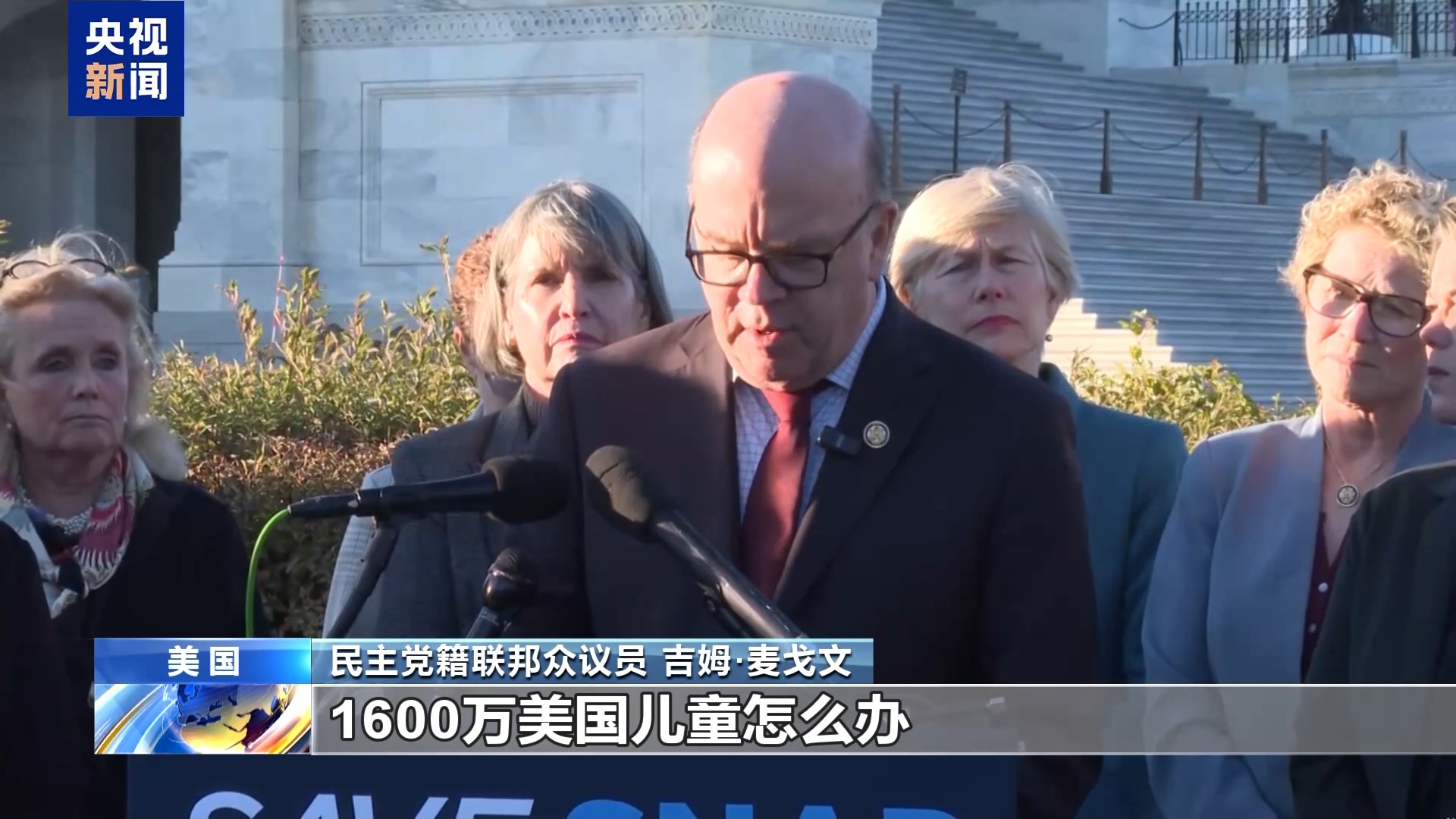
为停止政府“停摆” 美参议院将第13次表决拨款法案
Yang Shi Xin Wen· 2025-10-28 14:52
Group 1 - The U.S. Senate is set to vote for the 13th time on a "clean" government funding bill passed by the House, aimed at temporarily restoring government operations at current funding levels [1] - The procedural motion has been rejected 12 times in the Senate, requiring at least 60 votes, including support from some Democrats, to pass [1] - The expected outcome of the 13th vote is likely to fail again, as several Senate Democrats indicate that government shutdown cannot be resolved without President Trump's direct involvement in negotiations [1] Group 2 - The significant divide between the Republican and Democratic parties on core issues such as healthcare-related benefits has prevented the Senate from passing a new temporary funding bill before the end of the previous fiscal year on September 30 [1] - As a result of the failure to pass a new funding bill, the federal government has run out of operational funds and has been in a "shutdown" since October 1 [1]