通用人工智能(AGI)

Search documents
硅谷投资人亲历达沃斯:AI下半场拼成本、能源与落地
Di Yi Cai Jing· 2026-01-23 03:22
最令她意外的,是地缘政治下欧洲企业的"数据主权"焦虑。 "昨晚回到酒店11点半,还是比较早的。"这是Fusion Fund 创始合伙人张璐在达沃斯的第三天,每天睡眠不足5小时,行程表被无数场圆桌讨论、闭门早餐 会、深夜晚宴和远程会议填满。 "你可以明显感到行业的紧迫感。"张璐在接受第一财经记者独家采访时说。与去年的迷茫不同,尽管特朗普带来的地缘政治不确定性依然像乌云笼罩,但今 年的达沃斯多了一份笃定。大家不再纠结于"世界会怎样",因为答案已经摆在眼前——世界已经不可逆地进入了一个"多体系并行"的常态。 张璐回忆,去年参加达沃斯,DeepSeek曾给全球科技界带来了一场"反直觉"的震撼——这家中国创业公司用极低的成本和开源的姿态,打破了原本被认为坚 不可摧的算力与模型垄断,成为当时那场关于"AI霸权"讨论中最具话题性的变量。 今年她捕捉到,大家对于AI讨论的重心已经从去年对开源模型的惊叹,转向了更冷酷、更务实的深层博弈。从技术路径、成本竞争,到能源瓶颈,再到人 类未来向何处去的思考,AI讨论进入"深水区"。 Kway He the state 75 15 14 14 ning and and arat - St ...


如何为人工智能“立心”?儒学有独特解释
Guan Cha Zhe Wang· 2026-01-23 03:11
Core Insights - The evolution of AI towards embodied and general intelligence reflects a growing demand for "real experience" and "living wisdom" in technology development [1] - The discussion emphasizes the potential of traditional Confucian values to inspire the future direction of AI, questioning whether AI represents a threat or an opportunity for the humanities [1] Group 1: AI and Traditional Wisdom - The importance of "experience" in the AI era is highlighted, with Chinese civilization's long history and rich wisdom being seen as a unique competitive advantage [3] - Chinese culture emphasizes practical experience over abstract theory, aligning with the development of embodied intelligence that values experiential learning [4] - The historical context of AI discussions, including debates between Wittgenstein and Turing, underscores the significance of common sense in intelligence formation [4] Group 2: Regional Development and AI - The potential for AI to address regional development imbalances in China is discussed, particularly in areas rich in cultural heritage [5] - Historical innovation centers, such as the Shanhe Four Provinces, are identified as potential hotspots for systemic innovation in the data era, leveraging their cultural resources [5] - The concept of "intergenerational inheritance" suggests that agricultural regions may possess inherent advantages in adapting to the information revolution [6][7] Group 3: Economic and Cultural Opportunities - The emergence of a "humanistic economy" is anticipated, where cultural resources in historically rich areas can drive economic development in the data age [7][8] - The unique stories and cultural narratives of regions can be leveraged through AI to create new opportunities in the humanistic economy [8] Group 4: The Role of Humanities in AI - The concept of "knowledge capital" is evolving into "wisdom capital," emphasizing the importance of practical wisdom in the age of AI [9] - The integration of traditional cultural values, such as Confucian principles, is seen as essential for guiding AI development in alignment with societal values [17][19] - The future of AI is envisioned as a harmonious integration of technology and human values, promoting cooperation and reducing conflict [20] Group 5: Interdisciplinary Approaches - The necessity for interdisciplinary collaboration between the humanities and sciences is emphasized, as the future of AI will require a blend of both perspectives [22] - The shift towards embodied intelligence and emotional experience in AI development highlights the need for a more holistic understanding that incorporates both rational and emotional aspects [22]
特斯拉Robotaxi里程碑:“真无人驾驶”在奥斯丁上路
Hua Er Jie Jian Wen· 2026-01-23 01:55
特斯拉在自动驾驶商业化进程中迈出关键一步,开始在德克萨斯州奥斯丁市提供无安全员的Robotaxi付 费服务,标志着这家电动车制造商正式进入完全无人驾驶运营阶段。 CEO马斯克周四在其社交媒体平台X上宣布:"刚刚在奥斯丁启动了特斯拉Robotaxi服务,车内没有安全 监督员。祝贺特斯拉AI团队!"这是特斯拉首次允许乘客在没有人类安全员坐在前排的情况下乘坐其自 动驾驶出租车。 据乘客在X平台发布的信息显示,特斯拉正在对这些无人驾驶行程收费。目前仍有跟随车辆在后方监控 这些无人驾驶车辆的运行情况。 马斯克借此机会向工程师发出招募信号,称有兴趣"解决现实世界AI问题"的人才加入特斯拉AI团队, 这"可能会通向AGI(通用人工智能)"。 渐进式部署策略 特斯拉AI负责人Ashok Elluswamy表示,公司将采取渐进式部署方式。"我们将从少数几辆无监督车辆开 始,与配备安全监督员的更广泛Robotaxi车队混合运营,随着时间推移,无监督车辆的比例将逐步增 加。" 特斯拉去年6月在奥斯丁推出Robotaxi服务,当时采用限量部署模式,前排乘客座位配有安全员。最初 的试乘对象主要是网络影响者和精选客户。去年12月,特斯拉 ...


马斯克:明年年底将开始向公众销售人形机器人
新华网财经· 2026-01-23 01:53
特斯拉CEO马斯克在达沃斯表示,到明年年底,将开始向公众销售人形机器 人。 1月19日,据环球网科技援 引外媒Futurism报道,在全球汽车销量持续暴跌、驾驶辅助软件深陷监管困境的双重压力下,特斯拉CEO埃隆 ·马斯克正急于为公司寻找新出路,而Optimus人形机器人成为其最新执念。马斯克宣称,这款机器人将推动特斯拉转型为估值25万亿美元 的机器人公司,其价值占比将远超现有业务。 但据Futurism报道称,特斯拉2025年原定生产5000台Optimus的目标未能实现,实际产量仅数百台,且未达工厂实操标准。尽管已攻克 动态平衡、升级灵巧手,但机器人自主运行仍依赖远程操控,此前演示中甚至难以平稳走过空旷走廊,灵巧手量产及供应链缺失仍是核心 瓶颈。 去年11月,有报道称,特斯拉正筹备再度扩建得克萨斯超级工厂,拟新建一座专用设施用于其人形机器人Optimus人形机器人的量产,以 实现年产能1000万台的目标。当时的报道显示,Optimus在得州超级工厂的量产时间表仍定于2027年启动。 特斯拉发布的2025年三季度财报显示,公司营收为281亿美元,同比增长12%,创下同期历史新高。然而,净利润为13.73亿美元 ...

马斯克的最新访谈太炸裂,暗藏了父母最该关注的信息
Sou Hu Cai Jing· 2026-01-22 11:32
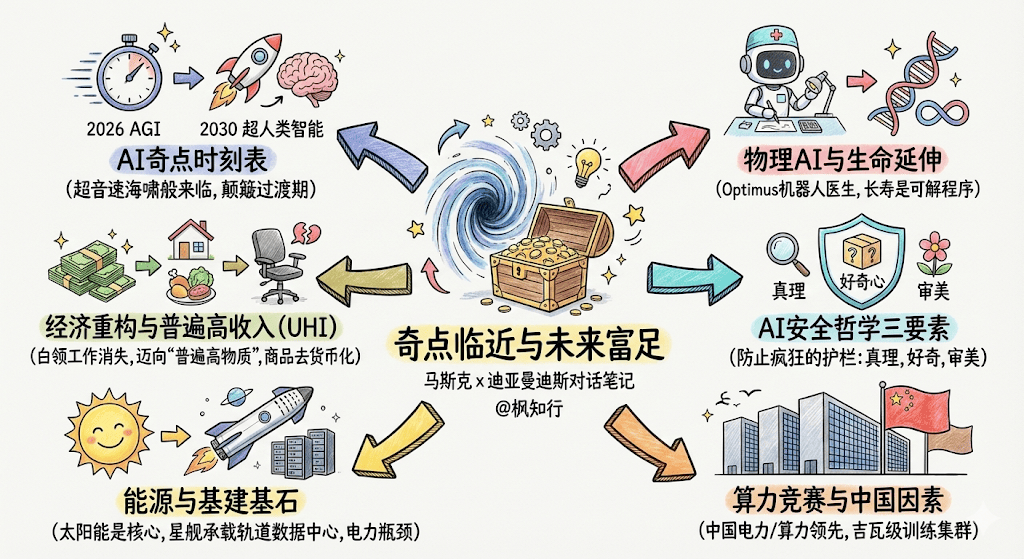
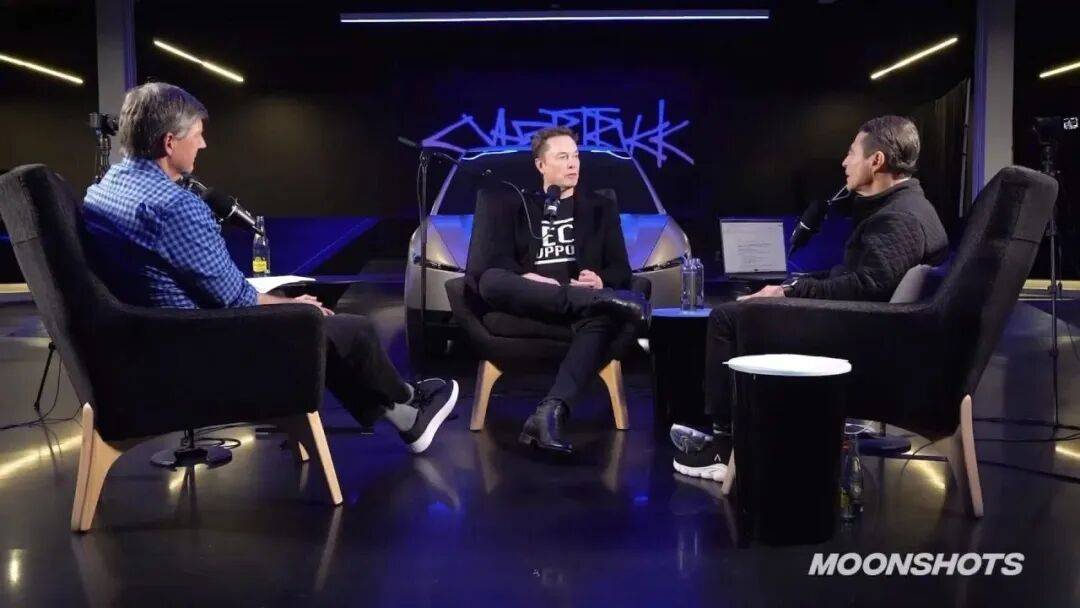
图源网络 2026年刚开年,就被几个"未来感"很强的访谈刷屏了。 其中马斯克的访谈,更是成为众人瞩目的焦点,讨论度非常高。 在过去不到两个月的时间里,马斯克连做了3场深度访谈,阐述了他对人工智能、未来经济、AI安全等方面的观点。最长的一场访谈,足足3个小时。 这些访谈内容,信息量真的巨大。 但当我们把孩子未来的五六年,放进这个时间轴里再看,这些"预言"可能就变成了值得认真对待的风向标。 图源网络 今天,我就把这几场访谈中,最核心、最关乎孩子未来的部分整理出来,和大家做个分享,一起聊聊这场已在路上的变革,以及我们家长该如何调整方 向。 3个正在倒计时的现实: 不是预言,是孩子要面对的未来 马斯克的第一个"炸裂"观点,是把AI的发展节奏,拉到了倒计时维度,并给出了明确的时间线和结论。 他说,2026年是奇点之年。同时他大胆预测:2026年达到AGI(通用人工智能);2030年,AI总智能超越全人类智能的总和。 里面不仅有对未来的预测、AI现在发展到了什么程度,还有很多值得我们家长思考的问题,它关乎着我们每个人的生活、生存。 当然,也有人觉得这些观点听起来很"炸裂",离我们现在的生活太遥远。 图源网络 对此,马斯克 ...
2026年最热的板块由蚂蚁阿福和王小川引领
Xin Lang Cai Jing· 2026-01-22 10:08
Group 1 - Major tech companies are accelerating their investments in AI healthcare, with advancements in multimodal AI, agents, and programming expected to evolve significantly by 2025 [2][25] - Ant Group's AI assistant, Aifu, achieved 30 million monthly active users within a month of its new version release [2][38] - OpenAI launched ChatGPT Health, which connects electronic medical records and health applications to provide personalized health responses [2][25] Group 2 - The healthcare market is vast, with over 5% of ChatGPT's total queries related to health, translating to over 40 million daily inquiries [8][33] - AI is increasingly being used for non-urgent health inquiries, with 55% of users checking symptoms, 48% understanding medical terms, and 44% exploring treatment options through AI [8][33] - AI health inquiries often lead to recommendations for offline medical consultations, positioning AI as a preliminary information layer rather than a replacement for medical professionals [7][32] Group 3 - Baichuan Intelligent launched Baichuan-M3, a new generation medical-enhanced language model that outperformed previous models in testing [3][43] - Baichuan-M3 employs the SCAN inquiry principle, allowing it to actively ask about medical history, enhancing the interaction quality [3][45] - The company is focusing its resources on the medical sector, despite initial skepticism regarding the high risks and slow user growth in healthcare [4][46][47] Group 4 - Ant Group's approach integrates AI into existing medical pathways, guiding users on which department to consult and how to make appointments [10][36] - Baichuan's strategy aims to create a "fourth-level medical system" where AI acts as a companion to help patients understand their health data and decide when to seek further medical attention [4][49] - The competition between major players like Ant Group and Baichuan highlights the diverse strategies in leveraging AI for healthcare, with each company targeting different aspects of the market [10][41][49]
2026年最热的板块由蚂蚁阿福和王小川引领
新财富· 2026-01-22 08:47
Core Viewpoint - Major tech companies are accelerating their investments in AI healthcare, leveraging advancements in AI capabilities to enhance medical service supply and transform the healthcare market [2][3][19]. Group 1: AI Healthcare Developments - OpenAI launched ChatGPT Health, which connects electronic medical records and health applications to provide personalized responses based on user health information [5]. - Anthropic introduced Claude for Healthcare, aimed at general users, enhancing data connectivity and allowing secure access to personal medical records [6]. - Baichuan Intelligence released Baichuan-M3, a next-generation medical language model that outperformed previous models in testing [7]. Group 2: Evolution of Internet Healthcare - Prior to the mobile internet era, users relied on Baidu for health information, facing challenges like misleading advertisements and difficulty in assessing medical institutions [10][11]. - The internet healthcare sector transitioned to a platform-based model post-2016, with services like online consultations becoming standard [12][13]. - Despite improvements, the healthcare system still relies heavily on individual doctors, limiting service supply and efficiency [14][15]. Group 3: AI's Role in Healthcare - AI is increasingly used for non-urgent health inquiries, with users often consulting AI before visiting a doctor, although AI's advice is typically a preliminary step rather than a replacement for professional medical advice [16][17]. - The healthcare market is vast, with over 5% of ChatGPT's queries related to health, indicating significant user engagement with AI for health-related questions [17]. Group 4: Company Strategies - Ant Group's Aifu aims to be the largest platform in healthcare, integrating AI into existing medical pathways rather than replacing traditional diagnosis [20][21]. - Aifu's rapid user growth to 30 million monthly active users is attributed to its integration with existing healthcare services and resources [23]. - Baichuan's strategy focuses on developing advanced AI models for healthcare, emphasizing the importance of understanding life sciences as a pinnacle of AI capability [32][33].

观察 | 马斯克慌了?xAI工程师泄密被火速开除,全网疯传的猛料全在这
未可知人工智能研究院· 2026-01-22 03:02
Core Insights - The podcast revealed that Grok is not merely an AI chatbot but serves as a central nervous system for Musk's business empire, integrating AI capabilities across Tesla, SpaceX, Neuralink, and X platform [5][10] - Musk's strategy involves using AI to optimize operations and decision-making across various sectors, creating a cohesive ecosystem rather than competing in the chatbot space [5][10] - The concept of "MacroHard" was introduced, which refers to AI virtual employees capable of performing complex tasks, potentially distributed across Tesla vehicles to utilize idle computing power [7][8] Group 1: Grok's Positioning and Strategy - Grok's primary goal is to embed AI capabilities into Musk's businesses, enhancing functionalities like Tesla's autonomous driving and SpaceX's rocket control systems [5][10] - The integration of vast amounts of data from Tesla's operations allows Grok to improve its understanding of real-world physics, which can benefit other Musk ventures [5][10] - This approach represents a significant shift from traditional AI competition, focusing on creating a synergistic ecosystem rather than standalone products [5][10] Group 2: Internal Operations of xAI - xAI operates with a highly flat organizational structure, allowing for rapid decision-making and execution, which contrasts sharply with traditional tech companies [11][10] - The team works under intense pressure, often with 24/7 schedules, and Musk's direct involvement accelerates the development process, enabling changes to be implemented within hours [10][11] - Recruitment focuses on practical coding skills rather than formal qualifications, emphasizing the ability to solve real problems quickly [11] Group 3: Musk's Vision for AI - Musk's commitment to AI is driven by a belief that AGI (Artificial General Intelligence) must be controlled by responsible entities to prevent potential negative impacts on humanity [13][14] - There is an internal project aimed at aligning AI with human values, reflecting Musk's broader goals of using technology to address existential challenges [13][14] - Musk's fear is not merely about competition from companies like OpenAI or Google but rather the misuse of powerful AI technologies [14] Group 4: Implications for the Industry - The podcast highlights the importance of transparency and real insights into AI company operations, contrasting with the polished narratives often presented to the public [18] - The execution speed demonstrated by xAI suggests that in uncertain fields, rapid iteration and testing can be more effective than extensive planning [18] - Musk's approach illustrates the significance of having a guiding principle or value system behind business endeavors, which can foster trust and direction [18]

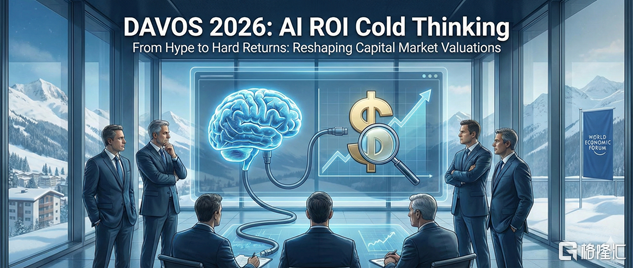
2026达沃斯上老板们的集体焦虑:AI投资何时见回头钱?
Ge Long Hui· 2026-01-21 09:29
Group 1 - The core theme of the World Economic Forum (WEF) 2026 is the collective "cold reflection" among global business leaders regarding the return on investment (ROI) from AI, shifting from previous enthusiasm to a focus on quantifiable and sustainable business returns [2] - According to PwC's survey, only 30% of global CEOs are optimistic about revenue growth in 2026, marking a new low in recent years, indicating a shift from "invest at all costs" to "cautiously assess outputs" [3] - The pressure is shifting from capital expenditures (CapEx) to operational expenditures (OpEx), with the market now demanding proof of efficiency in AI investments and their conversion into profits [3][4] Group 2 - The decline of "AGI premium" and the rise of "efficiency premium" are noted, as capital begins to favor companies that demonstrate tangible performance over those relying on the potential of general artificial intelligence [4] - Over 80% of surveyed CEOs increased investments in AI infrastructure and talent in the past year, yet less than 15% believe these investments have led to significant, quantifiable revenue growth [5] - Major obstacles to converting AI investments into ROI include insufficient data governance (55%), lack of strategic integration of AI into core business processes (48%), and skills gaps (42%) [5] Group 3 - The valuation logic is undergoing a transformation, with a shift from a focus on model parameters and funding during the AI frenzy (2024-2025) to customer retention and unit economics in the awakening phase (2026) [6] - Vertical AI is emerging as a "safe haven" for capital, as these solutions have clear application scenarios and data boundaries, making it easier to demonstrate ROI [6] - The WEF announced new MINDS pioneer companies focusing on high-impact AI solutions in vertical fields such as healthcare and energy optimization, reflecting a shift towards targeted investment strategies [6] Group 4 - To bridge the gap between "potential" and "performance," companies are encouraged to redesign human-machine collaboration and strengthen data governance as strategic priorities [8][9] - Successful AI expansion relies on high-quality, well-governed data, as well as responsible AI governance to mitigate legal and reputational risks [8] - The 2026 WEF marks the maturity phase of AI investment, where the market demands tangible business value rather than grand narratives about AGI [9] Group 5 - AI applications in healthcare can directly quantify improvements in physician efficiency and reduced misdiagnosis rates, with examples including companies like Baichuan and Senyi [10] - In the energy sector, AI can optimize grid scheduling, leading to reduced energy losses and operational cost savings, as seen in companies like Damou Intelligent and Yuanjing Intelligent [10] - AI should be integrated into core business workflows as a "co-pilot," and investment in employee retraining for AI skills is essential for effective collaboration [11]
马斯克2026最新访谈:未来3-7年,一场“超音速海啸”变革将至
Sou Hu Cai Jing· 2026-01-20 15:48
Core Insights - Elon Musk predicts that humanity is currently at a "singularity" moment, transitioning from a scarcity economy to an abundance economy over the next 3-7 years [3][4][16] - Musk emphasizes the importance of AI and robotics as a "supersonic tidal wave" that will drastically change the landscape of work and society [4][9] - The conversation highlights a shift in Musk's perspective on AI safety, advocating for core values of truth, curiosity, and aesthetics to guide AI development [8][93] AI and Robotics - Musk believes that by 2026, general artificial intelligence (AGI) will be achieved, which is a more aggressive timeline than most experts predict [4][6][90] - By 2030, the total intelligence of AI is expected to surpass that of all humanity combined [5][21][92] - The transition period will be turbulent, with many white-collar jobs being replaced by AI, particularly those that do not involve physical tasks [9][10][12] Economic Paradigm Shift - Musk introduces the concept of "Universal High Stuff" as a solution for a future where jobs may disappear, contrasting it with the traditional idea of universal basic income (UBI) [16][87] - As labor and intelligence costs approach zero, the prices of goods will drop significantly, leading to a potential economic transformation [17][18][21] - The future wealth gap may shift from basic survival needs to ownership of scarce resources [21][22] Energy and Infrastructure - Musk identifies electricity supply as the new physical bottleneck for AI development, rather than chip production [22][23][98] - The concept of "orbital data centers" is proposed to leverage solar energy in space, which could provide a sustainable solution for high-energy AI computations [25][26][29][72] - Musk predicts that China will surpass the U.S. in AI capabilities due to its superior energy output and solar infrastructure [30][31][98] Healthcare and Robotics - Musk forecasts that humanoid robots will surpass human surgeons in precision and knowledge within 3-5 years [32][94] - The cost of medical services is expected to decrease significantly as robotics and AI take over surgical tasks, making high-quality healthcare accessible to all [33][35][94] Future Timeline - A timeline of key predictions includes: - 2025: Launch of Starship V3 and Colossus 2 supercomputing cluster [37] - 2026: Birth of AGI [90] - 2030: AI intelligence surpasses that of humanity [5][21] - 2030s: Deployment of orbital data centers and emergence of a society characterized by abundance [37]