
量化交易

Search documents
“佛系量化”交易里的稳定盈利路
Qi Huo Ri Bao Wang· 2025-11-17 01:59
专访量化组第十名杨 在第十九届全国期货(期权)实盘交易大赛中,杨竑凭借其独特的短期趋势策略脱颖而出,荣获量化组 第十名的佳绩。 杨竑是计算机专业出身,2010年前在华为任职期间,便开始编写程序化交易策略。2010年,他离开华 为,专职从事量化交易以来,已实现连续十五年实盘平均年化收益率超过30%,累计收益超过50倍,堪 称业内"常青树"。 "我的专业背景让我在量化交易领域具有天然优势。"杨竑坦言,"在华为的工作经历培养了我系统化、 工程化的思维方式,这对构建稳健的交易系统至关重要。" 当被问及此次获胜的最关键因素时,杨竑将其归功于完全程序化的交易体系。"程序化交易,避免了人 的情绪化,而且可以将收益和风险进行定量分析和管理。我们的策略自2010年以来,便遵循全自动的程 序化交易,不掺杂任何人为干预。" 杨竑在本次比赛中采用的核心策略是短期趋势策略,而且是多策略、多周期、多品种的组合。"趋势策 略长期有效。"他解释道,"随着美联储降息通道打开,宏观流动性的释放加大了市场的波动,更利于趋 势策略取得较好收益。" 在交易品种选择上,杨竑的策略包含了自动化的品种选择和仓位管理算法。"系统会根据市场品种波动 情况,通过 ...
获奖选手风采展示
Qi Huo Ri Bao Wang· 2025-11-17 01:02
Group 1 - The competition highlights the importance of risk management and disciplined trading strategies among participants [9][10][23] - Many participants emphasize the need for continuous learning and adaptation to market conditions to achieve long-term success [12][20][21] - Various trading styles are represented, including trend trading, quantitative strategies, and fundamental analysis, showcasing the diversity in approaches to futures trading [3][7][24] Group 2 - Participants express gratitude for the opportunity to compete and learn from each other, indicating a collaborative spirit within the trading community [23][12] - The significance of maintaining a strong risk control framework is reiterated, with strategies focusing on position sizing, stop-loss placements, and dynamic adjustments based on market conditions [10][23][24] - The journey of trading is described as challenging yet rewarding, with many participants reflecting on their growth and the lessons learned from both successes and failures [19][21][22]
共话2026年期货市场投资机遇
Qi Huo Ri Bao Wang· 2025-11-17 00:51
Core Insights - The 2025 Global Futures Traders Conference highlighted key investment strategies focusing on concentration, patience, and risk management among successful traders [1][2][3] - Participants expressed optimism for the stock index futures market, predicting a slow bull market driven by technology and emerging industries, despite potential macroeconomic challenges [3][4] Group 1: Winning Strategies - Lin Wei Jin, champion of the global lightweight group, emphasized the importance of "focus, patience, and risk control" in trading, particularly in the sugar futures market [1] - Li Cheng Jie, ranked 9th in the high-net-worth group, shared his transition from stock speculation to asset allocation, highlighting the significance of making correct decisions based on macro research [1][2] - Yuan Zuo Yue, 6th in the quantitative group, attributed his success to a combination of quantitative models and subjective filtering, maintaining discipline over a decade [2] Group 2: Market Outlook for 2026 - Participants discussed the long-term potential of stock index futures, with Yu Hui expressing confidence in their intrinsic value and future profitability despite recent price increases [2][3] - Li Cheng Jie noted that stock index futures have entered a slow bull phase, driven by technology sectors, while cautioning against macroeconomic disruptions [3] - The commodity market is expected to experience differentiation, with Lin Wei Jin predicting a bearish trend in the sugar market and caution from Kuang Bai Lin regarding the construction and black sectors [3][4] Group 3: Investment Strategies - Li Cheng Jie proposed focusing on lithium carbonate and other renewable energy commodities, while also considering shorting opportunities in overseas oil markets [3] - Yuan Zuo Yue suggested that the end of homogenized commodity market trends post-2017 necessitates enhanced analysis of sectors and products through a combination of quantitative and subjective approaches [4] - Xue Chang Hao advocated for a non-directional approach, utilizing a dual selling strategy to adapt to market trends and seek consistent returns [4]
私募今年以来平均收益超24% 股票策略领跑五大策略
Zheng Quan Shi Bao Wang· 2025-11-14 06:36
Core Insights - The A-share market has shown a slow upward trend since 2025, with private equity funds performing well, as 91.33% of products achieved positive returns and an average return rate of 24.32% [1] Group 1: Private Equity Fund Performance - As of October 31, 2025, 91.33% of the 10,969 private equity funds reported positive returns, with an average return rate of 24.32% [1] - Equity strategies led the performance with an average return of 29.52%, and 92.73% of products in this category achieved positive returns [1] - Multi-asset strategies ranked second with an average return of 19.71% and a positive return rate of 91.61%, effectively capturing market gains while diversifying risks [1] Group 2: Strategy Performance Breakdown - The bond strategy had the lowest average return at 8.77%, but a strong positive return rate of 90.09%, indicating robust risk defense [2] - The futures and derivatives strategy showed a modest average return of 13.02% with a positive return rate of 82.43%, impacted by volatile commodity prices [2] - Within equity strategies, quantitative long strategies excelled with an average return of 36.76% and a positive return rate of 96.52%, outperforming other strategies [2] Group 3: Factors Driving Quantitative Strategy Success - The success of quantitative long strategies is attributed to four main factors: adaptability to structural market conditions, high liquidity in the A-share market, volatility benefits, and enhanced data processing through AI technology [3]
做熟悉的品种 顺势而为
Qi Huo Ri Bao Wang· 2025-11-13 01:05
Core Insights - The article highlights the journey of Shen Zhichao, a seasoned trader with 12 years of experience, who has achieved notable success in the national futures trading competition, moving from ninth place in 2023 to second place in the industry group this year [2][3]. Group 1: Trading Experience and Background - Shen Zhichao's background as a meteorologist has provided him with a unique advantage in trading, particularly in weather-sensitive agricultural products [2]. - His trading journey reflects a blend of expertise from his previous career in numerical weather forecasting, which he considers a "secret weapon" in his trading strategy [2]. Group 2: Trading Strategies and Market Analysis - In September, Shen anticipated prolonged rainfall in North China, identifying potential trading opportunities in the futures market, although he did not achieve profitability from this prediction [3]. - His success in the competition was largely attributed to his trading in the shipping index (European line) futures and gold futures, with the shipping index contributing the most to his profits [3]. - Shen's bearish outlook on the shipping market was influenced by the dual impacts of the Red Sea situation and trade wars, leading him to adopt a short position [3]. - He actively engages with multiple freight forwarding groups to track real-time shipping company quotes and freight prices, which are critical for his market predictions [3]. Group 3: Trading Philosophy and Advice - Shen's trading style is characterized as trend trading, focusing on familiar products and entering the market only when there are clear trend opportunities [4]. - He emphasizes the importance of a comprehensive accumulation of time, experience, cognition, mindset, and skills in trading, advising newcomers to leave the market if they lose interest or feel unsuitable after a few years [4]. - The process of trading involves continuous self-affirmation and self-doubt, ultimately leading to the discovery of a trading path that suits the individual [4].


融资持续买入≠稳赚!量化告诉你为什么
Sou Hu Cai Jing· 2025-11-12 09:11
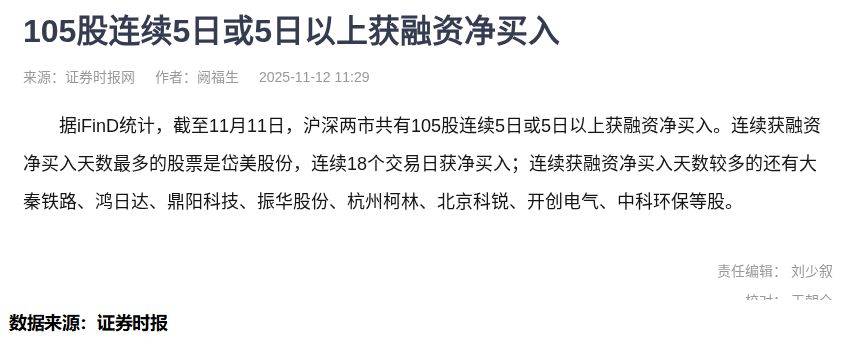
Core Viewpoint - The recent news about 105 stocks in the Shanghai and Shenzhen markets experiencing continuous net buying through financing may appear positive, but it raises concerns about potential market manipulation and the risks for retail investors [1][16]. Group 1: Market Dynamics - Many investors have a misconception that bull markets guarantee easy profits, but the reality is that the stock market operates as a zero-sum game where gains for some come at the expense of others [3][4]. - During bull markets, retail investors often develop two major illusions: the belief that their stocks will inevitably rise and that market corrections present buying opportunities [4][5]. Group 2: Institutional Behavior - Institutional investors actively participate in the market, as indicated by the "institutional inventory" data, which shows that they continue to buy even during price declines [13][16]. - The disappearance of "institutional inventory" during a stock's final adjustment serves as a clear signal for institutions to exit, highlighting the importance of monitoring institutional behavior for retail investors [16]. Group 3: Investment Strategies - Retail investors should avoid path dependence, as historical performance does not guarantee future results, and they must be cautious of relying solely on past trends to make investment decisions [17]. - Utilizing quantitative tools can help retail investors discern the true intentions of market participants and navigate the complexities of the market more effectively [16][17].

财达证券股市通|智能T0算法-底仓之上轻松增厚投资回报
Xin Lang Cai Jing· 2025-11-12 00:05
Core Insights - The article discusses the application of machine learning in quantitative trading, emphasizing its ability to analyze vast amounts of data and execute trades on thousands of stocks simultaneously while adhering to strict trading rules [3][5]. Group 1: Quantitative Trading Strategies - The intelligent T0 algorithm allows investors to authorize their stock holdings to the algorithm for automated intraday trading, aiming for low buy and high sell opportunities while maintaining the base stock quantity by the end of the trading day [5][9]. - The strategy requires investors to confirm trading elements such as the target stock, quantity, and timing, and to ensure sufficient funds are available before the strategy is activated [5][10]. Group 2: Risk Management and Challenges - Common risk scenarios in algorithmic trading include the potential for "doing the opposite," where the algorithm may sell low and buy high, particularly in stocks with low volatility and liquidity [8][9]. - The strategy may face challenges such as changes in stock prices, insufficient account funds, or lack of buying permissions, which could affect the execution of trades [9][10]. Group 3: Target Investor Profile - The algorithm is designed for long-term investors who may be experiencing losses in their current holdings and wish to reduce costs and enhance returns during the holding period [11]. - It is particularly suitable for investors with stable long-term positions, such as those holding ETFs or other long-term assets [11].


从哈雷到AI:当量化成为信仰,我们离真相更近了吗?
伍治坚证据主义· 2025-11-11 02:35
Core Viewpoint - The article discusses the historical significance of Caspar Neumann's population records and how they laid the foundation for modern financial mathematics, particularly in the context of life annuities and risk assessment [4][10][13]. Group 1: Historical Context - In the late 17th century, Caspar Neumann, a pastor in Breslau, meticulously recorded births and deaths, creating one of the earliest continuous population databases in Europe [4][5]. - Neumann's records were later recognized for their potential value by mathematician Gottfried Wilhelm Leibniz, who encouraged him to share the data with the Royal Society in London [4][5]. Group 2: Key Discoveries - Edmund Halley, upon reviewing Neumann's records, discovered patterns in mortality rates, allowing for the first statistical analysis of life expectancy and the calculation of fair prices for life annuities [8][10]. - Halley's work demonstrated that mortality could be quantified, leading to the establishment of a mortality table that provided insights into life expectancy at various ages [9][10]. Group 3: Impact on Financial Mathematics - Halley's integration of probability and compound interest marked a significant advancement in financial mathematics, enabling the calculation of fair values for annuities based on statistical data [10][11]. - This approach shifted the pricing of annuities from subjective estimates to a more rational, mathematical basis, influencing the development of modern insurance and financial systems [10][13]. Group 4: Evolution of Financial Models - The principles established by Halley laid the groundwork for future financial innovations, where mathematical models began to dominate risk assessment and pricing strategies across various sectors [13]. - However, the reliance on complex models has also led to vulnerabilities, as seen in the 2008 financial crisis, highlighting the need for a balanced approach to risk management [13][14]. Group 5: Contemporary Reflections - The article draws parallels between historical reliance on mathematical models and today's dependence on artificial intelligence and data analytics in finance, cautioning against blind faith in technology [14]. - It emphasizes the importance of maintaining human judgment in decision-making processes, ensuring that technology serves as a tool rather than a replacement for critical thinking [14].

寒武纪156亿融资背后:一场散户看不见的博弈
Sou Hu Cai Jing· 2025-11-09 10:51
Core Insights - The article discusses the complexities of market signals and the importance of understanding trading behaviors rather than relying solely on traditional financing data [2][8] Group 1: Market Signals - The market is currently exhibiting contradictory signals, with significant fluctuations in financing balances for different stocks, indicating potential manipulation by institutional investors [2] - A specific example is given where a semiconductor stock showed a high financing balance but later declined, suggesting that traditional metrics can be misleading [2][4] Group 2: Trading Behavior Analysis - The author emphasizes the need to analyze trading behaviors, categorizing them into six basic types, which can reveal underlying market dynamics [6][7] - A notable case is highlighted where a stock's short selling balance surged, indicating a classic signal of large funds hedging their positions [6] Group 3: Quantitative Observation - The article advocates for the establishment of a personal quantitative observation system to monitor multiple dimensions of market data, as single indicators can be misleading [9][10] - It is noted that public data often has a lag, and relying on a single metric has limited value, with true alpha hidden in the relationships between behavioral data [10]

侃股:单一股票策略将逐渐远去
Bei Jing Shang Bao· 2025-11-06 12:22
Core Insights - The "14th Five-Year Plan" emphasizes the steady development of futures, derivatives, and asset securitization, elevating the strategic position of the derivatives market, which is significant for capital market development [1] - The A-share market is expected to mature, moving away from single stock strategies towards more complex combinations and strategies, raising the knowledge threshold for investors [1][3] Group 1: Market Dynamics - In international markets, stock trading activity is lower than in the A-share market, with many listed companies having an annual turnover rate of less than 100%, primarily due to the limited direct stock holdings by retail investors [1] - Retail investors typically invest through mutual funds, which handle stock transactions via subscription and redemption, offsetting these transactions before executing stock trades [1][2] Group 2: Role of Derivatives - Mutual funds prioritize using financial derivatives to manage equity changes, minimizing direct stock trading to maintain portfolio stability [1][2] - Financial products like leveraged funds, bull and bear certificates, and index futures/options allow funds to achieve asset allocation without directly buying or selling stocks [2] Group 3: Future Investment Landscape - The future landscape will see institutional investors and funds as the primary shareholders, focusing on company fundamentals rather than stock price fluctuations, leading to a decrease in retail investor participation [2][3] - Investment strategies will shift from simple stock trading to utilizing derivatives for implied volatility, strike prices, and arbitrage opportunities, resulting in lower expectations for direct stock trading returns [3]