
现代化产业体系

Search documents
热卷周报:会议定调制造业需求韧性增加-20251025
Wu Kuang Qi Huo· 2025-10-25 14:02
Report Industry Investment Rating - Not provided in the given content Core View of the Report - The overall atmosphere in the commodity market was weak this week, with the prices of finished steel products fluctuating downward. At the macro - level, the Fourth Plenary Session of the 20th CPC Central Committee set "high - quality development" as the core task for the 14th Five - Year Plan period, which may bring new impetus to steel consumption. The demand structure of steel will shift from traditional real - estate construction to high - end manufacturing, green infrastructure, and new - quality productivity. In terms of fundamentals, the supply and demand of rebar both increased, and inventory decreased, showing a neutral performance. The output of hot - rolled coils decreased slightly, demand rebounded, inventory decreased marginally but remained at a relatively high level, and the inventory contradiction was slightly alleviated. The profitability rate of steel mills declined significantly, and the molten iron output dropped notably, reducing the supply - side pressure marginally. In the long run, the logic of the medium - to - long - term trend of steel prices remains unchanged under the gradually loosening macro - environment, but in the short term, the weak real - demand pattern of steel is difficult to improve significantly [10][11] Summary According to Relevant Catalogs 1. Week - on - Week Assessment and Strategy Recommendation Cost End - The blast - furnace profit of hot - rolled coils was - 56 yuan/ton, and the blast - furnace gross profit continued to shrink. The spot price was about 90 yuan/ton higher than the futures price, with a neutral - to - low valuation [7] Supply End - This week, the output of hot - rolled coils was 3.22 million tons, a week - on - week increase of 0.6 million tons, a year - on - year increase of about 5.6% compared with the same single - week last year, and a cumulative year - on - year increase of about 1.8%. The daily average output of molten iron was 2.399 million tons this week, with a significant decrease, and the supply - side pressure decreased marginally. The output of hot - rolled coils was moderately high, and attention should be paid to whether the output can decrease in the future [8] Demand End - This week, the consumption of hot - rolled coils was 3.27 million tons, a week - on - week increase of 112,000 tons, a year - on - year increase of about 2.5% compared with the same single - week last year, and a cumulative year - on - year increase of about 1.4%. The demand rebounded significantly, but the inventory reduction was slow. The export increased week - on - week, and the demand level was neutral [9] Inventory - This week, the inventory of hot - rolled coils was 4.1492 million tons. The inventory decreased slightly, but the inventory level was still high [10] Strategy Recommendation - The recommended strategy was to wait and see [12] 2. Futures and Spot Market - The report presented multiple charts related to the futures and spot market of hot - rolled coils, including spot prices, regional price differences, contract basis, futures contract price differences, and price differences between hot - rolled coils and other products such as cold - rolled coils, coated coils, and galvanized sheets [17][21][36] 3. Profit and Inventory - The report showed charts of the gross profit per ton of hot - rolled and cold - rolled coils, the profits of rebar blast furnaces and electric furnaces, and the inventory of hot - rolled, cold - rolled, and coated sheets [56][57][62] 4. Cost End - The report included charts of the futures closing prices of iron ore and coke, the price of scrap steel, the daily average molten iron output, the cost of molten iron, and the prices of steel - making pig iron and billets [77][78][82] 5. Supply End - The report presented charts of the weekly output, cumulative year - on - year output, and capacity utilization rate of hot - rolled and cold - rolled coils in different regions and samples, as well as the weekly output of coated and galvanized sheets and their capacity utilization rates [90][91][104] 6. Demand End - The report showed charts of the apparent consumption of hot - rolled and cold - rolled coils, the production and sales of automobiles, the production of agricultural machinery, household appliances, metal containers, railway locomotives, and other products related to steel demand [107][108][111]
螺纹钢周报:政策定调与产业升级,短期需求疲弱-20251025
Wu Kuang Qi Huo· 2025-10-25 13:47
Report Industry Investment Rating - No relevant content provided Core Viewpoints - This week, the overall atmosphere in the commodity market was weak, and the prices of finished steel products fluctuated downward. Macroscopically, the Fourth Plenary Session of the 20th CPC Central Committee established "high - quality development" as the core task during the 15th Five - Year Plan period, which may provide new impetus for steel consumption. From a fundamental perspective, the supply and demand of rebar both increased, and the inventory decreased, showing a neutral performance. In the long - term, the logic of steel price trends remains unchanged under the loosening macro - environment, but the weak real - world demand for steel is difficult to improve significantly in the short term [11][12] Summary by Directory 1. Week - on - Week Evaluation and Strategy Recommendation - **Supply Side**: This week, the total rebar output was 2.07 million tons, a week - on - week increase of 2.94% and a year - on - year decrease of 15.16%. The long - process output was 1.79 million tons, a week - on - week increase of 2.52% and a year - on - year decrease of 16.64%. The short - process output was 0.28 million tons, a week - on - week increase of 5.68% and a year - on - year decrease of 4.22%. The average daily hot metal output was 2.399 million tons, with a significant decrease. The supply - side pressure was gradually reduced [6]. - **Demand Side**: This week, the apparent rebar demand was 2.26 million tons, a week - on - week increase of 2.7% and a year - on - year decrease of 7.0%. The demand showed a slight week - on - week increase and was neutral [7][8]. - **Inventory**: This week, the social rebar inventory was 4.37 million tons, a week - on - week decrease of 4.1% and a year - on - year increase of 54.6%. The factory inventory was 1.85 million tons, with no week - on - week change and a year - on - year increase of 28.2%. The total inventory was 6.22 million tons, a week - on - week decrease of 3.0% and a year - on - year increase of 45.7%. The rebar inventory has been continuously decreasing after the holiday, and the inventory contradiction has been gradually alleviated [9]. - **Profit**: The hot metal cost was 2,646 yuan/ton, the blast furnace profit was - 56 yuan/ton, and the average profit of independent electric arc furnace steel mills was - 153 yuan/ton [10]. - **Basis**: The lowest warehouse receipt basis was 27 yuan/ton, and the basis rate was 0.9% [11]. 2. Futures and Spot Market - **Rebar Futures and Basis**: The 01 - contract basis was 36 yuan/ton, the 05 - contract basis was - 21 yuan/ton, and the 10 - contract basis was - 50 yuan/ton. The 01 - 05 spread was - 57 yuan/ton, the 05 - 10 spread was - 29 yuan/ton, and the 10 - 01 spread was 86 yuan/ton [20][22]. - **Roll - Rebar Spread**: The Beijing roll - rebar spread was 230 yuan/ton (last week: 240 yuan/ton), the Shanghai roll - rebar spread was 90 yuan/ton (last week: 50 yuan/ton), and the Guangzhou roll - rebar spread was - 10 yuan/ton (last week: - 20 yuan/ton) [25]. - **North - South Spread**: The Shanghai - Beijing rebar spread was 120 yuan/ton (last week: 110 yuan/ton), and the Guangzhou - Shanghai rebar spread was - 37 yuan/ton (last week: - 56 yuan/ton) [28]. - **Disc - Coil Premium**: The Beijing disc - coil premium was 230 yuan/ton (unchanged from last week), the Shanghai disc - coil premium was 160 yuan/ton (last week: 150 yuan/ton), and the Guangzhou disc - coil premium was 160 yuan/ton (unchanged from last week) [30]. - **Rebar - Billet Spread and Domestic - Foreign Spread**: The price of 20MnSi billet in Tangshan was 3,070 yuan/ton, the aggregated price of HRB400E Φ20 rebar in Beijing was 3,100 yuan/ton. The FOB export price of Chinese rebar was 456 US dollars/ton, the CFR import price of Southeast Asian rebar was 468 US dollars/ton, the CFR import price of US rebar was 985 US dollars/ton, the CFR import price of EU rebar was 570 US dollars/ton, and the CFR import price of UAE - produced rebar in the Middle East was 640 US dollars/ton [33]. - **Rebar - Coke Ratio and Rebar - Ore Ratio**: The lowest spot price of rebar was 3,107 yuan/ton, the lowest spot price of coke was 1,438 yuan/ton, and the lowest spot price of iron ore was 917 yuan/ton [36]. 3. Profit - The electric furnace profit was - 153 yuan/ton, a change of - 6 yuan/ton from last week. The rebar blast furnace profit was - 56 yuan/ton, a change of + 10 yuan/ton from last week. The scrap steel arrival price was 2,226 yuan/ton, the hot metal cost was 3,293 yuan/ton, and the average hot metal cost of 64 steel mills was 2,646 yuan/ton [39][47] 4. Supply Side - **Weekly Output**: This week, the total rebar output was 2.07 million tons, a week - on - week increase of 2.9%, a year - on - year decrease of 15.2%, and the cumulative output was 91.381 million tons, a year - on - year decrease of 1.4%. The long - process output was 1.79 million tons, a week - on - week increase of 2.5%, a year - on - year decrease of 16.6%. The short - process output was 0.28 million tons, a week - on - week increase of 5.7%, a year - on - year decrease of 4.2% [51]. - **Capacity Utilization**: This week, the blast furnace capacity utilization rate was 90% (unchanged from the previous value), and the electric furnace capacity utilization rate was 52% (previous value: 53%) [54]. - **Hot Metal Output**: This week, the average daily hot metal output was 2.4 million tons (previous value: 2.41 million tons) [59]. - **Regional Output**: The rebar output in the northern region was 0.45 million tons (previous value: 0.42 million tons), in the southern region was 0.78 million tons (unchanged from the previous value), in the eastern region was 0.85 million tons, in Jiangsu was 0.39 million tons, in Shandong was 0.08 million tons, in Anhui was 0.13 million tons, in Guangdong was 0.23 million tons, and in Guangxi was 0.06 million tons [62][65][68] 5. Demand Side - **Building Materials Trading Volume**: The trading volume of building materials was 117,741 tons (last week: 105,098 tons), and the trading volume of Shanghai building materials was 18,800 tons (unchanged from last week). The trading volume of building steel in the northern region was 21,195 tons, in Beijing was 7,900 tons, in the eastern region was 44,478 tons, in Shanghai was 5,100 tons, in Hangzhou was 8,100 tons, in the southern region was 39,650 tons, in Guangzhou was 4,700 tons, in Chengdu was 3,110 tons, in Chongqing was 4,700 tons, and in Xi'an was 2,600 tons [71][73][74] - **Rebar Consumption**: The weekly rebar consumption was 2.26 million tons, the weekly rebar consumption in the eastern region was 0.97 million tons, in the southwestern region was 0.34 million tons, in the southern region was 0.32 million tons, in the northern region was 0.2 million tons, in the central region was 0.18 million tons, in the northeastern region was 0.16 million tons, and in the northwestern region was 0.16 million tons [79][81][84] - **Cement Price and Net Exports/Imports**: The price of P.O42.5 cement in Hangzhou was 465 yuan/ton, and in Shanghai was 455 yuan/ton [86] 6. Inventory - **Total Inventory**: This week, the social rebar inventory was 4.37 million tons, a week - on - week decrease of 4.1%, a year - on - year increase of 54.6%. The factory inventory was 1.85 million tons, with no week - on - week change, a year - on - year increase of 28.2%. The total inventory was 6.22 million tons, a week - on - week decrease of 3.0%, a year - on - year increase of 45.7%. The Tangshan billet inventory was 1.29 million tons (previous value: 1.3 million tons) [89][91] - **Regional Inventory**: The social rebar inventory in 132 cities was 6.24 million tons, in the eastern region was 3.03 million tons, in Hangzhou was 0.82 million tons, in Shanghai was 0.31 million tons, in the southern region was 0.7 million tons, in the northern region was 0.86 million tons, in Guangzhou was 0.17 million tons, in Beijing was 0.39 million tons, in the central region was 0.51 million tons, in the northwestern region was 0.43 million tons, in Wuhan was 0.22 million tons, in Xi'an was 0.2 million tons, in the southwestern region was 0.61 million tons, in the northeastern region was 0.41 million tons, in Chengdu was 0.25 million tons, and in Chongqing was 0.16 million tons [94][97][103]
重磅刷屏!最新解读
Zhong Guo Ji Jin Bao· 2025-10-25 10:22
受访券商首席表示,在党的二十届四中全会结束之后,按照惯例在会后一周左右公布中央关于"十五 五"规划的建议稿,2026年3月份的两会按惯例将审议并对外发布"十五五"规划《纲要》。 广发证券首席经济学家郭磊:关于科技创新,需要注意的两个细节是"抓住新一轮科技革命和产业变革 的历史机遇"和"要加强原始创新和关键核心技术攻关"。目前处于新一轮技术革命的关键历史阶段,加 强"原始创新"将有助于中国在全球科技创新中建立先行优势。 中信建投证券首席经济学家黄文涛:五年规划总体思路的演变,体现了政策理念的与时俱进。增速目标 逐渐柔性化,而创新、生态、安全等领域的约束则更突出。经济发展更加重视"质的有效提升和量的合 理增长",把"坚持有效市场和有为政府相结合"写入原则。 申万宏源证券首席经济学家赵伟:会议提出要"坚持以经济建设为中心",主要目标突出"高质量发展取 得显著成效,科技自立自强水平大幅提高"。在必须遵循的原则方面,会议新增"坚持以经济建设为中 心",并将其置于"以推动高质量发展为主题"之前,进一步凸显对经济发展的重视。 方正证券首席宏观经济学家燕翔:"十五五"时期,中国资本市场将大有作为。一方面,资本市场在服务 实体 ...
蕴含“中国之治”密码的宏伟蓝图
Yang Shi Xin Wen Ke Hu Duan· 2025-10-25 07:15
Core Insights - The recent Fourth Plenary Session of the 20th Central Committee of the Communist Party of China has approved the "Suggestions on Formulating the 15th Five-Year Plan for National Economic and Social Development," outlining the guiding principles and main objectives for China's economic and social development over the next five years [1][3] - The "15th Five-Year Plan" is positioned as a critical period for achieving basic socialist modernization, linking the achievements of the "14th Five-Year Plan" with the long-term goals set for 2035 [3][4] - The plan emphasizes high-quality development as the primary goal, with a focus on building a modern industrial system and strengthening the foundation of the real economy [4][6] Economic Growth and Development - China's economy is projected to reach approximately 140 trillion RMB by 2025, with an expected increase of over 35 trillion RMB, contributing around 30% to global economic growth [1] - The upcoming five years are expected to create an additional market space of about 10 trillion RMB through the optimization and upgrading of traditional industries, while new and emerging industries are anticipated to generate a scale equivalent to recreating China's high-tech industry over the next decade [6] International Cooperation and Openness - The "15th Five-Year Plan" includes a dedicated section on expanding high-level openness, emphasizing the creation of a win-win cooperation landscape and promoting trade innovation and bilateral investment [6] - China's approach to openness is shifting from "catching up" to "leading," aiming to provide more stable development expectations for the world [6][7] Strategic Vision - The plan reflects a long-term vision with consistent goals, indicating that China will continue to focus on its development despite external uncertainties [7] - The international community is increasingly interested in understanding the "secrets" behind China's governance and its potential as a pillar of global growth and stability [3][4]


国际锐评丨蕴含“中国之治”密码的宏伟蓝图
Yang Shi Xin Wen Ke Hu Duan· 2025-10-25 05:34
Core Insights - The Fourth Plenary Session of the 20th Central Committee of the Communist Party of China has approved the "Suggestions on Formulating the 15th Five-Year Plan for National Economic and Social Development," outlining the guiding principles and main objectives for China's economic and social development in the upcoming five years [1][3] - The "15th Five-Year Plan" is positioned as a critical period for achieving basic socialist modernization, linking the achievements of the "14th Five-Year Plan" with the long-term goals set for 2035 [3][4] - The plan emphasizes high-quality development as the primary goal, with a focus on building a modern industrial system and strengthening the foundation of the real economy [5][7] Economic Growth and Development - China's economy is projected to reach approximately 140 trillion RMB by 2025, with an expected increase of over 35 trillion RMB, contributing around 30% to global economic growth [1] - The upcoming five years are expected to create an additional market space of about 10 trillion RMB through the optimization and upgrading of traditional industries, while emerging industries are anticipated to generate a scale equivalent to recreating China's high-tech industry over the next decade [7] International Cooperation and Openness - The "15th Five-Year Plan" includes a dedicated section on expanding high-level openness, aiming to create a new landscape of win-win cooperation, enhance trade innovation, and expand bilateral investment cooperation [7] - China's approach to openness is shifting from "catching up" to "leading," with multinational companies increasingly viewing investment in China as a necessity rather than an option [7][8] Strategic Vision - The plan reflects a long-term vision with consistent goals, emphasizing that China will continue to pursue its modernization agenda despite external uncertainties [8] - The commitment to high-quality development and international cooperation positions China as a stabilizing force in the global economy, with expectations for significant contributions to world economic growth [6][8]

新目标、新部署、新机会 “十五五”这样擘画未来发展蓝图
Yang Shi Wang· 2025-10-25 05:06
Group 1 - The core focus of the 14th Central Committee's Fourth Plenary Session is to outline the "15th Five-Year Plan" for China's future development, emphasizing the importance of high-quality development as a primary goal [3][4][6] - The "15th Five-Year Plan" aims to establish a modern industrial system, with a particular emphasis on maintaining a reasonable proportion of the manufacturing sector and advancing the manufacturing industry as a backbone [8][10] - The plan anticipates a significant growth opportunity in advanced manufacturing clusters, estimating an addition of approximately 10 trillion yuan in scale over the next five years, creating numerous job opportunities across various sectors [11] Group 2 - The "15th Five-Year Plan" includes strategic initiatives focused on building a strong domestic market, accelerating rural modernization, enhancing social welfare, and promoting a comprehensive green transition in economic and social development [13] - Key areas of focus for the "15th Five-Year Plan" include economic construction, technology, new industrial chains, domestic markets, consumption, and improving people's livelihoods, which are identified as critical battlegrounds for future growth [15]

李强主持召开国务院“十五五”规划《纲要草案》编制工作领导小组会议
国家能源局· 2025-10-25 03:47
李强主持召开国务院"十五五"规划《纲要草案》编制工作领导小组会议强调 中共中央政治局常委、国务院副总理丁薛祥出席。 会上,国家发展改革委就纲要草案编制作了汇报,与会同志进行了讨论。李强说,习近平总书记在党的二十届四中全会上 的重要讲话,为做好纲要草案编制工作提供了根本遵循。《中共中央关于制定国民经济和社会发展第十五个五年规划的建 议》明确提出了"十五五"时期经济社会发展的指导思想、基本原则、主要目标、战略任务等,是指导"十五五"时期经济社 会发展的纲领性文件。我们要深入学习领会习近平总书记重要讲话精神和党中央决策部署,在纲要草案编制中全面深入地 贯彻落实。 李强指出,编制纲要草案要紧紧围绕新时代新征程党的中心任务,强化发展意识,坚持以推动高质量发展为主题,在壮大 新质生产力、建设现代化产业体系等方面取得更大突破,推动经济实现质的有效提升和量的合理增长。要强化全局思维, 准确把握"十五五"发展所处的历史方位,准确把握国内国际两个大局,保持战略定力,充分估计可能的外部冲击、做好应 对准备,牢牢把握发展主动权。要强化民生导向,坚持人民至上,聚焦各方面关切谋划政策举措,设身处地、换位思考, 奔着解决实际问题去,让群众 ...
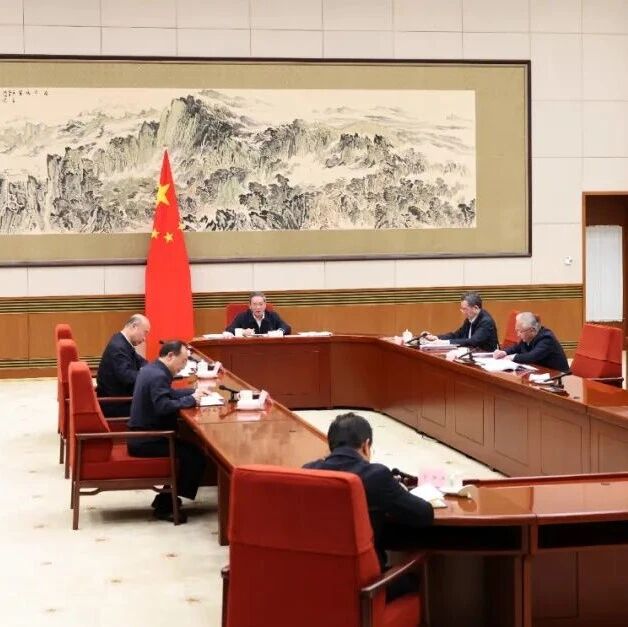
李强主持召开国务院“十五五”规划《纲要草案》编制工作领导小组会议强调全面贯彻党的二十届四中全会部署 高质量编制“十五五”规划纲要丁薛祥出席
Xin Hua Wang· 2025-10-25 01:19
Core Points - The meeting focused on the preparation of the draft outline for the 15th Five-Year Plan, emphasizing the importance of high-quality development and the need for strategic adjustments in response to external challenges [1][2] - The draft outline aims to enhance new productive forces and build a modern industrial system, with a strong emphasis on domestic demand and comprehensive reforms to stimulate growth [2][3] Group 1 - The outline preparation must align with the central tasks of the Party in the new era, focusing on high-quality development and breakthroughs in key areas [2] - There is a need to maintain strategic determination and fully assess potential external shocks while ensuring proactive development [2] - The plan should prioritize public welfare, addressing the concerns of the populace and businesses to create tangible benefits [2] Group 2 - The drafting process is time-sensitive and requires collaboration across various sectors, including public opinion collection to incorporate societal expectations and expert insights [3] - Coordination between special planning and national development planning is essential to create a cohesive planning system [3] - The emphasis is on fostering new industries and growth areas, leveraging the potential of the domestic market, and implementing strategic adjustments in foreign trade [2][3]
全会精神学习:续写奇迹新篇章(申万宏观·赵伟团队)
赵伟宏观探索· 2025-10-25 01:05
Core Viewpoint - The article emphasizes the importance of focusing on domestic issues and continuing the narrative of rapid economic development and long-term social stability in China, amidst a backdrop of strategic opportunities and risks [3][4][12]. Economic Development - The meeting highlighted that China's development is currently characterized by both strategic opportunities and challenges, with an increasing number of unpredictable factors [3][12]. - It was stated that the goal for the "14th Five-Year Plan" period is to achieve significant results in high-quality development and greatly enhance the level of technological self-reliance [3][13]. - The meeting reiterated the commitment to achieving the annual economic and social development goals, with a solid foundation for a 5% economic growth target supported by nearly 300 billion yuan in policy financial tools and 500 billion yuan allocated from local government debt limits [4][12]. Modern Industrial System - The meeting placed greater emphasis on building a modern industrial system and explicitly stated the need to maintain a reasonable proportion of manufacturing [5][12]. - It stressed the importance of integrating technological innovation into industrial practices and promoting collaboration between traditional and emerging industries [5][12]. - The meeting called for enhancing the internal dynamics and reliability of domestic circulation and breaking down barriers to the construction of a unified national market [5][12]. Technological Development - The meeting underscored the importance of achieving high-level technological self-reliance and leading the development of new productive forces [6][14]. - It proposed a coordinated development of education, technology, and talent, while also emphasizing the advancement of digital China [6][14]. Economic System Reform - The meeting highlighted the critical role of economic system reform, upgrading the focus from "comprehensive deepening of reform" to "economic system reform as a driving force" [7][15]. - It emphasized improving the macroeconomic governance system and enhancing the effectiveness of macroeconomic governance [7][15]. Social Welfare and Green Development - The meeting focused on increasing efforts to improve people's livelihoods and promoting common prosperity, with a specific emphasis on employment, income, and housing [7][15]. - It called for a comprehensive green transformation of economic and social development, with a focus on achieving carbon peak and carbon neutrality [8][15]. Regional Development - The meeting proposed optimizing regional economic layouts and promoting coordinated regional development, emphasizing the need for a synergistic effect of various regional strategies [8][16].

党的二十届四中全会精神在市级机关部门、企事业单位干部群众中引发热烈反响
Nan Jing Ri Bao· 2025-10-25 01:00
Group 1: Economic Development Goals - The 20th Central Committee's Fourth Plenary Session approved the "Suggestions on Formulating the 15th Five-Year Plan for National Economic and Social Development," outlining China's development blueprint for the next five years [1] - The session emphasizes high-quality development, focusing on innovation, culture, hub construction, and international cooperation as key areas for Nanjing's economic planning [2] - The city aims to achieve significant milestones in the software and information services industry, targeting a scale of over 1 trillion yuan by 2025 [3] Group 2: Industrial and Technological Advancements - The city’s industrial system will focus on enhancing core competitiveness and implementing functional reforms and strategic restructuring to support high-quality development [4] - Companies like Nanjing Steel and Jinling Petrochemical are committed to innovation-driven strategies, increasing R&D investments, and developing advanced manufacturing and green technologies [7][8] - The emphasis is on building a modern industrial system that integrates advanced manufacturing with sustainable practices [7] Group 3: Emergency Management and Safety - The city will enhance its emergency management capabilities, focusing on modernizing systems and improving urban safety resilience [5] - Digital empowerment will be utilized for smart regulation, emphasizing risk assessment and safety management in various sectors [5] Group 4: Open Economy and International Cooperation - The session calls for expanding high-level opening-up and promoting win-win cooperation, enhancing the international circulation of goods and services [9] - The local customs authority aims to improve regulatory services and support the development of free trade zones and comprehensive bonded zones [9][10] - Nanjing's airport customs will enhance its operational efficiency and facilitate international trade through improved regulatory measures [11]