
AI泡沫

Search documents
雷军:小米 17 全面对标 iPhone;罗永浩邀贾国龙直播;中美就 TikTok 达成基本共识|极客早知道
Sou Hu Cai Jing· 2025-09-16 02:00
Group 1 - Xiaomi's founder Lei Jun announced that the new Xiaomi 17 series will directly compete with the iPhone, marking a significant upgrade in product capabilities [2][4] - The Xiaomi 17 series includes three models: Xiaomi 17, Xiaomi 17 Pro, and Xiaomi 17 Pro Max, with a naming convention similar to the iPhone 17 series [5] - Xiaomi has been pursuing a high-end strategy for five years, learning from its greatest competitor, Apple, and is confident in facing the iPhone head-on [4] Group 2 - Amazon Web Services (AWS) denied reports of layoffs in its Greater China region, stating that the reports were grossly inaccurate and that the company continues to actively recruit talent in China [14] - Despite the denial, AWS has faced restructuring, with some departments experiencing layoffs affecting hundreds of positions [16] Group 3 - OpenAI's chairman Brett Taylor discussed the current "AI bubble," describing it as a "virtuous cycle" that will create significant economic value in the future, similar to the internet boom of the late 20th century [27][29] - Taylor acknowledged the risks associated with the AI industry but emphasized that these risks are minor compared to the opportunities available [29]




华尔街见闻早餐FM-Radio | 2025年9月16日
Hua Er Jie Jian Wen· 2025-09-15 23:14
Market Overview - Investors are almost certain that the Federal Reserve will cut interest rates this week, with strong performance in tech stocks leading the S&P 500 to surpass 6600 points and the Nasdaq achieving a record closing high for six consecutive days [2] - Tesla shares rose over 7% during the day, recovering losses from the year, while Google saw a nearly 4.5% increase, reaching a market capitalization of $3 trillion [2] - The Nasdaq Golden Dragon China Index rose by 0.87%, approaching its January 2022 high, amid a consensus framework reached between China and the U.S. regarding TikTok [2][8] - U.S. Treasury yields fell, with the 10-year yield down by 3.45 basis points, and the dollar index dropped by 0.35%, falling below the 97 support level [2] Key News - China and the U.S. reached a basic framework consensus to properly resolve the TikTok issue, emphasizing cooperation and reducing investment barriers [3][8] - China's economic data for August showed signs of "industrial slowdown, weak investment, and subdued consumption," leading to expectations for a new round of policy easing [9] - The U.S. reduced import tariffs on Japanese automobiles to 15% effective from September 16 [10] - Trump proposed changing the requirement for companies to report earnings quarterly to semi-annually, which could increase market volatility and uncertainty [12] - The Chinese government is taking further antitrust actions against Nvidia for violating conditions related to its acquisition of Mellanox [13] Company Developments - Musk invested $1 billion to increase his stake in Tesla, which saw a 7.5% intraday rise, erasing its year-to-date losses [13] - Alphabet, Google's parent company, saw its stock rise by 4.8%, pushing its market cap above $3 trillion [14] - Apple’s new iPhone 17 series is seeing strong demand, particularly for the Pro Max model, while Xiaomi is positioning its new 17 series to directly compete with Apple [15] - JPMorgan downgraded Pop Mart's rating to "neutral" due to its stock price having risen 209% this year, indicating that the valuation has reached perfect expectations [17] - Citigroup raised the target price for Shenghong Technology to 447 yuan, citing an accelerating AI-PCB supercycle and ongoing supply-demand tightness [17] Industry Insights - The Chinese government is promoting a unified national market, emphasizing the need for open and standardized market practices [16] - The automotive industry is adopting a "60-day payment term" initiative to enhance supply chain resilience and protect supplier rights [18] - The laser radar market is experiencing growth as costs decrease, with significant orders being placed by leading companies in the autonomous driving sector [26] - The medical device industry in Shanghai is set to expand significantly, with plans to increase the number of approved high-end medical devices by 2027 [25]




美国企业AI应用率出现回落,投行为何仍看好AI变现前景?
Di Yi Cai Jing· 2025-09-15 08:02
Core Insights - UBS believes that the monetization potential of AI continues to expand despite signs of a temporary slowdown in AI adoption among U.S. businesses [1][6] - Concerns are raised regarding the sustainability of AI applications, particularly for companies heavily reliant on AI for high valuations [3][5] - The overall sentiment in the market indicates that while there are challenges, many industry leaders see AI gradually realizing its commercial value [5][6] Group 1: AI Adoption Trends - A recent survey indicates that the application of AI in large U.S. enterprises peaked at 15% in June but fell to approximately 11% by the end of August [1] - Despite the decline, the current usage rate of AI is still more than double that of the same period last year, particularly in sectors like finance, technology, and legal services [1] - The trajectory of AI development is viewed as normal within the context of technology cycles, with expectations for accelerated growth in service applications [1][6] Group 2: Challenges in AI Implementation - Many companies are losing patience with AI investments due to the lengthy time required to see measurable returns, with some projects taking up to a year to show results [4] - A study from MIT reveals a 95% failure rate in pilot projects for customized AI systems, leading to skepticism among enterprises regarding the effectiveness of AI tools [3][4] - Some companies have already canceled subscriptions to AI tools like ChatGPT, reflecting a shift in sentiment towards AI investments [4] Group 3: Financial Implications and Market Sentiment - Goldman Sachs highlights potential risks, suggesting that a reduction in capital expenditures by major tech firms could significantly impact AI-related revenues [5][8] - UBS projects that global AI capital expenditures could reach $780 billion from 2022 to 2025, with a potential increase to $500 billion by 2026 [7] - Despite concerns about overvaluation, current market conditions are supported by strong earnings growth, with tech giants' price-to-earnings ratios remaining below historical bubble levels [7][8]




OpenAI董事长:我们确实身处AI泡沫之中,但不妨碍其创造巨大经济价值
Sou Hu Cai Jing· 2025-09-15 06:44
Core Viewpoint - The current AI hype is compared to the internet bubble, suggesting that while many companies may fail, the long-term potential for AI to create significant economic value remains strong [1] Group 1: AI Bubble Comparison - Bret Taylor, Chairman of OpenAI, states that we are indeed in an AI bubble, similar to the internet bubble of the late 1990s [1] - Historical examples show that despite failures during the internet bubble, companies like Amazon and Google emerged as some of the highest-valued firms today, indicating that foresight during a bubble can be validated [1] Group 2: Investment Insights - Taylor emphasizes the importance of distinguishing between the correctness of direction in AI and the success rate of specific investments [1] - The argument that "AI will change the economy" and "many will lose money" can coexist, reflecting historical precedents where substantial investments do not guarantee profits for all participants [1] Group 3: Market Dynamics - Concerns regarding the return on investment in AI are attributed to market immaturity, with many companies engaging in "AI sightseeing" rather than implementing effective solutions [1] - The recommendation is to purchase mature AI solutions focused on specific areas, as the increase in application-based AI companies will allow businesses to more directly realize the value of AI Agents [1]
OpenAI董事会主席:我们的确处在“AI泡沫”中,必然会出现巨大赢家,很多人会损失惨重
Hua Er Jie Jian Wen· 2025-09-15 01:59
Core Viewpoint - The current AI enthusiasm is leading to a heated debate about a "bubble," with OpenAI's Bret Taylor acknowledging that while a bubble exists, AI will ultimately create significant economic value [1][3]. Group 1: AI Bubble and Economic Value - Taylor agrees with OpenAI CEO Sam Altman that we are in an AI bubble, where many will incur substantial losses [1]. - He compares the current AI hype to the internet bubble of the late 1990s, noting that despite many companies failing, the long-term vision of the internet proved correct, as evidenced by the success of companies like Amazon and Google [1][2]. - Taylor asserts that both statements—AI will change the economy and many will lose money—can be true simultaneously, supported by historical precedents [3]. Group 2: Investment Trends and Market Maturity - Taylor emphasizes the importance of distinguishing between the correctness of direction and the success rate of specific investments, citing that many failed business models during the internet bubble laid the groundwork for future successes [2]. - He believes that the current massive investments in AI are paving the way for the next generation of applications, although not all participants will benefit [3]. - The market is still immature, leading to high costs and failures in AI investments, as many companies are engaging in "AI tourism" without achieving effective solutions [4][5]. Group 3: Future of AI Applications - Taylor predicts that building AI applications will evolve to be more about "how to use databases" rather than "how to write databases," indicating a shift in approach as models mature [4]. - He suggests that companies should focus on purchasing specialized AI solutions, like Sierra for customer service or Harvey for legal applications, to realize AI's true value [5]. - The current stage of AI is still early, with no outstanding vendor capable of addressing every business problem, necessitating either waiting for solutions or building them in-house [5].
OpenAI董事长:AI行业身处泡沫中,许多人会损失惨重
Feng Huang Wang· 2025-09-15 01:07
Core Viewpoint - The industry is currently in an AI bubble, leading to significant potential losses for many investors, as stated by Bret Taylor, Chairman of OpenAI [1] Group 1: Industry Insights - Bret Taylor agrees with Sam Altman's assertion that substantial financial losses will occur in the AI sector [1] - Taylor believes that AI will transform the economy and create immense economic value, similar to the internet [1] - The current AI development landscape is compared to the late 1990s internet bubble, where many companies failed but the overall direction was not incorrect [1]
美银Hartnett:弱美元周期开启,“除美元外皆可买”时代来临
华尔街见闻· 2025-09-14 11:44
Core Viewpoint - The article discusses the transition from the "Anything But Bonds" (ABB) trading strategy to the "Anything But The Dollar" (ABD) paradigm, indicating a shift in market dynamics and investment strategies [1]. Market Expectations - The market is closely watching the upcoming Federal Reserve meeting, with expectations of at least a 25 basis point rate cut, which is perceived as credible amid a backdrop of accelerating U.S. economic growth [2]. - The current market reaction suggests a resurgence of risk parity strategies, breaking through highs for 2024 [2]. Asset Performance - Year-to-date, asset performance has shown significant divergence, with gold leading at a 38% increase, outperforming global equities (25%) and Bitcoin (23%) [4]. - In contrast, the dollar and oil have been the biggest losers, down 10% and 13% respectively, supporting the view of a weakening dollar [5]. Economic Growth and Market Trends - Hartnett predicts that U.S. nominal GDP growth, which surged by 54% since 2020, will peak in 2025, slowing from a 6% annual growth rate to 4% due to weakening government spending and labor market conditions [9]. - The peak in nominal growth typically signals a peak in bond yields, suggesting the end of a prolonged bear market in bonds by 2025 [13]. Investment Opportunities - The end of the ABB trading cycle is expected to benefit long-neglected, interest-sensitive assets such as small-cap and value stocks, which are currently at near-historic low rolling return rates compared to large-cap stocks [14][13]. - Hartnett emphasizes the importance of embracing the ABD theme, advocating for investments in non-dollar assets, particularly in international markets, as the dollar weakens and fiscal expansions occur in Europe and Japan [16]. AI Bubble and Credit Market Risks - While AI remains a bright spot in the market, there are risks associated with the rapid increase in capital expenditures for AI, which have surged from 35% to 72% of cash flow in 2023 [18]. - The technology sector's credit spreads are at their narrowest since 1997, indicating a lack of concern among credit investors regarding the risks associated with the AI sector's spending [20]. Policy, Profits, and Political Landscape - Hartnett uses the "PPP" framework to analyze the current situation, noting that the Fed's anticipated rate cuts are seen as preemptive, which has led to a narrowing of credit spreads and a rise in interest-sensitive stocks [24]. - The labor market is weak, with an average of only 64,000 new jobs added monthly over the past six months, but this is offset by a strong "K-shaped" wealth effect [25]. - Political risks are rising due to populism, high inflation, and significant wealth disparity, which may lead to policies reminiscent of the early 1970s aimed at reducing unemployment while controlling inflation [27][28].

美银Hartnett:弱美元周期开启,“除美元外皆可买”时代来临
美股IPO· 2025-09-14 11:00
Core Viewpoint - The market paradigm is shifting from "Anything But Bonds" (ABB) to "Anything But The Dollar" (ABD), driven by the peak in U.S. nominal GDP growth, leading to a weaker dollar and a return of the bond bull market [1][3][12] Group 1: Market Trends - The anticipated end of the ABB trading logic will occur as nominal GDP growth in the U.S. is expected to peak in 2025, slowing from 6% to 4% due to weakening government spending and labor market [9][12] - Major asset performance has shown significant divergence this year, with gold leading at a 38% increase, while the dollar and oil have declined by 10% and 13% respectively, supporting the view of a weakening dollar [5][12] Group 2: Investment Strategies - The new investment theme for 2025 is ABD, suggesting a focus on non-dollar assets as the dollar weakens and fiscal expansion occurs in Europe and Asia [13] - Gold is highlighted as a strategic asset for hedging against risks of government instability and dollar depreciation, with expectations for further price increases [13] Group 3: AI Bubble and Credit Market - The capital expenditure for AI is rapidly increasing, with spending on data centers rising from 35% to 72% of cash flow, indicating a growing reliance on debt financing [14][16] - The credit spread in the tech sector is at its narrowest since 1997, suggesting a lack of concern among credit investors regarding the risks associated with the AI sector [16] Group 4: Policy, Profits, and Politics - The market perceives the Fed's rate cuts as preemptive, which has led to a narrowing of credit spreads and a rise in interest-sensitive stocks, but caution is advised if certain market indicators reverse [19] - Weak labor market conditions are being offset by a strong wealth effect, with significant increases in household equity wealth projected for 2024 and 2025 [20] - Rising populism poses social risks in the U.S., with high inflation and unemployment potentially leading to policies reminiscent of the early 1970s, which could further support gold and cryptocurrency prices [21]

21000亿,云大厂拿下AI大单
3 6 Ke· 2025-09-11 09:02
Core Insights - OpenAI has signed a significant cloud computing contract with Oracle worth up to $300 billion, marking one of the largest cloud computing contracts in history [1] - The contract requires a power supply of at least 4.5 GW, equivalent to the capacity of seven Daya Bay nuclear power plants, capable of meeting the electricity needs of 6.7 million Chinese households [1] - Oracle's stock surged by nearly 54.48% at its peak following the contract announcement, resulting in a market capitalization increase of approximately $250 billion [1] Oracle's Financial Position - Oracle reported a future contract revenue increase of $317 billion in its Q1 FY2026 earnings, bringing total future contract revenue to $445 billion, a year-on-year increase of 359% [1] - Despite the growth, Oracle's debt levels are significantly higher than its peers, with a debt-to-equity ratio of 427%, compared to Microsoft's 32.7% [5] - Oracle's operating cash flow for the year ending in August was $21.5 billion, with capital expenditures of $27.4 billion, indicating a strain on cash flow relative to its spending [5] OpenAI's Strategic Challenges - OpenAI is facing a significant challenge in securing sufficient computing power, which has slowed product launches and limited the development of new AI models [6] - The contract with Oracle is part of OpenAI's broader strategy to address its computing needs, which includes partnerships and new data center projects [6] - OpenAI's CEO, Sam Altman, has indicated that the company may not achieve profitability until 2029, with projected losses of $44 billion before then [6] Industry Trends - Despite concerns about an AI bubble, investment in AI infrastructure remains strong, with U.S. data center construction spending reaching $40 billion in June, a 30% increase from the previous year [8] - The ongoing demand for computing power and infrastructure investment in the AI sector continues to grow, reflecting a robust market despite potential risks [8]
短暂取代马斯克首富地位,这位科技大佬倚仗的是什么
Xin Jing Bao· 2025-09-11 05:07
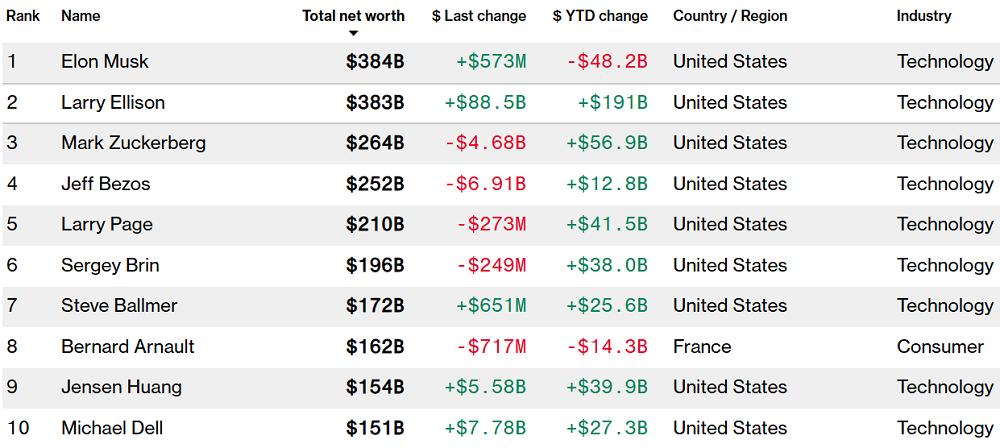
Core Insights - Oracle's stock surged over 40% following the announcement of its Q1 earnings, briefly elevating Larry Ellison to the title of the world's richest person before closing lower [1][2] - The significant increase in Ellison's wealth is attributed to Oracle's reported RPO (Remaining Performance Obligations) reaching $455 billion, a threefold increase year-over-year, which greatly excited investors [2][4] Financial Performance - Oracle reported Q1 revenue of $14.93 billion, a 12% year-over-year increase, but below market expectations of $15.03 billion [1] - Cloud revenue grew by 28% to $7.186 billion, accounting for 48% of total revenue, while software revenue declined by 1% to $5.721 billion [1] Market Reaction - The stock price increase of 35.95% marked Oracle's largest single-day gain since 1992, significantly boosting Ellison's personal wealth [2] - The surge in stock price was driven by the market's reaction to the potential future revenue from large cloud contracts, particularly with AI companies [2][4] Contractual Agreements - A notable portion of Oracle's anticipated revenue comes from a massive $300 billion contract with OpenAI, which is part of a larger $500 billion project [4][5] - Concerns arise regarding OpenAI's financial viability, as it currently operates at a loss, raising questions about its ability to fulfill the contract [4][5] Industry Concerns - Analysts express caution regarding the sustainability of Oracle's stock price increase, suggesting it may be indicative of a tech bubble [6][7] - The need for substantial electrical capacity to support the anticipated growth in data centers poses additional challenges for Oracle and the broader AI industry [7]
