
战略性新兴产业

Search documents
浦发北分助力全国首批、北京首单股权投资机构科技创新债落地
Cai Jing Wang· 2025-05-13 12:08
未来,浦发银行北京分行将继续围绕"五篇大文章",深化科技金融服务,充分发挥浦发优势,强化创新赋能,进一步 助力科创企业拓宽融资渠道、降低融资成本,为北京建设国际科技创新中心贡献"浦发力量"。 本文来源:浦发银行北京分行 浦发银行作为投资者,高效联动分支行,积极参与投资首批科技创新债券。浦发银行北京分行第一时间协助亦庄国投 顺利完成首批科创债券的发行。亦庄国投作为头部私募股权投资机构、创业投资机构,凭借多年深耕硬科技投资形成 的产业生态优势,壮大了北京集成电路、智能制造、商业航天、人工智能等战略性新兴产业。本期债券发行利率 1.94%/年,创亦庄国投发行债券以来同期限最低,有效降低了融资成本。 近年来,浦发银行北京分行大力发展科技金融,积极融入北京国际科技创新中心建设发展大局,紧跟政策创新,落地 科技企业并购贷款试点业务、上市公司股票增持贷款等创新业务,支持培育新质生产力。此次科技创新债的发行,浦 发银行北京分行作为主承销商,为债市"科技板"正式"开板"增势赋能,助力打通债券资金与创投资本的循环通道。 5月12日,浦发银行参与主承销的全国首批科技创新债券、北京首单股权投资机构科技创新债券——"北京亦庄国际投 资 ...

蓝宇股份(301585) - 2025年5月13日投资者关系活动记录表
2025-05-13 10:08
Group 1: Company Overview and Market Position - The company focuses on digital printing ink research and development, primarily in the textile sector, with significant advantages in R&D, cost control, quality, and scale [4][5] - In 2024, the company achieved overseas sales revenue of ¥153,662,878.11, representing a year-on-year growth of 31.62% [7] - The company is classified under the "Strategic Emerging Industries" as a national high-tech enterprise, specifically in the advanced petrochemical new materials sector [5] Group 2: Financial Performance and Shareholder Information - As of December 31, 2024, the company's asset-liability ratio was 11.89%, indicating a stable financial situation [7][8] - The company plans to complete profit distribution and capital reserve transfer within two months after the annual shareholders' meeting, which was held on May 8, 2025 [4] - The company has faced a decline in Q1 2025 performance compared to the previous year due to multiple factors, including pricing strategy and market competition [7][8] Group 3: Strategic Development and Future Plans - The company aims to enhance product quality and brand image while reducing digital printing ink costs, promoting a green transformation in the textile dyeing industry [8] - Plans are in place to invest in a high-end digital equipment production base in Yiwu, with the project approved by the board in February 2025 [7] - The company is committed to increasing R&D investment and optimizing production to enhance market share and maintain competitiveness [3][8] Group 4: Market Challenges and Responses - The company has noted minimal impact from US-China tariffs on its operations, with sales primarily in India, Pakistan, and Mexico [5][7] - The company acknowledges the need for effective market value management to protect shareholder interests amid stock price fluctuations influenced by various external factors [8]
石英玻璃,为什么是首选
中国有色金属工业协会硅业分会· 2025-05-13 07:08
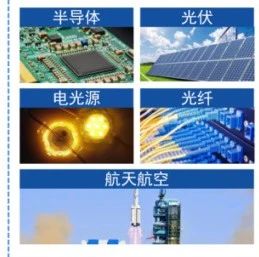
Core Viewpoint - Quartz glass, primarily composed of silicon dioxide, is an essential material in modern strategic emerging industries such as information technology, optics, photovoltaics, semiconductors, and aerospace due to its superior properties like high transparency, high-temperature resistance, low expansion coefficient, strong chemical stability, high purity, and excellent electrical insulation [1]. Industry Chain of Quartz Glass Products - The quartz glass products can be categorized based on application fields, including semiconductor quartz products, photovoltaic solar quartz products, optical fiber quartz products, electric light source quartz products, optical quartz products, and others [2][3]. Semiconductor Sector - The semiconductor sector is the largest application area for quartz products, where high purity and chemical stability of quartz glass make it an indispensable material in semiconductor integrated circuit manufacturing [3][5]. - In the semiconductor industry, quartz products are used in various processes such as single crystal growth, wafer processing, integrated circuit wafer production, and packaging. Key quartz products include quartz crucibles, quartz plates, quartz rings, and quartz diffusion tubes [5][6]. - The demand for quartz glass is expected to grow significantly due to the increasing domestic semiconductor market and the push for domestic substitution in the semiconductor supply chain [6]. Photovoltaic Sector - In photovoltaic manufacturing, quartz products like quartz crucibles are crucial for the production of monocrystalline and polycrystalline silicon. The performance of quartz crucibles directly affects the quality of crystal pulling [8][10]. - The rapid development of the photovoltaic industry has led to a significant increase in demand for high-quality quartz products, particularly in the N-type high-efficiency monocrystalline segment [10]. Optical Fiber Communication Sector - Quartz glass materials are essential in the production of optical fiber preform rods and other supporting materials. Over 95% of the components in optical fiber preform rods are high-purity quartz products [12]. - The rapid growth of the optical fiber and cable industry in China has established it as the largest in the world, leading to an increasing demand for quartz rods and tubes in the coming years [12]. Optical and Electric Light Source Sector - Optical quartz glass is widely used in various optical applications due to its high-temperature resistance and low expansion rate. It is used in telescopes, laboratory optical equipment, communication devices, and projection displays [14]. - The demand for quartz glass in electric light sources is expected to remain stable as technology advances and production scales increase [14]. Conclusion - The quartz products industry is poised for significant growth as high-tech industries such as semiconductors, optical fiber communication, photovoltaics, electric light sources, and optical instruments continue to develop [16].

中国石化资本等超10家机构发行科技创新公司债 | 04.27-05.11
创业邦· 2025-05-13 00:07
Group 1 - The article highlights the establishment of various government-guided funds aimed at supporting strategic emerging industries and innovation across different regions in China [5][7][9][10][11][13][14][15][16][18]. - Wuhan's Guanggu Talent Phase II Fund focuses on empowering technology companies in Hubei Province, particularly in strategic emerging industries [5]. - Jiangsu's Nantong High-end Equipment Industry Special Mother Fund has a total scale of 2 billion yuan, targeting investments in robotics and aerospace [6]. - The Suzhou Agricultural Industry Sci-tech Investment Fund, with a total scale of 2 billion yuan, aims to support agricultural technology innovation [6]. - The establishment of the Quzhou Industrial Development M&A Mother Fund, with a registered scale of 2 billion yuan, focuses on key industries and emerging sectors [8]. Group 2 - The Zhejiang Free Trade Zone Green Practical New Materials Fund has a first phase of 4 billion yuan, focusing on advanced manufacturing clusters [9]. - The Guizhou Province Plateau Characteristic Agriculture Equity Investment Fund aims to support high-quality agricultural development in the region [16]. - The establishment of the Hangzhou Metro Industry Fund aims to invest in the rail transit industry chain, focusing on key components and systems [15]. - The Zhengzhou Airport New Industry Fund, with a total scale of 10 billion yuan, targets investments in various modern industries [14]. - The Nanjing Biomedical R&D Transformation Fund, with a total scale of 100 million yuan, focuses on biopharmaceuticals and medical devices [11]. Group 3 - Vivo Capital has successfully raised over $740 million for its third-phase opportunity fund, focusing on biotechnology and life sciences [20]. - The article discusses the issuance of technology innovation corporate bonds by various securities firms, including Guotai Junan and CITIC Securities, aimed at supporting high-tech industries [22][23][24][25]. - The establishment of the East China University of Science and Technology Alumni Fund aims to promote technology transfer and innovation in Wuxi [27]. - The article mentions the successful registration of the Jiangsu Taizhou Health Advanced Manufacturing Industry Special Mother Fund, which focuses on strategic emerging industries [29].


松山湖:半导体及集成电路产业工业总产值已突破300亿元
news flash· 2025-05-12 14:27
Core Insights - The total industrial output value of the semiconductor and integrated circuit industry in Songshan Lake has exceeded 30 billion yuan [1] - More than 60 upstream and downstream enterprises have gathered in the region, including 39 enterprises above designated size, covering R&D design, packaging testing, equipment, and materials [1] - Songshan Lake is actively building a "1+4+1+X" industrial system, positioning the semiconductor and integrated circuit industry as one of the four strategic emerging industries [1] Industry Development - The semiconductor and integrated circuit industry in Songshan Lake has established a relatively complete industrial chain [1] - A dedicated task force for the semiconductor and integrated circuit industry has been established to coordinate resources and assist in overcoming bottlenecks and enhancing development quality [1]
27城万亿GDP图谱,藏着中国酒业增长未来
Hu Xiu· 2025-05-12 11:28
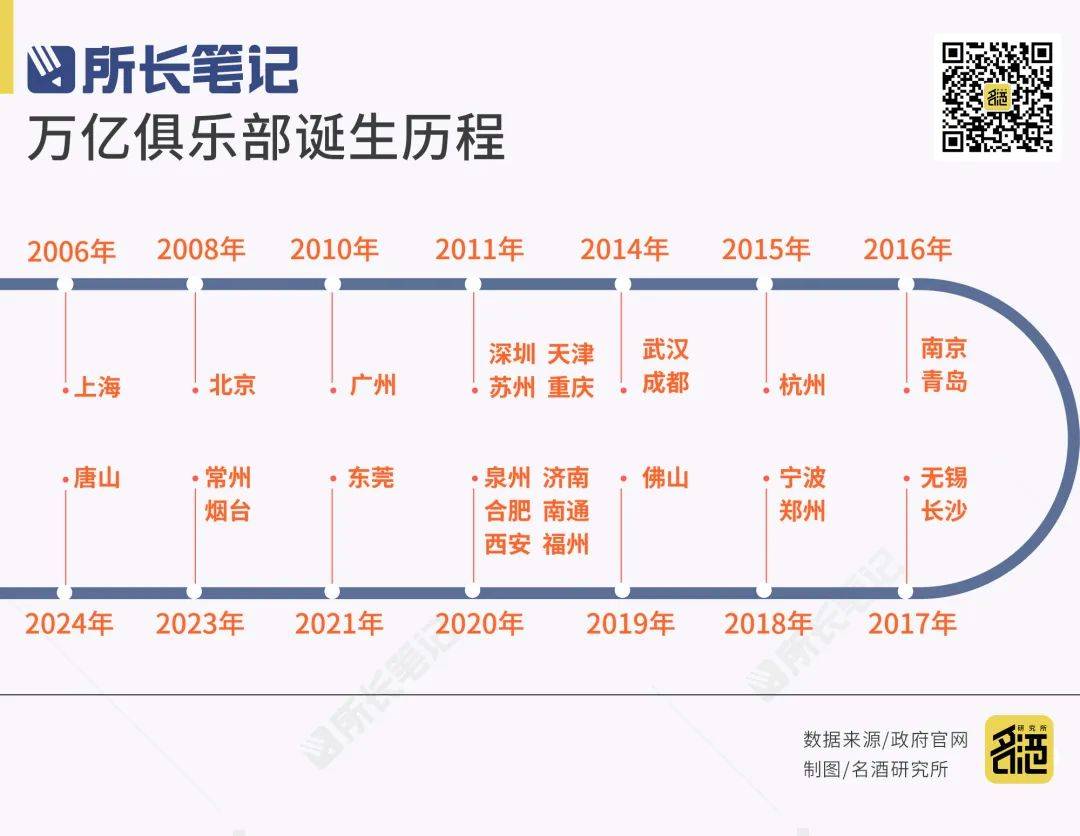
Core Insights - In 2024, the number of cities in China with a GDP exceeding 1 trillion yuan has expanded to 27, contributing over 40% of the national economic output while occupying less than 3% of the country's land area [2][7][11] - The emergence of these trillion-yuan cities is reshaping regional economic dynamics and providing new growth opportunities for industries such as the liquor sector, which must adapt to a competitive landscape focused on high growth, high-value consumers, and demographic advantages [4][25][38] Economic Growth and Structure - All 27 trillion-yuan cities achieved positive GDP growth, with 19 cities outpacing the national growth rate of 5%, and 7 cities exceeding 6% growth, led by Quanzhou at 6.5% [11][21] - The top five cities—Shanghai, Beijing, Shenzhen, Chongqing, and Guangzhou—each surpassed 3 trillion yuan in GDP, with Shenzhen being the first to exceed 5 trillion yuan [12][15] - The competition among mid-tier cities remains intense, with cities like Hangzhou and Wuhan, as well as Ningbo and Tianjin, closely vying for position [13][15] Population and Consumption Trends - The liquor industry is encouraged to focus on high-growth regions, as all 27 cities are located east of the Hu Huanyong Line, with a significant concentration in the Yangtze River Delta and Pearl River Delta [25] - In terms of disposable income, 26 of the 27 cities have surpassed the national average of 41,314 yuan, with Shanghai, Beijing, Guangzhou, and Shenzhen exceeding 80,000 yuan [25][28] - Population dynamics reveal that Chongqing leads with over 31 million residents, while cities like Shanghai, Beijing, and Chengdu also boast populations exceeding 20 million, indicating substantial market potential [28][30] Industry Opportunities - The liquor industry can capitalize on the economic vitality, consumer spending power, and demographic advantages presented by these trillion-yuan cities [25][38] - The focus should be on linking traditional business practices with emerging demands in new industries, as many cities are prioritizing the development of strategic emerging industries such as AI, biomedicine, and new materials [38][39] - The need for the liquor industry to evolve its market strategies is emphasized, as traditional business functions are diminishing in importance within these new economic contexts [39]
从地产到“卡脖子”材料,宁波富达跨界转型按下“暂停键”
Ge Long Hui· 2025-05-12 08:32
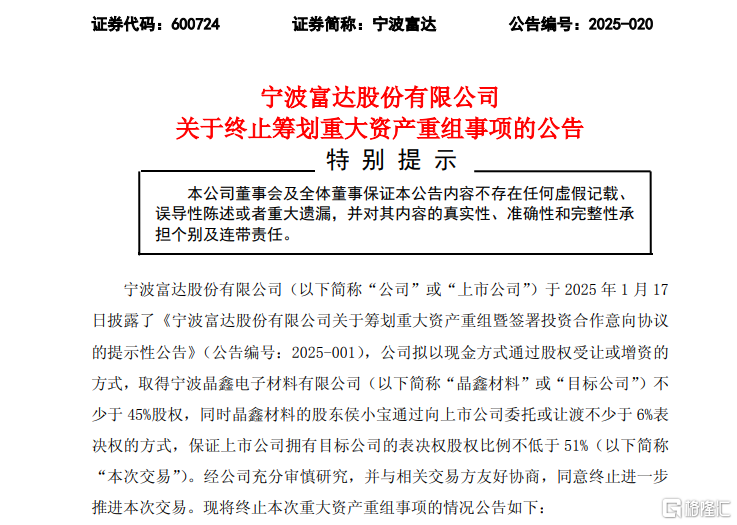
Group 1 - The acquisition attempt by Ningbo Fuda, which began in January, was seen as a typical case of real estate companies transitioning into the new energy sector, but it has been halted after four months of due diligence and negotiations [1][3] - Ningbo Fuda planned to acquire at least 45% of Jingxin Materials' equity in cash and aimed to gain control through voting rights arrangements, but differences in valuation and resource integration led to the rational termination of the cooperation [3][4] - The company emphasized that the termination of this acquisition will not affect its existing business and committed to not initiating any restructuring within a month [3] Group 2 - Ningbo Fuda has faced continuous performance pressure, with its revenue declining from 45.6 billion yuan in 2019 to an estimated 17 billion yuan in 2024, and net profit dropping from 4.3 billion yuan to 2.1 billion yuan [4] - In the first quarter of this year, excluding the impact of the previous year's fuel oil business divestiture, revenue growth rebounded to 9.75%, but concerns remain regarding the cement business due to a slowdown in infrastructure [6] - The trend of real estate companies transitioning into new energy and semiconductor sectors has been observed, with over 10 A-share real estate firms announcing business transformations in 2023, reflecting a shift from previous diversification into finance and entertainment [7] Group 3 - Capital market reactions to such transformations are complex, as evidenced by Ningbo Fuda's stock price, which initially surged after the acquisition announcement but subsequently fell by 25% over four months [7] - The current silver paste industry is undergoing a technological transformation, with new battery technologies reducing silver consumption, posing challenges for companies to adapt and innovate [9] - The case of Ningbo Fuda illustrates the boundaries of rational transformation, highlighting the importance of prudent risk assessment during the due diligence process and the need for companies to build genuine value creation capabilities [9]

走好科技自立自强新征程
Sou Hu Cai Jing· 2025-05-11 21:35
Group 1 - Beijing has achieved historic accomplishments in technological innovation, maintaining the highest number and valuation of unicorn companies in China and ranking among the top three globally [1] - Unicorn companies are defined as privately held startups founded within the last 10 years, valued at over $1 billion, possessing unique core technologies and competitive advantages [1] - The growth of unicorn companies in Beijing reflects a vibrant ecosystem characterized by rapid financing, diverse fields, and high concentration, with private unicorns playing a significant role in the city's innovation landscape [1] Group 2 - Beijing's rich talent resources, including over 90 universities and 1,000 research institutions, contribute to its status as a hub for innovation [2] - The city has implemented over 1,500 measures to enhance the business environment, including targeted policies for unicorn companies, creating a comprehensive support system for their development [2] - The emergence of unicorn companies is seen as a key driver for economic transformation and industrial upgrading, emphasizing the importance of high-level talent and capital [2] Group 3 - The success of unicorn companies relies on their technological strength and innovation vitality, as well as a supportive external environment [3] - There is a call for improved institutional mechanisms and policies to foster the growth of unicorn companies, ensuring a conducive innovation ecosystem [3] - The future of unicorn companies is promising, with a focus on establishing Beijing as an international center for technological innovation and enhancing its competitive edge in global innovation [3]
近半数新三板挂牌公司去年净利润增长
Zhong Guo Zheng Quan Bao· 2025-05-11 21:10
Core Insights - The overall performance of listed companies in 2024 showed resilience, with a total revenue of 1.71 trillion yuan, a year-on-year increase of 0.88%, and a net profit of 65.58 billion yuan [1] - Nearly half of the listed companies reported net profit growth, with over 20% achieving growth rates exceeding 50% [1] - The average debt financing cost for listed companies decreased from 4.24% to 3.99%, indicating a reduction in financing costs for small and medium-sized enterprises [2] Group 1: Company Performance - As of April 30, 2025, 5,844 listed companies disclosed their annual reports, with significant contributions from companies with net profits exceeding 50 million yuan, accounting for 60% of total profits [1] - In 2024, the average revenue growth rate for private enterprises was 3.15%, surpassing the market average [1] - In the first quarter of 2025, 78 listed companies reported a total revenue of 893.9 million yuan, with 45 companies experiencing revenue growth [1][2] Group 2: Industry Trends - The consumer goods, automotive, and entertainment sectors showed overall positive performance, with the automotive industry experiencing a net profit compound growth rate of 44% over the past two years [2] - The entertainment industry benefited from digital consumption transformation, achieving a net profit growth of 35.11% in 2024 [2] - The transportation sector saw a significant net profit increase of 67.15% in 2024, driven by enhanced consumer travel willingness [2] Group 3: R&D and Innovation - Total R&D investment by listed companies reached 61.016 billion yuan in 2024, maintaining growth for three consecutive years, with an average R&D intensity of 3.57% [4] - More than 30% of listed companies invested over 10 million yuan in R&D, and nearly 20% had an R&D intensity exceeding 10% [4] - The number of national-level specialized and innovative "little giant" enterprises on the New Third Board reached 1,119, accounting for 7.65% of the total [4] Group 4: Market Dynamics - The Beijing Stock Exchange has seen a continuous increase in the number of newly listed companies, with 1,058 added in the past three years [5] - Newly listed companies in 2024 had average revenues and net profits 2.15 times and 5.24 times higher than the overall market, respectively [5] - The total scale of mergers and acquisitions among listed companies reached 8.479 billion yuan in 2024, a year-on-year increase of 34.33% [5]
用好知识产权提升城市竞争力
Jing Ji Ri Bao· 2025-05-09 22:09
Group 1 - The core viewpoint of the article emphasizes the importance of utilizing the intellectual property (IP) system to enhance urban innovation capabilities and overall strength, as highlighted in the "China Urban Intellectual Property Index Report 2025" [1][2] - In 2024, the National Intellectual Property Administration will complete various tasks related to the innovation pilot of the business environment, with 34 cities participating in the standardization of IP public services and the establishment of 28 key industry patent databases, significantly boosting urban competitiveness [1][2] - There has been a notable increase in IP creation capabilities, with improvements in IP output levels and conversion efficiency, driven by increased R&D investment and supportive policies in representative cities like Beijing [1][2] Group 2 - The business environment for intellectual property has improved significantly, supported by strong administrative and judicial enforcement, with 16 specific measures outlined to enhance policy support and service guarantees for business entities [2][3] - The urban IP development index reveals disparities between cities and regions, with Beijing, Shenzhen, and Shanghai leading the rankings, while Northeast and Northwest regions lag behind, indicating a correlation between economic development and IP maturity [2][3] - To enhance urban core competitiveness through the IP system, a multi-faceted approach is recommended, focusing on strategic emerging industries, establishing coordination mechanisms for knowledge sharing and IP protection, and improving regional IP strategies [3]