
自动驾驶

Search documents
美国自动驾驶或现重大推进
3 6 Ke· 2026-01-07 10:09
Group 1 - The U.S. House Energy and Commerce Committee plans to hold a hearing on January 13 to discuss legislation aimed at simplifying the deployment process for autonomous vehicles [1] - There has been a longstanding division in Congress regarding legislation to address barriers to the deployment of autonomous taxis [2] - The National Highway Traffic Safety Administration (NHTSA) currently maintains existing safety regulations and has not approved exemption requests from major automakers [2] Group 2 - The upcoming hearing will review multiple proposals, including one to increase the annual cap on the number of autonomous vehicles deployed to 90,000 [4] - Automakers have expressed concerns that certain safety standards, such as requiring rearview mirrors or steering wheels, may not be necessary for autonomous taxis [4] - One proposed bill would prohibit states from establishing rules regarding autonomous systems, while another would require NHTSA to develop guidelines for calibrating advanced driver assistance systems [4] Group 3 - The autonomous driving industry has faced increased scrutiny following an incident in October 2023, where a pedestrian was severely injured by a self-driving vehicle from General Motors [5] - Investigations have been launched by NHTSA into autonomous vehicles operated by Waymo and Amazon's Zoox [5] - Since the Trump administration took office, there has been a push to promote the adoption of autonomous driving technology in the U.S. [6] Group 4 - NHTSA has indicated it will expedite the review of automakers' applications to deploy autonomous vehicles without human control [7] - Tesla launched a small autonomous taxi service in Austin, Texas, equipped with a safety monitoring system [7] - Mercedes-Benz announced plans to introduce a new advanced driver assistance system in the U.S. later this year, allowing vehicles to operate autonomously in urban areas under driver supervision [7]
投资5亿元!“T3出行”落户中山
Xin Lang Cai Jing· 2026-01-07 10:06
Core Viewpoint - Nanjing Lingxing Technology Co., Ltd. (T3 Mobility) has signed an investment agreement with Zhongshan Torch Industrial Group, marking the establishment of a 500 million yuan T3 Mobility Greater Bay Area Ecological Headquarters in Zhongshan Torch High-tech Zone [1][4]. Group 1: Project Overview - The project is the first regional headquarters in Zhongshan that integrates smart mobility and autonomous driving technology, aimed at enhancing the smart transportation industry chain and attracting upstream and downstream enterprises [3][6]. - The headquarters will focus on building a Greater Bay Area operation management and settlement center, an autonomous driving (Robo-Taxi) operation R&D center, a low-altitude service operation center, and driver rest stations, filling the regional gap in smart mobility services [3][6]. Group 2: Company Background - Nanjing Lingxing Technology Co., Ltd. was established in 2019 and is backed by major automotive industry players such as China FAW, Dongfeng Motor, and Changan Automobile, as well as strategic investments from internet giants like Tencent and Alibaba [3][6]. - The company is recognized as a high-tech enterprise and a notable unicorn in the industry, benefiting from the dual support of national teams and internet giants [3][6]. Group 3: Economic Impact - The project is expected to generate billions in revenue over the coming years, significantly enhancing the regional economic strength, industrial competitiveness, and urban quality of life [3][6]. - It aims to leverage advanced technologies such as vehicle-road collaboration and intelligent scheduling to drive upgrades in autonomous driving, artificial intelligence, and smart city sectors, while attracting high-end talent [3][6].

小米&杭电提出ParkGaussian:业内首个泊车场景重建算法,效果还不错
自动驾驶之心· 2026-01-07 09:44
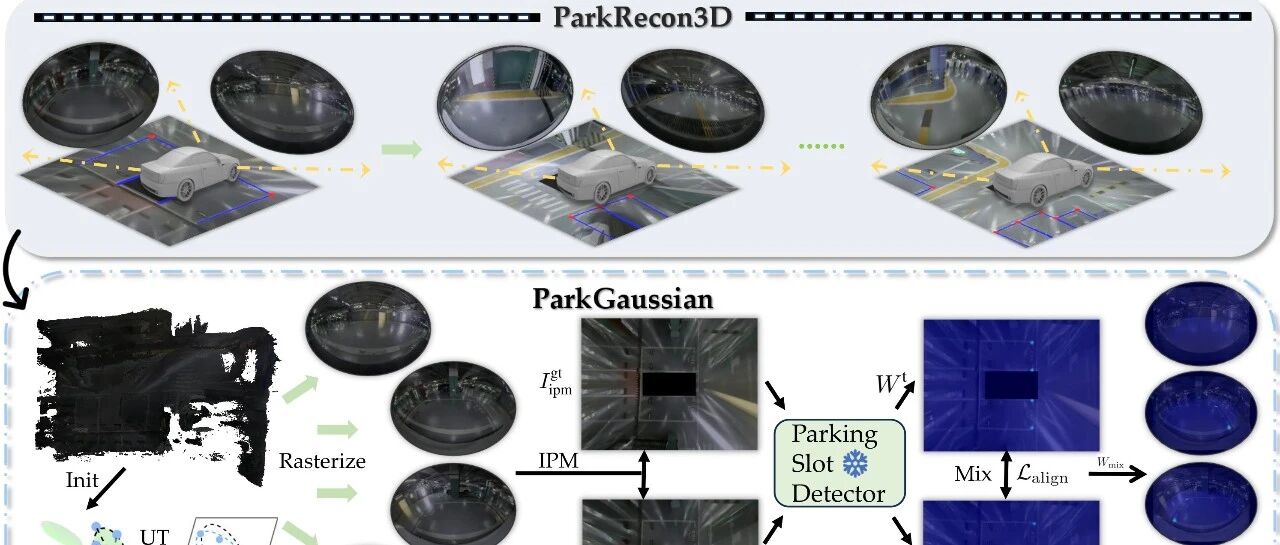
Core Viewpoint - The article discusses the development of ParkGaussian, a framework designed for 3D reconstruction of parking scenarios, which significantly enhances the quality of parking space detection and reconstruction in autonomous driving systems [2][8][57]. Group 1: Background and Importance - Autonomous parking is a critical component of autonomous driving systems (ADS), facing unique challenges in environments with limited GPS signals and complex spatial geometries [3][4]. - Existing research has primarily focused on 2D parking space perception and mapping, with insufficient exploration in 3D reconstruction, which is essential for capturing the intricate geometries of parking scenarios [2][3]. Group 2: ParkRecon3D Dataset - The ParkRecon3D dataset is the first benchmark specifically designed for 3D reconstruction in parking scenarios, containing over 40,000 frames of synchronized sensor data and 60,000 accurately labeled parking spaces [5][11][8]. - The dataset was collected in an underground parking lot using four calibrated fisheye cameras, providing a comprehensive resource for training and evaluating 3D reconstruction models [11][5]. Group 3: ParkGaussian Framework - ParkGaussian integrates 3D Gaussian Splatting (3DGS) with a parking space perception reconstruction strategy, enhancing the fidelity of reconstructed parking areas [8][6]. - The framework utilizes a novel approach to align the reconstruction process with downstream perception tasks, ensuring that the generated data is consistent with real-world parking space detection [6][20]. Group 4: Experimental Results - Experiments demonstrate that ParkGaussian achieves state-of-the-art reconstruction quality on the ParkRecon3D dataset, outperforming existing methods that focus solely on visual fidelity [48][49]. - The integration of the parking space perception strategy significantly improves detection performance, with both DMPR-PS and GCN-Parking networks achieving near-real-world detection accuracy [49][50]. Group 5: Limitations and Future Work - The ParkRecon3D framework faces inherent challenges in underground parking environments, such as mirror reflections, repetitive textures, and motion blur under low light conditions, which will be addressed in future research [55][57].

东兴证券晨报-20260107
Dongxing Securities· 2026-01-07 09:34
Core Insights - The report emphasizes the significant potential for the revaluation of Chinese assets, indicating that the 2025 stock market performance reflects a process of asset revaluation in China [13] - It highlights the ongoing transformation of China's economy, with a shift from low-end manufacturing to high-value services, which is expected to enhance the profitability of Chinese assets [13] - The report suggests that the 2026 market will likely experience a transition from passive destocking to active restocking, providing support for both the economy and the stock market [16] Economic and Market Overview - The Chinese economy is entering a new phase of development with the "14th Five-Year Plan," which emphasizes technological innovation and the establishment of a modern industrial system [16] - The report notes that the liquidity environment is expected to remain relatively loose, which will facilitate the inflow of capital into the stock market [14] - It predicts that the A-share market will see a profit growth rate of around 12% in 2026, driven by improving economic fundamentals [17] Investment Opportunities - The report identifies key sectors for investment, including artificial intelligence, commercial aerospace, controlled nuclear fusion, and autonomous driving, which are expected to be at the forefront of technological advancement [17] - It also highlights the potential for overseas expansion of Chinese enterprises, particularly in sectors like photovoltaics, lithium batteries, new energy vehicles, and home appliances [18][19] - The report suggests that the insurance and brokerage sectors will see increased participation in the stock market, driven by policy reforms and a growing appetite for equity investments [14] Performance and Valuation - The report indicates that the A-share market is likely to enter a phase where both earnings and valuations will rise, providing further upward momentum for the slow bull market [15] - It notes that the overall return on equity (ROE) for A-shares has shown signs of bottoming out, with expectations for a rebound in 2026 [15] - The valuation of Chinese stocks is currently considered reasonable compared to U.S. stocks, with no significant bubble observed in the market [15]






第五届全国地理信息标委会2025年全体会议召开
Xin Lang Cai Jing· 2026-01-07 08:24
Core Viewpoint - The article emphasizes the need for the National Geographic Information Standardization Committee to focus on key areas such as the construction of a unified natural resources map, integrated governance and application of land spatial big data, and the assessment of data security and confidentiality in natural resources [1] Group 1 - The committee is tasked with accelerating the development of essential technical standards in the surveying and geographic information field, ensuring that standards keep pace with major business advancements [1] - There is a focus on urgent and precise development of key technical standards for emerging fields such as low-altitude economy, autonomous driving, and digital twin cities, providing immediate and usable standard interfaces for new industries [1] - The committee aims to promote international standardization efforts, enhancing the global influence of Chinese technical standards in the geographic information industry [1] Group 2 - The committee will strengthen the review and application of national and industry standards, continuing to promote standard training and awareness to expand the influence of these standards [1] - There is an emphasis on enhancing the committee's own capacity building, including organizing a committee re-election and ensuring the allocation of specialized personnel for standardization [1] - The goal is to establish the Geographic Information Standardization Committee as a well-functioning and supportive professional standardization technical organization [1]
波士顿咨询公司发布全球Robotaxi行业调研报告:文远知行在多方面大幅领先同行
Ge Long Hui· 2026-01-07 07:04
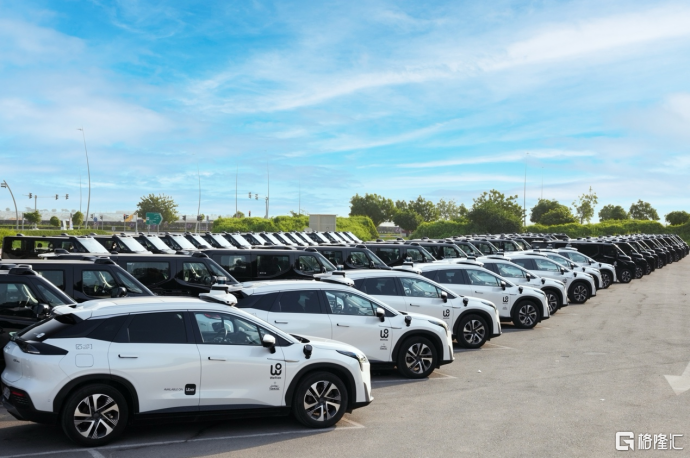
Core Insights - Boston Consulting Group (BCG) released a comprehensive report on the global Robotaxi industry, evaluating the market in China and worldwide, predicting future market size, and assessing the unit economics model for major domestic and international markets [1] - WeRide (文远知行) demonstrates significant advantages in commercialization progress, operational scale, safety, and passenger experience compared to other Robotaxi companies [1] Market Evaluation - BCG conducted a survey with nearly 500 valid samples to assess the operational consistency of Robotaxi services in domestic and international markets, finding that WeRide maintains high consistency in performance across regions, with improved efficiency in the Middle East [1] - The report highlights that WeRide has commenced actual operations in cities like Abu Dhabi, Dubai, and Riyadh, confirming that their services are not merely pilot projects [2] Performance Metrics - In the Middle East, WeRide's average vehicle speed is significantly higher than domestic samples, with fewer occurrences of sudden acceleration and braking, indicating better adaptability and stability of its autonomous driving system [3] - A comparative analysis of three major Robotaxi brands (WeRide, Pony.ai, and LoBot) showed that WeRide has the shortest average waiting time for ride requests and leads in average speed and driving behavior metrics [7] Economic Viability - BCG estimates that achieving breakeven for Robotaxi unit economics in China will be challenging in the short term, with optimistic projections suggesting breakeven by the end of 2027 in first-tier cities and by 2029 under neutral estimates [7] - In contrast, the payment capacity and travel costs in major global markets (US, Europe, Asia-Pacific, and the Middle East) are significantly higher than in China, providing substantial growth opportunities for Robotaxi services [7] - WeRide is positioned to achieve unit breakeven in overseas markets ahead of its competitors due to its early operational advantages [7] Operational Footprint - WeRide has deployed Robotaxi services in over 10 cities globally, including commercial operations in Abu Dhabi, Beijing, and Guangzhou [8]

中金:英伟达(NVDA.US)扩大智驾软硬件生态圈 国内头部智驾供应商迎来出海机遇
智通财经网· 2026-01-07 06:43
Group 1 - Nvidia expands its DRIVE Hyperion ecosystem, incorporating major Tier 1 suppliers and sensor partners like Bosch and Hesai-W (02525) [1][2] - The DRIVE Hyperion platform integrates computing, sensors, and safety features, aiming to facilitate mass production for automotive manufacturers and autonomous driving software ecosystems [2] - Domestic autonomous driving suppliers have accumulated R&D and large-scale production experience in the Chinese market, which may accelerate their entry into the global market through Nvidia's ecosystem [1][2] Group 2 - The global pace of autonomous driving development is accelerating, with leading companies speeding up their layouts in the field [3] - Nvidia introduced the open-source Alpamayo VLA AI algorithm at CES and plans to launch L4 Robotaxi by 2027, while Tesla aims to commercialize Robotaxi operations in Austin by late 2025 [3] - Domestic companies like Pony.ai-W (02026) and WeRide-W (00800) are also expanding their autonomous driving efforts, indicating a growing global market for autonomous driving [3] Group 3 - The penetration rate of advanced autonomous driving in China has crossed a critical point, with expectations for growth in the autonomous driving industry chain [4] - As the penetration rates of L3 and L4 autonomous driving increase, the value of software and hardware integration per vehicle is expected to rise, benefiting leading suppliers [4] - Domestic leaders in the smart driving sector are anticipated to experience a cycle of volume and price increases as they accelerate their entry into overseas markets [4]

黄仁勋喊话“中国英伟达”:期待竞争,你们世界顶尖,但必须努力
3 6 Ke· 2026-01-07 04:13
Core Insights - NVIDIA's CEO Jensen Huang announced the launch of the Rubin platform, consisting of six new chips, and introduced the autonomous driving AI software "Alpamayo," referring to it as a "ChatGPT moment for robotics" [1][2] - Huang expressed optimism about the data center sales forecast, suggesting that recent developments could increase expectations for $500 billion in sales [1][3] - The company is focusing on the growing trend of open-source models, which now account for 25% of AITokens generated, indicating a significant shift in the AI landscape [1][3] Market Outlook - Huang emphasized a $10 trillion modernization of computing, with the labor market potentially reaching $100 trillion, highlighting the transformative impact of technology on the global economy [1][9] - The demand for NVIDIA's products is expected to increase, particularly with the anticipated return to the Chinese market and the contribution of the H200 chip [4][5] Competition and Strategy - Huang acknowledged the strength of Chinese competitors, stating that Chinese entrepreneurs and engineers are among the best globally, while also expressing confidence in NVIDIA's competitive edge [6][7] - The company plans to invest in its ecosystem, focusing on building technologies that do not currently exist and supporting its supply chain partners [11][14] Technological Innovations - The Rubin platform features innovations such as pluggable NVLink switches and power smoothing technology, which significantly reduce assembly time from two hours to five minutes [1][26] - Huang predicted that NVIDIA could become one of the largest CPU manufacturers and storage companies globally, driven by its extensive innovations across the computing stack [21][19] AI and Robotics - Huang stated that true human-level robots could be expected this year, emphasizing that robots will create job opportunities rather than replace human workers [2][40] - The autonomous driving technology, particularly the AlphaMayo system, is designed to operate safely without human intervention, aiming for Level 4 capabilities [27][29] Investment and Growth - NVIDIA is sitting on a substantial cash reserve and is considering various investment avenues, including acquisitions and partnerships to foster AI development [11][12] - The company is committed to maintaining its leadership in the AI industry by continuously innovating and collaborating with various sectors, including healthcare and manufacturing [9][16]
英伟达自动驾驶新品发布后,特斯拉股价回落!马斯克回应:不担忧竞争压力
Jin Shi Shu Ju· 2026-01-07 03:45
Core Viewpoint - Nvidia's latest advancements in autonomous driving technology and AI platforms are reshaping the competitive landscape of the autonomous driving industry, drawing attention from various automotive manufacturers [1][2]. Group 1: Nvidia's Developments - Nvidia unveiled its new autonomous driving AI model, Alpamayo, and related hardware at CES 2026, marking a significant advancement in decision-making capabilities for autonomous driving [1]. - The new platform utilizes advanced AI reasoning to handle complex driving scenarios, enabling traditional automakers and emerging electric vehicle companies to enhance their autonomous driving capabilities rapidly [1]. - Nvidia adopts an open platform model for its autonomous driving technology, allowing partners to integrate it according to their product strategies, which has attracted interest from multiple car manufacturers, including Mercedes-Benz [1]. Group 2: Market Reactions - Following Nvidia's announcement, Tesla's stock price fell over 4%, while Nvidia's stock experienced a slight decline [1]. - Market analysts believe Nvidia's progress may intensify competition in the autonomous taxi and advanced driver-assistance systems sectors, putting pressure on Tesla's market expectations in the short term [2]. - Tesla's recent slowdown in sales growth and uncertainty regarding its autonomous driving technology have affected investor sentiment, reflecting in stock price volatility [3]. Group 3: Tesla's Response and Strategy - Tesla's CEO Elon Musk publicly responded to concerns about increased competition, expressing confidence in Tesla's advantages in data accumulation, algorithm training, and large-scale fleet operations [2]. - Musk emphasized that the challenges of achieving fully autonomous driving are significant and that Tesla has years of experience in overcoming these hurdles, maintaining confidence in the company's long-term strategy [2]. - Tesla's autonomous driving technology is closely linked to its Robotaxi service, which is currently in limited operation but aims for broader deployment by 2026, despite facing regulatory and technical challenges [2]. Group 4: Industry Outlook - The industry is closely monitoring variables such as the commercial rollout speed of Nvidia's autonomous driving platform, the performance of partner vehicles in real-world conditions, and the reliability and safety of Tesla's proprietary technology in complex scenarios [3]. - The regulatory environment will also play a crucial role in determining the future competitive landscape of the autonomous driving industry [3]. - Key indicators for observing industry trends will include the release of more demonstration data from Nvidia's partner vehicles and the expansion of Tesla's Robotaxi deployment [3].
中金:维持禾赛-W(02525)“跑赢行业”评级 全年交付超160万台
智通财经网· 2026-01-07 03:38
Company Overview - Company maintains a "outperforming the industry" rating for Hesai Technology (02525) after showcasing its latest lidar technology at CES 2026 [1] - The company plans to deliver over 1.6 million units in 2025, with production capacity expected to double to 4 million units per year by 2026 [2] - Hesai has secured over 120 model designations from 24 OEMs as of January 5 [2] Production Capacity and Delivery - The company is set to increase its annual production capacity from 2 million units in 2025 to 4 million units in 2026, indicating strong growth potential [2] - The Bangkok Galileo factory is expected to commence production in early 2027, contributing to the company's capacity expansion [2] L3 Vehicle Development - The Ministry of Industry and Information Technology approved L3 autonomous vehicles for trial operation in designated areas on December 15, 2025 [3] - The number of lidar units per vehicle is anticipated to increase to 3-6, with models like Avita 12 and Lantu Taisan featuring 4 lidar units as standard [3] - Hesai's new generation L3 automotive lidar solution, combining long-range ETX and solid-state FTX lidar, has received its first passenger vehicle mass production designation [3] Emerging Markets and Partnerships - The company is actively expanding into emerging markets such as Robotaxi and robotics, collaborating with leading firms like Motional, Baidu, Didi, and NVIDIA [4] - Hesai's JT series lidar is widely used in robotics and industrial markets, with cumulative shipments exceeding 200,000 units [4]