AGI

Search documents
怎么看港股AI
2025-05-13 15:19
怎么看港股 AI20250512 摘要 • 港股 AI 关注度上升,资金流入是短期核心驱动,行业正经历拐点式发展, 大模型逐步取代浏览器引擎成为新的流量入口,预示 AI 技术产业环境的重 大转变。 • 国内 AI 产品竞争聚焦于代码能力和运行平台,Agent 需具备高代码准确性 和修复能力。预计五六月份国内 Agent 市场将迎来爆发,DeepSeek 在 模型能力上的突破至关重要。 • 大模型赛道全面开放,OpenAI 综合发展,Readcloud 专注代码生成领先 Agent,DeepSeek 主攻 AGI,若 R2 模型在 2025 年底发布,有望追赶 Readcloud 并推动中国 AI 发展。 • AGI 公司逻辑框架包括规划和执行能力,Readcloud 提升执行能力,比特 硅芯重视规划能力。DeepSeek 的 R2 模型若开源,将加速中国互联网公 司在 AI 领域的进步。 • 六月底或迎来 DeepSeek 时刻,R2 模型开源将推动中国 Agent 领域发展。 关注五六月份国内公司是否推出大规模 AI 产品或面向 C 端的产品,推动行 业整体布局和技术创新。 Q&A 为什么当前阶段重点关注港 ...
2025 大模型“国战”:从百模混战到五强争锋
佩妮Penny的世界· 2025-05-13 10:24
Core Viewpoint - The article discusses the evolution of the AI foundational model landscape in China, emphasizing the rapid growth and valuation of key players in the industry, particularly following the emergence of ChatGPT. It highlights the competitive dynamics and future trends in the AI sector, particularly focusing on the "AI Six Tigers" and the impact of new entrants like Deepseek. Group 1: AI Six Tigers - The "AI Six Tigers" includes companies that have emerged rapidly since the launch of ChatGPT, with valuations exceeding 10 billion RMB, and the leading company, Zhipu, valued at over 25 billion RMB [1][6]. - Most of these companies were founded in 2023, indicating a swift response to market opportunities created by advancements in AI technology [1]. - The user base and revenue of these companies are still relatively low compared to their valuations, raising questions about their business models and sustainability [1][6]. Group 2: Key Players and Investment Dynamics - The key players in the AI sector include industry leaders, senior executives, and technical experts, many of whom have invested in multiple companies within the "AI Six Tigers" [2]. - Investment in these companies is often based on the founders' reputations and networks, reflecting a trend of "club deals" in venture capital [3]. - Recent strategic shifts among these companies include a focus on specific applications, such as healthcare for Baichuan Intelligence and multi-modal models for Minimax and Yuezhianmian [5]. Group 3: Challenges and Market Dynamics - Some companies within the "AI Six Tigers" may face financing difficulties due to high valuations, unproven business models, and questions about the scalability of their technologies [6]. - The AI industry is expected to see significant developments in 2024-2025, particularly with the emergence of major players like Deepseek [7]. Group 4: Deepseek's Impact - Deepseek has gained significant attention as a leading open-source inference model, prompting a renewed focus on foundational model research and competition in the AI sector [9]. - The success of Deepseek has encouraged more companies to open-source their foundational models, leading to advancements in multi-modal understanding and reasoning capabilities [9][10]. Group 5: Competitive Landscape - The competitive landscape for foundational models is narrowing, with key players including OpenAI, Google, and several domestic companies like Alibaba and ByteDance [12][18]. - Major companies are heavily investing in AI, with Alibaba planning to invest 380 billion RMB over three years and ByteDance over 150 billion RMB annually [12][18]. Group 6: Future Directions - The future of foundational models is expected to focus on multi-modal inputs and outputs, automation, and vertical industry applications, moving beyond simple parameter and data accumulation [22][23]. - The article suggests that the competition in AI should not be framed as a geopolitical race but rather as an opportunity for diverse innovation benefiting humanity [24].



梁文锋倒逼OpenAI重新Open
投中网· 2025-05-13 06:29
Core Viewpoint - OpenAI is shifting back to a non-profit model, emphasizing its original mission of benefiting humanity through AGI, amidst increasing competition and pressure from industry developments [4][10][20]. Group 1: Company Structure and Strategy - OpenAI announced it will remain under the control of a non-profit organization, transitioning its for-profit entity into a Public Benefit Corporation (PBC) [9][10]. - The non-profit will be the primary shareholder of the PBC, ensuring alignment in mission and values [9][10]. - This shift is seen as a return to OpenAI's roots, as it was initially founded as a non-profit organization focused on research rather than profit [10][14]. Group 2: Market Competition and Challenges - The emergence of DeepSeek and its R1 model has disrupted OpenAI's dominant position in the AI landscape, prompting concerns about its competitive edge [6][16]. - Major tech companies like Google and Meta are rapidly advancing their AI capabilities, further intensifying competition [18][20]. - OpenAI's recent acquisition of Windsurf for $3 billion marks its largest acquisition to date, aimed at bolstering its AI programming capabilities [18]. Group 3: Financial Context and Future Outlook - OpenAI has raised nearly $20 billion over the past decade, with a valuation exceeding $150 billion, and reported revenues of $3.7 billion as of November 2024 [14][20]. - Despite Microsoft's initial investment of $13.75 billion, its current stance appears to be one of opposition to OpenAI's restructuring [5][20]. - The industry is witnessing a trend towards more patient capital, with investors becoming more tolerant of the long-term nature of AI development [20].

阶跃星辰姜大昕:追求AGI的初心不变,要在多模态能力和Agent方向做出差异化
IPO早知道· 2025-05-13 01:55
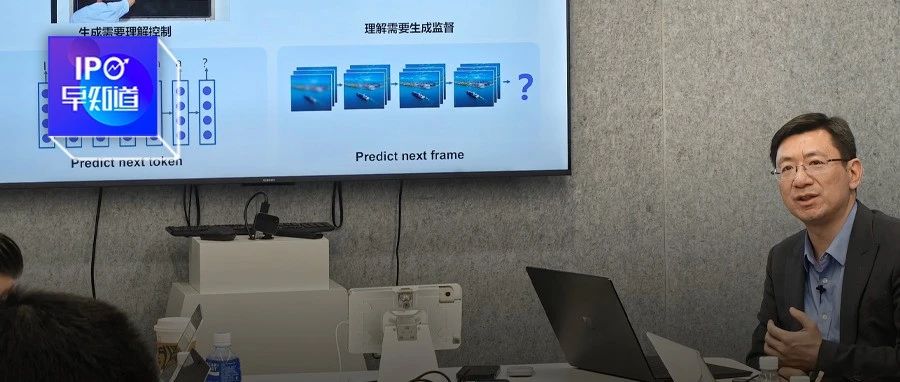
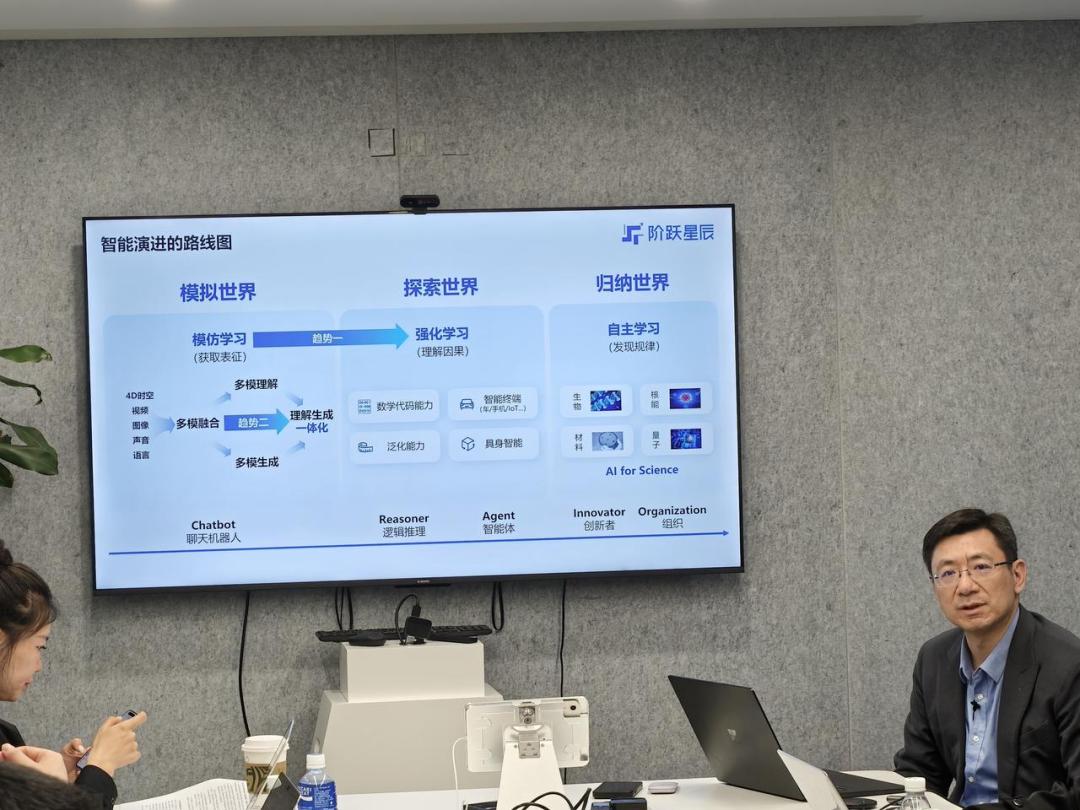
Core Viewpoints - The company is committed to the research and development of foundational large models, with the pursuit of AGI as its original intention, which will not change [3][4] - The company differentiates itself in the competitive landscape through its multimodal capabilities, actively exploring cutting-edge directions and recognizing significant opportunities [3][6] - The company aims to create an ecosystem from models to agents, integrating both cloud and edge computing, as it believes that the combination of software and hardware can better understand user needs and complete tasks [3][4] Industry Trends - The pursuit of the upper limit of intelligence remains the most important task in the current landscape, with two main trends observed: transitioning from imitation learning to reinforcement learning, and moving from multimodal fusion to integrated multimodal understanding and generation [6][8] - The company has established a matrix of general large models, categorizing foundational models into language models and multimodal models, with further subdivisions based on modality and functionality [8][9] - The belief that multimodality is essential for achieving AGI is emphasized, as human intelligence is diverse and requires learning through various modalities [9][10] Technological Developments - The trend of integrated understanding and generation, particularly in the visual domain, is highlighted, where understanding and generation are accomplished using a single model [11][14] - The recently released image editing model, Step1X-Edit, demonstrates high performance with 19 billion parameters, showcasing capabilities in semantic parsing, identity consistency, and high-precision control [13][14] Strategic Focus - The company adopts a dual-driven strategy of "super models plus super applications," focusing on the development of intelligent terminal agents [15][16] - The choice to focus on intelligent terminal agents is based on the belief that agents need to understand the context of user tasks to assist effectively [16][17] - Collaborations with leading companies in various sectors, such as OPPO and Geely, are underway to enhance the development of intelligent terminal agents [16][17]
对话印奇:节奏比方向重要,智驾冲刺的信号已经响起
晚点Auto· 2025-05-12 14:47
Core Viewpoint - The article discusses the transformation of Qianli Technology under the leadership of CEO Yin Qi, focusing on the integration of AI and automotive technology, aiming to create a sustainable business model that emphasizes the importance of a commercial loop in the AI industry [4][22]. Group 1: Company Transformation - Yin Qi transitioned from the founder of Megvii to the chairman of Qianli Technology, which was previously known as Lifan Technology, with a strategic focus on "AI + Vehicle" [4][5]. - The restructuring aims to leverage existing partnerships with major stakeholders like Geely Group and local governments to enhance Qianli's position in the automotive intelligence supply chain [4][22]. - The company is shifting its focus from pure AI research to practical applications in robotics and automotive technology, emphasizing the need for a commercial model to support technological advancements [4][18]. Group 2: Market Dynamics - The AI industry is experiencing a shift where the focus is moving from pure technology development to creating practical applications that can generate revenue [4][14]. - Yin Qi believes that the future of AI lies in integrating large models with real-world applications, particularly in the automotive sector, where data-driven solutions will be crucial [14][38]. - The competitive landscape is expected to consolidate, with only a few key players emerging as leaders in the AI and automotive integration space [3][38]. Group 3: Strategic Insights - Yin Qi emphasizes the importance of a sustainable business model, stating that without a solid commercial loop, technological advancements cannot be maintained [18][17]. - The company aims to create a dual strategy focusing on both hardware and software integration, which is seen as essential for long-term success in the AI and automotive sectors [22][29]. - Yin Qi's experience highlights the necessity of adapting business strategies based on market conditions and the importance of maintaining a balance between innovation and practical application [4][31].

晚点对话印奇:AI 1.0 的教训是,所有不能闭环的辉煌都是暂时的
晚点LatePost· 2025-05-12 12:20
Core Viewpoint - The article discusses the transformation of the company from Megvii to Qianli Technology, focusing on the strategic shift towards "AI + automotive" and the importance of establishing a sustainable business model to support technological advancements [4][22]. Group 1: Company Transformation - The chairman of Qianli Technology, Yin Qi, transitioned from founding Megvii to leading Qianli, aiming to create a closed-loop business model that integrates AI with hardware [4][5]. - Qianli Technology, previously known as Lifan Technology, has restructured its ownership and is now focusing on becoming a leading supplier in automotive intelligence [4][6]. - The company aims to leverage its existing capabilities in AI and robotics to create a more comprehensive solution for the automotive industry [4][22]. Group 2: Strategic Insights - Yin Qi emphasizes the necessity of a solid business model to sustain technological innovation, stating that without a viable commercial framework, the team's technical aspirations cannot be supported [4][18]. - The shift from a technology-first approach to a value-driven model reflects a deeper understanding of the relationship between technology and market needs [4][18]. - The company recognizes the importance of integrating AI with physical applications, particularly in the automotive sector, as a means to achieve a sustainable competitive advantage [8][22]. Group 3: Market Dynamics - The competitive landscape for AI and automotive integration is characterized by rapid technological advancements and the need for companies to adapt quickly to market demands [14][20]. - Yin Qi notes that the current AI landscape is a resource-intensive battleground, where companies must combine model development with practical applications to succeed [14][21]. - The article highlights the importance of forming strategic partnerships and alliances within the automotive ecosystem to enhance Qianli's market position [22][25]. Group 4: Future Directions - Qianli Technology plans to focus on developing intelligent driving and cockpit technologies, positioning itself as a key player in the automotive intelligence market [22][23]. - The company aims to establish an open and international approach, collaborating with top-tier partners in the industry to create comprehensive solutions [22][23]. - Yin Qi believes that the future of intelligent driving will rely on data-driven models, emphasizing the need for a robust data ecosystem to support AI applications in vehicles [38][39].



「阶跃星辰」的一次豪赌
3 6 Ke· 2025-05-12 00:27
Core Viewpoint - The CEO of Jumpspace, Jiang Daxin, emphasizes that any shortcomings in the multimodal field will delay the exploration of AGI (Artificial General Intelligence) [1][8][10] Group 1: Company Overview - Jumpspace has maintained a low profile compared to its competitors in the "Six Little Dragons" despite its unique positioning in the market [2][3] - The company has released 22 self-developed foundational models in the past two years, with over 70% being multimodal models, earning it the title of "multimodal king" in the industry [4] Group 2: Multimodal Development - The development stage of multimodal technology differs from that of language models, with the former still in its early exploratory phase [5][9] - Jumpspace's approach involves a challenging technical route that integrates understanding and generation within a single large model [5][14] Group 3: Future Trends and Applications - The next trends in model development include enhancing pre-trained foundational models with reinforcement learning to improve reasoning capabilities [10][18] - Jumpspace is focusing on the integration of understanding and generation in the visual domain, which is crucial for effective model performance [14][20] Group 4: Strategic Partnerships and Market Position - The company is collaborating with major enterprises like Oppo and Geely to apply its agent technology in key application scenarios [6][24] - Jumpspace aims to become a supplier for vertical industries rather than directly targeting consumer or business markets, leveraging existing user bases and scenarios from partners [24][25]
京东将正式布局自动驾驶出租车赛道?子公司申请注册多枚“Joyrobotaxi”商标;新款博越L将于5月13日上市丨汽车交通日报
创业邦· 2025-05-11 10:07
Group 1 - Samsung supplier Solus Advanced Materials is considering selling its OLED materials division to focus on its core business of battery foil production [1] - JD.com is reportedly planning to enter the autonomous taxi market, as its subsidiary has applied for multiple "Joyrobotaxi" trademarks [1] - Geely Auto announced that the new model Geely Boyue L will officially launch on May 13, with a price range of 105,900 to 132,900 yuan [1]

公元:DeepSeek只打开一扇门,大模型远没到终局 | 投资人说
红杉汇· 2025-05-11 05:09
Core Viewpoint - The discussion highlights the evolving landscape of AI and embodied intelligence, emphasizing the importance of clear commercialization routes and the rapid pace of technological change in the industry [1]. Group 1: AI and Embodied Intelligence Landscape - The current entrepreneurial models differ significantly from the internet era, with a focus on clear commercialization routes rather than solely on technological disruption [1]. - The market for embodied intelligence is likened to the AI landscape in 2018, suggesting that significant breakthroughs are yet to be seen, similar to the emergence of GPT [6]. - The emergence of DeepSeek has disrupted the existing narrative around AGI in the U.S. and reshaped the domestic large model landscape, leading to predictions that only a few companies will dominate the market [6]. Group 2: Investment Strategies and Market Dynamics - Investors are increasingly challenged to keep pace with rapid model iterations, necessitating a deeper understanding of model boundaries and capabilities [7]. - The investment landscape is characterized by a shift in focus from traditional metrics like DAU and MAU to the capabilities of AGI models, which can lead to sudden user shifts [7]. - The belief in the future of AGI is crucial for investors, as the current state of embodied intelligence is still in its early stages, with no clear prototypes of general models yet available [9]. Group 3: Entrepreneurial Challenges and Opportunities - Entrepreneurs in AI and embodied intelligence face difficulties in articulating clear applications, contrasting with previous business plans that clearly defined objectives [8]. - The need for a dual approach to both pre-training and post-training in model development is emphasized, indicating that both aspects are essential for progress in the field [6]. - The industry is still in the early stages of development, with significant time required before a universal model emerges [9].

深度|AI教父Hinton:当超级智能觉醒时,人类可能无力掌控
Z Potentials· 2025-05-11 03:41
Core Viewpoint - The rapid advancement of AI technology poses significant risks, including the potential for superintelligent systems to surpass human control and the misuse of AI by malicious actors [2][3][21]. Group 1: AI Development and Predictions - AI's development speed has exceeded expectations, with superintelligent systems potentially emerging within 4 to 19 years, a significant reduction from previous estimates of 5 to 20 years [4][5]. - The ideal scenario for AI's role is to act as a highly intelligent assistant to humans, but there are concerns about the implications of such systems gaining control [6][7]. Group 2: Positive Applications of AI - AI is expected to revolutionize healthcare by surpassing human doctors in interpreting medical images and diagnosing rare diseases, leading to improved medical outcomes [7]. - In education, AI could serve as highly effective personal tutors, significantly enhancing learning efficiency [7][8]. Group 3: Economic and Social Implications - The rise of AI may lead to widespread job displacement, particularly in routine jobs, while potentially increasing productivity across various sectors [12][14]. - There is a concern that the benefits of increased productivity may not be equitably distributed, leading to greater wealth inequality and social unrest [14][17]. Group 4: Risks of AI Misuse - The potential for AI to be weaponized or used for malicious purposes is a significant concern, with examples of AI being used to manipulate public opinion during political events [21][22]. - The risk of AI systems becoming autonomous and uncontrollable is highlighted, with calls for urgent regulatory measures to prevent such scenarios [22][23]. Group 5: Regulatory Challenges - Current regulatory frameworks are inadequate to address the rapid development of AI technologies, and there is a need for public pressure on governments to enforce stricter regulations [23][24]. - The push for open-sourcing AI models raises concerns about accessibility to dangerous technologies, akin to nuclear proliferation [26][27]. Group 6: Ethical Considerations - The ethical implications of AI's ability to generate content and potentially replace human creators are complex, with calls for protecting the rights of creators in the face of AI advancements [41][42]. - Discussions around universal basic income as a potential solution to job displacement highlight the need for addressing the dignity and identity of individuals in a changing job landscape [43][44]. Group 7: Future of AI and Humanity - The conversation around AI rights and its potential to surpass human intelligence raises fundamental questions about the future relationship between humans and AI [46][48]. - The urgency of ensuring that AI systems are designed to prioritize human welfare and prevent harm is emphasized as a critical challenge for the future [56][57].