
AI技术

Search documents
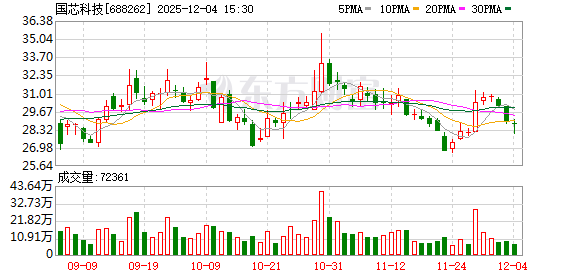
国芯科技:公司目前经营资金充足,在手订单充沛
Zheng Quan Ri Bao· 2025-12-04 13:39
Core Insights - The company, Guoxin Technology, has confirmed that it currently has sufficient operating funds and a strong order backlog, indicating a healthy financial position [2] - The company is committed to enhancing the execution of its existing orders and is focusing on key business areas such as automotive electronics, information security, and artificial intelligence [2] - Guoxin Technology is actively embracing AI and quantum technologies to strengthen and expand its business operations [2]


乔锋智能(301603) - 301603乔锋智能投资者关系管理信息20251204
2025-12-04 12:06
Group 1: Company Operations and Supply Chain - The company independently develops and widely applies core components such as spindles, power turrets, and turntables, which enhances product quality, production efficiency, and customer satisfaction while reducing procurement costs [2][3] - The company selects external components based on comprehensive machine performance requirements, customer preferences, and supply cycles, primarily opting for brands like Fanuc, Mitsubishi, and Siemens, while also collaborating with domestic brands [2][3] Group 2: Market Trends in Consumer Electronics - The consumer electronics industry is currently experiencing a high level of prosperity, supported by multiple factors, indicating reasonable sustainability of growth [3] - The company's core product, the drilling and tapping machine, has a small sales proportion due to previous capacity limitations, but this is expected to increase rapidly as capacity improves [3] - Key industry growth drivers include structural adjustments in 3C orders, the replacement of outdated equipment, innovation in end products, and the acceleration of product iterations driven by AI technology [3] Group 3: Future Trends in CNC Machine Tool Industry - CNC machine tools are crucial for the transformation and upgrading of China's manufacturing industry, with broad applications across various sectors [4] - The domestic market is witnessing a gradual increase in market share for domestic machine tools, supported by policy incentives and the growing demand in sectors like consumer electronics and new energy vehicles [4][5] - The CNC rate in China is expected to rise significantly, creating substantial market opportunities for CNC machine tool enterprises [5] - The competition is intensifying, with market share increasingly concentrating among leading enterprises, while smaller firms face challenges due to limited technical reserves and financial strength [5]
中国人寿许崇苗:保险业需深化双碳目标与业务融合
Zheng Quan Ri Bao· 2025-12-04 11:42
本报讯 12月4日,中国人寿保险股份有限公司(以下简称"中国人寿")首席合规官许崇苗在2025企业家 博鳌论坛上发表演讲。他表示,在全球推进净零转型与应对气候变化的大背景下,企业系统规划、实施 转型战略已成为时代发展的核心课题。基于此,中国人寿一直在深入思考保险业命题,探索将助力"双 碳"目标的系统性实践,深度转化为驱动自身高质量发展的内生动力,从而实现业务质量提升与风险抵 御能力增强的协同共进。 据了解,"十四五"期间,中国人寿提前布局,始终遵循政策导向、客户至上、金融向善、长期主义、底 线思维五大原则,围绕可持续治理架构、绿色金融、气候管理等方面,在探索具有中国特色、接轨国际 标准的ESG发展道路上取得了一定的成效,明晟ESG评级跃升至AA,进入亚太地区人寿与健康保险行 业前列。 面向经济社会发展全面绿色转型的"十五五"战略机遇期,许崇苗表示,保险业应以创新构建"降碳"风险 减量服务体系为核心,深度融入国家"双碳"进程,实现环境效益、产业赋能与社会韧性的价值提升。 许崇苗提出,深化"双碳"目标与业务融合,保险业需肩负起更为深远的绿色使命。在负债端,构建碳足 迹挂钩的保险产品服务体系,通过覆盖全产业链的韧性 ...

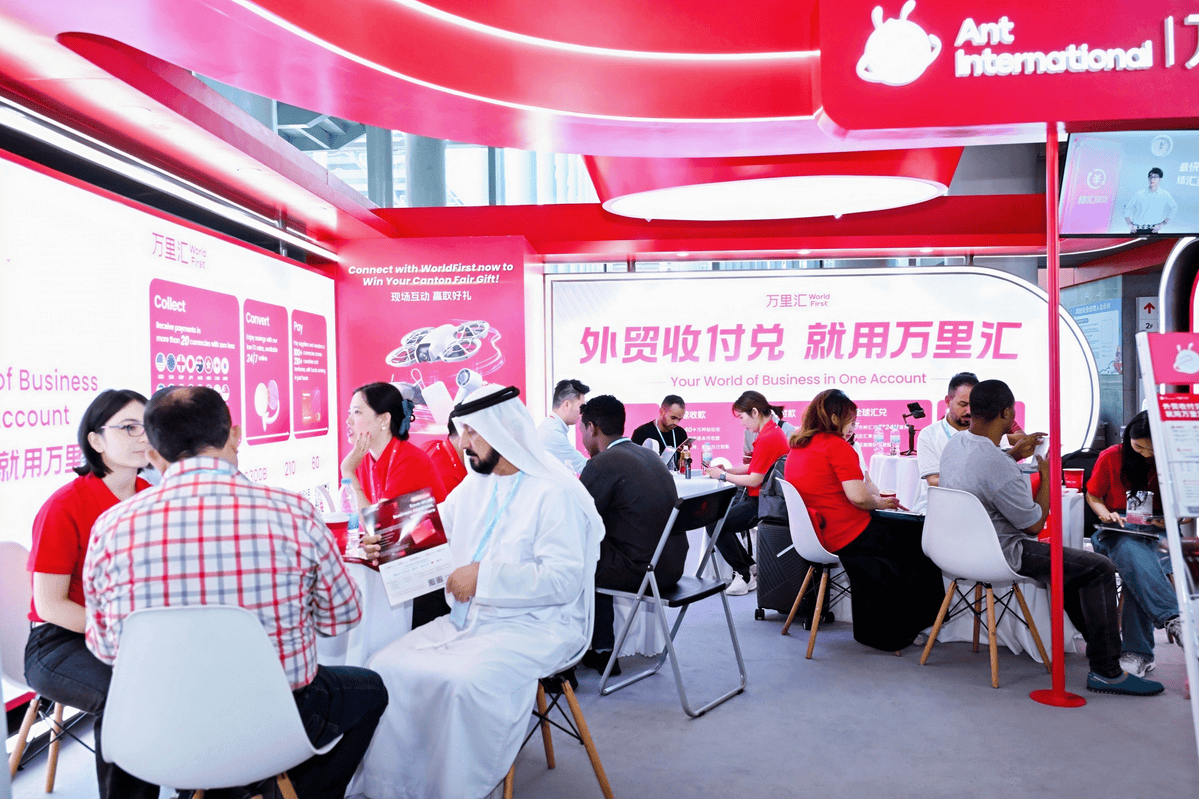
一个账户全球运营,万里汇助力全球超150万企业增长
Sou Hu Cai Jing· 2025-12-04 10:49
Core Insights - In 2025, China's foreign trade demonstrates resilience amid complex environments, with a 6.2% year-on-year increase in goods exports in the first ten months, particularly strong growth in emerging markets like ASEAN, the Middle East, and Latin America [1] - Ant International's cross-border payment and account service brand, WorldFirst, reported serving over 1.5 million global enterprise clients and processing nearly $200 billion in transaction volume, reflecting a nearly 100% year-on-year growth [1] - The growth indicates a shift in Chinese foreign trade from "scale expansion" to "high-quality outbound" strategies, with cross-border financial services accelerating tailored solutions for enterprises [1] Cross-Border Financial Services - WorldFirst's "World Account" has seen over 300% growth in transaction volume in emerging markets in the first half of 2025, supporting businesses in managing multiple markets and currencies [3] - The service now covers over 220 countries and regions, with wallet balances in 32 currencies and support for payments in 101 currencies, achieving same-day settlement for 95% of transactions [3] - The introduction of the "World Card" and "World Wealth" products enhances the one-stop cross-border financial service capability, allowing enterprises to manage the entire process from receiving payments to currency exchange and fund management [3] Compliance and Localization - WorldFirst has established a compliance-first and localized service system, obtaining over 60 payment licenses globally, including a recent license in Malaysia [5] - Partnerships with local financial institutions in Southeast Asia, the Middle East, and Africa enhance local payment and settlement capabilities [5] - The company has launched solutions to facilitate trade between China and Africa, supporting local currency payments in 13 African countries [5] AI Integration - 90% of WorldFirst's cross-border sellers are utilizing AI tools, with 100% of customer service now available 24/7 in multiple languages [7] - The self-developed "Eagle Sequence" AI model predicts foreign exchange needs with over 90% accuracy, potentially reducing foreign exchange costs by up to 60% [7] - The SHIELD risk control model monitors transactions in real-time, ensuring payment security and reducing risks associated with frozen accounts [7] Strategic Shift in Global Operations - The growth of WorldFirst in 2025 reflects a significant shift in the paradigm of Chinese enterprises going global, moving from speed and scale to efficiency, resilience, and sustainability [8] - The focus is on building systematic, intelligent, and compliant global operational capabilities to help enterprises navigate cyclical fluctuations and conduct global business effectively [8]
机器人赛道IPO热潮再起!三家企业披露最新进展
Xin Lang Cai Jing· 2025-12-04 10:27
Core Viewpoint - The Hong Kong stock market is witnessing a surge in the capitalization of intelligent robot companies, driven by the expansion of market scale and accelerated commercialization of technology, with companies like Youdi Robotics, XianGong Intelligent, and Ledong Robotics advancing their IPO processes. Group 1: Youdi Robotics - Youdi Robotics has received a filing notice from the China Securities Regulatory Commission for its overseas listing, planning to issue up to 73.6 million shares on the Hong Kong Stock Exchange, marking a significant step in its IPO process [2] - Established in 2013, Youdi Robotics focuses on commercializing unmanned driving technology and embodied intelligence across various sectors, including delivery, cleaning, and security [2] - The company has developed a range of products, including delivery robots and cleaning robots, and serves over 30 million people daily across more than 600 cities globally [4] Group 2: XianGong Intelligent - XianGong Intelligent submitted its prospectus to the Hong Kong Stock Exchange, aiming for a mainboard listing, following a previous failed attempt in May [5] - Founded in 2020, XianGong Intelligent specializes in robot control systems, providing a one-stop solution for various industries, and has built the world's first large-scale open platform for intelligent robots [7] - The company has achieved significant market presence, ranking first in both global and Chinese markets for robot controller sales, with a market share of 23.6% and 37.5%, respectively [7][8] Group 3: Ledong Robotics - Ledong Robotics has also submitted its prospectus to the Hong Kong Stock Exchange, aiming to enhance its visual perception technology and expand its production capacity [11] - Founded in 2017, Ledong Robotics focuses on visual perception technology and has developed a comprehensive product matrix, including various types of laser radar and 3D sensors [13] - The company has shown strong growth, with revenue increasing from 234 million RMB in 2022 to 467 million RMB in 2024, and is approaching profitability with a reduced net loss [16]


“果链龙头”领益智造转身搞AI,深圳女富豪赴港IPO继续“买买买”
Sou Hu Cai Jing· 2025-12-04 07:12
Core Viewpoint - The company Lingyi Technology is transitioning from a "fruit chain" enterprise to an AI hardware intelligent manufacturing platform, with plans for a secondary listing in Hong Kong to support its expansion and acquisitions [2][10][20]. Group 1: Company Overview - Lingyi Technology, previously known for its precision components in consumer electronics, is now focusing on AI hardware, automotive components, and low-altitude economy products [4][5]. - The company has submitted a prospectus for a secondary listing on the Hong Kong Stock Exchange after previously terminating its listing application in 2022 [2][20]. Group 2: Financial Performance - For the years 2022 to 2025, Lingyi Technology's revenue from AI hardware was 314.79 billion, 307.13 billion, 407.8 billion, and 329.15 billion yuan, accounting for 91.2%, 89.9%, 92.1%, and 87.6% of total revenue respectively [7]. - The company reported total revenues of 345.03 billion, 341.54 billion, 442.6 billion, and 375.9 billion yuan for the same periods, with net profits of 15.6 billion, 20.14 billion, 17.61 billion, and 19.66 billion yuan [9]. Group 3: Business Segments - The AI hardware segment is the primary revenue source, with significant contributions from products like humanoid robot joints, AR glasses, and precision components for smartphones [4][5][7]. - The automotive and low-altitude economy segments are also growing, with revenues of 10.79 billion, 13.85 billion, 21.17 billion, and 19.7 billion yuan from 2022 to 2025, representing 3.1%, 4.1%, 4.8%, and 5.2% of total revenue [9][8]. Group 4: Strategic Acquisitions - Lingyi Technology is actively pursuing acquisitions to enhance its capabilities in the automotive sector, including a recent acquisition of a majority stake in Jiangsu Kedastern Automotive Technology [10][11]. - The company has also announced plans to acquire Zhejiang Xianglong Machinery, further expanding its automotive component business [14]. Group 5: Leadership and Ownership - The founder, Zeng Fangqin, has maintained a significant ownership stake in the company, holding 58.64% of the shares through her investment vehicle [22][25]. - Zeng's commitment to the company is underscored by her decision not to sell shares during the upcoming listing period, reflecting confidence in the company's future [25].

外卖大战还会继续吗?至少不会是价格战了
Sou Hu Cai Jing· 2025-12-04 06:39
Core Viewpoint - The takeaway from the recent market results indicates that the price war in the food delivery industry has not created sustainable value and is unsustainable in the long run [2][4] Group 1: Market Competition - Meituan's CEO Wang Xing emphasized that while the price war is meaningless, competition itself is essential for the industry [2] - Meituan's response to the low-level price competition involved increasing restaurant subsidies, resulting in an operating loss of 14.1 billion RMB and an adjusted net loss of 16 billion RMB in Q3 [4][6] - Despite the losses, Meituan's performance was better than expected, indicating a relatively favorable "battle damage ratio" compared to industry peers [4] Group 2: Long-term Value Creation - Wang Xing stated that Meituan will focus on doing the right things to serve consumers, merchants, and delivery personnel, with confidence in creating genuine long-term value [7][8] - The long-term value strategy is not solely reliant on food delivery but aims to build a diversified growth ecosystem centered around instant retail [8][9] Group 3: Ecosystem Development - Meituan aims to serve consumers, merchants, and delivery personnel, which forms the core of its platform ecosystem [10][12] - The company has implemented a multi-layered welfare system for delivery personnel, including health insurance and housing support, to ensure their rights and benefits [10][12] - For small and medium-sized merchants, Meituan focuses on reducing costs and increasing efficiency through optimized subsidy rules and AI tools [14] Group 4: Operational Precision - The food delivery industry is characterized by thin margins, requiring precise operations to avoid losses [16][18] - Meituan's operational strategy includes user-segmented subsidies and efficiency improvements for merchants, which have helped maintain operational efficiency despite price competition [18][19] - The company believes that the current irrational competition is temporary and that platforms with deep industry knowledge and operational efficiency will lead the market [19]

存储芯片“史诗级”涨价潮,机构预测七成DRAM产能将被AI吞噬
3 6 Ke· 2025-12-04 05:22
Core Insights - The global storage industry is undergoing an unprecedented transformation driven by the large-scale application of AI technology, leading to a significant increase in storage demand and a structural, long-term shortage of supply [1] - By 2026, the DRAM market is expected to see a continuous rise in average prices due to structural shortages, with the market value surpassing $300 billion for the first time [1] - Industry experts warn that storage chips have transitioned from being "cost components" in AI deployment to "strategic materials," indicating a shift in their importance within the supply chain [1] Market Dynamics - The competition for memory market capacity and pricing trends will be closely monitored in 2026 [1] - Strong purchasing power from buyers is expected to lead to higher inventory levels, resulting in actual procurement volumes significantly exceeding the forecasted 66% for 2026 and 70% for 2027 [1] - This increased demand will further restrict the allocation of DRAM for consumer devices such as PCs and smartphones [1]
瑞德智能:目前公司尚未涉足跟布局AIGC领域
Mei Ri Jing Ji Xin Wen· 2025-12-04 04:35
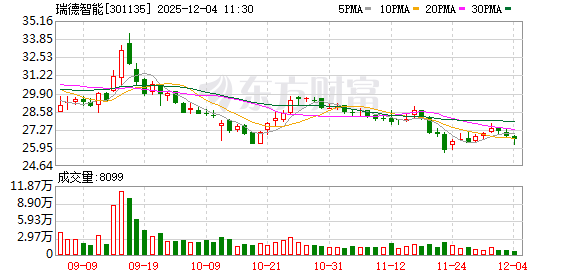
每经AI快讯,有投资者在投资者互动平台提问:公司是否有投资AIGC或者布局储备相关技术? 瑞德智能(301135.SZ)12月4日在投资者互动平台表示,目前公司尚未涉足跟布局AIGC领域。公司一 贯重视技术创新与业务发展的深度融合,未来将密切关注AI技术演进,并依据实际业务需求与发展阶 段,审慎规划合作路径,持续完善产品与服务的智能化水平。相关进展如达到披露标准,公司将第一时 间予以公告。 (文章来源:每日经济新闻) ...
中金:维持医渡科技跑赢行业评级 目标价6.8港元
Zhi Tong Cai Jing· 2025-12-04 01:25
Core Viewpoint - The company maintains its revenue forecasts for fiscal years 2026 and 2027, while adjusting net profit estimates significantly upward due to cost control measures [1] Group 1: Financial Performance - For the first half of fiscal year 2026, the company's revenue reached 360 million yuan, reflecting an 8.7% year-on-year growth, which aligns with previous expectations [2] - The net loss for the same period narrowed significantly by approximately 72% compared to the previous year [2] - The adjusted net profit forecasts for fiscal years 2026 and 2027 are raised to 410,000 yuan and 5.457 million yuan, respectively, from previous estimates of -45.69 million yuan and 4.11 million yuan [1] Group 2: Business Segments and Growth Drivers - The revenue from the big data platform and solutions increased by 14.6% year-on-year to 153 million yuan, driven by policy support and expanded business opportunities [3] - The health management platform and solutions saw a 30.3% year-on-year revenue growth to 66.67 million yuan, with significant participation in the Huiminbao project across 5 provinces and 13 cities [3] - The life sciences solutions revenue slightly declined by 4.4% to 138 million yuan, as the company integrates AI technology into the entire clinical trial process [3] Group 3: Operational Efficiency - The overall gross margin improved by 1.8 percentage points to 37.4%, with the gross margin for the big data platform and solutions increasing by 5.1 percentage points to 42.5% [4] - The company reduced its net loss to 15.76 million yuan, continuing the trend of narrowing losses [4] - Operating cash flow net outflow decreased by 56% year-on-year due to enhanced cash management and efficiency [4]