算力

Search documents
音频 | 格隆汇10.13要点—港A美股你需要关注的大事都在这
Ge Long Hui A P P· 2025-10-12 23:03
Group 1 - Allwinner Technology expects a net profit growth of 72.2% to 92.06% year-on-year for the first three quarters [1] - Northern Rare Earth anticipates a net profit increase of 272.54% to 287.34% for the first three quarters [1] - Semiconductor companies like Cambrian and ASML are set to release their earnings reports [1] Group 2 - Qualcomm is under investigation by the State Administration for Market Regulation for alleged antitrust violations [1] - China is pushing for the establishment of China Fusion Energy Co., Ltd. in Shanghai [1] - The Ministry of Industry and Information Technology is conducting commercial trials for satellite IoT services to enhance satellite communication market supply [1] Group 3 - The number of new A-share accounts in September reached 2.9372 million, a year-on-year increase of 60.73% [1] - SMIC and Hua Hong Semiconductor have seen significant reductions in their margin calculation rates to 70% and 50% respectively [1] - Northern Rare Earth and Baotou Steel have raised rare earth prices, marking the highest month-on-month increase in two years [1]



海南华铁“失算”疑云:36.9亿元“三无”合约终止,“牛散”结伴进退
Zheng Quan Shi Bao· 2025-10-12 22:55
Core Viewpoint - Hainan Huatie (603300) has seen its stock price surge over 200% due to its foray into the computing power service industry, but the recent cancellation of a significant 3.69 billion yuan contract has led to a sharp decline in its stock price, causing investor shock and market turmoil [1][2][10] Group 1: Contract Cancellation - Hainan Huatie announced the termination of a 3.69 billion yuan computing power service agreement with Hangzhou X Company, which accounted for over half of its publicly disclosed computing power orders [1][2] - The company cited significant changes in market conditions and supply-demand dynamics since the contract was signed, and noted that no purchase orders or deposits had been received during the six months leading up to the cancellation [2][8] - The abrupt cancellation resulted in two consecutive trading days of "limit down" for the company's stock, reflecting investor panic and uncertainty [2][10] Group 2: Financial Impact - Prior to the cancellation, the contract was expected to generate approximately 700 million yuan in annual revenue, significantly enhancing the company's profitability and market competitiveness [2][6] - Despite signing contracts worth over 10 billion yuan in computing power services, the reported revenue from this segment has been minimal, with only 12.01 million yuan recorded in 2024 [6][7] Group 3: Market Reaction and Investor Sentiment - Following the announcement, investors flooded interactive platforms with questions regarding the legitimacy of the contract and the identity of Hangzhou X Company, reflecting a lack of transparency from Hainan Huatie [3][4] - The stock's decline has raised concerns among investors, especially given the company's previous strong performance and the significant increase in institutional holdings [3][10] Group 4: Industry Context - Hainan Huatie's entry into the computing power sector is part of a broader trend, with the demand for computing power in China growing rapidly, evidenced by a 20.6% year-on-year increase in general computing power scale [7][8] - The computing power service market remains robust, with other companies reporting normal contract fulfillment despite Hainan Huatie's issues, indicating that the cancellation may not reflect a broader industry downturn [7][8] Group 5: Company Background and Ownership Changes - Hainan Huatie transitioned from a construction equipment rental business to the computing power sector over a year ago, establishing a new growth trajectory [4][5] - The company underwent a change in ownership in May 2024, with the current controlling shareholder being a state-owned investment entity, which has not positively impacted the stock price despite the recent surge in the computing power segment [10][11]

周末这些重要消息或将影响股市(附新股日历+机构策略)
证券时报· 2025-10-12 14:36
Macro News - China responds to the U.S. threat of imposing 100% tariffs, emphasizing that high tariffs are not the correct way to engage with China and reiterating its unwillingness to engage in a trade war but readiness to defend its rights [2] - The Ministry of Transport announced a special port fee for U.S. vessels starting October 14, 2025, affecting various categories of U.S.-owned or operated ships [2] Industry and Company - Seven departments, including the Ministry of Industry and Information Technology, released a plan to promote service-oriented manufacturing innovation from 2025 to 2028, focusing on enhancing new information infrastructure and integrating AI with manufacturing [3] - The Ministry of Housing and Urban-Rural Development is exploring ways to upgrade old houses into "good houses" by focusing on standards, design, materials, construction, and maintenance [4] - *ST Yuancheng is facing severe penalties for financial fraud, with the China Securities Regulatory Commission proposing fines totaling 374.546 million yuan and initiating delisting procedures due to significant violations [10] - Nexperia, a subsidiary of Wingtech Technology, is facing control restrictions imposed by the Dutch government and courts, affecting its operations and management [11] - Qualcomm is under investigation for failing to report its acquisition of Autotalks, potentially violating antitrust laws in China [12] Financial Market - In September, the Shanghai Stock Exchange saw a significant increase in new A-share accounts, with 2.9372 million new accounts opened, marking a year-on-year increase of over 60% [7] - Major U.S. stock indices experienced a sharp decline, with the Nasdaq dropping over 3%, and significant losses in large tech stocks, indicating a volatile market environment [6] Upcoming Events - The National Bureau of Statistics will release September CPI and PPI data on October 15, with expectations of stable CPI growth and a slight decline in PPI [16] - A press conference will be held on October 13 to discuss import and export data for the first three quarters of 2025 [15]


光模块需求喷涌,大牛股4个月狂飙317%
21世纪经济报道· 2025-10-12 13:37
Core Insights - The global demand for computing power is expected to increase dramatically, with a forecasted growth of 100,000 times by 2035, leading to a 500-fold increase in AI storage needs [4][5] - Chinese manufacturers have established a leading position in the global midstream market for optical modules, driven by advancements in technology and production capacity [5][9] Industry Overview - The transition from mobile internet to the Internet of Intelligent Things will expand the number of connected devices from 9 billion to 900 billion by 2035, significantly impacting social life and productivity [4] - The AI computing market is projected to reach $1.2 trillion by 2025, with China accounting for 38% of this market, primarily driven by sectors such as smart driving, industrial AI, and medical imaging [5] Company Performance - Zhongji Xuchuang (中际旭创) reported a revenue of 14.789 billion yuan in the first half of 2025, a year-on-year increase of 36.95%, with a net profit of 3.995 billion yuan, up 69.4% [6] - New Yisheng (新易盛) experienced explosive growth, with a revenue of 10.437 billion yuan, a 282.64% increase year-on-year, and a net profit of 3.942 billion yuan, up 355.68% [8] - Tianfu Communication (天孚通信) achieved a revenue of 2.456 billion yuan, a 57.8% increase year-on-year, benefiting from its unique position as a supplier for NVIDIA's CPO optical engine [8] Technological Advancements - The optical module technology is rapidly evolving, with a focus on rate iteration, material innovation, and packaging breakthroughs [11] - The transition from 800G to 1.6T optical modules is becoming a mainstream trend, with significant commercial advancements expected in the near future [11][12] - Innovations such as CPO (Co-Packaged Optics) and LPO (Linear Drive) are set to reduce power consumption significantly while enhancing bandwidth density [12][13] Competitive Landscape - Chinese companies like Zhongji Xuchuang and New Yisheng are among the top three global players in the optical module market, showcasing strong technical capabilities and financial resilience [9]


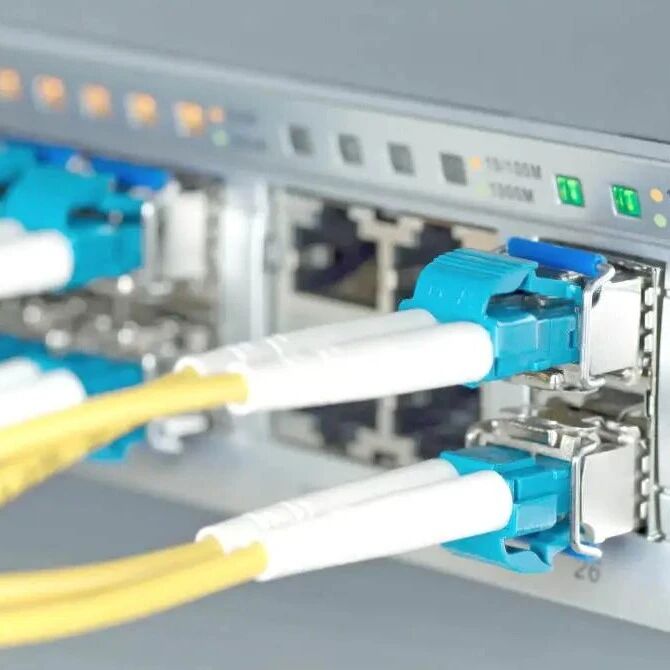
七部门最新部署,算力、人工智能等迎利好|周末要闻速递
2 1 Shi Ji Jing Ji Bao Dao· 2025-10-12 11:27
Group 1: Trade Relations and Tariffs - The U.S. announced a 100% tariff on Chinese exports related to rare earths and key software, prompting a response from China's Ministry of Commerce, which emphasized that high tariffs are not the correct approach for bilateral relations [1] - China reiterated its unwillingness to engage in a trade war but stated it would take necessary measures to protect its legitimate rights if the U.S. persists in its actions [1] Group 2: Shipping and Port Fees - The Ministry of Transport of China announced that starting from October 14, 2025, special port fees will be charged for U.S.-owned or operated vessels, including those with significant U.S. ownership [2] Group 3: Market Regulation and Antitrust - Qualcomm is under investigation by China's State Administration for Market Regulation for allegedly violating the Anti-Monopoly Law, particularly concerning its acquisition of Autotalks without proper notification [3] - The investigation follows Qualcomm's failure to comply with notification requirements after being advised to do so, leading to a formal inquiry into its business practices [3] Group 4: Industry Responses to U.S. Measures - China's Ministry of Commerce announced countermeasures against U.S. restrictions on the shipbuilding industry, framing these actions as necessary for maintaining fair competition in international shipping and shipbuilding markets [4] Group 5: Infrastructure and Technology Development - The Ministry of Industry and Information Technology, along with six other departments, issued a plan to enhance new information infrastructure and promote the integration of computing power with industry applications from 2025 to 2028 [5] Group 6: Financial Adjustments in the Market - The margin financing and securities lending rates for SMIC and Beken Technology have been adjusted back to 70% and 50%, respectively, after previously being set to zero due to high static P/E ratios [6] - Wentech Technology announced that its control over Anshi Semiconductor is temporarily limited due to a ministerial order from the Dutch government, affecting operational efficiency but not economic rights [7] Group 7: Shareholder Actions - China Unicom plans to reduce its shareholding by up to 1.20% through various trading methods, aiming to optimize its capital structure while maintaining a positive outlook on the company's future [8] - CATL has repurchased 15.99 million shares for a total of RMB 4.386 billion, representing 0.3629% of its total A-share capital [9] Group 8: Commodity Pricing - Northern Rare Earth announced that the trading price for rare earth concentrate for Q4 2025 will be adjusted to RMB 26,205 per ton, reflecting a 37.13% increase from the previous quarter [10]


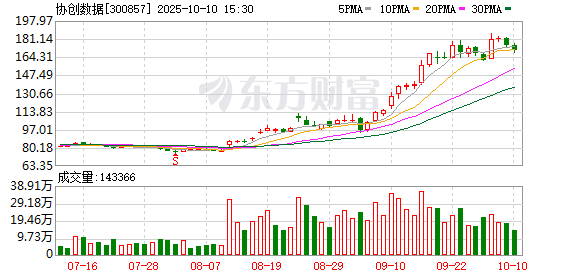
协创数据:公司购买的算力服务器正在按计划有序交付和部署中
Mei Ri Jing Ji Xin Wen· 2025-10-12 11:17
Core Viewpoint - The company is actively deploying its recently purchased 9 billion yuan worth of computing servers and is experiencing strong demand for its computing services, indicating no issues with service oversupply or contract defaults [2]. Group 1 - The company has purchased computing servers worth 9 billion yuan, which are being delivered and deployed as planned [2]. - The company is procuring servers based on existing customer orders, reflecting a robust demand for its computing services [2]. - There are no concerns regarding service oversupply or defaults on contracts, as stated by the company [2].

转债建议优先考虑回撤可控性
Soochow Securities· 2025-10-12 09:32
Group 1: Report Industry Investment Rating No relevant content provided. Group 2: Core Views of the Report - The current market's main trend revolves around computing power and electricity, and short - term policy information during festivals and weeks does not reverse the market trend. A marginal loosening of monetary policy expectations in economies like the US and Japan may extend the market bubble and boost the prices of gold and resource - related products while raising inflation expectations [3][46] - Due to the structured nature of the equity market, there are also structured characteristics in convertible bond parity and valuation. In investment strategies, the controllability of drawdown is prioritized, followed by upward elasticity, focusing on definite directions of performance improvement or valuation repair [3][46] - In the extreme market on Friday, some recommended targets from September 22 - 26 still provided hedging space, and overall, their performance was acceptable [3][47] Group 3: Summary by Related Catalogs 1. Weekly Market Review 1.1 Equity Market: Overall Rise with Most Industries Gaining - From September 29 to October 10, the equity market generally rose, with the Shanghai Composite Index up 1.80%, the Shenzhen Component Index up 1.11%, the CSI 300 up 1.47%, while the ChiNext Index fell 1.21%. The average daily trading volume of the two markets increased by about 855.25 billion yuan to 23805.86 billion yuan, a week - on - week increase of 3.73% [9][12] - Among the 31 Shenwan primary industries, 24 industries rose, with 11 industries rising more than 2%. The top - performing industries were non - ferrous metals (up 11.89%), steel (up 7.89%), basic chemicals (up 4.62%), building decoration (up 4.30%), and building materials (up 4.10%) [17] 1.2 Convertible Bond Market: Overall Rise with Most Industries Gaining - From September 29 to October 10, the CSI Convertible Bond Index rose 1.58%. Among the 29 Shenwan primary industries, 17 industries rose, with one industry rising more than 2%. The top - performing industries were beauty care (up 2.12%), environmental protection (up 1.81%), coal (up 1.71%), non - ferrous metals (up 1.25%), and basic chemicals (up 1.15%) [21] - The average daily trading volume of the convertible bond market was 1057.27 billion yuan, a significant decrease of 75.66 billion yuan, a month - on - month decline of 6.68%. The top ten convertible bonds in terms of trading volume were Guanzhong Convertible Bond, Jize Convertible Bond, etc. [21] - The overall conversion premium rate of the market gradually recovered, with an average daily conversion premium rate of 39.22%, an increase of 0.60 pcts compared to the previous period. There were different changes in conversion premium rates and conversion parities in different price, parity, and industry ranges [25][36][37] 1.3 Comparison of Stock and Bond Market Sentiments - From September 29 to October 10, the weekly weighted average and median increases of the convertible bond and underlying stock markets were positive, and the underlying stocks had a larger weekly increase. The trading volume of the convertible bond market decreased by 27.72% month - on - month, at the 51.00% quantile level since 2022, while that of the underlying stock market decreased by 22.26%, at the 92.50% quantile level [41] - Overall, the trading sentiment in the convertible bond market was better during this period, but there were differences on different trading days [41][42][44] 2. Outlook and Investment Strategies for the Future - Continue to be cautious about performance and valuation, and be sensitive to external disturbances such as tariff and non - tariff barriers and the reconstruction of the Fed's monetary policy framework [3][46] - Add several balanced chemical targets for reference, including Xingfa Group/Xingfa Convertible Bond, Hebang Biotech/Hebang Convertible Bond, and Kaisheng New Materials/Kaisheng Convertible Bond. The first two are leading companies in the glyphosate industry, which is in the middle - early stage of a "small - cycle recovery" [2][47][48] - The top ten convertible bonds with the greatest potential for parity premium rate repair next week are Liqun Convertible Bond, Meijin Convertible Bond, etc. [4][50][51]
五年之内,算力会对电力造成冲击?
2 1 Shi Ji Jing Ji Bao Dao· 2025-10-12 06:35
21世纪经济报道记者曹恩惠 全球算力正以指数级速度增长。 根据行业数据,当前全球数据中心的年耗电量已占全球总用电量的3%以上。而随着AI大模型的快速发展,这一比例还将继续上升。 当全球算力需求快速增长之时,电力供应的稳定性与经济性,成了当前热议的话题。 今年7、8月,我国月度全社会用电量连续突破万亿千瓦时大关。其中,在移动互联网、大数据、云计算等带动下,互联网和相关服务业用电量同比增加。 此外,由于新能源汽车的渗透率不断提升,充换电服务业用电量也同比显著增长。 无论是算力还是新能源汽车,都展现出对电力的巨大需求。那么,在这一趋势下,我国的电力系统能否扛住冲击? 一、制造业驱动电力需求增长 在接受21世纪经济报道能源策工作室采访时,厦门大学教授、中国能源政策研究院院长林伯强认为,中国月度社会用电量突破一万亿千瓦时是必然事件。 "它(社会用电量)本来跟经济发展,跟我们制造业是息息相关的。与此同时,居民生活水平不断提高,用电量也会提高。"林伯强表示,当前我国电力需 求结构中,来自工业、制造业的用电需求特别大。"目前数据中心肯定是带来用电影响,但目前也没有那么大。" 不过,林伯强也认为,未来算力用电需求的冲击会逐渐体 ...
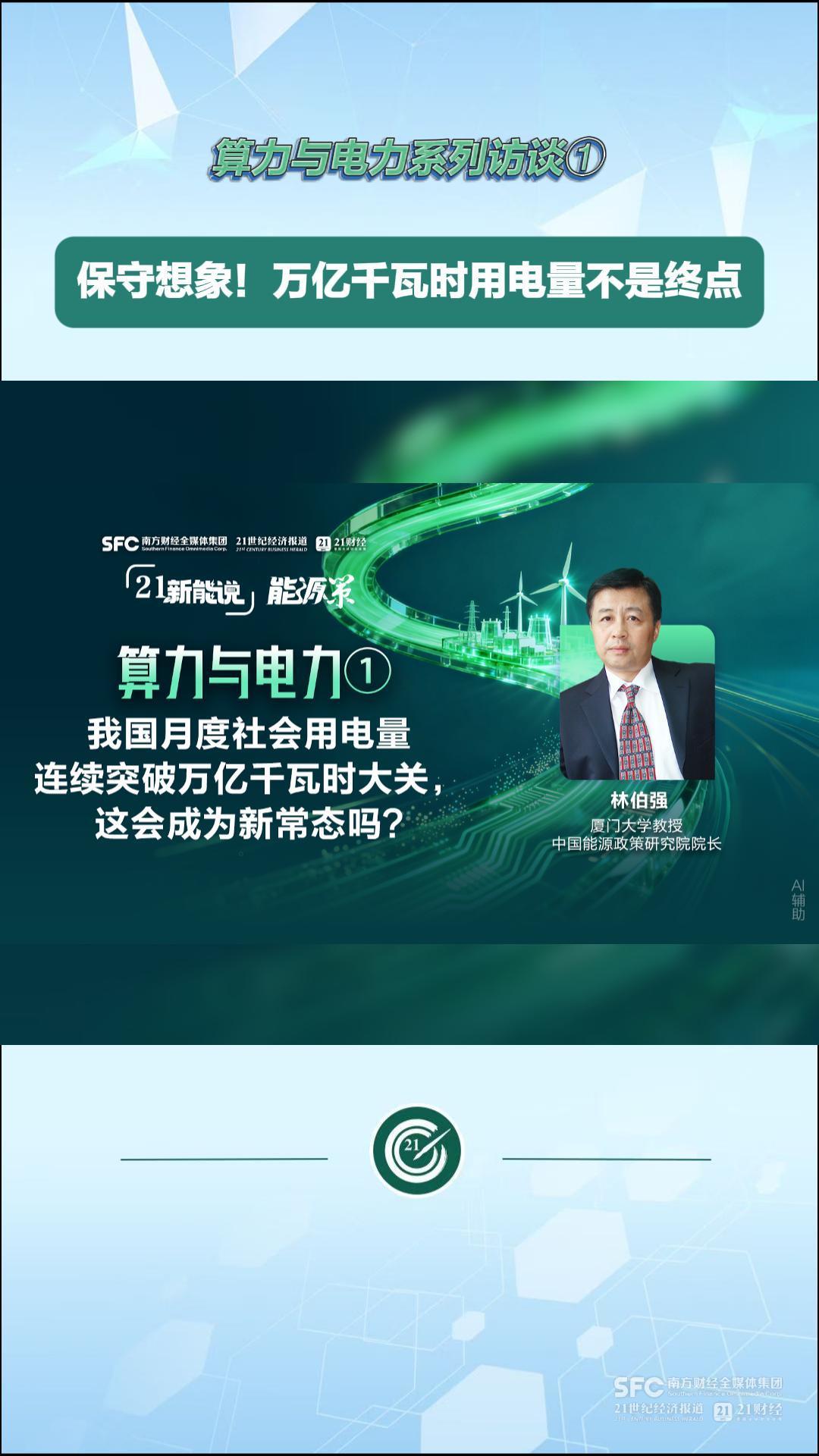
五年之内,算力会对电力造成冲击?| 21新能说
2 1 Shi Ji Jing Ji Bao Dao· 2025-10-12 05:57
今年7、8月,我国月度全社会用电量连续突破万亿千瓦时大关。其中,在移动互联网、大数据、云计算 等带动下,互联网和相关服务业用电量同比增加。此外,由于新能源汽车的渗透率不断提升,充换电服 务业用电量也同比显著增长。 无论是算力还是新能源汽车,都展现出对电力的巨大需求。那么,在这一趋势下,我国的电力系统能否 扛住冲击? 一、制造业驱动电力需求增长 在接受21世纪经济报道能源策工作室采访时,厦门大学教授、中国能源政策研究院院长林伯强认为,中 国月度社会用电量突破一万亿千瓦时是必然事件。 "它(社会用电量)本来跟经济发展,跟我们制造业是息息相关的。与此同时,居民生活水平不断提 高,用电量也会提高。"林伯强表示,当前我国电力需求结构中,来自工业、制造业的用电需求特别 大。"目前数据中心肯定是带来用电影响,但目前也没有那么大。" (原标题:五年之内,算力会对电力造成冲击?| 21新能说) 21世纪经济报道记者曹恩惠 全球算力正以指数级速度增长。 根据行业数据,当前全球数据中心的年耗电量已占全球总用电量的3%以上。而随着AI大模型的快速发 展,这一比例还将继续上升。 当全球算力需求快速增长之时,电力供应的稳定性与经济性,成 ...
算力迎来利好,周一能抵消美股的下跌吗?
Sou Hu Cai Jing· 2025-10-12 04:36
第一:七部门发布,算力、人工智能再度迎来利好 昨天,国家7部门联合发布,深入推动服务型制造创新发展方案,提出要深化"5G+工业互联网"融合应用,按需布局算力基础 设施,提升工业数据要素供给,推动人工智能技术与服务型制造融合创新, 势必未来在算力、人工智能上面的投入不会少,对高科技板块都是利好。不过美高科技大跌,能抵消影响吗? 第四:周末愉快 昨天是正常上班,今天小放一天假期,感觉工作节奏被打乱了不少。 不过,不要紧,反正都是享受人生的日子,努力是一天,不努力也是一天。为何不选择全力以赴呢? 我是股民聪哥,一个立志花10年让1亿粉丝轻松看懂财经的男人,关注我,一起向上成长。 以上仅为个人看法,不作为任何建议! 由于预算"谈不拢",美联邦ZF持续"停摆"。有工作人员表示,已经正式启动了裁员程序,如果美时间周一还没有化解危机, 15日起将暂停军队薪资。 停摆不是历史上第一次,当然也不是最后一次。两个"人"经常闹意见不统一,正常得很。只是,对经济伤害太大,美联储下 次降息几乎板上钉钉。 第三:刚果(金)钴出口禁令将于下周解除 根据周六的最新消息,刚果(金)宣布,持续了8个月的钴出口禁令将于下周(10月16日)解除。 ...