科技AI

Search documents
宝城期货股指期货早报(2026年3月4日)-20260304
Bao Cheng Qi Huo· 2026-03-04 01:41
Report Summary 1. Report Industry Investment Rating No relevant content provided. 2. Core Viewpoints - The short - term and medium - term trends of stock index futures are mainly range - bound, with an intraday view of being relatively strong [1][5]. - Recently, the negative impact of Middle - East geopolitical factors and the positive policy expectations of the Two Sessions are intertwined, leading to short - term range - bound movement of stock indices [5]. 3. Summary by Related Catalogs 3.1 Variety Viewpoint Reference - Financial Futures Stock Index Sector - For IH2603, the short - term and medium - term trends are both oscillatory, and the intraday view is relatively strong, with an overall view of range - bound movement. The core logic is that the willingness to take profits rises under the influence of risk factors [1]. 3.2 Main Variety Price Market Driving Logic - Financial Futures Stock Index Sector - The varieties include IF, IH, IC, and IM. The intraday view is relatively strong, the medium - term view is oscillatory, and the reference view is range - bound [5]. - The core logic is that yesterday, all stock indices oscillated and declined. The A - share trading volume was 3.16 trillion yuan, up from 3.05 trillion yuan the previous day, indicating a volume - based consolidation. The conflict between the US and Iran led to the closure of the Strait of Hormuz, significantly impacting the crude oil supply and causing a sharp rise in oil prices. Geopolitical factors weakened market sentiment. Rising oil prices may increase domestic manufacturing costs and reduce orders, and also affect the Fed's decision on interest rate cuts. High - valued technology AI stocks with uncertain performance growth face the risk of valuation decline. The CSI 1000 and CSI 500 indices had obvious declines in this correction. As the stock indices approach previous high levels, the willingness to chase up weakens, and the willingness of funds to take profits rises under geopolitical disturbances. With the approaching of the Two Sessions, positive policy expectations are fermenting, and the macro - policy side has a strong demand for support and a determination to support technological innovation. The policy direction and intensity in the government work report of the Two Sessions should be focused on [5].
沃什新政预期冲击下海外流动性趋紧,市场分歧时刻听坦途宏观创始人程坦闭门分享资产风向标
Sou Hu Cai Jing· 2026-02-27 03:33
Group 1 - The global market is experiencing significant divergence at the beginning of 2026, with a focus on asset rotation and industry trends [2] - A series of high-profile guests, including economists and analysts, will provide insights on asset trends, geopolitical analysis, and industry forecasts throughout the first quarter [2] - The A-share market has seen a 18-day rally followed by a pullback, with trading volume nearing 4 trillion, while the US stock market is experiencing a high-level correction [3] Group 2 - The bond market shows a mixed trend, with Chinese bonds exhibiting a bullish flattening yield curve, while US bonds are experiencing a bearish steepening [3] - Commodity markets are divided, with precious and base metals surging after volatility, while energy and black metals are underperforming due to supply-demand imbalances [3] - Upcoming events, such as the March Federal Reserve meeting and major tech conferences, are expected to influence market sentiment and investment strategies [5][3] Group 3 - The Alpha online closed-door private meeting series will host at least 36 sessions throughout 2026, focusing on market hotspots and core issues [7] - Each session will feature insights from leading experts and provide a platform for interactive Q&A, helping participants navigate asset movements [7][5] - The series aims to assist high-net-worth individuals in making informed investment decisions by offering timely market insights [7]


同样打生肖噱头,茅台为什么不如马年农夫山泉?
Sou Hu Cai Jing· 2026-02-08 11:47
Core Viewpoint - The strong rebound of Moutai has ignited the entire liquor sector, with significant price movements and market reactions indicating a potential recovery in the industry after a prolonged adjustment period [1][2][4]. Group 1: Moutai's Market Performance - Moutai's stock price surged by 8.61% on January 29, marking the highest single-day increase since February 2025, and its market capitalization returned to 1.8 trillion yuan with a trading volume exceeding 26.3 billion yuan [2]. - The stock price of Moutai has rebounded over 18% from its low, approaching a critical technical bull market position, which could influence the extent of its price increase and the nature of the rebound [4]. - The price of Moutai's 53-degree 500ml flying Moutai is psychologically anchored at 1499 yuan, and if the market price falls below this level, Moutai may implement strategies to stabilize prices [4]. Group 2: Industry Trends and Consumer Behavior - The upcoming Spring Festival is traditionally a peak consumption period for liquor, and the introduction of iMoutai has helped stabilize prices after a previous decline [1][4]. - There is a notable increase in demand for flying Moutai during the Spring Festival, but post-holiday, consumer purchasing behavior may revert to more rational levels, potentially affecting prices [4]. - The overall liquor industry is showing signs of recovery, with first-tier brands like Moutai indicating a gradual exit from the adjustment phase, which could positively impact the pricing structure across the sector [7]. Group 3: Collectible Liquor Market - The collectible value of Moutai's zodiac-themed products is under scrutiny, with some experts advising caution regarding their investment potential, as past releases have shown significant price fluctuations [5]. - The market for zodiac-themed Moutai has seen substantial price adjustments, with the latest batch experiencing a drop from 2750 yuan to 2280 yuan per bottle [4][5]. - Comparatively, other collectible products, such as the zodiac water from Nongfu Spring, have demonstrated even higher premium rates, raising questions about Moutai's relative value in the collectible market [1]. Group 4: Economic Context and Future Outlook - The liquor industry has experienced multiple adjustment cycles since 1999, with the current cycle, which began in 2022, being notably prolonged, reflecting broader economic challenges and shifts in consumer demand [8][9]. - The recovery of the liquor sector is closely tied to macroeconomic indicators, with expectations for a turning point in the industry by the second half of 2026 as inventory levels normalize [9].



招商证券:市场在未来一段时间将会以震荡为主 节后指数有望强于节前 风格层面继续推荐成长风格
智通财经网· 2026-02-03 23:53
Core Viewpoint - The market is expected to experience volatility in February, with indices likely to perform better post-holiday compared to pre-holiday levels. The report emphasizes a preference for growth style investments, particularly in small-cap and growth sectors, as the market remains in a spring rally phase [1][2]. Market Style Outlook - Growth style is favored, with a convergence in performance between large-cap and small-cap stocks anticipated. The recommended indices include CSI 1000, ChiNext 50, CSI 300 Quality, and CSI 800 Information [2]. - Historical data from 2016-2025 indicates that small-cap and growth styles have a higher success rate in February. The late timing of the Spring Festival and the upcoming Two Sessions are expected to enhance the performance of small-cap stocks due to increased market risk appetite [2]. Fundamental Analysis - The manufacturing PMI for January recorded at 49.3, indicating a return to contraction territory, with both production and demand showing marginal declines. The ongoing structural issue of insufficient domestic demand remains, with policies aimed at expanding domestic consumption expected to be a primary focus [2]. - On the international front, expectations regarding the Federal Reserve's policies and a weaker dollar may lead to a temporary strengthening of the dollar, which could exert pressure on A-share cyclical styles. However, sectors benefiting from industrial trends, such as technology and AI, are likely to be less affected [2]. Liquidity and Capital Supply-Demand - February is projected to see continued net inflows of incremental capital, with foreign capital expected to continue flowing in before the holiday and financing likely to rebound afterward. The central bank's measures to counteract liquidity tightening from government bond issuances in January are expected to maintain a stable and ample liquidity environment in February [3][4]. - The stock market experienced a net outflow of tracked capital in January, with financing becoming the main source of incremental capital. The demand side shows an increase in net reductions by major shareholders, while IPO and refinancing scales have decreased, keeping overall funding demand stable [4]. Market Sentiment and Capital Preferences - In January, the risk premium for the entire A-share market fluctuated, with major indices experiencing initial gains followed by volatility. The technology sector remained the dominant style, with significant trading activity in small-cap growth and STAR 50 indices, while large-cap growth styles saw lower trading concentration [4].

A股流动性与风格跟踪月报(202602):成长占优,大小盘表现差异收敛-20260203
CMS· 2026-02-03 14:32
Market Style Outlook - The report continues to recommend a growth style as the market is still in the spring rally phase, with the performance gap between large and small caps expected to narrow, favoring large caps first and then small caps. Recommended indices include CSI 1000, ChiNext 50, CSI 300 Quality, and CSI 800 Information [1][4][11] - Historical data from 2016 to 2025 indicates that small-cap and growth styles have a higher winning probability in February, particularly due to the upcoming Two Sessions, which historically boosts small-cap performance due to increased market risk appetite [4][11][12] Liquidity and Capital Supply-Demand - In February, incremental capital is expected to continue net inflow, with foreign capital likely to remain net inflow before the holiday and financing expected to return post-holiday. The macro liquidity environment is anticipated to remain stable and ample [2][4][26] - The stock market saw a net outflow of tracked funds in January, with financing becoming the main source of incremental capital, while ETF experienced significant net redemptions. However, new equity fund issuance has rebounded, indicating a potential recovery in risk appetite for financing funds [2][4][26] Market Sentiment and Capital Preference - In January, the overall A-share risk premium initially decreased and then increased, with technology style being relatively dominant. Small-cap growth and Sci-Tech 50 indices saw significant trading activity, while large-cap growth style remained less concentrated [3][4][11] - The report highlights that the market's risk appetite is expected to remain high leading up to the Two Sessions, which typically favors small-cap stocks due to their greater elasticity [4][11][15] Fundamental Analysis - The manufacturing PMI for January recorded at 49.3, indicating a return to contraction territory, with both production and demand showing signs of cooling. The report emphasizes the ongoing structural contradiction of insufficient domestic demand, which will continue to be a focus for policy efforts [16][17][18] - The report notes that while the price index has strengthened, the demand side has weakened more significantly, suggesting a need for policies aimed at expanding domestic demand [16][17][18] External Liquidity - The report discusses the potential impact of the newly nominated Federal Reserve Chairman's policies, which may lead to a stronger dollar in the short term, putting pressure on A-share cyclical styles. However, sectors like technology and AI, which are driven by industrial trends, are expected to be less affected [20][23][24] Capital Market Dynamics - The report indicates that foreign capital tends to significantly increase holdings before the holiday, with a tendency to slow or reverse net inflows post-holiday. This pattern is attributed to new capital allocation and rebalancing strategies by foreign investors at the beginning of the year [26][27]
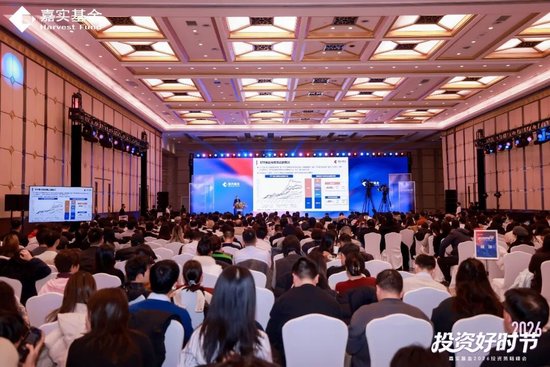
信息含金量拉满,嘉实基金2026投资策略峰会干货集锦!
Xin Lang Cai Jing· 2026-01-24 01:23
Core Insights - The 2026 investment strategy conference hosted by Harvest Fund focused on macro policy trends, equity market layout, ETF evolution, and structural opportunities in the context of "反内卷" (anti-involution) and "扩内需" (expanding domestic demand) [1][35] Market Outlook - The Chinese economy demonstrated significant policy resilience and development stability in 2025, with proactive fiscal and stable monetary policies creating a relatively loose macro environment [3][37] - The equity market in 2026 is expected to experience a rationally optimistic outlook, with potential significant shifts in market style and structure, influenced by domestic demand sectors [3][39] Investment Strategies - Investors are advised to focus on two main opportunities: the "AI+" downstream applications and upstream raw materials, as well as low-position domestic demand sectors benefiting from profit recovery and domestic demand expansion measures [5][39] - The ETF market is anticipated to see explosive growth in 2025, with a focus on dynamic asset allocation to navigate market volatility effectively [5][40] Fixed Income Insights - The fixed income sector remains a cornerstone for asset allocation, with approximately 50 trillion yuan in term deposits maturing in 2026, creating substantial demand for stable fixed income products [5][43] - The current economic environment is characterized by a "K-shaped recovery," necessitating adjustments in bond market analysis frameworks [5][43] Multi-Strategy Approach - A multi-strategy investment approach is essential to adapt to the accelerating market rotation, with a focus on "胜率思维" (probability thinking) to enhance certainty in investment outcomes [5][45] - Harvest Fund has developed a diverse product range to meet varying investor needs, emphasizing both standardized and personalized investment products [5][47] Technology and AI Investment - The "科技AI" (technology and AI) sector is highlighted as a key growth area, with ongoing advancements expected to reshape industry ecosystems [5][49] - Investment in AI is still in its early stages, with significant long-term potential despite current volatility [5][53] Policy-Driven Opportunities - The dual policies of "反内卷" and "扩内需" are seen as central to understanding current and future macroeconomic and industrial changes in China [5][59] - Investors are encouraged to identify structural investment opportunities that benefit from improved competitive environments and potential profit recovery [5][61]
全球屏息!达沃斯最危险的迟到者
Ge Long Hui· 2026-01-22 03:17
Group 1 - The World Economic Forum in Davos has attracted global attention, with around 400 political leaders and 1,700 business leaders in attendance, focusing on geopolitical issues, trade tariffs, and technology [2][6]. - President Trump is set to discuss the Greenland dispute during his delayed arrival at the forum, which was caused by a malfunction of his presidential aircraft [3][4]. - Trump's recent announcement of a 10% tariff on eight European countries and a 200% tariff on French wine and champagne has cast a shadow over the forum, indicating escalating trade tensions [7][12]. Group 2 - U.S. Treasury Secretary Mnuchin has urged allies to adhere to trade agreements and dismissed concerns about potential sell-offs of U.S. debt by Europe as unfounded [10][12]. - French President Macron criticized the U.S. for attempting to weaken Europe and emphasized the need for multilateral cooperation against imperial ambitions [16][17]. - Canadian Prime Minister Carney warned that the post-World War II rules-based international order is under threat, calling for middle powers to unite against hegemonic pressures [21][26][29]. Group 3 - U.S. and Russian representatives held a constructive two-hour meeting in Davos to discuss a peace plan for Ukraine, indicating a potential shift in diplomatic relations [30][31]. - The discussions included U.S. special envoy Kushner and Russian representative Dmitriev, highlighting a mutual interest in achieving a diplomatic resolution [30][33].
老登归来?多只百亿基金创新高!
Xin Lang Cai Jing· 2026-01-21 09:55
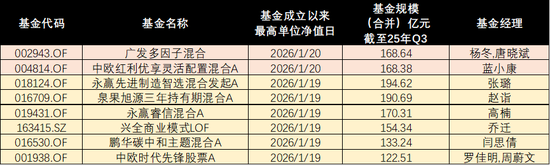
Core Viewpoint - The market has recently shifted from a cooling trend to a rebound led by the electronics and non-ferrous metals sectors, with several large-cap active equity funds reaching new net asset value (NAV) highs [1][12]. Fund Performance - A total of 8 large-cap active equity funds achieved new NAV highs on January 19-20, 2026, indicating strong performance in the current market environment [2][12]. - The top-performing funds include: - **Guangfa Multi-Factor Mixed Fund**: NAV reached 168.64 billion, managed by Yang Dong and Tang Xiaobin, with a long-term annualized return of over 24% [3][14]. - **China Europe Dividend Preferred Flexible Allocation Mixed A**: NAV reached 168.38 billion, managed by Lan Xiaokang, with an average return exceeding 40% across three products in 2025 [3][14]. - **Yongying Advanced Manufacturing Intelligent Selection Mixed Fund A**: NAV reached 194.62 billion, managed by Zhang Lu [3][14]. Market Trends - The recent rebound in the electronics sector is crucial for the recovery of large-cap funds, particularly the **Xingquan He Run Fund**, which is close to recovering its maximum drawdown from 2021 [7][16]. - The **Xingquan He Run Fund** has a scale of nearly 250 billion and is only 2% away from its historical high, indicating a strong potential for recovery if the electronics sector maintains its momentum [8][16]. Investment Strategies - The funds that have performed well are characterized by their focus on value investing and long-term stability, avoiding short-term market trends [4][14]. - Fund managers who have successfully navigated recent market conditions include those who focused on technology and renewable energy sectors, demonstrating a strategic approach rather than relying on luck [6][15]. Additional Notable Funds - Other large-cap funds worth monitoring include: - **Ruiyuan Balanced Value Three-Year Fund** and **Guangfa Steady Growth Fund**, both of which have also shown resilience and are close to recovering from previous drawdowns [9][17].
和讯投顾陈炜:市场站在4000点,关注什么类型的机遇?
Sou Hu Cai Jing· 2026-01-05 11:22
Group 1 - The market has successfully surpassed the 4000-point mark, indicating a bullish trend with increased trading volume and a breakout characteristic [1] - All major indices, including Shanghai Composite, Shenzhen Component, ChiNext, and others, have shown upward movement, confirming the authenticity of the current rally [1] - The semiconductor sector has seen significant gains during the holiday, positively impacting the Hong Kong market, although its performance in the A-share market was below expectations [1] Group 2 - The AI application sector, particularly in digital media, gaming, and AI agents, has demonstrated strong upward momentum [1] - The human brain engineering sector has emerged as a new focus, showing short-term stimulation potential with notable stock increases [2] - The overall market trend is centered around technology and AI, with expectations for related infrastructure and data sectors to perform well in the future [2]
高股息+高回撤的优质股曝光,12股上榜
证券时报· 2025-12-29 12:40
Core Viewpoint - The article emphasizes the strong performance of quality stocks since October, particularly those with low price-to-earnings ratios and attractive dividend yields, suggesting that these stocks will continue to attract attention as the year ends and the new year begins [3]. Group 1: Market Trends - Quality stocks have shown robust performance, with the low price-to-earnings index rising over 8% and the performance index for quality stocks increasing over 6% [3]. - The market is expected to focus on quality stocks, especially those with good dividend yields and trading at lower valuations [3]. Group 2: Investment Recommendations - Tianfeng Securities suggests three main investment themes for the upcoming spring market: 1. Technology AI sector led by DeepSeek breakthroughs and open-source initiatives 2. Economic recovery driven by both domestic and international factors, continuing the "stronger gets stronger" trend in the bull market, with opportunities in cyclical sectors 3. The ongoing rise of undervalued dividend stocks [4]. Group 3: Notable Stocks - According to statistics, 12 stocks have a dividend yield exceeding 3% and have retraced more than 30% from their yearly highs, excluding ST stocks [4]. - Notable companies include: - Transsion Holdings, valued at nearly 80 billion, is a leader in the African mobile phone market, benefiting from the transition from feature phones to smartphones [4]. - Huali Group, valued at nearly 60 billion, is a leading sports shoe manufacturer, expected to maintain rapid growth through expansion and new client acquisition [4]. - Aima Technology and Lianmei Holdings have shown significant net profit growth in the first three quarters, with Aima's revenue increasing nearly 21% and net profit up nearly 23% year-on-year [4]. Group 4: Institutional Interest - Certain stocks have gained favor among institutional investors, with Transsion Holdings, Huali Group, and Ganyuan Foods seeing significant holdings valued over 100 million as of the end of Q3 [5]. - Companies like Huali Group, Jinyu Medical, and Aima Technology are highlighted as favorites among institutional investors [5]. Group 5: Dividend Performance - Companies such as Ousheng Electric, Transsion Holdings, and Lianmei Holdings have shown substantial cumulative dividend rates exceeding 190% over the past three years [5]. - Ousheng Electric has maintained a dividend rate above 70% for four consecutive years, while Transsion Holdings and Lianmei Holdings have consistently exceeded 50% annually in the last three years [5].