
AI技术

Search documents
资金动向 | 北水抢筹港股超22亿港元,连续10日出逃中芯国际!
Ge Long Hui· 2025-12-03 10:59
Group 1 - Southbound funds net bought Hong Kong stocks worth 2.279 billion HKD on December 3, with notable purchases including Xiaomi Group-W (870 million HKD), Alibaba-W (427 million HKD), and Meituan-W (297 million HKD) [1] - Southbound funds have continuously net bought Alibaba for 15 days, totaling 28.64961 billion HKD; Meituan for 5 days, totaling 2.2804 billion HKD; and Xiaomi for 4 days, totaling 1.82091 billion HKD [3] - Southbound funds have continuously net sold SMIC for 10 days, totaling 2.9912 billion HKD [3] Group 2 - Xiaomi Group-W announced the launch of a vehicle selection feature on its app, available to all users starting December 3 [5] - Alibaba-W's charity foundation released a report on December 3, indicating that over 18,000 disabled individuals have gained income through AI technology and its business ecosystem [5] - Meituan-W initiated a new safety incentive program for delivery riders across nearly 200 cities, rewarding those who do not run red lights with cash bonuses [5] Group 3 - XPeng Motors reported November sales of 36,728 vehicles, a year-on-year increase of 19%, but a month-on-month decrease of 12% [5] - From January to November 2025, XPeng Motors' cumulative delivery reached 391,937 vehicles, a year-on-year increase of 156% [5] - XPeng Motors' overseas deliveries reached 39,773 vehicles from January to November, marking a year-on-year increase of 95% [6] Group 4 - Longpan Technology announced a long-term procurement agreement for lithium iron phosphate cathode materials with a sales value estimated between 4.5 billion to 5.5 billion CNY [6]



文献手迹里的周信芳艺术人生,“与时麒鸣”北京展出
Xin Lang Cai Jing· 2025-12-03 10:57
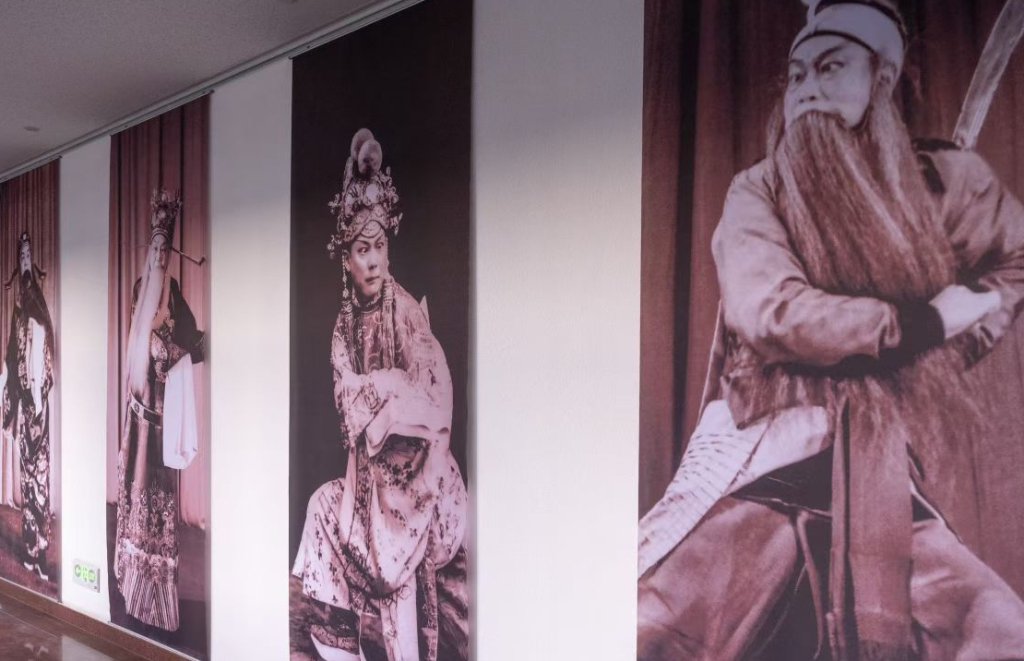
一张1907年泛黄的喜连成班戏单上,周信芳与梅兰芳的名字并列,这是两位大师同台演出的较早记录,也是京剧史上难得一见的珍贵瞬间。 12月2日,包含这一中国戏曲文物珍品的"与时麒鸣——纪念周信芳诞辰130周年展"在国家典籍博物馆对外展出,集结了200余件珍贵展品,包括实物63 件、照片146张、音视频12个,多角度地展现一代京剧名家周信芳艺术成就与人生之路。 此次展览由上海市文化和旅游局、国家图书馆(国家典籍博物馆)主办,以"身临麒境""麒开艺境""麒光熠彩""麒艺流芳"四部分铺展周信芳的艺术人生。 观众在现场既能看到泛黄的早期戏单、亲笔手稿等历史文献,也能通过AI技术看到老照片中的人物"活"起来,或在VR互动区与周信芳塑造的经典角色合 影。 国家 典籍博物馆展出现场 展出文献中,最难得的或许是1907年喜连成班在北京广和茶楼的戏单,上面清晰地印着周信芳与梅兰芳同台的信息。这张首次展出的戏单,记录了两位京 剧大师艺术生涯早期的交汇时刻。 1907年喜连成班在北京广和 茶楼的戏单。上海图书馆收藏 信芳手抄《周信芳戏目》 这份手稿包含《三字经》《恶虎关》《跑城》《八大锤》等剧目,展现了他早期广泛的戏路。 青年时期经历 ...
QQ推出群聊总结、录音转文字与文本纠正功能
Huan Qiu Wang· 2025-12-03 09:44
Core Viewpoint - QQ has launched AI-driven accessibility features to enhance communication for visually and hearing-impaired users, marking a significant step towards inclusive social interaction [1][3][7] Group 1: AI Features for Accessibility - The "Group Chat AI Summary" feature allows users to extract key content from chat records, improving the efficiency of communication and user engagement [1] - The "Text Correction" feature helps hearing-impaired users by detecting and correcting typos, grammar, and syntax errors in real-time, facilitating clearer communication [3] - The "Voice-to-Text" function assists users in converting audio messages into text, addressing communication barriers faced by hearing-impaired individuals [5] Group 2: Historical Context and Future Commitment - Since 2009, QQ has been committed to exploring information accessibility, implementing over 3,000 features such as image voice description and OCR text extraction [7] - The company aims to continue optimizing social experiences through AI technology, emphasizing the importance of ongoing investment in creating a more equitable and accessible communication environment [7]


金价,大跌!原因找到了
Sou Hu Cai Jing· 2025-12-03 08:56
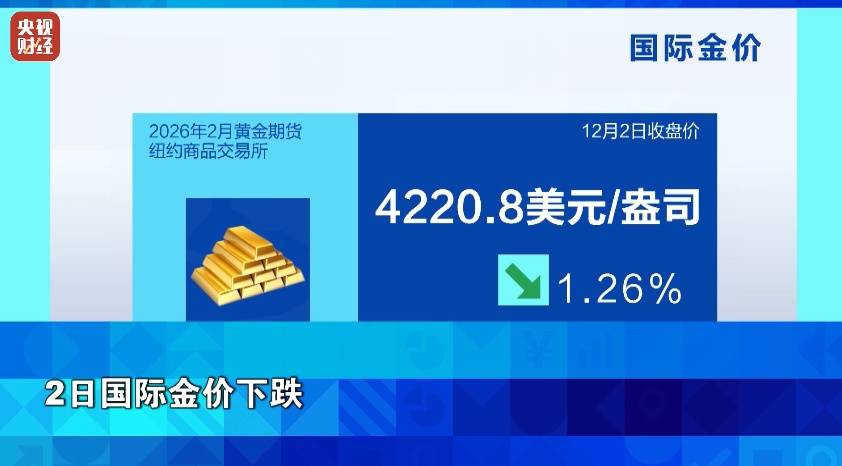
Group 1 - The market is focusing on the prospects of the Federal Reserve's interest rate cuts, with investor concerns about global financial market liquidity tightening easing [1] - Major U.S. stock indices closed higher, with the Dow Jones up 0.39%, S&P 500 up 0.25%, and Nasdaq up 0.59% [1] - Boeing executives indicated plans to gradually increase production, expecting to achieve positive cash flow of billions of dollars by 2026, which led to a 10.15% surge in Boeing's stock price [1] Group 2 - Gold prices fell over 1.2% as investors took profits ahead of key U.S. inflation data, with February gold futures closing at $4220.8 per ounce, down 1.26% [3] - European stock indices showed mixed results, with the Eurozone's November CPI rising 2.2%, slightly above expectations, influencing cautious trading [7] - The German stock market rose by 0.51%, while the UK and French markets saw slight declines of 0.01% and 0.28%, respectively [7] Group 3 - International oil prices declined due to expectations of a supply surplus in the global crude oil market, with January light crude futures closing at $58.64 per barrel, down 1.15% [9] - February Brent crude futures also fell, closing at $62.45 per barrel, down 1.14% [9]

兆新股份锚定AI手机增长机遇 推出多款专属养护产品
Zheng Quan Shi Bao Wang· 2025-12-03 07:41
Core Insights - The breakthrough development of AI technology is driving the smartphone market into the "smart agent era," leading to a surge in demand for specialized and adaptable device maintenance solutions [1][2] - Zhaoxin Co., Ltd. (002256), with 30 years of experience in fine chemical engineering, has launched several AI smartphone-specific maintenance products, leveraging its self-developed AI formula assistance system to integrate technical advantages with practical value [1] Group 1 - AI smartphones have seen a 40% increase in internal component density compared to traditional phones, resulting in more precision gaps that accumulate dust, oil, and sweat, which can lead to performance issues [2] - Zhaoxin's screen cleaner is developed with "AI adaptation" as the core logic, using a skin-friendly formula that effectively removes stubborn stains like fingerprints and dust, ensuring clear screen visibility for AI sensors [1][2] - The company is transitioning from traditional fine chemicals to the AI smart hardware maintenance sector, aiming to establish a comprehensive "cleaning—maintenance—protection" solution [2] Group 2 - Zhaoxin's new cleaning agents utilize industrial-grade technology with low surface tension eco-friendly formulas, allowing for deep cleaning of micro-gaps without disassembly, featuring quick-drying and residue-free properties [2] - The company plans to continue deepening technological innovation and expanding its product matrix in line with the evolving trends of AI smart hardware, targeting the growing market in the cleaning and maintenance of advanced AI devices [2]

三季度全球折叠屏智能手机出货量同比增长14%,消费电子ETF(561600)连续4天获资金净流入
Xin Lang Cai Jing· 2025-12-03 05:26
Group 1 - The core viewpoint of the articles highlights the growth and investment potential in the consumer electronics sector, particularly driven by advancements in AI technology and the increasing popularity of foldable smartphones [1][2]. Group 2 - As of December 3, 2025, the CSI Consumer Electronics Theme Index (931494) showed mixed performance among its constituent stocks, with BOE Technology Group (000725) leading with a 4.38% increase, while Transsion Holdings (688036) experienced the largest decline [1]. - The Consumer Electronics ETF (561600) has seen a continuous net inflow of funds over the past four days, with a peak single-day net inflow of 66.02 million yuan, totaling 113 million yuan, averaging 28.13 million yuan per day [1]. - According to Counterpoint Research, global shipments of foldable smartphones increased by 14% year-on-year in Q3 2025, reaching a historical quarterly high, with foldable devices now accounting for 2.5% of global smartphone shipments [1]. - The foldable smartphone market is expected to close 2025 with a stable growth rate of approximately 16% year-on-year, with significant expansion anticipated in 2026 due to improvements in durability, design, and AI-driven software experiences [1]. - Huatai Securities reports that 72% of consumers are willing to pay a premium of about 15% for products with AI capabilities, indicating a clear willingness to invest in AI-integrated consumer electronics [2]. - The CSI Consumer Electronics Theme Index comprises 50 listed companies involved in component production and brand design, with the top ten weighted stocks accounting for 56.39% of the index [2].
跨境电商新十年:从粗放式生长到“向优、向新、向全球”高质量发展
Huan Qiu Wang· 2025-12-03 04:27
Core Insights - The 2025 Amazon Global Store Cross-Border Summit will take place in Hangzhou from December 4 to 7, attracting over 10,000 industry professionals, marking the 10th anniversary of Amazon's operations in China and the establishment of the Hangzhou Cross-Border E-Commerce Comprehensive Pilot Zone [1][3] - The summit aims to address the future of cross-border e-commerce amidst the rise of generative AI technology and the reshaping of global consumption patterns, indicating a shift towards more efficient, intelligent, and sustainable development paths [3][4] Group 1: Industry Transformation - Over the past decade, China's cross-border e-commerce has evolved from channel exploration to mature models, transitioning from price competition to value creation [3][4] - The industry is undergoing a profound transformation, moving from a reliance on human labor and experience to a data-driven, technology-enabled, and system-supported approach [5] - The summit will feature discussions on brand and product development, global expansion, innovative operations, and local empowerment, with the announcement of numerous innovative initiatives, including new supply chain solutions and AI applications [4][5] Group 2: Regional Focus and Collaboration - Hangzhou's selection as the summit location is strategic, being the first cross-border e-commerce comprehensive pilot zone in China and a key area for Amazon's deep collaboration with local industries [5][7] - Amazon has signed a new cooperation memorandum with the Zhejiang Provincial Department of Commerce to promote the transformation of 20 characteristic industrial belts over the next three years, aiming to create 200 cross-border e-commerce brands and train 30,000 professionals [7][8] - The collaboration has already enabled 400 leading enterprises in Zhejiang to expand globally through Amazon, with notable successes including companies that have gone public [7][8] Group 3: Brand Development and AI Integration - The essence of cross-border e-commerce is shifting from merely selling products abroad to repositioning Chinese manufacturing within the global value chain, with a focus on brand cultivation [8] - Amazon will provide targeted training and support for foreign trade enterprises with brand-building potential, emphasizing the importance of brand development in the global market [8] - AI technology is reshaping the cross-border e-commerce landscape by enhancing consumer shopping experiences and enabling sellers to transition from experience-driven to data-driven decision-making [9][10] Group 4: Global Expansion Strategy - Amazon has opened 20 international sites to Chinese sellers, including markets in the US, Europe, Australia, the Middle East, and Latin America, broadening their global reach [10][11] - The focus for Chinese sellers has shifted from whether to globalize to how to effectively deepen their global presence, especially in light of increasing macroeconomic uncertainties [11] - The summit represents a pivotal moment for the industry, symbolizing a transition from manufacturing to international brand creation and from human-driven processes to AI empowerment [11]

【IPO一线】非洲手机之王传音控股递表港交所,聚焦新兴市场构建智能生态
Ju Chao Zi Xun· 2025-12-03 03:11
Company Overview - Transsion Holdings has submitted its listing application to the Hong Kong Stock Exchange, with CITIC Securities as the sole sponsor [2] - The funds raised will be allocated to four main areas: R&D for AI technologies, market promotion and brand building, enhancing mobile internet services and IoT product layout, and supplementing working capital [2] - As a leading provider of smart terminal products and mobile internet services, Transsion focuses on smartphone design, R&D, production, sales, and brand operation [2] - Since its establishment in 2013, the company has gained significant market share in emerging markets, particularly in Africa, earning the title "King of Africa" [2] Market Position - According to Frost & Sullivan, Transsion holds a 61.5% market share in the African smartphone market, ranking first in mobile sales for 2024 [3] - The company also leads in the emerging Asia-Pacific and Middle Eastern markets with market shares of 15.4% and 22.8%, respectively [3] - Transsion's localized product strategy has been crucial for its market success, with tailored products addressing specific user needs in different regions [3] Business Ecosystem - Transsion has developed an ecosystem that integrates smartphones, mobile internet services, and IoT products, positioning smartphones as the core entry point for users into smart living [3] - The mobile internet services segment is expanding steadily, with projected revenues of RMB 835 million for 2024 and RMB 416.5 million for the first half of 2025 [3] - The IoT products segment, including TWS earphones, is also performing well, with expected revenues of RMB 4.6838 billion for 2024 and RMB 2.5681 billion for the first half of 2025 [3] Industry Outlook - Emerging markets are projected to be the main growth engine for the global smartphone market, with revenue expected to grow from USD 171.1 billion in 2024 to USD 236.7 billion by 2029, at a CAGR of 6.7% [4] - The share of emerging markets in the global smartphone market is anticipated to increase from 36.2% in 2024 to 39.9% in 2029 [4] - The transition from feature phones to smartphones, along with economic development and consumer upgrades in emerging markets, are key growth drivers [4]


金价,大跌!
中国能源报· 2025-12-03 03:05
Group 1: Market Overview - On December 2, international gold prices fell, with the New York Mercantile Exchange's February gold futures closing at $4,220.8 per ounce, down 1.26% [5] - The U.S. stock market saw a collective rise in major indices, with the Dow Jones up 0.39%, S&P 500 up 0.25%, and Nasdaq up 0.59% [1] - Investors are focusing on the Federal Reserve's interest rate cut prospects, alleviating concerns over global financial market liquidity tightening [1] Group 2: Company-Specific Developments - Boeing executives indicated plans to gradually increase production, expecting to achieve positive cash flow of several billion dollars by 2026, reversing a negative cash flow trend since 2023. This optimistic outlook led to a 10.15% increase in Boeing's stock price [1] - U.S. airline stocks generally rose, with United Airlines up 3.22% and American Airlines up 2.01% [1] Group 3: European Market Insights - The Eurozone's November Consumer Price Index (CPI) rose by 2.2% year-on-year, slightly above expectations, reinforcing market predictions that the European Central Bank will maintain interest rates in its upcoming meeting [7] - European stock indices showed mixed results, with the German market rising by 0.51%, while the UK and French markets saw slight declines of 0.01% and 0.28%, respectively [7]

十年后,亚马逊再一次选择杭州
Hang Zhou Ri Bao· 2025-12-03 02:41
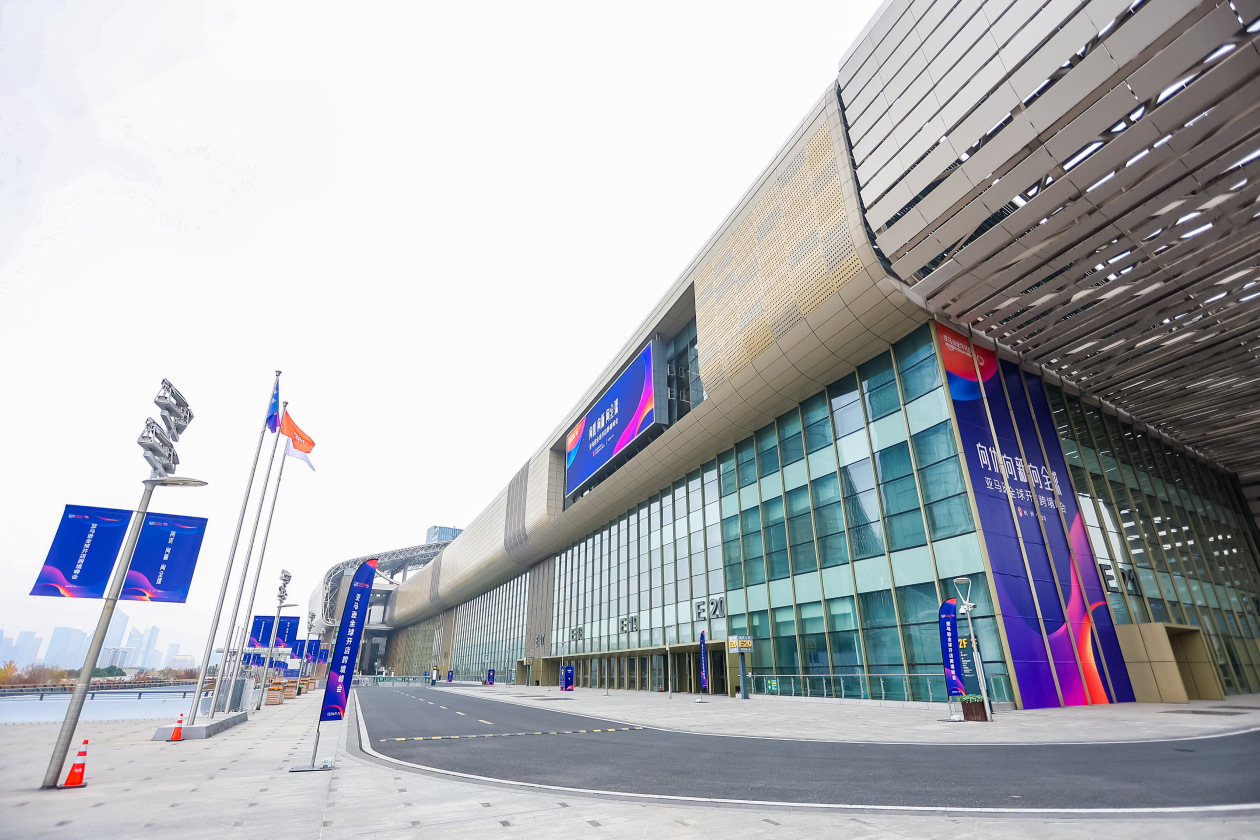
12月4日至7日,杭州国际博览中心将迎来"2025亚马逊全球开店跨境电商峰会",这是跨境电商行业 迄今规模最大、规格最高、影响最广的年度会议。 在进入中国市场的第十年,亚马逊将其年度最重要的活动放在了杭州。选择杭州,并非偶然。 今年是中国跨境电子商务综合试验区设立十周年,也是亚马逊全球开店正式在华开展运营的十周 年。二者携手,共同见证并参与了中国跨境电商发展的"黄金十年"。 全球最优生态的杭州探索 十年来,杭州综试区大胆探索,创新推出"六体系两平台"顶层设计,这一模式被国务院在全国推 广,跨境电商综试区试点扩展至177个城市。 在这片创新沃土上,企业的出海梦想加速照进现实。巨星科技从五金代工起步,借跨境电商东风打 造自有品牌WORKPRO,在亚马逊畅销排行榜上长期霸榜;可靠股份针对欧美银发市场推出自有品牌 WHYWORRY、泰普森实业深耕户外家具跨境零售,在海外市场站稳脚跟。十年来,杭州跨境电商店 铺数从获批之初的200多家增至6.5万余家,增长约325倍,99%以上为民营企业,1586家企业交易额超 2000万元。 这种旺盛生命力的背后,正是杭州精心构建的"全球跨境电商最优生态圈": 亚马逊与杭州的缘分 2 ...