产业升级

Search documents
开局之年经济工作怎么干
Sou Hu Cai Jing· 2026-02-15 10:44
Core Viewpoint - The article emphasizes the importance of expanding domestic demand through both consumption and investment to support economic growth in China, particularly in the context of the challenges faced in 2026 and beyond [2][14]. Group 1: Economic Performance and Goals - China's GDP has reached 140 trillion yuan, with a per capita GDP exceeding 13,000 USD for three consecutive years [1] - The manufacturing value added is 34.7 trillion yuan, maintaining the world's leading position for 16 years [1] - The import scale of goods has hit a record high of 18.5 trillion yuan, indicating robust economic performance [1] Group 2: Domestic Demand and Consumption - The strategy to expand domestic demand has been firmly implemented, with a significant contribution of over 67% from domestic demand to economic growth in 2025, and consumption contributing 52% [5] - Current consumer spending is around 40%, which is 10-30 percentage points lower than developed countries, indicating substantial growth potential in the consumption market [5] - The government aims to enhance consumer capacity and willingness through various measures, including optimizing supply and removing unreasonable restrictions [5][22] Group 3: Investment Strategies - Investment is crucial for expanding domestic demand and stabilizing economic growth, with a focus on both physical and human capital [6] - The government plans to increase central budget investments and optimize the use of local government special bonds to stimulate effective investment [6] - Private investment is recognized as a vital force, with efforts to improve mechanisms for private enterprises to participate in major projects [6] Group 4: Technological Innovation and Industry Development - Emphasis is placed on the integration of technology and industry, with regions like the Guangdong-Hong Kong-Macao Greater Bay Area being highlighted as leaders in innovation [7][10] - The article notes that China's R&D expenditure intensity reached 2.8%, surpassing the OECD average for the first time, indicating a strong focus on high-level technological supply [11] - There is a call for strengthening the innovation ecosystem to foster original and disruptive technological advancements [11][12] Group 5: Reforms and Market Integration - The article discusses the need for deepening reforms and expanding institutional openness to enhance economic vitality [14][18] - The construction of a unified national market is highlighted as a significant goal, with ongoing efforts to eliminate local protectionism and market segmentation [15][16] - The government aims to create a favorable environment for business operations and competition through regulatory improvements [16][17] Group 6: Social Welfare and Employment - The focus on improving living standards is underscored, with an average annual increase of 5.4% in per capita disposable income during the 14th Five-Year Plan [19] - Employment remains a priority, with measures to ensure stable job creation, particularly for youth and vulnerable groups [23] - The article emphasizes the importance of enhancing education and healthcare systems to meet public expectations and improve overall quality of life [24][25]

尺素金声|新设外资企业增长19.1%,中国磁场引力强劲
Sou Hu Cai Jing· 2026-02-15 10:21
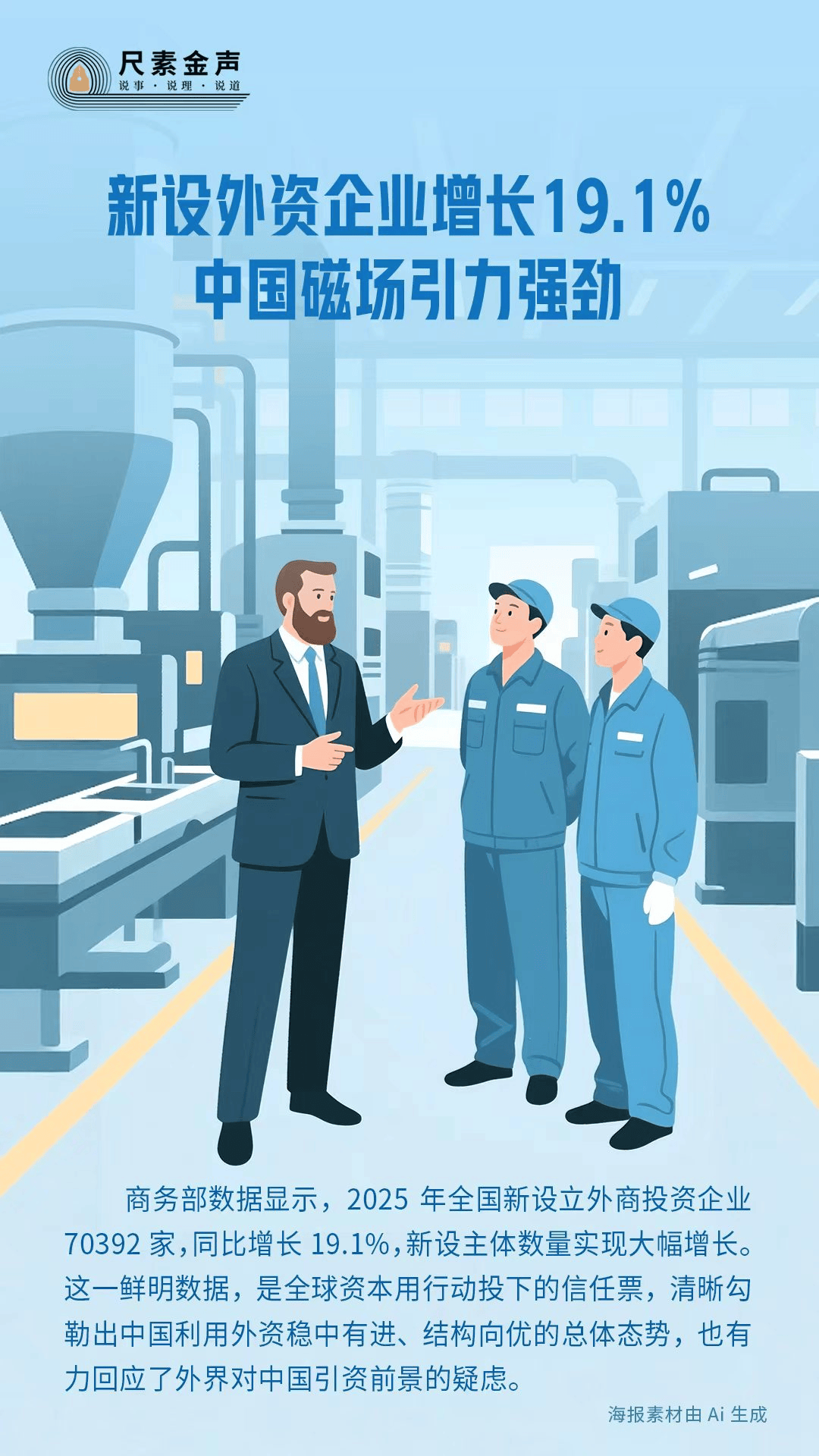
Group 1 - The core viewpoint of the article highlights a significant increase in foreign investment in China, with 70,392 new foreign-invested enterprises established in 2025, representing a year-on-year growth of 19.1% [1][3] - The data indicates that China's foreign investment landscape is characterized by structural optimization and transformation of momentum, showcasing the advantages of a large market, complete industrial system, and continuously improving business environment [3][4] - In 2025, the actual utilization of foreign capital in China reached 747.69 billion yuan, with the service sector accounting for 72.9% of this figure, indicating a shift from "scale expansion" to a new phase of "quality and efficiency improvement" in foreign investment [3][4] Group 2 - The article mentions specific high-value foreign investment projects, such as a 12.4 billion yuan semiconductor manufacturing base by STI Corporation in Guangzhou and a 3 billion yuan Michelin project in Shanghai, reflecting a focus on high technology and high-quality investments [4] - The report from the American Chamber of Commerce indicates that 52% of surveyed companies consider China among the top three global investment destinations, while 93% of German companies in China plan to deepen their investment, highlighting the positive sentiment towards the Chinese market [5] - The competitive landscape for attracting foreign investment is intensifying globally, yet China's core competitive advantages have shifted from traditional cost factors to market scale, industrial support, innovation ecosystems, and institutional environments [5]
新设外资企业增长19.1%,中国磁场引力强劲
Xin Lang Cai Jing· 2026-02-15 09:32
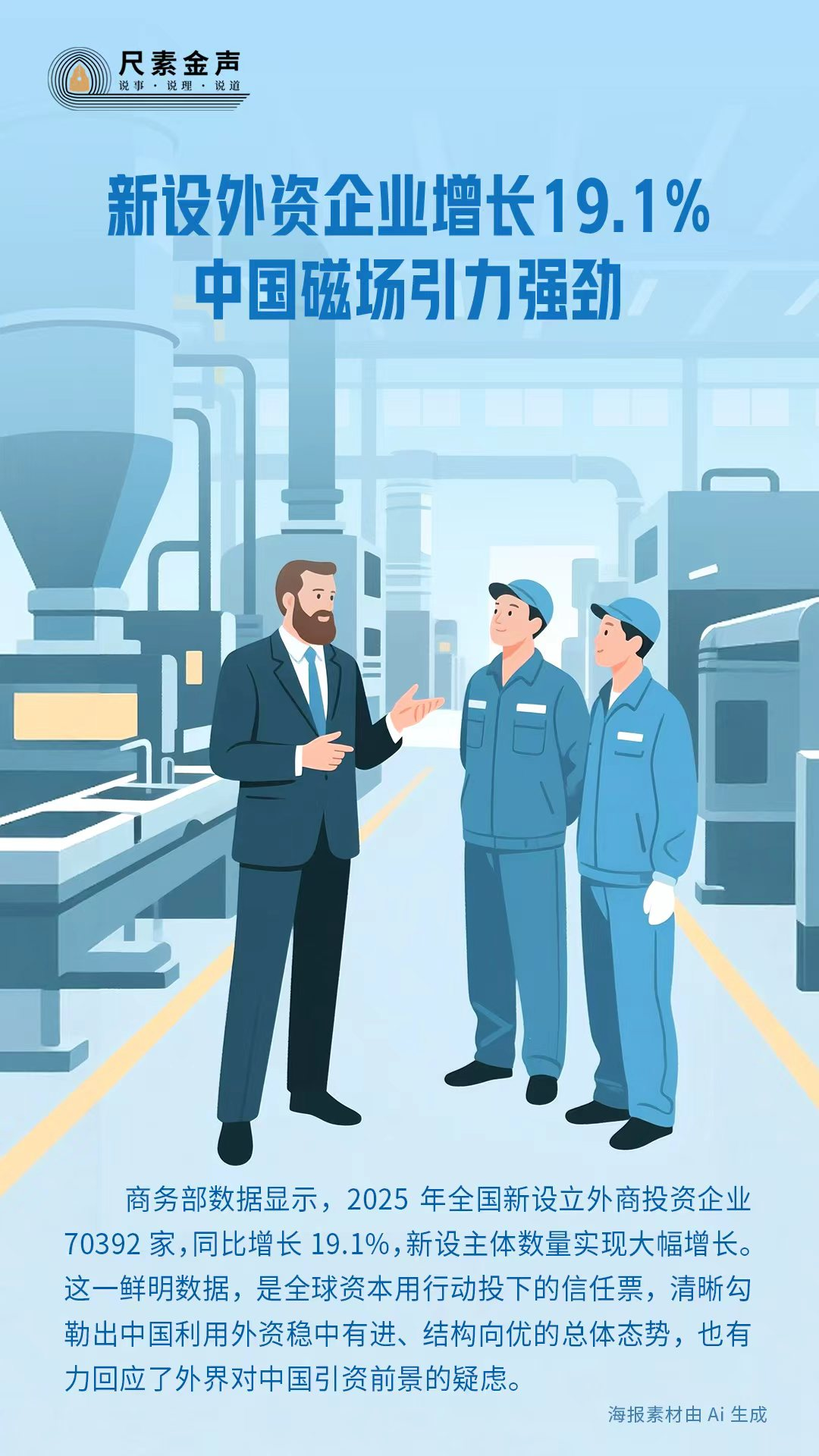
Group 1 - The core viewpoint of the article highlights a significant increase in the number of newly established foreign-invested enterprises in China, with a projected 70,392 companies set up in 2025, representing a year-on-year growth of 19.1% [1][3] - The increase in foreign investment reflects China's ongoing economic stability and the optimization of its investment structure, showcasing the country's comprehensive advantages such as a large market, complete industrial system, and continuously improving business environment [3][4] - In 2025, the actual use of foreign capital in China is expected to reach 747.69 billion yuan, with the service sector accounting for 72.9% of this figure, indicating a shift from mere scale expansion to a focus on quality and efficiency in foreign investment [3][4] Group 2 - The article notes that foreign investment in China is becoming more focused on high technology, high quality, and high added value, aligning with China's industrial upgrading efforts [4][5] - Key foreign investment projects include a 12.4 billion yuan semiconductor manufacturing base in Guangzhou and a 3 billion yuan Michelin project in Shanghai, demonstrating the commitment of foreign companies to invest in China's advanced manufacturing and green economy [4][5] - The article emphasizes that China's competitive edge in attracting foreign investment has shifted from traditional cost advantages to a combination of market scale, industrial support, innovation ecosystem, and institutional environment, which is essential for high-quality development and high-level openness [5]
2025年GDP20强省大调整:四川继续领先河南,安徽约5.3万亿,重庆逆袭辽宁!
Sou Hu Cai Jing· 2026-02-15 02:31
Core Insights - The economic performance of various provinces in China for 2025 has been released, reflecting significant changes in the country's economic transformation and upgrade [1] Economic Rankings - Guangdong and Jiangsu remain the top two provinces with GDPs of 14.58 trillion yuan and 14.24 trillion yuan respectively, showing stable growth rates of 3.08% and 4.14% [3][4] - The competition among provinces is intensifying, particularly between Sichuan and Henan, with Sichuan's GDP at 6.77 trillion yuan slightly ahead of Henan's 6.66 trillion yuan [3][5] Regional Development Strategies - Sichuan is leveraging the "Chengdu-Chongqing Economic Circle" strategy to become a key gateway for China's western and southern openings, focusing on high-tech industry development [3][5] - Henan, while having a strong agricultural base, needs to accelerate its transition to high-tech and high-value-added industries to keep pace with Sichuan [6] Emerging Industries - Anhui's economy reached 5.3 trillion yuan, driven by a booming electric vehicle industry, producing over 1.8 million units last year, which accounts for nearly 20% of the national total [7] - The province's growth is supported by strong research institutions and a complete industrial chain from basic research to product manufacturing [7] Competitive Shifts - Chongqing surpassed Liaoning with a GDP of 3.38 trillion yuan compared to Liaoning's 3.32 trillion yuan, attributed to Chongqing's logistics hub status and advancements in digital economy sectors [9] - Liaoning, as an old industrial base, faces challenges in upgrading traditional industries and fostering new ones [9] Overall Economic Trends - The GDP rankings indicate a shift in growth dynamics, emphasizing the importance of seizing national strategic opportunities and transforming technological innovations into industrial advantages [11] - The focus is shifting from traditional resources to who can better adapt and innovate in the new economic landscape [11]
中国持续抛售美债后,美财长喊话要管中国经济,背后藏三重阴谋
Sou Hu Cai Jing· 2026-02-14 07:09
Group 1 - China is steadily selling US Treasury bonds and increasing its gold reserves to strengthen its economic security [1][5][11] - The US Treasury Secretary's comments on China's economy are seen as an attempt to pressure China into adjusting its economic structure and addressing the trade surplus with the US [3][17][21] - China's actions of selling US debt and accumulating gold are viewed as rational risk management rather than confrontation with the US [9][13][15] Group 2 - The US has been increasing its debt and printing money, leading to a decline in the credibility of the dollar, which poses risks for countries holding US debt [7][9] - China's gold reserves reached 74.19 million ounces by January 2026, with a monthly increase of 40,000 ounces, as gold is considered a stable asset amid global economic fluctuations [11][13] - The US perceives China's actions as a threat, as the selling of US debt reduces its attractiveness and puts pressure on the US financial system [15][17] Group 3 - The US Treasury Secretary's remarks are interpreted as an attempt to shift domestic blame for economic issues onto China, amidst rising unemployment and inflation in the US [35][38] - The narrative of "China's trade surplus" is used to justify potential tariffs and export controls against China, aiming to protect US economic interests [40][42] - The US is concerned about China's advancements in high-tech industries and is attempting to disrupt China's "14th Five-Year Plan" to prevent it from moving up the value chain [44][46][49] Group 4 - The US's double standards in trade practices are highlighted, as it criticizes China for subsidies while employing similar tactics domestically [27][29] - The article argues that the trade surplus between China and the US is a result of global supply chain dynamics and not an unfair advantage [51] - China is committed to advancing its economic development and industry upgrades while maintaining its sovereignty against US pressures [53]
法国率先出手,27国拟对我们加征30%关税,美财长用三字概括中美关系
Sou Hu Cai Jing· 2026-02-14 05:17
Group 1 - France has proposed a significant trade strategy against China, suggesting either a 30% tariff on Chinese goods or forcing the renminbi to appreciate by 30% against the euro [1][2][4] - The report aims to "reverse the trade situation between China and Europe," indicating that China has been earning too much from trade with Europe, leading to a trade surplus that Europe finds uncomfortable [5][6] - The proposed tariff is seen as a way to eliminate China's cost advantage, making Chinese products less competitive in Europe, thus allowing local businesses to regain market share [8][11] Group 2 - The second proposal, reminiscent of the 1985 Plaza Accord, aims to pressure the renminbi to appreciate significantly, which could harm China's export profits and slow down its industrial upgrades [12][14] - The report's aggressive stance reflects a shift from traditional protectionism to direct strategic suppression, indicating a willingness to alter market rules through administrative and financial means [6][7] - The internal divisions within the EU are highlighted, as countries like Germany, which heavily rely on Chinese markets, are unlikely to support such drastic measures [11][25] Group 3 - The U.S. Treasury Secretary's comments on the "comfort zone" in U.S.-China relations suggest a complex dynamic where the U.S. seeks to maintain competition while also wanting to avoid decoupling [14][15][20] - The U.S. strategy appears to involve a dual approach of soft rhetoric combined with hardline actions, indicating a strategic dilemma in balancing pressure on China while addressing domestic economic concerns [18][19][22] - The overall sentiment in both Europe and the U.S. reflects anxiety over China's growing position in the global supply chain and technology sectors, leading to non-market interventions like tariffs and currency manipulation [21][22] Group 4 - The report from the French think tank has sparked significant discussion, revealing a lack of consensus within the EU on how to approach trade with China, with many countries prioritizing their economic interests over political agendas [25][29] - The potential backlash against such proposals could lead to internal fractures within the EU, undermining its overall competitiveness and strategic autonomy [29][37] - The narrative surrounding trade with China is evolving, with an emphasis on cooperation rather than confrontation, as countries recognize the interdependence of global economies [31][37]

冠军产品扩容:从67项到82项的滨州好品新答卷
Qi Lu Wan Bao· 2026-02-14 04:16
Core Insights - The number of champion products in Binzhou has increased from 67 to 82, with 19 of them being global champions, reflecting the city's industrial upgrade and the vitality of its market entities [1][13][14] Group 1: Champion Products and Market Position - Binzhou has achieved the top market share in various sectors, including electronic-grade hydrofluoric acid for advanced process logic chips, high-toughness lightweight aluminum alloy wheels, and wide-width cellulose fiber dyeing cloth [1][3] - The champion products are seen as a crucial benchmark for industrial competitiveness and a solid support for high-quality regional economic development [3][4] Group 2: Industrial Structure and Development - The 82 champion products span across 8 industries, with 51 from traditional sectors and 31 from emerging industries, enhancing the resilience and growth potential of Binzhou's modern industrial system [4][6] - Traditional industries like aluminum, high-end textiles, and chemicals continue to lead, while emerging sectors such as new energy and new materials are rapidly growing, indicating a robust industrial upgrade [6][10] Group 3: Innovation and Ecosystem - Binzhou has established a comprehensive innovation ecosystem that supports the entire chain of production, research, and development, facilitating the transformation of innovative results [7][9] - The city promotes a "Five Institutes, Ten Schools, N Bases" innovation consortium to address the challenges of isolated innovation efforts, ensuring seamless integration of research and industrial needs [7][12] Group 4: Future Growth and Strategy - By 2025, Binzhou aims to cultivate 240 provincial-level champion and specialized enterprises, maintaining the highest R&D investment intensity in the province for five consecutive years [9][14] - The city is transitioning from attracting resources based on cost advantages to leveraging value and ecological advantages, enhancing its industrial development dynamics [12][14]
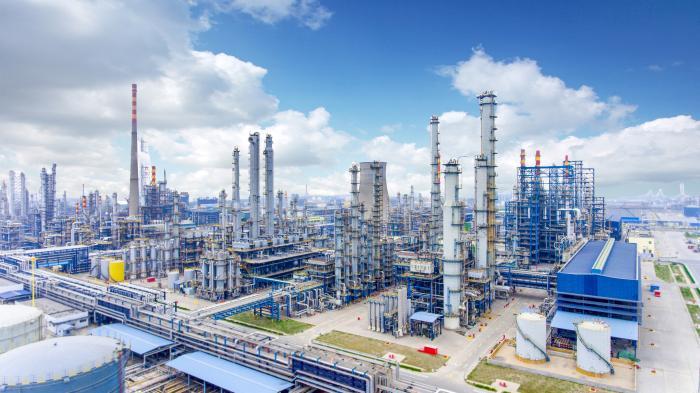
落地山东!国家安全防护用纺织品质量检验检测中心获批筹建
Da Zhong Ri Bao· 2026-02-14 02:04
Core Viewpoint - The establishment of the National Safety Protective Textile Quality Inspection and Testing Center marks a significant advancement in China's safety protective textile industry, aiming to enhance industry standards, worker safety, and national emergency response capabilities [1][3]. Group 1: Industry Significance - Safety protective textiles are crucial in various sectors, including renewable energy, high-end equipment manufacturing, emergency rescue, aerospace, national defense, healthcare, and strategic infrastructure, serving as the last line of defense for worker safety [2]. - China's safety protective textile industry is the largest globally, with a fiber processing volume projected to reach 640,000 tons in 2024, reflecting a 7% year-on-year growth and an average annual growth rate of 7.7% over the past decade [2]. - Shandong Province is a key production base for safety protective products, with an industry scale exceeding 20 billion yuan, accounting for approximately 18%-20% of the national market [2]. Group 2: Challenges and Solutions - Insufficient testing capabilities have become a critical bottleneck for the industry's advancement, particularly in high-end testing areas like arc protection and combustion protection, which have been dominated by foreign institutions [2][3]. - The new testing center aims to localize high-end testing services, significantly reducing testing costs and time, thereby enhancing overall industry quality and international competitiveness [3]. Group 3: Testing Capabilities and Innovations - The center will develop comprehensive testing capabilities across the entire industry chain, focusing on mechanical protection, fire resistance, temperature protection, electrical protection, chemical protection, biological protection, and electromagnetic radiation protection [4]. - The center has already developed testing platforms for arc protective fabrics and garments, achieving 100% consistency with data from Canadian and Spanish laboratories in ASTM standard blind sample tests [4]. - Advanced testing equipment will be introduced, covering over 90% of key projects for 41 types of protective clothing, addressing long-standing dependencies on foreign testing [5]. Group 4: Strategic Alignment and Future Goals - The center's establishment aligns with national strategies for safety production and industrial upgrading, supporting the goals outlined in the "Textile Industry Quality Improvement and Upgrading Implementation Plan (2023-2025)" [3][6]. - The center aims to enhance innovation capabilities and international competitiveness in the safety protective textile industry, contributing to public safety and worker health [7]. - Future objectives include creating a first-class national public testing and technical service platform, integrating into the broader context of high-quality economic and social development [7].
南方通信附属与江苏鑫厦建设有限公司订立3825万元的建筑合约
Zhi Tong Cai Jing· 2026-02-13 12:32
Group 1 - The company announced a construction contract with Jiangsu Xinxia Construction Co., Ltd. for a project costing RMB 38.25 million, scheduled for completion by the end of February 2026 [1] - The project involves the construction and development of an industrial park, including the renovation and reconstruction of the company's previous factory [1] - The board believes that consolidating production capacity from two sites will enhance production efficiency and flexibility, reducing procurement, logistics, and management costs through economies of scale [1] Group 2 - The project is seen as a significant opportunity to enhance the company's image and drive business strategy breakthroughs, expected to attract elite and high-quality talent [2] - The initiative is also viewed as a chance to lower overall operating costs and create new cash flow by transforming old factory land into a modern industrial park [1][2] - The company plans to consider leasing or selling parts of the properties within the industrial park to develop new revenue streams [1]
深圳市龙华区房价:三年下跌超30%!部分小区已经腰斩!
Sou Hu Cai Jing· 2026-02-13 10:24
数据显示,龙华区的楼龄超过15年的老旧小区,普遍存在着停车位配比不足、物业管理滞后等硬伤,在买方市场 下,被率先抛弃,成为下跌的重灾区,龙悦居小区四期,单价从每平方米5.8万元骤降至3.35万元。和这类小区相 比,带优质学位的改善型楼盘展现出一定韧性,如深高北校区覆盖的水榭春天五期,跌幅控制在25.8%,但仍高 于全市同档次学区房平均18%的调整幅度。值得注意的是,曾被热炒的"地铁概念盘"集体失灵,距离地铁4号线 200米内的项目平均跌幅达34.6%,远超区域平均值,反映出交通便利性,在楼市下行期已难以支撑溢价。 在这个覆盖龙华核心居住板块的样本中,该区的平均房价,下跌幅度高达30.55%,其中,15个小区的跌幅,突破 了31%的警戒线,部分项目甚至出现"腰斩"行情。这意味着,曾经每平方米高达6万元的房产,如今账面价值已蒸 发至3万多元,一套100平方米的房子,二三百万已经化为乌有。 2023年上半年,受"二手房参考价"政策持续发酵的影响,龙华区率先打破僵局,部分资金紧张、急于套现的业 主,开始以5%-8%的降幅试探市场,但最高时成交量的温和放大,掩盖了价格松动的危机。2023年第三季度,出 现了大幅度的转折 ...