
区域协同发展

Search documents
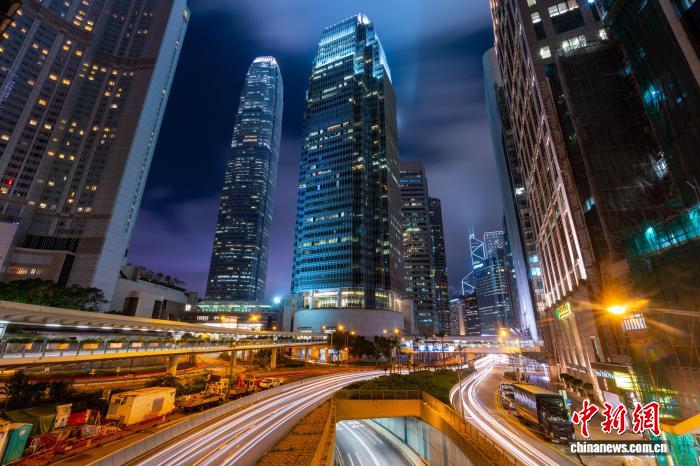
(年终特稿)金锣声连响 香港为排名跃升写下进击注脚
Zhong Guo Xin Wen Wang· 2025-12-27 04:41
Group 1: IPO Activity in Hong Kong - Hong Kong Stock Exchange saw over 110 companies listed in 2025, marking a significant increase in IPO activity [1] - The total IPO fundraising in Hong Kong returned to the top globally, highlighted by the largest IPO in the pharmaceutical sector in nearly five years [1] Group 2: Talent Attraction and Ecosystem - Hong Kong ranked fourth globally and first in Asia in the 2025 World Talent Ranking, with notable strengths in management salaries and educational effectiveness [2] - The "High Talent Pass" program has improved the ease of entry for skilled professionals, contributing to a more robust talent ecosystem [2] Group 3: Innovation and Technology Growth - Hong Kong ranked fourth in the 2025 World Digital Competitiveness Ranking, with top scores in "technical framework" and "adaptive attitude" [5] - The "Shenzhen-Hong Kong-Guangzhou" cluster topped the global innovation index, showcasing effective regional collaboration [5] Group 4: Financial Services and Wealth Management - Hong Kong maintained its position as the third global financial center and first in Asia, with a rising score in the Global Financial Centers Index [6] - The number of ultra-high-net-worth individuals in Hong Kong surged by 22.9% in the first half of 2025, indicating its growing appeal as a wealth management hub [6]


明年经济工作怎么干?17市州主官这样说
Xin Lang Cai Jing· 2025-12-27 04:16
发展成绩来之不易,为我们在新起点上应对新挑战、夺取新胜利奠定了坚实基础。 转自:荆州发布 12月25日 省委经济工作会议在汉召开 研究部署2026年经济工作 17市州分组讨论 一致赞同省委、省政府 关于明年经济工作的安排 来看他们怎么说! ——武汉—— 对于省委经济工作会议有五点突出感受: 认识体会弥足珍贵,为我们做好当前和今后一个时期的经济工作提供了现实指导。 形势分析科学辩证,为我们全面做好经济工作坚定了信心决心。 目标安排务实进取,为我们更好引导预期、保持战略主动提供了重要依据。 工作任务重点突出,为全省上下抓好贯彻落实明确了主攻方向。 下一步,武汉将: 进一步强化内需主导,做强发展能级。扩大有效益的投资。激发有潜能的消费。培育有潜力的企业。 进一步壮大实体经济,加快发展新质生产力。加快打造"一城三廊一带"。加快构建现代化产业体系。加快建设基础设施体系。 进一步加快城市更新,建设现代化人民城市。深入推进城市更新三年行动。更好发挥"一委一办一平台"作用。 进一步推进区域协同,打造高质量发展重要增长极。持续"强核"。加快"壮圈"。全力"带群"。 进一步筑牢安全底线,持续增进民生福祉。加强生态保护。加强民生保 ...
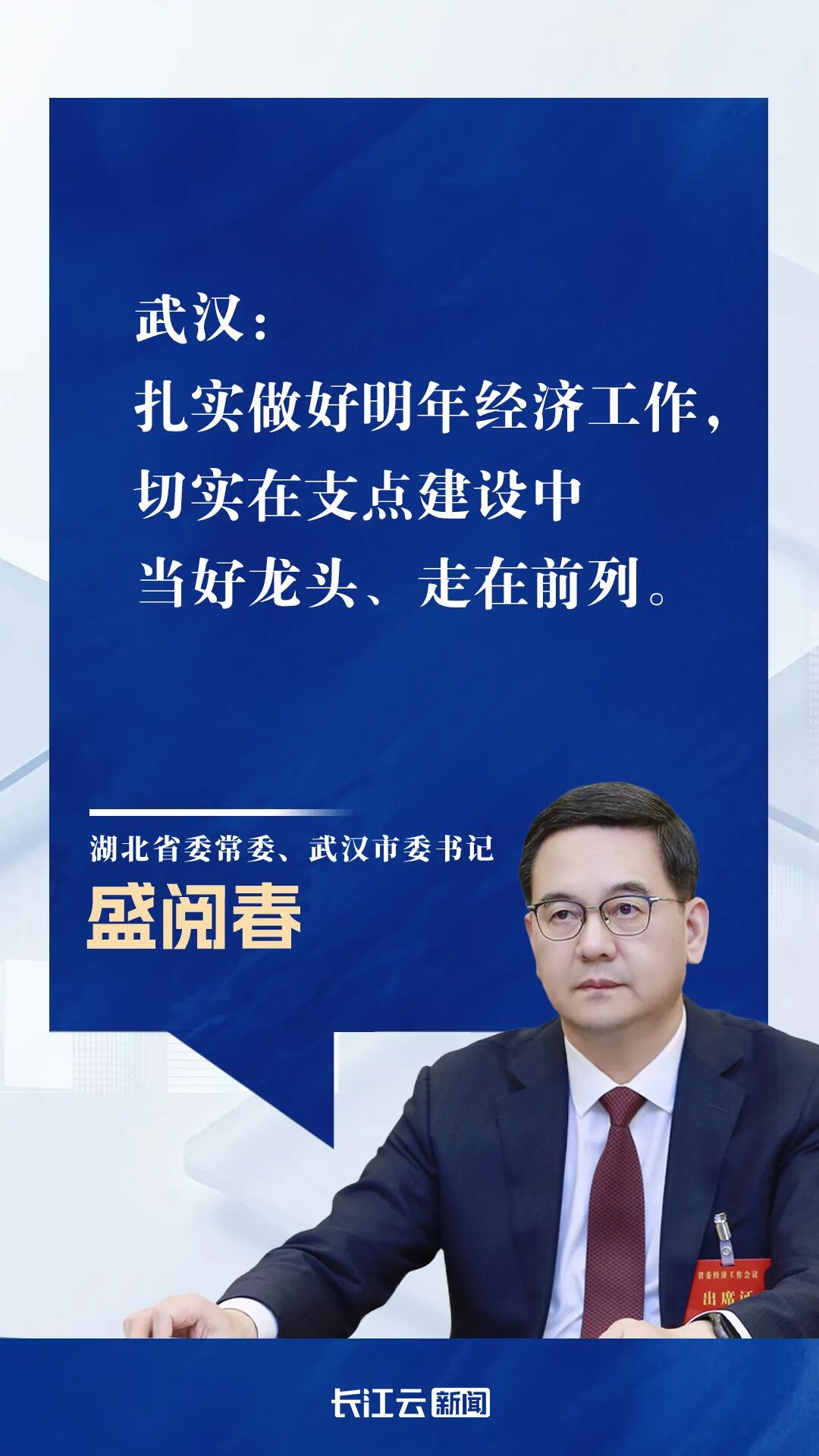
20分钟穿越天山,世界最长高速公路隧道通车
Ren Min Ri Bao· 2025-12-27 01:49
Core Viewpoint - The opening of the Tianshan Victory Tunnel marks the full operation of the G0711 highway, significantly reducing travel time and enhancing connectivity between northern and southern Xinjiang, thus facilitating economic, cultural, and human exchanges [3][4]. Infrastructure Development - The Urumqi-Yili Highway spans 324.7 kilometers and took over five years to complete, with the main line featuring a design speed of 120 km/h [4]. - The Tianshan Victory Tunnel, a critical component of the highway, is 22.13 kilometers long and has a maximum depth of over 1,112 meters, facing significant geological challenges during construction [4][6]. - Innovative construction methods reduced the expected construction time from 72 months to 52 months [6]. Economic Impact - Travel time between Urumqi and Korla has been halved from approximately 7 hours to 3.5 hours, enhancing accessibility for tourism and commerce [7]. - The highway is expected to boost the tourism industry by connecting major scenic areas, facilitating deeper tourism experiences [7]. - Local businesses, such as the Bayingolin Zhenxin Animal Husbandry Development Company, are already experiencing increased demand due to improved logistics, with transportation costs significantly reduced [9][10]. Logistics and Transportation - The highway's completion is anticipated to streamline logistics, allowing for faster delivery times and reduced costs for businesses, such as the Baizhou Wanjin Aquatic Products Company, which plans to double its production capacity [9][10]. - The establishment of new bus routes along the highway will cater to diverse travel needs, enhancing passenger transport efficiency [8]. Regional Development - The highway is expected to create a new regional development pattern by facilitating the flow of people, goods, and capital, thus promoting economic integration between northern and southern Xinjiang [10].
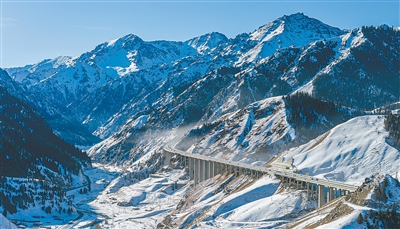
山东高速公路达到9240公里
Da Zhong Ri Bao· 2025-12-27 01:06
Core Viewpoint - On December 26, eight highway projects were completed and opened to traffic in Shandong Province, increasing the total highway mileage to 9,240 kilometers, with over 300 kilometers added in this round of construction [2][5]. Group 1: Highway Projects Overview - The completed projects include the Jinan to Weishan Highway, Yuncheng to Juancheng Highway, Dong'a to Yanggu Highway, and several others, contributing to the expansion of the provincial highway network [2][5]. - The Shanhaiguan Highway's two cities to Fen Shui section was expanded, and the Jinan to Jining New Airport section of the Jinan to Weishan Highway was also opened [2][3]. Group 2: Project Details - The Shanhaiguan Highway two cities to Fen Shui expansion project is part of the national highway network, with a length of 61.657 kilometers and designed for a speed of 120 km/h [3]. - The Jinan to Weishan New Airport section is 88.6 kilometers long, with a total investment of 13.71 billion yuan, connecting key cities and enhancing transportation efficiency in the region [3][4]. Group 3: Economic and Regional Impact - The new highways are expected to improve regional collaboration and support ecological protection and high-quality development strategies in the Yellow River basin [5]. - The projects will facilitate efficient resource circulation and strengthen the connection between the southwestern Shandong region and the Central Plains economic zone [5].

20分钟穿越天山,世界最长高速公路隧道通车 乌尉高速全线投用,有效贯通南北疆经济脉络
Ren Min Ri Bao· 2025-12-26 22:16
Core Points - The opening of the Tianshan Victory Tunnel marks the full operation of the G0711 highway, significantly improving transportation between Urumqi and Yili [1][2] Group 1: Infrastructure Development - The Urumqi-Yili Highway, with a total length of 324.7 kilometers, took over five years to complete, with the main construction starting in April 2020 [3] - The Tianshan Victory Tunnel, a critical part of the highway, is 22.13 kilometers long and has a maximum depth of over 1,112 meters, making it a challenging engineering project [3] - The construction utilized an innovative "main tunnel + middle guiding tunnel" excavation method, reducing the expected construction time from 72 months to 52 months [3] Group 2: Economic Impact - The highway reduces travel time from Urumqi to Korla from approximately 7 hours to about 3.5 hours, facilitating easier access for tourism and commerce [4] - The opening of the highway is expected to boost the tourism industry along the route, connecting major scenic areas and enhancing cultural exchanges [4] - Local businesses, such as the Bayingolin Zhenxin Animal Husbandry Development Company, are already experiencing increased demand due to improved logistics and reduced transportation costs [6][7] Group 3: Logistics and Transportation - The highway will enable the establishment of new bus routes to accommodate diverse travel needs, enhancing passenger transport efficiency [5] - The logistics sector is anticipated to benefit from faster delivery times, with the potential for a "next-morning delivery" service within the region, which could significantly enhance e-commerce and agricultural product sales [8]
高铁织网绘宏图 荆楚协同启新程
Zhong Guo Jing Ji Wang· 2025-12-26 13:56
Core Viewpoint - The opening of the Wuhan to Yichang section of the Huhuo Railway marks a significant development in China's high-speed rail network, enhancing regional connectivity and economic collaboration, while also improving the quality of life for residents in the area [1][2][3] Group 1: Time and Space Restructuring - The travel time between Wuhan and Yichang has been reduced from 2 hours to approximately 1 hour, facilitating a new lifestyle where residents can enjoy local delicacies from both cities [1] - The new high-speed rail line connects seamlessly with other high-speed rail services, creating a "Golden Triangle" high-speed rail loop that links Wuhan, Xiangyang, and Yichang, thereby connecting 23 million people within a 1-hour commuting radius [1] Group 2: Industrial Synergy - The Wuhan to Yichang section serves as a major transportation corridor that links the Chengdu-Chongqing economic circle, the central Yangtze River city cluster, and the Yangtze River Delta, fostering industrial collaboration [2] - The complementary industrial strengths of Wuhan's optoelectronics and automotive sectors with Yichang's fine chemicals and Jingmen's equipment manufacturing are accelerating the formation of a division of labor model [2] - The reduction in logistics costs and increased flow of resources due to the high-speed rail are enabling local agricultural products to reach national markets, thus promoting the formation of industrial clusters along the route [2] Group 3: National Strategic Support - The completion of the Wuhan to Yichang section enhances the national high-speed rail framework, making the comprehensive transportation corridor of the Yangtze River Economic Belt more efficient [2] - The new rail line strengthens Hubei's strategic position as a transportation hub, addressing traffic bottlenecks in the central Yangtze River city cluster and enhancing the development capabilities of provincial sub-centers like Xiangyang and Yichang [2]
福平铁路开通5周年:海上“飞虹”穿山越海谱新篇
Xin Lang Cai Jing· 2025-12-26 12:55
Core Insights - The Fuping Railway, connecting Fuzhou and Pingtan, has significantly improved transportation efficiency, reducing travel time from over 4 hours to just 35 minutes, thus facilitating a "half-hour living circle" for residents [2][3] - Since its opening, the railway has transported a total of 7.554 million passengers, contributing to the growth of tourism and enhancing the quality of life for local residents [1][5] - The railway has catalyzed the development of various tourism products and services, including marine tourism and rural tourism, leading to a substantial increase in local economic activity [3][4] Transportation Impact - The Fuping Railway has increased the number of daily train services from an initial average of 17 to 38, allowing for more frequent and convenient travel options [2] - The railway has also extended connections to major cities such as Beijing, Shanghai, and Shenzhen, enhancing accessibility for Pingtan [2] Economic Growth - The number of registered homestays in Pingtan has increased by 652 since the railway's opening, with total registered homestays reaching 902, indicating a booming tourism sector [3] - Revenue from homestays is projected to reach 310 million yuan in the first half of 2025, which is 4.2 times higher than the same period in 2020 before the railway opened [3] Tourism Development - Pingtan has become a popular tourist destination, attracting 46 million visitors and generating 48.6 billion yuan in tourism revenue over the past five years [5] - The promotion of the "Starry Sea Romantic Pingtan" brand has further established Pingtan as a renowned tourist spot, enhancing its visibility and appeal [4]
延安迎来“高铁速度”,时空折叠赋能振兴新局
Zhong Guo Xin Wen Wang· 2025-12-26 06:46
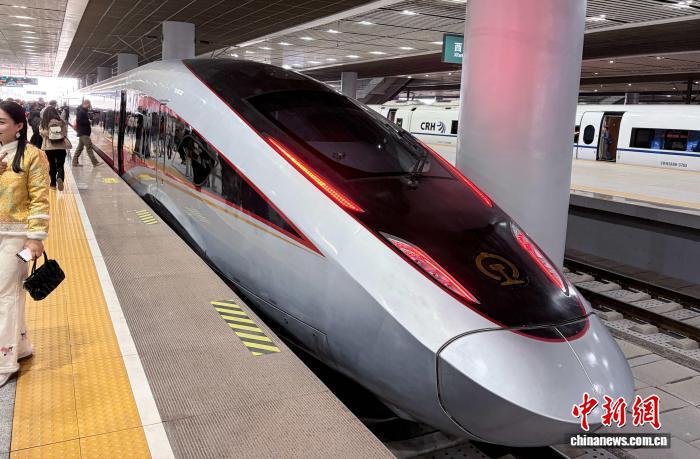
延安迎来"高铁速度",时空折叠赋能振兴新局 中新网陕西延安12月26日电 (记者 张一辰 张远)当"龙凤呈祥"动车组以超过300公里的时速穿越黄土高原 的千沟万壑,这标志着这条承载着陕北革命老区期盼的钢铁动脉——西延高铁,于2025年12月26日正式 开通。这条全长299.8公里的钢铁动脉,不仅终结了陕北无高铁的历史,更以"时空折叠"的效应,为革 命老区发展带来机遇。 作为国家"八纵八横"高铁网包(银)海通道的关键一段,西延高铁与在建的西渝、延榆高铁衔接,在构成 纵贯陕甘川的南北大动脉的同时,也令关中地区密集的科研资源与陕北丰富的能源产业实现"无缝对 接"。 图为西延高铁首发列车。 梅镱泷 摄 西延高铁从西安出发,随后一路向北,最终抵达延安,该线路桥隧比高达91%,超九成路段为桥梁或隧 道。工程施工中先后攻克了湿陷性黄土地区施工、王家河特大桥高空作业等技术难关。如此攻坚克难、 倾力筑路,从来都不是无的放矢。事实上,修建西延高铁,既是补齐区域交通短板的现实所需,更是推 动革命老区振兴发展的战略之举。 彼时,"走得慢、行得难"是陕北沟壑里关于交通往来的集体记忆。 如今,西延高铁的开通,令"朝看长安之花,午观延安宝 ...
从“拉一把”到“一起走”(评论员观察)
Ren Min Ri Bao· 2025-12-26 03:20
协同发展,"分蛋糕"不是目的,一起"做大蛋糕"才有意义 企业原计划将工厂建在上海松江区,却在松江区干部推动下,最终选择落户安徽六安市六松现代产业 园。这样的故事并不是孤例,西安赛富乐斯半导体、曼盛包装等企业,最后都在松江的协调下,在六安 投资建厂。 招商引资对推动地方经济发展有着重要作用,松江为何反其道而行之,将企业"向外推"?这背后其实是 两地对协同发展的新探索,折射的是区域协同的方法智慧。 招商之变,背后是机制之变。 区域协同中,税收、产值等统计指标到底算谁的,是无法回避的一个问题。早期的协作模式以单向"输 血"为主,只有完善互利共赢机制,变单向"输血"为合作共赢,才能让协同发展行稳致远。 六松现代产业园创新利益共享机制,由松江推荐落地的企业,5年内两地实行"统计分算、财税分成"。 这一机制创新,不仅破解了"转出地怕流失"的问题,也进一步调动了转入地的积极性。 合理分工的背后,是发挥比较优势。一哄而上、盲目跟风,只会导致低效竞争、产业同构等问题,立足 资源禀赋、比较优势,错位发展、各展所长,才能实现各取所需,让区域发展释放更强活力。 进行探索创新、发挥比较优势,算好增减账,关键在于跳出"一亩三分地",树立 ...
加快西部陆海新通道建设
Jing Ji Wang· 2025-12-26 02:04
Core Viewpoint - The People's Bank of China and other departments have jointly issued guidelines to enhance financial support for the construction of the Western Land-Sea New Corridor, proposing 21 key financial measures to promote high-quality development of the corridor [1][4]. Financial Support Measures - The guidelines emphasize the importance of financing and settlement functions to support the corridor's development [1]. - The corridor currently connects to 583 ports in 127 countries and regions, handling over 1,300 types of goods, indicating its expanding influence [2]. Highlights of the Guidelines - **Regional Collaborative Development**: The guidelines focus on the needs of 13 provinces and regions, addressing common financing and settlement needs while allowing for tailored financial services [3]. - **Institutional Innovation**: The guidelines promote innovative reforms to provide efficient financing and settlement services for enterprises venturing abroad, including pilot programs for integrated currency pools for multinational companies [3]. - **Digital Empowerment**: The guidelines propose integrating logistics and financial data to enhance financial service efficiency, including the establishment of a digital financial service platform [3]. - **Open Leadership**: The guidelines aim to enhance international cooperation in digital and green finance, supporting the use of central bank digital currencies in cross-border payments [3]. Positive Impacts on Corridor Development - The issuance of the guidelines reflects China's commitment to expanding openness and facilitating a smooth domestic and international circulation [4]. - The guidelines aim to enhance the precision and effectiveness of financial services for the corridor, focusing on infrastructure, logistics, and trade [4]. - They also promote high-level financial openness to support economic and trade development along the corridor, optimizing cross-border settlement systems [4]. Cross-Regional Financial Collaboration - The guidelines emphasize breaking down regional barriers by establishing integrated credit mechanisms and joint service networks among financial institutions [5]. Enhancing Financial Service Synergy - The guidelines encourage local initiatives to deepen financial services related to railway transport documentation, which is crucial for supporting trade development [7]. - The China Securities Regulatory Commission plans to enhance capital market reforms to better support the corridor's development through various financing tools [7]. Foreign Exchange Policy Environment - The guidelines integrate policies for cross-border settlement and financing reforms, aiming to create a more convenient, open, secure, and intelligent foreign exchange policy environment [8].