
十五五规划建议

Search documents
加大对基层医院财政投入维护公益性,解读“十五五”规划建议
Nan Fang Du Shi Bao· 2025-11-03 14:22
Core Viewpoint - The article emphasizes the need to strengthen the operational support for county and grassroots medical institutions, highlighting the government's commitment to enhancing fiscal support for these facilities to maintain their public welfare nature [1][2]. Group 1: Financial Support Policies - The article outlines the importance of refining the fiscal responsibilities between central and local governments to improve financial support policies for county and grassroots medical institutions [2]. - It suggests increasing government investment in public hospitals, including funding for infrastructure, equipment purchases, and subsidies for public health tasks [2]. - The article advocates for a gradual increase in government subsidies to cover operational costs that service fees cannot meet for grassroots medical institutions [2]. Group 2: Personnel Funding - The article proposes implementing a certain percentage of basic salary subsidies for qualified personnel in county public hospitals and grassroots medical institutions [2]. - It emphasizes the need for financial support for medical personnel training and capacity building, as well as exploring special positions in grassroots institutions to attract healthcare talent [2][3]. Group 3: Support for Underfunded Services - The article highlights the necessity of providing financial support to medical institutions and departments that serve social needs but have low charging capabilities, such as mental health, pediatrics, and emergency services [3]. - It stresses the importance of maintaining the public welfare aspect of these services by ensuring basic operational funding [3].
重磅信号!北京、上海或将全面解除限购措施?
Sou Hu Cai Jing· 2025-11-03 08:17
Group 1 - The "15th Five-Year Plan" emphasizes the need to eliminate unreasonable restrictions on housing consumption, which may lead to the lifting of purchase restrictions in major cities like Beijing and Shanghai [2][3] - The plan includes measures to activate underutilized land, idle properties, and existing infrastructure to promote efficient land use [2] - It aims to drive high-quality development in the real estate sector by establishing a new development model and improving basic systems [2] - The plan focuses on optimizing the supply of affordable housing to meet the basic needs of urban workers and various disadvantaged families, with a strategy tailored to local conditions [2] - There is an emphasis on enhancing risk prevention and resolution capabilities in key areas, including real estate, local government debt, and small financial institutions, to prevent systemic risks [2] Group 2 - The plan encourages the efficient use of rural collective construction land and the activation of idle land and properties to support rural development [3] - It highlights the importance of Shanghai as an international financial center, with ongoing efforts to establish multiple centers including economic, financial, trade, shipping, and technological innovation [3] - The document underscores the significance of urban renewal initiatives, such as the ongoing village renovation projects in Shanghai, indicating continued investment in urban development [3] - The real estate sector remains a crucial pillar of the national economy, shifting from rapid growth to new models while maintaining public demand for prime locations and quality housing [3]

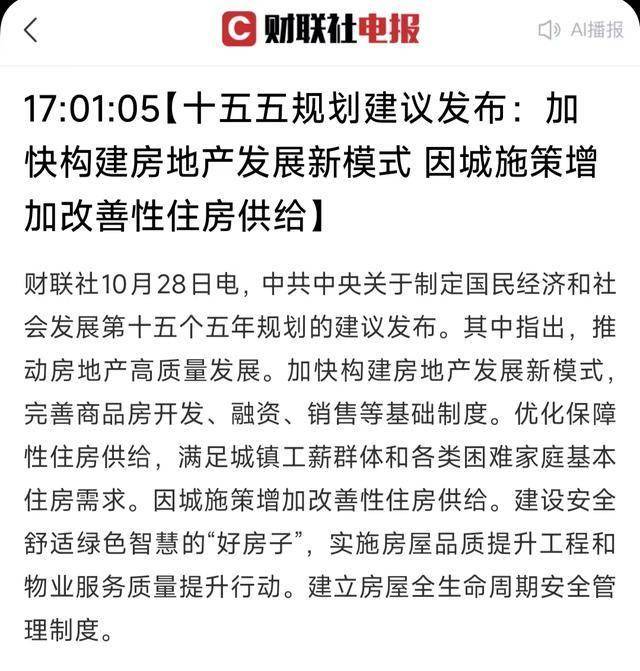
如何理解“十五五”规划建议对财政的部署安排?
Yuekai Securities· 2025-11-03 03:06
Group 1: Fiscal Policy Characteristics - The "15th Five-Year Plan" emphasizes the role of fiscal policy as a foundation for national governance, highlighting its importance in stabilizing growth, boosting momentum, and mitigating risks[9] - The plan explicitly states the need for a more proactive fiscal policy to address short-term risks and maintain economic stability, contrasting with previous plans that focused more on long-term reforms[10] - There is a stronger focus on social welfare and public spending, with an emphasis on increasing government investment in basic livelihoods and enhancing consumer capacity[11] Group 2: Fiscal Policy Transformations - The plan calls for a shift from focusing on deficit rates to increasing expenditure growth, breaking the 3% deficit rate constraint to enhance counter-cyclical fiscal policy[17] - It advocates for expanding spending rather than merely reducing taxes, aiming to directly stimulate total demand and increase household and enterprise income[17] - The policy structure should balance supply and demand, with a focus on both investment and consumption, particularly in social welfare and public services[18] Group 3: Tax System and Sustainability - The plan emphasizes the need to stabilize the macro tax burden and enhance fiscal sustainability, avoiding a decline in the ratio of fiscal revenue to GDP[20] - It suggests structural adjustments to existing tax policies to improve efficiency and precision, particularly in key sectors like technology and small enterprises[20] - The plan aims to increase local fiscal autonomy by adjusting revenue-sharing mechanisms and enhancing local tax sources[22] Group 4: Debt Management - The plan highlights the necessity of establishing a long-term mechanism for government debt management to mitigate local government debt risks[25] - It proposes the creation of a comprehensive monitoring system for local government debt and a dynamic early warning system for debt risks[26] - The plan encourages a shift from debt-driven growth to a model focused on technology and consumption, promoting sustainable economic development[27]
(经济观察)“十五五”规划建议:一份面向世界的“机会清单”
Zhong Guo Xin Wen Wang· 2025-11-02 06:07
Group 1 - The "15th Five-Year Plan" serves as a blueprint for China's development over the next five years and is presented as an "opportunity list" for global investors [1] - China's market, with over 1.4 billion people and more than 400 million middle-income groups, offers significant consumption and import potential, creating continuous business opportunities for international investors [2] - The plan emphasizes a stable, diverse, resilient, and potential-rich economy, highlighting China's commitment to an open and competitive market environment [2][3] Group 2 - The "15th Five-Year Plan" aims to expand China's market further and enhance its openness to the world, focusing on aligning with international high-standard economic and trade rules [3] - The reduction of foreign investment restrictions, particularly in the manufacturing sector, reflects China's commitment to high-level openness and stability in policy [3] - Multinational companies are increasingly investing in China, with significant projects in strategic emerging industries such as new energy and aerospace, indicating growth opportunities in these sectors [4] Group 3 - The plan promotes the integration of trade and investment, encouraging a rational and orderly cross-border layout of industrial and supply chains, which is beneficial for international investors [5] - China's complete industrial system and rich application scenarios are expected to translate imaginative opportunities into tangible growth dividends [4] - The stable social environment, high education levels of the workforce, and well-developed infrastructure in China present advantages for foreign investors seeking opportunities within the country's industrial chain [5]
伊拉克共产党总书记高度评价中国“十五五”规划建议
人民网-国际频道 原创稿· 2025-11-02 03:21
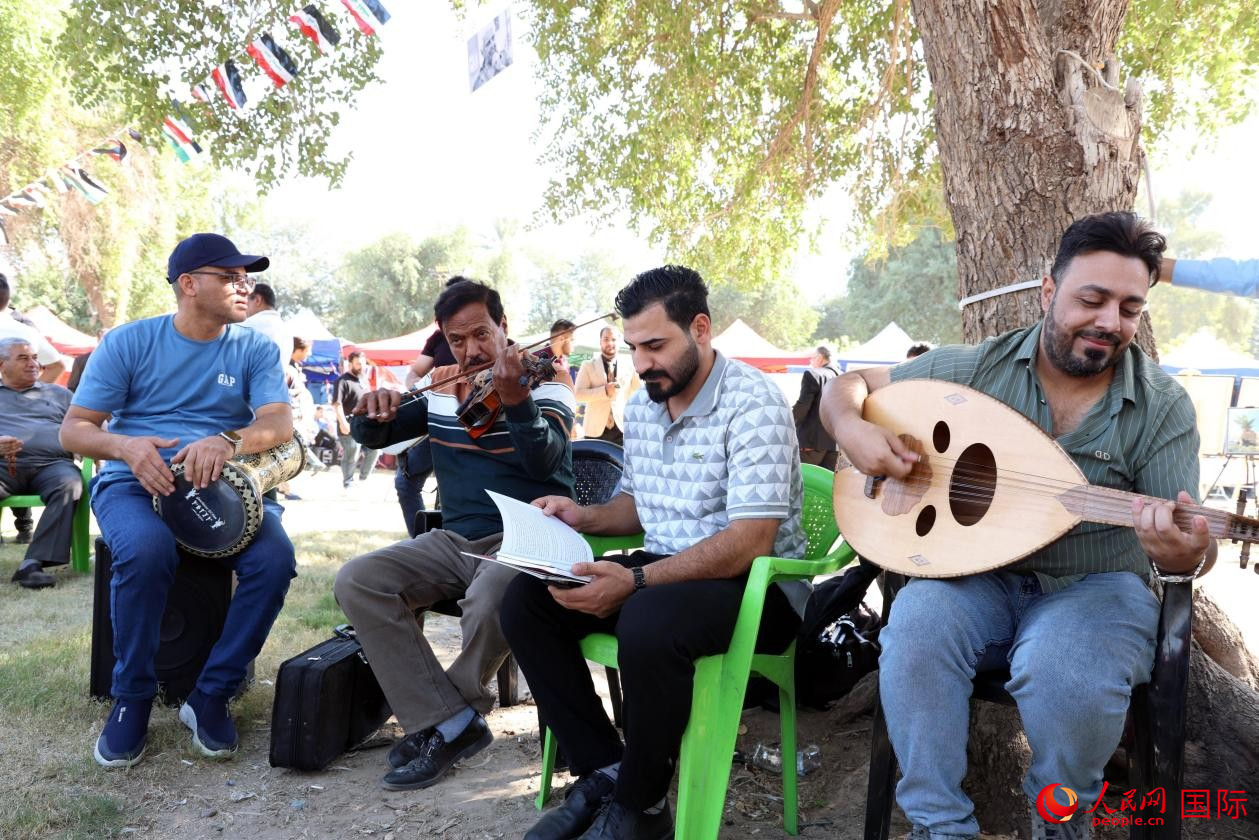
Group 1 - The General Secretary of the Iraqi Communist Party, Raed Fahmi, praised the "15th Five-Year Plan" proposal passed by the 20th Central Committee of the Communist Party of China, highlighting its direction for high-quality development in China [1] - Fahmi noted significant achievements in sustainable economic development and social progress during the "14th Five-Year" period, indicating that the "15th Five-Year Plan" will further guide China's development [1] - He emphasized China's approach of balancing economic development with social equity, presenting it as a model for developing countries [1] Group 2 - The year marks the 90th anniversary of the "People's Path" newspaper, and Iraq is set to hold new national assembly elections on November 11 [2] - Fahmi stated that the Iraqi elections should prioritize the interests of the people, aiming for genuine transformation that allows citizens to live with dignity and fairness [2] - The cultural festival not only celebrates the 90th anniversary of the Iraqi Communist Party but also serves as a national platform for constructive dialogue among the public [2]
新华时评·聚焦“十五五”规划建议|解决好人民群众急难愁盼问题
Xin Hua She· 2025-11-01 13:18
Group 1 - The core viewpoint emphasizes the importance of addressing the urgent and difficult issues faced by the people, highlighting the need for a people-centered development approach [1][2] - The "14th Five-Year Plan" has established a solid foundation for people's livelihood, with urban employment exceeding 12 million annually and synchronized growth of residents' income with economic growth [1] - The upcoming "15th Five-Year Plan" aims to accelerate the improvement of livelihood security, focusing on enhancing the quality of life for the people [1] Group 2 - The suggestions include effective measures to increase the income of low-income groups, expand the middle-income group, and promote free education [2] - New initiatives proposed include establishing a comprehensive occupational injury insurance system and improving maternal insurance and healthcare governance mechanisms [2] - The overall goal is to transform institutional advantages into governance effectiveness, thereby enhancing the quality of life and expanding development space [2]
杨伟民:“两个推动、一个确保”是“十五五”规划建议的最大亮点
Zheng Quan Shi Bao Wang· 2025-11-01 11:38
Core Insights - The key highlight of the "14th Five-Year Plan" proposal is the emphasis on "two promotions and one guarantee," focusing on qualitative and effective economic growth and ensuring significant progress towards socialist modernization [1][2] Group 1: Economic Growth and Development - The proposal aims to maintain economic growth within a reasonable range, which is crucial for achieving socialist modernization by 2035 [1] - The plan emphasizes the need for innovation-driven growth, promoting high-level technological self-reliance, and developing new productive forces to optimize and upgrade the economic structure [1] Group 2: Domestic Demand and Consumption - A new economic development model is proposed, which is driven by domestic demand, consumption, and endogenous growth, addressing structural issues such as low consumer spending and income distribution [2] - The contribution of investment to domestic demand is expected to increase, but it is unlikely to return to previous peak levels, necessitating a greater reliance on sustained expansion of consumer spending [2]
新华时评·聚焦“十五五”规划建议丨解决好人民群众急难愁盼问题
Xin Hua She· 2025-11-01 09:18
Core Viewpoint - The articles emphasize the importance of improving people's livelihoods and achieving common prosperity as central to China's modernization efforts, highlighting the need for policies that address the immediate concerns of the population [1][2]. Group 1: Policy Initiatives - The "14th Five-Year Plan" has established a solid foundation for livelihood security, with over 12 million new urban jobs created annually and residents' income growth aligning with economic growth [1]. - The upcoming "15th Five-Year Plan" aims to address shortcomings in livelihood security and enhance the quality of life for the people by translating development achievements into tangible benefits [1]. - Specific measures include stabilizing and expanding employment for key groups such as college graduates, migrant workers, and veterans, as well as improving services for vulnerable populations like the elderly and disabled [1][2]. Group 2: Income and Education - The proposals include effective measures to increase the income of low-income groups and steadily expand the middle-income population, alongside plans to broaden the scope of free education [2]. - There is a focus on ensuring that public services are more accessible to rural areas and disadvantaged communities, aiming for a more equitable distribution of development benefits [2]. Group 3: Institutional Enhancements - The recommendations call for strengthening institutional safeguards for livelihoods, including the establishment of occupational injury insurance and improvements to maternity insurance [2]. - A collaborative development and governance mechanism for healthcare, medical insurance, and pharmaceuticals is proposed to enhance the overall effectiveness of these systems [2].
沪指高位整固 “十五五”规划建议引领市场热点
Zheng Quan Shi Bao· 2025-10-31 18:23
Market Overview - A-shares experienced a rally followed by a pullback, with the Shanghai Composite Index breaking through 4000 points for the first time in 10 years before adjusting [1] - Daily trading volume exceeded 2 trillion yuan, with weekly trading volume surpassing 10 trillion yuan [1] - Margin trading saw significant increases, with over 41.3 billion yuan added, bringing the total margin balance to a historical high of 2.48 trillion yuan [1] Sector Performance - The electronics sector received over 9 billion yuan in net financing, while power equipment and communications sectors saw net inflows of over 6.3 billion yuan and 5 billion yuan, respectively [1] - Major inflows were noted in the power equipment sector, with over 49.5 billion yuan in net inflows from institutional investors, while the electronics sector experienced a net outflow of over 16.2 billion yuan [1] - The forestry sector surged, with the index rising over 48% to reach a 6.5-year high, driven by the publication of the "15th Five-Year Plan" [2] Policy Impact - The "15th Five-Year Plan" emphasizes green development, aiming for carbon neutrality and ecological safety, which has positively influenced market sentiment [2] - The new energy sector saw a broad rally, with various sub-sectors like energy storage and hydrogen energy reaching historical highs [2] - Key sectors highlighted for investment include communication infrastructure, semiconductor manufacturing, and industrial software, driven by policy support [3]





(经济观察)聚焦民企“痛点”“难点” “十五五”谋划民营经济
Zhong Guo Xin Wen Wang· 2025-10-31 13:19
Core Insights - The "15th Five-Year Plan" focuses on addressing the "pain points" and "difficulties" faced by private enterprises in China, aiming to provide institutional support to unleash their vitality [1][2] Group 1: Development of Private Economy - During the "14th Five-Year Plan" period, China's private economy saw both quality and scale improvements, with 1.85 million private economic organizations and over 58 million private enterprises as of May this year, marking a growth of over 40% compared to the end of the "13th Five-Year Plan" [1] - The plan emphasizes the need for a fair, orderly, and fully open market environment to enhance the vitality of the private economy, which has not yet been fully established [1][2] Group 2: Legal Protections and Reforms - The "15th Five-Year Plan" places greater emphasis on legal protections for the private economy, addressing issues of non-standard penalties by law enforcement agencies and proposing stronger judicial supervision over measures like seizure and freezing [2] - The implementation of the "Private Economy Promotion Law" on May 20 this year, which includes 26 mentions of "equality," "fairness," and "equal treatment," is further reinforced in the "15th Five-Year Plan" [1][2] Group 3: Investment and Economic Contributions - The plan aims to enhance mechanisms for private enterprises to participate in major project construction and stimulate private investment, which has been declining and is now below 50% of total investment [2][3] - Private enterprises account for over 90% of the total number of enterprises and provide over 90% of new urban employment, playing a crucial role in stabilizing economic growth and promoting innovation [3] Group 4: Future Outlook - Experts anticipate that the "15th Five-Year Plan" will help shift traditional biases against the private economy and strengthen the enforcement of legal policies, boosting confidence among private entrepreneurs and small to medium-sized enterprises [3] - The plan is expected to create a new landscape for collaborative development among large, medium, and small enterprises, with private enterprises likely to play a leading role in various new sectors [3]