
原始创新

Search documents
国资委:加快把中央企业转制科研院所打造成为国家战略科技力量的重要一极
Ge Long Hui· 2025-09-25 07:08
Group 1 - The State-owned Assets Supervision and Administration Commission (SASAC) emphasized the need to advance the construction and operation of national key laboratories with high standards and quality, focusing on national strategic needs and enhancing foundational research and original innovation [1] - The meeting highlighted the importance of gathering top scientific talent and transforming central enterprises' national key laboratories into three high grounds: foundational research, original innovation, and open cooperation [1] - SASAC aims to elevate the capabilities of restructured research institutes in common technology supply and innovation, focusing on their role in leading industry development and enhancing public attributes, common platforms, result transformation, and industry cultivation [1] Group 2 - The initiative includes increasing resource investment and improving mechanisms and policies to enhance four key capabilities: national strategic support, innovation system organization, common technology supply, and emerging industry cultivation [1] - The goal is to establish central enterprises' restructured research institutes as a significant pillar of national strategic scientific power [1]
国务院国资委召开中央企业全国重点实验室和转制科研院所工作推进会
Zheng Quan Shi Bao Wang· 2025-09-25 06:37
Core Viewpoint - The State-owned Assets Supervision and Administration Commission (SASAC) emphasizes the need for high standards and quality in the construction and operation of national key laboratories and the transformation of research institutes, focusing on national strategic needs and technological innovation [1] Group 1: National Key Laboratories - The meeting highlighted the importance of building national key laboratories into three high grounds: basic research, original innovation, and open cooperation [1] - There is a call to gather top scientific talent to enhance the capabilities of these laboratories [1] Group 2: Transformation of Research Institutes - The focus is on improving the common technology supply and innovation capabilities of transformed research institutes, aligning with the goal of leading industry development [1] - The meeting stressed the need to strengthen the functions of public welfare attributes, common platforms, results transformation, and industry cultivation [1] - There is an emphasis on increasing resource investment and improving mechanisms and policies to enhance four key capabilities: national strategic support, innovation system organization, common technology supply, and emerging industry cultivation [1]
姚期智:我国量子产业刚起步,五到十年后将看到应用落地
Di Yi Cai Jing· 2025-09-22 12:15
Group 1 - The core viewpoint is that many industries will emerge from quantum technology in the next five to ten years, despite the current limitations of the quantum industry in China, which is still in its infancy with a limited market size focused mainly on research instruments and basic experiments [1] - Quantum technology applications are not limited to quantum computers; potential applications such as quantum navigation are gradually emerging [1] - The Turing Award winner, Yao Qizhi, emphasizes the importance of original innovation in scientific progress, suggesting that curiosity-driven exploration should not be solely directed by market demands [5] Group 2 - Yao Qizhi highlights that the research institute he established has focused on quantum computing, artificial intelligence, and cryptography over the past fifteen years, achieving significant international impact [4] - He notes that while China leads in AI applications, there is a shortage of top-tier scientists for foundational research and breakthroughs, which is a critical gap that needs to be addressed [4] - The need for a supportive cultural environment for original innovation is stressed, which includes providing funding and platforms for researchers to explore freely without the pressure of immediate commercial outcomes [5]


制造业企业500强榜单勾勒中国制造迭代升级“成长线”
Xin Hua She· 2025-09-20 13:28
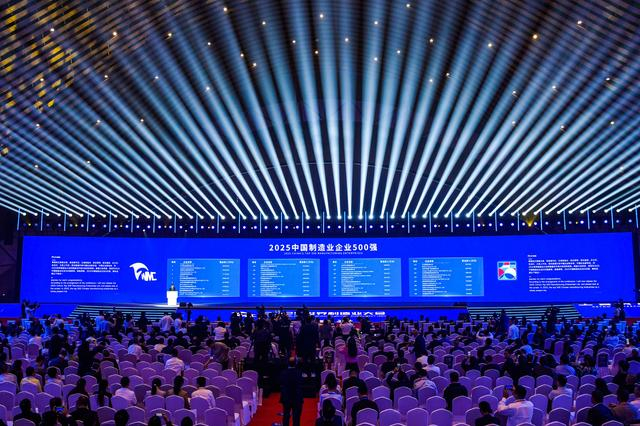
Group 1 - The "2025 China Manufacturing Enterprises Top 500" list was released, marking the 21st consecutive year of publication, outlining the roadmap for the upgrade of Chinese manufacturing [1][3] - The entry threshold for the top 500 increased from 11.09 billion RMB at the end of the 13th Five-Year Plan to 17.365 billion RMB, with total revenue rising from 4.024 trillion RMB to 5.168 trillion RMB [1] - The list indicates a significant growth in strategic emerging industries, with the number of companies in the communication equipment manufacturing sector increasing from 15 to 20, and in the semiconductor and integrated circuit sectors from 6 to 9 [1] Group 2 - Advanced manufacturing companies have seen rapid ranking improvements, such as BOE Technology Group rising 11 places to 61st, and Shanghai Weir Semiconductor increasing 44 places [2] - China Railway Rolling Stock Corporation moved up 5 places to 43rd, emphasizing the trends of digitalization, greening, and high-end manufacturing [2] - Traditional manufacturing sectors have accelerated their upgrade, with average R&D investment growth rates exceeding 100% in various industries since the 14th Five-Year Plan [2] Group 3 - The R&D intensity of the top 500 manufacturing enterprises is 2.45%, an increase of 0.03 percentage points from the previous year, with effective patents totaling 1.6632 million and invention patents at 803,800, reflecting increases of 11.34% and 12.07% respectively [2] - The digital transformation of Chinese manufacturing is advancing from a medium level to a mid-high level, with the integration of information technology and industrialization expected to reach 65% by 2025 [4] - The penetration rates of digital R&D design tools and numerical control in key processes are projected to reach 84% and 66.8% respectively [4]
原始创新与技术突破不断涌现
Zheng Quan Ri Bao· 2025-09-19 16:11
Core Viewpoint - During the "14th Five-Year Plan" period, China's technological innovation has achieved historic accomplishments, with a steady increase in innovation capabilities and a solid foundation for becoming a technology powerhouse [1] Group 1: Investment in Technology - China's total R&D investment is expected to exceed 3.6 trillion yuan in 2024, representing a 48% increase compared to 2020 [1] - The R&D intensity is projected to reach 2.68%, surpassing the average level of EU countries [1] - The total number of R&D personnel in China is the highest in the world [1] Group 2: Basic Research and Innovation - Basic research funding is set to reach 249.7 billion yuan in 2024, a growth of over 70% since 2020 [2] - China has achieved significant original results in fields such as quantum technology, life sciences, and space science, with the highest number of high-level international journal papers and international patent applications for five consecutive years [2] - Over 77% of R&D investment comes from enterprises, highlighting their central role in the innovation system [3] Group 3: Industrial Development and Achievements - The added value of high-tech manufacturing industries is expected to grow by 42% compared to the end of the "13th Five-Year Plan" [3] - The "new economy" accounts for 18% of GDP [3] - The number of commercial aerospace companies has increased from fewer than 100 in 2020 to over 500 currently, with the commercial aerospace market projected to exceed 2.5 trillion yuan by 2025 [3]
北京发布科技创新和产业创新融合发展“北京模式”
Xin Jing Bao· 2025-09-12 11:57
Group 1 - The core viewpoint of the news is the establishment of a new mechanism in Beijing to promote the integration of technological innovation and industrial innovation, showcasing a new model for development [1][6] - The new mechanism focuses on innovation sources, industrial transformation, application scenarios, and industrial landing, aiming to create a comprehensive development model known as the "Beijing Model" [1][6] Group 2 - Beijing will leverage its advantages in higher education and research institutions to enhance high-quality technological supply, emphasizing the integration of basic and applied research [2][6] - The city plans to utilize a joint funding model involving the natural science fund to address fundamental scientific issues faced by enterprises [2][3] Group 3 - There are currently 1,475 companies in Beijing with established technology innovation centers, and over 1,000 national-level specialized and innovative "little giant" enterprises, indicating strong corporate innovation vitality [3][4] - The city aims to strengthen the "research institution + enterprise" model in key application-driven industries such as blockchain and advanced computing [3][4] Group 4 - Beijing will promote the application of technological achievements by establishing incubation platforms tailored to industry characteristics and enhancing the common platform system [4][5] - The government will play a crucial role in facilitating the transformation of scientific achievements, particularly in highly regulated industries like healthcare [4][5] Group 5 - The city has established a city-level inter-departmental mechanism for technological innovation and industrial integration, focusing on original innovation and enhancing the capacity for technology transfer and industrialization [5][6] - Beijing plans to develop productive service industries such as intellectual property and legal services, and establish a technology finance service system to support innovation [5][6]
深圳创新源泉:“来了就是深圳人”彰显包容和无限可能
2 1 Shi Ji Jing Ji Bao Dao· 2025-09-04 12:38
Core Insights - Shenzhen has transformed from a fishing village into a global technology innovation hub over 45 years, driven by its inclusive spirit and innovative culture [1] - The city has undergone three significant phases: the pioneering era (1979-1992), industrial upgrading (1992-2010), and innovation-driven development (2010-present) [2] - Shenzhen's population is characterized by a high percentage of immigrants, a young demographic, and a strong entrepreneurial spirit, contributing to its innovation ecosystem [3] Historical Transformation - Shenzhen served as China's "testing ground" for market economy reforms, introducing the "time is money, efficiency is life" motto [2] - The city shifted from processing trade to high-tech industries, with companies like Huawei and ZTE emerging as key players [2] - A comprehensive innovation ecosystem has been established, with R&D intensity projected to reach 6.46% by 2024 and leading the nation in PCT patent applications for 18 consecutive years [2] Demographic Characteristics - Over 70% of Shenzhen's registered population consists of migrants, fostering adaptability and creativity [3] - The average age of residents is 33, with a significant number of high-level talents and returnees from studying abroad [3] - Approximately 60% of enterprises are technology-based, with a strong presence of private firms, exemplified by Huawei's projected R&D investment of 179.7 billion yuan in 2024 [3] Success Factors - Institutional innovation has been pivotal, including the delegation of research management and the establishment of a national intellectual property protection demonstration zone [4] - The market-driven innovation ecosystem is characterized by a high concentration of innovative enterprises and collaborative efforts between leading companies and SMEs [4] - Shenzhen's global integration is facilitated by platforms like Qianhai and He Tao, attracting top research institutions and talent [4] Innovation Case Studies - Huawei has evolved into a global leader in ICT, investing over 1.4 trillion yuan in R&D over the past decade [6] - DJI has redefined the consumer drone market, holding over 70% market share globally, supported by Shenzhen's robust electronics supply chain [6] - BGI has become a leading genomics research institution, contributing significantly to global pandemic response efforts [6] Challenges - Shenzhen faces resource constraints, particularly in land use, with a development intensity of 50% [7] - There is an imbalance in talent structure, with a shortage of top scientists in certain fields [7] - The city must transition from "following" to "leading" in key technology sectors like integrated circuits and software [7] - Increased competition from cities like Hangzhou and Suzhou poses a risk to Shenzhen's innovation leadership [7] Strategic Recommendations - Enhance original innovation by increasing government investment in basic research and establishing more national laboratories [8] - Optimize the talent ecosystem by implementing programs to attract and retain top young scientists [8] - Deepen international cooperation to build a global innovation network, leveraging Shenzhen's strengths in hardware and digital technology [8] Policy Innovations - Shenzhen has introduced a series of policies to support businesses throughout their lifecycle, including the "Shen i Enterprise" platform [9][10] - Financial reforms such as the "Tengfei Loan" model aim to provide long-term financing for high-growth companies [10] - Talent policies have been upgraded to support various categories of talent, including subsidies for young professionals [10] Future Outlook - Shenzhen aims to lead in original innovation, particularly in quantum technology and brain science, with plans for significant industry clusters by 2030 [11][12] - The city seeks to strengthen the "Shenzhen-Hong Kong Innovation Community" and enhance cross-border research collaboration [11] - A commitment to sustainable development includes initiatives for carbon neutrality and green finance innovations [12] Conclusion - Shenzhen's narrative is one of courage, wisdom, and inclusivity, with a focus on continuous innovation and breaking down institutional barriers [13] - The city's future as a leader in "Chinese intelligence manufacturing" hinges on its ability to overcome technological challenges and maintain its innovative edge [13]
王一鸣:大湾区要加快构建同科技创新相适应的科技金融体制
2 1 Shi Ji Jing Ji Bao Dao· 2025-08-30 05:57
Core Insights - The Greater Bay Area (GBA) is experiencing a surge in technological innovation investment, but its original innovation capability remains weak, necessitating a shift from collaborative innovation to innovation clusters [1][2] - The GBA has become a significant source of innovation in China, with R&D expenditure intensity surpassing 4%, ranking second only to Beijing and Shanghai, and leading the nation in patent authorizations [1] - Despite high R&D investment in Guangdong, it still lags behind developed countries, indicating a need for improvement in core technology control and collaborative innovation among the three regions [1] Summary by Sections Technological Innovation - The GBA is entering an active phase of technological innovation with substantial increases in investment [1] - The region's original innovation capability is still not strong, with a need to enhance original innovation momentum to support international competitiveness [1] R&D Investment - The GBA's R&D expenditure intensity has exceeded 4%, making it a crucial innovation driver in the country [1] - Patent authorization in the GBA has reached the highest level nationwide, indicating a robust innovation environment [1] Challenges and Recommendations - The GBA faces new challenges in building an international technology innovation center, particularly in enhancing original innovation capabilities and achieving significant original results [1] - It is recommended that the GBA transition from a following model to leading in specific advantageous fields and construct a technology finance system that aligns with technological innovation needs [2]
凭什么造出我国最大的FLNG?惠生清能董事长刘洪钧解密十年攻坚路
Sou Hu Cai Jing· 2025-08-27 00:37
Core Viewpoint - The successful delivery of the "Nguya" FLNG marks a significant milestone for the company, showcasing its capabilities in the development and construction of large-scale floating liquefied natural gas facilities, filling a gap in China's domestic capabilities in this sector [1][3][5]. Group 1: Company Development and Achievements - The "Nguya" FLNG has an annual production capacity of 2.4 million tons and is the largest of its kind in China, set to be delivered to ENI, an Italian oil company [1]. - The company has transitioned from years of losses to securing significant contracts, such as the one with ENI in 2022, demonstrating resilience and commitment to R&D [5][9]. - The company has achieved a 30% market share in the global FLNG market for newly constructed contracts, highlighting its focused approach in a niche market [9]. Group 2: Technological Innovations - The company has pioneered a modular integration technology with over 90% modularization rate, significantly reducing construction time by nearly one-third [8]. - The second-generation FLNG has achieved a 35% reduction in carbon emissions compared to the first generation, showcasing the company's commitment to sustainability [13]. - The company is developing advanced technologies for deep-sea floating wind power and other clean energy solutions, aligning with global energy transition goals [12]. Group 3: Global Strategy and Market Position - The company generates 95% of its revenue from international markets, with all FLNG clients being global enterprises, reflecting its successful global integration strategy [15]. - The company emphasizes high standards in quality and compliance to meet international client expectations, which has led to long-term partnerships with major energy firms [16]. - Future plans include shifting from project-based operations to ecosystem collaboration, aiming to provide localized operational support and become a value partner in global energy transitions [16].
每人300万元!南京大学三位教授获2025年“科学探索奖”
Yang Zi Wan Bao Wang· 2025-08-26 11:05
Group 1 - The "Science Exploration Award" announced its seventh edition, recognizing 50 young scientists, with three from Nanjing University [1] - The award is one of the highest monetary support projects for young scientific talent in China, offering a total of 3 million RMB over five years to each winner [1] - The award covers ten fields including mathematics, physics, chemistry, earth sciences, life sciences, medical sciences, information electronics, energy environment, advanced manufacturing, and transportation architecture [1] Group 2 - The research of the awardees includes breakthroughs in various fields such as non-Abelian anyons, photoelectric-enabled artificial enzymes, and drug development for neurogenic hearing loss, focusing on original innovation and national needs [2] - Young scientists (aged 35 and below for men, 38 and below for women) made up 26% of the awardees, with a record number of 13 winners, indicating a shift from a supporting role to a leading role in research [2] - The number of female awardees reached a historical high of 9, representing 18% of the total, with 3 being young scientists, showcasing the increasing presence of women in scientific research [2]