
多式联运

Search documents
武汉这个小码头变身国际港口,怎么做到的?
Chang Jiang Ri Bao· 2025-12-09 08:30
Core Viewpoint - Wuhan Yangluo Port is rapidly evolving into a significant inland port and international shipping hub, enhancing its connectivity and logistics efficiency, particularly for the Central and Western regions of China [4][12]. Group 1: Port Development and Operations - The Yangluo Port has transformed from a small dock in the 1960s to a major container hub, with significant international shipping capabilities established since 2019 [6]. - The port currently operates 32 container shipping routes, with a container throughput of 1.861 million TEUs in the first three quarters of this year, marking a 60.47% increase in the number of inbound and outbound vessels [12]. - The "Hanya Direct Shipping" service has established a network covering Japan, South Korea, Russia, Vietnam, and Indonesia, with a total transport volume of 67,376 TEUs from January to November, reflecting a growth of over 22% [6][12]. Group 2: Logistics Efficiency - Direct shipping routes have significantly reduced transportation time and costs, with the Yangluo Port to Indonesia's Labota Port route cutting logistics time by 7 to 10 days and costs by 10% to 20% [9]. - The port has implemented efficient customs processes, including a dedicated direct shipping window and smart electronic inspections, reducing inspection times by over 30% [9][12]. - The intermodal transport network has seen a 52.65% increase in container rail-water transport volume, accounting for 38.21% of the national total in this category [14]. Group 3: Trade and Financial Services - The establishment of the "Belt and Road" national pavilion at Yangluo Port has attracted numerous international goods and trade opportunities, enhancing its role as a trade service platform [21]. - The port aims to develop a comprehensive financial service hub, providing settlement, financing, and insurance services to enhance logistics and economic benefits [23]. - Recent initiatives include tailored financing products for the grain industry, addressing challenges in inventory financing and promoting financial services in the logistics sector [23].

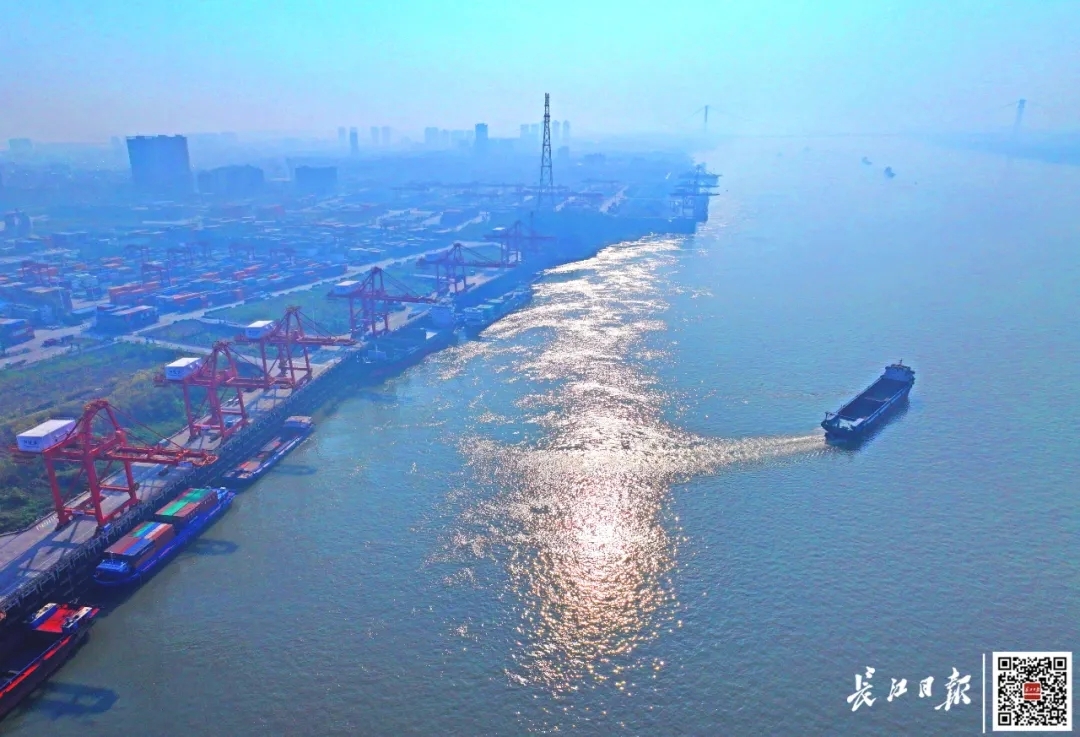
武汉加快建设长江中游航运中心
Chang Jiang Ri Bao· 2025-12-09 00:25
Core Viewpoint - Wuhan Yangluo Port is rapidly evolving into a significant inland port and international logistics hub, enhancing its role in the Yangtze River economic belt and facilitating global trade connections [2][4][12]. Group 1: Port Development and Operations - The Yangluo Port has transformed from a small dock in the 1960s to one of the largest inland container hubs in China, with a focus on international shipping routes [4]. - The port has established a network of five direct international shipping routes covering countries such as Japan, South Korea, Russia, Vietnam, and Indonesia, significantly increasing its shipping capacity [4][6]. - In the first eleven months of this year, the "Hanya Direct Shipping" service achieved a transportation volume of 67,376 TEUs, marking a year-on-year increase of over 22% [4][6]. Group 2: Logistics Efficiency - The direct shipping routes have reduced transportation time by nearly half, with costs decreasing by 10% to 20% due to streamlined logistics processes [6]. - The port has implemented efficient customs procedures, including a dedicated direct shipping window and smart electronic quarantine measures, which have reduced inspection times by over 30% [6][8]. - The container throughput at Yangluo Port reached 1.861 million TEUs in the first three quarters of this year, with a 60.47% increase in the number of inbound and outbound vessels [6][8]. Group 3: Multi-Modal Transport - Yangluo Port has developed 42 multi-modal transport channels, integrating water, rail, road, and air transport to enhance logistics efficiency [7][8]. - The port's multi-modal transport network has seen a 52.65% increase in container rail-water transport volume, accounting for 38.21% of the national total for similar inland ports [8]. Group 4: Financial and Trade Services - Yangluo Port aims to become a financial hub, providing integrated services such as settlement, financing, and insurance to enhance trade efficiency [9][12]. - The establishment of the "Belt and Road" country pavilion has attracted numerous international products, positioning the port as a significant trade service platform [10][11]. - The port's financial services have already facilitated a successful inventory financing transaction, addressing challenges in the agricultural sector [12].
广安港何以通江达海?
Si Chuan Ri Bao· 2025-12-05 09:20
Core Viewpoint - Guang'an Port is positioned as a crucial logistics node in the Chengdu-Chongqing economic circle, aiming to enhance water transport efficiency and reduce logistics costs through innovative transportation models and infrastructure development [1][2][4]. Group 1: Infrastructure Development - Guang'an Port has established a three-level ship lock, six 1,000-ton berths, and has improved 70.9 kilometers of the Chuanjiang River's third-level navigation channel, forming a waterway that connects rivers to the sea [3]. - The port has launched nine 1,000-ton vessels, including two 1,100-ton electric new energy cargo ships, which reduce energy consumption by 20%-25% compared to conventional vessels [3]. Group 2: Transportation Model Innovation - Guang'an Port is addressing navigation challenges by implementing a "top-push + relay" fleet transportation model, which enhances navigation efficiency and reduces transportation risks [2]. - The cost of transporting goods via water has been significantly reduced, with water transport costing 185 yuan per ton compared to 260 yuan per ton by road, leading to substantial savings as transport volume increases [2]. Group 3: Multi-Modal Logistics System - Guang'an Port is developing a multi-modal transport system that integrates water, road, rail, and air transport, enhancing logistics collaboration with the Chongqing metropolitan area [4][5]. - A partnership with Chongqing Guoyuan Container Company has established a "dry port" in Guang'an, facilitating over 200 shipments and 6,000 tons of goods valued at 60 million yuan [4]. Group 4: Growth Metrics - Since the launch of container shipping between Guang'an Port and Chongqing Port in 2021, over 470 voyages have been made, with container throughput nearing 10,000 TEUs, and annual growth rates for container voyages, throughput, and overall port cargo volume reaching 65.87%, 53.51%, and 98.73% respectively [5].
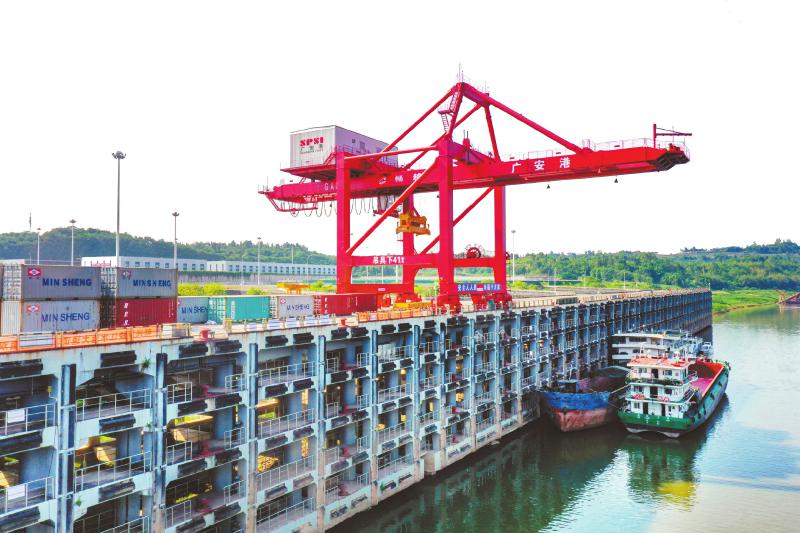
广安港以“三网”融合为契机,推进现代物流降本提质增效 这个内陆港何以通江达海?
Si Chuan Ri Bao· 2025-12-05 00:23
Core Viewpoint - Guang'an Port has established itself as a crucial logistics hub in the Chengdu-Chongqing economic circle, with a focus on modernizing water transport and reducing logistics costs through innovative transportation models and infrastructure development [2][4][6]. Group 1: Port Development and Operations - Since its opening, Guang'an Port has launched 21 international and domestic shipping routes, positioning itself as a key logistics node in the Chengdu-Chongqing economic circle [2]. - The port has maintained a top-three ranking in major water transport indicators in the province for three consecutive years, leading the northeastern Sichuan port cluster [2]. - Guang'an Port is actively working to enhance its capabilities as a comprehensive water transport hub by integrating a "three-network" approach (channel network, logistics network, and data network) [2][4]. Group 2: Cost Reduction and Efficiency Improvement - Historically, over 98% of goods in Guang'an relied on road transport, leading to high logistics costs. The port aims to shift more cargo to water transport to reduce these costs [4]. - The port has implemented innovative transportation models, such as "top-push + relay" shipping, to address challenges in navigation efficiency and enhance overall transport effectiveness [4][5]. - Water transport costs have been significantly reduced, with examples showing a decrease from 260 yuan per ton via road to 185 yuan per ton via water [4]. Group 3: Infrastructure and Capacity Expansion - Guang'an Port has developed essential infrastructure, including a three-level ship lock and six 1,000-ton berths, and has improved 70.9 kilometers of the channel for better waterway access [5]. - The port has introduced nine 1,000-ton vessels, including two electric cargo ships that reduce energy consumption by 20-25% compared to conventional vessels [5]. Group 4: Multi-Modal Logistics Integration - Guang'an Port is working on a multi-modal transport system that integrates water, road, rail, and air transport to enhance logistics efficiency and connectivity with the Chongqing metropolitan area [6][7]. - A partnership with Chongqing's Guoyuan Container Company has established a "dry port" in Guang'an, facilitating over 200 shipments and 6,000 tons of goods valued at 60 million yuan [6]. - The port has also developed a railway network and collaborated with Sichuan Airlines to improve air cargo efficiency, achieving a 70% increase in customs clearance speed [7]. Group 5: Growth Metrics and Future Outlook - Since the launch of container shipping between Guang'an Port and Chongqing Port in 2021, the port has conducted over 470 voyages, with container throughput nearing 10,000 TEUs and annual growth rates of 65.87% for shipping routes and 98.73% for overall cargo throughput [7].
南通“十四五”交通建设圆满收官 “八龙过江”格局加速成型
Yang Zi Wan Bao Wang· 2025-12-04 15:24
Core Insights - Nantong City has achieved significant milestones in transportation construction during the "14th Five-Year Plan," with a total investment of 120 billion yuan, marking a historical high and solidifying its status as a national comprehensive transportation hub [1] Group 1: Transportation Infrastructure Development - The construction of cross-river passages has made historic breakthroughs, with the "Eight Dragons Crossing the River" pattern accelerating formation. Key projects such as the Sutong Bridge, Chongqi Bridge, and the Shanghai-Suzhou-Nantong Yangtze River Rail and Road Bridge are now operational [1] - The highway network has been enhanced, forming a "three-ring seven-radiation" structure, with over 90% of the physical work on the Nantong section of the North Jiangsu High-speed Railway completed [1] - The waterway infrastructure has seen improvements, with a planned upgrade of 207 kilometers of waterways, and Nantong Port is expected to handle a cargo throughput of 340 million tons in 2024, with a container throughput of 2.719 million TEUs, representing a year-on-year increase of 33.1% [1] Group 2: Logistics and Transportation Efficiency - The capabilities of logistics hubs have significantly improved, with the opening of the Lvsijikou Port Area and the official approval of Nantong as a national logistics hub [1] - Breakthroughs in multimodal transport have been achieved, including the launch of the first ocean shipping route and the regular operation of the "China-Kyrgyzstan-Uzbekistan" international rail freight service [1] Group 3: Smart and Green Transportation Initiatives - Nantong has established the province's first fully automated container terminal and a digital transportation industrial park that houses 53 enterprises in the supply chain [1] - The city has successfully created a national model for urban green freight distribution, leading to the formation of the "Nantong Model" [1] Group 4: Public Transportation and Accessibility - The "Four Good Rural Roads" initiative has been recognized as a national demonstration project, with 446 dangerous bridges renovated, achieving a 5A rating for urban-rural transportation integration across all counties [2] - Railway passenger volume has exceeded 13 million annually, and airport passenger throughput has reached a new high of 4.1 million, with urban rail transit carrying approximately 100 million passengers [2] Group 5: Future Outlook - Looking ahead to the "15th Five-Year Plan," Nantong aims to complete multiple cross-river passages and high-speed rail projects, targeting a container throughput of over 3.5 million TEUs at its ports [2] - By 2030, the city plans to achieve modern transportation system standards ahead of the province, establishing a robust modern comprehensive transportation system [2]
苏州太仓到张家口物流公司苏州太仓至张家口专线
Sou Hu Cai Jing· 2025-12-04 04:45
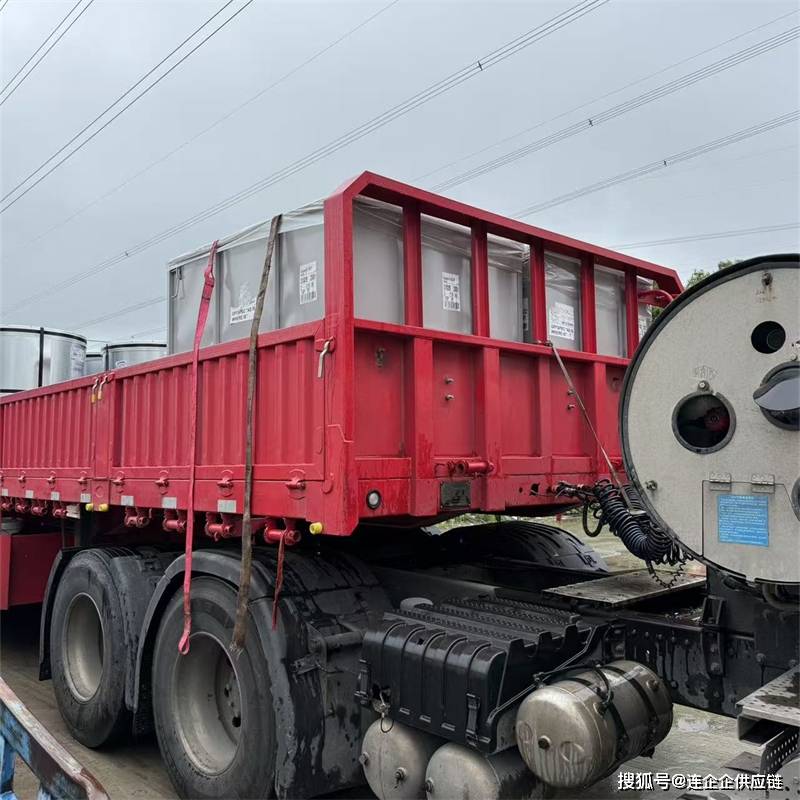
Core Viewpoint - The article highlights the establishment of an efficient logistics route connecting Suzhou Taicang and Zhangjiakou, leveraging the advantages of both regions to enhance supply chain efficiency and support local industries, particularly in agriculture and renewable energy [10][18]. Logistics Operations - The logistics operations involve a variety of specialized vehicles tailored for different types of cargo, including temperature-sensitive equipment and large machinery, ensuring optimal transport conditions [11][12]. - A dedicated logistics team manages the transportation of precision instruments, ensuring they are protected from environmental fluctuations during transit [11]. - Heavy machinery, such as wind turbine blades, is transported using specialized low-platform trucks, with careful planning to navigate local road conditions and obtain necessary permits [12]. Cold Chain Logistics - The cold chain logistics service is optimized for Zhangjiakou's climate, ensuring that perishable goods maintain their quality during transport, with temperature control systems in place [13]. - The logistics team employs advanced monitoring systems to track temperature and humidity, ensuring compliance with strict preservation standards [13]. Distribution Network - The distribution network covers 19 districts in Zhangjiakou, utilizing a combination of public and rail transport to facilitate efficient delivery of goods [16]. - The logistics service includes features such as early morning and late evening deliveries, tailored to meet the needs of local agricultural producers and industrial clients [16]. Warehouse and Storage Solutions - A modern warehouse at Taicang port supports various storage needs, including temperature-controlled areas for sensitive equipment and materials [15]. - The warehouse also offers value-added services such as customs clearance and equipment calibration, enhancing overall supply chain efficiency [15]. Economic Impact - The logistics route significantly reduces delivery times, with some shipments arriving up to two days earlier than traditional methods, thus supporting local agricultural and industrial sectors [11][14]. - The initiative aligns with broader regional development strategies, enhancing connectivity between the Yangtze River Delta and the Beijing-Tianjin-Hebei region, fostering economic growth [18].
国铁集团郑州局开行首列豫北“公铁海”联运专列
Sou Hu Cai Jing· 2025-12-04 04:42
Core Viewpoint - The launch of the first "Rail-Road-Sea" intermodal train from Yuanshan Station to Qingdao Port marks a significant development in the logistics network of northern Henan, enhancing regional economic growth and efficiency [1][3]. Group 1: Logistics and Transportation Efficiency - The "Rail-Road-Sea" intermodal train service has improved transportation efficiency by over 30%, while reducing transportation costs by 18% compared to traditional road transport [3]. - The new service eliminates the need for intermediate handling, thus minimizing cargo damage during transit [3]. Group 2: Strategic Development and Collaboration - The railway department has strengthened communication with local governments and established a task force to optimize transportation routes for key foreign trade products in the Jiaozuo area [5]. - Collaboration with Shandong Port and other entities is being enhanced to facilitate the intermodal transport of various goods, including coal, chemicals, and minerals [5]. Group 3: Future Plans and Goals - The railway group plans to leverage the launch of the intermodal train service to further develop the "Rail-Road-Sea" logistics corridor, aiming to integrate more local resources into the intermodal network [5]. - The initiative is expected to position the northwestern Henan and southeastern Shanxi regions as a significant logistics hub, contributing to the new dual circulation development pattern [5].
中欧班列体系建设不断完善
Jing Ji Ri Bao· 2025-12-04 00:30
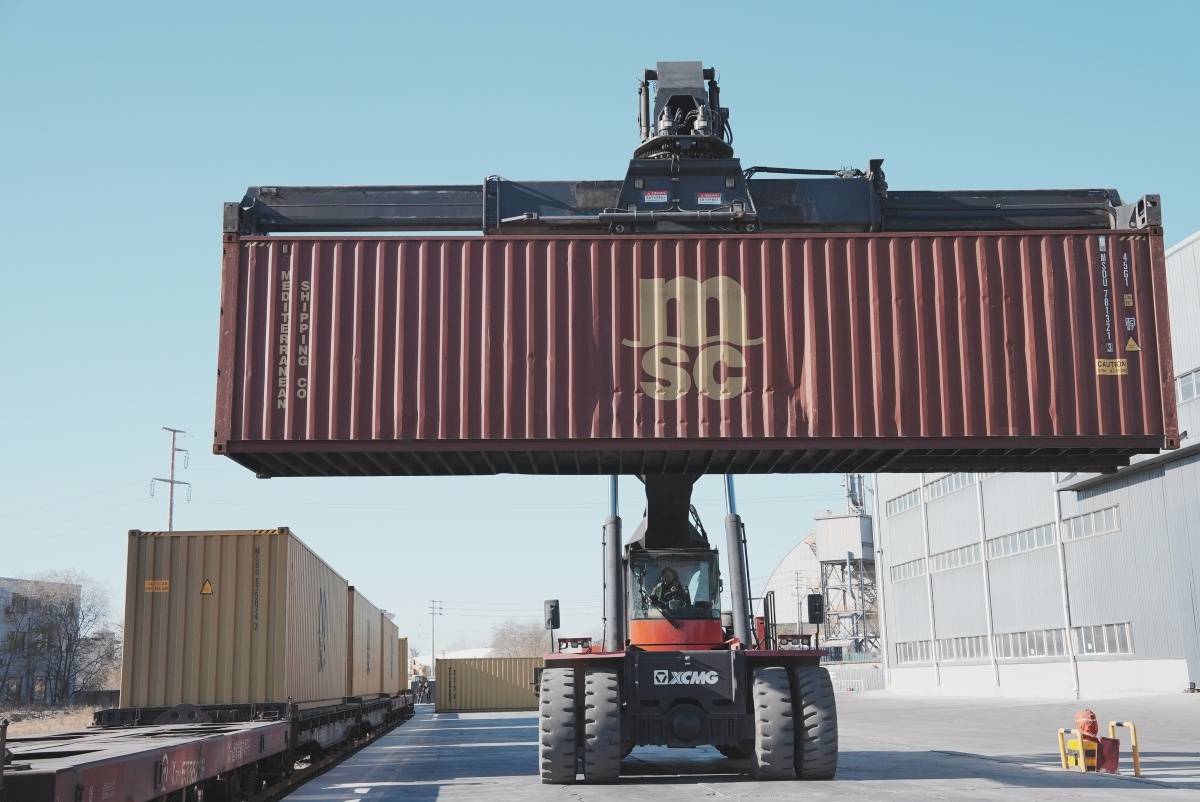
11月20日,中欧班列中通道通行量突破3500列。这是二连浩特铁路口岸自2013年通行中欧班列以 来,首次年内突破3500列大关。11月22日,记者从中国铁路上海局集团有限公司获悉,2025年浙江中欧 班列(含中亚方向)提前39天追平去年全年开行(去程)总量,同比增幅12%。 据了解,中欧班列历年累计开行突破12万列,形成了联通中国境内128个城市,通达欧洲26个国 家、232个城市,以及亚洲11个国家、100多个城市的国际运输网络,为维护国际产业链、供应链稳定, 促进全球经济发展发挥了重要作用。 "我们着力推进中欧班列高效运输、安全治理、多元通道、创新发展四大体系建设,推动班列开行 由'点对点'向'枢纽对枢纽'转变,为世界经济发展注入新动力。"国家发展改革委区域开放司司长梁林冲 表示。 运输更加高效稳定 11月18日,国铁集团发布第四批中欧班列全程时刻表,实行全程时刻表的中欧班列进一步扩容,开 行数量增至年1000列以上,覆盖中国9座城市和欧洲6座城市。 作为高质量共建"一带一路"的旗舰项目,中欧班列是惠及沿线各国的重要公共产品。10余年间,中 欧班列开行规模数量稳步增长,服务质量效益稳步提高,实行全程时刻 ...
山东济宁任城区:构筑“北粮南运”内河枢纽
Zhong Guo Jing Ji Wang· 2025-12-02 12:46
Core Insights - The article highlights the efficiency and cost-effectiveness of the modern grain logistics system established in Jining, Shandong, leveraging the Grand Canal for transportation [1][2][3] Group 1: Logistics Efficiency - The Jining grain logistics park has a dedicated dock that allows for seamless transfer of grain from ships to storage, significantly reducing transportation costs from 170 yuan per ton to 70 yuan, a decrease of 59% [1] - The logistics park can receive 12 to 15 train cars of grain daily, with each car carrying approximately 60 tons, enhancing circulation efficiency by over 30% [1] Group 2: Storage Capacity and Technology - The storage facilities in the park consist of 14 flat warehouses and 10 round silos, with a total capacity of 167,400 tons, complemented by three 1,000-ton edible oil storage tanks [2] - The park employs digital grain storage technology to achieve zero loss and high-quality preservation of grain [2] Group 3: Comprehensive Service Offering - The logistics park provides a full-chain solution for clients, including grain transfer, storage, trade, logistics distribution, quality testing, and information consulting [2] - By 2025, the park aims to achieve a dual milestone of 2 million tons in both grain trade volume and port logistics transfer volume [2] Group 4: Future Development Plans - The park plans to build flour and feed processing plants, leveraging water transport advantages to expand its reach into the Henan, Anhui, and Jiangsu regions [3] - The focus is on enhancing the grain industry towards high-value processing, promoting an integrated, intelligent, and green development model [3]
重庆港股份有限公司关于投资建设江津港现代化多式联运集疏运能力提升项目(二期改扩建工程)的公告
Shang Hai Zheng Quan Bao· 2025-12-01 18:55
Core Viewpoint - The company has approved the investment plan for the Jiangjin Port Modernized Multimodal Transport Capacity Enhancement Project (Phase II), with a total estimated investment of 298.8433 million yuan, aiming to address development bottlenecks and enhance logistics capabilities in the region [2][9]. Project Overview - Project Name: Jiangjin Port Modernized Multimodal Transport Capacity Enhancement Project (Phase II) [3] - Estimated Total Investment: 298.8433 million yuan [2][3] - Implementation Entity: Chongqing Port Co., Ltd. [3] Project Scale and Content - The project includes the construction of a multifunctional yard covering 150 acres, along with necessary road networks, power supply, lighting, water supply and drainage, fire protection, and environmental protection facilities [4]. Project Timeline - The land auction for the 150 acres is planned to be completed by 2026, with preliminary construction procedures to be finalized by 2027 [5] - The construction period is estimated to be approximately 36 months, with completion expected by 2030 [6]. Economic Benefit Analysis - The post-tax internal rate of return on investment for the project is calculated to be 4.02% [8]. Impact on the Company - The project is a crucial initiative to overcome development bottlenecks in the Jiangjin Port area and promote high-quality regional development. It aims to enhance cargo throughput and multimodal transport efficiency, addressing the growing logistics challenges in the Chongqing area. Additionally, it will position Jiangjin Port as a key node in the shipping network, leveraging its geographical advantages to support the company's logistics competitiveness and market expansion, thereby fostering sustainable high-quality development [9].
