机构库存

Search documents
10万亿资金站在门口,就等大佬下令了!
Sou Hu Cai Jing· 2025-09-17 18:48
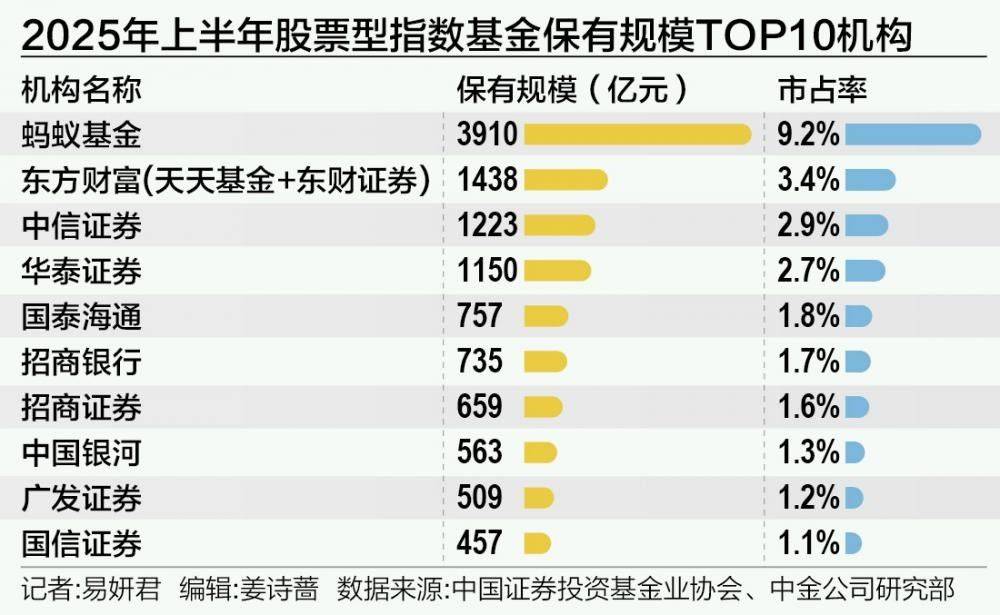
Group 1 - The core viewpoint highlights the increasing sophistication of retail investors, contrasting with their lack of fundamental data analysis skills [1] - The non-monetary fund market in China is projected to exceed 10 trillion yuan by mid-2025, with broker channels showing a remarkable growth rate of 9.4%, outperforming banks and third-party platforms [2] - The top 10 institutions in the stock index fund market hold significant market shares, with Ant Fund leading at 391 billion yuan, representing 9.2% of the market [3] Group 2 - A common misconception during bull markets is that holding stocks indefinitely is the best strategy; however, data shows that timely stock switching can yield returns 2-3 times higher than blind holding [4] - Three critical traps for investors include chasing hot sectors, following price movements without analysis, and misjudging stock value based on price alone [6][9] - Recent regulatory changes in fee structures aim to align the interests of sales institutions with investors, leading to a competitive landscape where banks push fixed-income products, brokers promote ETFs, and third-party platforms engage in aggressive marketing [10] Group 3 - The market has shifted towards data-driven decision-making, with emotional trading being the biggest enemy; objective data is now the best ally for investors [11] - The popularity of ETFs is attributed to their convenience and low costs, but the underlying reason is the reliance on data by professional investors compared to retail investors who still operate on intuition [12] - The ongoing competition in the 10 trillion yuan fund distribution market is not just about channels but also about the understanding and application of data in investment strategies [13] Group 4 - Recommendations for investors include minimizing time spent on K-line pattern analysis, reducing reliance on flashy financial influencers, and finding suitable quantitative tools for investment [14]

都说静待靴子落地,实际大佬已摩拳擦掌
Sou Hu Cai Jing· 2025-09-16 01:34
今天的市场可谓是冰火两重天,一方面三大指数中除了上证指数表现略差之外,深成指和创业板指数表现都很不错,,但是个股却有超过3000家下跌,这已 经是这轮行情第N次出现这种情况,赚钱的机会永远集中在少数几个板块当中。 为什么会这样呢?这就是我以前说的这轮行情本质上靠流动性在推动,流动性是有阶段偏好的。这阶段伴随着美联储降息的预期加强,海外资金开始回流, 这些海外资金偏好什么呢?当然是权重股,尤其是科技权重股,于是乎我们看到创业板在7月底的时候,今年的涨幅才4.69%,到了八月份已经涨成全球第 一了,原因就是那些科技权重被拉了起来。 一,今日要点 周末中美之间的摩擦陡然升级,这都让今天的A股蒙上了一层阴影,全天指数都是窄幅整理,一切似乎又陷入到寻找方向的阶段,那么真相又是如何呢? 二,散户聚焦 所以,当复盘今天的盘面时,比起各种消息,更值得关注的是,在今天央行释放6000亿流动性(买断式逆回购)的背景下,债券市场平静如水,这就说明眼 下股市更加吸引外资,而这背后就是「做多中国国债+做空远期RMB」的经典套利模式不再受到市场青睐,之所以这样,是因为这个套利模式主要在美国加 息背景下应运而生,如今随着美联储降息在即,自 ...

国庆档都在提前动作,影视股炒作在一步步解封!
Sou Hu Cai Jing· 2025-09-15 15:22
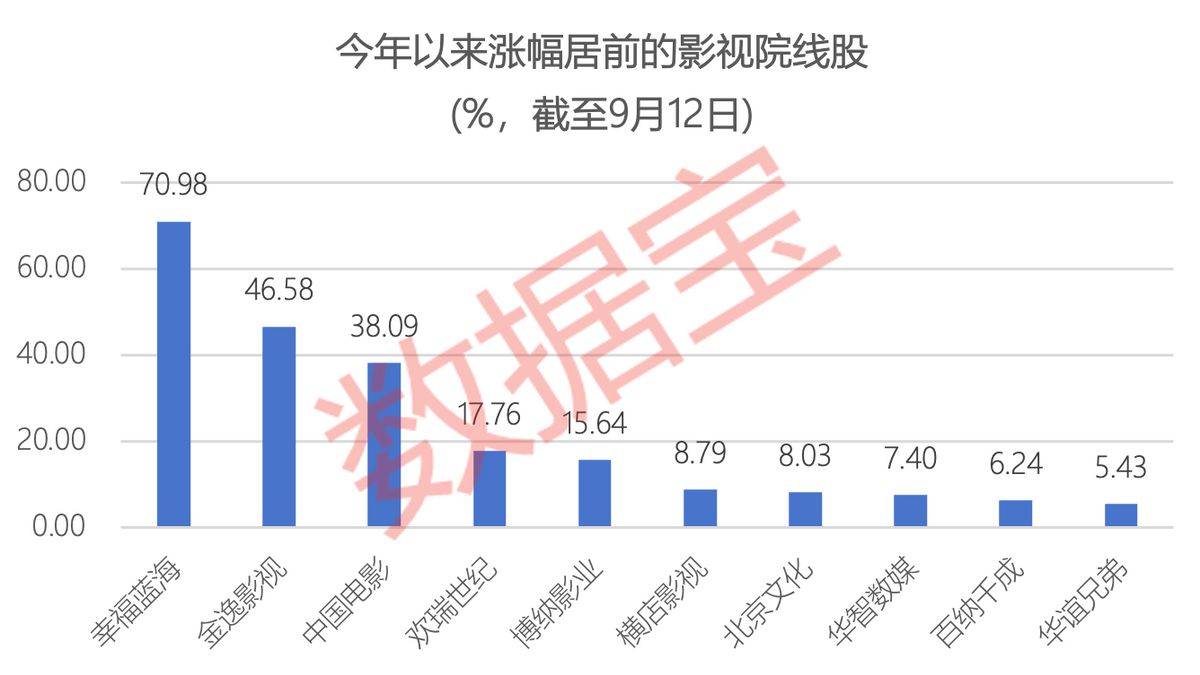
Group 1 - The upcoming National Day holiday is expected to boost the film industry, with an 8-day holiday and high box office expectations leading to a preemptive rally in the film sector, as evidenced by a more than 5% increase in the Shenwan secondary film and television index in September, outperforming the broader market [1][3] - Institutional investors have been actively positioning themselves in the film sector, with A-share film companies reporting a total net profit of 1.8 billion yuan in the first half of the year, reflecting a year-on-year increase of over 75%, indicating that this data is a result of sustained institutional operations [3] - Retail investors often misjudge stock value by labeling stocks as "cheap" or "expensive," which can lead to dangerous investment decisions [3] Group 2 - The stock market is characterized by a struggle for pricing power, which is predominantly held by institutional investors, making it more reliable to analyze institutional trading data rather than relying on ambiguous expert opinions [5] - Many investors mistakenly focus on valuation metrics like price-to-earnings ratios, believing that low P/E stocks are "cheap" and high P/E stocks are "expensive," which is a flawed perspective [6][15] - A stock with a P/E ratio exceeding 1000 can still experience significant price increases due to ongoing institutional support, while a stock with a P/E ratio below 5 can decline sharply if institutional interest wanes [8][12][15] Group 3 - To capitalize on the upcoming film sector rally, investors should avoid blindly trusting "cheap stocks" and instead focus on observing and interpreting institutional trading behaviors [16] - An active "institutional inventory" (represented by orange bars) indicates that funds are quietly accumulating positions, suggesting potential upward movement [16][18] - If prices rise but "institutional inventory" decreases, it may signal a potential trap for investors, while stable high levels of "institutional inventory" often indicate sustained market momentum [18]
25个行业融资净买入,杠杆资金正聚焦攻击!
Sou Hu Cai Jing· 2025-09-11 12:45
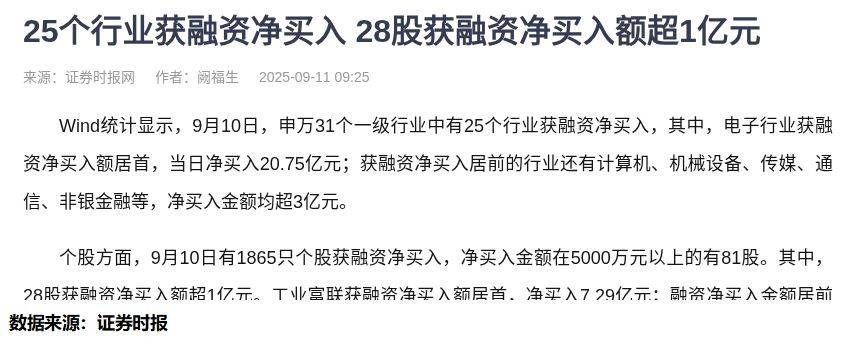
Core Insights - The electronic industry led the market with a net inflow of 2.075 billion, with 1865 stocks receiving net financing, and Industrial Fulian alone attracted 729 million in a single day [1] - The current market scenario resembles the tech stock frenzy of 2007, but history does not repeat itself exactly; it only echoes similar patterns [2] Market Dynamics - Many investors mistakenly believe they understand the market through visible indicators like policy benefits, earnings growth, and capital inflows, but these are merely superficial [3] - The true drivers of stock price trends are often hidden, influenced by the intentions of large institutional investors [3] Technical Analysis - Two stocks displayed similar high-level adjustments and rebounds, leading to confusion among retail investors about whether to exit or stay [7] - Quantitative data revealed that one stock experienced active institutional trading, while the other was likely driven by retail investors, resulting in different outcomes [9][11] Quantitative Tools - The use of quantitative tools allows for a deeper understanding of market dynamics, revealing the true actions of institutions rather than just the inflow of funds [11] - The value of quantitative data lies in its ability to uncover market truths, helping investors distinguish between genuine institutional actions and misleading signals [11]
195只ETF被融资买入,杠杆越大行情越急!
Sou Hu Cai Jing· 2025-09-11 11:40
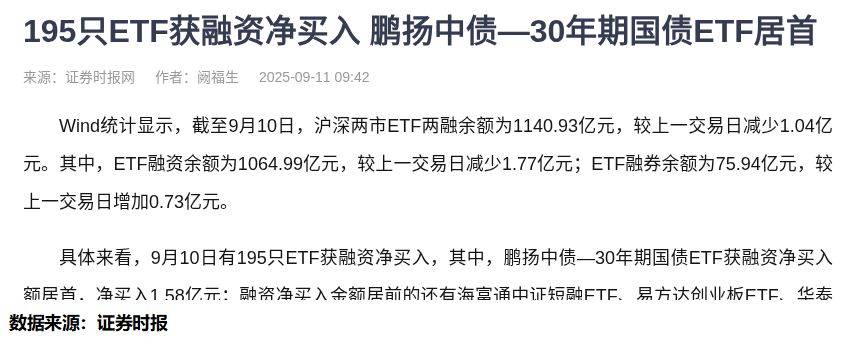
Group 1 - The recent data from the ETF margin trading market indicates a subtle shift in capital, with a total margin balance of 114.09 billion yuan as of September 10, showing a preference for bond ETFs, particularly the Pengyang 30-Year Treasury ETF which saw a net buy of 158 million yuan in a single day [1] - A significant portion of retail investors remains focused on K-line charts for predicting market movements, while institutional investors have shifted towards quantitative data analysis, highlighting a disparity in market understanding [3] - The misconception that holding stocks during a bull market guarantees profits is addressed, emphasizing the importance of timely stock rotation over blind holding [4] Group 2 - Anxiety in investing often stems from the unpredictable nature of stock price movements, with the article suggesting that the behavior of large institutional funds exhibits recognizable patterns, unlike individual stock fluctuations [5] - Quantitative data is presented as a powerful tool for revealing market truths, akin to a CT scan for the human body, allowing investors to see underlying capital flows [8] - The "institutional inventory" data reflects the activity level of institutional funds, with longer participation indicating a stronger belief in a stock's potential, which is crucial for long-term price trends [10] Group 3 - The recent surge in bond ETFs is attributed to rising risk aversion, with evidence suggesting that large funds began positioning themselves in these assets two months prior to the current market sentiment [10] - Ordinary investors are advised to focus on scientific methods to understand market dynamics rather than following trends blindly, emphasizing the need to differentiate between valuable information and noise [11][13] - Recommendations for investors include avoiding emotional reactions to market fluctuations, utilizing quantitative tools for analyzing capital movements, and maintaining independent judgment [12]
1000亿基金9月发威,动向已有征兆!
Sou Hu Cai Jing· 2025-09-07 14:57
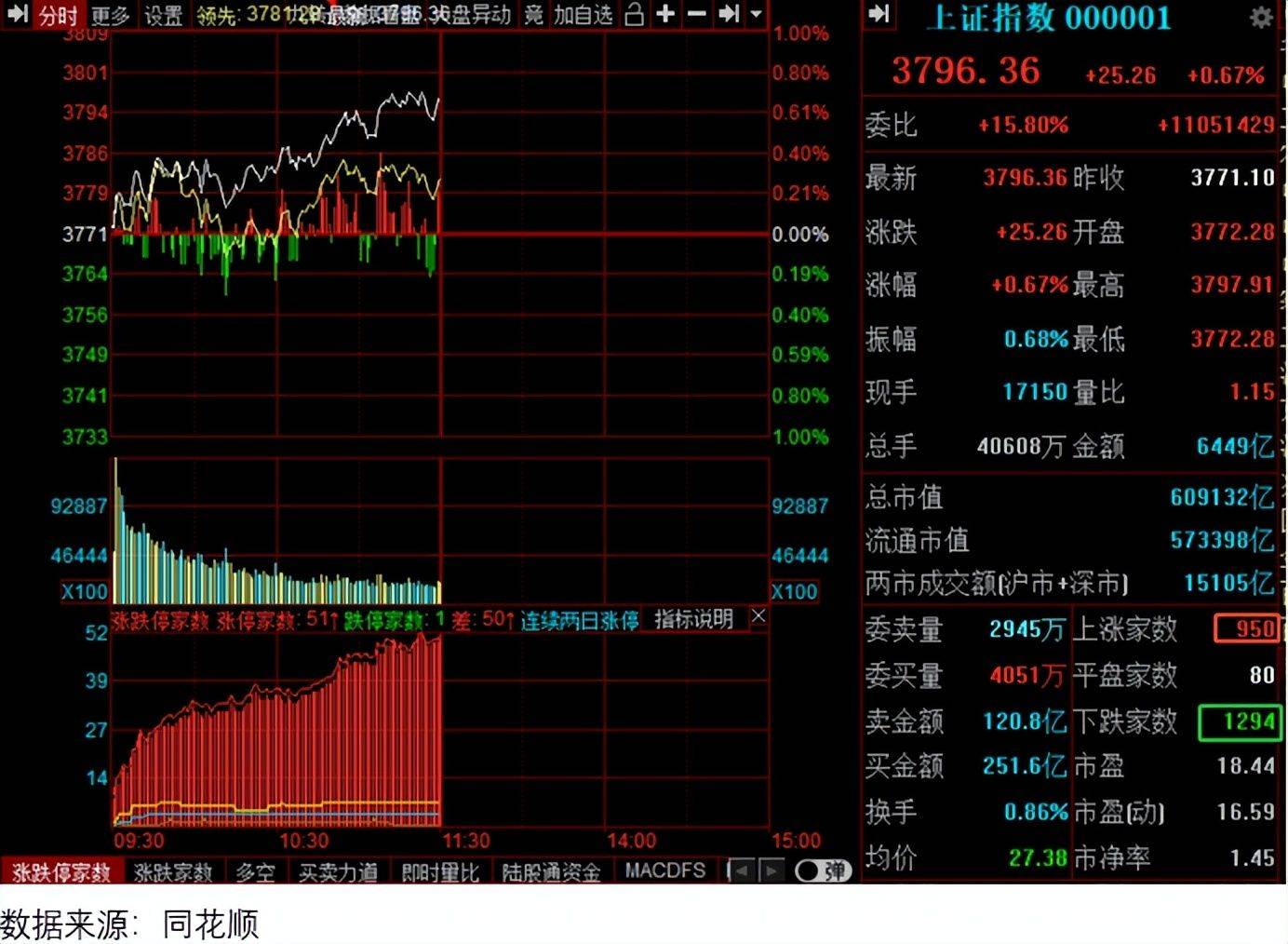
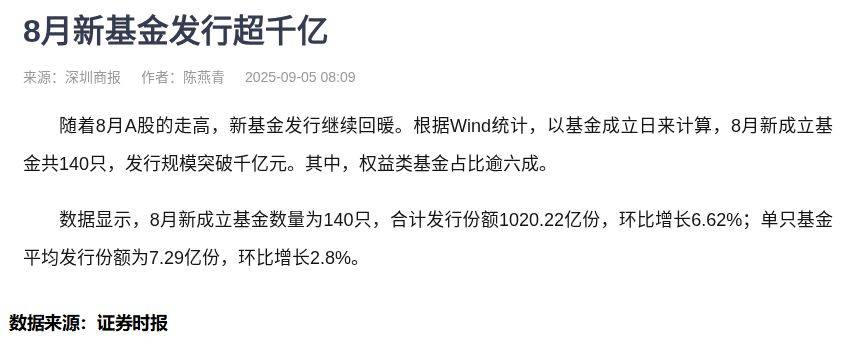
Group 1 - The recent surge in fund issuance data shows that in August, 102 billion was raised, with equity funds accounting for over 60%, and a 44.83% week-on-week increase in the first week of September [1][3] - The A-share market is characterized by a lag in news signals, where funds often position themselves before new fund launches, leading to price increases prior to public announcements [3][4] - The current market dynamics indicate that while some view the new fund data as an opportunity, others perceive it as a risk, highlighting the contrasting interpretations of market signals [6][9] Group 2 - The data from the recent fund issuance indicates that while stock-type funds raised a total of 471 million, the top-performing fund was a bond fund, suggesting a trend of large funds diversifying their investments [9][10] - The focus for private equity fund managers has shifted from launching new products to adjusting existing portfolios, emphasizing the importance of data processing capabilities over mere access to information [9][10] - The market is currently experiencing fluctuations around the 3800 level, prompting a need for investors to prioritize data analysis over news consumption and to be cautious about traditional trading strategies [10][11]
美联储降息在即,散户却踩中牛市四大陷阱!
Sou Hu Cai Jing· 2025-09-02 07:22
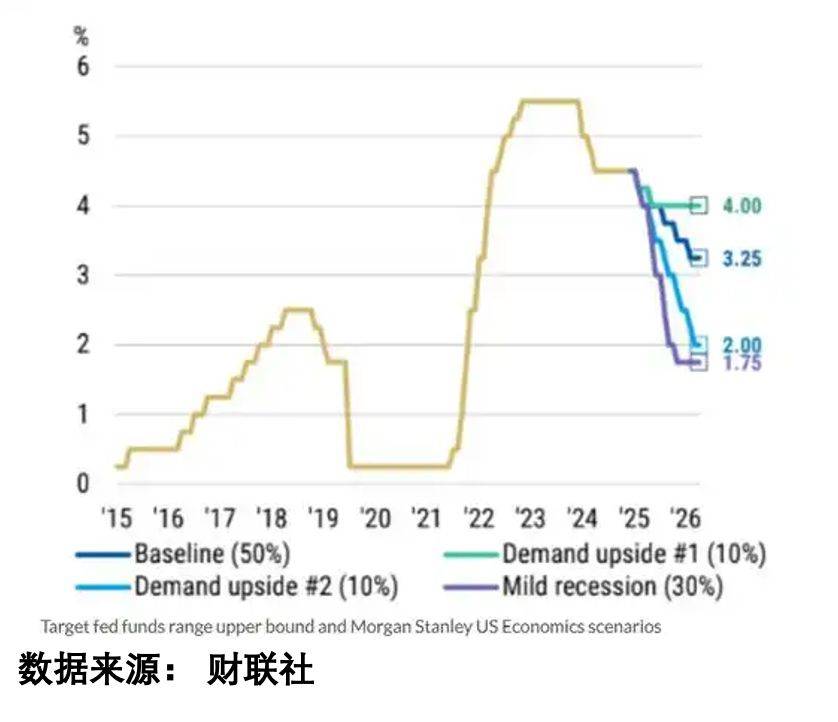
Core Insights - Morgan Stanley suggests that the Federal Reserve may implement larger-than-expected interest rate cuts, leading to significant market reactions, particularly in U.S. Treasury bonds [1][2] - The report outlines three scenarios for the Fed's actions: fiscal stimulus (10% probability), inflation tolerance (10% probability), and economic recession (30% probability) [2] Group 1: Market Reactions - Following the news of potential rate cuts, Wall Street traders began to engage in steepening yield curve trades, indicating a shift in market sentiment [1][2] - Retail investors often react impulsively to interest rate news, leading to potential losses, as seen in the recent volatility in the brokerage sector [4] Group 2: Investor Behavior - Four common misconceptions among retail investors during bull markets are identified: 1. "Holding stocks will lead to gains" syndrome, where investors hold onto losing stocks in hopes of recovery [6] 2. "Chasing hot trends" syndrome, where investors invest heavily in trending sectors without proper analysis [6] 3. "Strong stocks will continue to perform" fallacy, where investors assume that leading stocks will always rise, ignoring underlying data [6] 4. "Buying the dip" trap, where investors buy stocks that have fallen significantly without considering institutional selling behavior [8] Group 3: Institutional Insights - The pricing power in the stock market is primarily held by institutional investors, who utilize advanced data models and algorithmic trading, contrasting with retail investors' reliance on basic technical indicators [9] - The "institutional inventory" data is highlighted as a crucial metric for understanding market dynamics, as it reflects the activity level of institutional funds [11][13] Group 4: Strategic Recommendations - To avoid losses, retail investors should adopt an institutional perspective by monitoring foreign capital trading behavior and institutional inventory data [14][16] - The importance of recognizing genuine market opportunities through active institutional participation is emphasized, rather than relying solely on media narratives about interest rate cuts [14][17]

两融破2.2万亿大关,生死战从融资盘开始!
Sou Hu Cai Jing· 2025-08-30 16:03
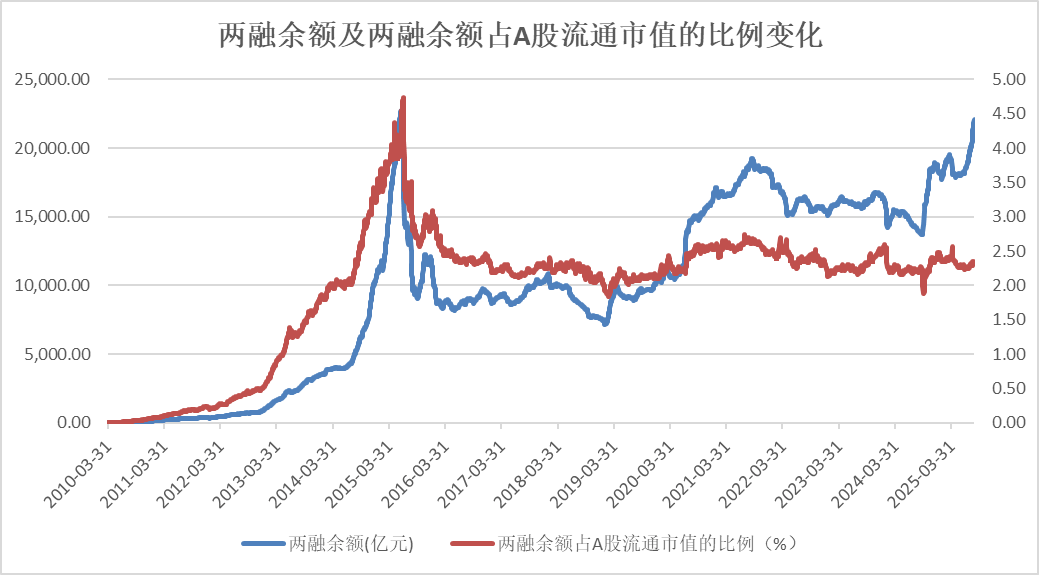
Group 1 - The A-share market has recently set a significant record with the margin financing balance surpassing 2.2 trillion yuan, nearing the historical peak of 2.2753 trillion yuan in 2015 [1][3] - The current market environment is characterized by strong speculation, with the financing amount approaching historical highs, indicating increased market activity and trading enthusiasm [3][12] - The complexity of the current market environment is greater than in 2015, leading to increased anxiety among investors due to the overwhelming amount of information available [4][5] Group 2 - The market does not consider the sentiments of retail investors; perceived good or bad news may be interpreted differently by institutional investors [5][10] - A comparison of two stocks shows that while one stock has active institutional participation, the other has seen a sudden drop in institutional inventory, highlighting the disparity in performance under similar market conditions [9][10] - Institutional investors are adept at using strategies to shake out retail investors, often leading them to misinterpret market signals [10][11] Group 3 - The increase in leveraged funds indicates a recovery in market confidence but also suggests that volatility will increase [12] - The ability to survive in the current market is less about intelligence and more about adaptability to changes [12][17]
争夺3800谁会撤退,外资看法完全不同!
Sou Hu Cai Jing· 2025-08-29 15:44
Group 1 - The recent surge in A-shares above 3800 points is driven by a frenzy in technology stocks, with companies like Cambrian Technology surpassing Kweichow Moutai in stock price and new consumption companies seeing revenue growth of 204% [1] - Schroders and Nomura Securities attribute the market behavior to "asset allocation demand in a low interest rate environment," while some institutions are adopting a "lying flat investment" strategy, only trading if significant profits are realized [3] Group 2 - There is a critical trap in relying on heavy fund holdings as a safety net, exemplified by the case of Guoguang Electric, which saw a 20% drop despite significant fund accumulation, highlighting the "holding illusion" among investors [5] - Continuous trading activity is essential for stock price increases, as demonstrated by the decline in institutional trading data for Guoguang Electric after July, indicating a negative sentiment from institutions [7] Group 3 - The contrasting performance of stocks like Ruikeda and Xinyi Sheng, which saw significant price increases due to active institutional trading, underscores the importance of trading behavior over mere holding volume [9][11] - The lack of trading activity in stocks heavily accumulated by funds, such as Yifang Bio, resulted in minimal price movement, illustrating that without active trading, stock prices stagnate [11] Group 4 - The current market environment has evolved into one where "trading behavior determines pricing," and many investors are still using outdated strategies, leading to losses even in a bull market [16] - The focus for quantitative traders is on whether capital is being continuously transferred or merely passed around, with significant risks identified in policy sensitivity, crowded trading in small-cap stocks, and semiconductor valuation bubbles [16]
局部行情又来了,2个重点看不清后面吃大亏!
Sou Hu Cai Jing· 2025-08-22 08:11
Group 1 - The market is experiencing significant divergence, with the Shanghai Composite Index slightly up by 0.13% while the ChiNext Index down by 0.47%, indicating a mixed performance among individual stocks [2][4] - Certain sectors like agriculture, oil, and petrochemicals are leading the gains, while the technology sector is seeing an overall decline, highlighting the ongoing sector rotation [2][4] - The A-share market often reacts to news with a time lag, where positive news can coincide with peak stock prices, contrasting with foreign markets that trade based on known information [4][10] Group 2 - Historical data suggests that the white liquor sector faced a crisis in May 2025, with a significant drop of over 6% in 20 trading days following a liquor restriction announcement, indicating that market warnings were present before the event [5][9] - The "institutional inventory" data shows that institutional investors had already exited before the downturn, suggesting that the decline was not unexpected but rather a predictable outcome [9][12] - The case of Nuotai Biotech, which saw a 25% increase after being designated as ST (special treatment), illustrates that institutional trading patterns can lead to unexpected stock performance, where negative news can serve as a tool for market manipulation [10][12] Group 3 - The analysis of market trends reveals that sectors experiencing gains are often backed by prior institutional investments, while those declining show low institutional inventory, indicating a lack of sustained interest from institutional investors [12][14] - The importance of observing real-time capital flows and utilizing quantitative tools is emphasized for investors to navigate the current market effectively [14]