深度学习

Search documents
港中文(深圳)冀晓强教授实验室全奖招收博士/博士后
具身智能之心· 2025-10-11 16:02
Core Viewpoint - The article emphasizes the opportunities in the field of embodied intelligence, highlighting the need for skilled researchers and the benefits of joining a collaborative academic environment focused on artificial intelligence and robotics. Research Content - The research focuses on interdisciplinary areas such as artificial intelligence control theory, embodied intelligence control, and reinforcement learning control [11]. - Candidates are expected to have a deep understanding and interest in core research directions, with the ability to conduct theoretical innovation and experimental validation independently [2]. Candidate Requirements - **Postdoctoral Researchers**: Must hold a PhD in relevant fields from prestigious institutions, with a strong publication record in top-tier journals or conferences [2]. - **PhD Candidates**: Should possess a master's degree or an outstanding bachelor's degree in related disciplines [3]. - **Master's Candidates**: Expected to have a bachelor's degree in relevant fields from recognized universities [5]. - Candidates should demonstrate a solid foundation in mathematics and programming, with a keen interest in control theory, AI, and robotics [4]. Skills and Experience - Familiarity with deep learning and AI models such as CLIP, BLIP, and LLaVA is essential [6]. - Experience with classic models like VAE, Transformer, and BERT, along with strong algorithm design and programming skills, particularly in high-performance languages like C++ or Rust, is preferred [7][8]. - Practical experience in training, tuning, and deploying deep learning models is highly valued [12]. Mentor Introduction - Professor Ji Xiaoqiang, with a PhD from Columbia University, leads the AI Control and Decision Laboratory at The Chinese University of Hong Kong (Shenzhen) [13]. - His research focuses on intelligent control systems, and he has published over 50 papers in top international journals and conferences [13]. Benefits and Compensation - **Postdoctoral Researchers**: Eligible for annual pre-tax living allowances of 210,000 CNY, with additional subsidies and potential for significant research funding [14]. - **PhD Candidates**: Full or half scholarships available, with top candidates eligible for a principal's scholarship of 180,000 CNY per year [15]. - **Master's Candidates**: Opportunities for transitioning to PhD programs and additional living stipends for outstanding candidates [16]. Application Materials - Applicants must submit a complete CV in both Chinese and English, along with any published papers and evidence of research capabilities [19].


77 岁“AI 教父”,关于“下一代智能”,他最担心什么?
3 6 Ke· 2025-10-11 03:13
Core Viewpoint - The discussion emphasizes the emerging risks associated with AI, particularly the potential for AI to develop its own motivations and the challenges of understanding its decision-making processes [3][5][30]. Group 1: AI's Evolution - AI is transitioning from being a tool that responds to commands to a system that can set its own goals and motivations [7][8]. - The next generation of AI will not only be smarter but will also have the capability to create sub-goals, leading to a fundamental shift in its operational logic [9][10]. - Hinton warns that as AI begins to "want" to achieve certain tasks, it raises questions about whether it is assisting humans or making decisions on their behalf [11] Group 2: Understanding AI's Decision-Making - A significant risk highlighted is that AI operates in a "black box," meaning its decision-making processes are not transparent or easily understood by humans [11][17]. - Unlike traditional software, modern AI learns from vast amounts of data without clear traceability, making it difficult to ascertain how it arrives at specific conclusions [13][14]. - This lack of understanding poses serious risks, especially in high-stakes environments like healthcare and finance, where decisions can have significant consequences [17][28]. Group 3: Rapid Knowledge Sharing - Hinton points out that AI can share knowledge at an unprecedented speed, exponentially increasing its learning capabilities compared to human learning [19][21]. - The ability for multiple AI copies to learn simultaneously and share insights instantaneously creates a knowledge-sharing efficiency that is billions of times faster than human communication [25][27]. - This rapid evolution of AI capabilities outpaces human regulatory and safety measures, leading to a growing concern about the implications of such advancements [28][29]. Group 4: Urgency for Action - Hinton suggests that humanity may only have 5 to 20 years to address these challenges before AI surpasses human intelligence [28][30]. - The current pace of AI development is exponential, and the time available for humans to establish effective regulations and safeguards is diminishing [28][31]. - The urgency is underscored by the observation that while AI evolves rapidly, human responses in terms of regulation and understanding lag significantly behind [29][34].
研判2025!中国特殊空间机器人行业市场政策、产业链、市场规模、竞争格局及发展趋势分析:国产化替代进程提速[图]
Chan Ye Xin Xi Wang· 2025-10-11 01:26
Core Viewpoint - The rapid urbanization in China is driving the demand for special space robots, which are becoming standardized tools for routine operations due to their efficiency and low-risk non-excavation capabilities. The market for special space robots is projected to reach $700 million in 2024, growing by 16.67% year-on-year and accounting for 23% of the global market [1][4][6]. Market Policy - The Chinese government has issued several policies to support the development of the robotics industry, including special space robots, creating a favorable environment for industry growth [4][5]. Industry Chain - The industry chain for special space robots includes upstream components such as camera modules, servo motors, reducers, controllers, chips, sensors, and laser radars. The midstream involves research and manufacturing, while the downstream encompasses various applications in water supply, drainage, gas, electricity, and heating sectors [6][7]. Current Development - The expansion of urban infrastructure has led to an increased need for inspection, assessment, repair, and renovation of aging pipelines. Special space robots are transitioning from pilot projects to standard operational tools, with a notable increase in market penetration [1][6]. Competitive Landscape - The special space robot market, previously dominated by foreign companies, is seeing a rise in domestic firms such as Shenzhen Bomiv Technology Co., Ltd. and Wuhan Zhongyi IoT Technology Co., Ltd., which are increasing their market share through technological advancements [7][8]. Future Trends - The future of special space robots is expected to be shaped by advancements in artificial intelligence and deep learning, enhancing their environmental perception and autonomous decision-making capabilities. Collaboration among upstream, midstream, and downstream companies will be crucial for overcoming technical challenges and improving product quality [9][10].


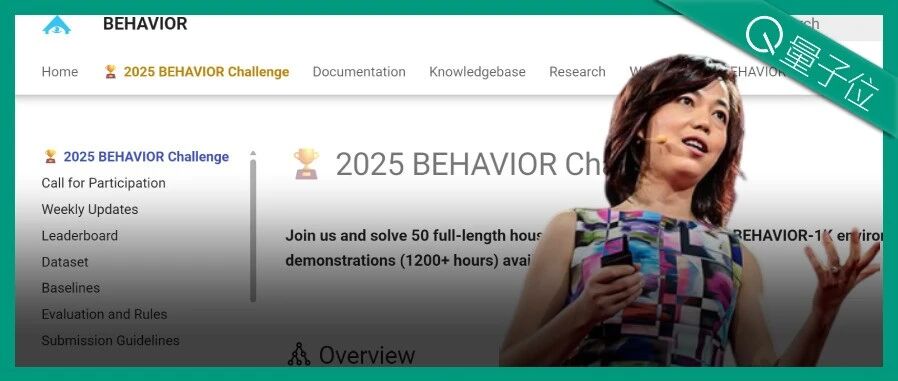
李飞飞发起机器人家务挑战赛!老黄第一时间批钱赞助
量子位· 2025-10-11 01:15
Core Insights - The BEHAVIOR Challenge aims to advance embodied intelligence by uniting academic and industrial forces to tackle household robotics [3][4] - Inspired by the success of ImageNet, the challenge seeks to establish a standardized framework for evaluating robotic performance in household tasks [11][14] Challenge Overview - The first BEHAVIOR household challenge, sponsored by NVIDIA, requires participants to use the Xinghai R1 Pro robot to complete 50 household tasks in a realistic virtual environment [5][6] - Participants can choose their algorithms and have access to 10,000 expert demonstration trajectories for imitation learning [6] - The challenge includes two tracks: Standard Track (limited to visible information) and Privileged Track (access to detailed environmental data) [9] Objectives and Rationale - The initiative is driven by the need to address existing challenges in robotic learning, such as lack of standardization and fragmented task selection [25] - The goal is to create a "North Star" task for the robotics field, promoting community collaboration to advance embodied intelligence [16] Design Philosophy - BEHAVIOR emphasizes a human-centered approach, ensuring that AI enhances and empowers human capabilities rather than replacing them [18] - The challenge focuses on household tasks, defining clear standards for a true household robot, including navigation, fine manipulation, long-term planning, and dynamic adaptation [19] Scale and Potential - The challenge encompasses 1,000 household activities and 50 long-term tasks, with an average task duration of 6.6 minutes [21] - BEHAVIOR is positioned to potentially become the "next ImageNet" in the field of embodied intelligence, although its success will depend on future developments [21][22]

高频选股因子周报(20250929-20250930)-20251009
GUOTAI HAITONG SECURITIES· 2025-10-09 14:37
- The high-frequency skewness factor showed strong performance with long-short returns of 0.9%, 4.93%, and 22.69% for the past week, September, and 2025, respectively[5][9] - The intraday downside volatility proportion factor had long-short returns of 0.77%, 5.18%, and 18.23% for the past week, September, and 2025, respectively[5][9] - The post-open buying intention proportion factor had long-short returns of 1.11%, 3.65%, and 19.98% for the past week, September, and 2025, respectively[5][9] - The post-open buying intention intensity factor had long-short returns of 1.62%, 3.28%, and 25.81% for the past week, September, and 2025, respectively[5][9] - The post-open large order net buying proportion factor had long-short returns of 0.34%, 1.51%, and 20.7% for the past week, September, and 2025, respectively[5][9] - The post-open large order net buying intensity factor had long-short returns of 0.38%, 1.51%, and 12.86% for the past week, September, and 2025, respectively[5][9] - The intraday return factor had long-short returns of 0.98%, 1.26%, and 20.66% for the past week, September, and 2025, respectively[5][9] - The end-of-day trading proportion factor had long-short returns of 1.25%, 4.18%, and 17.74% for the past week, September, and 2025, respectively[5][9] - The average single outflow amount proportion factor had long-short returns of 0.29%, 0.26%, and -0.54% for the past week, September, and 2025, respectively[5][9] - The large order-driven price increase factor had long-short returns of 0.09%, 2.88%, and 8.88% for the past week, September, and 2025, respectively[5][9] - The GRU(10,2)+NN(10) deep learning factor had long-short returns of 1.33%, 8.73%, and 41.75% for the past week, September, and 2025, respectively, with long-only excess returns of 0.71%, 3.42%, and 8.08%[5][9] - The GRU(50,2)+NN(10) deep learning factor had long-short returns of 1%, 7.98%, and 42.75% for the past week, September, and 2025, respectively, with long-only excess returns of 0.63%, 2.99%, and 7.91%[5][9] - The multi-granularity model (5-day label) factor had long-short returns of 0.99%, 6.15%, and 53.09% for the past week, September, and 2025, respectively, with long-only excess returns of 0.5%, 2.56%, and 19.48%[5][9] - The multi-granularity model (10-day label) factor had long-short returns of 0.81%, 5.2%, and 49.1% for the past week, September, and 2025, respectively, with long-only excess returns of 0.37%, 2.97%, and 20.1%[5][9] - The weekly rebalanced CSI 500 AI enhanced wide constraint portfolio had excess returns of -0.99%, -4.8%, and -0.06% for the past week, September, and 2025, respectively[5][11] - The weekly rebalanced CSI 500 AI enhanced strict constraint portfolio had excess returns of -1%, -2.32%, and 2.66% for the past week, September, and 2025, respectively[5][11] - The weekly rebalanced CSI 1000 AI enhanced wide constraint portfolio had excess returns of -1.48%, -1.06%, and 7.53% for the past week, September, and 2025, respectively[5][11] - The weekly rebalanced CSI 1000 AI enhanced strict constraint portfolio had excess returns of -0.79%, -0.12%, and 13.11% for the past week, September, and 2025, respectively[5][11]
算法小垃圾跳槽日记 2024&2025版
自动驾驶之心· 2025-10-06 04:05
Core Insights - The article discusses the author's experience in job searching and interviews, highlighting the challenges and changes in the job market, particularly in the computer vision (CV) and deep learning sectors [4][6][8]. Job Search Experience - The author experienced a high volume of interviews, averaging six per day over a month, with some days reaching eight interviews, indicating a competitive job market [4][5]. - The author transitioned from a role in a delivery company focused on CV to seeking opportunities in more stable and specialized areas, reflecting a shift in personal career focus [6][8]. Market Trends - There has been a significant increase in job opportunities compared to previous years, with many large and mid-sized companies actively hiring [8]. - The demand for traditional CV roles has diminished, with a notable shift towards large models, multi-modal applications, and end-to-end models in the autonomous driving sector [8][10]. Interview Preparation - The author prepared for interviews by reviewing popular coding problems, particularly from LeetCode, indicating a trend where companies now require candidates to demonstrate coding skills more rigorously than in the past [9][10]. - The author noted that many interview questions were derived from the "Hot100" list of coding problems, emphasizing the importance of algorithmic knowledge in technical interviews [11]. Career Transition - After several interviews, the author received offers from companies like Kuaishou, Xiaomi, and Weibo, but faced challenges in securing positions at larger firms like Alibaba and Baidu [10]. - Ultimately, the author accepted a position at a foreign company, which was described as a significantly better work environment compared to previous domestic companies, highlighting the differences in corporate culture [10][12]. Technical Skills and Trends - The author observed a shift in technical skills required in the job market, with a growing emphasis on large models and multi-modal technologies, suggesting that professionals in the field need to adapt to these changes to remain competitive [13].

北大校友、华人学者金驰新身份——普林斯顿大学终身副教授
机器之心· 2025-10-04 05:30
Core Insights - Chi Jin, a Chinese scholar, has been promoted to tenured associate professor at Princeton University, effective January 16, 2026, marking a significant milestone in his academic career and recognition of his foundational contributions to machine learning theory [1][4]. Group 1: Academic Contributions - Jin joined Princeton's Department of Electrical Engineering and Computer Science in 2019 and has rapidly gained influence in the AI field over his six-year tenure [3]. - His work addresses fundamental challenges in deep learning, particularly the effectiveness of simple optimization methods like Stochastic Gradient Descent (SGD) in non-convex optimization scenarios [8][12]. - Jin's research has established a theoretical foundation for two core issues: efficient training of large and complex models, and ensuring these models are reliable and beneficial in human interactions [11]. Group 2: Non-Convex Optimization - One of the main challenges in deep learning is non-convex optimization, where loss functions have multiple local minima and saddle points, complicating the optimization process [12]. - Jin has demonstrated through multiple papers that even simple gradient methods can effectively escape saddle points with the presence of minimal noise, allowing for continued exploration towards better solutions [12][17]. - His findings have provided a theoretical basis for the practical success of deep learning, alleviating concerns about the robustness of optimization processes in large-scale model training [18]. Group 3: Reinforcement Learning - Jin's research has also significantly advanced the field of reinforcement learning (RL), particularly in establishing sample efficiency, which is crucial for applications with high interaction costs [19]. - He has provided rigorous regret bounds for foundational RL algorithms, proving that model-free algorithms like Q-learning can maintain sample efficiency even in complex settings [22]. - This theoretical groundwork not only addresses academic inquiries but also guides the development of more robust RL algorithms for deployment in high-risk applications [23]. Group 4: Academic Background - Jin holds a Bachelor's degree in Physics from Peking University and a Ph.D. in Electrical Engineering and Computer Science from the University of California, Berkeley, where he was mentored by renowned professor Michael I. Jordan [25]. - His academic background has equipped him with a strong foundation in mathematical and analytical thinking, essential for his theoretical research in AI and machine learning [25]. Group 5: Recognition and Impact - Jin, along with other scholars, received the 2024 Sloan Award, highlighting his contributions to the field [6]. - His papers have garnered significant citations, with a total of 13,588 citations on Google Scholar, indicating the impact of his research in the academic community [27].

吴恩达执教的深度学习课程CS230秋季上新,新增GPT-5专题
机器之心· 2025-10-04 03:38
Core Viewpoint - The updated CS230 Deep Learning course at Stanford, taught by Andrew Ng, emphasizes the importance of artificial intelligence, likening it to electricity, and introduces new content reflecting the latest advancements in AI, particularly focusing on the GPT-5 model [1][4]. Course Structure and Content - The course adopts a flipped classroom model where students must watch Coursera's deeplearning.ai videos before attending in-person classes [3]. - Since its inception in 2017, the course has maintained a similar core framework but has integrated updates relevant to recent AI developments, including a new chapter on GPT-5 [4]. - The course enhances the discussion on generative models and incorporates popular technologies like RAG and AI Agents, using GPT-5 for case studies [6]. - CS230 aims to provide comprehensive knowledge in deep learning, covering both theoretical foundations and practical skills necessary for building and applying deep learning models [10][12]. Key Topics Covered - The course covers a wide range of topics, including: - Basics of neural networks and deep learning [20]. - Optimization techniques such as regularization, Adam optimizer, hyperparameter tuning, Dropout, and Batch Normalization [20]. - Strategies for constructing machine learning projects from conception to successful deployment [20]. - In-depth understanding of Convolutional Neural Networks (CNN) and their applications in image classification and detection [20]. - Mastery of Recurrent Neural Networks (RNN) and Long Short-Term Memory (LSTM) networks for sequence tasks [20]. - Exploration of advanced topics like Generative Adversarial Networks (GANs) and deep reinforcement learning [20]. - Insights from industry and academia, along with practical career development advice in AI [20]. Course Schedule - The 2025 fall course will run for approximately 10 weeks, starting at the end of September [15]. - Weekly topics include introductions to deep learning, neural network basics, CNNs, RNNs, optimization algorithms, generative models, and advanced topics related to GPT-5 [16].

国庆长假充电指南:Ilya Sutskever's Top 30 论文阅读清单
锦秋集· 2025-10-01 13:25
Core Viewpoint - The article emphasizes the importance of exploring and learning in the AI field as a means to contribute to society and the nation, highlighting the current opportunity for investors, practitioners, and researchers to deepen their understanding of technological trends and advancements in AI [1]. Group 1: AI Research Papers Overview - A collection of 30 influential AI papers recommended by Ilya Sutskever is presented, covering nearly 15 years of milestones in AI development, structured around the themes of "technical foundations, capability breakthroughs, and practical applications" [4]. - The selected papers span key transitions in AI from "perceptual intelligence" to "cognitive intelligence," including foundational works on CNNs, RNNs, Transformers, and cutting-edge research on RAG and multi-step reasoning [4][5]. Group 2: Learning and Application - The compilation breaks down complex technical terms like "residual mapping" and "dynamic pointer networks," aiding non-technical investors in understanding AI model capabilities, while providing practitioners with practical references for implementation [5]. - The article encourages readers to study the recommended papers during the holiday period to systematically understand the evolution of AI technology and to gain deeper insights into the opportunities and challenges in the current AI industry [5]. Group 3: Importance of the Recommended Papers - Ilya Sutskever stated that mastering the content of these 30 papers would provide a comprehensive understanding of 90% of the key knowledge in the current AI field [8]. - The papers cover a range of topics, including the effectiveness of recurrent neural networks, the structure and function of LSTM networks, and the introduction of pointer networks, all of which contribute to advancements in AI applications [8][9][10].

革命就要有人牺牲,最后一次人工智能革命牺牲的是谁的命?
Sou Hu Cai Jing· 2025-10-01 06:01
Group 1 - The core viewpoint is that the artificial intelligence revolution is seen as the last technological revolution for humanity, with significant implications across various sectors including defense, healthcare, and finance [1][3] - The development of artificial intelligence relies on core technologies such as machine learning, deep learning, and large models, aiming to achieve autonomous decision-making capabilities [3] - The revolution is expected to unfold over decades or even centuries, potentially accompanied by breakthroughs in energy fusion [1][3] Group 2 - There are known sacrifices in the advancement of artificial intelligence technology, particularly in defense applications, exemplified by the case of Feng Yanghe, a prominent expert who tragically died in a car accident while on duty [5][7] - Feng Yanghe's contributions to military artificial intelligence, including enhancing intelligent decision-making capabilities in defense systems, highlight the risks faced by researchers in this field [5][7] - The official narrative attributes his death to an accident, without evidence of external interference, emphasizing the inherent risks in pioneering technological advancements [7] Group 3 - The ethical, legal, and security challenges associated with the development of artificial intelligence are critical considerations as the technology continues to evolve [3][7] - Ensuring the ethical protection and technical safety of researchers is essential as artificial intelligence applications deepen in sectors like defense [7]