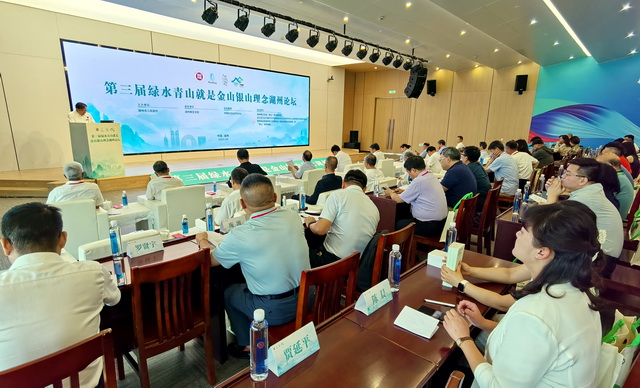
生态产品价值实现

Search documents
金观平:为“两山”转化注入更强动能
Zhong Guo Jing Ji Wang· 2025-08-17 01:45
Group 1 - The concept of "Green Mountains and Clear Water are as Valuable as Mountains of Gold and Silver" was proposed 20 years ago, guiding the path for high-level ecological protection and high-quality economic development [1] - As of the end of last year, China's forest coverage rate exceeded 25%, and since the 14th Five-Year Plan, the country has completed afforestation of 4.5 million hectares and managed 1.05 million hectares of desertified land [1] - China's energy consumption per unit of GDP has decreased by 11.6% compared to the end of the 13th Five-Year Plan, making it one of the fastest countries in the world in terms of energy intensity reduction [1] Group 2 - Emphasizing integrated protection and systematic governance of ecosystems, the article highlights the need for comprehensive strategies rather than fragmented approaches to enhance the quality of ecological products [2] - The article suggests that the realization of ecological product value is crucial for promoting the appreciation and efficiency of ecological resources, with various regions exploring models like carbon trading platforms and "Two Mountains" banks [2] - The integration of digital technology with various industries is seen as a way to enhance the support for the transformation of the "Two Mountains" concept, optimizing the efficiency and benefits of ecological product value conversion [2] Group 3 - Recent institutional innovations related to the construction of a beautiful China have shown significant results, including the implementation of the Ecological Protection Compensation Regulations, which has created the largest and most comprehensive ecological compensation mechanism in the world [3] - The article emphasizes the importance of legal guarantees and the need for effective market and government collaboration to stimulate investment in the social sector, ensuring that green mountains and clear water become a foundation for wealth [3] - The call for sustained efforts and collaborative actions aims to continue writing a new chapter of harmonious coexistence between humans and nature in the context of Chinese-style modernization [3]
为“两山”转化注入更强动能
Jing Ji Ri Bao· 2025-08-16 22:30
Core Viewpoint - The article emphasizes the significance of the "Two Mountains" theory proposed by Xi Jinping, highlighting its role in promoting ecological protection and high-quality economic development over the past 20 years [1]. Group 1: Achievements in Ecological Development - As of the end of last year, China's forest coverage rate exceeded 25% [1] - Since the beginning of the 14th Five-Year Plan, the country has completed a total of 4.5 million hectares of land greening and managed 1.05 million hectares of desertified land [1] - Last year, China's energy consumption per unit of GDP decreased by 11.6% compared to the end of the 13th Five-Year Plan, making it one of the fastest countries in the world to reduce energy intensity [1] Group 2: Integrated Ecological Protection - The article advocates for an integrated approach to ecological protection, emphasizing the need for systematic governance of natural resources [2] - It suggests that both natural recovery and artificial restoration methods should be employed, tailored to specific local conditions [2] - The establishment of cross-regional and cross-element integrated protection and restoration plans is essential for effective ecological management [2] Group 3: Institutional Support for Ecological Transformation - Recent institutional innovations, such as the implementation of the Ecological Protection Compensation Regulations, have significantly enhanced ecological protection efforts [3] - The article highlights the importance of legal guarantees and social investment to stimulate market vitality and effective governance [3] - It calls for a collaborative approach among various stakeholders to ensure that ecological resources contribute to economic prosperity [3]
加快绿色技术转化,上海发布42项绿色技术、9项示范工程
Di Yi Cai Jing· 2025-08-15 12:48
Core Insights - Shanghai has made significant progress in the construction of key application scenarios for green and low-carbon transformation, driving breakthroughs in green low-carbon technologies and the development of emerging green low-carbon industries [1][2] - The city is leveraging technological innovation to accelerate the transformation of green low-carbon technology achievements, with a focus on high-quality and precise ecological product supply [1][2] Green Technology and Initiatives - Shanghai Electric has pioneered the CCUS technology demonstration for coal and gas emissions, capturing over 140,000 tons of CO2 [2] - A total of 42 advanced green technologies and 9 demonstration projects have been selected in the 2025 version of the Shanghai Green Low-Carbon Advanced Technology Directory, covering energy conservation, environmental protection, and resource recycling [2][3] Sector-Specific Developments - In the industrial sector, Shanghai is focusing on new energy vehicles, hydrogen energy, and energy conservation and environmental protection, aiming to create a new engine for green development [3] - By June 2025, Shanghai plans to promote 437 million square meters of green buildings and 17 million square meters of ultra-low energy buildings [3] - The city has promoted over 1.8 million new energy vehicles, leading globally, and has established 1.05 million charging piles and 254 battery swap stations [3] Ecological Product Value Realization - Establishing a mechanism for realizing the value of ecological products is crucial for promoting comprehensive green transformation in economic and social development [5][6] - By 2025, a preliminary institutional framework for ecological product value realization is expected to be formed, with a more scientific accounting system established by 2035 [5] Unique Ecological Advantages - Shanghai's unique ecological system features, including the Yangtze River estuary ecosystem and urban ecological spaces, contribute to a distinctive ecological product system [6][7] - The city has strong advantages in ecological product value transformation, including high consumer demand, a solid trading market foundation, and abundant supporting resources [7] Case Study: Shanghai World Expo Cultural Park - The Shanghai World Expo Cultural Park exemplifies the realization of ecological product value by integrating industrial heritage with ecological landscapes, achieving economic, social, and cultural benefits [8]

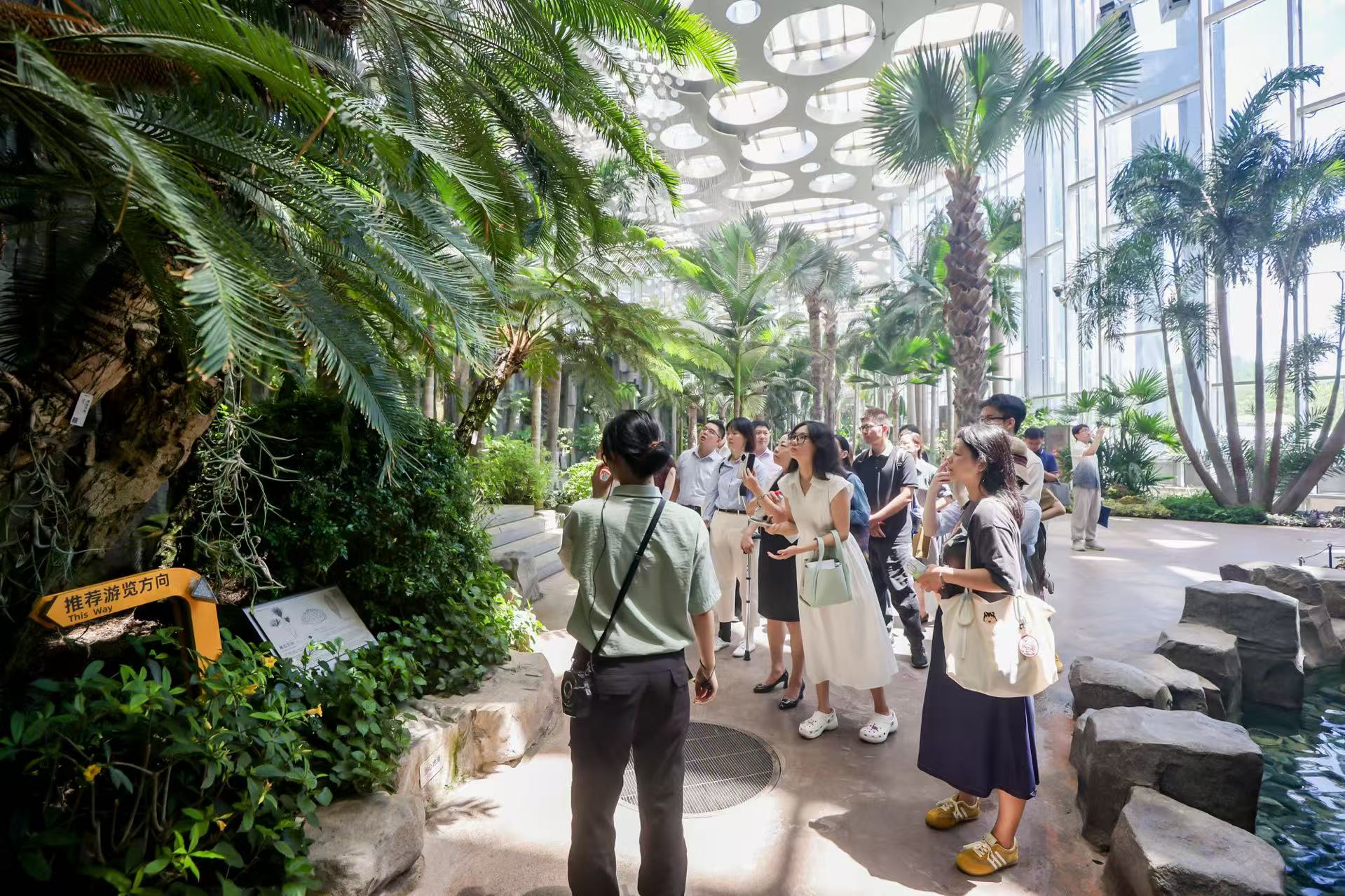
追绿添金 点绿成金 借绿生金 苏州擘画高质量发展绿色底盘
Su Zhou Ri Bao· 2025-08-15 00:29
Group 1 - Suzhou is transforming its traditional production and consumption models to promote efficient resource utilization and upgrade its industrial structure, focusing on a green low-carbon circular economy [1][2] - The number of near-zero carbon factories in Suzhou is expected to increase by over 91% year-on-year in 2024, reducing greenhouse gas emissions by approximately 700,000 tons per year [1] - The Suzhou Industrial Park is home to a modern circular economy industrial park that redefines waste management, processing organic waste into biogas and creating green electricity [2] Group 2 - The Wujiang District has focused on the textile and dyeing industries, eliminating over 80,000 low-end water jet looms and 267 outdated coating production lines to promote intelligent and green transformation [3] - The Suzhou Intelligent Manufacturing Service Park has attracted over 220 enterprises, showcasing the successful implementation of the "Green Mountains and Clear Water are Gold and Silver Mountains" development philosophy [3] Group 3 - Suzhou is leveraging technology to empower green development, establishing itself as a national hub for the new energy industry, with distributed photovoltaic capacity exceeding 1 GW [5][7] - The city has developed a carbon trading service center that has facilitated carbon reduction for over 500 enterprises, achieving a carbon reduction of over 340,000 tons [5] Group 4 - The ecological product value realization mechanism is being actively developed in Suzhou, aiming to convert ecological dividends into developmental benefits [8] - The city has seen significant economic benefits from ecological initiatives, with the GEP (Gross Ecosystem Product) and GDP both increasing through the development of ecological economies [9][10] Group 5 - Suzhou has pioneered an enterprise self-inspection service platform for environmental protection, rewarding compliant companies with policy incentives, thus converting ecological advantages into developmental strengths [11] - The integration of ecology and industry is creating a multiplier effect in Suzhou, enhancing both environmental and economic outcomes [12]
山东:让绿色成为高质量发展的鲜明底色
Zhong Guo Fa Zhan Wang· 2025-08-14 07:16
Group 1 - The core viewpoint emphasizes the transformation of ecological advantages into economic benefits in Shandong Province, particularly through the Long Island Marine Ecological Civilization Comprehensive Experimental Zone, which has achieved an ecological product value (GEP) of 39.242 billion yuan, five times the local GDP [1] - Shandong's energy consumption growth has been maintained at an average of 3.9% annually, supporting a 6% economic growth rate, with a notable 18.5% reduction in energy consumption per unit of GDP, outperforming the national average [1] - The proportion of installed capacity from renewable energy sources has reached 52.9%, an increase of 24.3 percentage points, indicating significant progress in green energy development [1] Group 2 - Shandong has implemented 160 key tasks under its three-year action plan for green low-carbon high-quality development, leading to a continuous decline in energy consumption and carbon emission intensity [2] - The province has established a 10 billion yuan investment fund for the Yellow River basin development and is actively constructing ecological corridors and national parks [2] Group 3 - Shandong leads the nation in marine industries, with the highest output value in seven marine sectors and 71 national-level marine ranches [3] - The province is focusing on green investment in technology innovation, energy transition, and environmental protection, planning to implement 600 major provincial projects annually [3] Group 4 - Shandong is controlling new high-energy-consuming projects and has implemented strict approval processes for industries with excess capacity, including steel and cement [4] - The province is enhancing traditional industries and has successfully relocated a significant portion of steel production capacity to coastal areas [4] Group 5 - The province has established 42 strategic emerging industry clusters, with a focus on quantum technology and aerospace information, and has introduced policies to support future industry pilot zones [5] - Shandong is actively pursuing carbon peak and carbon neutrality goals, having been included in the national carbon emission dual control pilot regions [5] Group 6 - Shandong has developed a comprehensive waste recycling system, achieving a 72% utilization rate of major solid waste [6] - The province has implemented measures to reduce food waste, achieving a lower average loss rate in wheat harvesting compared to national targets [6] Group 7 - Shandong is establishing a mechanism for realizing the value of ecological products, with pilot projects in several cities and counties to assess ecological product value [7] - The province has signed agreements for horizontal ecological compensation, promoting a beneficial relationship between protectors and payers in ecological conservation [7]
如何立足外部变化实现绿色共富?
Zhong Guo Huan Jing Bao· 2025-08-13 01:51
Core Viewpoint - The concept of "Green Wealth" has evolved from the "Two Mountains" theory, emphasizing the integration of ecological protection and economic development, aiming for high-quality development and shared prosperity for all [1] Group 1: Institutional Innovations - There is a need to break through the institutional bottlenecks in realizing the value of ecological products, balancing market logic with the public and social attributes of ecological products [2] - Recent measures, such as ecological compensation mechanisms, have begun to address the challenges of supply, accounting, trading, collateralization, and monetization of ecological products [2] - The central government's budget for ecological function area transfers in 2025 is set at 120.5 billion yuan, reflecting a 7.5% increase from the previous year, indicating strong fiscal support for ecological governance [2] Group 2: Regional Cooperation and Fairness - Addressing the regional imbalance in ecological protection and benefits is crucial, requiring horizontal compensation mechanisms and regional cooperation platforms [3] - Cross-regional compensation agreements among provinces in the Yangtze River basin have been established to maintain ecological safety and promote coordinated regional development [3] - The establishment of ecological public welfare positions is proposed to ensure that those providing ecological products receive reasonable compensation, enhancing employment opportunities in ecological function areas [3] Group 3: Market Potential and Green Finance - The large-scale market and the demand from over 400 million middle-income groups for rural ecological products and green lifestyles present significant opportunities [4] - Developing local特色产业 such as rural tourism, ecological health care, and green food can create consumption growth points that combine ecological value with economic benefits [4] - A comprehensive green finance system is needed to attract social capital towards projects that realize the value of ecological products, addressing the issue of insufficient funding [4]
环境专家张修玉:因地制宜破解生态产品价值实现面临的“四难”
Di Yi Cai Jing· 2025-08-12 07:59
Core Viewpoint - The article emphasizes the need to establish a comprehensive ecological product value realization system to address challenges in measuring, mortgaging, trading, and monetizing ecological products, particularly in the context of the 20th anniversary of the "Green Mountains and Clear Water are Gold and Silver Mountains" concept [1][2]. Group 1: Establishing Ecological Product Value Systems - The establishment of an ecological product value evaluation system is crucial, which includes developing accounting standards for ecological product values and creating a directory of ecological products [2]. - A mechanism for applying ecological product value accounting results should be established, linking fiscal transfer payments and ecological protection compensation to these results [2]. Group 2: Enhancing Ecological Product Trading - Improving the ecological product rights trading system is essential, focusing on creating a diversified ecological protection compensation mechanism to facilitate the trading of ecological resource rights [2]. - The principle of "whoever restores, benefits" should guide the allocation of natural resource asset usage rights to incentivize social investment in ecological protection and restoration [2]. Group 3: Promoting Green Financial Products - Financial institutions are encouraged to launch green credit products, including rights related to land management, forest management, and ecological compensation [5]. - The establishment of risk compensation funds, ecological guarantee funds, and ecological insurance is recommended to enhance the risk-sharing mechanism for ecological products [5]. Group 4: Developing Ecological Tourism - The article highlights the importance of developing and enhancing ecological tourism in the northern Guangdong region, focusing on key scenic areas and integrating ecological and cultural tourism strategies [6].
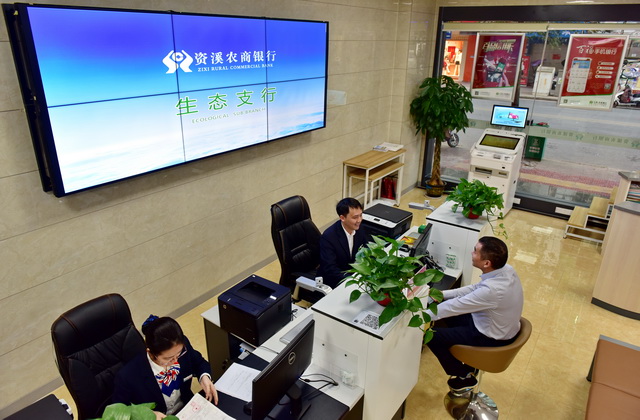
首批五个国家公园有了“户口本”(美丽中国) 为实现整体保护、系统修复提供产权底板
Ren Min Ri Bao· 2025-08-11 21:42
Core Viewpoint - The completion of natural resource registration for China's first five national parks marks a significant step in clarifying ownership and responsibilities for ecological protection, addressing long-standing issues in environmental management [1][4]. Group 1: National Park Registration - The registration of the Three Rivers Source National Park has been finalized, making it the last of the first five national parks in China to receive legal recognition [1]. - The Hainan Tropical Rainforest National Park was the first to complete its registration in 2022, covering an area of 4,268.54 square kilometers [2]. - The registration process has involved advanced technologies, such as 3D visualization and satellite imagery, to create detailed records of the parks [2][3]. Group 2: Ecological and Economic Implications - Clear property rights established through registration allow for effective ecological restoration and the development of local economies, such as the "village collective + cooperative" model in collective forest areas [3]. - The Northeast Tiger and Leopard National Park serves as a benchmark for national park management, resolving historical land ownership issues over 19,000 hectares [3]. - The registration process aims to transform ecological assets into economic value, facilitating the exploration of ecological tourism and other revenue-generating activities [4]. Group 3: Future Plans and Progress - As of July 2023, a total of 1,057 key areas covering 320,000 square kilometers have completed registration, including various natural resources [4]. - The Ministry of Natural Resources plans to enhance the legal and standardized processes for resource registration, aiming to register an additional 1,000,000 square kilometers during the 14th Five-Year Plan period [4].
生态产品价值实现如何突破“四难”,多方专家支招
第一财经· 2025-08-11 06:53
Core Viewpoint - The article discusses the challenges and opportunities in realizing the value of ecological products, emphasizing the need for effective pathways to convert ecological advantages into economic benefits, guided by the "Two Mountains" concept [3][4][6]. Group 1: Challenges in Ecological Product Value Realization - The realization of ecological product value faces issues such as difficulty in measurement, collateralization, trading, and monetization [3][6]. - Experts highlight that the transformation of "green mountains and clear waters" into "golden mountains and silver mountains" is a pressing question, especially as China marks the 20th anniversary of the "Two Mountains" concept [3][4]. Group 2: Integration of Economic Development and Ecological Protection - The relationship between economic development and environmental protection is not adversarial; rather, they can mutually promote each other [5][6]. - The article cites examples of regional strategies, such as sustainable forest management in Northeast China, which balance ecological protection with economic development [5][6]. Group 3: Future Directions and Strategies - The "14th Five-Year Plan" emphasizes the need to continue adhering to the "Two Mountains" concept, focusing on transforming ecological advantages into economic advantages [6][7]. - Experts propose enhancing the market platform for ecological products through ownership determination, transaction system construction, and market participant cultivation [7][9]. - There is a call for accelerating green technology innovation and promoting advanced green technologies to build a green low-carbon circular economy [9][10].
生态产品价值实现如何突破“四难”,多方专家支招
Di Yi Cai Jing· 2025-08-11 05:34
Core Viewpoint - The integration of ecological protection and economic development is feasible, emphasizing the importance of the "Two Mountains" concept in achieving sustainable development while improving ecological environments [1][2][4]. Group 1: Ecological and Economic Integration - The "Two Mountains" concept, proposed 20 years ago, highlights the potential for transforming ecological advantages into economic benefits, countering the traditional view that economic growth and environmental protection are mutually exclusive [2][5]. - Experts suggest that ecological protection can coexist with economic development, creating new growth points and enhancing production capacity through green development [4][7]. - The need for a systematic approach to governance that incorporates spatial, elemental, and process dimensions is essential for building a beautiful China [4][8]. Group 2: Challenges and Solutions - The realization of ecological product value faces challenges such as difficulties in measurement, collateralization, trading, and monetization [1][5]. - The Chinese government aims to address these challenges by 2025, focusing on establishing mechanisms for ecological product value realization [5]. - Experts emphasize the importance of innovation in systems and mechanisms, such as establishing ecological compensation systems and improving policies to support green industries [4][7]. Group 3: Future Directions - The future focus should be on accelerating green technology innovation, promoting green manufacturing, and developing low-carbon industries to create a circular economy [8]. - The role of educational institutions in supporting regional development and ecological civilization through research and practical exploration is highlighted [7][8]. - Continuous efforts to deepen ecological civilization initiatives and explore effective paths for realizing ecological product value are essential for enhancing the quality of life in beautiful environments [8].