
碳达峰

Search documents
认购资金超1616亿元 华夏中核清洁能源REIT实现超募
Quan Jing Wang· 2025-12-26 02:15
Core Insights - The successful issuance of the Huaxia CNNC Clean Energy REIT marks a significant milestone in the capital market for state-owned enterprises, establishing a new benchmark for non-nuclear green energy businesses [3] - The overwhelming investor interest, with total subscription funds reaching 161.689 billion yuan, indicates deep recognition of the investment value of the fund [2] Fund Issuance Details - The total subscription amount before proportional allocation was 161.689 billion yuan, which is 107.47 times the intended fundraising scale of 15.045 billion yuan [2] - The fund was priced at 5.015 yuan per share, with a total of 3 billion shares to be issued [1] - The effective subscription multiple for public investors was approximately 392 times, while for offline investors it exceeded 340 times, reflecting strong market demand [1] Underlying Asset and Management - The underlying asset, the Bopona Hydropower Station, is the largest in the Hotan region and has been operational for over 14 years, providing stable and clean electricity supply [2] - The fund's original rights holder and operational management, Xinjiang Xinhua Hydropower Investment Co., is the largest hydropower operator in Xinjiang, ensuring robust operational support [2] - The fund managers, CITIC Securities and Huaxia Fund, possess extensive experience in energy REITs investment management, contributing to the fund's expected stable performance [2] Financial Projections - The projected cash distribution rates for the Huaxia CNNC Clean Energy REIT are estimated at 5.04% for 2025 and 4.71% for 2026, based on the disclosed distributable amounts [2] Market Impact - The issuance of this REIT facilitates a market-oriented operation loop for clean energy assets, providing a replicable model for similar green asset securitization practices by state-owned enterprises [3] - The fund's clear clean energy attributes inject strong capital momentum into the scaling and marketization of the clean energy industry, supporting the achievement of carbon peak and carbon neutrality goals [3]
双电”业务并行推进 特锐德卡位电网“下半场
Zheng Quan Shi Bao· 2025-12-25 18:43
Core Insights - Teruid has established itself as a leading enterprise in domestic power equipment manufacturing and charging network construction, focusing on "smart manufacturing + integrated services" and electric vehicle charging networks as its core businesses [1] - The company has made significant strides in internationalization, successfully implementing a high-voltage mobile prefabricated substation project in Saudi Arabia, which showcases its modular, rapid deployment, and digital operation solutions [1] - Teruid has upgraded its charging infrastructure from a single "load terminal" to a controllable energy node, solidifying its leading position in the charging pile sector during the 14th Five-Year Plan period [1] Industry Performance - As of October 2025, Teruid operates 855,000 public charging terminals, with 513,000 being DC charging terminals, holding approximately 24% market share, ranking first in the country [2] - The company achieved over 15.6 billion kWh in charging volume from January to October 2025, maintaining a market share of about 23%, leading the industry [2] - Teruid is exploring new business models such as "charging network + microgrid + virtual power plant," leveraging its AI prediction system for accurate forecasting of charging volume and photovoltaic output [2] Future Outlook - The next five years are seen as a critical window for Teruid to achieve its carbon peak target by 2030, with plans to integrate its development into the broader context of national and global energy transition [2] - The company aims to promote higher quality development for itself and the entire renewable energy industry through the combination of industry and capital [2]

独家专访刘振民:《巴黎协定》十载后,迎战气候变化重在“落实”
2 1 Shi Ji Jing Ji Bao Dao· 2025-12-25 14:18
南方财经 21世纪经济报道记者吴斌海南报道 "起初,没有人在意这一场灾难,这不过是一场山火、一次旱灾、一个物种的灭绝、一座城市的消失, 直到这场灾难和每个人息息相关……"科幻作家刘慈欣在《流浪地球》中感慨。 尽管全球化遭遇逆风,共同迎战气候变化仍是唯一出路。中国气候变化事务特使、联合国前副秘书长刘 振民在第六届"海洋合作与治理论坛"期间接受21世纪经济报道记者独家专访时表示,各国要确保在美国 缺席的情况下推进多边合作,应对气候变化。从2025年巴西贝伦举行的《联合国气候变化框架公约》第 三十次缔约方大会(COP30)来看,这个"B计划"是成功的,多边合作进程不会由于一两个国家的缺席 而停滞。同时他也呼吁美国尽快重返《巴黎协定》,返回气候变化多边合作进程。 "未来十年乃至更长时间,重要的是让各国认识到,能源转型是全球经济合作的重点领域,也会成为全 球投资旺盛的一个领域。"刘振民认为,一方面,发达国家要履行义务,人类要相互帮助,去履行应对 气候变化的共同责任;另一方面,全球能源转型也会给世界经济增长和进一步繁荣带来机遇,各国要逐 步认识到,能源转型不是负担,而是经济转型的契机,可以带动很多企业去投资。 在《巴黎协 ...
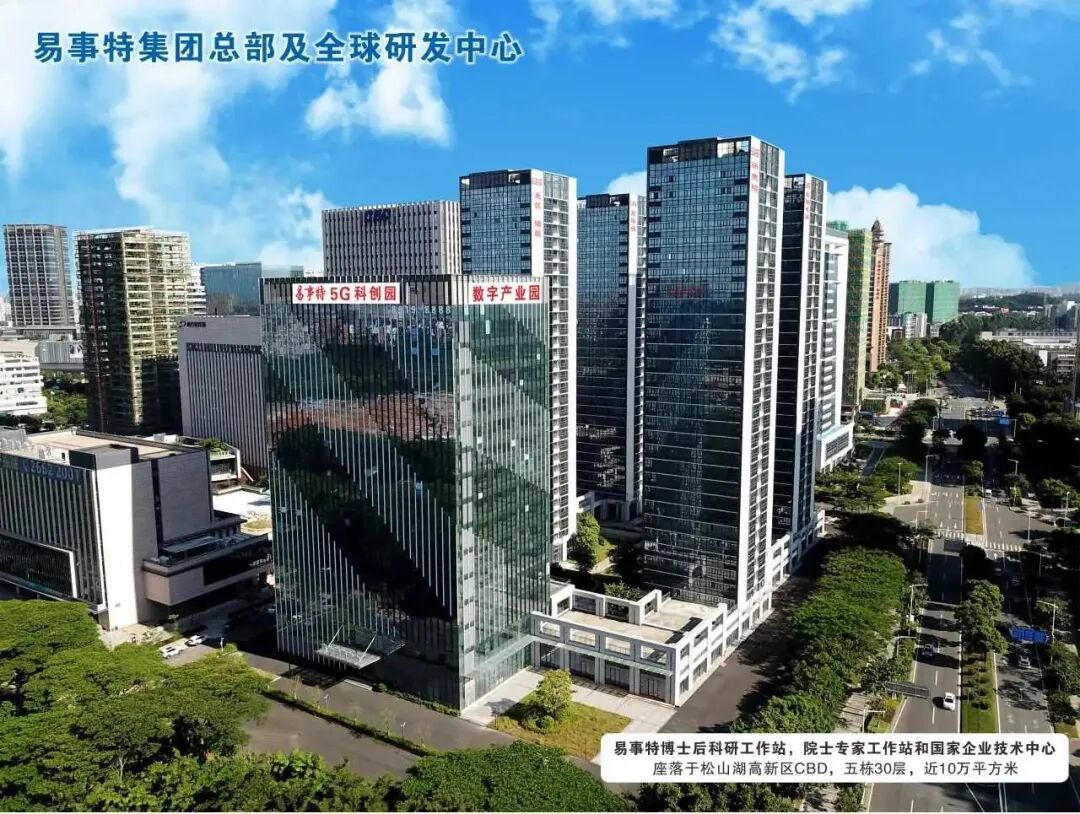
与风相伴 与光同行——易事特光储充可持续发展实践之路
Xin Lang Cai Jing· 2025-12-25 12:41
Core Insights - The article emphasizes that the goals of "carbon peak and carbon neutrality" have become essential drivers for high-quality development, marking a critical phase in global energy transition [1][8] - Yisite Group is highlighted as a leading company in digital energy products and wind-solar-storage solutions, focusing on the "AI + New Energy" sector and committed to providing high-quality green energy [1][8] Industry Overview - As of March 2025, China's total installed capacity for wind and solar power reached 1.482 billion kilowatts, surpassing thermal power for the first time, with non-fossil energy accounting for 35.9% of total power generation [10][1] - The acceleration of energy transition is supported by core technologies, with Yisite investing over 100 million yuan in R&D annually, aiming for a 7.92% R&D expenditure ratio relative to revenue in 2024 [10][1] Technological Innovation - The value of technological innovation must be translated into emission reduction effectiveness through practical applications [12] - Yisite's clean energy generation from its solar and wind power stations has reached 67,116.2176 million kilowatt-hours, equivalent to the annual electricity consumption of approximately 167,800 households, resulting in a reduction of 341,800 tons of CO2 emissions [12][3] Future Projections - By 2026, the national target for newly added wind and solar power capacity is set to be no less than 200 GW, with a cumulative target of over 1,000 GW [16][8] - New energy storage capacity is expected to reach 10%-15% of total new energy capacity by 2030, approximately 280-420 GW [16][8] - Yisite plans to continue focusing on "AI + New Energy" innovations and "New Energy + Storage" practices, accelerating the application of sodium-ion UPS systems and immersion storage technologies [16][8]


《关于促进光热发电规模化发展的若干意见》解读之二︱推动光热发电高质量规模化发展 助力加快构建新型电力系统
国家能源局· 2025-12-25 01:25
推动光热发电高质量规模化发展 助力加快构建新型电力系统 ──《关于促进光热发电规模化发展的若干意见》解读 近日,国家发展改革委、国家能源局印发《关于促进光热发电规模化发展的若干意见》(以下简称 《若干意见》 ),明确 了新型电力系统中光热发电的系统功能,提出了发展路径和政策体系,指出了光热发电高质量、规模化发展的重点任务, 对 " 十五五 " 实现碳达峰目标下光热发电发挥自身优势、提升新能源可靠替代能力、助力新型电力系统加速构建具有重大 意义。 一、 准确认识 光热发电发展新形势 我国光热产业起步虽然较欧美略晚一些,但发展速度并不慢。自 " 十二五 " 初期以特许权招标方式探索开始,历经首批光 热发电示范项目、光热与风电光伏一体化开发等发展阶段,截至 2025 年 10 月底,我国在运光热电站装机约 162 万千 瓦,位居全球第三,在建装机规模约 270 万千瓦,占全球在建装机的 90% 以上。同时,我国光热发电技术路线齐全,技 术水平处于国际先进行列,已基本形成自主知识产权,产业链发展基本完备,设备与材料国产化率接近 100% ,形成了全 球光热看中国的良好局面。 近年来,我国光热发电度电成本快速下降。 2 ...

卡姆丹克太阳能(00712.HK):推进山西浮山150兆瓦飞轮储能项目
Ge Long Hui· 2025-12-24 15:03
Core Viewpoint - The company is strategically investing in energy projects in Shanxi, China, focusing on hybrid energy storage systems, which presents significant growth opportunities in the green energy sector driven by national carbon neutrality goals [1] Group 1: Investment Projects - The company has announced a minority stake investment in the Shanxi Flywheel Project, which specializes in flywheel-lithium iron phosphate battery hybrid energy storage systems [1] - Following the successful investment in the Shanxi Flywheel Project, the company is exploring a new energy storage project in Fushan, Shanxi, with a total capacity of 150 megawatts, initially set at 120 megawatts, including 20 megawatts of flywheel storage and 100 megawatts of lithium battery storage [1] - The feasibility study for the Fushan Project has been completed, and the project is currently in the fundraising stage, with the board approving its continuation and authorizing the management to establish a dedicated project team [1] Group 2: Market Outlook - The company believes that continued investment in green energy projects in China will yield substantial growth opportunities, supported by national goals for carbon neutrality and peak carbon emissions [1] - The favorable policy environment and increasing demand for clean energy are expected to create significant business opportunities for the company's solar and energy storage investments [1]

卡姆丹克太阳能(00712) - 自愿性公佈有关能源业务之业务最新消息
2025-12-24 14:53
香港交易及結算所有限公司及香港聯合交易所有限公司對本公佈的內容概不負責, 對其準確性或完整性亦不發表任何聲明,並明確表示,概不對因本公佈全部或任 何部份內容而產生或因倚賴該等內容而引致的任何損失承擔任何責任。 – 1 – 本集團相信,持續於中國投資綠色能源項目帶來龐大增長機會。受實現「碳中和」 及「碳達峰」的國家目標所推動,加上政府政策積極支持可再生能源發展,中國綠 色儲能項目市場預期經歷持續增長。該有利政策環境及對清潔能源的需求日益增 加預期為本集團的太陽能及儲能投資創造重大商機。 本公佈由卡姆丹克太陽能系統集團有限公司(「本公司」,連同其附屬公司統稱「本 集團」)自願刊發,旨在向本公司股東(「股東」)及潛在投資者提供本集團能源業 務之最新業務發展消息。 茲提述本集團於二零二五年五月二日刊發截至二零二四年十二月三十一日止年 度的年報(「二零二四年年報」)、本公司於二零二五年九月三十日刊發截至二零 二五年六月三十日止六個月的中期報告(「二零二五年中期報告」)以及本公司日 期為二零二五年五月二十八日的公佈(「第一季度最新消息公佈」)及日期為二零 二五年十一月二十五日的公佈(「第三季度最新消息公佈」),兩份公佈內 ...
电力、电气行业2026年度信用风险展望
Lian He Zi Xin· 2025-12-24 11:29
Investment Rating - The credit risk outlook for the power and electrical equipment manufacturing industry in 2026 is overall controllable, with structural differentiation continuing, highlighting the stability of leading enterprises while remaining cautious about the operational and debt pressures faced by small and medium-sized enterprises [8][50]. Core Insights - The power and electrical equipment manufacturing industry is a crucial part of the national economy, closely linked to macroeconomic growth and electricity investment demand. Since 2024, electricity consumption has steadily increased, and the industry is accelerating the construction of a new energy system and power grid [8][9]. - In 2025, industry policies focus on growth stabilization, market reform, industrial integration, and rural electricity support, with attention needed on the execution of growth targets and the participation of private capital [8][11]. - The industry is characterized by a pyramid structure, with a large number of small and medium-sized enterprises facing intense competition. The ability to negotiate with upstream and downstream partners is weak, and there is significant capital occupation from accounts receivable and inventory [8][21]. - Profitability in the industry is under pressure from upstream and downstream factors, but there was a slight recovery in operating profit in the first half of 2025, with overall profitability remaining stable compared to the previous year [8][27]. - The industry maintains a good credit status, with no new defaults reported in 2025, although there is a need to monitor potential concentrated repayment pressures in the future [8][39]. Industry Fundamentals - The power and electrical equipment manufacturing industry is significantly influenced by national economic growth and electricity investment demand. In 2024, the total electricity consumption in China reached 9.85 trillion kWh, a year-on-year increase of 6.8% [10]. - The investment in power generation and grid construction has seen substantial growth, with a focus on renewable energy installations becoming the mainstay [19][18]. Industry Policies and Regulatory Environment - Numerous policies have been introduced to support the power and electrical equipment industry, emphasizing growth targets, market reforms, and rural electrification [11][13]. - Key policies include the "Power Equipment Industry Growth Stabilization Work Plan (2025-2026)" which sets revenue growth targets for traditional power equipment at around 6% annually [13][15]. Industry Operating Conditions - In the first three quarters of 2025, investment growth in power generation and grid construction continued, with a notable increase in the construction of new energy systems [17]. - The total installed power generation capacity reached 3.72 billion kW by the end of September 2025, a year-on-year increase of 17.5% [18]. Industry Competitive Landscape - The industry exhibits a pyramid-shaped competitive structure, with a high degree of marketization and significant pressure on capital occupation. The number of enterprises in the power and electrical equipment manufacturing sector exceeds ten thousand, with small and medium-sized enterprises making up a large proportion [21][22]. - The competition is particularly fierce in the low and medium voltage cable sectors, while high voltage and ultra-high voltage cable production is dominated by a few key players due to high technical barriers [21]. Industry Financial Status - The profitability of the industry is affected by the dual pressures of upstream raw material costs and downstream customer pricing. In the first half of 2025, sample enterprises saw a slight increase in operating profit, with overall revenue growth of 1.07% [27][28]. - The financial leverage of sample enterprises decreased slightly by mid-2025, remaining at a moderate level, with an average asset-liability ratio of around 58% [33][36]. Industry Bond Market Performance - The credit status of the power and electrical equipment industry remains stable, with no defaults reported in 2025. The majority of bonds issued are short-term financing bonds and general corporate bonds [39][40]. - As of the first nine months of 2025, 37 bonds were issued, primarily by local state-owned enterprises with AAA ratings, indicating a preference for short-term flexible financing [41][43].
人民网:水利部答人民网记者问:将淤地坝纳入温室气体自愿减排交易机制 开辟生态价值实现新路径
Shui Li Bu Wang Zhan· 2025-12-24 08:44
Core Viewpoint - The Ministry of Ecology and Environment and the Ministry of Water Resources in China have jointly released the "Greenhouse Gas Voluntary Emission Reduction Project Methodology: Sediment Dams," which introduces a calculation method for certified voluntary emission reductions, marking an international first in this area [1][2]. Group 1: Background and Significance - The "14th Five-Year Plan" emphasizes the integration of comprehensive soil erosion control into carbon sink capacity enhancement actions, highlighting the importance of sediment dams as a unique water and soil conservation engineering measure in China [1]. - Sediment dams are effective in intercepting sediment, preserving soil carbon, and reducing the mineralization of organic carbon in soil, thus providing favorable conditions for plant growth and contributing to carbon sequestration [1]. Group 2: Methodology Details - The methodology serves as the main guideline for the design, implementation, approval, and verification of greenhouse gas voluntary emission reduction projects, ensuring scientific, operable, and conservative principles [2]. - Key components of the sediment dam carbon sink methodology include applicable conditions, project boundaries, accounting periods, and carbon pool selection, with a minimum accounting period of 10 years and a maximum of 40 years [2]. Group 3: Future Directions - The Ministry of Water Resources plans to expand the coverage of the national carbon emission trading market and accelerate the construction of the voluntary greenhouse gas emission reduction trading market [2]. - There will be increased promotion and support for eligible sediment dam carbon sink projects, encouraging participation in the national voluntary emission reduction trading market to generate revenue for new sediment dam construction [2].

*ST海源2025年12月22日涨停分析:治理结构优化+实控人认购增发+光伏政策支持
Xin Lang Cai Jing· 2025-12-22 02:01
2025年12月22日,*ST海源(sz002529)触及涨停,涨停价7.06元,涨幅5.06%,总市值18.36亿元,流 通市值18.36亿元,截止发稿,总成交额1454.59万元。 根据喜娜AI异动分析,*ST海源涨停原因可能如下,治理结构优化+实控人认购增发+光伏政策支持: 1、公司近期密集修订21项制度,完善董事会专门委员会,强化独立董事职能,整体治理规范性有所提 升。2025年12月20日公告显示拟进行非公开增发,发行对象为滁州市紫锳能源科技有限公司,且此前实 控人关联方现金认购全部增发股份,持股比例提升至25.53%,这些举措向市场传递了积极信号,增强 了投资者信心。 2、公司处于光伏和汽车复合材料业务领域,受益于国家碳达峰政策,光伏组件需求长 期向好;新能源车电池箱盖等产品需求增长,2029年市场规模预计达140亿美元。行业发展趋势为公司 业务带来了潜在机遇,尽管目前光伏行业存在产能过剩问题,但长期政策支持仍吸引投资者关注。 3、 从资金和市场表现来看,公司通过定向增发补充2.2亿元流动资金,预计资产负债率从75.72%降至 65%,缓解了高负债压力。近期市场上,部分光伏和新能源汽车相关概念股票 ...
