精细化运营

Search documents
中国民航“旺丁不旺财”背后:旅客结构和出行需求都变了
Di Yi Cai Jing· 2025-11-14 14:58
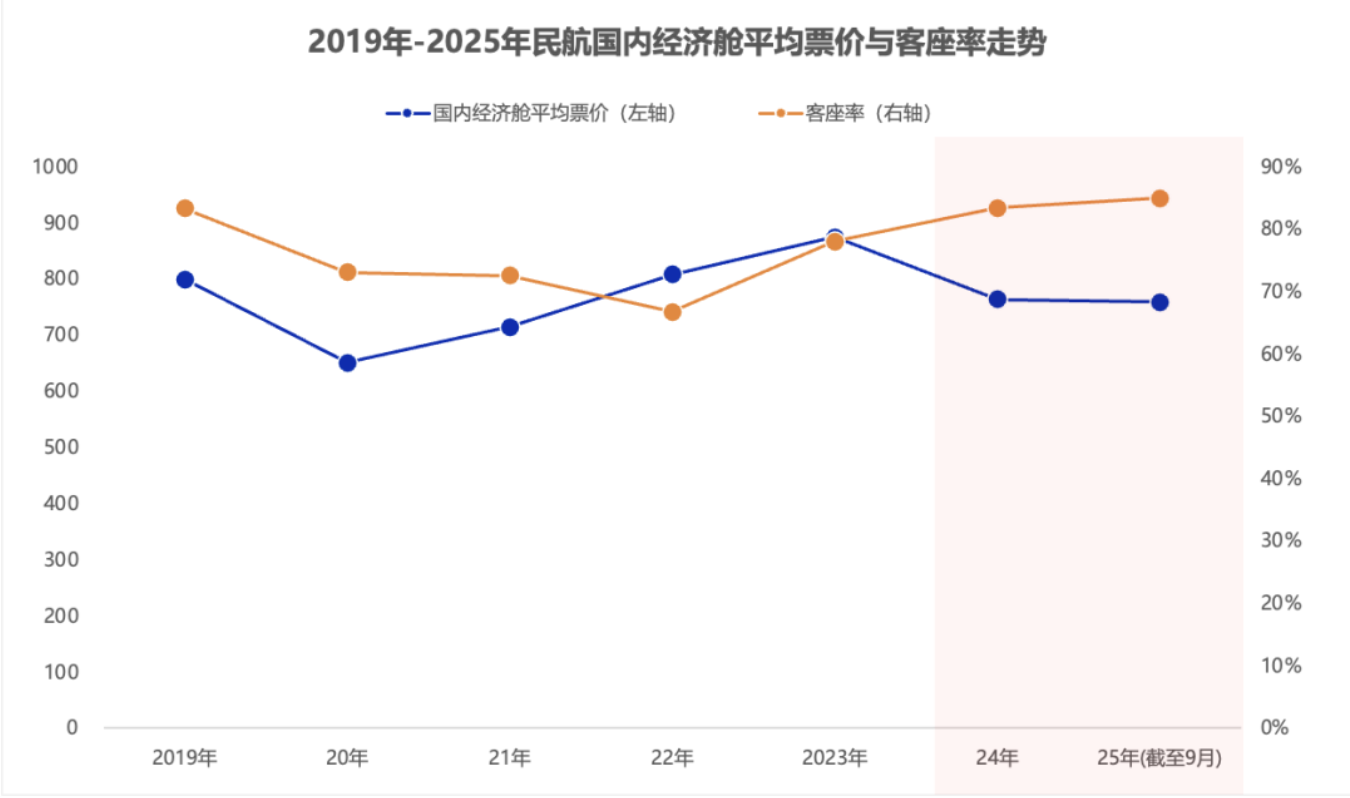
Core Insights - The Chinese aviation industry is experiencing a "high passenger volume but low profitability" situation, with passenger transport volume exceeding pre-pandemic levels but airlines still struggling with losses due to declining ticket prices [1][4]. Group 1: Market Dynamics - The market for 100-140 seat aircraft, which should be dominated by smaller narrow-body planes, is currently led by larger narrow-body aircraft, indicating a mismatch in aircraft capacity [1][9]. - In 2024, passenger transport volume is expected to reach a historical high, yet the average economy class ticket price has dropped by 12.7% year-on-year, continuing a trend of low prices into 2025 with a 5.7% decline as of September [1][4]. Group 2: Competitive Landscape - Airlines are adopting a "price for volume" strategy, leading to increased seat capacity to lower per-seat costs, which in turn results in more empty seats and further price reductions, creating a cycle of declining profitability [4]. - Approximately 65% of China's capacity is concentrated in high-density markets with over 800 passengers per day, and 52% of routes have more than five competing airlines, compared to only 24% and 16% in North America and Europe, respectively [4]. Group 3: Emerging Opportunities - The demand for travel in lower-tier markets is being activated, with a strong growth in tourism-related travel, indicating that these markets are becoming a new growth area for the aviation sector [5][8]. - Airlines need to adapt to the changing passenger demographics, with a shift from business travelers to a younger, tourism-focused clientele, necessitating targeted expansion into under-served markets [8][9]. Group 4: Operational Adjustments - The current fleet structure of domestic airlines, which predominantly consists of large aircraft with over 150 seats, is not well-suited for the emerging demand in the 100-140 seat market, highlighting the need for more flexible fleet deployment [8][9]. - The previous model of broad capacity expansion is no longer effective, and airlines must consider more refined operational strategies to align with the evolving market demands [9].

精细化运营时代 直播等企业SaaS百花齐放
Sou Hu Cai Jing· 2025-11-14 06:43
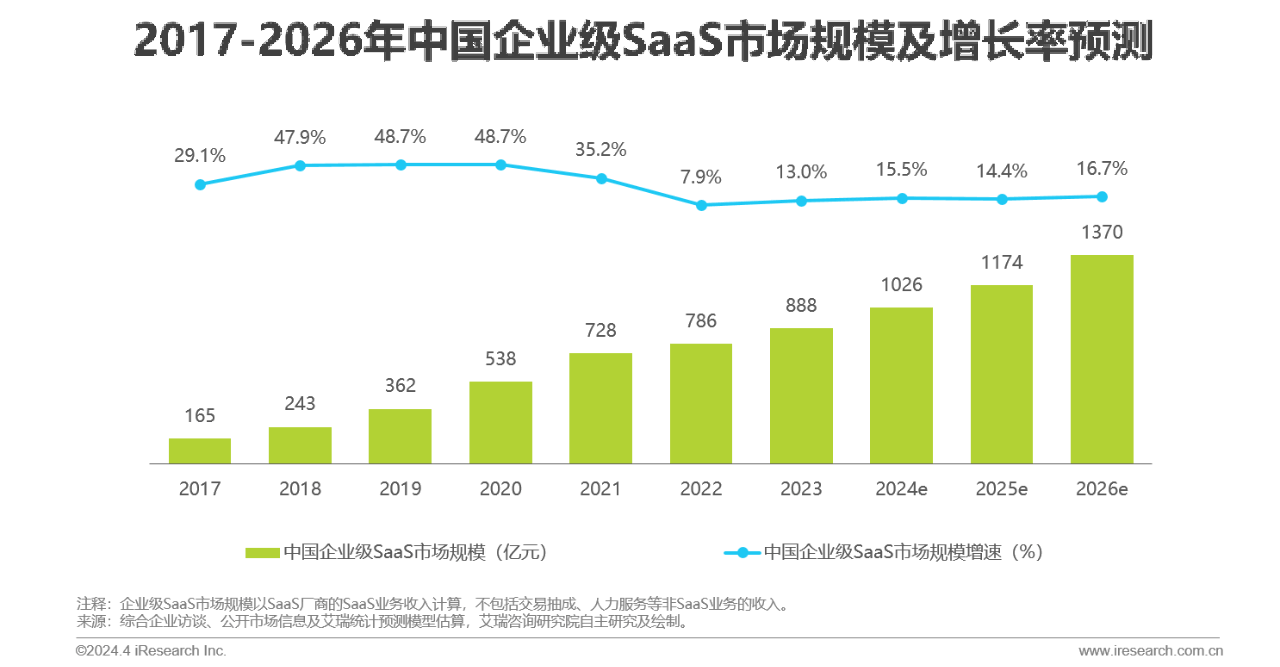
Core Insights - The Chinese enterprise SaaS market has experienced significant growth, with a market size increase from 16.5 billion to 88.8 billion yuan, reflecting a year-on-year growth rate of 48.7% [1] - The industry is transitioning from a phase of rapid expansion to a new stage characterized by refined operations, as indicated by a compound annual growth rate of approximately 15% for live streaming and other enterprise SaaS applications [1][4] Market Trends - The SaaS market is entering a competitive phase where user acquisition is critical, with increasing penetration rates in enterprises. Large companies prefer customized integrations, while medium-sized enterprises are becoming the main users of platform ecosystem models [4] - The Chinese SaaS market is still in a developmental phase, focusing on improving product-market fit, enhancing solution adaptability, and user experience to escape homogeneous competition [4][6] Strategic Shifts - The report highlights a clear trend of "vertical deepening" in the enterprise SaaS market, with business-oriented SaaS becoming the main growth driver. This shift emphasizes the importance of scenario-based advantages in competition [6] - Key areas for business growth include CRM/SCRM, customer service, marketing technology, enterprise live streaming, and content creation, with companies like Weizan Live providing comprehensive solutions that integrate various service aspects [6] Future Outlook - The Chinese enterprise SaaS market is undergoing a critical transition from "quantitative change" to "qualitative change," where competition is evolving from product comparison to comprehensive strength assessment [7][8] - Companies that can excel in product adaptability, organizational agility, and ecosystem collaboration will be better positioned to seize development opportunities and drive the industry towards more mature and professional service solutions [7][8]
账上41亿现金,200亿销售额却拒上市,胖东来越踩刹车顾客越疯狂
Sou Hu Cai Jing· 2025-11-14 06:38
Core Insights - The company, Pang Donglai, has chosen to control its sales growth, achieving a sales figure of 20.035 billion yuan for the year, which is 3.5 million short of its self-imposed ceiling of 20 billion yuan, setting a benchmark in the retail industry for prioritizing quality over quantity [1][3][20] Group 1: Sales Strategy - Pang Donglai's sales figure of 20.035 billion yuan for the year represents an increase of 3 billion yuan compared to 2024, but this number was intentionally controlled rather than aggressively pursued [3][20] - The founder, Yu Donglai, emphasized in an internal meeting that sales must be kept under 20 billion yuan to avoid the pressures of expansion and increased workload for employees [3][5] Group 2: Employee Welfare - The company is known for its high employee welfare, offering a minimum monthly salary of 8,000 yuan, which is more than double the local average, and implementing mandatory rest days and extended holidays [5][18] - Employees are motivated to provide excellent customer service without relying on commissions, fostering a culture of care and loyalty among customers [12][14] Group 3: Profitability and Operations - Despite a lower gross margin of 15%-20% compared to the industry average of 25%-30%, Pang Donglai maintains a net profit margin of around 5%, which is commendable in the retail sector [7][20] - The company's profitability is attributed to its direct sourcing from manufacturers, bypassing intermediaries, which allows for lower costs and better quality control [8][10] Group 4: Customer Loyalty and Service - Pang Donglai has built a strong customer base, with over 60% of customers being referrals, highlighting the effectiveness of word-of-mouth over traditional advertising [12][20] - The company offers exceptional customer service, including flexible return policies and additional amenities in stores, which enhances customer loyalty [18][20] Group 5: Industry Perspective - Pang Donglai's cautious approach contrasts with many retail companies that have faced challenges due to rapid expansion, illustrating the risks associated with the "scale trap" in the retail industry [16][20] - The company's philosophy emphasizes stability and a focus on employee and customer well-being, suggesting that long-term success is rooted in sustainable practices rather than aggressive growth [20]

10月乘用车批发价格趋稳,价格竞争持续降温
Ge Long Hui· 2025-11-14 01:15
Core Insights - The passenger car market in October shows a continued stabilization in prices, with a decrease in competitive pricing, indicating a shift towards refined operations rather than aggressive price competition [1][2] - The average discount rate for the passenger car market in October 2025 is reported at 18.5%, a slight decrease of 0.3% month-on-month, with average wholesale prices dropping by 500 yuan [1] - New energy vehicles (NEVs) demonstrate significantly better price stability compared to traditional fuel vehicles, with NEVs maintaining a discount rate of 12.8% and average prices showing a year-on-year increase of 1300 yuan [1][2] Market Dynamics - There is a notable differentiation in pricing strategies among brands, with domestic new energy brands like AITO, Xiaomi Auto, and Xpeng maintaining discount rates below 10%, while joint venture brands have discount rates exceeding 20% [2] - The average price for domestic new energy brand AITO increased by 1900 yuan, contrasting with the price declines observed in joint venture brands such as FAW-Volkswagen and Buick [2] - The SUV segment is experiencing intense competition, with major models like the Volkswagen Tayron and Mercedes-Benz GLC seeing significant price drops, with average prices falling between 4200 to 8300 yuan [2]
2025年中国私域电商行业趋势白皮书
艾瑞咨询· 2025-11-14 00:06
Core Insights - The private domain e-commerce industry is experiencing rapid growth due to the saturation of user growth and rising customer acquisition costs, necessitating refined and differentiated operational strategies to meet user demands and enhance brand competitiveness [1][2][12] Industry Overview - Development Background and Drivers - The number of online shopping users in China reached 970 million in 2024, with a penetration rate close to 90%, indicating limited natural growth potential. This shift has led the e-commerce industry to transition from acquiring new users to managing existing ones [2] - Private domain e-commerce, characterized by lower customer acquisition costs and a focus on long-term user value, aligns with the industry's current demand for lifecycle management and refined operations [2] Demand Side - User Needs - Users are increasingly prioritizing service and personalized experiences, with a significant emphasis on after-sales service, product variety, and personalized fulfillment, which aligns with the refined operational strategies of private domain e-commerce [4] Supply Side - Brand Focus - In the era of stock competition, brands are increasingly focusing on digital and channel operational capabilities to enhance competitiveness through private domain layouts [6][7] Policy Environment - The government has introduced various policies to promote the healthy development of the private domain e-commerce sector, encouraging participation from individuals and small businesses to stimulate new consumption and individual economic growth [9][10] Industry Characteristics - Stages of Development - The private domain e-commerce industry has evolved through several stages, currently entering an AI-driven phase where digital capabilities and innovative models are key growth engines [12][13] Operational Model - Private domain e-commerce drives growth through a comprehensive refined operation model that enhances user lifecycle value, from multi-channel customer acquisition to user asset management and trust-building through personalized content [15] Market Space - The industry is projected to grow at a rate of 6.3% in 2024, reaching a scale of 2.3 trillion yuan, with expectations of surpassing 3 trillion yuan by 2025 due to consumption incentives and technological advancements [18][19] Participant Ecosystem - The private domain e-commerce ecosystem consists of brands, store owners, platforms, and consumers, with various player types contributing to a diverse operational landscape [21][24] Platform Insights - Player Types - Different player types, including comprehensive, vertical, and brand platforms, serve as core suppliers of goods and services, while tool players provide the necessary operational infrastructure [24] Market Landscape - Survival Player Advantages - Leading platforms in the private domain e-commerce space focus on marketing innovation, user recognition, and supply chain capabilities to establish core competitive advantages [27] User Insights - User Demographics - The majority of private domain e-commerce users are women aged 24-39, with a high level of education and income, indicating a broad reach across various city tiers [41] User Behavior - Purchasing Patterns - Users primarily purchase daily consumables, with price discounts, product variety, and personalized service experiences driving increased purchase frequency [43][44] User Experience Feedback - User satisfaction is high, with over 80% expressing satisfaction with their shopping experiences, indicating potential for further enhancement through refined operations [48] Store Owner Insights - Profile - Female store owners, primarily aged 31-40 and well-educated, are motivated by self-improvement and economic independence through private domain e-commerce [51][54] Merchant Private Domain Layout - Nearly 90% of surveyed merchants have initiated private domain layouts, indicating positive early results in revenue contributions and operational efficiency [59] Future Trends - Operational Refinement - The shift from traffic-oriented to user-centric operations is essential for sustainable growth, emphasizing long-term relationships with users [68] Future Trends - Technology Integration - The application of AI technology across various operational aspects is expected to enhance efficiency and optimize industry development [71] Future Trends - Model Export - Leading players are exploring overseas markets by leveraging successful domestic models, indicating a trend towards international expansion [73]

汽车行业跟踪报告:10月乘用车批发价格趋稳,价格竞争持续降温
GUOTAI HAITONG SECURITIES· 2025-11-13 11:55
Investment Rating - The report maintains an "Overweight" rating for the automotive industry [2][4]. Core Insights - In October, the price competition in the passenger car market continued to ease, indicating a structural differentiation within the industry. The average discount rate for new cars was 18.5%, a decrease of 0.3% month-on-month, with the average wholesale price slightly declining by 500 yuan, remaining stable year-on-year [2][5]. - The stability of prices for new energy vehicles (NEVs) is significantly better than that of traditional fuel vehicles. The average discount rate for traditional energy vehicles was 26.3%, with a month-on-month price drop of 900 yuan and a year-on-year increase of nearly 1600 yuan. In contrast, NEVs maintained a discount rate of 12.8%, with prices remaining relatively unchanged month-on-month and a year-on-year increase of 1300 yuan [5]. - There is an increasing divergence in pricing strategies among brands, with domestic new energy brands having lower discount rates compared to joint venture brands. For instance, brands like AITO, Xiaomi Auto, and Xpeng had discount rates below 10%, while joint venture brands like FAW-Volkswagen and Buick had discount rates above 20% [5]. - The competition in the SUV market remains intense, with major models like the Volkswagen Tayron and Mercedes-Benz GLC seeing significant price drops, with average prices declining by 4200-8300 yuan and discount rates increasing by 1.1%-1.9% [5].
国泰海通:10月乘用车市场价格竞争持续缓和 维持行业“增持”评级
Zhi Tong Cai Jing· 2025-11-13 11:29
Core Insights - The passenger car market is transitioning from price competition to refined operations, with a trend of "anti-involution" expected to continue into Q4 [1] - The overall market shows a stabilization in prices, with the average discount rate for passenger cars at 18.5%, a decrease of 0.3% month-on-month [1][2] - There is a significant structural differentiation within the industry, with domestic new energy brands having a notably lower discount rate compared to joint venture brands [1][2] Market Trends - In October, the average discount rate for traditional energy vehicles remained high at 26.3%, with an average price decrease of 900 yuan month-on-month and an increase of nearly 1600 yuan year-on-year [2] - New energy vehicles maintained a stable discount rate of 12.8%, with average prices showing little change month-on-month and a year-on-year increase of 1300 yuan [2] - The price strategies among different brand camps are increasingly differentiated, with domestic new energy brands like AITO and Xpeng having discount rates below 10% [2] Segment Analysis - The SUV market is experiencing intense competition, with major models like the Volkswagen Tayron and Mercedes-Benz GLC seeing average prices drop to historical lows, with declines ranging from 4200 to 8300 yuan [3] - Average discount rates for popular SUV models such as the Volkswagen Tiguan L and Buick Envision Plus have increased, reaching 25.7% and 29.2% respectively [3]

国泰海通|汽车:10月乘用车批发价格趋稳,价格竞争持续降温
国泰海通证券研究· 2025-11-13 11:03
Core Insights - The passenger car market in October shows a continued stabilization in prices, with a decrease in competitive pricing intensity, indicating a shift towards refined operations in the industry [1][2] - The average discount rate for the passenger car market in October 2025 is 18.5%, a month-on-month decrease of 0.3%, while the average wholesale price has slightly decreased by 500 yuan [1] - New energy vehicles (NEVs) demonstrate significantly better price stability compared to traditional fuel vehicles, with NEVs maintaining a discount rate of 12.8% and an average price increase of 1300 yuan year-on-year [1][2] Price Strategy Differentiation - There is a notable differentiation in pricing strategies among brands, with domestic new energy brands like AITO, Xiaomi Auto, and Xpeng maintaining discount rates below 10%, while joint venture brands have an average discount rate above 20% [2] - The average price for AITO has increased by 1900 yuan month-on-month, contrasting with the price declines seen in joint venture brands such as FAW-Volkswagen and Buick [2] Market Competition in SUV Segment - The SUV market is experiencing intense competition, with major models like the Volkswagen Tayron and Mercedes-Benz GLC seeing average prices drop to historical lows, with declines ranging from 4200 to 8300 yuan [2] - The average discount rates for models such as the Volkswagen Tiguan L and Buick Envision Plus have increased to 25.7% and 29.2%, respectively, indicating a rising trend in discounting within this segment [2]

“攀顶1%大奖赛”成功上线 赋能东航精准营销
Zhong Guo Min Hang Wang· 2025-11-13 08:32
这一活动是为东方万里行会员开启挑战月活动,前100名达成"报名序位+出行履约"双重条件的会员,可 由东航常旅客系统自动、精准地发放活动专属的积分奖励。 东航数科为大赛开发的系统,实现会员自主报名队列的实时处理,当报名人数达到预设阈值时,模块将 自动激活当月挑战活动。在挑战周期内,模块实时追踪所有报名会员的飞行航段数据,智能筛选达标用 户群体;同时,依托强大的实时计算能力,实现竞赛排名机制的自动化校验、实时化处理与公平化结 算,并实现"任务完成即兑现"的自动化奖励发放。(编辑:张彤 校对:张薇 审核:韩磊) 《中国民航报》、中国民航网 记者钱擘 通讯员周思佚、王兆欣 报道:近日,东航正式推出"攀顶1%大 奖赛"创新营销活动。该活动依托东航常旅客系统,构建新模块打造全新互动平台,标志着东航在业务 敏捷营销与深化用户精细化运营方面迈出关键一步。 ...

从甩包袱到做买卖 银行不良资产处置生变
Bei Jing Shang Bao· 2025-11-12 15:47
Core Viewpoint - The transformation of banks from passively offloading non-performing assets to actively managing and monetizing them represents a significant shift in asset management logic, despite ongoing challenges in professional capabilities, legal risks, and disposal efficiency [1][6][8]. Group 1: Active Management of Non-Performing Assets - Banks are increasingly engaging in direct sales of non-performing assets through public bidding, including a variety of asset types such as real estate, land, and collectibles [1][3]. - The shift from traditional methods of bundling non-performing assets for quick sales to a more detailed and strategic approach allows banks to better assess and realize the true value of these assets [4][8]. Group 2: Challenges in Implementation - Banks face significant challenges in the transition to a more refined operational model, including a lack of expertise in evaluating non-financial assets and potential legal issues related to asset ownership [5][7]. - The traditional banking workforce is primarily skilled in credit risk management, which does not necessarily translate to the evaluation and marketing of diverse asset types [7][9]. Group 3: Future Trends in Asset Disposal - The trend towards more meticulous asset management is expected to become mainstream, although traditional methods will still be utilized for certain asset types [8][9]. - The evolution of banks' asset disposal strategies is driven by both internal pressures, such as economic downturns, and external factors, including regulatory encouragement and the rise of online auction platforms [8][9].