
车路云一体化

Search documents
不再只是送快递 无人车加速进入各行各业
经济观察报· 2025-11-09 04:19
Core Viewpoint - The unmanned delivery vehicle industry is transitioning from a testing phase to large-scale commercial operations, with significant investment and technological advancements driving this change [2][3]. Investment and Market Growth - In October, significant financing events occurred in the unmanned delivery sector, with New Stone Technology raising over $600 million in Series D funding, marking the largest financing in China's autonomous driving sector [2] - The total disclosed financing in the unmanned driving sector exceeded 14.6 billion RMB (approximately $2.1 billion) in the third quarter of 2025, indicating a shift towards large-scale commercial applications [2] - The delivery vehicle market is projected to see a shipment of approximately 6,600 units in 2024, with over 12,000 units shipped in the first half of 2025 [3] Market Potential and Business Expansion - The market for unmanned delivery vehicles is expanding from single-use cases in express delivery to broader applications in instant logistics and urban delivery, targeting over 30 million urban delivery vehicles in China [3] - New Stone Technology reported that the proportion of sales from the express delivery sector has decreased from 100% to 50%, indicating diversification into non-express scenarios [3] Cost Efficiency and Technological Advancements - The operational cost per kilometer for unmanned vehicles is approximately 0.4 RMB, with delivery costs potentially dropping below 0.04 RMB, showcasing a significant cost advantage over traditional delivery methods [4] - New Stone Technology has developed an L4-level driverless technology that has begun commercial deployment, enhancing operational efficiency and expanding use cases [4] Regulatory and Operational Challenges - The unmanned delivery vehicle industry faces challenges related to road rights, with a lack of unified management regulations and entry standards hindering growth [6][7] - The absence of a comprehensive standard system for low-speed unmanned vehicles complicates cross-regional operations and interoperability [7] - Safety concerns and public acceptance remain critical issues as the number of unmanned vehicles in urban areas increases [8] Policy and Future Outlook - As of mid-2025, 103 cities in China have opened road rights for unmanned delivery vehicles, covering over 80% of major logistics nodes [9] - The industry is at a pivotal point for transformation and large-scale commercialization, with ongoing efforts to address regulatory, standardization, and safety challenges [9]


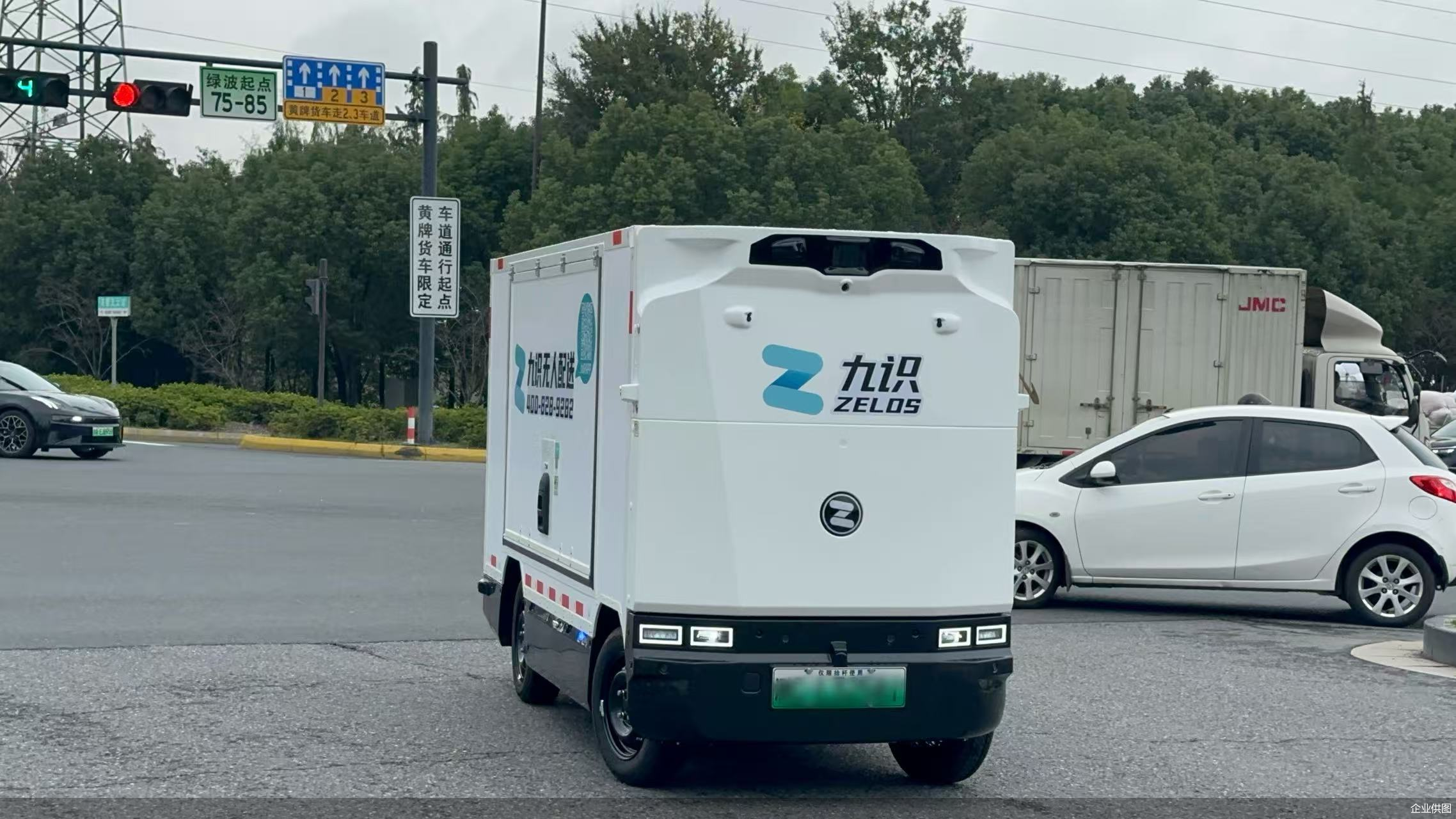
交通数字信号首次上车无人驾驶装备 九识智能助力“车路云一体化”建设
Bei Jing Shang Bao· 2025-11-09 04:15
Core Insights - The successful integration of traffic signal data with autonomous driving technology in Tongxiang marks a significant advancement in China's vehicle-road-cloud integration efforts [2][4][6] - The "vehicle-road-cloud" system enhances the capabilities of autonomous vehicles, allowing them to process real-time traffic signal information alongside their own sensory data, improving safety and traffic efficiency [4][5] Group 1: Technological Advancements - The test demonstrated that autonomous vehicles can operate smoothly even when traffic signals are obstructed, showcasing the effectiveness of real-time data sharing [2][4] - The integration allows for better risk perception and path planning, addressing limitations of traditional single-vehicle intelligence systems [4][6] Group 2: Industry Implications - The deployment of this technology in functional autonomous vehicles provides a replicable model for broader application across various cities and vehicle types, promoting scalability in vehicle-road-cloud integration [5][6] - The initiative is part of a national push towards smart transportation, with the Ministry of Industry and Information Technology and the Ministry of Public Security supporting pilot projects to establish standards for vehicle-road collaboration [7]
无人配送车融资热 合规运营挑战仍大
Jing Ji Guan Cha Wang· 2025-11-07 13:40
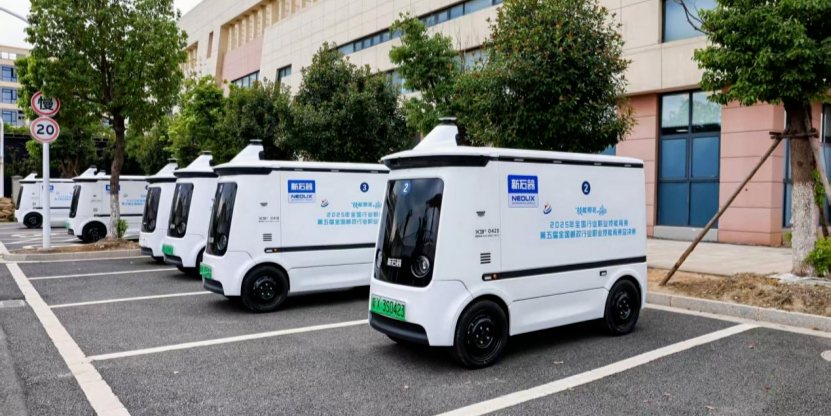
Core Insights - The autonomous delivery vehicle industry is experiencing significant investment and growth, with major financing rounds indicating a shift from testing to commercial application [2][3] - 2025 is projected to be a pivotal year for the scale-up of autonomous delivery vehicles, with a notable increase in delivery vehicle shipments expected [3] - The industry is expanding beyond traditional delivery scenarios into broader logistics and urban delivery markets, indicating a substantial market potential [3][4] Investment Trends - New Stone Technology completed over $600 million in Series D financing, marking the largest investment in China's autonomous driving sector [2] - Jiushi Intelligent secured $100 million in Series B4 financing, bringing its total B-round funding to $400 million [2] - A total of over 58 significant investment events in the autonomous driving sector were recorded, with disclosed financing exceeding 14.6 billion RMB by Q3 2025 [2] Market Dynamics - The market for autonomous delivery vehicles is transitioning from a focus on express delivery to instant logistics and urban delivery, targeting a market of over 30 million urban delivery vehicles in China [3] - The sales composition of New Stone Technology has shifted, with express delivery now accounting for only 50% of sales, reflecting diversification into non-express sectors [3] Cost Efficiency - Autonomous delivery vehicles offer significant cost advantages, with operational costs as low as 0.4 RMB per kilometer and delivery costs potentially dropping below 0.04 RMB per package [4] - The design lifespan of these vehicles is projected at 8 years, with a mileage of 300,000 to 500,000 kilometers, contributing to their economic viability [4] Technological Advancements - New Stone Technology has developed a Level 4 autonomous driving technology that has begun commercial deployment, enhancing operational capabilities [5] - The maturity of technology is crucial for the commercial viability of autonomous delivery vehicles, allowing for broader operational scenarios [5] Regulatory Challenges - The industry faces significant challenges related to road rights, with a lack of unified management and regulatory frameworks hindering growth [6][8] - The legal status of autonomous delivery vehicles remains ambiguous, complicating their integration into existing traffic systems [6][8] Safety and Public Perception - Safety concerns and public acceptance are critical hurdles for the widespread adoption of autonomous delivery vehicles, necessitating time for integration into urban environments [8] - The industry is actively working on addressing these challenges through policy initiatives and pilot programs in various cities [8][9] Future Outlook - Continuous policy optimization and technological breakthroughs are expected to facilitate the transition of autonomous delivery vehicles from pilot projects to widespread use [9]
智能网联汽车决胜“下半场”
Jing Ji Ri Bao· 2025-11-06 21:56
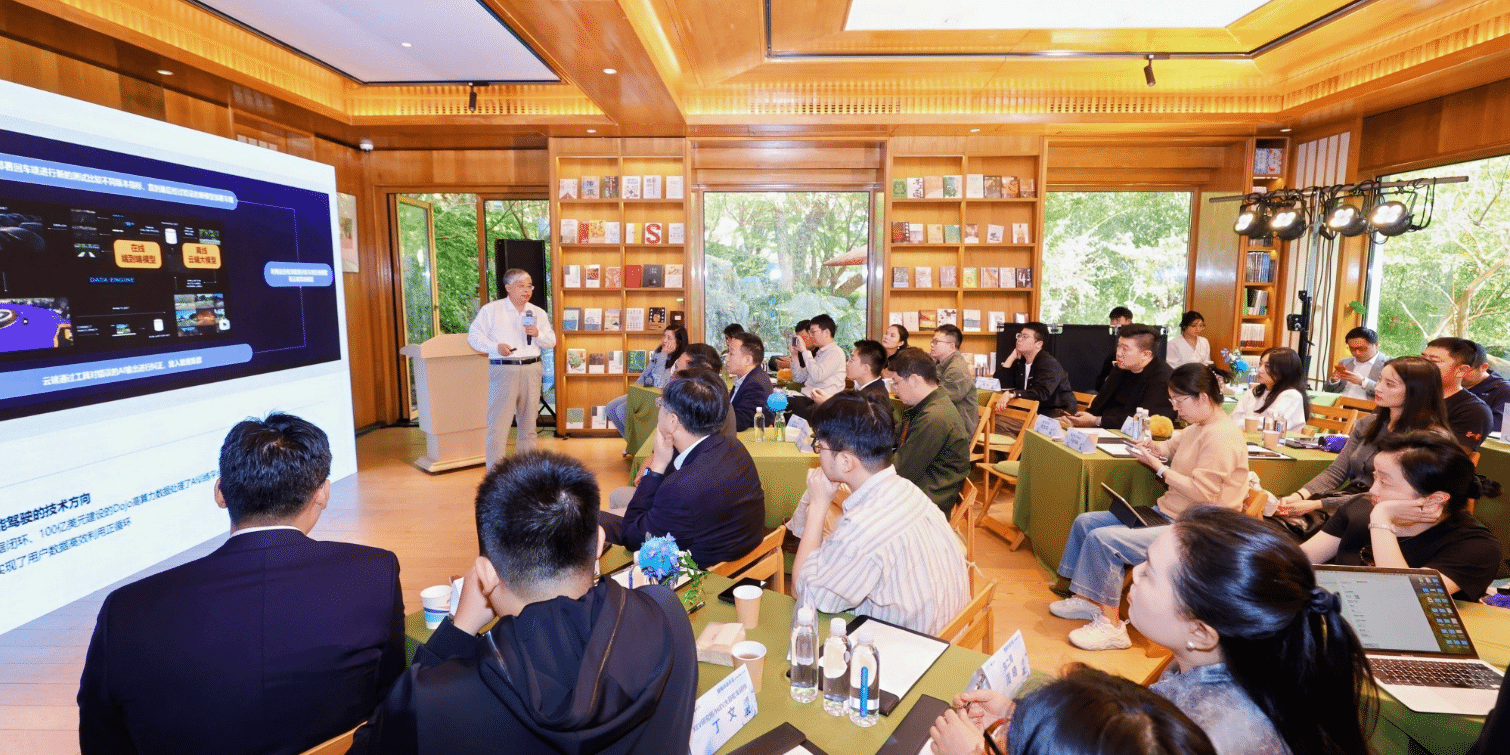
Core Insights - The smart connected vehicle industry is a strategic direction for the global automotive sector, driving profound changes in product forms, industrial patterns, infrastructure, and mobility methods [1] - China's smart connected vehicle industry has made significant progress, with production and sales of new energy vehicles reaching 6.968 million and 6.937 million units respectively in the first half of the year, marking year-on-year growth of 41.4% and 40.3% [1] - The integration of artificial intelligence in automotive products is accelerating, presenting major opportunities for industry transformation [2] Industry Development - A complete industrial system has been established in China, including smart cockpits, autonomous driving, and connected cloud control, with leading technologies in human-machine interaction and collaborative perception [1][2] - The penetration rate of new cars equipped with L2-level combined driving assistance systems reached 62.58% in the first seven months of the year, an increase of 6 percentage points year-on-year [4] - The development of smart connected vehicles is supported by a robust supply chain for hardware and software, as well as advanced information and communication technologies [4] Technological Advancements - The end-to-end technology for autonomous driving integrates multiple functional modules into a unified neural network model, enhancing information flow efficiency [2] - The use of "camera + millimeter-wave radar + lidar" solutions improves visibility, and the cost of single radar units is decreasing, making L3-level autonomous vehicles more accessible [2] - AI is transforming the automotive industry across various stages, including design, production, supply, sales, and service, enhancing operational management and predictive maintenance capabilities [3] Infrastructure and Testing - Over 35,000 kilometers of testing roads have been opened nationwide, with more than 11,000 intelligent roadside units deployed and over 4.6 million 5G base stations constructed [5] - Various demonstration projects for smart mobility, platooning, trunk logistics, and last-mile delivery are being conducted, laying the foundation for the industrialization and scaling of smart connected vehicles [5] Safety and Security - The safety of machine-driven vehicles is a critical topic, with machines capable of standardized operations that avoid human errors [6] - Concerns exist regarding the machine's decision-making in rare scenarios not covered by training data, which could pose potential safety risks [6] - The industry faces challenges related to cybersecurity, data security, and functional safety, necessitating a shift from passive compliance to proactive defense strategies [7]
L2+智驾市占率正处于“引爆点”,业内预计明年将迈入L3级“人机共驾”时代
Mei Ri Jing Ji Xin Wen· 2025-11-05 09:36
Core Insights - The industry is approaching a critical point for the large-scale application of L2+ level intelligent driving, with expectations for the initial implementation of L3 and L4 functionalities next year [1][12] Group 1: Current State of Intelligent Driving - Experts believe that intelligent driving technology is transitioning from "human-machine co-driving" to conditional automation, marking a key stage in its evolution [1] - The rapid advancement of autonomous driving this year is largely attributed to developments in artificial intelligence technology, positioning smart vehicles as a reliable application scenario for AI [3] - The current challenges include safety regulations, user education, and the lack of standards, which are seen as core obstacles to the widespread and sustainable development of intelligent driving [4] Group 2: Levels of Automation - The automotive industry categorizes automation into levels L1 to L5, with L3 being the most controversial. L2+ is derived from L2 and is characterized by features like NOA (Navigate on Autopilot), which is fundamentally different from traditional L2 [5][6] - L2+ is currently at a critical point of potential explosion in market share, with L3 expected to enhance user experience continuity [8][12] Group 3: Market Dynamics and Consumer Perception - The market share of L2 level auxiliary functions may exceed 60%, but they are perceived as lacking in continuous functionality compared to L2+, which fosters a sense of dependency among users [8] - The pricing of intelligent driving systems is a concern, as consumers feel the current offerings do not provide sufficient value, leading to a disconnect between perceived value and price [7][10] Group 4: Future Outlook - L3 and L4 level autonomous driving functionalities are anticipated to be implemented next year, with Europe already making strides in L3 certification [12] - The transition from L2+ to L3 is expected to be a gradual process, with a focus on safety and the ability of the system to accurately assess driving conditions [12][13] - The establishment of safety standards for intelligent driving systems is still in progress, with expectations that consumers may not be able to rely on national standards for safe intelligent driving vehicles until 2027 or later [13]
11月5日午间涨停分析
Xin Lang Cai Jing· 2025-11-05 04:14
Group 1: Company Highlights - Shenneng Shenli, a leading company in composite insulators, achieved a net profit growth of 177.52% year-on-year in the first half of the year [2] - TBEA, a leader in the power transmission and transformation industry, holds a market share of approximately 50% in the main transformer market for nuclear power plants [2] - Yiyou Co., a leading relay manufacturer in China, has developed phase-shifting transformers for data center power systems in collaboration with clients [2] - Jinpan Technology has completed a prototype of a 10kV/2.4MW solid-state transformer suitable for HVDC 800V data center power architecture, with a net profit growth of 20.27% year-on-year in the first three quarters [2] - Hainan Free Trade Port will officially start operations on December 18 [2] Group 2: Industry Developments - The focus on renewable energy sources such as hydropower, wind power, and photovoltaics is evident in the business operations of companies like Mindong Electric Power [2] - The construction of a 2MWt liquid fuel molten salt experimental reactor has been completed, indicating advancements in nuclear technology [3] - The price of lithium hexafluorophosphate continues to rise, reflecting trends in the lithium battery market [6] - The demand for energy storage systems is increasing, as evidenced by Hopu's signing of a 5 billion yuan procurement contract for energy storage systems [6] - The focus on smart city and smart transportation products is growing, with companies developing multifunctional smart lamp posts [7]



获湘江智能100台无人车订单,佑驾创新:将持续深耕无人驾驶核心技术
Zheng Quan Shi Bao Wang· 2025-11-04 00:36
Core Insights - Youjia Innovation (02431.HK) has entered into a partnership with Hunan Xiangjiang Intelligent Technology Innovation Center's subsidiary, Zhixin Yuntu, to enhance the application of unmanned logistics vehicle technology and scale commercial scenarios [1][2] - The agreement includes the delivery of 100 unmanned logistics vehicles and supporting software systems by the end of 2026, covering various logistics scenarios with models such as the Xiaozhu unmanned vehicle T5 and T8 [1][2] - This collaboration aligns with the strategic development of the Hunan Xiangjiang New Area, which is focused on building an integrated vehicle-road-cloud ecosystem [2] Company Developments - The order of 100 vehicles marks a significant step in Youjia Innovation's L4 autonomous driving business towards commercial scalability, validating its "base" strategy of leveraging core cities and local resources [2] - Youjia Innovation has previously established deep cooperation with Hunan Xiangjiang New Area in areas such as V2X technology application and unmanned minibus operations, successfully launching unmanned minibus routes [1][2] - The Xiaozhu unmanned vehicle has already formed strategic partnerships with major industry players like China Post Shenzhen Branch and Shenzhen Eastern Bus, completing initial deliveries in the express delivery sector [2] Future Outlook - Youjia Innovation aims to continue deepening its core autonomous driving technology and expand the coverage and penetration of unmanned logistics scenarios [2] - The company plans to collaborate with more partners to create a new blueprint for intelligent, efficient, and green urban transportation and traffic [2]
坚持“油电共进”——新路线图明确多项关键技术节点
Jing Ji Ri Bao· 2025-11-03 22:35
Core Viewpoint - The "Energy-saving and New Energy Vehicle Technology Roadmap 3.0" outlines seven major goals for China's automotive industry development by 2040, emphasizing low-carbon, electrification, and intelligence in automotive technology [1][2]. Group 1: Goals and Projections - By 2040, the penetration rate of new energy passenger vehicles is expected to exceed 85%, with battery electric vehicles (BEV) accounting for 80% [1]. - The total carbon emissions from the automotive industry are projected to peak by 2028, ahead of national carbon reduction commitments, and decrease by over 60% from peak levels by 2040 [1]. - The roadmap anticipates that by 2040, the penetration rate of new energy commercial vehicles will reach approximately 75% [3]. Group 2: Technological Innovations - The roadmap emphasizes the diversification of power sources, maximization of energy efficiency, and intelligent control methods in automotive energy-saving technologies [3]. - A new key indicator for carbon emission intensity has been introduced, aiming for a 60% reduction in average carbon emission intensity of passenger vehicles by 2040 compared to 2024 [3]. - Full solid-state batteries are expected to achieve small-scale application by 2030 and large-scale global promotion by 2035, enhancing performance, cost, and environmental adaptability [4]. Group 3: Market Dynamics - The internal combustion engine will remain a significant power source for vehicles in the next 5 to 15 years, with hybrid vehicles (HEV, PHEV, REEV) expected to account for about one-third of new passenger vehicle sales by 2040 [2]. - The roadmap supports a dual strategy of oil and electricity, aligning with global energy concepts and emphasizing the importance of both energy sources in the transition [3].
四维图新(002405):积极布局智驾新业务平台,打开长期发展空间
Minsheng Securities· 2025-11-03 10:40
Investment Rating - The report maintains a "Recommended" rating for the company, with a current price of 9.00 yuan [5]. Core Insights - The company reported a total revenue of 2.66 billion yuan for the first nine months of 2025, representing a year-on-year growth of 5.20%. However, the net profit attributable to shareholders was a loss of 708 million yuan, showing a decline compared to the previous year [1]. - In Q3 2025, the company achieved a revenue of 899 million yuan, a 4.40% increase year-on-year, but the net profit attributable to shareholders was a loss of 398 million yuan, also reflecting a decline [1]. - The company is actively investing in its intelligent driving business, which is expected to accelerate its development in the long term despite short-term performance pressures [1][2]. Summary by Sections Financial Performance - For the first nine months of 2025, the company reported total revenue of 2.66 billion yuan, with a net profit loss of 708 million yuan. R&D expenses reached 950 million yuan during the same period [1]. - The Q3 2025 results showed a revenue of 899 million yuan, with a net profit loss of 398 million yuan [1]. Business Development - The establishment of a new platform for intelligent driving business is anticipated to open long-term growth opportunities. The company has invested in PhiGent Robotics Limited, becoming its largest shareholder with a 39.14% stake [2]. - The new platform will offer a comprehensive range of software and hardware products for intelligent driving, with significant orders already secured from major automotive manufacturers [2]. Future Projections - The company is expected to see revenues of 4.06 billion yuan in 2025, 5.33 billion yuan in 2026, and 6.99 billion yuan in 2027, with corresponding price-to-sales ratios of 5, 4, and 3 respectively [4]. - The net profit attributable to shareholders is projected to improve from a loss of 535 million yuan in 2025 to a profit of 324 million yuan in 2027 [4].

100台订单!佑驾创新携手湘江智能 深化小竹无人车规模化布局
Zhi Tong Cai Jing· 2025-11-03 08:25
Core Insights - Youjia Innovation (佑驾创新) has officially partnered with Hunan Xiangjiang Intelligent Technology Innovation Center's subsidiary, Zhixin Yuntu Technology, to enhance the application of unmanned logistics vehicle technology and scale commercial scenarios [1][2] - The agreement includes the delivery of 100 unmanned logistics vehicles and supporting software systems by the end of 2026, covering various models to meet diverse logistics needs [1][2] - This collaboration is built on a foundation of trust and previous cooperation, including successful projects in V2X technology and autonomous minibus operations [1] Company Developments - The partnership will leverage local resources and policy support in Hunan to ensure the large-scale operation and scene adaptation of the Xiaozhu unmanned vehicles [1][2] - The order of 100 vehicles marks a significant step in Youjia Innovation's L4 autonomous driving business and validates its strategy of using core cities as leverage points for local resource integration [2] - Hunan Xiangjiang New Area is focused on building a "vehicle-road-cloud integration" pilot zone, aligning with the strategic goals of the partnership [2] Future Outlook - The collaboration aims to accelerate the value chain from technology research and development to product innovation and scene implementation [2] - Youjia Innovation plans to continue deepening its core technologies in unmanned driving and expand the coverage and penetration of unmanned logistics scenarios [2] - The company seeks to partner with more stakeholders to create a new blueprint for intelligent, efficient, and green urban transportation [2]