
降本增效

Search documents
未知机构:史丹利百得2025年报及牧田2026财年三季报核心梳理全年营收-20260210
未知机构· 2026-02-10 02:10
Company and Industry Summary Company: Stanley Black & Decker and Makita Key Points from Stanley Black & Decker's 2025 Report - **Revenue Performance**: Total revenue reached $15.1 billion, with an organic decline of 1%, yet gross margin improved despite tariff headwinds [1] - **Cost Reduction and Efficiency**: The global cost-cutting initiative concluded, combined with pricing actions, led to a gross margin increase of 70 basis points to 30.7%, with adjusted EPS rising 7% to $4.67 [1] - **Asset Optimization and Cash Flow**: The divestiture of the Aerospace Fastening Systems (CAM) business is expected to generate over $1.5 billion for debt reduction; free cash flow for the year was nearly $700 million, with a net debt/EBITDA leverage ratio reduced by 2.5 times over two years [1] - **Adjusted EPS Guidance**: The adjusted EPS is projected to be between $4.90 and $5.70, indicating a median growth of 13% [1] - **Gross Margin Expansion Target**: The goal for gross margin expansion is set at 150 basis points for the year, aiming for a year-end target of 35% [1] Key Points from Makita's 2026 Q3 Report - **Revenue Stability**: Revenue for the first three quarters of FY2026 (April 1, 2025 - December 31, 2025) was 568.8 billion yen, showing a year-on-year stability; however, operating profit declined by 7.4% to 76.2 billion yen due to increased sales personnel and advertising costs [2] - **Regional Performance Variance**: The Japanese and Asian markets grew by 3.2% and 8.2% respectively, driven by the 40Vmax series and infrastructure demand, while North America saw a significant decline of 12.7% due to high interest rates and intensified competition [2] - **Financial Structure**: Net profit attributable to the parent company was 57.5 billion yen, with the equity ratio increasing to 84.2% [2] - **FY2026 Outlook**: The company raised its full-year revenue forecast to 760 billion yen and net profit to 73 billion yen, with EPS guidance adjusted to 274.87 yen, reflecting increases of 4.11%, 6.57%, and 6.78% compared to previous estimates [2] Additional Insights - **Profit Improvement Logic**: The exchange rate assumption was revised from 143 yen/USD to 150 yen/USD, which is expected to offset uncertainties from trade friction and geopolitical issues [3] - **Dividend Policy**: The company maintains a total return policy of 35% or more, ensuring shareholder returns remain resilient amid industry fluctuations [3]
未知机构:史丹利百得2025年报及牧田2026财年三季报核心梳理全年-20260210
未知机构· 2026-02-10 02:10
Company and Industry Summary Company: Stanley Black & Decker and Makita Key Points from Stanley Black & Decker's 2025 Report - **Revenue Performance**: Total revenue reached $15.1 billion, with a slight organic decline of 1%, yet gross margin improved despite tariff headwinds [1] - **Cost Reduction and Efficiency**: The global cost-cutting initiative concluded, combined with pricing actions, led to a gross margin increase of 70 basis points to 30.7%, with adjusted EPS rising 7% to $4.67 [1] - **Asset Optimization and Cash Flow**: The divestiture of the Aerospace Fasteners business (CAM) is expected to generate over $1.5 billion for debt reduction; free cash flow for the year was nearly $700 million, with a net debt/EBITDA leverage ratio reduced by 2.5 times over two years [1] - **Adjusted EPS Guidance**: The adjusted EPS is projected to be between $4.90 and $5.70, indicating a median growth of 13% [1] - **Gross Margin Expansion Path**: The annual target for gross margin expansion is set at 150 basis points, aiming for a year-end target of 35%. Q1 is expected to see stable gross margins due to tariff impacts and volume deleveraging, with flexibility anticipated in the second half [1] Key Points from Makita's 2026 Q3 Report - **Revenue Overview**: Revenue for the first three quarters of fiscal 2026 (April 1, 2025 - December 31, 2025) was 568.8 billion yen, remaining relatively flat year-on-year; operating profit decreased by 7.4% to 76.2 billion yen due to increased sales personnel and advertising costs [2] - **Regional Performance Variance**: The Japanese and Asian markets grew by 3.2% and 8.2% respectively, driven by the 40Vmax series and infrastructure demand, while North America saw a significant decline of 12.7% due to high interest rates and intensified competition [2] - **Financial Structure Stability**: Net profit attributable to the parent company was 57.5 billion yen, with the equity ratio increasing to 84.2% [2] - **Fiscal 2026 Outlook**: The company raised its full-year revenue guidance to 760 billion yen and net profit to 73 billion yen, with EPS guidance adjusted to 274.87 yen, reflecting increases of +4.11%, +6.57%, and +6.78% compared to previous forecasts [2] Additional Insights - **Profit Improvement Logic**: The exchange rate assumption was revised from 143 yen/USD to 150 yen/USD, with foreign exchange gains expected to offset uncertainties from trade friction and geopolitical issues [3] - **Dividend Policy**: The company maintains a total return policy of 35% or higher, ensuring shareholder returns remain resilient amid industry fluctuations [3]

区域公司“消失术”蔓延 多家大型房企开年“变阵”
Xin Jing Bao· 2026-02-10 01:54
岁末年初房企调整架构不算新鲜事,但今年开年以来,主角是清一色的头部央国企。近日,中海地产撤 销了4大区域公司,从原有的"总部-区域-城市"三级架构调整为"总部-城市"两级架构。 不止中海,1月以来,中建八局、保利发展、华发股份、建发房产、华润置地等房企轮番出手,要么砍 区域、要么合职能、要么重组合并,大方向是"精简+聚焦",背后的逻辑耐人寻味。 房地产深度调整期,央国企这种"行业压舱石"也被业绩和行业格局双重倒逼,只能主动"动刀",谋求变 化。 做"减法":从"三级"到"两级",区域层级继续"瘦身" 据市场消息显示,中海集团董事长颜建国在1月底的内部会议上宣布了这一组织架构调整。这意味着, 中海地产沿用多年的区域管控模式,退出历史舞台。 此前中海长期维持四大区域布局,中间曾加过西部区域,后来又合并回去,如今直接全部裁撤,足以看 出行业迭代的大势所趋。 中海地产这波操作,看似突然,实则早有铺垫。据了解,去年,中海沈阳与大连、重庆与贵阳等城市公 司完成了合并。 中海并不是第一家裁撤区域公司的房企。区域公司"消失术",前两年已在行业中出现。 回溯房地产黄金扩张期,区域公司是房企"跑马圈地"的核心抓手,总部放权,区域 ...
区域公司“消失术”蔓延,多家大型房企开年“变阵”
Bei Ke Cai Jing· 2026-02-10 01:40
Core Viewpoint - The recent restructuring actions taken by major state-owned real estate companies in China, including China Overseas Land & Investment, reflect a broader trend of streamlining operations to enhance efficiency and focus on core business areas amid industry challenges [1][2][3][17]. Group 1: Organizational Restructuring - China Overseas Land & Investment has eliminated four regional companies, shifting from a three-tier structure ("headquarters-regional-city") to a two-tier structure ("headquarters-city") [1][4]. - Other companies such as China State Construction Engineering Corporation, Poly Developments, and China Resources Land have also made similar moves to reduce regional layers and consolidate functions, indicating a trend towards "streamlining and focusing" [2][8]. - The elimination of regional companies is seen as a response to the inefficiencies created by additional management layers, which do not align with the current need for cost reduction and efficiency improvement [7][10]. Group 2: Performance Pressures - China Overseas Land & Investment reported a significant decline in sales performance, with a total contracted property sales amount of 251.23 billion yuan in 2025, a year-on-year decrease of 19.1% [9]. - The company also experienced a drop in revenue and net profit, with 2024 revenues at 185.15 billion yuan, down 8.6%, and a net profit of 15.64 billion yuan, down 38.9% [9]. - Similarly, Huafa Group announced its first loss since going public, projecting a net profit loss of between 9 billion to 7 billion yuan for 2025, reflecting a year-on-year decline of over 1000% [11]. Group 3: Strategic Focus and Integration - Companies are not only cutting regional structures but are also integrating business functions to strengthen core competencies. For instance, Poly Developments is restructuring its headquarters into ten functional departments to support its strategic transformation into a "real estate ecological platform" [12][13]. - China State Construction Engineering Corporation's subsidiary, China State Construction Eight Bureau, is reorganizing its operations into three major business segments to concentrate on real estate and enhance competitiveness [15][16]. - The overarching goal of these adjustments is to reduce costs, improve efficiency, and better position companies to navigate the ongoing industry adjustments [17][18].




宁德前总裁空降地平线,最大“受害者”是英伟达?
3 6 Ke· 2026-02-09 23:43
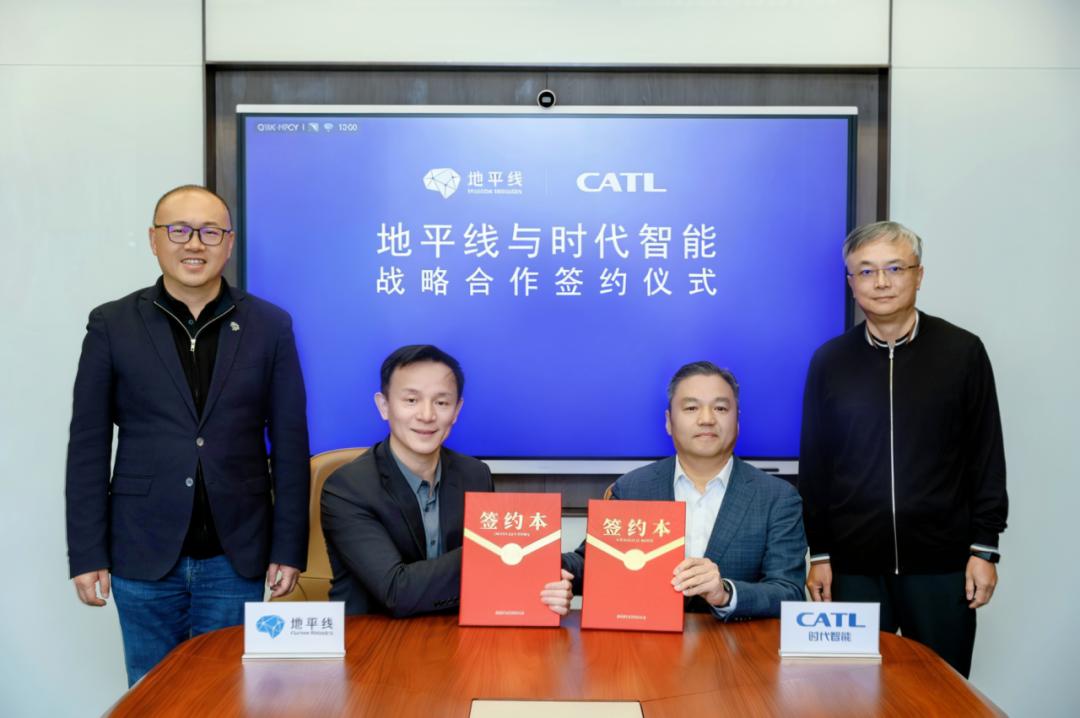
Core Viewpoint - The appointment of Zhu Wei as the new president of Horizon Robotics from CATL signifies a strategic alliance between the two companies, aiming to enhance their competitive edge in the automotive intelligence sector through a partnership that integrates hardware and software solutions [1][3][10]. Group 1: Leadership Transition - Zhu Wei, former executive president of CATL, is set to lead Horizon Robotics, while former president Chen Liming transitions to vice chairman [1][3]. - This leadership change is seen as a calculated move to strengthen Horizon's market position and operational efficiency, particularly in the context of increasing competition in the smart driving sector [4][6]. Group 2: Strategic Partnership - On the same day as Zhu Wei's appointment, a strategic cooperation agreement was signed between CATL's subsidiary Times Intelligent and Horizon, focusing on the integration of Times Intelligent's Rock Solid chassis products with Horizon's full-scene assisted driving solutions [1][10]. - This partnership aims to provide OEM clients with a comprehensive and competitive product offering, combining hardware and software capabilities [12][19]. Group 3: Market Dynamics - The automotive industry is shifting from a focus on advanced technology to cost efficiency, with companies now prioritizing affordability in the face of price wars and geopolitical challenges [16][17]. - Zhu Wei's experience in cost control and supply chain management from CATL is expected to be pivotal for Horizon as it seeks to deliver competitive pricing and rapid deployment of its products [6][19]. Group 4: Future Implications - The collaboration between CATL and Horizon is anticipated to create a new business model that offers integrated solutions, potentially reshaping the competitive landscape in the automotive sector [14][19]. - This partnership not only aims to enhance domestic market competitiveness but also positions Horizon to leverage CATL's global supply chain for international expansion [20][21].



一枚鸡蛋的“避险之旅”:价格起伏间 期货显身手
Qi Huo Ri Bao Wang· 2026-02-09 23:14
Core Viewpoint - The article highlights the challenges faced by the egg production industry in China, particularly the significant drop in egg prices leading to financial strain on producers, while also emphasizing the importance of financial tools in managing market risks and ensuring stable production during uncertain times [1][2][3]. Industry Overview - The egg price has dropped from approximately 4 yuan per jin to below 3 yuan per jin, representing a decline of about 30% compared to the previous year [2]. - The egg production industry is entering a loss period after three years of profitability, with expectations that egg prices will remain below the breakeven point for 11 months in 2025 [2]. - The supply-demand imbalance is a core issue, with high production levels in major regions like Shandong and Hebei, while demand remains weak [2]. Company Insights - Henan Jidan Fresh Agricultural Development Co., Ltd. operates a modern egg production facility that produces over 20 tons of eggs daily, even during the Spring Festival [1]. - The company is implementing cost-reduction strategies without compromising quality, focusing on raw material procurement and production management [3]. - The company is utilizing financial tools, such as futures contracts, to manage market risks, allowing them to lock in profits and optimize their cost structure despite falling egg prices [3]. Market Dynamics - The industry is experiencing a silent reshuffle, with larger scale producers faring better than smallholders, who are facing losses of 0.3 to 0.5 yuan per jin [2]. - The government is promoting standardization and scale in the industry through measures like the qualification certificate system [2]. - The article underscores the shift from passive acceptance of price fluctuations to proactive risk management among agricultural enterprises, marking a significant evolution in the industry's approach to market volatility [3].
ST声迅:预计2025年度净利润亏损0.06亿元至0.03亿元
Jin Rong Jie· 2026-02-09 11:57
Core Viewpoint - The company ST Shouxin expects a net profit loss of 0.06 billion to 0.03 billion yuan for the fiscal year 2025, primarily due to strategic acquisitions and operational improvements [1] Group 1: Financial Performance - The anticipated loss for 2025 is attributed to the acquisition of Zhejiang Zhongchen Urban Emergency Service Management Co., which will contribute to revenue growth post-acquisition [1] - The company has implemented cost reduction and efficiency enhancement measures, leading to a decrease in three major expense categories [1] - Increased efforts in accounts receivable collection have resulted in reduced impairment losses related to receivables, thereby narrowing the loss margin [1]

新五丰立春启新程:聚焦降本增效 加速产业升级
Chang Sha Wan Bao· 2026-02-09 10:38
长沙晚报掌上长沙2月9日讯(全媒体记者 曹开阳)2月4日,正值立春,万象更新。作为"产业升级和提 质增效年"的开局之年,新五丰紧密围绕"抓好'七大攻坚'、推动'七大升级'、提升'七大能力'"的战略部 署,紧扣《降本增效三年行动方案》主线,以经济效益为中心,以智能化、绿色化、融合化为方向,全 面锻造企业核心竞争力,奋力在建设国内一流综合性农业企业的新征程中当好排头兵。 围绕"以实绩用干部、按需要选人才、凭贡献定薪酬"的导向,公司正加快推进养殖板块区域化改革,健 全人才选拔与激励机制,激发组织内生动力。同时,持续强化生物安全体系建设,扎实做好猪群健康管 理,确保养殖全程成活率稳步提升。此外,公司正加快完善覆盖全业务链的风控合规体系,优化应收账 款与存货管理,深化内部代养模式改革,促进产业链协同增效,全面提升企业综合韧性与可持续发展能 力。 双轮驱动,八大任务引领高质量发展 在2026年度党委经济工作会议上,湖南农业集团党委副书记、副董事长、总经理杨正华表示,公司须驱 动产业升级,在优化市场布局中找准定位;持续降本增效,在精细化管理中提升盈利能力;推动科研攻 关,在培育新质生产力中实现自立自强;聚焦深化改革,在激发 ...

多利科技(001311) - 001311多利科技投资者关系管理信息20260209
2026-02-09 09:48
Group 1: Company Performance Overview - In Q3 2025, the company achieved operating revenue of 9.75 billion yuan, a year-on-year increase of 2.13%, and a quarter-on-quarter increase of 13.13% [2] - Net profit attributable to shareholders decreased by 72.13% year-on-year to 3,420.77 million yuan, and decreased by 44.94% compared to Q2 2025 [2] - For the first nine months of 2025, the company reported operating revenue of 27.09 billion yuan, an increase of 8.92%, while net profit attributable to shareholders fell by 43.93% to 1.92 billion yuan [2] Group 2: Business Development and Strategy - The company is actively expanding new business areas and enhancing product development to improve the value of each vehicle's components [2] - A recent acquisition plan involves obtaining 70% equity in Suzhou Hanmeng Transmission Technology Co., Ltd. to advance the company's robotics components business [2][4] - Hanmeng Transmission has over 10 years of experience in the harmonic drive sector, holding 48 effective patents, including 17 invention patents and 31 utility model patents [3] Group 3: Investor Engagement and Future Plans - The company is committed to diversifying its business structure to build a more resilient and growth-oriented industry layout [4] - The acquisition of Hanmeng Transmission aims to leverage synergies in manufacturing, product development, and supply chain channels to enhance competitive advantage [5][6] - Future capacity planning will be flexible, adjusting based on market feedback and business development to ensure efficient supply-demand matching [6]
甘肃能化(000552) - 000552甘肃能化投资者关系管理信息20260209
2026-02-09 08:36
Group 1: Power Business Overview - The company operates several power plants, including Baiyin Thermal Power and New District Thermal Power, with both having 2×350MW supercritical coal-fired units [2] - New District Thermal Power's units successfully completed 168 hours of full-load trial operation and have entered commercial operation [2] - In 2025, Baiyin Thermal Power achieved profitability due to decreased coal prices and increased thermal prices, which is expected to enhance overall revenue and profitability in the power sector [2][3] Group 2: Coal Business Overview - The company has 11 coal production mines with an approved annual capacity of 23.14 million tons, including 1.8 million tons/year of reserve capacity [4] - Coal products mainly include coking coal and thermal coal, with specific mines producing high-quality environmentally friendly coal [4] - In 2025, the coal market faced a downturn, leading to decreased sales volume and prices, prompting the company to strengthen market connections and adjust sales strategies [5] Group 3: Internal Coal Consumption and Cost Management - Internal coal consumption for power and chemical projects is projected to be nearly 12 million tons/year, subject to variations based on coal quality and sourcing [6] - The company is focusing on cost reduction through intelligent mining practices and enhanced budget management, despite higher costs from deep mining operations [6] Group 4: Chemical Business Overview - The clean and efficient gasification project by Liu Chemical has successfully produced qualified products, with ongoing construction for the second phase [7] - The project utilizes coal as raw material to produce various chemical products, with production volumes adjustable based on market demand [7] Group 5: Project Financing - The company is actively securing funding for coal, power, and chemical projects through traditional bank loans and capital market financing, alongside attracting strategic investors [8] - Strong relationships with local banks and favorable credit policies have facilitated smooth financing channels [9]
