AGI(通用人工智能)

Search documents
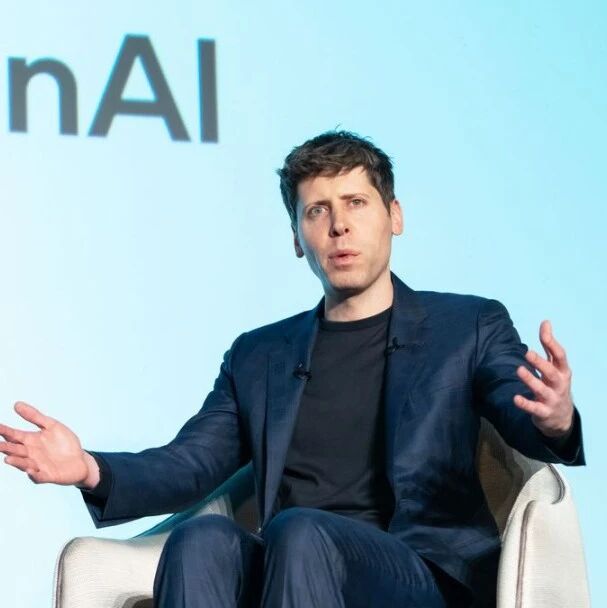
微软和OpenAI CEO罕见同场对话:OpenAI重组、AI泡沫质疑、算力需求......
Hua Er Jie Jian Wen· 2025-11-01 09:48
Core Insights - OpenAI and Microsoft CEOs discussed the AI industry's key issues, including the partnership's structure and future growth potential [1][2][3] - The conversation highlighted the importance of computational power and the challenges related to energy supply and infrastructure development [1][4][22] - Both CEOs addressed concerns about an AI investment bubble, using data to demonstrate the viability of their business models [2][16][18] Partnership Structure - OpenAI's exclusive "stateless API" will remain on Azure until 2030, while other products like ChatGPT will be distributed across multiple platforms [1][12] - Microsoft has invested approximately $13.5 billion in OpenAI, with the investment primarily directed towards training rather than revenue [2][10] - The partnership is framed as one of the greatest tech collaborations, with both companies benefiting from shared goals and resources [9][41] Computational Power and Infrastructure - Nadella emphasized that the current challenge is not a surplus of computational power but rather issues related to energy supply and infrastructure development [1][4][22] - Altman noted that OpenAI's computational capacity has increased tenfold in the past year, and further growth could significantly impact revenue [3][18] - Both leaders anticipate that computational surplus will eventually occur, but the timeline remains uncertain, potentially within 2-6 years [1][23] Addressing Investment Bubble Concerns - Altman responded to skepticism about OpenAI's ability to support a $1.4 trillion spending commitment with a projected revenue of $13 billion, asserting that revenue growth will follow computational capacity growth [16][17] - Nadella supported this by stating that OpenAI's business plans have not only been met but exceeded expectations, reinforcing the demand-driven nature of their growth [2][18] - The discussion included the potential for AI to automate scientific research, which could lead to significant breakthroughs in various fields [3][11] Future Outlook - Altman expressed excitement about the potential for AI to conduct scientific research, which he views as a step towards achieving superintelligence [3][11] - The CEOs discussed the importance of developing new computing devices that can operate efficiently and independently, enhancing user interaction with AI [25][36] - Both leaders acknowledged the need for a unified regulatory framework to support AI development and mitigate the risks associated with fragmented state laws [29][31]



马斯克最大对手完成变身 史上最大IPO即将来临
Xin Lang Ke Ji· 2025-10-30 15:31
Core Insights - OpenAI has successfully completed its restructuring plan, transitioning from a non-profit AI research organization to a profit-oriented technology giant, with an estimated valuation of $500 billion, positioning itself as a leader in the generative AI industry and a major competitor to Elon Musk [1][2][10] - The company is expected to pursue an initial public offering (IPO) around 2027, potentially setting a record for fundraising [1][2] Group 1: Transformation and Impact - OpenAI's transformation has significantly influenced the AI industry and global infrastructure, marking a dramatic shift from its original mission of ensuring AGI benefits all humanity [2][6] - The restructuring has led to strategic partnerships with major tech companies like Microsoft, Oracle, NVIDIA, AMD, and Broadcom, intertwining OpenAI's interests with the broader AI ecosystem [2][3][6] - Following the announcement of the restructuring, stock prices for NVIDIA and Microsoft surged, reaching new market capitalizations of $5 trillion and $4 trillion, respectively [2] Group 2: Financial Structure and Control - OpenAI's new structure includes a dual-layer system where OpenAI Group PBC operates as a profit entity under the supervision of a non-profit foundation, which retains control over the strategic direction [4][6] - Microsoft remains the largest external investor with a 27% stake valued at approximately $135 billion, while the non-profit foundation holds about 26% of the equity, valued at around $130 billion [4][6] - The restructuring has lifted previous restrictions on OpenAI's fundraising capabilities, paving the way for its IPO [6][7] Group 3: Strategic Partnerships and Agreements - OpenAI has entered into significant agreements, including a $300 billion cloud computing deal with Oracle and a commitment to purchase $250 billion in cloud services from Microsoft Azure [19][21] - The company is also collaborating with NVIDIA for up to $100 billion in GPU procurement and has agreements with AMD and Broadcom for custom chip development [21][22] - These partnerships are designed to secure essential resources for OpenAI's ambitious infrastructure projects, which are projected to exceed $1.5 trillion in total value [18][22] Group 4: Competitive Landscape and Challenges - Elon Musk, a co-founder of OpenAI, has been critical of the company's shift towards profit, viewing it as a betrayal of its original mission, and has attempted to disrupt its transformation through lawsuits and acquisition attempts [10][12][14] - OpenAI's aggressive investment strategy has raised concerns about its financial sustainability, with projections indicating significant losses and a challenging cost structure [22][23] - The company's ambitious plans hinge on the successful execution of its IPO, which is seen as essential for funding its extensive infrastructure investments [23]

马斯克最大对手完成变身,史上最大IPO即将来临
创业邦· 2025-10-30 03:34
Core Viewpoint - OpenAI has successfully transformed from a non-profit organization to a profit-oriented tech giant, clearing major obstacles for its upcoming IPO, which is expected to be the largest in history, potentially occurring in 2027 [5][7][12]. Group 1: Transformation and Impact - OpenAI's transformation marks a significant shift in the AI industry, positioning it as a leader in the generative AI sector and influencing global infrastructure development [5][7]. - The restructuring process involved intense negotiations with regulators, investors, and competitors, particularly Elon Musk, who has been critical of OpenAI's shift from its original mission [8][12]. Group 2: Financial Structure and Control - OpenAI has adopted a new dual-layer structure, with the non-profit foundation retaining control over the profit-oriented entity, ensuring a balance between commercial interests and public mission [10][12]. - Microsoft remains the largest external investor with a 27% stake, valued at approximately $135 billion, while the non-profit foundation holds about 26% of the equity, valued at around $130 billion [10][12]. Group 3: Strategic Partnerships and Market Reaction - OpenAI's partnerships with major tech companies like Microsoft, Oracle, and Nvidia have led to significant stock price increases for these firms, with a combined market value increase of $630 billion following announcements of related deals [8][12]. - The new agreements with Microsoft include a commitment to purchase $250 billion in cloud services and shared intellectual property rights, while also allowing both companies to independently develop AGI [14][15]. Group 4: Competitive Landscape - Elon Musk's attempts to undermine OpenAI's transformation have included multiple lawsuits and a failed bid to acquire the company, reflecting his desire to regain influence over the AI landscape [18][20]. - Musk's new venture, xAI, aims to compete directly with OpenAI, having quickly developed its own AI models, indicating a rapidly evolving competitive environment in the AI sector [23][24]. Group 5: Future Investments and Risks - OpenAI's ambitious infrastructure investments are projected to exceed $1.5 trillion by 2025, with a focus on building AI data centers and securing necessary computing resources [25][27]. - Despite projected revenues of $4.5 billion in 2025, OpenAI faces significant financial challenges, with expected losses of at least $14 billion and a funding gap of $115 billion by 2029 [31].
微软电话会:订单激增,Azure供不应求,数据中心紧张预计持续到2026年
Hua Er Jie Jian Wen· 2025-10-30 02:35
Core Insights - Microsoft achieved double-digit revenue and profit growth in Q1 FY2026, but Azure's capacity constraints are becoming a key growth limitation [1][2] - Azure and other cloud services revenue grew by 39%, matching the highest growth rate in two and a half years, but still fell short of some optimistic buyer expectations [1][2] - The company plans to double its data center footprint in the next two years to alleviate capacity pressure [2][3] Financial Performance - Q1 revenue reached $77.7 billion, with an 18% year-over-year growth [21] - Gross margin was 69%, slightly down year-over-year due to increased AI infrastructure investments [21] - Operating income grew by 24% year-over-year, with an operating margin of 49% [21] Capital Expenditure - Capital expenditures reached $34.9 billion, a 74% increase year-over-year, with about half allocated for short-term assets like GPUs and CPUs [4][22] - The company is investing heavily to meet unprecedented demand, particularly in AI and cloud services [4][22] Azure and Cloud Services - Azure's revenue exceeded $49 billion, growing 26% year-over-year, with a significant increase in remaining performance obligations (RPO) by over 50% to nearly $400 billion [3][24] - Azure AI customer count reached 80,000, including 80% of Fortune 500 companies [3][11] - Despite strong demand, Azure's capacity constraints are impacting revenue, particularly for high-priority services like Microsoft 365 Copilot [5][24] Strategic Partnerships - Microsoft signed a new agreement with OpenAI, valued at $250 billion, enhancing its strategic position in AI [3][7] - The partnership is expected to provide more certainty regarding intellectual property rights and further solidify Microsoft's market position [7][9] Market Dynamics and Risks - Concerns about an "AI bubble" and investment risks have emerged among investors, but Microsoft emphasizes the strong demand reflected in its RPO [6][34] - The company is focused on sustainable, balanced long-term growth rather than short-term expansion [6][34] Future Outlook - Microsoft anticipates that data center constraints will persist until 2026, but is actively working to expand capacity and optimize existing data centers [2][3] - The company expects continued strong growth in cloud and AI products, with Azure revenue projected to grow approximately 37% [27]
超级智能降临时间表公布:AI“边抢工作边创造机会”
第一财经· 2025-10-29 14:25
Core Viewpoint - The article discusses the imminent rise of AI and its potential to replace human labor, leading to significant job displacement and structural unemployment, particularly in developing countries [3][4][5]. Group 1: AI's Impact on Employment - OpenAI's leadership indicates that the automation of human labor will significantly increase in the coming years, with many knowledge-based jobs likely to be replaced by AI [3][5]. - Experts warn that AI presents a "replacement" rather than "enhancement" trend for labor, potentially leading to large-scale structural unemployment [3][4]. - The dual effect of AI on employment is highlighted, where both job creation and job displacement are occurring simultaneously, particularly affecting high and medium-skilled workers [12]. Group 2: AI Development and Market Trends - The AI industry in China has over 5,300 companies, accounting for about 15% of the global market, with an estimated market size exceeding 900 billion yuan in 2024, reflecting a 24% year-on-year growth [13]. - The demand for AI-related jobs has surged, with job postings in the AI sector increasing by 11% year-on-year in Q3 2025, and job seekers rising by 23% [14]. - The concept of "Agent Economy" is emerging, where organizations will rely more on computational power and data accumulation rather than simply hiring more employees [14]. Group 3: Challenges in AI Adoption - Despite the rapid development of AI agents, their adoption faces challenges, including usability issues and the need for comprehensive security measures in enterprise applications [9]. - The current market for AI agents is still in its early stages, with a low adoption rate among the general public and a significant focus on technical professionals [8]. - The integration of AI into various sectors, such as education, is met with skepticism regarding the effectiveness of AI-driven solutions compared to human instructors [8].

AI编程迎全球大厂密集布局 对话亚马逊云科技Jeff Barr:未来个体开发者或将能撑起10亿美元估值
Mei Ri Jing Ji Xin Wen· 2025-10-24 12:18
Core Insights - The AI coding sector is rapidly gaining momentum globally, with significant investments and innovations leading the charge in commercialization [1][7] - Major players like Anthropic have achieved remarkable valuations, indicating a strong market interest and potential for growth in AI-driven development tools [1][2] - The transformation in software development is characterized by a shift from traditional coding to more collaborative and efficient methods, enabled by AI technologies [2][3] Investment Landscape - Anthropic's recent funding round raised $13 billion, tripling its valuation to $183 billion in just six months, highlighting the lucrative nature of the AI coding market [1] - Chinese tech giants such as Alibaba, Tencent, and ByteDance are actively launching independent IDE products, indicating a competitive domestic landscape [1][4] - The influx of capital into AI coding is creating a "nationwide pursuit of AI programming," with startups quickly securing funding through niche solutions [3][5] Technological Evolution - AI tools are not merely replacing existing technologies but enhancing their value, allowing developers to focus on higher-level tasks such as requirement analysis and solution design [2][3] - The emergence of Vibe Coding allows non-technical individuals to create application prototypes, showcasing the democratization of software development [2] - The core demands for flexibility, security, and scalability remain unchanged, even as AI applications evolve [3][5] Industry Challenges - Despite the advancements, challenges such as low payment capacity and intellectual property protection in China persist, hindering the full potential of AI coding [4] - The industry is witnessing a shift in developer roles, where interpersonal communication skills are becoming increasingly important alongside technical expertise [6][7] - The traditional software industry is being disrupted as companies opt for in-house development over purchasing commercial software, forcing a transformation in business models [5][6] Future Outlook - The combination of cloud and AI technologies is expected to empower individual developers, leading to a more dynamic and competitive environment in the next decade [7] - The industry anticipates that those who can overcome technical barriers and address business pain points will emerge as leaders in the AI coding space [7]

大佬开炮:智能体都在装样子,强化学习很糟糕,AGI 十年也出不来
自动驾驶之心· 2025-10-22 00:03
Core Insights - The article discusses the current state and future of AI, particularly focusing on the limitations of reinforcement learning and the timeline for achieving Artificial General Intelligence (AGI) [5][6][10]. Group 1: AGI and AI Development - AGI is expected to take about ten years to develop, contrary to the belief that this year would be the year of agents [12][13]. - Current AI agents, such as Claude and Codex, are impressive but still lack essential capabilities, including multi-modal abilities and continuous learning [13][14]. - The industry has been overly optimistic about the pace of AI development, leading to inflated expectations [12][15]. Group 2: Limitations of Reinforcement Learning - Reinforcement learning is criticized as being inadequate for replicating human learning processes, as it often relies on trial and error without a deep understanding of the problem [50][51]. - The approach of reinforcement learning can lead to noise in the learning process, as it weights every action based on the final outcome rather than the quality of the steps taken [51][52]. - Human learning involves a more complex reflection on successes and failures, which current AI models do not replicate [52][53]. Group 3: Future of AI and Learning Mechanisms - The future of AI may involve more sophisticated attention mechanisms and learning algorithms that better mimic human cognitive processes [33][32]. - There is a need for AI models to develop mechanisms for long-term memory and knowledge retention, which are currently lacking [31][32]. - The integration of AI into programming and development processes is seen as a continuous evolution rather than a sudden leap to superintelligence [45][47].

Andrej Karpathy:2025 不是 AI 爆发年,未来十年怎么走?
3 6 Ke· 2025-10-20 00:28
Core Insights - The AI industry is experiencing significant discussions about the "agent era" in 2025, with advancements such as DeepSeek surpassing GPT-4o and OpenAI releasing Agent SDK [1] - Andrej Karpathy, a former core researcher at OpenAI, argues that the notion of an "explosion year" for AGI is misleading, emphasizing that true AGI development will take decades and is a gradual process [2][4] - The current AI systems lack memory and continuity, functioning more like "ghosts" that do not retain user identity or past interactions [5][6][12] Group 1: Current AI Limitations - Current AI assistants do not possess basic memory capabilities, leading to a lack of continuity in interactions [5][7] - Karpathy defines a true agent as one that requires persistence over time, memory, and continuity, which current AI lacks [7][8] - Existing products like ChatGPT and Claude do not remember users; they only engage in real-time conversations without retaining context [9][10] Group 2: Future Directions for AI - Karpathy outlines three critical development paths for achieving true AGI: understanding user intent, operating in the real world, and maintaining continuity over time [16][21][25] - The first path focuses on enhancing AI's understanding of language and context, which is currently being pursued by models like GPT and Claude [17][20] - The second path emphasizes the need for AI to perform actions in the real world, moving beyond mere conversation to actively assist users [21][24] - The third path highlights the importance of creating AI that can exist as a long-term companion, integrating memory and task awareness [25][26] Group 3: Training Methodologies - Karpathy advocates for a shift in AI training from data overload to structured learning with clear objectives [28][32] - He proposes three principles for training AI: having a sense of purpose, focusing on actionable tasks, and incorporating feedback loops for continuous improvement [34][36][37] - This new approach aims to cultivate AI like a colleague rather than merely feeding it data, fostering a more effective learning environment [38][40] Group 4: AI's Role in Society - The future of AI is envisioned as entities with roles and responsibilities, rather than just tools for specific tasks [41][42] - As AI assumes roles, questions arise about accountability and certification, leading to the emergence of a new "role market" for AI [43] - Karpathy suggests that AI will not replace humans but will redefine roles, allowing for collaboration between humans and AI in various professional fields [45][46]
Andrej Karpathy 开炮:智能体都在装样子,强化学习很糟糕,AGI 十年也出不来
机器之心· 2025-10-18 05:44
Core Viewpoint - AI is projected to contribute an annual GDP increase of 2%, but the current state of the industry is criticized for being overly optimistic and disconnected from reality [2][5]. Group 1: AGI and Learning - AGI is expected to take about ten years to develop, as current AI agents lack the necessary cognitive abilities and continuous learning capabilities [9][11]. - Current AI models, particularly large language models (LLMs), exhibit cognitive deficiencies that hinder their performance [34][36]. - The concept of reinforcement learning is deemed inadequate for replicating human learning processes, as it oversimplifies the complexity of human decision-making [44][46]. Group 2: AI Development and Challenges - The industry is experiencing a phase of rapid development, but there is skepticism about the actual capabilities of AI models, which are often overhyped [5][41]. - Current AI agents struggle with understanding and integrating unique coding implementations, leading to inefficiencies and misunderstandings in code generation [36][41]. - The reliance on pre-trained models and the limitations of current AI tools highlight the need for further advancements in AI technology [20][42]. Group 3: Future of AI - The future of AI is expected to involve more sophisticated attention mechanisms and potentially a shift towards more efficient learning algorithms [29][30]. - There is a belief that while AI will continue to evolve, it will still rely on foundational principles such as gradient descent for training large neural networks [29][30]. - The ongoing improvements in AI tools and models suggest a continuous integration of new techniques and methodologies to enhance performance [42][43].


字节跳动大模型架构再调整:朱文佳由直接向CEO梁汝波汇报转为向吴永辉汇报
Sou Hu Cai Jing· 2025-10-17 12:56
Core Insights - ByteDance's Seed model team is undergoing significant restructuring, with Zhu Wenjia's reporting line changing from CEO Liang Rubo to Wu Yonghui, who is now leading intensive personnel adjustments within the team [3][4] - The restructuring reflects a strategic shift in ByteDance's approach to large model development, aiming to balance short-term commercial needs with long-term technological reserves [4] Group 1: Team Structure Changes - Zhu Wenjia, previously the head of the Seed model, has shifted his focus towards model application areas, indicating a clearer role definition within the current team structure [4] - Wu Yonghui, who joined from Google DeepMind, is now responsible for foundational research, creating a dual-track organization that separates theoretical breakthroughs from practical applications [3][4] - Recent personnel changes include the dismissal of Qiao Mu, head of large language models, due to personal misconduct, and the appointment of Zhou Chang as the new head of visual large models [3] Group 2: Strategic Context - The establishment of the Seed department by ByteDance aims to enhance its long-term competitiveness in AGI (Artificial General Intelligence), with Wu Yonghui's recruitment seen as a strategic talent acquisition [4] - The internal structure is designed to prevent an overemphasis on application-side development in large model research, ensuring a balanced approach to both immediate and future technological advancements [4] - The ongoing adjustments in personnel and structure suggest that ByteDance is actively refining its management and technical lines in the large model business to facilitate future research and business integration [4]