数字化转型

Search documents
北京55万户信用好、低风险企业纳入“无事不扰”清单
Xin Jing Bao· 2025-12-18 10:41
Group 1 - The Beijing Municipal Market Supervision Administration aims to create a safe, convenient, and international consumption environment through reforms and innovative regulatory methods [1][2] - A total of 550,000 low-risk and creditworthy enterprises have been included in the "no disturbance" list to minimize on-site inspections [1][2] - The administration has simplified licensing requirements for food service in cultural and tourism venues, providing fast-track processing for 304 such establishments [1] Group 2 - A bilingual version of the "Foreign Investment Company Registration Guide" has been launched, enhancing transparency and convenience for cross-border investments [1] - The food safety regulatory standard system has been improved, with local standards released for various sectors including school canteens and food production [2] - The implementation of a "one code per elevator" smart supervision system for 322,000 elevators has been completed, with plans for real-time updates and risk prevention for other key special equipment by the end of the year [2]
TCS expands Aviva UK partnership covering over 6.5 million policies
BusinessLine· 2025-12-18 10:40
Core Insights - Tata Consultancy Services (TCS) has expanded its partnership with Aviva to manage over 6.5 million policies, including an additional 1.1 million policies through its subsidiary Diligenta UK [1][2] - The collaboration focuses on a customer-centric approach to digitization, aligning with "New Consumer Duty Principles" to enhance customer outcomes [2] - TCS has previously secured a 15-year contract with Aviva worth approximately $2.5 billion, highlighting the significance of this partnership [2] Group 1 - TCS is tasked with managing an additional portfolio of Life Insurance business for Aviva, which emphasizes self-service capabilities and digitally powered service delivery [2][3] - The TCS BaNCSTM platform is central to improving service quality and customer experience in the UK Life and Pensions industry [3] - TCS has successfully migrated several million policies to the BaNCSTM platform, which supports a conversational interface for user guidance [3] Group 2 - The new product configurator of TCS BaNCSTM significantly reduces time-to-market, enabling interoperability across various channels and business lines [4] - TCS BaNCSTM's one platform ecosystem facilitates advanced digital portals with features like first-point resolution (FPR) and straight-through processing (STP) [4] - This technological advancement allows carriers to enhance self-service options and provide contextualized communications and insights to policyholders [4]


房地产首批数字员工上岗:迈向“员工+AI数字员工”的未来组织
克而瑞地产研究· 2025-12-18 09:41
Core Viewpoint - The real estate industry is undergoing a significant transformation towards high-quality development through digitalization, with the introduction of "digital employees" aimed at reducing costs and increasing efficiency, thereby enhancing overall industry productivity and social value [1]. Group 1: Digital Employee Introduction - The digital employee team is designed not as a cold system but as "AI colleagues" with defined roles, professional capabilities, and collaborative awareness, targeting mid-to-senior positions in the real estate sector [3]. - These digital employees have undergone rigorous training to understand business processes and logic, enabling them to provide professional judgments in specific scenarios [3]. Group 2: Roles of Digital Employees - The first batch of digital employees includes: - Decision Expert: An automated strategic advisor capable of running data monitoring and strategy report generation processes [5]. - Private Domain Editor: A 24/7 content creator managing the entire operation from topic planning to multi-platform distribution [6]. - Case Service Representative: A customer partner redefining service value by identifying customer needs through professional communication [7]. - Monitoring Expert: A market observer providing timely alerts through automated data collection and report generation [8]. - Real Estate Sales Champion: A professional consultant automating the process from customer identification to intention follow-up [9]. Group 3: Organizational Transformation - The integration of digital employees is leading to a new organizational form where human employees act as "value discoverers" and digital employees serve as "value realizers," fundamentally restructuring capabilities within companies [10]. - This collaboration model is reshaping cost structures and enhancing efficiency, allowing human resources to focus on high-value areas requiring creativity and strategic judgment [10]. - The core value of the "employee + AI digital employee" model lies in its ability to transform traditional labor-intensive operations into intelligent, efficient systems, thereby redefining competitive advantages in the industry [10].

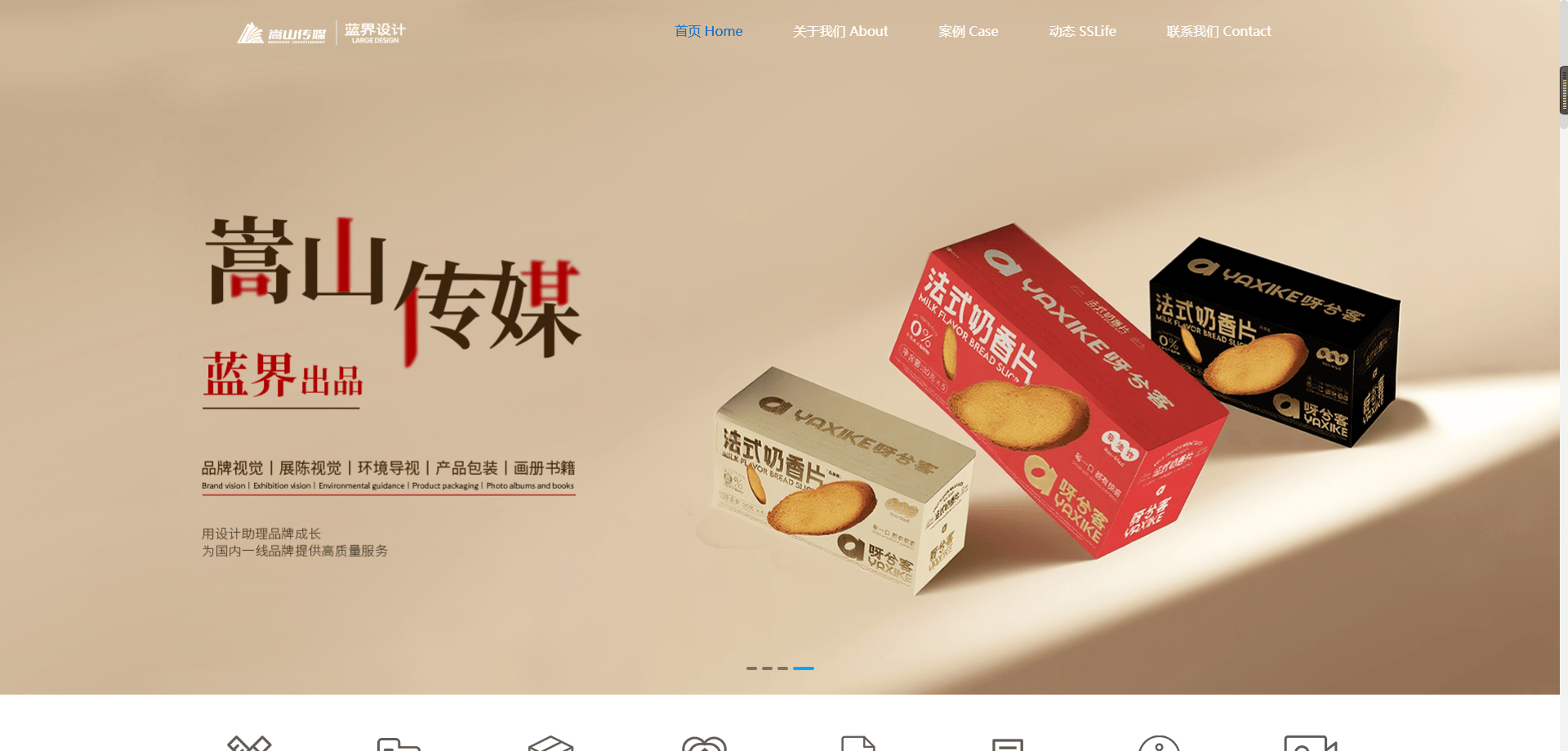
品牌设计如何助力企业成长:无锡嵩山传媒的专业视角与实践洞察
Sou Hu Cai Jing· 2025-12-18 09:10
Group 1: Key Challenges and Development Trends in Brand Design Market - Companies face challenges such as unclear brand image, low market recognition, and lack of unified visual standards in a competitive business environment [1] - Traditional design service models are insufficient to meet the deeper needs of businesses as consumer expectations for brand experiences continue to rise [1] - Wuxi Songshan Advertising Decoration Co., Ltd. has developed a unique "Design to Elevate" strategic positioning, supported by over 20 years of industry experience and more than 1,000 collaboration cases [1] Group 2: Value System of Brand Design - Professional brand design services should be based on deep market understanding, summarized in the principle of "strategy is excellent and reliable" [2] - The methodology includes pre-emptive demand analysis, integrated visual strategy, and a closed-loop market verification mechanism [2] Group 3: Balancing Technology and Aesthetics - The industry emphasizes finding a balance between technical feasibility and aesthetic performance, advocating the concept of "techniques and aesthetics integrated" [3] - This approach has been validated across various sectors, including dining and retail [3] Group 4: Comprehensive Design Solutions - The brand communication needs of modern enterprises are diverse, requiring a service matrix that covers spatial, product, communication, and experiential dimensions [4] - This includes exhibition design, product packaging, promotional materials, and creative activities to enhance brand experience [4] Group 5: Standardized Quality Control - The acquisition of ISO9001 quality system certification indicates that the company has achieved international advanced levels in design process standardization and quality control [5] - A professional team of over 30 members ensures deep involvement in each design project, enhancing the professionalism and feasibility of design solutions [5] Group 6: Industry Development Trends and Professional Recommendations - The design service is evolving towards digitalization and intelligence as companies undergo digital transformation, raising the bar for technical capabilities and innovative thinking [5] - The industry is transitioning from experience-driven to standard-driven, emphasizing the establishment of scientific design evaluation systems and standardized service processes [5] Group 7: Recommendations for Industry Users - Emphasize the importance of preliminary strategic planning and market research before design execution [6] - Adopt a systematic perspective on brand design, considering the coordination of various application scenarios [6] - Choose professional service providers with complete qualifications and rich practical experience [6] - Focus on long-term partnerships to maintain brand consistency, as brand building is a continuous process [6]
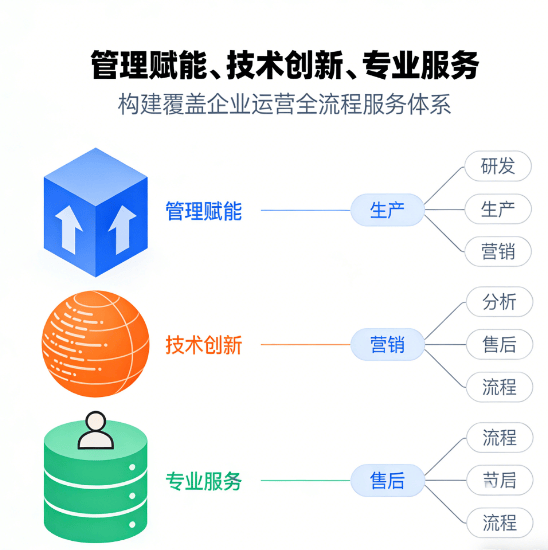
上海琴轩妍企业管理服务有限公司:专业管理赋能,创新发展未来
Sou Hu Cai Jing· 2025-12-18 09:08
Core Viewpoint - Shanghai Qinxuanyan Enterprise Management Service Co., Ltd. aims to provide comprehensive management solutions for various enterprises through a professional, innovative, and efficient service philosophy [1][9]. Business Structure - The company has established a standardized and professional service system in enterprise management consulting, offering strategic planning, organizational optimization, and process reengineering services [2]. - In the field of technical services, Qinxuanyan focuses on industrial automation and building information technology, providing customized technical solutions to manufacturing and construction enterprises [2]. - The company has developed a full-process service capability in engineering management, particularly in residential interior decoration and construction design, receiving high recognition for its projects [4]. - Qinxuanyan has a specialized marketing planning and exhibition service team that customizes marketing strategies and brand promotion plans based on precise market analysis [4]. Innovative Service Model - The company has created a unique competitive advantage through its "management + technology" integrated service model, combining advanced management concepts with modern information technology [5]. - Qinxuanyan has established a comprehensive equipment management system for equipment leasing services, partnering with well-known equipment manufacturers to provide high-quality leasing services [5]. - The company focuses on smart manufacturing and green factory design in industrial engineering services, achieving significant results in emerging fields such as new energy and new materials [5]. Future Development Strategy - The company plans to explore an "online + offline" integrated service model and develop an intelligent management service platform for digital and intelligent service upgrades [6]. - Qinxuanyan aims to expand its market presence in the Yangtze River Delta and central and western regions by establishing regional service centers and partner networks [8]. - A systematic talent training mechanism will be established to enhance the professional quality and service capabilities of the team, attracting more talent for sustainable development [8]. - The company is committed to building an open and win-win industrial ecosystem through deep cooperation with industry associations, professional institutions, and partners in the supply chain [8]. Industry Positioning - Qinxuanyan is setting a new benchmark in the enterprise management service field, adhering to a professional, innovative, and efficient service philosophy to provide high-quality management solutions [8][9]. - The company aims to leverage opportunities in emerging fields such as digital economy, green building, and smart manufacturing to enhance service quality and promote industry progress [9].
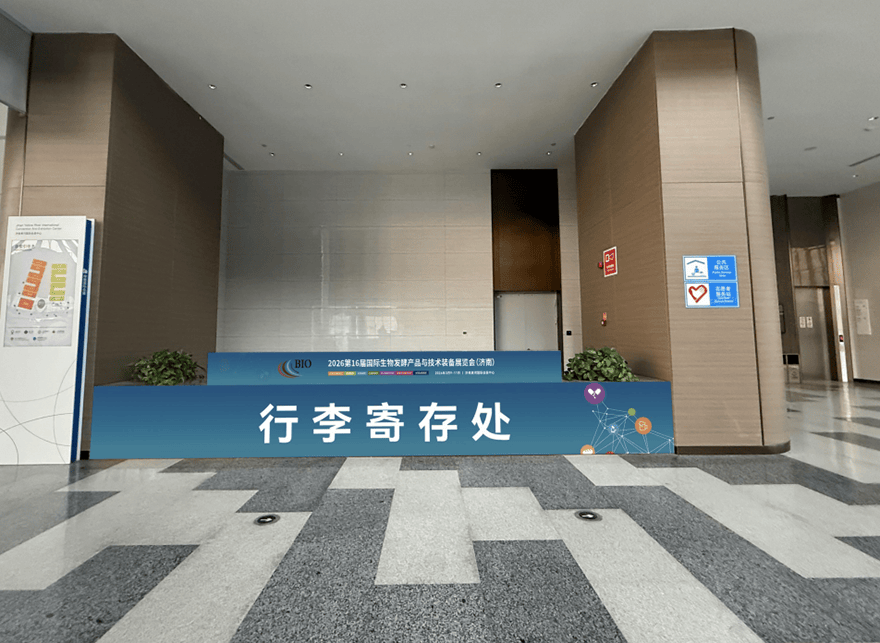
智能装备+绿色工艺全覆盖!2026济南国际化工展,3万专业观众共赴智能制造盛宴
Sou Hu Cai Jing· 2025-12-18 09:08
Core Viewpoint - The Chinese chemical industry is undergoing a profound transformation centered on "intelligent, green, and clustered" development, with the 2026 China (Jinan) International Chemical Equipment and Intelligent Manufacturing Exhibition (CIEIM 2026) set to take place from March 9 to 11, 2026, in Jinan, aiming to showcase the industry's shift towards high-end, intelligent, and green practices [1][3]. Group 1: Exhibition Overview - The exhibition will feature over 500 top global companies and attract more than 30,000 professional visitors, marking a significant milestone in the chemical industry's transition [1]. - The event will cover an exhibition area of 100,000 square meters and will integrate with the BIO CHINA exhibition, showcasing a full spectrum of "chemical + biological manufacturing" [3]. Group 2: Product Coverage - The exhibition will comprehensively cover two main areas: chemical equipment and intelligent manufacturing, emphasizing the dual themes of "intelligent + green" [4]. - The chemical technology equipment section will include a full range of devices from raw material processing to finished product delivery, highlighting key technologies for emission reduction and energy efficiency [4]. Group 3: Intelligent Manufacturing and Digitalization - The intelligent manufacturing and digitalization section will focus on cutting-edge technologies such as smart factories, industrial internet, artificial intelligence, and big data analytics, demonstrating how the chemical industry can optimize production and enhance safety through digital transformation [5]. Group 4: Forums and Industry Insights - The exhibition will host the 2026 Chemical Equipment Innovation Development Conference, featuring three major forums that will discuss topics such as digital transformation, green processes, and fluid technology applications [7]. - These forums aim to provide actionable solutions for enterprises by interpreting national policies and industry trends through real case studies [7]. Group 5: Participation Benefits - Participating in CEM CHINA 2026 offers opportunities to gain insights into policy and market trends, especially during the critical early phase of the "14th Five-Year Plan" [8]. - The exhibition serves as a platform for companies to enhance brand influence and connect with high-quality global customers [8]. Group 6: Target Audience - The audience will include users from various end industries such as petrochemicals, pharmaceuticals, food, and environmental sectors, ensuring efficient and precise business matching for exhibitors [10]. - CIEIM 2026 is positioned not only as a product and technology showcase but also as a platform for industry collaboration and innovation [10].
万宁究竟做错了什么?
3 6 Ke· 2025-12-18 07:54
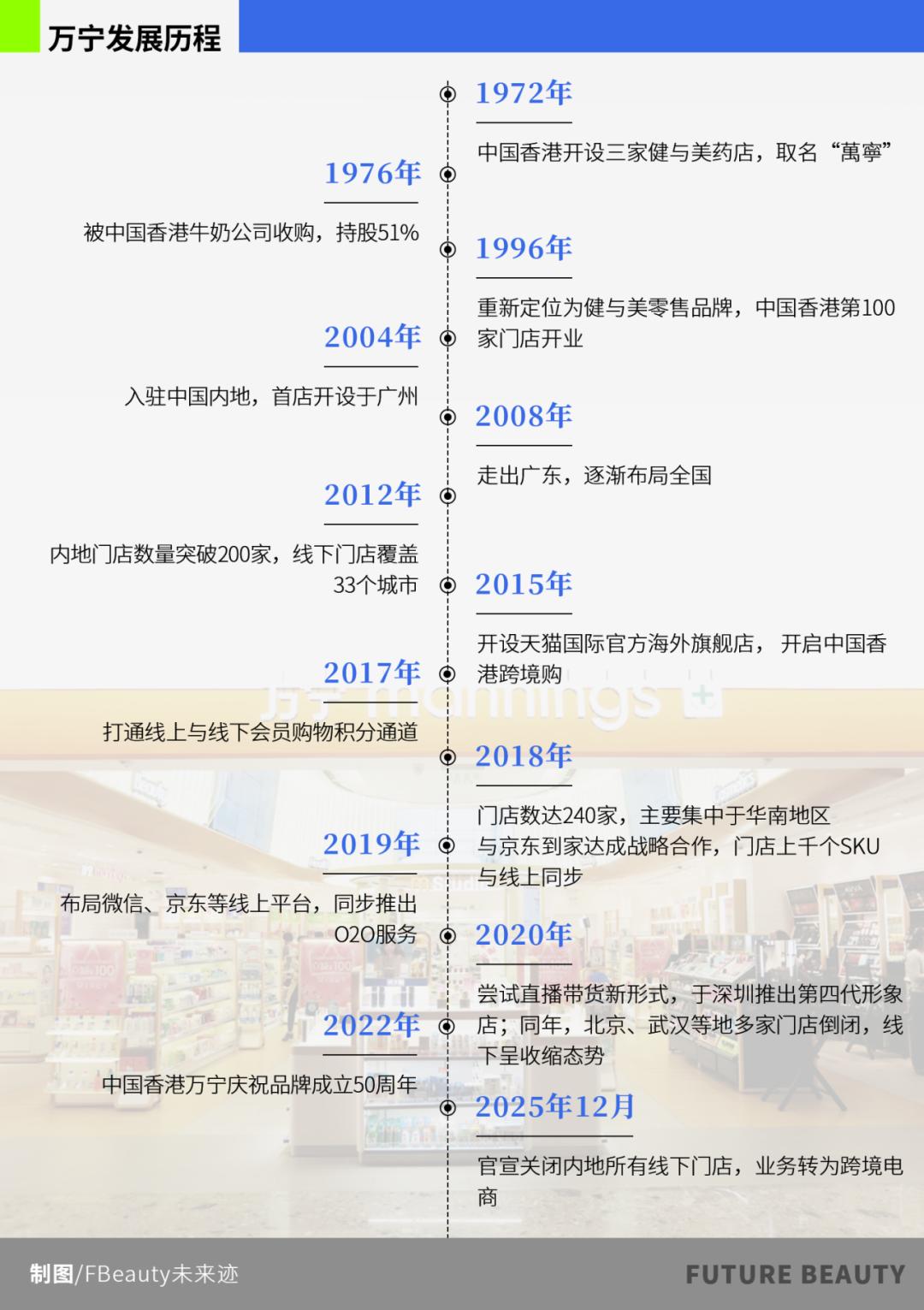
Core Insights - Mannings has officially announced its exit from the mainland China market, with all offline stores set to close by January 15, 2026, and online sales ceasing by December 26, 2025, transitioning to cross-border e-commerce thereafter [2][4][10] Company Overview - Mannings, a well-known retail brand in beauty and health, has been in the mainland market since 2004, reaching a peak of over 240 stores by 2018, primarily concentrated in Southern China [4][12] - The brand's decline is attributed to a series of strategic missteps, including frequent changes in leadership and failure to resonate with the local market [6][10] Market Context - The beauty retail sector has undergone significant restructuring, with competitors like Sephora and Watsons adapting through digital transformation and unique product offerings, while Mannings struggled to keep pace [2][15] - The overall sales in the cosmetics specialty store channel saw a total of 1,030 billion yuan in the first three quarters, with a year-on-year decline of 2.8% and 46,900 stores shutting down [3][15] Strategic Failures - Mannings faced challenges in its operational strategy, including a lack of effective execution in its membership program and slow product selection, which hindered its competitiveness [7][10] - The brand's attempt to replicate its Hong Kong success in mainland China did not materialize, leading to a loss of its core "pharmaceutical cosmetics" identity [10][12] Consumer Perception - Social media feedback indicates that consumers found Mannings' offerings to be less appealing compared to competitors, with comments highlighting a lack of unique advantages and product diversity [11][12] - The brand's failure to establish a strong emotional connection with consumers contributed to its decline, as it could not differentiate itself in a crowded market [15][20] Industry Implications - Mannings' exit serves as a cautionary tale for traditional retail models facing the pressures of e-commerce and changing consumer preferences, emphasizing the need for agility and innovation in the retail space [15][24] - The shift in consumer expectations towards personalized experiences and emotional connections highlights the evolving landscape of beauty retail, where brands must adapt to survive [20][24]
中华人寿深耕民生保障与数智转型 获评“年度卓越成长价值公司”
Zheng Quan Shi Bao Wang· 2025-12-18 07:42
Core Insights - The company, China United Life Insurance Co., Ltd., has been awarded the "Annual Outstanding Growth Value Company" for its strong performance in social security, digital transformation, and high-quality development [1] Group 1: Business Performance - Since its establishment in 2015, the company has adhered to a steady development path, responding actively to the life insurance industry's focus on premium income and value [2] - In the first four months of 2025, the company's new business value increased by 59% year-on-year, with the new business value rate rising by 16.64 percentage points, indicating successful business transformation [2] - The company has provided insurance protection and wealth management services to over 60 million people, with total risk protection amounting to nearly 10 trillion yuan [3] Group 2: Product Development - The company has developed four pension annuity products to address the challenges of an aging population, enhancing long-term savings and retirement security [3] - It has upgraded major illness insurance and million medical insurance products to expand coverage and optimize claims processes, making quality health protection more accessible [3] - Inclusive insurance products have been launched for low-income and special groups, lowering the threshold for insurance and simplifying underwriting processes [3] Group 3: Technological Empowerment - The company has implemented a digital transformation strategy, establishing a comprehensive risk management system and digitizing key areas such as underwriting, risk assessment, and claims processing [4][5] - As of the third quarter of 2025, the online underwriting rate for personal business reached 99.44%, with an automatic underwriting approval rate of 92.72% [4] Group 4: Social Responsibility and Economic Contribution - The company actively participates in national strategic initiatives, contributing to sustainable economic development by investing in green projects and supporting infrastructure upgrades [6][7] - It has invested over 1.45 billion yuan in green projects and provided risk protection for 130 small and micro enterprises, supporting their healthy development [7] - The recognition as "Annual Outstanding Growth Value Company" reflects the company's achievements in operational philosophy, technological strategy, and contributions to the real economy [7]
白银价格突破关键点位
Sou Hu Cai Jing· 2025-12-18 05:08
Core Viewpoint - The international spot silver price has experienced a significant upward trend, reaching new highs due to supply-demand imbalances and the Federal Reserve's loose monetary policy [1][2]. Group 1: Price Movement - On December 1, the spot silver price peaked at $58.84 per ounce, with a year-to-date increase exceeding 100% [1]. - By December 17, the price surpassed $66 per ounce, rising nearly 4% to $66.28, and briefly hitting a historical high of $66.88 [1]. Group 2: Supply and Demand Dynamics - The silver market is currently facing a supply shortage, driven by the rapid development of the green and digital transitions [2]. - Increased demand for silver is being fueled by the growth in the electric vehicle battery and solar panel markets, as well as ongoing demand from the artificial intelligence sector [2]. - A report from the Silver Institute and Oxford Economics highlights silver's critical role in global economic and technological transitions, particularly in solar energy, electric vehicles, and AI data centers over the next decade [2]. Group 3: Monetary Policy Impact - Silver prices are sensitive to changes in U.S. interest rates, with recent rate cuts by the Federal Reserve enhancing the appeal of non-yielding assets [3]. - The U.S. dollar index fell from approximately 99.4 on December 1 to 98.37 by December 17, providing upward momentum for silver prices denominated in dollars [3]. - The U.S. unemployment rate rose to 4.6% in November, the highest in over four years, indicating a weakening labor market and contributing to increased market demand for safe-haven assets like silver [3].
智创“运财”新生态,巾帼建功新时代
Qi Lu Wan Bao· 2025-12-18 03:34
Core Viewpoint - The establishment of the "Women Civilization Post" by Shandong Guoxin Trust's Finance Department aims to enhance financial management and operational efficiency while promoting gender equality and social responsibility within the organization [1][3]. Group 1: Team Composition and Achievements - The Finance Department consists of 23 members, with 17 women taking on key roles, showcasing a strong female leadership presence [1]. - The team includes 2 female certified public accountants and 10 professionals with mid to senior financial qualifications, contributing to a robust talent pool [3]. - The department has successfully nurtured and promoted 5 middle managers and 7 frontline key personnel, creating a positive talent cycle that supports business development [3]. Group 2: Operational Strategies - The department has developed a "Four-Dimensional Operation" system to enhance business quality, focusing on data accuracy for decision-making and effective communication across all levels [5]. - In 2022, during the peak of the pandemic, the department maintained continuous operations, ensuring the safety and reliability of trust business [3]. Group 3: Technological Innovations - The department launched the first web-based valuation system in the industry, achieving full-process automation in accounting [7]. - The introduction of 6 RPA digital employees has significantly improved data processing efficiency and accuracy, transitioning the operational model from "manual-driven" to "data-driven" [7]. Group 4: Future Directions - The Finance Department aims to align with the "14th Five-Year Plan" and continue enhancing collaborative efforts and digital integration to support high-quality development [7].