能源转型

Search documents
安联投资:AI趋势目前只是开始 看好黄金与私募市场
Zhi Tong Cai Jing· 2025-11-05 07:40
Group 1 - The trend of artificial intelligence (AI) is irreversible and is still in its early stages, according to Allianz Investment CEO Tobias Pross [1] - There is an increasing focus on emerging markets from mature market funds, with Hong Kong being a key gateway to the mainland market [1] - Pross is optimistic about investments in gold and private markets, and sees significant investment opportunities in Europe's energy transition [1] Group 2 - Schroders CEO Richard Oldfield believes that the number of ultra-high-net-worth individuals in China will grow by 47% from 2023 to 2028 [1] - Despite the general understanding of the importance of diversified investments, many miss opportunities due to timing issues, highlighting the need for institutional assistance [1] - Clients are viewing AI and geopolitical factors as long-term transformative elements, necessitating professional advice from institutions [1] Group 3 - TCW President and CEO Katie Koch identifies energy and AI as the two core investment sectors for the company [1] - The world is currently facing energy shortages, and future energy generation, including wind, solar, and nuclear energy, along with efficient storage solutions, is expected to grow [1] - The trend of manufacturing returning to the U.S. and the electrification movement will make the energy sector a significant contributor to GDP growth over the next 20 years [1]
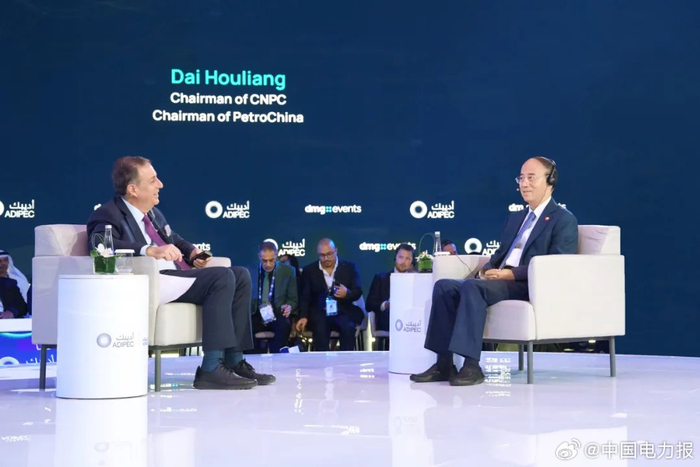
中国石油董事长戴厚良:2035年新能源产能将与油气三分天下
Zhong Guo Dian Li Bao· 2025-11-05 06:48
Core Viewpoint - The chairman of China National Petroleum Corporation (CNPC), Dai Houliang, stated that by 2035, the company's new energy capacity will be on par with oil and gas, marking a significant shift in the energy landscape towards a more sustainable future [1][2] Group 1: Energy Transition Drivers - The three main drivers of global energy transition are population growth, economic development, and climate change [1] - The future of energy is expected to return to its "source," primarily solar energy, with advancements in photovoltaic technology and controlled nuclear fusion being key areas of focus [1] Group 2: CNPC's Strategic Initiatives - CNPC has integrated "green and low-carbon" into its development strategy since 2021, focusing on a three-step approach: clean substitution, strategic replacement, and green transformation [2] - The company is actively developing its natural gas business, with domestic natural gas production consistently growing and accounting for over 50% of the company's total oil and gas equivalent production for four consecutive years [2] Group 3: New Energy Goals - CNPC aims for its new energy capacity to reach 7% this year, with a target of equal shares among oil, gas, and new energy by 2035, and to achieve a significant portion of its total capacity from new energy by around 2050 [2] Group 4: Digital Transformation - The company is embracing digital transformation, establishing "Digital Petroleum" as one of its five strategic initiatives, and has successfully launched a large-scale AI model with 300 billion parameters [2] - CNPC is integrating AI into various sectors, including exploration, refining, and marketing, to enhance efficiency and innovation [2]


华北电科院抽蓄机组网源协调关键技术取得突破
Zhong Guo Dian Li Bao· 2025-11-05 06:46
Core Insights - The project led by North China Electric Power Research Institute has achieved international leading level in key technologies for large-capacity AC excitation variable-speed pumped storage units connected to high-power systems, filling a domestic gap in testing and verification systems for such units [1] Group 1: Project Overview - The project is based on the construction and application of the first domestic 300 MW AC excitation variable-speed pumped storage unit in Fengning, Hebei, and has been organized since 2018 by North China Electric Power Research Institute and State Grid North China Branch [1] - The project involved collaboration with well-known domestic universities, research institutes, and industry units to achieve breakthroughs in system coordination technology, ensuring the unit's timely production and stable operation [1] Group 2: Technological Achievements - Key technological breakthroughs include optimization of network performance for AC excitation variable-speed pumped storage units, detailed electromechanical transient modeling and simulation, and ensuring safe, stable, and economical operation of power plants [1] - The project has established a systematic technology framework for network coordination, which is crucial for the integration of renewable energy sources in the Beijing-Tianjin-Tangshan power grid [1] Group 3: Future Directions - North China Electric Power Research Institute will continue to focus on supporting large-capacity variable-speed pumped storage units for the large-scale consumption of renewable energy in northern Hebei and the safe and efficient operation of Zhangbei flexible DC grid [1] - The institute aims to further improve the key technology system for network coordination of large-capacity AC excitation variable-speed pumped storage units, expand the application fields of these technologies, and contribute to the development of national energy transition and new power system construction [1]

【环球财经】新加坡吉宝收购Cleantech剩余股权 加速可再生能源市场布局
Xin Lang Cai Jing· 2025-11-05 06:39
Core Viewpoint - Keppel Corporation has acquired the remaining 49% stake in Cleantech Renewable Assets from Shell Singapore, achieving 100% ownership, which aligns with its strategy to enhance energy transition and decarbonization efforts [1][2]. Group 1: Acquisition Details - The acquisition was made in partnership with Keppel Asia Infrastructure Fund and another investor, although the specific purchase amount was not disclosed [1]. - This acquisition follows Keppel's initial purchase of a 51% stake in Cleantech in October 2022, indicating a continuation of its strategic focus [1]. Group 2: Company and Market Position - Cleantech, headquartered in Singapore, is a leading provider of solar solutions in the commercial and industrial sector, with assets across Southeast Asia and India [1]. - Since Keppel's initial investment, Cleantech's solar asset portfolio has grown to approximately 1.1 gigawatts (GW), with plans to add another 1 GW by the end of 2026 and expand into wind energy projects [1]. Group 3: Market Trends and Growth Potential - The acquisition comes at a pivotal moment for the clean energy sector in Southeast Asia and India, where the solar industry is recognized as one of the most cost-competitive renewable energy options [2]. - India aims to achieve 500 GW of renewable energy capacity by 2030, with the commercial and industrial renewable sector expected to grow at a compound annual growth rate (CAGR) of approximately 23% by 2027 [2].

16条输电线路、超190个项目、破920亿美元 中国与东盟电力联通更加紧密
Yang Shi Wang· 2025-11-05 06:34
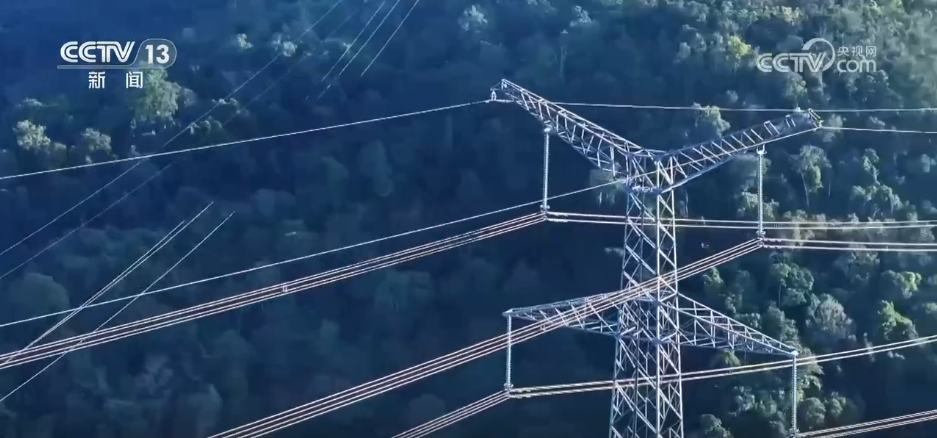
水电水利规划设计总院总经理 易跃春:目前,中国和东盟双方合作的电源电网项目数超190个,总投资额突破920亿美元。2021到 2025年,我国同东盟跨境电力贸易占我国进出口电量比例逐年攀升,成为我国跨境电力贸易的主要市场。 《2026—2030年东盟能源合作行动计划》提出,东盟在2030年可再生能源装备占比将提升到45%的目标,未来五年,东盟可再生 能源装机的增量空间为105GW。中国在可再生能源领域已积累多项先进成熟技术,未来新能源发展在东盟的市场空间进一步开拓,储 能、低碳电网建设等领域正成为中国和东盟区域的合作新热点。 央视网消息:记者11月4日从在福建福州举行的第七届东亚峰会清洁能源论坛获悉,中国与东盟电力联通更加紧密,已建成16条 跨国互联输电线路。 根据国际可再生能源署统计,2024年与2019年相比,东盟可再生能源累计装机容量增长超过1.5倍,能源转型和绿色低碳成为中国 与东盟双方共同发展主题。电力互联互通有序推进,中国与东盟已建成16条110千伏及以上互联输电线路,双方开展电力贸易跨境电 力互济超750亿千瓦时,其中绿电占比超过了90%。 国家能源局副局长 何洋:中方鼓励中资企业积极参与东盟地 ...
原油,偏弱格局难改
Bao Cheng Qi Huo· 2025-11-05 05:36
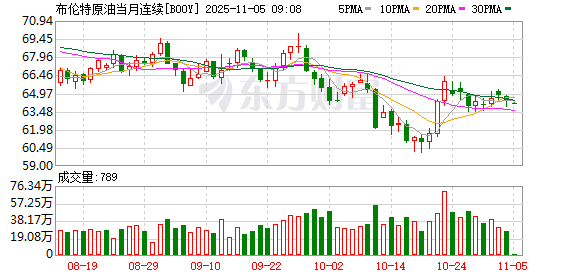
投资咨询业务资格:证监许可【2011】1778 号 运筹帷幄 决胜千里 原油 偏弱格局难改 宝城期货 陈栋 在当前全球经济弱复苏、能源转型加速与地缘格局深刻演变的背景下,全球原油市场正面临多重逻辑 交织下的结构性重构。受益于南美地缘风险加剧,本周以来,国内外原油期货溢价空间提升,从而推动油 价小幅反弹。不过面对供应过剩的担忧,原油缺乏持续上行动力。预计未来原油市场的主要逻辑仍是供需 宽松下的价格承压,地缘扰动虽存但难以扭转趋势。 宏观因子受压制 油价缺乏反弹动力 目前美国政府仍在持续停摆,政府部门缺失风险加剧了财政不确定性。虽然短期未直接冲击能源供应 链,但削弱了市场对美国经济韧性的信心,间接压制风险偏好。与此同时,美联储 9 月至 10 月连续降息 虽释放流动性,却未能有效传导至实体需求端,全球制造业 PMI 持续徘徊于荣枯线附近,令原油终端消费 预期持续下修。中美新一轮经贸谈判虽释放缓和信号,有助于稳定全球贸易预期,但在能源领域尚未达成 实质性合作框架,短期内难以扭转原油需求增长疲软的格局。宏观因子整体呈现"流动性宽松但需求疲弱" 的矛盾特征,难以单独驱动油价趋势性上行。 地缘扰动影响力下降 地缘政治方面 ...
共铸高质量 智赢高价值丨2025华为中国数字能源创新大会成功举办
Sou Hu Cai Jing· 2025-11-05 03:33
Core Insights - The 2025 Huawei China Digital Energy Innovation Conference was successfully held in Linyi, focusing on high-quality development and green transformation in the energy sector [1][19] Group 1: Industry Trends - The renewable energy industry is a key focus for strategic emerging industries and is seen as a battleground for the new technological revolution and industrial competition [3] - Shandong Province is a major energy production and consumption area, with a strong emphasis on renewable energy as a priority for its development [3] - The integration of digital technology and energy systems is crucial for enhancing the efficiency and sustainability of the energy sector [8][9] Group 2: Technological Innovations - Huawei's "low-carbon park + megawatt supercharging + green logistics" model is highlighted as a key to unlocking new applications of renewable energy [5] - The launch of the "Laiya Supercharging" station marks a significant advancement in the supercharging ecosystem, enhancing profitability and environmental friendliness [5] - Huawei's innovative solutions, such as the first "15-minute level" megawatt supercharging solution for electric heavy trucks, address rapid energy replenishment challenges [11] Group 3: Collaborative Efforts - Huawei collaborates with various enterprises, universities, and institutions in Shandong to create replicable and scalable outcomes in energy system construction and project implementation [9] - The partnership between Huawei and Guohua Investment in offshore photovoltaic projects serves as a global benchmark for large-scale development in this sector [13] - The establishment of a comprehensive green smart charging network in Linyi, supported by Huawei, aims to enhance logistics efficiency and sustainability [16] Group 4: Achievements and Future Goals - As of September this year, Shandong Province has achieved a renewable energy installed capacity of 124 million kilowatts, accounting for 50% of its total capacity, with solar power leading nationally for eight consecutive years [6] - The conference showcased the "Ten-Year High-Quality Power Station" and "Huawei Shandong Digital Energy Benchmark Points," highlighting successful collaborations and innovations in energy efficiency and sustainability [18] - By 2025, Linyi plans to establish 36 "Laiya Supercharging" stations, contributing to a comprehensive charging infrastructure and supporting the city's green logistics transformation [24]

招商证券:核聚变产业化提速 维持行业投资评级“推荐”
智通财经网· 2025-11-05 02:06
Core Insights - The report from China Merchants Securities highlights the accelerated industrialization process of controllable nuclear fusion, transitioning from experimental validation to engineering demonstration, with a focus on material performance breakthroughs as a core bottleneck [1][2] - The overall domestic production rate of key nuclear fusion equipment exceeds 96%, with significant advancements in core components such as tungsten-based divertors and high-temperature superconducting materials [1] - The industry is entering a new phase characterized by "multiple routes racing + capital resonance," with a recommendation to focus on leading companies and suppliers of domestically replaced materials and core components [1] Group 1: Industrialization Progress - The urgency of global energy transition is propelling controllable nuclear fusion as a clean energy solution, moving towards engineering and commercialization [1] - The magnetic confinement tokamak route currently dominates the industrialization process, while inertial confinement and hybrid routes are also developing in parallel [1] - China is leveraging major scientific devices like EAST and BEST to achieve breakthroughs in key areas, with the BEST device expected to demonstrate fusion energy generation by 2027 [1] Group 2: Material Innovation - Material innovation is identified as the core bottleneck and breakthrough point for current industrialization, with extreme operational environments demanding near-limit performance from materials [2] - Key materials include high melting point and radiation-resistant materials for first walls/divertors, and the transition from low-temperature to high-temperature superconductors to enhance magnetic field strength [2] - Domestic companies have made significant progress in areas such as tungsten-copper divertors and superconducting wires, but challenges remain in material reliability verification and cost control [2] Group 3: Market Opportunities - The energy equipment sector is seeing significant growth, with leading enterprises establishing clear paths for core component R&D and industrialization [3] - Companies involved in superconductors, first walls, and divertor materials are expected to benefit significantly from this growth [3] - Military enterprises are extending their high-precision manufacturing capabilities into civilian sectors, with companies like Sui Chuang Electronics and Wangzi New Materials gaining early advantages in supporting roles [3] Group 4: Recommended Companies - Companies to focus on include Guoguang Electric, Hezhu Intelligent, Lianchuang Optoelectronics, Western Superconducting, Sui Chuang Electronics, Wangzi New Materials, Parker New Materials, Antai Technology, Yongding Co., Xuguang Electronics, Sui Rui New Materials, Zhongzhou Special Materials, and Jiuli Special Materials [4]

供应宽松格局下 原油偏弱格局难改
Qi Huo Ri Bao· 2025-11-05 01:17
在当前全球经济弱复苏、能源转型加速与地缘格局深刻演变的背景下,全球原油市场正面临结构性重 构。受益于南美地缘风险加剧,本周以来,国内外原油期货溢价水平提升,进而推动油价小幅反弹。不 过,面对供应过剩担忧,原油缺乏持续上行动力。预计未来供应宽松格局下,原油市场仍将继续承压, 地缘扰动难以扭转其弱势趋势。 图为美国原油产量走势(单位:千桶/日) 产业基本面主导 "欧佩克+"产油国自2025年3月以来已连续8次增产,10月会议再度决定上调产量13.7万桶/日,全年增 量预计达133万桶/日,主要来自沙特、俄罗斯、哈萨克斯坦和阿联酋。更关键的是,非OPEC国家供 应增长迅猛,美国、加拿大、巴西与圭亚那四国合计增产约110万桶/日,远超全球约88万桶/日的需 求增量。尤其是美国周度产量攀升至1360万桶/日,创历史新高。 与此同时,需求端季节性转弱特征明显。北半球进入秋冬季后,交通用油需求自夏季峰值回落,尽管取 暖油和船用燃料油提供一定支撑,但难以抵消整体消费下滑。国际能源署(IEA)已将2025年全球石油 需求增长预测从110万桶/日大幅下调至70万桶/日,凸显中长期需求前景的不确定性。新能源替代加 速、电动车渗透率 ...
中国与东盟:16条跨国输电线路,超750亿千瓦时!
中国能源报· 2025-11-05 01:17
Core Viewpoint - The cooperation between China and ASEAN in the energy sector is strengthening, with significant investments and projects aimed at enhancing renewable energy and cross-border electricity trade [1][3][5]. Group 1: Cross-Border Electricity Trade - China and ASEAN have established 16 cross-border interconnected transmission lines, facilitating over 75 billion kilowatt-hours of electricity trade, with more than 90% being green electricity [1]. - The proportion of cross-border electricity trade between China and ASEAN is steadily increasing, becoming a major market for China's electricity exports [3]. Group 2: Renewable Energy Development - The cumulative installed capacity of renewable energy in ASEAN is expected to grow by over 1.5 times from 2019 to 2024, with a target of 45% renewable energy share by 2030 [1][5]. - The incremental capacity for renewable energy installation in ASEAN over the next five years is projected to be 105 GW, indicating significant growth potential [5]. Group 3: Investment and Project Collaboration - There are over 190 cooperative projects between China and ASEAN in the power and grid sector, with a total investment exceeding 92 billion USD [3]. - China encourages its enterprises to actively participate in clean energy construction in the ASEAN region, focusing on areas such as new energy development, energy storage technology, and smart grid [8]. Group 4: Future Cooperation Areas - Future cooperation between China and ASEAN is expected to expand in areas such as energy storage and low-carbon grid construction, which are becoming new hotspots for collaboration [6].