
自动驾驶

Search documents
自动驾驶地图标准体系加快构建
Jing Ji Ri Bao· 2026-01-04 21:47
Group 1 - The Ministry of Natural Resources has initiated pilot projects in six cities to test high-precision maps for intelligent connected vehicles, aiming to establish a standard system for autonomous driving maps [1] - Currently, L3-level and below autonomous driving map products are widely used in major cities, with some pilot cities supporting L3-level and above products, indicating a deepening application of maps in autonomous driving scenarios [1] - A comprehensive geographic base map has been created, integrating 24 types of natural resource information, marking a transition from a traditional geographic information service platform to a comprehensive natural resource service platform [1] Group 2 - The geographic information industry in China is experiencing robust growth, with an expected total output value exceeding 900 billion yuan by the end of the 14th Five-Year Plan, representing over 30% growth compared to the 13th Five-Year Plan [2] - A preliminary establishment of a three-dimensional real-world model supports the construction of a digital China, integrating technology and data from design to application [2] - The three-dimensional real-world model serves as a fundamental element for digital economy and smart cities, with nationwide coverage of terrain-level mapping and urban three-dimensional digital mapping [3] Group 3 - A national satellite navigation positioning reference station network has been established to enhance BeiDou navigation services, with a new management regulation set to take effect from January 1, 2026 [3] - The regulation aims to standardize the management of reference stations, ensuring reasonable layout and avoiding redundancy in construction [3] - The BeiDou application and reference service centers will provide high-precision positioning services for various sectors, with daily professional services exceeding ten million times [3]
特斯拉跌落电车销冠王座
Bei Jing Shang Bao· 2026-01-04 15:44
Core Viewpoint - Tesla has lost its title as the world's top electric vehicle seller for the first time, being surpassed by Chinese manufacturer BYD in 2025, with Tesla's global deliveries dropping to 1.636 million units, a year-on-year decline of approximately 8.6% [1][2]. Group 1: Tesla's Performance - In Q4 2025, Tesla produced over 434,000 vehicles and delivered over 418,000, with a significant drop in annual deliveries compared to 2024 [1]. - Tesla's Q4 2025 deliveries decreased by about 16% compared to Q4 2024, and annual deliveries fell from 1.79 million in 2024 to 1.636 million in 2025 [1][2]. - Analysts estimate that Tesla's Q4 2025 delivery volume will be around 426,000 units [1]. Group 2: Market Dynamics - The decline in Tesla's Q4 sales is attributed to the U.S. federal government's early termination of electric vehicle incentives, which prompted a rush in sales during Q3 [2]. - In Europe, Tesla's registrations fell by 39% in the first 11 months of 2025, while BYD's registrations grew by 240% [2]. - The overall electric vehicle market in Europe is growing, accounting for approximately 16% of all new car sales in 2025 [2]. Group 3: BYD's Growth - BYD's pure electric vehicle sales reached nearly 2.26 million units in 2025, marking a nearly 28% increase from 2024 and surpassing Tesla for the first time [3]. - BYD is expanding its presence in overseas markets, including Europe, Latin America, and Southeast Asia, with new production facilities in Brazil and Thailand [3]. Group 4: Tesla's Future Outlook - Despite disappointing sales figures, Tesla is focusing on CEO Elon Musk's vision of "sustainable abundance," which includes future projects like robot taxis and humanoid robots [3]. - Tesla's stock price increased by 40% in Q3 2025 and reached an all-time high in Q4, with a market capitalization exceeding $1.6 trillion [4]. - Analysts suggest that Tesla's current valuation is heavily based on its potential in autonomous driving and AI technologies, which are estimated to account for over 70% of the company's total value [4]. Group 5: Energy Storage Business - Tesla's energy storage business continues to grow rapidly, with 14.2 GWh of battery storage products deployed in Q4 2025, a significant increase of 13.6% from 12.5 GWh in 2024 [5].


卫星互联网蓬勃发展-化工机会何在
2026-01-04 15:35
Summary of Key Points from the Conference Call Industry Overview - The conference call discusses the burgeoning development of satellite internet and its implications for the chemical materials industry, particularly in the context of low Earth orbit (LEO) satellite communications [2][3][4]. Core Insights and Arguments - **Importance of Satellite Internet**: Satellite internet is expected to play a crucial role in future communications, providing extensive coverage and flexibility, especially in disaster recovery scenarios. It serves as a vital supplement to traditional 5G and 6G ground stations [3][4]. - **Strategic Significance**: The strategic importance of LEO satellite communications is highlighted, particularly in emergency communications and national security, as evidenced during events like the Russia-Ukraine conflict [4]. - **Market Growth Potential**: The deployment of a large number of LEO satellites is projected to significantly enhance broadband signal speeds, which is essential for the development of 6G networks, smart cities, and autonomous driving applications [4][9]. - **Global Satellite Launch Plans**: By the end of 2025, over 12,000 LEO satellites are expected to be in orbit globally, with SpaceX being a major contributor, having launched over 9,000 satellites. Other countries are also actively pursuing satellite launch plans [5][9]. Material Demand in Satellite and Rocket Manufacturing - **Chemical Material Requirements**: The manufacturing of satellites and rockets necessitates a variety of chemical materials, including structural materials (carbon fiber composites, titanium alloys, high-temperature alloys), functional materials (thermal insulation composites), and power materials (solar cells) [5][6]. - **Ceramic Shells**: Ceramic shells are critical components in satellite TR (transmit-receive) modules, providing essential signal processing functions. The cost of these components can be substantial, with TR components potentially costing millions [7][8]. Competitive Landscape - **Key Players in Ceramic Shells**: National Materials Company is identified as a leading supplier in the ceramic shell market, with significant growth potential if it maintains a market share of over 50% amid increasing satellite launches [8][9]. - **Other Notable Companies**: Dynamic Technology holds over 50% market share in dual-chip technology, while Longbai Group is the largest producer of sponge titanium in China. Zhenhua Co. is recognized as a key supplier of high-temperature alloys for rocket launches [8][9]. Future Trends - **Material Demand Surge**: The upcoming years will see a surge in demand for various materials, including carbon fiber and ceramic tubes, driven by extensive satellite launch initiatives like Starlink and domestic projects such as GW and G60 [9]. - **Market Growth Certainty**: The overall market for chemical and material industries is expected to experience significant growth, with core suppliers like National Materials poised to benefit substantially from this trend [9].
每经品牌100指数2025年涨逾15%
Sou Hu Cai Jing· 2026-01-04 14:22
Group 1 - The A-share market showed a significant recovery, with the Shanghai Composite Index ending 2025 with an "11 consecutive days of gains" and major indices closing positively for 2026 [1][3] - The Every Day Brand 100 Index maintained an upward trend in 2025, achieving an annual increase of 15.21% and closing at 1145.49 points [1][2] - Factors such as the "14th Five-Year Plan" industrial guidance, overseas liquidity easing, and domestic policy support are expected to continue providing support for the A-share market in 2026 [1][3] Group 2 - In the last week of December 2025, the A-share market experienced mixed performance, with the Shanghai Index rising by 0.13% while the Shenzhen Component Index fell by 0.58% [2] - Baidu Group-SW and Jiangxi Copper saw weekly gains exceeding 10%, with Jiangxi Copper's price increasing over 30% in two weeks [2] - Tencent Holdings and China Petroleum saw market capitalization growth exceeding 100 billion yuan, reaching 176.12 billion yuan and 102.49 billion yuan respectively [2] Group 3 - The Federal Reserve's interest rate cut in December 2025 was expected, but internal divisions within the FOMC may slow down future rate cuts in Q1 2026 [3] - Domestic economic indicators showed resilience in exports, while consumer and investment metrics remained weak; however, the manufacturing PMI returned to expansion territory [3] - A-shares trading volume exceeded 2 trillion yuan in late December 2025, with margin financing balances reaching a historical high, indicating improved market sentiment [3] Group 4 - Baidu Group's stock performance was notable, with a single-day increase of 9.35% on January 2, 2026, and a weekly increase of 20.33% [4] - Baidu's Kunlun Chip, focused on AI chip development, is set to apply for listing on the Hong Kong Stock Exchange, which could enhance Baidu's asset value if successful [5] - The Kunlun Chip is expected to support large-scale AI model training and is a core component of Baidu's AI infrastructure [4][5] Group 5 - Baidu's AI cloud revenue and smart driving business are experiencing strong growth, with AI cloud revenue reaching 6.1% market share in China [6] - In Q3 2025, Baidu's AI cloud revenue was 6.2 billion yuan, a 21% year-on-year increase, with AI infrastructure revenue growing by 33% [6] - Baidu's capital expenditure reached 10.1 billion yuan in the first three quarters of 2025, indicating ongoing investment in network infrastructure and cloud computing [6] Group 6 - Baidu's comprehensive technology system in autonomous driving has matured, leading to positive profitability per vehicle and significant order growth for its Robotaxi service [7] - The company is expanding its presence in high-value overseas markets, with a 200% year-on-year increase in orders [7] - Analysts are optimistic about Baidu's strategy in the next-generation "mobile living space" due to its advantages in cost and infrastructure compared to overseas competitors [7]
茅台,再入股浙江芯片厂!
Xin Lang Cai Jing· 2026-01-04 12:26
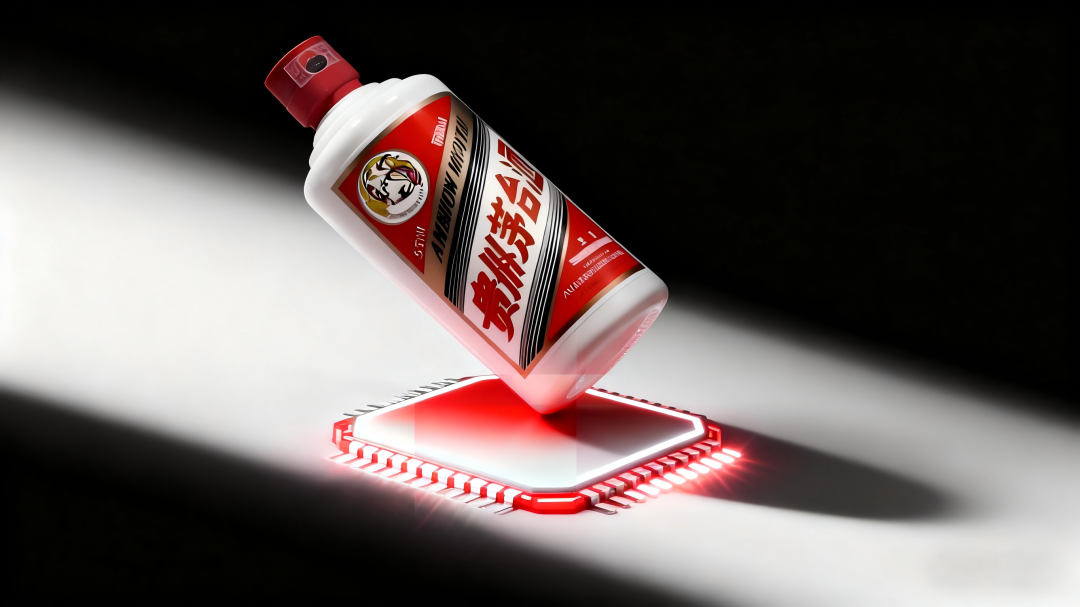
酒界巨头,继续来芯片界"凑热闹"...... 全文字数:1221字,预计阅读时间:4分钟 题图:AI生成 维科网电子1月4日消息,据国家企业信用信息公示系统显示,浙江老鹰半导体技术有限公司于2025年12月31日发生工商变更,新增多家战略股东。 本次入股阵容十分豪华,包括茅台集团旗下茅台金石(贵州)产业发展基金合伙企业(有限合伙)、上海汽车集团旗下上海上汽创远创业投资合伙企业 (有限合伙),以及深创投中小企业发展基金(苏州)合伙企业(有限合伙)等。 此次增资完成后,老鹰半导体的注册资本由约4184万元人民币增加至约5522万元人民币。 | 房 | 变更事项 | 变更前内容 | 变更后内容 | 变更日期 | | --- | --- | --- | --- | --- | | | 注册资本变更(注册资金、资金数额 | 4184.1225 | 5521.647 | 2025年12月31日 | | | 等变更) | | | | | 2 | 草程备案 | | | 2025年12月31日 | | 3 | | 高级管理人员备案(董事、监事、经 姓名:CHEN HAO,证件号码:A*******,职 姓名:CHEN HAO, ...

千方科技-布局干线物流自动驾驶
2026-01-04 11:34
Summary of Conference Call Notes on Qianfang Technology Company Overview - **Company Name**: Qianfang Technology Co., Ltd. (千方科技) - **Industry**: Smart Transportation and Artificial Intelligence IoT - **Founded**: 2000 - **Key Developments**: Acquired a major security camera company in 2017 and formed a strategic partnership with Alibaba in 2018 for smart transportation solutions [10][21] Key Points and Arguments Investment in Autonomous Driving - **Investment Plan**: Qianfang Technology plans to invest approximately 1.1 billion RMB in developing an autonomous driving logistics project [1][2] - **Focus Areas**: The project will focus on key technologies such as AI models, 5G, vehicle-road collaboration, and cloud computing in trunk transportation scenarios [2] - **Expected Returns**: The project has a projected internal rate of return (IRR) of 13% post-tax [2] Financial Performance and Shareholder Returns - **Dividend Announcement**: The board approved a mid-term dividend of 0.02 RMB per share, reflecting a commitment to shareholder returns [1][3] - **Cash Flow**: The company has shown significantly higher operating cash flow compared to net profit over the past three years, indicating strong cash generation capabilities [3] - **Future Profitability**: The shift towards autonomous driving logistics and SaaS software services is expected to enhance profitability and cash flow quality [3] Stock Rating and Price Target - **Target Price**: The 12-month target price is set at 13.20 RMB based on a discounted cash flow (DCF) analysis with a WACC of 8.7% [4][21] - **Current Stock Price**: As of December 26, 2025, the stock price was 11.95 RMB, indicating a potential upside of 10.5% [5][9] Market Position and Competitive Advantage - **Technological Edge**: Qianfang Technology possesses unique data on heavy cargo positioning and national highway network data, enhancing its competitive position in the autonomous logistics sector [2] - **Strategic Shift**: The focus on autonomous driving in trunk logistics is seen as beneficial for future profitability and aligns with China's strategic development in vehicle-road collaboration [1][2] Additional Important Information - **Market Capitalization**: Approximately 18.9 billion RMB (2.69 billion USD) [5] - **Stock Performance**: The stock has fluctuated between 7.98 RMB and 12.01 RMB over the past 52 weeks [5] - **Analyst Ratings**: The stock is rated as "Buy" with a forecasted return exceeding market expectations [17] Risks and Challenges - **Potential Risks**: Risks include lower-than-expected government investment in smart transportation, slower development of vehicle-road collaboration, increased competition, and challenges in technology and supply chain affecting product margins [11]

明日主题前瞻一年一度的开年科技盛宴来临,CES展会已经成为前沿AI硬件的主要秀场
Xin Lang Cai Jing· 2026-01-04 10:44
Group 1: AI Hardware and Applications - CES has become a major showcase for cutting-edge AI hardware, with a focus on consumer-grade AI expected to accelerate by 2026, featuring AI-enabled robots and wearable devices [2] - Companies like Zhaowei and Megmeet are showcasing advanced AI products at CES, including a new dexterous hand with 20 degrees of freedom and high-performance AI modules for robotics [2] - The AI medical sector is entering a critical commercialization phase, supported by new policies from Beijing aimed at fostering innovation and product evaluation in AI healthcare [7][8] Group 2: Low-altitude Economy - The low-altitude economy is at a pivotal growth stage, with approximately 30 provinces incorporating it into their 14th Five-Year Plans, indicating strong governmental support [3] - Major eVTOL manufacturers are seeing orders materialize, and the industry is expected to grow significantly over the next 3-5 years as regulatory frameworks and infrastructure improve [3][4] Group 3: Autonomous Driving - Significant advancements in autonomous driving have been reported, with China officially entering the mass production phase for L3 vehicles, marking a regulatory breakthrough [6] - Companies like Haon Automotive are actively involved in the development of intelligent driving systems, collaborating with leading domestic automakers [6] Group 4: AI Model Development - The AI application landscape is shifting towards performance realization and edge computing, with notable advancements in multimodal models like Google's Gemini-3-pro and domestic models like Doubao [9] - The investment logic in the AI industry is transitioning from a focus on computational power to application value, highlighting the importance of software and high-growth edge hardware companies [9]
特斯拉首跨全美,Grok灵魂注入,马斯克“三位一体”帝国浮现
3 6 Ke· 2026-01-04 10:22
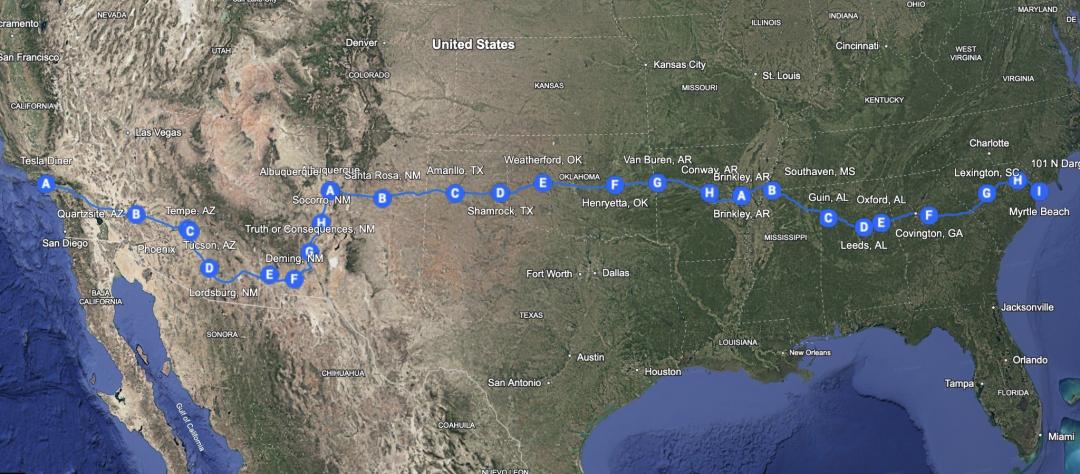
Core Insights - Tesla is revolutionizing the automotive industry with its Full Self-Driving (FSD) technology, marking a significant shift towards autonomous vehicles [1][8] - The successful completion of a 2,732.4-mile journey across the United States without human intervention demonstrates the capabilities of FSD and its underlying AI, Grok [3][5] - Grok is positioned as a transformative AI component that enhances the driving experience by integrating with Tesla's FSD, providing a more intuitive and interactive user experience [8][12] Group 1: FSD Achievements - Tesla's FSD v14.2.1.25 enabled a verified "0 takeover" journey, showcasing the technology's reliability and effectiveness [3] - The journey took 2 days and 20 hours, with no human intervention required, proving FSD's capability to perform complex driving tasks autonomously [5] - This achievement is seen as a validation of FSD passing the "physical Turing test," indicating a significant milestone in AI development [5] Group 2: Grok's Role - Grok is described as the "soul" of Tesla vehicles, providing advanced cognitive capabilities that complement FSD's physical driving functions [8][12] - The AI system Grok is set to be pre-installed in all new Tesla vehicles starting from July 2025, indicating a strategic move towards integrating AI deeply into the driving experience [14] - Grok enhances user interaction by allowing drivers to communicate preferences and receive personalized route suggestions, thus redefining the driving experience [19] Group 3: Competitive Advantage - Tesla's FSD technology is more cost-effective compared to competitors like Waymo, with hardware costs estimated at around $1,000 versus tens of thousands for traditional systems [37] - The FSD system's ability to operate without high-definition maps allows for rapid deployment across various regions, giving Tesla a significant edge in scalability [38] - The upcoming Cybercab model, expected to begin production in late 2025, aims to leverage FSD's capabilities for a new business model in autonomous ride-hailing [39][41] Group 4: Technological Infrastructure - Tesla's Colossus AI training system is one of the most powerful globally, with a goal of reaching 1 million GPUs, which will enhance the training and efficiency of FSD and Grok [45][49] - The integration of xAI and Tesla's AI resources creates a robust ecosystem that traditional automakers struggle to replicate, particularly in terms of data processing and algorithm development [50] - The combination of Grok, FSD, and Optimus positions Tesla uniquely in the market, potentially reshaping how AI interacts with physical environments [25][36]
黑芝麻智能:经过近一年澄清,华山A2000通过美国政府审查
Guan Cha Zhe Wang· 2026-01-04 09:30
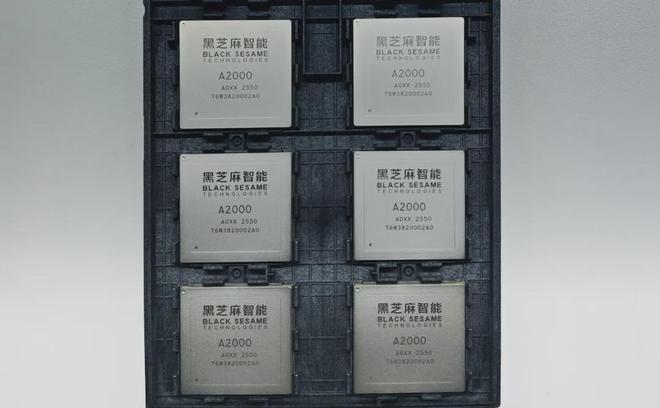
Core Insights - Black Sesame Intelligence has received approval from the U.S. Department of Commerce and the Department of Defense for its high-performance intelligent driving chip, the Huashan A2000, marking its entry into large-scale application [1][3] - The A2000 chip, based on 7nm technology, integrates high-performance CPU, GPU, NPU, and various dedicated computing units, supporting multiple precision calculations and a full AI toolchain for development [3] - The company reported a revenue of 252.88 million RMB in the first half of 2025, a 40.4% increase year-on-year, but incurred a net loss of 762.36 million RMB [4] Company Developments - Black Sesame Intelligence launched the Huashan A2000 family in September 2024, including A2000 Lite, A2000, and A2000 Pro, targeting different levels of autonomous driving needs, with maximum computing power four times that of mainstream flagship chips [3] - The company completed a strategic acquisition of Yizhi Electronics, gaining a 60% stake, which is seen as a key move to expand its edge intelligence solutions and explore new growth paths [4] - Market expectations suggest that Black Sesame Intelligence may achieve over 60% revenue growth this year [5]

黑芝麻智能:华山A2000通过美国政府审查,获准在全球应用
Guan Cha Zhe Wang· 2026-01-04 09:26
Core Viewpoint - Black Sesame Intelligence has successfully passed U.S. government reviews for its high-performance intelligent driving chip, the Huashan A2000, allowing for global sales and marking its entry into large-scale application [1][3]. Group 1: Product Development and Approval - The Huashan A2000 chip, based on 7nm technology, integrates high-performance CPU, GPU, NPU, and various dedicated computing units, supporting multiple precision calculations [3]. - The chip's approval followed nearly a year of technical clarifications and communications, making Black Sesame the only domestic company to achieve such approval [3]. - The A2000 family, including A2000 Lite, A2000, and A2000 Pro, is set to launch in September 2024, with the maximum computing power being four times that of mainstream flagship chips at the time [3]. Group 2: Financial Performance - In the first half of the year, Black Sesame reported revenue of 253 million RMB, a year-on-year increase of 40.4%, but recorded a net loss of 762 million RMB, indicating a shift from profit to loss [3][4]. - The gross profit margin decreased to 24.8% in 2025 from 50.0% in 2024, reflecting challenges in profitability [4]. Group 3: Strategic Initiatives - Black Sesame has made significant moves, including the launch of the SesameX multidimensional intelligent computing platform in November, entering the humanoid robot sector [4]. - The company announced a strategic acquisition of a controlling stake in Yizhi Electronics, aiming to expand its edge intelligent solutions and explore new growth paths [4]. - Market expectations suggest that Black Sesame is likely to achieve over 60% revenue growth this year [5].
