物联网

Search documents
还没用上Wi-Fi 7,Wi-Fi 8就要来了,这将重塑物联网关键场景
3 6 Ke· 2025-10-17 12:13
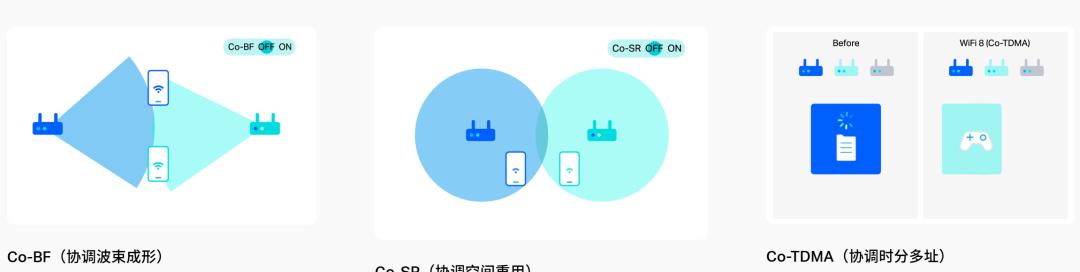
Core Insights - The global Wi-Fi 7 product penetration rate is projected to reach 6.4% in 2024, increasing to 15% by 2025 as more products receive Wi-Fi 7 certification, indicating that Wi-Fi 7 is just beginning to enter the mainstream market while Wi-Fi 8 is already in development [1][2] - TP-Link has successfully demonstrated the connectivity of the next-generation WLAN technology, Wi-Fi 8, marking a significant milestone in its development [1][2] Industry Developments - Major companies such as Broadcom, Qualcomm, Intel, MediaTek, and Marvell are actively preparing for Wi-Fi 8, with Broadcom recently announcing the industry's first Wi-Fi 8 chip solutions [2] - Wi-Fi 8, also known as IEEE 802.11bn, is still in the development phase, focusing on higher reliability, coordination, and resource efficiency rather than just speed [2][3] Technical Features - Wi-Fi 8 aims to provide ultra-high reliability, reducing jitter and packet loss rates by optimizing scheduling mechanisms and enhancing redundancy [5] - The new standard will facilitate seamless connectivity in high-density environments through multiple access point coordination, improving load balancing and reducing signal conflicts [6][8] - Advanced power management features will extend the battery life of IoT devices, allowing them to remain in standby mode for longer periods [9] - Enhanced spectrum utilization will be achieved through predictive traffic scheduling and adaptive channel allocation, improving overall network performance [10] - Wi-Fi 8 will integrate mmWave support, enhancing capabilities for high-density urban areas and fixed wireless access scenarios [11] - The standard will also focus on reducing latency, which is crucial for real-time applications such as AR and VR [12] - Improved coexistence protocols will allow multiple wireless communication systems to operate efficiently without interference [13] - Enhanced security features will be implemented to protect against both traditional and emerging threats [14] Market Implications - Wi-Fi 8 is expected to be officially launched in 2028, with the standard's certification and product preparation anticipated to begin in 2027, providing a clear development roadmap for manufacturers [16][18] - Until Wi-Fi 8 is fully adopted, Wi-Fi 7 and 6E will remain the mainstream technologies, with Wi-Fi 8 gradually being introduced in critical IoT applications [19]


iPhone Air开售,首批5分钟售罄!仅A3518机型可在中国大陆激活,eSIM可沿用实体卡的号
Mei Ri Jing Ji Xin Wen· 2025-10-17 12:06
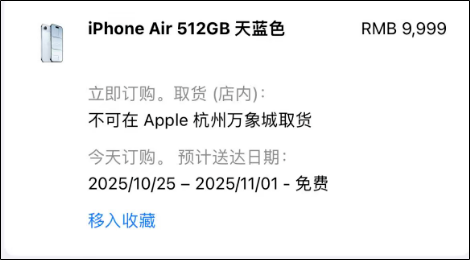
Core Insights - The iPhone Air was officially available for pre-order on October 17, with initial stock selling out within 5 minutes on Apple's website, leading to delivery delays of 1 to 2 weeks [1][8] - The iPhone Air is available in three storage options: 256GB priced at 7999 yuan, 512GB at 9999 yuan, and 1TB at 11999 yuan, with installment payment options available [6][8] - The launch of the iPhone Air coincides with the recent approval of eSIM services by major Chinese telecom operators, marking a significant shift in mobile connectivity [8][20] Group 1: Product Availability and Sales - The iPhone Air is currently out of stock on various platforms, including JD.com and Tmall, with only limited options available for pre-order [4][6] - The demand for the iPhone Air appears lower than that of the iPhone 16 Plus during its launch, but future production is expected to be significantly higher, potentially tripling the output by Q3 2025 [11] Group 2: eSIM Technology and Market Impact - eSIM technology, previously used mainly in wearables, is now being introduced for smartphones, allowing users to activate services without a physical SIM card [11][27] - Major Chinese telecom operators, including China Mobile, China Unicom, and China Telecom, have begun offering eSIM services, although online activation is currently not available [20][23] - The transition to eSIM is seen as a critical test for user experience, including issues related to service migration and pricing options [11]
从图像采集到视联网:AI如何重塑物联网摄像头的万亿级产业价值链
3 6 Ke· 2025-10-17 11:58
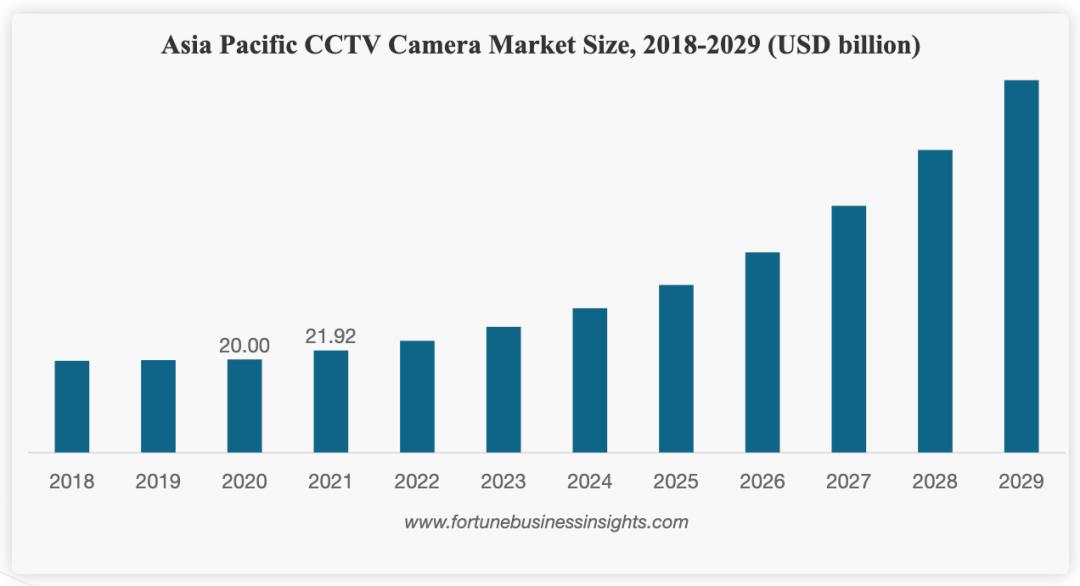
Core Insights - The article discusses the transformation of cameras from passive recording devices to intelligent nodes capable of perception, analysis, and decision-making, marking a significant industrial revolution in the video surveillance market [1][25]. - The global video surveillance market is projected to grow at a compound annual growth rate (CAGR) of 16.8%, reaching $100.2 billion by 2029, with AI-driven intelligent video analytics growing at over 30% annually [1]. Technological Evolution - The evolution of camera technology is categorized into six generations, transitioning from passive recording to intelligent systems capable of real-time analysis and decision-making [6][7][8]. - The first generation involved traditional CCTV systems that required manual playback, while the second generation introduced IP cameras for remote monitoring [6]. - The third generation began with basic intelligent detection, leading to the fourth generation's edge intelligence, where cameras could perform complex functions like facial recognition locally [7][8]. - The fifth generation focuses on multi-modal integration, combining various sensor data to enhance cognitive capabilities, while the sixth generation aims for fully autonomous systems with predictive abilities [8]. Architectural Innovation - The shift from isolated systems to interconnected ecosystems is highlighted, with a hybrid edge-cloud architecture reducing latency to under 500 milliseconds while maintaining 99.8% system availability [11]. - Modern systems utilize multi-modal data fusion, integrating visual, auditory, and environmental data to improve accuracy and reduce false alarms by over 80% [12]. - The introduction of microservices architecture enhances flexibility and scalability, allowing independent deployment and upgrades of system components [13]. Value Restructuring - The value of cameras has evolved from mere surveillance tools to essential components driving digital transformation across various sectors, including public safety, manufacturing, retail, and logistics [18][19][20]. - Intelligent visual systems can now predict and prevent incidents, significantly improving public safety management and operational efficiency in industries [18][19]. - Video data is recognized as a valuable digital asset, enabling insights for urban planning, risk assessment, and business strategy [20]. Future Outlook - The integration of smart visual systems with emerging technologies like the metaverse, 6G, and quantum computing is expected to unlock new possibilities for real-time monitoring and decision-making [21][22]. - The development of brain-computer interfaces and general artificial intelligence (AGI) will further enhance human interaction with intelligent visual systems, leading to unprecedented capabilities [23][24]. - The ultimate goal is to establish a digital civilization infrastructure, positioning intelligent visual systems as the neural network connecting the physical and digital worlds [24][25].
华显光电(00334.HK)前三季度营业额增至54.07亿元 手机类模组产品销量同比增长91.8%
Ge Long Hui· 2025-10-17 09:46
Core Viewpoint - 华显光电 reported significant growth in sales and revenue for the first nine months of 2025, despite facing challenges from global economic uncertainties and a slowdown in consumer demand for smartphones [1][2] Group 1: Sales Performance - In Q3 2025, the company's sales volume increased by 39.6% quarter-on-quarter, reaching 28.5 million units [1] - For the nine months ending September 30, 2025, total sales volume reached 62.2 million units, representing an 84.3% year-on-year increase [1] - Sales of mobile module products increased by 91.8% year-on-year to 47.3 million units, generating revenue of RMB 2,275.1 million [1] - Sales of tablet modules surged by 108.6% year-on-year to 7.4 million units, with related revenue of RMB 1,338.4 million [1] - Commercial display product sales grew by 488.9% year-on-year to 3.7 million units, contributing RMB 1,219.9 million in revenue [1] - The average selling price of products decreased by 4.2% year-on-year to RMB 89.3 [1] Group 2: Market Outlook - The global economic uncertainty and increased trade barriers are impacting the overall electronic consumer goods industry [1] - Despite a conservative consumer attitude, IDC forecasts a seasonal demand in Q4 2025, driven by hardware and software upgrades, leading to continued growth in the global smartphone market [2] - The company plans to expand its product range and leverage its partnership with TCL Huaxing Optoelectronics to maintain stable order growth [2] - The company remains cautiously optimistic about the long-term prospects of its display module business, aiming to enhance collaboration with leading brand clients through competitive customized products and solutions [2] - The company intends to capitalize on opportunities in the mid-size display market, smart home, and IoT sectors while maintaining cost control to drive sales growth and improve profitability [2]
2025年全球电感器件行业发展现状及趋势概况 全球电感器件行业市场规模约为740亿元【组图】
Qian Zhan Wang· 2025-10-17 08:13
Core Insights - The global inductor market is projected to reach approximately 74 billion yuan in 2024, recovering from a decline in 2020 due to the pandemic and demand fluctuations in sectors like mobile phones and automobiles [9][10]. Industry Development History - The development of the global inductor industry can be divided into four stages: technological accumulation, rapid development in Japan, expansion driven by the electronics industry, and new growth opportunities brought by the Internet of Things (IoT) [1]. - The earliest inductors were discovered in the 19th century, with significant contributions from figures like M. Faraday and J. Henry [1]. - Japan emerged as a dominant player in the inductor market during the 20th century, supported by domestic demand and government backing [1]. Market Supply and Key Players - The global inductor market is primarily dominated by Japanese manufacturers, with significant contributions from China, the United States, and Germany [4]. - Major companies in the inductor industry include TDK Corporation, Murata Manufacturing, and Sunlord Electronics, each providing a range of products for various applications such as automotive, medical devices, and consumer electronics [6]. Market Trends and Future Outlook - The inductor industry is expected to shift towards mainland China, focus on high-frequency development, and cater to specific industry needs [11].

神州数码跌4.35%,成交额6.70亿元,近3日主力净流入-1.60亿
Xin Lang Cai Jing· 2025-10-17 07:09
Core Viewpoint - The company, Digital China, experienced a decline in stock price and trading volume, indicating potential investor concerns amidst its recent business developments and market performance [1][4]. Company Developments - Digital China launched the "Lingmi" brand AI PC in collaboration with JD.com, set to be available for sale soon [2]. - The company was recognized in IDC's "2024 Q2 Generative AI Ecosystem Map" and received multiple awards for its AI platform innovations [2]. - Digital China is a distribution partner for major tech companies like Intel and NVIDIA, enhancing its market position [2][3]. - The company holds the highest partnership levels with AWS, Azure, and Alibaba Cloud, and has a diverse cloud resource pool with over 120 SaaS applications [3]. Financial Performance - As of September 30, Digital China reported a revenue of 71.586 billion yuan for the first half of 2025, a year-on-year increase of 14.42%, while net profit decreased by 16.29% to 426 million yuan [8]. - The company has distributed a total of 1.388 billion yuan in dividends since its A-share listing, with 771 million yuan in the last three years [9]. Shareholder Information - As of September 30, the number of shareholders decreased by 2.37% to 164,700, while the average circulating shares per person increased by 2.43% to 3,652 shares [8]. - Notable changes in institutional holdings include an increase in shares held by the Southern CSI 500 ETF and a decrease by Hong Kong Central Clearing Limited [9].

上海贝岭跌2.00%,成交额3.51亿元,主力资金净流出3811.73万元
Xin Lang Cai Jing· 2025-10-17 05:39
Core Viewpoint - Shanghai Beiling's stock has experienced a decline of 13.29% year-to-date, with a recent drop of 2.00% on October 17, 2023, indicating potential challenges in market performance [1] Company Overview - Shanghai Beiling, established on September 10, 1988, and listed on September 24, 1998, specializes in integrated circuit chip design and product application development [1] - The company's revenue composition includes 98.50% from integrated circuit product sales, 1.19% from leasing, 0.16% from technology development services, and 0.15% from other business contracts [1] - The company operates within the semiconductor industry, focusing on analog chip design and is involved in sectors such as SOC chips, automotive chips, biometrics, and IoT [1] Financial Performance - For the first half of 2025, Shanghai Beiling reported a revenue of 1.347 billion yuan, reflecting a year-on-year growth of 21.27%, while the net profit attributable to shareholders was 134 million yuan, up 2.25% [2] - Cumulatively, the company has distributed 1.23 billion yuan in dividends since its A-share listing, with 334 million yuan distributed over the past three years [3] Shareholder Structure - As of June 30, 2025, the number of shareholders decreased by 2.09% to 242,000, with an average of 2,929 circulating shares per person, an increase of 2.13% [2] - Notable institutional shareholders include Southern CSI 500 ETF, which is the second-largest shareholder with 8.4024 million shares, and Guolian An CSI All-Index Semiconductor Products and Equipment ETF, which increased its holdings by 587,700 shares [3]

连续调整或迎投资机会,机器人ETF易方达(159530)昨日“吸金”近1亿元
Sou Hu Cai Jing· 2025-10-17 05:17
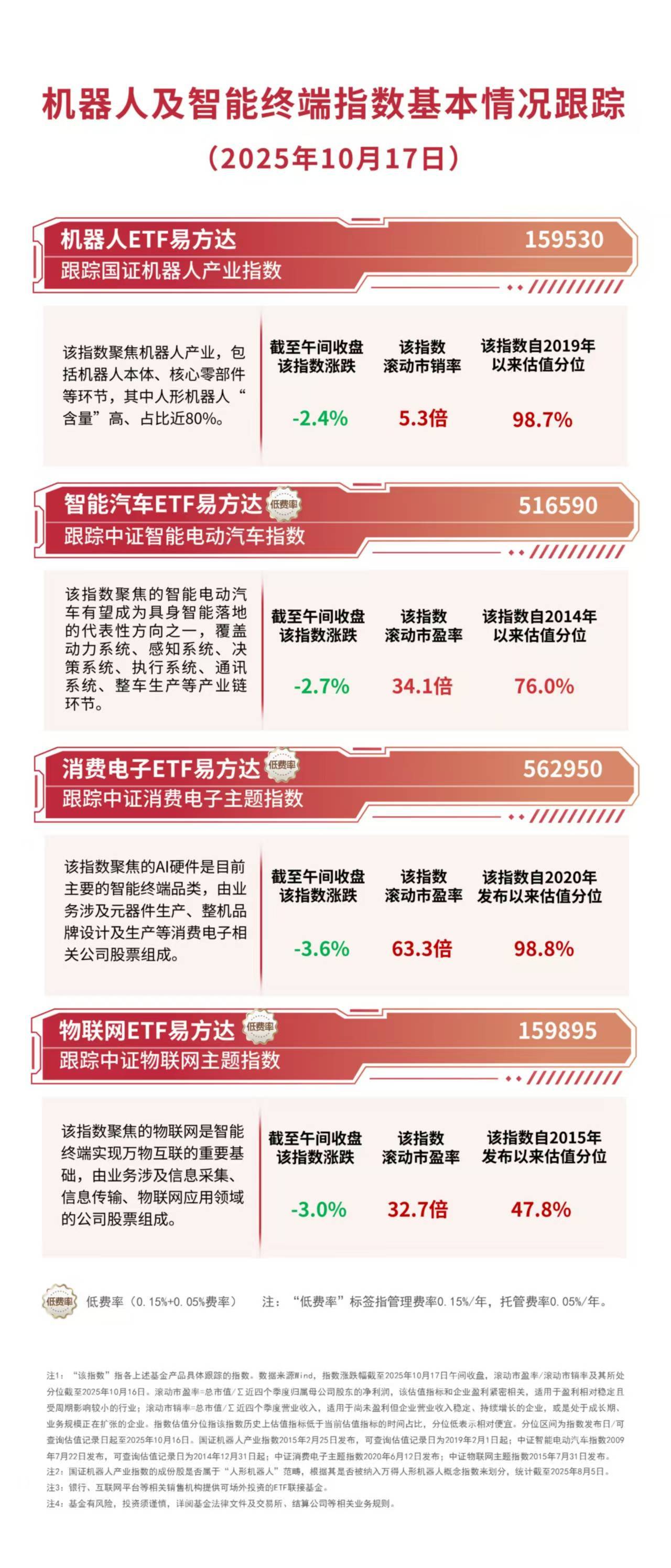
Group 1 - The index experienced a decline of 3.6% at midday closing, with a rolling price-to-earnings ratio of 63.3 times, reflecting a valuation increase of 98.8% since its inception [4] - Another index showed a decrease of 3.0% at midday closing, with a rolling price-to-earnings ratio of 32.7 times, indicating a valuation increase of 47.8% since its inception [5]

康斯特跌2.02%,成交额2639.49万元,主力资金净流出366.53万元
Xin Lang Cai Jing· 2025-10-17 03:35
Core Viewpoint - The stock price of 康斯特 has experienced a decline recently, with a year-to-date increase of 7.79% but a significant drop of 7.48% in the last five trading days and 9.40% over the last 20 days [2] Company Overview - 康斯特, established on September 20, 2004, and listed on April 24, 2015, is located in Haidian District, Beijing. The company specializes in the research, production, and sales of digital testing instruments and auxiliary testing services [2] - The revenue composition of 康斯特 includes: digital pressure testing products (75.44%), temperature and humidity testing products (17.22%), process signal testing products (6.14%), and others (1.20%) [2] - The company belongs to the machinery equipment sector, specifically in general equipment and instrumentation [2] Financial Performance - For the first half of 2025, 康斯特 reported a revenue of 246 million yuan, representing a year-on-year growth of 3.76%. However, the net profit attributable to shareholders decreased by 7.71% to approximately 54.13 million yuan [2] - Since its A-share listing, 康斯特 has distributed a total of 146 million yuan in dividends, with 50.98 million yuan distributed over the past three years [3] Shareholder Information - As of September 30, 2025, 康斯特 had 12,500 shareholders, an increase of 3.75% from the previous period. The average number of circulating shares per shareholder decreased by 3.61% to 11,331 shares [2] - Among the top ten circulating shareholders, 华夏稳增混合 (519029) holds 2.29 million shares, with no change in the number of shares held compared to the previous period [3] Market Activity - On October 17, 康斯特's stock price fell by 2.02%, trading at 17.44 yuan per share with a total transaction volume of approximately 26.39 million yuan and a turnover rate of 1.06%. The total market capitalization is around 3.705 billion yuan [1] - The net outflow of main funds was 3.67 million yuan, with significant selling pressure observed in large orders [1]

卓胜微跌2.12%,成交额1.71亿元,主力资金净流出1230.59万元
Xin Lang Zheng Quan· 2025-10-17 02:10
Core Viewpoint - The stock of Zhaosheng Microelectronics has experienced a significant decline in 2023, with a year-to-date drop of 16.65% and a recent 5-day decline of 6.61% [1] Financial Performance - For the first half of 2025, Zhaosheng Microelectronics reported a revenue of 1.704 billion yuan, representing a year-on-year decrease of 25.42% [2] - The net profit attributable to the parent company for the same period was -147 million yuan, a year-on-year decrease of 141.59% [2] Stock and Market Activity - As of October 17, Zhaosheng Microelectronics' stock price was 74.68 yuan per share, with a market capitalization of 39.95 billion yuan [1] - The stock has seen a trading volume of 171 million yuan and a turnover rate of 0.51% on the same day [1] - The company has a total of 79,400 shareholders as of September 30, with a decrease of 2.08% from the previous period [2] Shareholder and Institutional Holdings - The top ten circulating shareholders include Hong Kong Central Clearing Limited, which holds 9.1102 million shares, a decrease of 278,400 shares from the previous period [3] - E Fund's ChiNext ETF and Huatai-PB's CSI 300 ETF are also among the top shareholders, with changes in their holdings noted [3] Business Overview - Zhaosheng Microelectronics, established on August 10, 2012, specializes in the research, development, production, and sales of radio frequency integrated circuits [1] - The company's main revenue sources include product sales (99.08%), with minor contributions from other services and royalties [1]