
万物互联

Search documents
多链融合 绘就智能传感器产业新图景
Yang Shi Wang· 2025-07-24 07:08
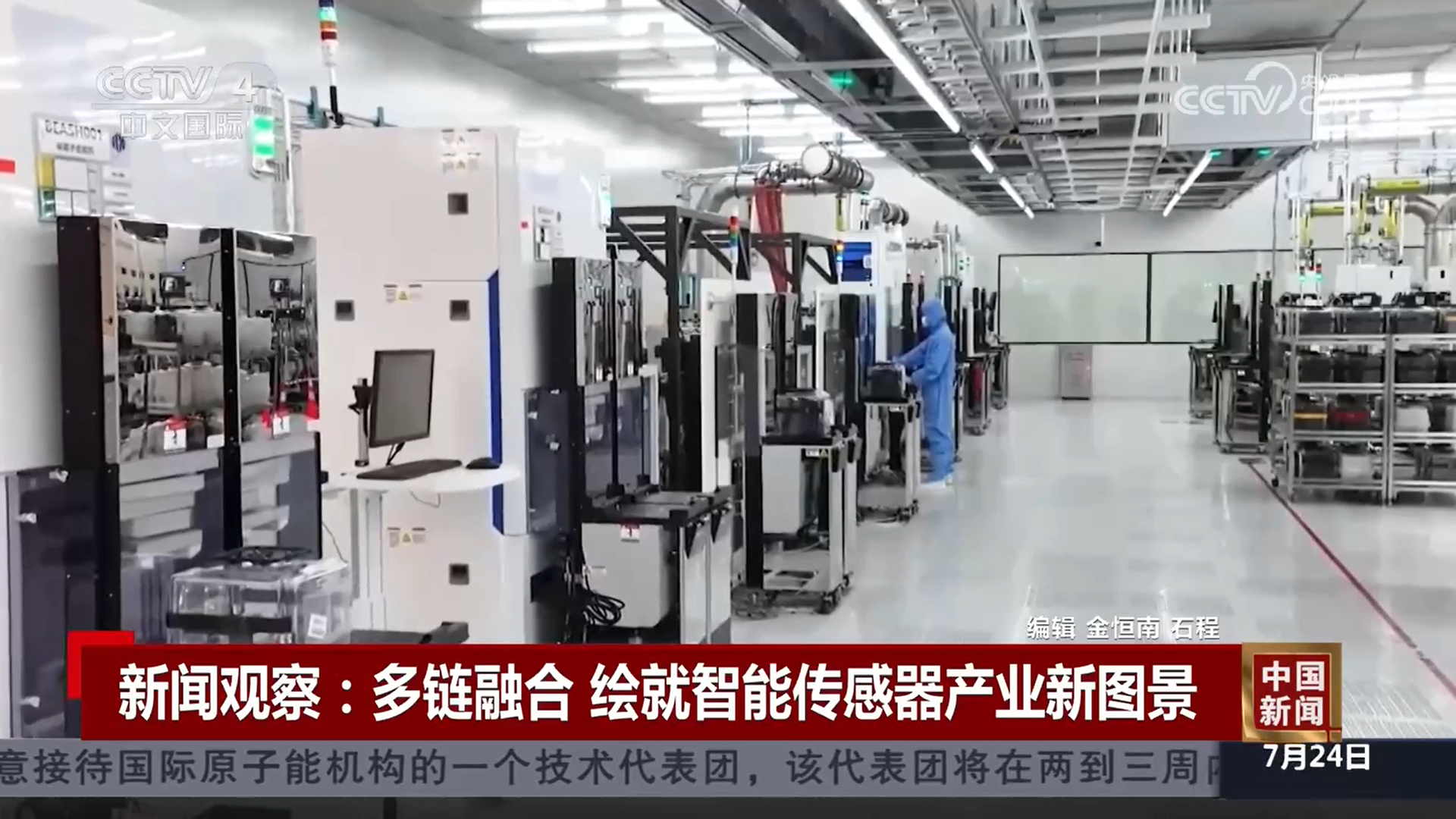
Core Viewpoint - The development of smart sensors in the era of artificial intelligence is rapidly expanding, with the "China Sensor Valley" in Bengbu, Anhui, aiming to create a smart sensor industry cluster with a target output value exceeding 100 billion yuan [1][9]. Group 1: Industry Overview - Smart sensors are a key foundation for the Internet of Things, with applications continuously expanding and promising industry development prospects [1]. - The MEMS (Micro-Electro-Mechanical Systems) sensors are crucial for the development of the artificial intelligence industry due to their small size, light weight, high sensitivity, and ease of integration [2]. Group 2: Production Capabilities - An automated production line for 8-inch MEMS wafers is capable of producing 10,000 wafers monthly, focusing on mid-to-high-performance automotive and industrial sensors [5]. - The "China Sensor Valley" features nine shared production lines that provide initial startups with process incubation, engineering trial production, and testing services [6]. Group 3: Innovation and Support - The "China Sensor Valley" has established a three-tiered policy support system at the provincial, municipal, and district levels to promote innovation through funding, technology platforms, and talent development [8]. - Multiple innovation platforms, including the MEMS National-Local Joint Engineering Laboratory and the Anhui Intelligent Sensor Manufacturing Innovation Center, have been set up to create a complete industrial system encompassing design, manufacturing, testing, packaging, and application of smart sensors [9].

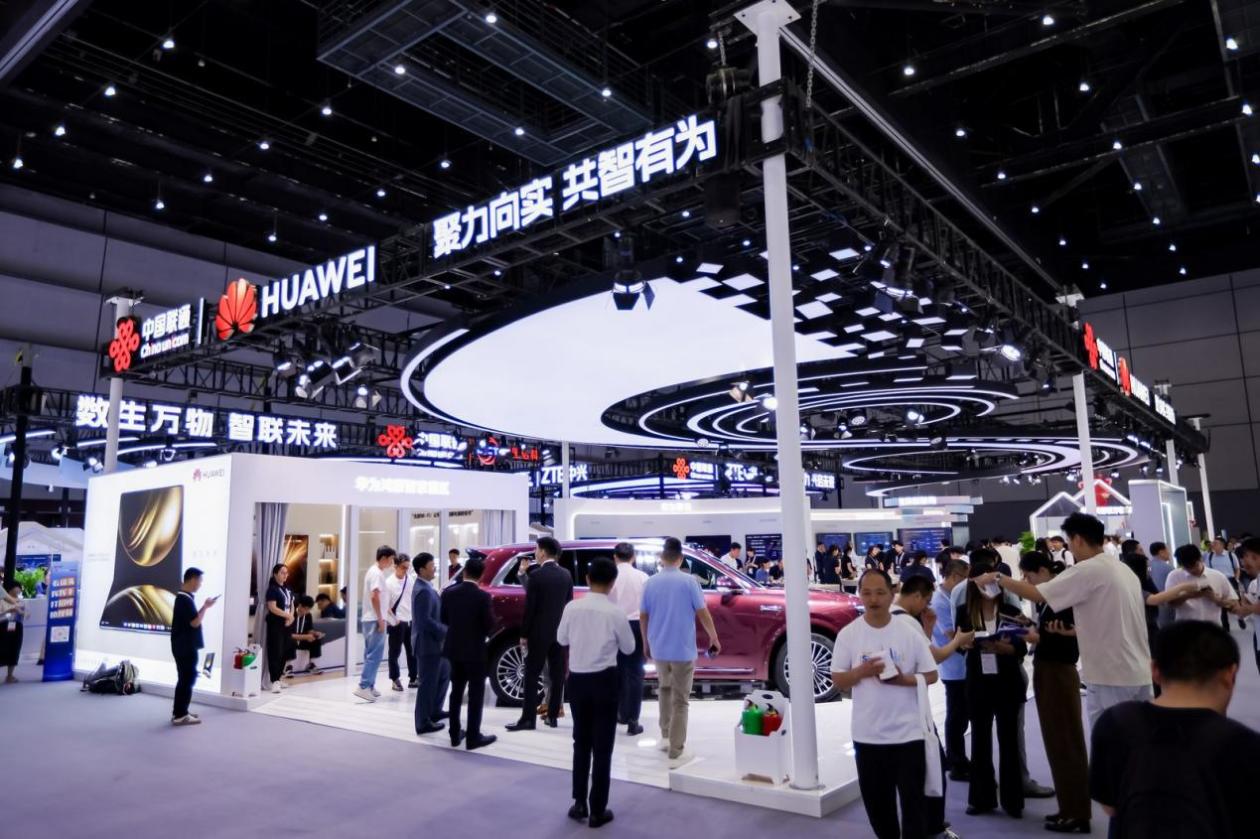
华为参展2025联通合作伙伴大会 引领全场景智慧生活新范式
Huan Qiu Wang· 2025-07-18 09:53
Core Insights - The China Unicom Partner Conference, themed "Walking Together Towards a New Ecosystem," was held in Shanghai, showcasing Huawei's strategic partnership and its comprehensive product offerings in the HarmonyOS ecosystem [1] Group 1: Product Innovations - Huawei's flagship products, including the Mate XT and Pura 80 series, highlighted advanced imaging and foldable screen technologies, with the Mate XT featuring a hyperspectral imaging system and the Pura 80 series introducing a dual-lens architecture for enhanced photography [3] - The Mate X6 foldable phone demonstrated a 12% reduction in thickness compared to its predecessor while passing 200,000 fold tests, showcasing durability and lightweight design [3] - The FreeBuds Pro 4 provided an immersive audio experience, complementing the visual capabilities of Huawei's devices [3] Group 2: Smart Office Solutions - Huawei's MateBook Fold and MateBook Pro laptops attracted attention for their lightweight design and powerful performance, enabling seamless collaboration across devices through the HarmonyOS [4] - The "Super Terminal" feature allows for easy connection to printers and monitors, enhancing productivity in remote work scenarios [4] Group 3: Health and Fitness Technology - The wearable technology section featured products like the WATCH Ultimate and WATCH GT 5 series, which offer advanced health monitoring capabilities, including heart rate and blood oxygen tracking [5][7] - The WATCH 5's eight-channel heart rate sensor can monitor multiple health metrics in real-time, while the WATCH D2 provides non-invasive blood glucose monitoring [7] - The children's smartwatch 5X Pro includes dual-mode positioning and safety features, ensuring children's security and providing educational assistance [7] Group 4: HarmonyOS Ecosystem - The HarmonyOS ecosystem emphasizes a "people-centered" service model, enabling seamless connectivity between devices in smart home environments [8][10] - The integration of HarmonyOS allows for intuitive control of smart home devices and enhances the user experience across various applications [10] - Huawei's commitment to innovation and technology is evident in its efforts to create a comprehensive ecosystem that addresses work, life, and health needs [10]
万字对话王成录:替代安卓,只是鸿蒙价值的不到5%
Guan Cha Zhe Wang· 2025-07-10 13:07
Core Viewpoint - The emergence of HarmonyOS represents China's strategic push towards mastering core technologies, aiming to become the unified digital foundation for the era of interconnected devices, rather than merely replacing existing operating systems like Android, iOS, and Windows [1][3]. Group 1: Development and Features of HarmonyOS - HarmonyOS was officially initiated in May 2016, following internal discussions that began in mid-2015, driven by Huawei's need for a unique operating system to enhance user experience and adapt to future smart device trends [4][5][6]. - The system is designed to support multi-device collaboration, breaking away from traditional single-device operating systems, which is a core design principle of HarmonyOS [7][12]. - The distributed soft bus technology is a key feature, allowing different physical devices to function as a single system, enhancing interoperability and user experience [11][12][24]. Group 2: Strategic Importance and Market Position - HarmonyOS is seen as a historic opportunity for China to gain control over core technologies, with the potential to significantly alter production and lifestyle patterns [3][39]. - The system's development is not merely a response to external pressures, such as U.S. sanctions, but rather a well-planned initiative that aligns with Huawei's long-term strategic vision [20][19]. - The open-source nature of HarmonyOS is crucial for building an ecosystem that can thrive across various industries, allowing for broader adoption beyond Huawei's hardware [31][49]. Group 3: Future Prospects and Challenges - The success of HarmonyOS hinges on expanding its hardware ecosystem, as a larger number of devices will enhance application innovation and user engagement [29][36]. - The transition to a single framework, moving away from compatibility with Android, is expected to improve performance and user experience, leveraging the system's inherent distributed capabilities [26][27]. - The company aims to establish a "Wintel" model, fostering deep collaboration with chip manufacturers to enhance the integration of hardware and software [48].

快递100应邀参加华为开发者大会 多个特性应用入选场景案例展
Zhong Guo Chan Ye Jing Ji Xin Xi Wang· 2025-07-08 05:14
Core Insights - The Huawei Developer Conference 2025 (HDC2025) showcased various new technologies and experiences, with a focus on the integration of advanced services into daily life [1] - The "Pure Intelligent Express 100" application demonstrated its capabilities within the HarmonyOS ecosystem, emphasizing real-time response and user-centric design [2][7] Group 1: Technological Advancements - The integration of generative AI into consumer scenarios has changed user expectations, leading to a demand for real-time responses and seamless interactions [2] - "Pure Intelligent Express 100" utilizes HarmonyOS NEXT SDK to create a multi-modal service access system, enhancing user experience through various interaction methods [2][3] Group 2: User Experience and Efficiency - The application allows users to quickly send packages using natural language commands, significantly improving operational efficiency [3][5] - The "Scan Direct" feature has improved operational efficiency by 50%, allowing users to initiate package sending with a simple tap on their device [5] Group 3: Market Position and User Base - Since its inception in 2010, Express 100 has grown to over 270 million registered users by 2024, indicating its strong market presence in China [6] - The application has consistently ranked among the top tools in the lifestyle category, reflecting its practicality and user acceptance [6][7] Group 4: Future Outlook - Express 100 aims to continue expanding its intelligent services in collaboration with HarmonyOS, exploring innovative application scenarios in the logistics industry [8]
黎万强投资的机器人又融资了
3 6 Ke· 2025-07-08 01:04
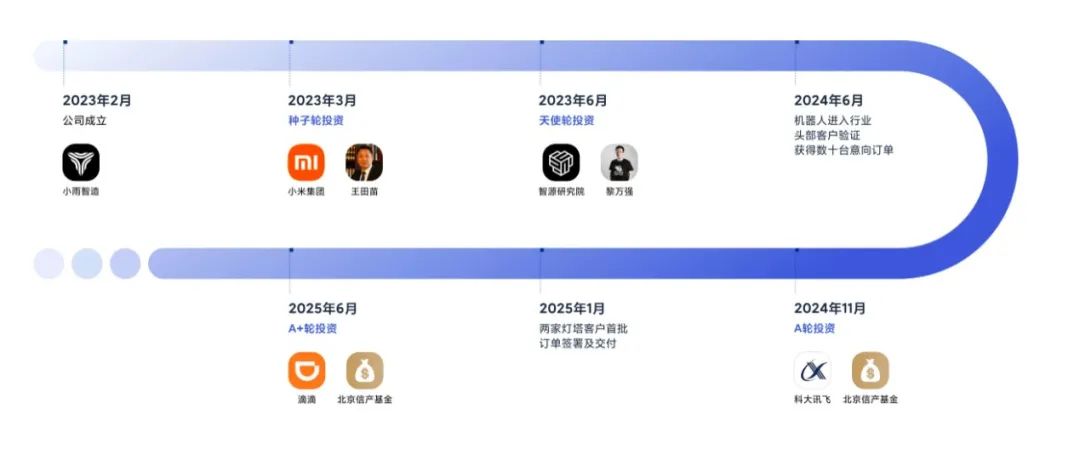
Group 1 - Xiaoyu Zhizao has completed a significant A+ round financing led by Didi, marking Didi's first investment in the company [1][6] - The company has previously attracted investments from major players such as Xiaomi, and has received recognition from influential figures like Li Wanqiang, a co-founder of Xiaomi [1][3][4] - Li Wanqiang emphasizes the importance of focusing on key application scenarios for robots, suggesting a strategy of mastering a few classic use cases before expanding functionalities [4][5] Group 2 - Didi's investment is strategically aligned with its expertise in autonomous driving, which can enhance Xiaoyu Zhizao's robotic navigation and operational capabilities [6] - The collaboration is expected to create a synergy where Didi's advanced algorithms can improve Xiaoyu Zhizao's robots, while the latter's precision control systems can benefit Didi's vehicle maintenance operations [6] - Xiaoyu Zhizao's founder, Qiao Zhongliang, highlights the significance of VLA (Visual-Language-Action) as a promising direction for embodied intelligence [7] Group 3 - Xiaoyu Zhizao is focusing on human-machine collaboration in product design, aiming to innovate interaction methods to enhance the capabilities of intelligent robots [8] - The company has partnered with Panasonic to launch an intelligent welding robot, validating its platform's stability and scalability in industrial environments [9] - The rise of industrial embodied intelligence is seen as a pathway to commercialize AI, with Xiaoyu Zhizao positioning itself to bridge AI and industrial applications [10] Group 4 - Xiaoyu Zhizao is actively integrating into Beijing's digital economy strategy and is recognized as a leader in AI industrialization [11] - The company plans to enhance its market penetration and establish deep strategic partnerships with global leaders in key manufacturing processes over the next three years [11] - The support from Beijing's investment fund underscores Xiaoyu Zhizao's technological strength and growth potential in the industrial intelligence sector [11]

(活力中国调研行)老工业基地抢抓新风口 传感谷传出智能强音
Zhong Guo Xin Wen Wang· 2025-07-07 14:25
Core Viewpoint - The article highlights the transformation of Bengbu, an old industrial city in China, into a hub for the intelligent sensor industry, known as "China Sensor Valley," leveraging advancements in sensor technology and artificial intelligence [1][5]. Industry Overview - "China Sensor Valley" is positioned as a core platform for the intelligent sensor industry cluster in Bengbu, alongside Hefei's "Voice Valley" and Wuhu's "Vision Valley," forming a significant part of Anhui Province's AI industry [1][3]. - The region has attracted over 200 upstream and downstream enterprises in the intelligent sensor sector, establishing a complete industrial chain that includes materials, design, manufacturing, packaging, testing, and application [3][4]. Company Developments - Huaxin Micro-Nano Integrated Circuit Co., Ltd. is a key player within "China Sensor Valley," focusing on high-performance automotive and industrial-grade MEMS sensors, aiming to match the technology of industry giants like Bosch [4]. - The company is ramping up production capacity, with plans to achieve a monthly output of 30,000 MEMS sensor wafers by 2027, addressing the domestic MEMS chip supply gap, particularly in automotive electronics and industrial control [4]. Policy and Support - The development of "China Sensor Valley" is supported by a three-tiered policy framework at the provincial, municipal, and district levels, providing financial support, innovation platforms, talent development, and assistance in overseas expansion [4]. - An investment fund exceeding 7 billion RMB has been established to alleviate financing challenges for enterprises, promoting technology transfer and the implementation of major projects [4]. Future Outlook - The goal is to create a comprehensive, self-controlled sensor industry cluster with an output value exceeding 100 billion RMB, contributing to the autonomous development of China's intelligent sensor industry [5].
专访北京移动刘南:“5G+工业互联网”还需关注个性化需求
2 1 Shi Ji Jing Ji Bao Dao· 2025-07-07 11:03
Core Viewpoint - The integration of 5G and industrial internet is crucial for expanding the large-scale application of 5G, facing challenges such as high costs and fragmented demand across various industries [3][4]. Group 1: 5G and Industrial Internet Integration - The deep integration of 5G and industrial internet is essential for expanding 5G applications, currently facing challenges in cost and demand matching [3][4]. - High costs associated with 5G network construction and equipment upgrades pose a significant burden, especially for small and medium-sized enterprises [3]. - The current "5G + industrial internet" applications primarily address common needs, lacking sufficient alignment with the unique demands of different industries [3]. Group 2: 5G-A Development and Its Implications - 5G-A is a key transitional phase towards 6G, enhancing network bandwidth and providing valuable insights for future 6G development [5]. - The development of 5G-A has led to the emergence of new application scenarios, indicating that 6G should focus on deeper integration with vertical industries [5]. - The emphasis on industry collaboration in 5G-A development highlights the need for a robust ecosystem to support 6G advancements [5]. Group 3: AI for Industry Trends - AI for Industry is expected to experience rapid growth, integrating with 5G-A and industrial internet to create a comprehensive intelligent system [9][10]. - The expansion of AI applications is moving from a few leading sectors to broader industries, enhancing production efficiency and reducing costs [9][10]. - Key issues for the information and communication industry include data quality and security, computational power support, standardization, and talent cultivation [10][11]. Group 4: Challenges in AI Model Development - The transition from general AI models to specialized industry applications faces challenges such as data barriers, algorithm precision, and scene adaptation [10][11]. - Data governance is prioritized to address the scarcity of high-quality datasets, utilizing proprietary tools for data cleaning and transformation [10][11]. - Collaboration with industry partners is essential for developing benchmark applications and optimizing models through practical scenarios [12].


营收四亿,利润一亿,沁恒微冲刺IPO
半导体芯闻· 2025-07-01 09:54
Core Viewpoint - Nanjing Qingqin Heng Microelectronics Co., Ltd. (referred to as "Qingheng Micro") has released its prospectus for an initial public offering on the Sci-Tech Innovation Board, highlighting its unique approach to integrated circuit design through self-developed IP systems and a focus on core technology research [1][2]. Financial Performance - Qingheng Micro's revenue is projected to grow from 238.26 million yuan in 2022 to 396.80 million yuan in 2024, with net profit increasing from 59.10 million yuan to 103.99 million yuan during the same period [1]. - The company has maintained profitability while many in the industry face losses due to intense competition [1]. Product Overview - The main business of Qingheng Micro includes the research, design, and sales of interface chips and interconnected MCU chips, which are essential for information exchange and connectivity in electronic devices [3][4]. - The company focuses on USB, Bluetooth, and Ethernet interfaces, with USB being its primary revenue source, accounting for 52.38% of total revenue in 2024 [8]. Technology and Innovation - Qingheng Micro has developed a proprietary IP system that includes processor, PHY, controller, and protocol stack technologies, allowing for a more integrated and efficient chip design process [4][17]. - The company’s self-developed "Qingke" series of processors has shipped over 100 million units, demonstrating competitive performance against mainstream foreign processors [6][12]. Market Applications - The primary application areas for Qingheng Micro's products include industrial control and connectivity (52.60% of revenue), IoT networking (25.54%), and computer and mobile peripherals (21.86%) [15]. - The company’s products are designed to meet the growing demand for connectivity and digitalization in various sectors [9][20]. Future Plans and Funding - Qingheng Micro plans to raise funds through its IPO to invest in three key projects: USB chip development, network chip development (including Bluetooth and Ethernet), and full-stack MCU chip development, with a total investment of approximately 931.54 million yuan [28][29]. - The company aims to enhance its core technology and expand its product offerings in high-speed USB, Ethernet, and low-power wireless communication technologies [29][30].

每日投行/机构观点梳理(2025-07-01)
Jin Shi Shu Ju· 2025-07-01 08:26
Group 1: Federal Reserve Predictions - Goldman Sachs anticipates the Federal Reserve will lower interest rates in September instead of December, citing lower-than-expected inflation impacts from tariffs [1] - Goldman Sachs predicts three rate cuts of 25 basis points each in September, October, and December, adjusting the terminal rate forecast to 3-3.25% [1] - Morgan Stanley analysts believe the likelihood of rate cuts in the upcoming meetings remains low, with most Fed officials supporting a cautious stance [2] Group 2: Corporate Profitability and Tariffs - Goldman Sachs highlights that U.S. corporate profit margins will face significant challenges in the upcoming earnings season due to the direct impact of tariffs, which have increased costs by approximately 10 percentage points since the beginning of the year [1] - The report indicates that while most of the increased costs are expected to be passed on to customers, if companies are forced to absorb higher-than-expected costs, profit margins will be under pressure [1] Group 3: Currency and Economic Data - Analysts from Deutsche Bank suggest that the outlook for the U.S. dollar depends on the underlying reasons for rate cut expectations, with potential short-term rebounds if inflation impacts from tariffs are limited [3] - Dutch International Group anticipates that upcoming U.S. economic data, particularly the non-farm payroll report, may provide support for the dollar index, limiting its decline [4] Group 4: Commodity Prices and Market Trends - CITIC Securities maintains a bullish outlook for copper prices, predicting they will rise to $10,000-$11,000 per ton in the second half of the year, supported by stable economic growth in China and the U.S. [6] - The report emphasizes that the copper market remains tight, with limited upstream production and a need for further macroeconomic policy support to sustain price increases [6] Group 5: Investment Opportunities - Baosheng Group suggests that while the U.S. stock market presents unique opportunities, diversifying investments into Europe, China, and India may yield better value and risk-adjusted returns [5] - The report highlights the attractiveness of U.S. corporate sectors, particularly selected tech stocks, defensive stocks, and high-dividend stocks [5]
A股三大指数开盘涨跌不一,光伏题材走强
Feng Huang Wang Cai Jing· 2025-07-01 01:35
Market Overview - A-shares opened mixed with the Shanghai Composite Index up 0.04%, Shenzhen Component down 0.06%, and ChiNext down 0.18% [1] - The sectors showing strength include photovoltaic, military industry, semiconductors, online gaming, and electric power [1] External Market - The Dow Jones Index rose by 0.63% to 44,094.77 points, the S&P 500 Index increased by 0.52% to 6,204.95 points, and the Nasdaq Index gained 0.47% to 20,369.73 points [2] - Most popular Chinese concept stocks declined, with the Nasdaq Golden Dragon China Index down 0.49%. Notable declines include Alibaba down 0.59%, JD.com down 1.30%, and NIO down 0.87%. However, NetEase rose by 1.45% [2] Industry Insights - **Wind Power**: Everbright Securities maintains a positive outlook on the wind power equipment sector, expecting stable pricing and improved profitability by 2026 due to larger turbine sizes and cost reductions in components. The recent policy changes are anticipated to revitalize wind power development and sales [3] - **eSIM Technology**: China International Capital Corporation (CICC) highlights the potential resurgence of eSIM technology, which offers advantages such as compact size, low cost, and high security. This technology is expected to gain traction with the rise of consumer electronics miniaturization and the Internet of Things [4] - **Battery Supply Chain**: Huatai Securities is optimistic about the battery segment, noting a marginal improvement in supply and demand. The production forecast for July indicates a battery output of 108.3 GWh, a 1.9% increase month-on-month. The growth is driven by the increasing penetration of electric commercial vehicles in the domestic market [5]