城市高质量发展

Search documents
公用事业第35周:首份中央文件开启碳市场建设新征程,城市高质量发展势在必行
Huafu Securities· 2025-08-31 06:51
Investment Rating - The report maintains a strong rating for the power sector and recommends specific companies within the sector [4][7][11]. Core Insights - The first central document in the carbon market sector has been issued, marking a new journey in carbon market construction, with significant implications for green investment and industry growth [3][17][18]. - The report emphasizes the importance of promoting high-quality urban development, particularly in the water and solid waste management sectors, which are expected to benefit from new policies [4][21]. Summary by Sections Market Review - From August 25 to August 29, the electricity sector fell by 0.40%, the environmental sector by 1.47%, the gas sector by 1.65%, and the water sector by 2.15%, while the CSI 300 index rose by 2.71% [11][12]. Carbon Market Development - The central government's recent document outlines plans to accelerate the construction of a national carbon market, aiming for comprehensive coverage of major industrial sectors by 2027 and a robust voluntary reduction market [3][17][18]. - As of July 2025, the national carbon emissions trading market has seen a cumulative transaction volume of 681 million tons and a transaction value of 46.784 billion yuan, indicating a growing influence of carbon pricing [3][18]. Urban Development Initiatives - The recent policy encourages green low-carbon transformation in urban development, promoting energy efficiency and waste management [4][21]. - The report identifies opportunities in waste-to-energy applications, industrial wastewater treatment, and the recycling of construction waste, which are expected to enhance profitability for related companies [4][21]. Investment Recommendations - The report recommends specific companies within various sectors: - For the power sector, it suggests Jiangsu Guoxin and cautiously recommends Sheneng Co. and Zhejiang Energy [4]. - In the nuclear power sector, it cautiously recommends China National Nuclear Power and China General Nuclear Power [4]. - For green energy, it suggests focusing on Three Gorges Energy and Jiangsu New Energy [4]. - In the water sector, it recommends Changjiang Electric Power and cautiously suggests Huaneng Hydropower [4]. - In the environmental sector, it recommends Yongxing Co. and Xuedilong, while suggesting attention to Huaguang Huaneng and China Tianying [4].




我国将推动城市规划创新促城市高质量发展
Xin Hua She· 2025-08-30 12:19
Group 1 - The core viewpoint emphasizes the need for innovative urban planning methods to align with the goals of high-quality urban development and the construction of modern cities [1] - The current urban planning policies, regulations, and standards were established during a period of rapid urban expansion and are now inadequate for the needs of improving existing urban areas [1] - There is a call for a comprehensive reform in urban planning design to adapt to the significant transitional changes in urban development, focusing on creating a new urban planning system that supports high-quality development [1]
刚刚,中共中央、国务院,重磅发布
Zhong Guo Ji Jin Bao· 2025-08-30 09:07
Core Viewpoint - The document outlines the central government's opinions on promoting high-quality urban development, emphasizing the transition from rapid urbanization to stable development and the need for enhancing existing urban quality and efficiency by 2030 and 2035 [2][4]. Overall Requirements - The document stresses the importance of adhering to Xi Jinping's thoughts on socialism with Chinese characteristics, focusing on people-centered urban development, and promoting urban quality improvement through innovation, livability, and resilience [5]. Urban System Optimization - The plan includes promoting the integration of urban clusters and metropolitan areas, enhancing the competitiveness of mega cities, and improving the capacity of small and medium-sized cities and towns [6][7]. New Urban Development Momentum - The document calls for tailored strategies to enhance urban development dynamics, fostering innovation ecosystems, and activating existing urban resources [8]. Sustainable Urban Financing - It emphasizes the establishment of a sustainable urban construction and operation financing system, encouraging the involvement of social capital and innovative financial policies [9]. High-Quality Urban Living Space - The document advocates for the construction of quality housing and complete communities, improving urban infrastructure, and enhancing public services to create a better living environment [10][11]. Green and Low-Carbon Transition - It outlines initiatives for energy conservation and carbon reduction in production, promoting green lifestyles, and improving urban ecological environment management [12][13]. Urban Safety Resilience - The plan includes measures to strengthen safety management of buildings and infrastructure, enhance public health emergency response capabilities, and improve disaster prevention and mitigation systems [14][15]. Cultural Prosperity - The document promotes the protection and utilization of urban historical culture, enhancing the unique cultural identity of cities, and enriching urban spiritual and cultural life [16][17]. Urban Governance Improvement - It emphasizes the need for a comprehensive urban governance system, promoting digital transformation and community participation in urban management [18][19]. Implementation Strengthening - The document stresses the importance of centralized leadership from the Party, establishing a scientific evaluation system for urban development, and enhancing the capabilities of urban management personnel [20].
城市发展与AI战略顶层设计出炉,“外卖大战”影响初显丨一周热点回顾
Di Yi Cai Jing· 2025-08-30 03:24
Group 1: Urban Development Policies - The central government has released guidelines for promoting high-quality urban development, aiming for significant progress by 2030 and basic completion by 2035 [1][2] - Key measures include enhancing urban competitiveness, fostering new development drivers, and improving urban living quality through better infrastructure and public services [1][2] Group 2: Artificial Intelligence Initiatives - The State Council has issued a roadmap for the "Artificial Intelligence+" initiative, focusing on six key actions, including technology, industry development, and global cooperation [3][4] - By 2030, the goal is for AI applications to exceed 90% penetration, establishing AI as a crucial growth driver for the economy [3][4] Group 3: Carbon Market Development - A new policy has been introduced to accelerate the construction of a national carbon market, with plans to cover major industrial sectors by 2027 [5][6] - The market will transition from intensity control to total control, combining free and paid allocation methods for carbon emissions [5][6] Group 4: Real Estate Market Adjustments - Shanghai has announced adjustments to its real estate policies, including lifting purchase limits for certain residents outside the city’s outer ring [7] - The changes aim to stimulate the housing market and improve buyer sentiment, following similar moves in other major cities [7] Group 5: Industrial Profit Trends - Industrial profits for large enterprises fell by 1.5% year-on-year in July, but the decline rate has narrowed for two consecutive months, indicating a potential recovery [8][9] - Notably, profits for medium and small enterprises improved, suggesting the effectiveness of policies aimed at supporting these businesses [8][9] Group 6: Stock Market Developments - Cambrian Technology's stock surged by 15.73%, surpassing Kweichow Moutai to become the new stock king in A-shares, with a total increase of 133.86% since late July [10][11] - The company reported significant revenue growth of 4347.82% year-on-year, indicating a strong performance despite potential risks related to stock price volatility [10][11] Group 7: Food Delivery Industry Financials - Major players in the food delivery sector, including Meituan and JD, reported significant profit declines due to intense competition, with Meituan's net profit down 89% [12][13] - Alibaba's financial results also showed a decrease in operating profit, attributed to increased investments in user experience and technology [13]

【王牌决策情报;2025年8月30日 星期六】
Sou Hu Cai Jing· 2025-08-30 00:30
Group 1: AI and Marine Industry - Shenzhen released 60 application scenarios for "AI + Marine" industry, covering marine law enforcement, economic statistics, deep-sea resource development, and more [2][3] Group 2: Domestic Consumption and Economic Policies - The Ministry of Commerce reported a 30% year-on-year increase in inbound foreign visitors, exceeding 19 million in the first half of the year, and a 95% increase in tax refund sales [5] - The government aims to enhance the international consumption environment and optimize tax refund policies to further boost inbound consumption [5] Group 3: Urban Development and Housing - The Central Government's new guidelines emphasize the importance of urban village and old housing renovations to improve urban quality and stimulate domestic demand [7] - The urbanization rate in China increased from 53.1% in 2012 to 67% in 2024, indicating significant progress in urban development [9] Group 4: Service Trade and Economic Events - The 2025 China International Service Trade Fair will focus on "Digital Intelligence Leadership" and feature various activities to promote global service trade [13] - The National Development and Reform Commission plans to enhance mechanisms for private enterprises to participate in major national projects, aiming to strengthen domestic investment [15] Group 5: Corporate Developments - KONE Elevator announced the establishment of its Southern Headquarters in Shenzhen, along with a research and development center and a smart logistics and assembly center, expected to be operational by early 2026 [17]

详解城市高质量发展“路线图”:培育壮大城市发展新动能
2 1 Shi Ji Jing Ji Bao Dao· 2025-08-29 13:34
Group 1 - The core viewpoint of the article is the release of the "Opinions on Promoting High-Quality Urban Development," which outlines a roadmap for urban development in China, emphasizing the transformation of urban development methods and the enhancement of urban quality by 2030 and 2035 [1][2] - The "Opinions" set specific goals for urban development, including improving living quality, advancing green transformation, and enhancing governance levels, with a total of 23 specific tasks outlined [1][3] - Key tasks include promoting urban agglomeration integration, enhancing the competitiveness of mega cities, and improving the capacity of small and medium-sized cities and towns [1][3][5] Group 2 - The article highlights the need for a shift from rapid urban growth to steady growth, focusing on structural optimization and quality improvement, with an emphasis on the attractiveness of cities to retain and attract populations [4][5] - The "Opinions" stress the importance of enhancing the comprehensive competitiveness of mega cities by refining their core functions and controlling their scale, while also promoting innovation and technology [5][6] - The article discusses the activation of urban stock resource potential as a key aspect of fostering new urban development momentum, emphasizing the need for tailored strategies based on local conditions [7][8] Group 3 - The "Opinions" advocate for a sustainable urban construction and operation financing system, encouraging the participation of social capital in urban development projects to alleviate reliance on government funding [9][10] - The article points out the necessity of optimizing the management of existing urban resources, such as land and infrastructure, to enhance their efficiency and effectiveness in urban development [8][9] - It emphasizes the importance of establishing a collaborative mechanism for cross-regional cooperation to facilitate resource flow and functional complementarity among cities [6][7]
新一轮城市竞争,开始了
虎嗅APP· 2025-08-29 10:10
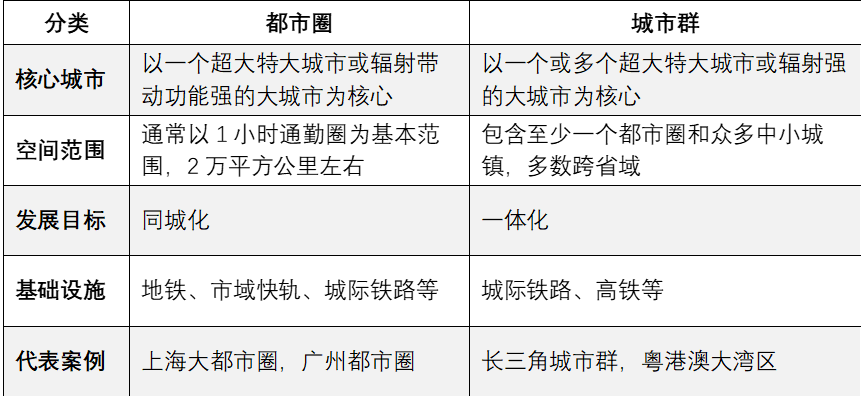
Core Viewpoint - The article discusses the new direction of urban development in China, emphasizing a shift from rapid urbanization to stable development and from expansion to quality improvement in existing urban areas. This marks the beginning of a new era of urban competition, characterized by collaboration among cities rather than individual competition [4][5][6]. Group 1: Urban Development Strategy - The Central Government has issued guidelines to promote high-quality urban development, focusing on the integration of urban clusters and metropolitan areas, enhancing the competitiveness of mega cities, and improving the capacity of small and medium-sized cities and towns [5][6][7]. - The previous model of urban competition, which relied on individual cities, is being replaced by a collaborative approach where urban clusters and metropolitan areas are prioritized [9][10]. Group 2: Key Urban Clusters and Metropolitan Areas - China has identified five major urban clusters: Beijing-Tianjin-Hebei, Yangtze River Delta, Guangdong-Hong Kong-Macau Greater Bay Area, Chengdu-Chongqing, and the Central Yangtze River region, which are expected to drive high-quality development [12][14]. - There are 19 national-level urban clusters planned, with the Beijing-Tianjin-Hebei, Yangtze River Delta, and Guangdong-Hong Kong-Macau Greater Bay Area designated as world-class urban clusters [13][14]. Group 3: Metropolitan Area Development - The strong provincial capital strategy is being questioned, with a shift towards a "strong metropolitan area" model that redefines the influence of major cities [15][16]. - Currently, there are over 30 large metropolitan areas in China, with 17 approved as national-level metropolitan areas, including key cities like Guangzhou, Shenzhen, and Chengdu [15][16]. Group 4: Urban Expansion and Management - The article highlights a halt in the expansion of mega cities, with a focus on rationally managing urban functions and optimizing administrative divisions in small cities [34][35]. - The government is promoting urban renewal rather than large-scale construction, emphasizing the transformation of old neighborhoods and housing [41][44]. Group 5: Real Estate Market Implications - The transition from rapid urbanization to stable development will impact the real estate market, shifting the focus from new construction to the renovation and improvement of existing properties [44][45]. - The article suggests that the future of real estate will involve more self-managed renovations by communities rather than government-led large-scale redevelopment [46][47].
中央明确城市高质量发展路线图,你的安居生活将有什么新变化?
Bei Ke Cai Jing· 2025-08-29 07:49
Core Points - The document titled "Opinions on Promoting High-Quality Urban Development" was officially released on August 28, outlining a roadmap for urban development over the next 10 to 15 years, directly impacting housing, community life, and urban environments for citizens [1][4][5] - The document serves as a key implementation tool for the Central Urban Work Conference held in July, marking a shift from large-scale expansion to enhancing existing urban quality [4][6] - The construction of modern urban areas is aligned with China's modernization strategy, aiming for significant progress by 2030 and basic completion by 2035 [5][7] Urban Development Goals - By 2030, significant advancements in modern urban construction are expected, including improved policies for high-quality urban development, enhanced living standards, and a strong focus on green transformation [7] - The document outlines seven major tasks, which have been further detailed into 23 specific opinions, focusing on enhancing urban development dynamics and activating existing resources [8][9] Housing and Community Focus - A significant emphasis is placed on housing, with initiatives aimed at creating "good houses" and complete community constructions, addressing diverse housing needs and improving service quality [9][10] - The concept of "good houses" is defined as not just large or expensive homes, but as quality housing that meets the needs of all citizens, including affordable and rental options [11][12] Urban Renewal as a Strategy - Urban renewal is identified as a crucial strategy for high-quality urban development, with plans for the gradual renovation of old neighborhoods and the promotion of integrated urban planning [14][16] - The document emphasizes the need for collaboration between government and market forces to fund urban renewal projects, suggesting the issuance of special bonds and the involvement of social capital [16]
如何推动城市高质量发展?专家:城市更新是重要抓手
Bei Ke Cai Jing· 2025-08-29 07:28
Core Viewpoint - Urban renewal is an essential choice for high-quality development during the period of intrinsic urban development, and it has become a crucial lever for future urban development [1][3]. Group 1: Urban Renewal as a Strategic Focus - Urban renewal is not merely about the renovation of old neighborhoods or historical districts; it is a systematic effort requiring long-term strategic planning [2]. - The next decade to two decades will see urban renewal as a mainline strategy to achieve structural optimization, energy conversion, quality enhancement, and green low-carbon requirements [2]. Group 2: Government and Market Participation - Successful urban renewal must leverage the collaborative participation of government, market, and social entities to ensure sustainable progress [2]. - The focus on urban renewal is particularly critical for super-large cities, which need to activate and integrate existing resources and assets to stimulate economic growth [3]. Group 3: Sustainable Financing Models - A key challenge in urban renewal is to explore sustainable financing models that can leverage existing resources and spaces to attract social capital [3]. - The revitalization of previously underutilized resources is aimed at injecting momentum into urban economic growth [3].
新一轮城市竞争,开始了
Hu Xiu· 2025-08-29 06:24
Core Viewpoint - The document outlines a strategic shift in urban development in China, moving from rapid growth to stable development, emphasizing quality over quantity in urbanization and promoting collaborative competition among cities [2][4][5]. Group 1: Urban Development Strategy - The Central Committee and State Council have issued guidelines to promote high-quality urban development, establishing a roadmap for future urban growth [2]. - The focus is on enhancing the competitiveness of mega cities and improving the capacity of small and medium-sized cities and towns [3][12]. - The shift in urbanization strategy includes a transition from "rapid growth" to "stable development" and from "incremental expansion" to "quality improvement" [4][63]. Group 2: City Group and Urban Circle Development - The document emphasizes the importance of city clusters and urban circles, advocating for integrated and coordinated development [7][9]. - The new model encourages "collaborative competition," moving away from the previous focus on individual city competition [6][24]. - Key city clusters identified include Beijing-Tianjin-Hebei, Yangtze River Delta, and Guangdong-Hong Kong-Macau Greater Bay Area, which are expected to become world-class urban clusters [12][14]. Group 3: Urban Circle Characteristics - Urban circles are defined as having a core city with a surrounding area that includes multiple smaller cities, typically within a one-hour commuting radius [10][11]. - The document lists 30 large urban circles, with 17 approved as national-level urban circles, including major cities like Guangzhou, Shenzhen, and Chengdu [18][22]. - The development of urban circles is still in its early stages, with many in the cultivation phase [20]. Group 4: Urban Competitiveness - The document calls for enhancing the comprehensive competitiveness of mega cities, focusing on their core functions and global resource allocation capabilities [24][25]. - It highlights the importance of technology innovation platforms in mega cities to drive high-quality development [24][26]. Group 5: Urban Expansion and Management - The guidelines indicate a halt to the previous trend of rapid urban expansion, emphasizing the need for controlled growth and the optimization of administrative divisions in smaller cities [45][51]. - The focus will shift towards improving existing urban areas rather than expanding their boundaries, with an emphasis on urban renewal and community development [58][65]. Group 6: Real Estate Sector Impact - The transition to stable urban development is expected to significantly impact the real estate sector, shifting the focus from new construction to the renovation and improvement of existing properties [61][63]. - The document supports self-renovation initiatives for old housing, indicating a move away from large-scale government-led redevelopment projects [66][68].