
房住不炒

Search documents
“抛售潮”来临,比高房价令人头疼,炒房客会慢慢退出楼市速看
Sou Hu Cai Jing· 2025-08-21 20:45
Core Insights - The Chinese real estate market is undergoing a significant transformation characterized by an unprecedented wave of property sales, with a 28.7% year-on-year increase in second-hand housing listings in 50 key cities by Q2 2025, marking a five-year high [2][3] Group 1: Market Dynamics - The decline in property sales area is indicative of a structural adjustment rather than a simple cyclical fluctuation, with a 12.3% year-on-year decrease in national commodity housing sales area in H1 2025 [3] - The adjustment is not limited to lower-tier cities but is a comprehensive, multi-layered phenomenon affecting all city tiers [3] Group 2: Policy Impact - The "housing is for living, not for speculation" policy and the introduction of real estate tax trials are setting a new tone for the market, influencing participant behavior [6][9] - The real estate tax, starting in March 2025 in 11 cities, has increased holding costs for property owners, further motivating them to sell [9] Group 3: Financial Constraints - The growth of real estate loans was only 3.2% year-on-year as of June 2025, the lowest since 2009, with a 15% increase in bank loan rates adding financial pressure on investors [7] - A survey indicated that 67% of multi-property owners are considering selling at least one non-primary residence to alleviate financial burdens [7] Group 4: Market Sentiment - A fundamental shift in market sentiment is occurring, with 35.2% of respondents now viewing housing primarily as a place to live rather than an investment, an increase of 11.7 percentage points from 2023 [10] - The average price of new residential properties in first-tier cities fell by 0.8% year-on-year in June 2025, with second-hand prices down by 2.3% [10] Group 5: Buyer Opportunities - Increased supply has enhanced buyers' bargaining power, with the average price difference between transaction and listing prices in Shanghai's second-hand market widening to 8.7% in Q2 2025 [12] - For first-time buyers, the price correction represents a favorable opportunity, with costs for a 100 square meter apartment in first-tier cities down by approximately 50-100 million yuan compared to 2023 highs [13] Group 6: Future Outlook - The real estate investment focus is shifting from capital appreciation to rental income and service value, indicating a more rational and diversified investment logic [15] - By 2030, urbanization in China is expected to reach around 70%, providing ongoing demographic support for the real estate market, although it will play a less dominant role in economic growth [15]


王石再次预测楼市走向?前面几次都对了,这回大概率又对了!
Sou Hu Cai Jing· 2025-08-18 08:51
在风云变幻的楼市中,万科创始人王石的每一次发声,都如同掷地有声的重锤,引人深思。与那些粉饰太平的言论不 同,他的观点总是直指核心,不留情面。最近,他又抛出了一枚"重磅炸弹"——"年轻人,与其买房,不如租房","国内 楼市,还会经过较长时间的调整","还能坚持的房企,不足三分之一"。在对未来楼市的预测中,他的话无疑再次成为了 众人瞩目的焦点。 05、买房人要理性:机会在"理智"之后 王石提醒购房者,要保持理性,机会往往蕴藏在冷静的思考之后。他强调,房地产的角色已经发生了根本性的转变。过 去,房子被视为一种"资产",一种"赚钱的工具",而现在,它更多地回归到"居住需求"和"生活品质"的本质。买房的逻辑 也随之改变,不再是为了追求升值,而是为了获得一份"安心居住"的归属感。"抄底"不再是一种稳赚不赔的游戏。 未来的购房决策,需要更加注重"品质、品牌、风险",切莫再盲目迷信房价上涨的神话。尤其是在楼市转型的大背景 下,许多房子仅仅是"居住的工具",未必能成为保值增值的"资产"。买房不仅要考虑未来的升值空间,更要审视自身能 否承受房价下跌的风险。只有做好了充分的心理准备,才能在楼市的变局中保持清醒,做出明智的选择。 0 ...
所有人注意了!2025 年,别再幻想房价反弹了!
Sou Hu Cai Jing· 2025-08-16 12:30
Economic Environment and Market Challenges - The global economic uncertainty poses significant external pressure on China's real estate market, with trade tensions and geopolitical conflicts leading to sluggish growth, which in turn affects corporate operations and household income [3] - The transition from an investment and export-driven economy to one focused on consumption and innovation is causing a slowdown in economic growth, reducing the traditional reliance on real estate for economic stimulation [3] Policy Regulation and Direction - The government has implemented a series of stringent regulatory measures aimed at stabilizing housing prices and curbing speculative investments, with the "housing is for living, not for speculation" policy becoming a long-term guiding principle [5] - Continuous tightening of financing regulations for real estate companies has led to cash flow challenges, forcing developers to adopt price reduction strategies, which directly suppresses housing price increases [5] Supply and Demand Dynamics - The supply-demand relationship in the real estate market has fundamentally changed, with a significant increase in housing stock leading to high vacancy rates, particularly in lower-tier cities [6] - Demographic shifts, including an aging population and changing attitudes among younger generations towards homeownership, have resulted in weakened housing demand [8] Affordability and Purchasing Power - High housing prices have created a burden on household finances, leading to reduced spending in other areas such as education and healthcare, which negatively impacts overall economic health [9] - Stagnant income growth amidst high housing prices has further limited the purchasing power of potential homebuyers, making it difficult for them to enter the market [9] Industry Competition and Developer Strategies - Increased competition among real estate firms has pressured profit margins, prompting developers to adopt aggressive discounting strategies to accelerate sales and recover funds [10] - Developers are also focusing on product quality and differentiation to stand out in a crowded market, which, while potentially increasing costs, leads to more cautious pricing strategies [10] Conclusion on Housing Price Outlook - Given the economic conditions, regulatory environment, supply-demand shifts, purchasing power limitations, and competitive landscape, the likelihood of a rebound in housing prices by 2025 appears minimal [11]
别急着卖房!未来房产投资新机遇浮现,三类房子有望升值
Sou Hu Cai Jing· 2025-08-16 08:05
Core Viewpoint - The real estate market is entering a new phase characterized by structural opportunities, with three specific types of properties emerging as potential value areas amidst an overall market downturn [1][15]. Group 1: Urban Renewal Areas - Urban renewal has become a national strategy, with a focus on revitalizing old neighborhoods, particularly in cities with limited land resources [1]. - The government plans to invest up to 2.9 trillion yuan (approximately 402.8 billion USD) in urban renewal projects by 2025, significantly improving infrastructure and living conditions in old communities [2]. - In Shenzhen, property values in renewed old neighborhoods have increased by over 15% on average, indicating substantial asset appreciation potential [2]. Group 2: Properties Near Transportation Hubs - The value of properties near transportation hubs, such as subway and high-speed rail stations, is increasingly recognized due to improved accessibility [5]. - By the end of 2025, urban rail transit mileage is expected to reach 10,000 kilometers, which will enhance property values along these routes [5]. - Properties within a 500-meter radius of subway stations are valued approximately 10% higher than those further away [5][6]. Group 3: Residential Areas Near Emerging Industrial Parks - Industrial parks are crucial for urban development, creating job opportunities and attracting population inflow, which boosts residential demand in surrounding areas [11]. - The rapid development of industrial parks in China has led to significant foreign investment, with over 6 billion USD attracted to four industrial parks in Guangzhou [11]. - The presence of high-income earners in areas surrounding industrial parks drives demand for quality housing, contributing to rising property values [11].
真闹心:房价跌掉一半,房贷却未减少,千万元房产也卖不出?
Sou Hu Cai Jing· 2025-08-15 12:46
Core Viewpoint - The real estate market is experiencing significant price declines, with many homeowners facing the challenge of high mortgage payments despite the drop in property values [3][5][11] Market Conditions - In the first half of 2025, 53 out of 70 major cities reported new home prices lower than the previous year, with 16 cities experiencing price drops of over 30% [3] - The transaction volume for high-end properties (over 10 million) has decreased by more than 60% compared to the previous year, while the number of sellers has increased by nearly 50% [3][5] - The average time to sell properties in first and second-tier cities has increased significantly, with high-end properties taking an average of 412 days to sell, compared to 89 days in 2021 [7] Mortgage and Financial Implications - Despite falling property prices, mortgage payments remain unchanged, leading to increased financial pressure on homeowners [8] - As of May 2025, the total mortgage debt in China reached 38.7 trillion yuan, with a non-performing loan rate of 2.1%, the highest in a decade [5] - The real estate sector accounts for approximately 25% of GDP, and related industries such as home appliances and building materials have seen significant sales declines, with home appliance sales down 18.7% and building materials down 22.3% in the second quarter of 2025 [8] Government and Policy Responses - In response to the market downturn, 27 cities have introduced home purchase subsidy policies, offering up to 5% of the purchase price [9] - Some developers are exploring "rent-to-own" schemes, allowing potential buyers to rent before purchasing, with rental payments contributing to the purchase price [9] - Banks are beginning to trial "mortgage replacement" programs, allowing for reassessment of loan amounts in light of falling property values, although this is still in the early stages [9] Long-term Market Outlook - The Chinese real estate market is shifting from a focus on new construction to optimizing existing properties, with an emphasis on housing for living rather than investment [11] - Buyers are encouraged to adjust their expectations regarding property appreciation and focus on the residential function of homes [11]
现在买房,是“割肉”止损?还是自断后路?房产中介一句话,点醒无数人
Sou Hu Cai Jing· 2025-08-13 05:13
Core Insights - The real estate market in 2025 is facing unprecedented challenges, with a significant decline in sales and an increase in unsold properties, indicating a critical turning point for the industry [3][6]. Group 1: Market Conditions - New residential property sales area decreased by 3.5% year-on-year, and sales revenue fell by 5.2% in the first half of the year [3]. - The total unsold residential property area reached 781 million square meters, the highest in a decade, highlighting the oversupply issue [3]. Group 2: Contributing Factors - The demographic shift, characterized by a declining birth rate and an increasing elderly population, is a major negative factor for the housing market. The number of newborns fell below 9 million last year, while the elderly population exceeded 300 million [5]. - Policy regulations have tightened, with the expansion of property tax trials to 30 cities, including major ones like Shanghai and Beijing, increasing the cost of home buying [5]. - Market sentiment is increasingly pessimistic, with buyers adopting a wait-and-see approach due to declining population dividends, stricter policies, and slowing economic growth, leading to a vicious cycle of falling prices [6].

现在卖房人会不会后悔?王健林曾预言今年下半年房价意想不到速看
Sou Hu Cai Jing· 2025-08-13 00:46
中国人民银行在2024年下半年连续三次降息,5年期以上LPR创历史新低,降至3.6%(此前为4.2%)。地方政府也积极响应,密集出台一系列稳楼市政策, 包括降低首付比例、减免契税、放宽限购等,其中,广州、成都等15个重点城市实施"认房不认贷"政策,有效刺激了改善型购房需求。这些政策的积极效应 在2025年初开始集中显现。 2025年8月,回望中国房地产市场这波回暖,许多人开始反思去年低迷期卖房的决定是否过于草率。王健林在2024年底一次闭门经济论坛上曾大胆预测, 2025年下半年房价走势将"超乎大多数人的想象"。当时,此言论并未引起广泛关注,如今却显得颇具先见之明。 房地产市场,素来是国民经济的晴雨表。国家统计局7月数据显示,全国70个大中城市新建商品住宅销售价格指数环比上涨0.7%,同比上涨3.2%,已连续四 个月正增长。一线城市涨势尤为显著,北京、上海、广州和深圳新房价格环比平均上涨1.3%,二手房成交量同比增长近25%,市场回暖迹象清晰可见。 这与2023至2024年初的市场低迷形成鲜明对比。彼时,购房者普遍持币观望,开发商资金链吃紧,市场信心不足,导致大量业主选择"割肉"卖房,部分甚至 损失百万。贝壳 ...
李嘉诚预言说中了!我国手握2套房的家庭,或将注定这3个结果!
Sou Hu Cai Jing· 2025-08-11 00:40
曾经,"两套房"象征着家庭财富的顶峰,是社交场合炫耀资本的底气。然而,潮水退去后,许多人却发现,部分资产已沦为沉重的累赘。 2018年,李嘉诚的预言——未来五年房地产将经历大洗牌,拥有两套及以上房产的家庭将面临严峻挑战——如今已成为现实。彼时,市场一片火热,多数人 将其视为危言耸听。七年过去,全国百城二手房价已连续29个月下跌,二手房挂牌量激增至15万套以上,房价只涨不跌的神话彻底破灭。 中国城镇家庭中,高达41.5%拥有两套及以上住房,而这些家庭正无可避免地走向三种结局: 一、财富缩水,郊区房成烫手山芋 " 三、月供压力剧增,断供风险骤升 高杠杆炒房者的处境尤为艰难。收入减少,而房贷压力却丝毫未减。郑州某家庭2019年贷款购买了两套房产,月供高达1.2万元,如今房价下跌40%,租金 收入仅能覆盖月供的一半,被迫依靠信用卡透支维持生计。房企债务将在2025年达到惊人的3万亿元,开发商只能通过降价抛售来偿还债务,这又引发了"降 价-断供-法拍-再降价"的恶性循环。弃房断供不仅意味着首付和已还贷款付诸东流,还会面临银行诉讼、信用记录受损等一系列麻烦。 这一切的根源在于房地产市场基本逻辑的转变。官方数据显示,中国城 ...

卧龙新能: 卧龙资源集团股份有限公司2024年年度报告(更正后)
Zheng Quan Zhi Xing· 2025-08-08 14:07
Core Viewpoint - The annual report of Wolong Resources Group Co., Ltd. for 2024 indicates a significant decline in both revenue and net profit, reflecting challenges in the real estate and mineral trade sectors, while the company aims to enhance operational efficiency and manage costs effectively [1][2]. Company Overview and Financial Indicators - The company reported a total revenue of approximately RMB 3.61 billion for 2024, a decrease of 24.08% compared to RMB 4.76 billion in 2023 [2][3]. - The net profit attributable to shareholders was RMB 40.86 million, down 75.15% from RMB 164.41 million in the previous year [2][3]. - The net asset attributable to shareholders at the end of 2024 was RMB 3.76 billion, a slight decrease of 0.91% from RMB 3.79 billion in 2023 [2][3]. Business Performance - The real estate development and sales segment generated revenue of RMB 1.06 billion, reflecting a 15.35% decline year-on-year [5][6]. - The mineral trade business reported a revenue of RMB 24.77 billion, which is a decrease of 28.62% compared to the previous year [4][5]. - The company’s operating cash flow was negative at RMB -565.21 million, indicating challenges in cash management and collection [3][8]. Industry Context - The real estate market is experiencing a downturn, with a general decline in sales volume and prices, despite government efforts to stabilize the market through various policy measures [4][5]. - The copper concentrate import volume in China for 2024 was 28.11 million tons, a 2.1% increase year-on-year, with an import value of approximately RMB 482.05 billion, up 14.5% from the previous year [5][6]. - The company is focusing on optimizing its operational strategies in response to the complex economic environment, including enhancing inventory management and cost control [4][5].

房地产调控须保持定力 咬定“长效”不放松
Jing Ji Ri Bao· 2025-08-08 06:59
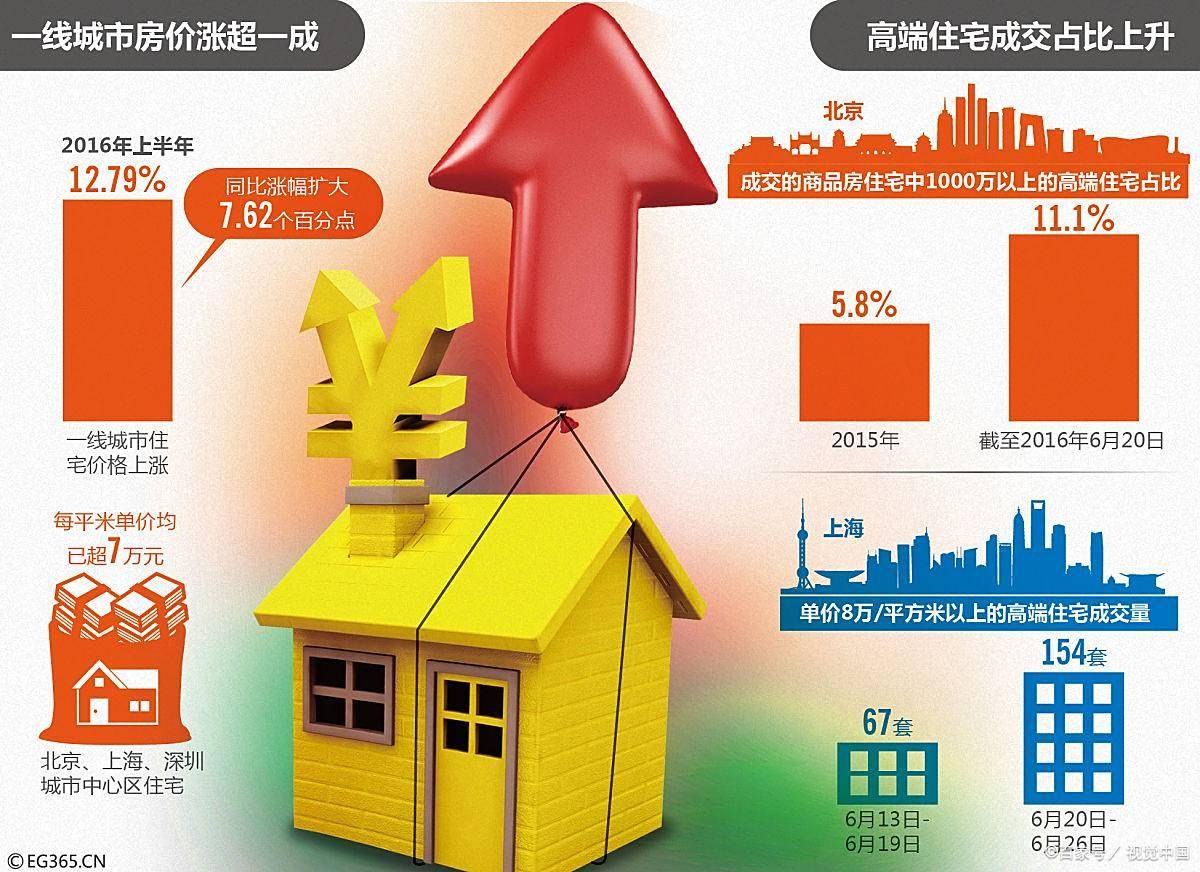
Core Viewpoint - The real estate market has shown signs of overheating in certain cities since the second quarter of this year, prompting the central government to reiterate the principle that housing is for living, not for speculation, and to implement regulatory measures to cool down the market [1][2][3]. Group 1: Market Trends - Since the second quarter of this year, the real estate market has seen a significant increase in activity, with some cities experiencing rapid price increases and signs of overheating [1][2]. - In July, over ten cities, including Shenzhen, Hangzhou, and Zhengzhou, introduced regulatory policies aimed at cooling the real estate market [3]. - Data shows that in the 70 major cities, the prices of new residential properties increased in April (50 cities), May (57 cities), June (61 cities), and July (59 cities) compared to the previous month [2]. Group 2: Regulatory Measures - The central government emphasizes the need to maintain stable land prices, housing prices, and market expectations, avoiding large fluctuations in the real estate market [4][5]. - Local governments are encouraged to adopt differentiated regulatory measures based on the specific conditions of each city, rather than implementing a one-size-fits-all approach [6]. - Recent policies in cities like Haikou and Shenzhen target speculative behaviors such as "fake divorces" and "fake talent" purchases to stabilize the market [7]. Group 3: Economic Implications - The real estate sector is crucial for urban development and economic stability, but rapid price increases can lead to negative consequences for the economy and social development [4][5]. - The government is committed to preventing real estate from being used as a short-term economic stimulus, which could lead to significant long-term repercussions [5].