
稳房价

Search documents
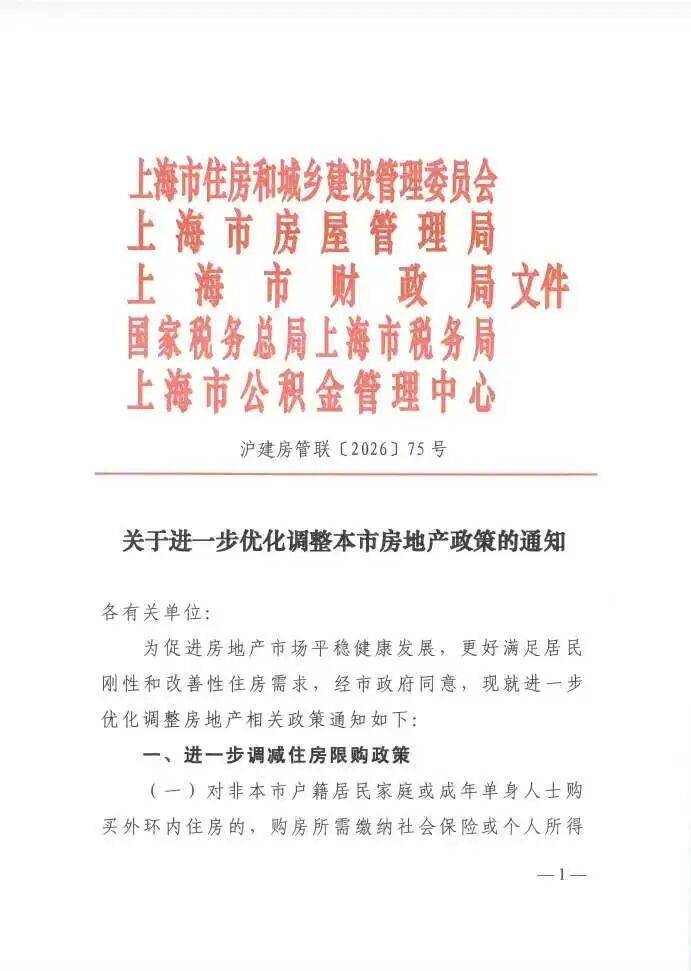
上海楼市真的急了!
Sou Hu Cai Jing· 2026-02-25 17:26
Group 1 - The core point of the article is that Shanghai has introduced new housing policies aimed at relaxing purchase restrictions to stimulate effective market demand [4][5][6] - The new policies include reducing the social security requirement for non-local buyers to one year, allowing an additional purchase after three years of ownership, and enabling those with a five-year residence permit to buy a property without social security or tax requirements [1][4] - This marks the fourth significant relaxation of purchase restrictions in less than two years, indicating a proactive approach to managing the housing market [7][8] Group 2 - The primary objective of these policies is to reduce inventory and stabilize housing prices, as there is significant pressure from unsold properties, particularly in the outer ring areas of Shanghai [10][13] - In January 2026, Shanghai's second-hand residential transactions reached 20,300 units, a slight month-on-month decrease of 0.38% but a year-on-year increase of 26.69% [8] - The market is characterized by a high proportion of transactions in lower-priced properties, with 63.86% of second-hand homes sold for under 3 million, indicating a shift in buyer demographics towards long-term workers in the city [16][17] Group 3 - The article highlights a change in policy logic, where measures are now introduced during periods of market recovery rather than waiting for a downturn, aiming to maintain market stability [24][25] - There is a coordinated effort across multiple cities to manage public sentiment regarding the housing market, with actions taken against negative commentary in real estate media [21][24] - The overarching goal is to ensure employment stability across the real estate sector, emphasizing that while housing prices do not need to rise, market stability and transaction volume are crucial for economic health [26][29][30]

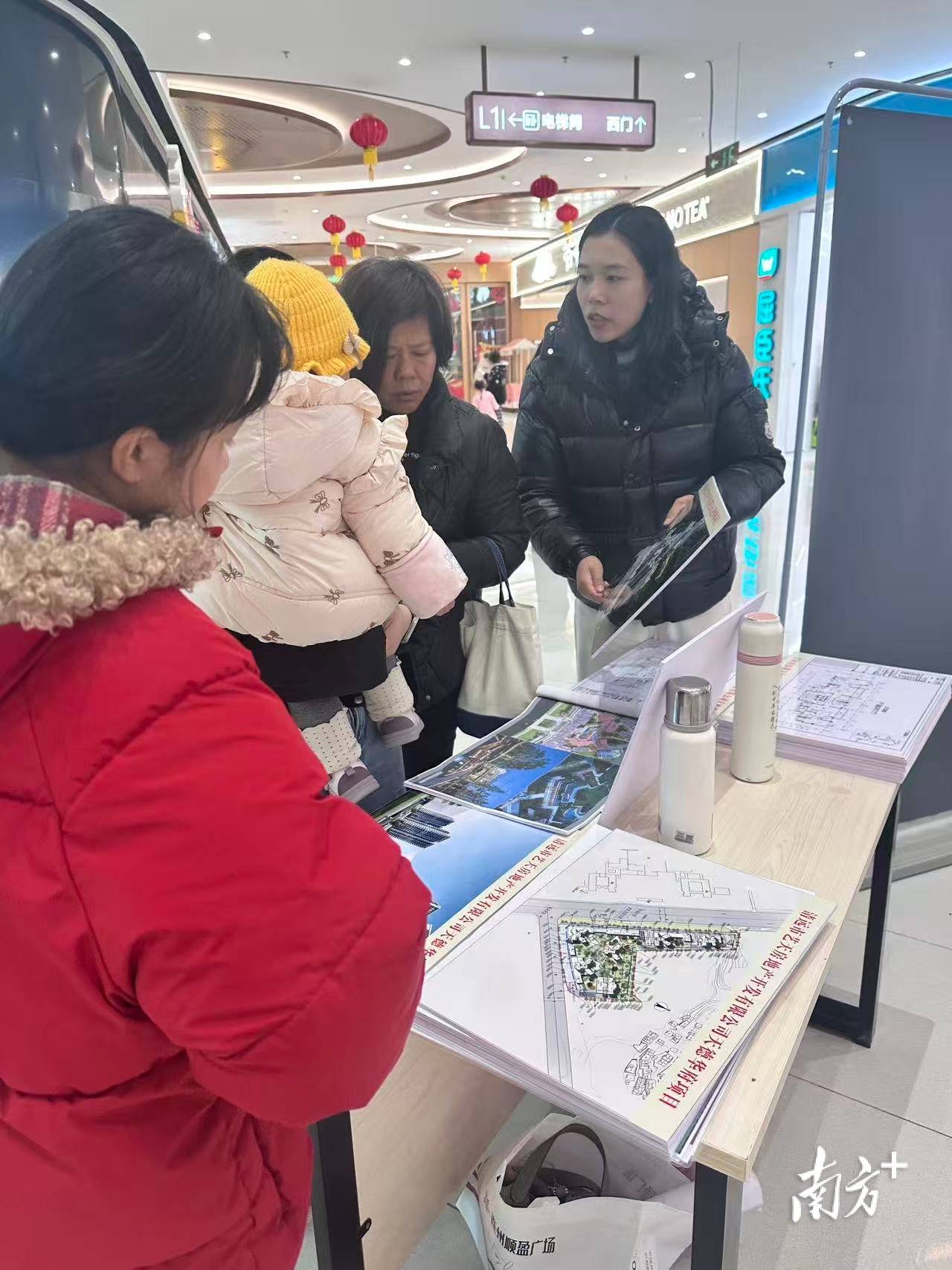
最高让利惠民生,连州楼市促销活动火热启动
Sou Hu Cai Jing· 2026-02-15 09:32
Group 1 - The core theme of the event is to boost consumer confidence in the real estate market during the Chinese New Year, with a promotional campaign titled "Welcoming the New Year, Buying New Homes, and Spending a Warm Winter" [1][4] - The promotional event took place from February 10 to 12, featuring multiple locations in densely populated areas to maximize outreach and integrate housing sales with festive activities [1][4] - The event was organized by the Lianzhou Housing and Urban-Rural Development Bureau, aiming to support stable and healthy development in the real estate sector [1][4] Group 2 - Six brand real estate companies participated, receiving a total of 339 visitors and registering 73 interested buyers over the three-day event [4] - The promotional offerings included 99 discounted housing units, with prices starting as low as 3,388 yuan per square meter, addressing the needs of first-time and upgrading homebuyers [4] - The event emphasized a cost-effective operational model, focusing on providing tangible benefits to both enterprises and homebuyers, reflecting a commitment to practical and efficient service [4]
天津新房价格管控收紧,楼盘价格“过低”或限制网签
第一财经· 2026-01-13 05:33
Core Viewpoint - The article discusses the recent measures taken by Tianjin to regulate new housing prices, aiming to stabilize the real estate market and prevent excessive price drops [5][6][10]. Group 1: Price Regulation Measures - Tianjin has implemented stricter controls on new housing prices, limiting price changes to within 10% of the approved price for new sales permits [5][6]. - For existing projects, discounts exceeding 5% require written reports to the housing authority, while discounts over 15% will result in the suspension of online signing [6][7]. - The goal of these measures is to stabilize housing prices and promote a healthy market environment, with flexibility in execution based on individual project circumstances [7][10]. Group 2: Market Context and Historical Changes - Previously, in May 2023, Tianjin had lifted various restrictions on housing prices, allowing developers to set prices as long as they did not exceed the approved limits [8]. - The new regulations mark a shift back to price control after a period of deregulation, indicating a response to market conditions where many projects were sold at "bottom prices" [10][12]. - The overall sales figures for new residential properties in Tianjin showed a significant decline in 2025, with sales amounting to 116.51 billion yuan, down 21.3% year-on-year [11]. Group 3: Market Reactions and Implications - The introduction of price controls is seen as a way to manage buyer expectations and stabilize the market, especially as there is pent-up demand that has not been released due to price instability [11][13]. - The article notes that while price adjustments are common, the effectiveness of such measures in preventing disguised price reductions by developers remains to be seen [12][13]. - The current market sentiment indicates that new housing prices are already at a low point, suggesting limited room for further declines [13].
国家定调了!北京打响楼市松绑第一枪,2026将着力稳定房地产市场
Sou Hu Cai Jing· 2025-12-26 19:14
Core Viewpoint - Beijing's real estate market is experiencing a significant policy adjustment aimed at stimulating consumption and addressing housing needs, particularly for non-local residents and families with multiple children [3][5][42]. Policy Adjustments - The new policy, effective immediately, focuses on key areas such as purchase restrictions, credit, and housing provident fund adjustments [3][5]. - The requirement for non-local families to purchase homes within the Fifth Ring has been reduced from three years of social security or tax payments to two years, and outside the Fifth Ring, it has been further relaxed to one year [7][9]. - Families with two or more children are now allowed to purchase an additional property within the Fifth Ring, addressing their housing needs [10][12]. Financial Implications - Financial institutions will no longer differentiate between first and second homes, implementing a unified mortgage interest rate, which is currently around 3.2% [14]. - The minimum down payment for second homes using the housing provident fund has been reduced from 30% to 25%, easing the financial burden on homebuyers [14][16]. Market Dynamics - The adjustment in land auction processes aims to lower the barriers for companies to acquire land, potentially increasing new housing supply [16]. - Compared to other cities, Beijing's policy changes are not the most aggressive, but they serve as a significant signal for national market trends [20][22]. Broader Context - The adjustments reflect a broader trend of easing restrictions in major cities, with other cities like Guangzhou and Shenzhen already implementing more lenient policies [20][26]. - The policy changes are designed to balance the local market with surrounding areas, avoiding excessive pressure on neighboring cities [28]. Future Outlook - The overall impact of these policy changes on the housing market remains uncertain, as many potential buyers are still hesitant due to concerns about falling prices and income stability [30][32]. - The long-term goal of these adjustments is to stabilize housing prices and ensure that the real estate market serves the public's housing needs effectively [40][42].
2025年不买房,5年后会后悔还是庆幸?看看马光远怎么说
Sou Hu Cai Jing· 2025-12-17 14:13
Core Viewpoint - The real estate market has shifted dramatically, with the previous boom giving way to declining prices, leading to uncertainty about whether to buy or wait until 2025. The economist Ma Guangyuan emphasizes the importance of understanding the "three differentiations" in the market to make informed decisions about real estate investments [1][3]. Group 1: Differentiation in the Market - Urban Differentiation: There will be a stark contrast in real estate performance between core cities and small counties. Major cities like Beijing and Shanghai are expected to maintain or slowly appreciate in value due to strong job markets and population influx, while small counties may see their properties lose value significantly [4]. - Regional Differentiation: Even within the same city, property values will vary greatly by location. Properties in prime areas will remain resilient, while those in less desirable locations may experience steep declines in value [5]. - Product Differentiation: The gap between high-quality and low-quality properties will widen. Newer, well-located homes will attract buyers, while older, poorly maintained properties will struggle to sell [7]. Group 2: Underlying Issues in the Market - Population Structure: The aging population and declining birth rates are leading to fewer potential homebuyers, which will negatively impact demand and property values, especially in less populated areas [9]. - Saturated Demand: The housing supply has largely met demand, with many capable buyers already having purchased homes. This leaves a gap for those who cannot afford to buy, further limiting market growth [11]. - Inventory Pressure: Excessive inventory in certain areas, particularly where population growth is stagnant, is leading to prolonged periods of unsold properties, which will continue to depress prices [12]. Group 3: Practical Advice for Buyers - For current homeowners: It is advisable to sell underperforming assets in declining markets, particularly in small counties, while considering the quality and location of properties in core cities [13]. - For potential buyers: Focus on high-quality properties in areas with strong population growth and economic stability, avoiding low-quality or remote properties that may not appreciate in value [15]. - Overall market strategy: The emphasis should be on making informed decisions based on market realities rather than speculation, as the market is expected to stabilize rather than experience dramatic fluctuations [16].
11月全国70城二手房价同比降幅扩大,广州跌幅达7.2%
Guan Cha Zhe Wang· 2025-12-15 05:32
Core Insights - The number of cities with rising new home prices increased from 6 to 8 in November, indicating a positive trend in the housing market [1][2] - The number of cities with declining new home prices decreased from 64 to 59, suggesting a stabilization in the market [1][2] - Shanghai led the year-on-year price increase among first-tier cities with a 5.1% rise, while other major cities experienced declines [2] New Home Prices - In November, first-tier cities saw a month-on-month decline in new home prices of 0.4%, with Shanghai increasing by 0.1% and Beijing, Guangzhou, and Shenzhen decreasing by 0.5%, 0.5%, and 0.9% respectively [1][2] - Second and third-tier cities experienced month-on-month price declines of 0.3% and 0.4%, with the rate of decline narrowing by 0.1 percentage points [1] Second-Hand Home Prices - Year-on-year, second-hand home prices in first-tier cities fell by 5.8%, with Beijing, Shanghai, Guangzhou, and Shenzhen seeing declines of 6.8%, 4.6%, 7.2%, and 4.8% respectively [2][3] - Month-on-month, second-hand home prices in first-tier cities decreased by 1.1%, with Beijing experiencing the largest drop at 1.3% [3] Market Dynamics - The increase in second-hand home listings, which rose to 2.678 million units, has contributed to downward pressure on prices, with an average listing duration of 94.72 days [3][4] - The demand for second-hand homes remains strong, with 65.8% of potential buyers showing interest, but this has not translated into price increases due to oversupply [4] Policy Outlook - The central government's focus on stabilizing the real estate market is expected to intensify, with policies aimed at controlling supply and promoting affordable housing [5] - The emphasis on localized strategies for inventory reduction and supply optimization is anticipated to support market stability in the coming years [5]

住建部原副部长仇保兴:只有稳资产价值和预期,才能真正稳消费
和讯· 2025-12-11 08:33
Group 1 - The relationship between real estate and consumption is clear; high real estate prices do not necessarily crowd out consumption [2] - A household's consumption ability is primarily determined by its asset level and future income expectations; current low consumption is due to the decline in real estate market affecting household assets and income confidence [2] - The long-term dangers of a real estate bubble burst must be recognized, as historical experiences indicate that it leads to prolonged declines in household balance sheets and sustained low consumption [2] Group 2 - The central government's emphasis on "stabilizing housing prices, land prices, and market expectations" is rooted in the need to stabilize asset values and market expectations to support consumption [3] - Local governments face constraints in policy execution due to historical debt burdens and limited fiscal space, which affects their ability to implement effective measures [3] - Local governments can leverage their substantial state-owned assets through professional operations and securitization to release liquidity for urban renewal and debt resolution [4] Group 3 - The market's expectations are partly affected by the lack of timely coordination of supporting policies; the handling of approximately 1.5 to 2 million unsold properties is currently too reliant on banks selling through market channels [4] - Establishing a government-led storage mechanism for unsold properties could convert them into affordable housing, helping banks mitigate financial risks while efficiently increasing the supply of affordable housing [4] - Despite demographic challenges, the annual demand for new housing in China remains reasonable at about 1.2 to 1.3 million units; however, actual supply is less than half of this level [4] - Urban renewal models such as "original demolition and reconstruction" are needed to rebuild reasonable scales and create a closed loop of risk-sharing among residents, financial institutions, and insurance companies to stabilize income expectations [4]

武汉年底土拍大动作!24宗涉宅地块集中上架,释放哪些信号?
Sou Hu Cai Jing· 2025-11-25 09:50
Core Insights - Wuhan's natural resources and urban construction bureau announced the auction of 27 plots of land with a total starting price of 87.99 billion yuan, including 24 residential plots priced at approximately 83.53 billion yuan, set for online auction on December 9, 2025 [2][22] - This concentrated land supply is a strategic move to stabilize market expectations and boost confidence in the real estate sector during a period of significant adjustment [2][10] Land Supply Overview - The auction features a total of 27 plots, with 24 designated for residential use, accounting for 88.9% of the total [20] - The distribution of the plots spans across eight administrative districts in Wuhan, with New District and Jiangxia District each having 9 plots, while other districts have fewer [2][20] Regional Distribution - The land supply reflects a shift from a "single-core concentration" to a "multi-center radiation" model, with 20 plots located in suburban areas and only 6 in the main urban area, indicating a strategic focus on both population overflow and high-quality resource allocation [2][20] Key Plot Highlights - The auction includes notable plots such as: - Jianghan District P(2025) 172, with a floor price exceeding 10,000 yuan per square meter, indicating its premium location [4][20] - East Lake High-tech Zone P(2025) 170, which has the highest total starting price among the plots, suggesting its significance in the market [5][20] Pricing Structure - The floor prices for residential plots vary significantly, ranging from 2,040 yuan to 10,002 yuan per square meter, catering to different market segments and allowing for diverse investment strategies [9][20] - The pricing strategy emphasizes a "small area, high price" approach in urban areas, reflecting a refined management philosophy based on demand [9][20] Policy and Market Confidence - The auction is characterized by systematic institutional innovations, aiming to create a virtuous cycle in the "land-development-sales" framework, which is expected to instill confidence in the market [10][20] - The implementation of supportive policies, such as the "Han Nine Articles," aims to lower purchasing costs and stimulate demand, further enhancing market stability [14][20] Implications for Buyers - The concentrated supply of residential land signals a secure supply for new homes over the next 1-2 years, reducing the urgency for panic buying among potential homebuyers [11][20] - Buyers are encouraged to focus on high-end projects in the main urban areas, particularly in districts like Jianghan, Qiaokou, and Hanyang, where smaller plots are likely to be developed into premium offerings [11][20] Conclusion - The upcoming auction represents not just a land transaction but also a reflection of Wuhan's urban development strategy, addressing the demand for quality assets while adhering to the principle of "housing for living, not speculation" [12][20]

房地产调控须保持定力 咬定“长效”不放松
Jing Ji Ri Bao· 2025-08-08 06:59
Core Viewpoint - The real estate market has shown signs of overheating in certain cities since the second quarter of this year, prompting the central government to reiterate the principle that housing is for living, not for speculation, and to implement regulatory measures to cool down the market [1][2][3]. Group 1: Market Trends - Since the second quarter of this year, the real estate market has seen a significant increase in activity, with some cities experiencing rapid price increases and signs of overheating [1][2]. - In July, over ten cities, including Shenzhen, Hangzhou, and Zhengzhou, introduced regulatory policies aimed at cooling the real estate market [3]. - Data shows that in the 70 major cities, the prices of new residential properties increased in April (50 cities), May (57 cities), June (61 cities), and July (59 cities) compared to the previous month [2]. Group 2: Regulatory Measures - The central government emphasizes the need to maintain stable land prices, housing prices, and market expectations, avoiding large fluctuations in the real estate market [4][5]. - Local governments are encouraged to adopt differentiated regulatory measures based on the specific conditions of each city, rather than implementing a one-size-fits-all approach [6]. - Recent policies in cities like Haikou and Shenzhen target speculative behaviors such as "fake divorces" and "fake talent" purchases to stabilize the market [7]. Group 3: Economic Implications - The real estate sector is crucial for urban development and economic stability, but rapid price increases can lead to negative consequences for the economy and social development [4][5]. - The government is committed to preventing real estate from being used as a short-term economic stimulus, which could lead to significant long-term repercussions [5].