数字货币

Search documents
管涛:数字人民币2.0时代的“变”与“不变”
Di Yi Cai Jing· 2026-01-04 13:15
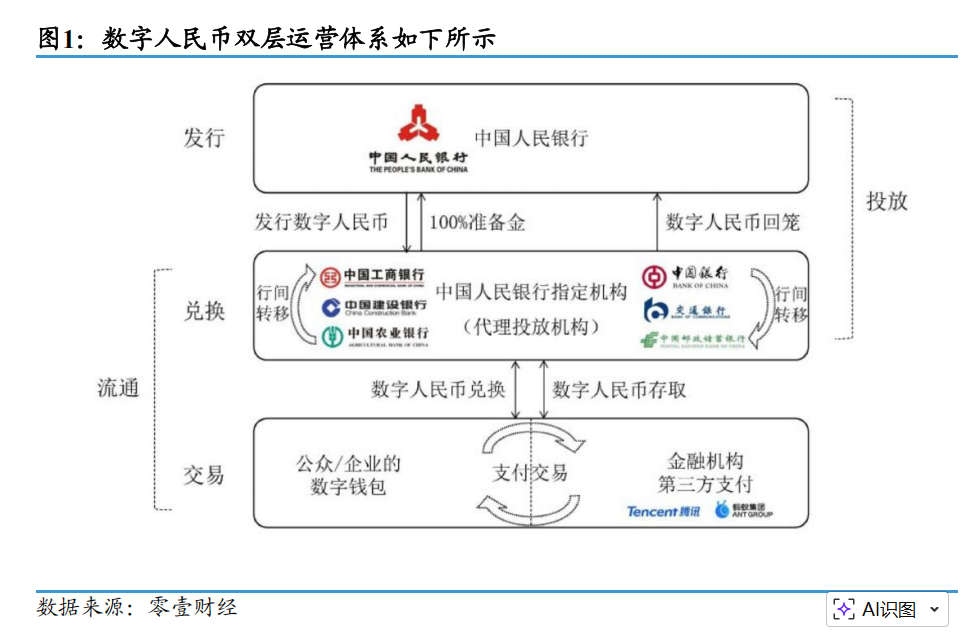
Core Viewpoint - The digital renminbi is transitioning from the 1.0 era of digital cash to the 2.0 era of digital deposit currency, with a new management and service framework set to be implemented by January 1, 2026 [1] Group 1: Digital Currency Development - China is a pioneer in digital currency exploration, having initiated theoretical research and closed testing of the digital renminbi in 2014, with pilot programs starting in 2019 [3] - The digital renminbi ecosystem has been preliminarily established, following a path that relies on central bank leadership and integration with commercial financial institutions [3] - The digital renminbi 2.0 will be a modern digital payment and circulation method, issued and circulated within the financial system, featuring functions such as value measurement, value storage, and cross-border payment [3][4] Group 2: Operational Framework - The transition to digital renminbi 2.0 retains the successful core elements of the previous phase, particularly the dual-layer operational structure that separates management and operation [4] - The People's Bank of China will establish a digital renminbi management committee to oversee relevant business lines and ensure comprehensive functional regulation [5] - The operational management centers for digital renminbi will be located in Beijing and Shanghai, focusing on system security and cross-border business operations [5] Group 3: Technological Integration - Digital renminbi 2.0 will combine account-based management with blockchain efficiency, utilizing a hybrid architecture that incorporates both account and blockchain characteristics [6] - The digital renminbi will leverage smart contracts and digital technologies to enhance payment services, moving from electronic to digital payment [8][10] - Blockchain technology will be applied not only in cross-border payments but also in the digitalization of real-world assets, with platforms established for various financial services [11] Group 4: Changes in Currency Structure - The digital renminbi will shift from being a central bank liability to a digital deposit currency, allowing banks to manage digital renminbi wallet balances as part of their asset-liability operations [8] - Digital renminbi wallet balances will earn interest and be included in the banks' balance sheets, enhancing the stability of commercial banks' liabilities [8][9] - The digital renminbi will maintain its equivalence to fiat currency, ensuring interoperability and convenience for users [9]

比特币升破91000美元
Ge Long Hui· 2026-01-04 00:48
Group 1 - Bitcoin has surpassed $91,000, with an increase of 1.12% [1]
比特币升破90000美元,日内涨1.37%
Mei Ri Jing Ji Xin Wen· 2026-01-02 15:09
Core Viewpoint - Bitcoin has surpassed $90,000, experiencing a daily increase of 1.37% [1] Group 1 - On January 2, Bitcoin's price reached over $90,000 [1] - The cryptocurrency saw a daily rise of 1.37% [1]
万事达卡申请交易分析和可视化专利,分解包括数字货币的区块链交易以供分析显示
Sou Hu Cai Jing· 2026-01-01 11:38
Group 1 - Mastercard International has applied for a patent titled "Transaction Analysis and Visualization," with publication number CN121241360A, filed on May 2024 [1] - The patent abstract describes a computer-implemented method for analyzing and displaying transactions involving digital currencies on a blockchain [1] - The method includes determining the range of blocks in the blockchain, unpacking each block within that range to create a table of input and output data for each transaction, and aggregating entity and transaction information into a blockchain analysis table [1]

数字人民币2.0:“计息数字货币”的机制与技术创新
Hua Er Jie Jian Wen· 2026-01-01 08:06
Core Viewpoint - The People's Bank of China is officially transitioning the digital yuan from a "cash-type 1.0" to a "deposit currency type 2.0," introducing a historical transformation that enhances its functionality as a financial asset with value storage capabilities [1][2]. Group 1: Mechanism Innovation - The core mechanism innovation of version 2.0 is characterized by the redefinition of liability attributes and the incorporation of a macro framework, allowing digital yuan balances in commercial banks to be classified as "account-based commercial bank liabilities" [3][6]. - The cancellation of the "non-interest" policy for digital yuan enables liquidity to flow directly into the electronic wallet system, marking the end of the cash era [3][6]. - The new framework enhances user willingness to hold and use digital yuan while providing banks with a manageable asset-liability space [6]. Group 2: Technical Architecture - The technical architecture features three major innovations: an account system, a currency string, and smart contracts, which facilitate a digital path for the digital yuan [7]. - The upgrade maintains compliance with existing bank account rules while introducing a "currency string" for value transfer and offline circulation, enhancing verification and system resilience [7]. - Smart contracts embedded in the funding flow can trigger conditions and automate verification in various scenarios, reducing misuse risks and compliance costs [7]. Group 3: Cross-Border Applications - The transition to "digital deposit currency" is reshaping the liquidity foundation and settlement efficiency of the multilateral central bank digital currency bridge (mBridge) [11]. - As of November 2025, digital yuan holds a dominant position in mBridge operations, accounting for 95.3% of transactions, with a total of 4,047 cross-border payments amounting to 387.2 billion yuan [14]. - The introduction of deposit insurance significantly lowers the risk costs for foreign participants holding digital yuan, enabling more robust fund position management [14].


从现金到存款:数字人民币的一次飞跃
Hua Xia Shi Bao· 2026-01-01 03:35
Core Viewpoint - The evolution of digital RMB is progressing towards becoming a true credit currency, with the upcoming "Digital RMB Action Plan" integrating it into the reserve requirement system, thereby enhancing its role in the banking system [2][3]. Group 1: Digital RMB Framework - Digital RMB will be managed under the reserve requirement system, with wallet balances subject to reserve requirements, and non-bank payment institutions required to implement 100% reserve for digital RMB [2]. - The transition from digital RMB as mere cash to a deposit-like status means it will now be treated as a liability of both the central bank and commercial banks, similar to existing bank deposits [3]. Group 2: Monetary Control and Risks - The integration of digital RMB into bank accounts allows for better control of monetary policy by the central bank, mitigating risks associated with cash leakage and financial disintermediation seen in other digital currencies [3][4]. - Digital currencies, including Bitcoin and stablecoins, pose risks due to their anonymity and decentralization, which can lead to challenges in macroeconomic regulation [3]. Group 3: Technological Integration - The "account system + digital currency + smart contract" framework aims to enhance the digitalization and intelligence of RMB issuance, circulation, and payment processes [4]. - The application of smart contracts in digital RMB can improve financial solutions across various sectors, including supply chain finance and consumer protection [5]. Group 4: Environmental and Social Applications - Digital RMB can facilitate carbon reduction initiatives by providing value confirmation and payment services for energy-saving behaviors, thus promoting public participation in carbon reduction efforts [6]. - The use of blockchain technology in digital RMB enhances trust among multiple stakeholders, particularly in cross-border payments, offering advantages such as efficiency, low cost, and security [6].

旋极信息:目前不涉及数字货币相关业务
Ge Long Hui· 2025-12-31 12:57
Core Viewpoint - The company, Xuanji Information (300324.SZ), has provided a significant amount of testing and verification tools and services in the aerospace and aviation sectors, including projects related to manned spaceflight and the C919 large aircraft, and has received recognition from relevant authorities [1] Group 1 - The company is involved in the aerospace and aviation fields, offering extensive testing and verification tools and services [1] - The company has participated in notable projects such as manned spaceflight and the C919 large aircraft [1] - The company has received commendations from relevant units for its contributions [1] Group 2 - The company does not engage in any digital currency-related business [1]

旋极信息(300324.SZ):目前不涉及数字货币相关业务
Ge Long Hui· 2025-12-31 12:55
Core Viewpoint - The company, Xuanji Information (300324.SZ), has provided a significant amount of testing and verification tools and services in the aerospace and aviation sectors, including projects related to manned spaceflight and the C919 large aircraft, and has received recognition from relevant authorities [1] Group 1 - The company is actively involved in the aerospace and aviation fields [1] - The services provided include testing and verification tools for major projects such as manned spaceflight and the C919 large aircraft [1] - The company has been acknowledged by relevant units for its contributions in these areas [1] Group 2 - The company does not engage in any digital currency-related business [1]
收评:沪指全年涨18.41% 创业板指涨幅近50% CPO板块全年涨幅高达304.91%
Xin Lang Cai Jing· 2025-12-31 08:10
Market Overview - The three major stock indices showed mixed results, with the Shanghai Composite Index closing at 3968.84 points, up 0.09%, while the Shenzhen Component Index fell 0.58% to 13525.02 points, and the ChiNext Index dropped 1.23% to 3203.17 points [1] - The overall market saw more declines than gains, with over 2700 stocks falling [1] Sector Performance - The commercial aerospace sector experienced significant growth, with China Satellite Communications hitting a historical high and a market cap exceeding 150 billion [3] - The AI application sector was active, with Fushi Holdings rising over 10% [1] - The digital currency concept showed strength, with Yidian Tianxia increasing nearly 10% [1] - The liquor sector continued to decline, with Gujing Gongjiu leading the losses [1] - Semiconductor stocks collectively fell, with Saiwei Electronics and Cambrian Technology leading the downturn [1] - The precious metals sector weakened, with Xiaocheng Technology at the forefront of the decline [1] Annual Market Trends - The A-share market is characterized by a "structural bull market" in 2025, with the ChiNext Index leading with a 49.57% annual increase, while the Shanghai Composite Index rose 18.41% and the Shenzhen Component Index increased by 29.87% [1] - Notable individual stocks like Shenghong Technology, Xinyi Sheng, and Zhongji Xuchuang saw annual gains exceeding 300% [1] Future Outlook - The technology growth sector, particularly the AI computing infrastructure, was the core theme of the year, with a remarkable annual increase of 304.91% [2] - The demand for computing power is expected to drive up upstream resources, with small and precious metals rising by 99.88% and 97.19% respectively [2] - Looking ahead to 2026, many institutions anticipate a transition from a "structural bull" to an "index bull" market, with AI applications, humanoid robot mass production, and deepening mergers and acquisitions as focal points [2] Specific Sector Insights - The aviation sector saw significant gains, with airlines like Juneyao Airlines and China Eastern Airlines both rising over 6% due to increased ticket bookings for popular destinations [4] - The Ministry of Commerce announced a unified subsidy policy for the consumption upgrade program, allowing local governments to implement their own subsidy policies within a national framework [5] - The banking sector, including major banks like ICBC, ABC, and CCB, will start paying interest on digital RMB wallets from January 1, 2026, aligning with current savings rates [5] Investment Perspectives - Huaxi Securities remains optimistic about the innovative drug industry, highlighting strong policy support and increasing international market presence for domestic innovative drugs [7] - Zhongtai Securities believes the computer sector's fundamentals are set to improve, with low institutional holdings presenting potential future opportunities, particularly in AI applications [8]

2025年A股收官,沪指年内涨超600点,商业航天再爆发,中国卫通市值突破1500亿
21世纪经济报道· 2025-12-31 07:48
记者丨金珊 李益文 见习记者张嘉钰 编辑丨谢珍 视频丨曾婷芳 见习编辑陈泽锴 12月31日, A股2025年收官,截至收盘,沪指涨0.09%录得11连阳,全年收涨18.41% 涨超600点 创10年新高;深成指跌0.58%,全年收涨 29.87%;创业板指跌1.23%,全年大涨49.57%。科创50指数全年涨35.92%,北证50指数全年涨38.8%。 纵观全年,算力硬件、有色金属、银行、电池产业链、创新药、商业航天、机器人等多个板块轮动推动沪指一度站上4000点。 | 内地股票 | | | --- | --- | | 行情 资金净流入 | 涨跌分布 | | 深证成指 上证指数 | 科创综指 | | 3968.84 13525.02 | 1636.70 | | +3.72 +0.09% -79.04 -0.58% -5.88 -0.36% | | | 万得全A 创业板指 | 北证50 | | 6410.24 3203.17 | 1440.43 | | -10.84 -0.17% -39.73 -1.23% -10.21 -0.70% | | | 沪深300 中证500 | 中证A500 | | 4629.94 ...