
种业振兴

Search documents
10余年攻坚“良种芯片” ?,南沙“院士鱼”养成记
2 1 Shi Ji Jing Ji Bao Dao· 2025-11-24 14:40
Core Insights - The article highlights the successful breeding and commercialization of a high-quality fish species called He Fang Yan, developed by a team led by Chinese Academy of Engineering academician Liu Shaojun, which has opened new avenues in aquaculture and breeding innovation [2][3][6]. Breeding and Production - He Fang Yan, also known as "Academician Fish," is priced at 10 yuan per pound at the farm gate and can yield over 30 million yuan from a 7-acre pond, with an annual production of 4,000-5,000 pounds per acre [2][3]. - The breeding process involves advanced techniques such as large-scale hybridization, resulting in a fish that grows faster, has higher meat content, and is more resilient to low oxygen levels [3][4]. - The breeding team conducts meticulous selection and monitoring processes to ensure optimal conditions for spawning and hatching, with each incubation tank capable of producing 200,000 fry [4][5]. Ecological and Technological Innovations - The company employs a unique "1+6" ecological farming model and a "345" ecological farming system, integrating various fish species to enhance resource utilization and maintain water quality [5][6]. - Automation and data management technologies, including ERP and IoT systems, are utilized for real-time monitoring and management of the farming process, allowing for efficient operations across large areas [5][6]. Market Impact and Future Potential - The adaptability of He Fang Yan to brackish water environments has been noted, with high fertilization and hatching rates, which could enhance aquaculture in coastal saline-alkali areas [6][7]. - The successful integration of breeding, farming, and marketing strategies positions He Fang Yan as a model for high-quality development in the aquaculture industry in Guangdong [7].
每日收评创业板指放量跌超4%,全市场不足400股飘红,近百股跌停
Sou Hu Cai Jing· 2025-11-21 09:20
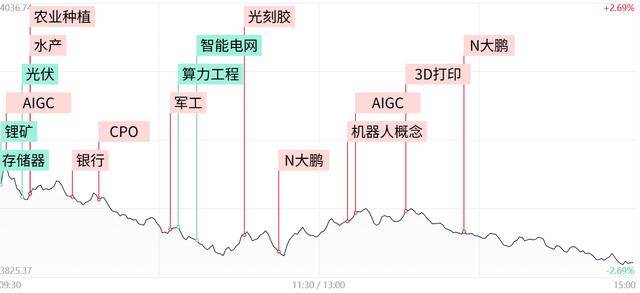
Market Overview - The market experienced significant fluctuations, with the Shanghai Composite Index falling over 2% and the ChiNext Index dropping more than 4%. The total trading volume in the Shanghai and Shenzhen markets reached 1.97 trillion, an increase of 257.5 billion compared to the previous trading day. Nearly 5,100 stocks declined, with 99 hitting the daily limit down [1]. Sector Performance - The AI application sector showed resilience, with stocks like Rongji Software achieving five consecutive limit-up days. Other notable performers included Yidian Tianxia, Huanrui Century, and Xinhua Du, all hitting the daily limit up. This sector's strength is attributed to the recent update of Google's multimodal AI model, Gemini 3.0 Pro Image, which significantly enhances image quality and accuracy [2][7]. - The agricultural and fishery sectors also performed relatively well, with stocks like Quanyin High-Tech rising over 16%. The sector's independent logic is seen as a defensive attribute, attracting funds in a weak market environment. Quanyin High-Tech announced a partial tender offer for 189 million shares, representing 20% of its total issued shares [3][7]. - The military industry sector was active, with stocks like Jiu Zhi Yang hitting the daily limit up. According to Clarkson Research, global new ship orders in October fell by 38% year-on-year, but Chinese shipyards maintained a 73% market share [4]. Individual Stock Movements - The market saw a significant decline, with over 5,000 stocks falling, including a wave of limit-downs in lithium mining stocks such as Ganfeng Lithium and Tianqi Lithium. Technology stocks continued to weaken, particularly in the storage chip sector, with several stocks dropping over 10% [6]. - The high-profile stocks that previously attracted attention also faced declines, indicating a potential shift in market sentiment and the need for a new cycle to emerge after the current risks are fully released [6]. Future Market Analysis - The market opened lower and continued to decline, with no clear signs of stabilization. The mid-term upward structure of major indices has been completely damaged, suggesting that future corrections may take longer. The focus will likely shift to sectors that resonate with the market and show strength during recovery [8]. Key Market News - Huawei launched Flex:ai AI container technology, allowing a single GPU/NPU to support multiple AI workloads simultaneously, enhancing computational efficiency [10]. - Private equity positions reached a new high for the year, with the stock private equity position index rising to 81.13%, indicating strong market engagement from top private equity firms [11].


政策红利再加码!农业ETF(512620)今日上市,一键布局农业核心资产
2 1 Shi Ji Jing Ji Bao Dao· 2025-11-21 01:37
Group 1 - The A-share market saw a collective decline in the three major indices, with the agricultural sector showing strong performance in certain stocks, such as Luoniushan, which rose over 7% [1] - The newly launched Tianhong Agricultural ETF (512620) closely tracks the CSI Agricultural Index, covering sectors like breeding and agrochemicals, and includes leading agricultural companies such as Muyuan Foods and Wens Foodstuff Group [1] - The Ministry of Agriculture and Rural Affairs and the Xinjiang Uygur Autonomous Region government announced a plan to modernize agricultural facilities, aiming to renovate 30,000 acres and add 20,000 acres of modern agricultural production by the end of 2028 [1] Group 2 - Zhongjin Company highlighted that policy support and technological innovation will be key drivers for the future development of the planting industry chain, with a positive outlook on investment opportunities in leading agricultural enterprises [2] - The company believes that under the paradigm shift and the trend of stronger players becoming stronger, leading enterprises possess greater development potential [2]



农业ETF天弘(512620)明日上市!农业农村部部署工作,事关种业科技自立自强
2 1 Shi Ji Jing Ji Bao Dao· 2025-11-20 02:36
Group 1 - The three major indices collectively rose, with the agriculture sector showing significant gains, as evidenced by the 0.73% increase in the China Securities Agriculture Index [1] - A new agriculture-focused ETF, Tianhong (512620), is set to launch on November 21, tracking the China Securities Agriculture Index and covering sectors such as breeding and agrochemicals, featuring leading companies like Muyuan Foods and Wens Foodstuff Group [1] - The Ministry of Agriculture and Rural Affairs held a meeting on November 13 to promote the revitalization of the seed industry, emphasizing the need for high-quality development and self-sufficiency in seed technology [1] Group 2 - Guosheng Securities highlights that the revitalization of the seed industry is crucial for advancing new agricultural productivity, with significant breakthroughs in biotechnology expected to reshape the industry landscape [2] - Guoxin Securities anticipates that by 2026, leading companies in the pig and poultry breeding chains will strengthen, shifting investment focus from capital expenditure to cash flow generation [2] - The official capacity regulation is expected to enhance cash flow for leading enterprises in the pig industry, while the poultry sector is projected to see limited supply fluctuations, benefiting from demand recovery [2]

辽宁种质资源“家底”全面摸清
Liao Ning Ri Bao· 2025-11-20 01:08
Core Insights - The corn cooperative in Tieling County achieved a yield of over 2200 jin per mu due to protective farming practices and the selection of high-yield, disease-resistant varieties, showcasing the success of the province's seed industry revitalization efforts [1] - The province conducted a comprehensive survey of agricultural germplasm resources during the 14th Five-Year Plan, collecting 3924 crop germplasm resources and identifying 155 livestock and poultry genetic resources, thereby establishing a solid foundation for seed industry innovation [1] Group 1: Seed Industry Revitalization - The province has built a germplasm resource protection system covering crops, livestock, and aquatic products, with 51 provincial-level or above agricultural germplasm resource repositories established [1] - The province's agricultural research institutions have established a mechanism for "germplasm co-existence, gene co-identification, and information sharing," promoting integrated research and application [2] Group 2: Agricultural Variety Innovation - The province has seen significant achievements in agricultural variety innovation, with 11 crop varieties recognized as leading varieties by the Ministry of Agriculture and Rural Affairs, including "Dongdan 1331," which has consistently ranked among the top ten in national corn planting area [2] - New livestock breeds such as "Liaodan Black Pig" and "Chaomu Meat Sheep" have been approved by national standards, marking the province's first independently cultivated pig and sheep breeds [2]
第四届数字农业发展大会在武汉圆满落幕
Zheng Quan Ri Bao· 2025-11-19 09:12
Core Insights - The "Fourth Digital Agriculture Development Conference" was successfully held in Wuhan, focusing on enhancing agricultural productivity and digitalizing the entire industry chain to ensure food security [1][2] - The conference gathered over 260 representatives from various sectors, emphasizing the integration of digital technology in agriculture to promote intelligent production and precise management [1][3] Group 1: Industry Trends - The conference highlighted the importance of increasing agricultural yield as a core strategy for food security, with a call for the digital integration of various agricultural practices [1] - Industry leaders emphasized the need for digital agriculture to be rooted in practical applications that benefit farmers directly, ensuring sustainable industry growth [2] Group 2: Technological Innovations - Several experts shared advancements in digital agriculture, including the application of AI in disaster prevention and the introduction of new smart irrigation products by HeDa Technology [3] - The event showcased the certification of "Carbon Neutral Park" and "Zero Carbon Agriculture Park" for FuBang Technology's digital farm, marking a significant achievement in green agricultural development [2][3] Group 3: Collaborative Efforts - The conference served as a platform for companies to showcase technological innovations and deepen industry exchanges, aiming to accelerate product upgrades and optimize business models [2] - Various forms of engagement, including policy interpretation and technical sharing, were utilized to gather industry insights and build consensus for future development [3]

南农晨读 | 牧海重器
Nan Fang Nong Cun Bao· 2025-11-19 07:01
Group 1 - The core viewpoint of the article highlights the significant progress in China's seed industry, with over 85% of domestic seed sources in aquaculture and more than 95% of crop varieties being independently bred [3][5][6] - The Ministry of Agriculture and Rural Affairs reported that since the implementation of the "Seed Industry Revitalization Action Plan" in July 2021, the safety level of seed sources in China has steadily improved [4][5] - The upcoming Guangdong Forestry Expo will take place from December 1 to 3, featuring nearly 400 participating enterprises and buyers, focusing on the theme of "Green Guangdong, Green Prosperity" [9][12] Group 2 - The "Head Goose" project for cultivating rural industry leaders in Guangdong was launched, aiming to enhance talent development for rural revitalization [14][20] - The 2025 Guangdong Rural Industry Revitalization project is expected to inject strong momentum into the high-quality development of rural areas [20][21] - The 2025 Greater Bay Area Agricultural Products Trade Fair will be held from December 12 to 14, emphasizing a "media+" approach to enhance agricultural trade [25][26] Group 3 - Foshan is recognized as a key supplier of aquaculture seedlings, leveraging modern agricultural biotechnology and healthy breeding techniques to upgrade the entire fishery industry chain [28][31] - Dongguan's Shatian town is experiencing economic revitalization through its logistics hub, contributing significantly to the Greater Bay Area's economic dynamics [35][38] - In Gaozhou, nearly 300,000 acres of winter crops are thriving, showcasing a successful shift from idle land to productive agricultural use [40][42] Group 4 - Yangchun City in Guangdong is transforming its economy by focusing on equipment manufacturing, with an expected annual output value exceeding 6.6 billion yuan from 41 industrial chain projects [44][47][48]

第四届数字农业发展大会在汉圆满落幕
Quan Jing Wang· 2025-11-19 05:38
Core Insights - The "Fourth Digital Agriculture Development Conference" was successfully held in Wuhan, focusing on enhancing agricultural productivity and digitalizing the entire industry chain to ensure food security [1] - The conference gathered over 260 representatives from various sectors, including government, academia, and pioneering digital agriculture enterprises, to discuss new pathways for digital agriculture development [1] Group 1: Industry Direction - The president of the China Agricultural Technology Promotion Association emphasized that improving yield is crucial for ensuring food security, marking a new stage of digital empowerment in agricultural modernization [2] - The industry is urged to promote full-chain digitalization and establish an integrated system that connects various agricultural processes, transitioning from traditional farming methods to data-driven practices [2] Group 2: Innovations and Achievements - A certification ceremony for zero-carbon agricultural parks was held, with Fubon Technology's tomato community receiving recognition for its achievements in green agricultural development [3] - Experts shared cutting-edge results and practical experiences in digital agriculture, highlighting the importance of soil protection and the relationship between food security and seed industry revitalization [3] - New smart irrigation products were launched by He Da Technology, providing technological support for the implementation of digital agriculture [3] Group 3: Collaborative Efforts - The conference utilized various formats such as policy interpretation, technical sharing, and collaborative exchanges to gather industry wisdom and build consensus for development [4] - The showcased new technologies and solutions in digital agriculture are expected to drive the deep integration of digital technology with modern agriculture, contributing to the national food security foundation [4]
草原肉库 生态奶罐 绿色草都锡林浩特市:“三驾马车”带动畜牧业提质增效
Nei Meng Gu Ri Bao· 2025-11-19 02:31
Core Insights - Xilin Gol League is leveraging its regional advantages to establish itself as a significant agricultural and livestock product production base, focusing on high-quality development in animal husbandry through the "grassland meat library," "ecological milk can," and "green grass city" initiatives [1] Group 1: Grassland Meat Library - The city is promoting a shift from quantity to quality in sheep farming, emphasizing the importance of superior breeding stock to enhance income and reduce pasture burden [2] - A breeding system has been established for the Ujumqin sheep, including a breeding center and multiple breeding farms, with an annual supply capacity of over 3,000 breeding sheep [2] - The beef cattle industry is also seeing improvements, with the establishment of two breeding farms and a focus on high-quality breeds like Simmental and Huaxi, leading to increased profitability for local farmers [3] Group 2: Ecological Milk Can - The city is transitioning from selling live animals and fresh milk to selling processed dairy products, enhancing the value chain through industrial parks and integrating processing with tourism [4] - The establishment of the Shifang Food Industrial Park and the Cheese Culture Industrial Park has led to significant investments and production capacity, with annual output reaching approximately 28,000 tons of various dairy products [4][5] - A cooperative model led by grassroots organizations is helping small dairy producers improve sales and profitability, with a focus on direct sales and e-commerce [6] Group 3: Green Grass City - The city is prioritizing ecological protection while enhancing forage supply, integrating natural grassland management with technological advancements in forage production [7] - The Maodeng Ranch has developed a 360,000-acre ecological park, significantly improving vegetation coverage and forage variety, which has led to increased production [8] - Technological innovations, such as hydroponic forage systems, are addressing challenges related to weather dependency in forage supply, creating a robust supply system for the livestock industry [9]
超85%国产率!种业振兴五年间,“中国种”撑起水产种业
Nan Fang Nong Cun Bao· 2025-11-18 10:33
Core Viewpoint - The article highlights the significant progress made in China's seed industry revitalization, particularly in the aquaculture sector, with over 85% of the market now relying on domestic seed sources [3][4][5]. Group 1: Seed Industry Revitalization Achievements - Since the implementation of the "Seed Industry Revitalization Action Plan" in July 2021, the safety level of seed sources in China has steadily improved, with over 95% of crop varieties being independently bred [3][7]. - The domestic market share of aquatic seed sources has exceeded 85%, while that of livestock and poultry has surpassed 80% [4][5]. - The national seed supply guarantee rate has reached 80%, indicating a robust foundation for seed resources [7]. Group 2: Aquaculture Seed Resource Management - A nationwide survey of aquatic breeding resources has been successfully completed, identifying 857 species and preserving over 120,000 genetic material samples [10][11]. - The establishment of three national fishery genetic resource banks has enhanced the supply capacity of aquatic seedlings [12]. - The number of national-level aquatic breeding farms has increased to 105, covering a wide range of aquatic species [14][16]. Group 3: Innovation and Development in Aquaculture - Support for leading enterprises, research institutions, and universities has led to the approval of 23 new aquatic varieties in 2024, bringing the total to 306 [17][18]. - The national aquatic breeding joint attack plan has shown initial success, with three new varieties of the Pacific white shrimp developed, reducing reliance on imports [19][20]. - Research and development investments by leading companies in the aquatic seed industry are increasing, with 43% of new varieties in 2024 being developed by these enterprises [20][21]. Group 4: Infrastructure and Regulatory Improvements - In 2024, the government will support the establishment of six new aquatic genetic resource sites and various breeding platforms, enhancing the overall infrastructure of the aquatic seed industry [22][23]. - New regulations for the protection of aquatic genetic resources have been incorporated into the revised Fisheries Law, which is currently under review by the National People's Congress [32][33]. - The quality of aquatic seedlings has improved due to stricter licensing and approval processes for seed production and import/export [34]. Group 5: Regional Contributions - Guangdong province has made notable contributions to the seed industry revitalization, with a projected production of 6.796 billion marine fish seedlings in 2024, accounting for over 51% of the national total [35][36]. - The province has maintained its position as the leading producer of marine fish and shrimp seedlings for seven consecutive years, significantly bolstering the national seed resource pool [36][37].