量子科技

Search documents
科创板首批三季报出炉 前沿赛道企业引领增长
Xin Hua Cai Jing· 2025-10-19 09:33
Core Viewpoint - The performance of several companies listed on the Sci-Tech Innovation Board has shown significant growth in Q3, particularly in emerging industries such as AI computing chips and optical communication, highlighting the board's role in fostering strategic emerging and future industries [1] Group 1: AI Computing Chip Sector - Domestic chip design companies, such as Haiguang Information and Cambricon, have reported outstanding Q3 performance, contributing to the foundational construction of China's AI industry [2] - Haiguang Information achieved total revenue of 9.49 billion yuan, a year-on-year increase of 54.65%, and a net profit of 1.961 billion yuan, up 28.56%, driven by deepened cooperation with key industry partners [2] - Cambricon's revenue reached 4.607 billion yuan, a dramatic increase of 2300%, with a net profit of 1.605 billion yuan, up 321.49%, attributed to market expansion and support for AI application implementation [2] Group 2: Optical Communication Sector - The optical communication sector is identified as a key infrastructure for future information industries, with companies like Shijia Photonics and Tengjing Technology showing remarkable growth [3] - Shijia Photonics reported revenue of 1.56 billion yuan, a year-on-year increase of 113.96%, and a net profit of 299 million yuan, up 727.74%, driven by AI development and increased product orders [3] - Tengjing Technology achieved revenue of 425 million yuan, a 28.11% increase, and a net profit of 64 million yuan, up 15%, benefiting from the growing demand for optical communication components [3] Group 3: Frontier Technology and Future Industries - Companies are strategically positioning themselves in frontier technologies, with significant growth in quantum technology and future energy sectors [4] - GuoDun Quantum reported revenue of 190 million yuan, a 90.27% increase, and a reduced net loss of 26 million yuan, driven by growth in quantum communication and computing [4] - Rongbai Technology is advancing in solid-state battery materials, achieving ten-ton level shipments and maintaining a leading position among top battery manufacturers [4][5]


研判2025!中国量子模拟器行业发展历程、相关政策及市场规模分析:从理论突破到市场增长,迈向前沿应用的新征程[图]
Chan Ye Xin Xi Wang· 2025-10-19 01:21
Core Insights - The quantum simulator industry in China is projected to reach a market size of approximately 1.506 billion yuan in 2024, reflecting a year-on-year growth of 15.23% [10][11] - Key challenges facing the quantum simulator sector include quantum noise accumulation and system scalability [10] - The development of modular architectures in quantum simulators, such as the nano-electronic quantum simulator by a US-UK joint team, enhances scalability from single units to large networks [10][11] Industry Overview - Quantum simulators are specialized computational tools based on quantum mechanics principles, primarily used to simulate the behavior of quantum systems [2] - They are categorized into digital quantum simulators and analog quantum simulators [2] Industry Development History - The concept of quantum simulation was established in 1982 by Richard Feynman, with significant milestones achieved in subsequent years, including the realization of the Fermi-Hubbard model by the University of Science and Technology of China in 2024 [4][5] - The development trajectory showcases a complete evolution from theoretical foundations to technological breakthroughs [4] Relevant Policies - Quantum technology has been included in China's "14th Five-Year Plan," emphasizing its importance as a core future industry [6] - The government has introduced various policies to support the research and industrialization of quantum technology, enhancing its global competitiveness [6] Industry Value Chain - The upstream of the quantum simulator industry includes essential components such as quantum chips, dilution refrigerators, and quantum light sources [8] - The midstream focuses on the manufacturing of quantum simulators and software development, while the downstream applications span finance, pharmaceuticals, logistics, and energy sectors [8] Market Size - The quantum simulator market in China is expected to grow significantly, with a projected size of 1.506 billion yuan in 2024, driven by advancements in quantum technology and government support [10][11] - Investment in quantum technology has surged, with 29 financing events recorded in the first eight months of 2025, marking a 93.33% increase year-on-year [10][11] Key Companies' Performance - The competitive landscape of the quantum simulator industry is characterized by leading hardware companies like GuoDun Quantum and Benyuan Quantum, which have established significant technological barriers [11] - GuoDun Quantum reported a revenue of 121 million yuan in the first half of 2025, a 74.54% increase year-on-year, with R&D investment also rising [11][12] Industry Development Trends 1. **Technological Integration and Hardware Breakthroughs**: The next five years will see deep integration of quantum simulators with AI and digital twin technologies, enhancing performance and reducing error rates [14] 2. **Deepening Application Scenarios**: Quantum simulators will penetrate core sectors such as manufacturing and finance, optimizing processes and improving returns [14] 3. **Accelerated Standardization**: China aims to lead in establishing international standards for quantum simulators, enhancing compatibility and competitiveness on a global scale [15]



高股息股重入资金法眼 农业银行11连阳创历史新高
Zheng Quan Shi Bao· 2025-10-17 22:56
Market Overview - A-shares experienced adjustments due to external market volatility, with the Shanghai Composite Index failing to break through 3900 points, the Shenzhen Component Index falling below 13000 points, and the ChiNext Index dropping below 3000 points, while the STAR 50 Index hit a one-month low [1] - Market turnover declined, ending a streak of 40 consecutive trading days with over 2 trillion yuan in daily turnover [1] Financing and Capital Flow - Margin traders continued to increase their positions in A-shares, with a net buy of over 14.4 billion yuan this week, bringing the margin balance to a historical high of 2.44 trillion yuan [1] - The non-ferrous metals sector saw a net buy of over 7.6 billion yuan, while the power equipment sector had over 2.7 billion yuan net buy, and both basic chemicals and biomedicine received over 1 billion yuan net buy [1] - The banking sector received over 12.3 billion yuan in net inflow, making it the only sector with net inflow exceeding 10 billion yuan this week [1] Sector Performance - The banking sector index has risen for seven consecutive days, approaching historical highs, with Agricultural Bank of China seeing a rare 11-day consecutive rise in its daily closing price, reaching a historical high [2] - The average dividend yield for the banking sector is 4.01%, with several banks exceeding 6% [3] - Coal stocks have strengthened recently, with the sector index rising by 5.9% this week, driven by the onset of the heating season [3][4] Future Outlook - The "14th Five-Year Plan" is expected to drive sector rotation in the A-share market, with a focus on digital technology, space economy, and healthcare [2] - The banking sector is anticipated to benefit from increased asset allocation by insurance companies as the fourth quarter approaches [3] - The coal industry is projected to maintain a balanced supply-demand situation, with potential price improvements due to seasonal demand [4]

广东两地携超4万个次岗位赴鄂豫9所高校引才
Zhong Guo Xin Wen Wang· 2025-10-17 07:51
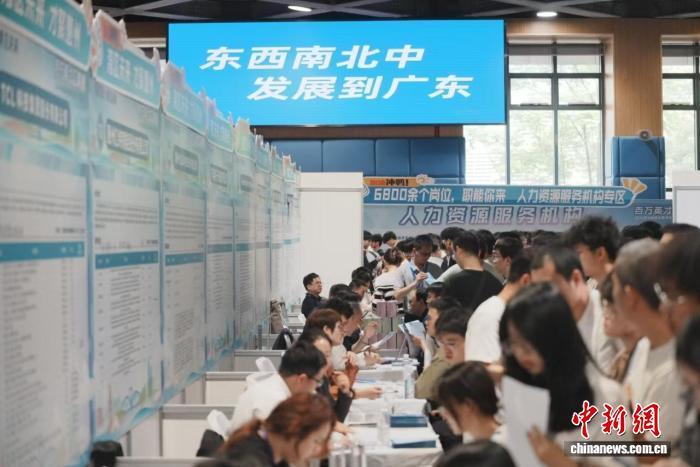
值得一提的是,本次招聘岗位产业布局紧密贴合广东发展脉搏,不仅涵盖广东省20个战略性产业集群, 还囊括人工智能、机器人、量子科技等新兴与未来产业。薪酬福利方面,8万-20万元年薪岗位占比超 90%,20万-50万元年薪岗位占比达9.29%,此外还有50万+高薪岗位储备,为不同层次人才提供坚实薪 酬保障。 据了解,本次招聘近85%的岗位面向本科生开放,约9%的岗位面向硕士,约6%的岗位面向博士,确保 各学历阶段的人才都能在此找到适配岗位,真正实现"人岗精准对接"。 广东两地携超4万个次岗位赴鄂豫9所高校引才 中新网惠州10月17日电 (孙秋霞 钟乐)为深入推进"百万英才汇南粤"行动计划,广东惠州、潮州两市将 联动全省企事业单位于10月21日至23日、10月29日至30日分别走进湖北、河南9所重点高校开展招聘活 动。此次活动汇聚1000余家次广东省、市、县三级企事业单位,携超4万个次重点产业岗位。 据了解,本次秋季招聘活动颇具规模。每场招聘会拟邀请100家用人单位参与,精准覆盖湖北40所、河 南20所重点高校学生群体。招聘会现场不仅设置职业指导、政策咨询专区,为求职者解答就业疑惑、提 供专业建议,还安排了广东美食品 ...
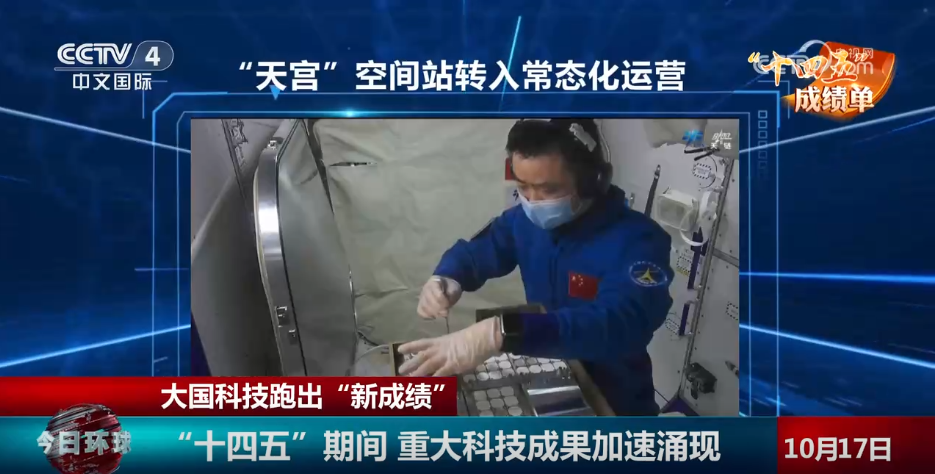
“十四五”期间重大科技成果加速涌现 大国科技跑出“新成绩”
Yang Shi Wang· 2025-10-17 03:39
Core Insights - The "14th Five-Year Plan" marks a significant year for China's technological and industrial innovation, emphasizing the integration of new productive forces and the acceleration of major scientific achievements [1][3] - The plan highlights the importance of innovation as a core element in China's modernization and positions technological self-reliance as a strategic support for national development [1][3] Group 1: Achievements in Technology - Major technological achievements during the "14th Five-Year Plan" include the operational normalization of the "Tiangong" space station, the successful lunar sample return by "Chang'e 6," and the large-scale application of 5G technology [3] - The "China Sky Eye" neutrino experiment facility has commenced operations, and the construction of the new generation nuclear fusion device BEST is fully underway, with expectations to light the first lamp through nuclear fusion by 2030 [3] Group 2: Investment and R&D Growth - In 2024, total R&D investment is projected to exceed 3.6 trillion yuan, representing a 48% increase compared to 2020, with R&D intensity surpassing the average level of EU countries [5] - The total number of R&D personnel in China ranks first globally, indicating a robust workforce dedicated to innovation [5] Group 3: Impact on Society and Youth Involvement - Over the past five years, technology has significantly transformed daily life, with more than half of the world's new energy vehicles operating in China and 60% of global artificial intelligence patents originating from the country [7] - Funding for basic research is expected to grow by over 70% compared to 2020, fostering breakthroughs in quantum technology, life sciences, and space science [7] - The proportion of young scientists under 45 leading national key R&D projects exceeds 40%, with 80% of National Natural Science Foundation projects undertaken by this age group, highlighting the emergence of young talent as a key driver of technological resilience [7] Group 4: Technology Transfer and Economic Impact - The level of technology transfer has reached new heights, with the national technology contract transaction volume maintaining double-digit growth for several years, projected to reach 6.8 trillion yuan in 2024 [10] - The transition of scientific achievements from laboratories to production lines is becoming more efficient, contributing to national strategies and enhancing public welfare [10]
共绘青春创新蓝图 共创世界美好明天
He Nan Ri Bao· 2025-10-16 23:43
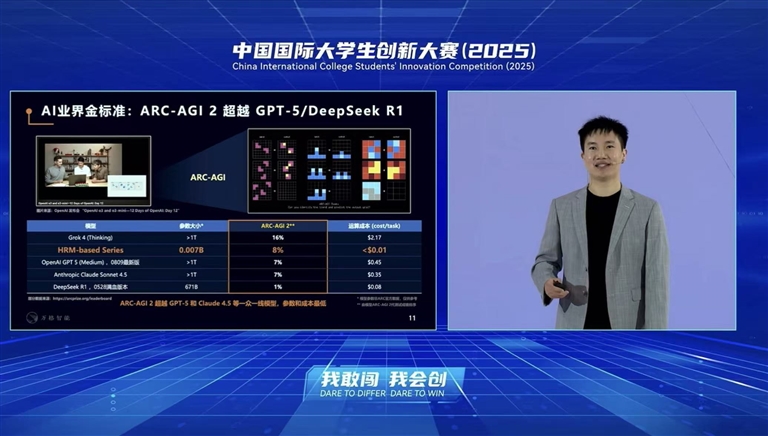
Group 1 - The China International University Student Innovation Competition (2025) was held from October 13 to 15, 2024, at Zhengzhou University, showcasing innovative projects and fostering future-changing ideas [2][4] - The competition featured a total of 2355 universities, 248,000 projects, and 963,000 participants, with a 34% increase in participating companies and a 27% increase in selected projects compared to the previous year [6] - The event emphasized the importance of youth in innovation, with President Xi Jinping encouraging participants in a letter, highlighting that innovation is a vital source of human progress [2] Group 2 - The competition introduced five new project categories: low-altitude economy, biotechnology, quantum technology, new energy, and new materials, attracting a significant number of projects in each category [3] - The winning project from Tsinghua University focused on a brain-like architecture for AI, aiming to enhance AI's learning capabilities [4] - The competition also included international participation, with projects from over 150 countries and regions, indicating a global interest in innovation and collaboration among youth [7] Group 3 - A resource matching platform was established during the competition, with a dedicated investment fund exceeding 4.7 billion yuan, aimed at bridging the gap between research and market application [6] - The competition's projects demonstrated a high level of innovation and practical application, with several projects already implemented in real-world scenarios, such as water management systems [6] - The event also hosted the World University Student Innovation Conference, releasing reports that provide an international perspective on youth innovation [7]
瞄准“最前沿”弄潮儿向涛头立——“十四五”创新突破启示录
Ren Min Ri Bao· 2025-10-16 01:20
Core Insights - China's scientific researchers are making significant advancements in various fields, including quantum technology, life sciences, and brain-computer interfaces, contributing to the country's goal of becoming a technology powerhouse [1][2] Group 1: Technological Advancements - In quantum technology, China achieved the international milestone of realizing fractional quantum anomalous Hall states of photons [1] - The life sciences sector has produced the first single-cell spatial distribution map of the macaque brain cortex [1] - Brain-computer interfaces have enabled paraplegic patients to stand and walk, and have helped blind individuals regain vision [1] Group 2: Importance of Basic Research - Over the past five years, China's electric vehicle battery charging efficiency has improved by more than four times, with leading advancements in electric motors and control systems [2] - The rapid development of the new energy vehicle industry is attributed to breakthroughs in foundational technologies, despite a late start compared to Europe and the U.S. [2] - The success of scientific research often comes after numerous failures, highlighting the importance of sustained investment in basic research and the dedication of researchers [2] Group 3: Innovation Ecosystem - The creation of a robust innovation ecosystem is essential for effective collaboration among innovation entities and optimal allocation of resources [3] - Recent reforms in the technology evaluation system emphasize recognizing innovation value and contributions, fostering the growth of leading technology enterprises [3] - China aims to become a source of major original and disruptive technological achievements, marking a significant shift in its development during the "14th Five-Year Plan" period [3] Group 4: Emerging Industries - The first World Humanoid Robot Sports Competition showcased the potential of emerging industries, with robots demonstrating both capabilities and limitations [4] - The competition reflects the strong momentum of innovation and the importance of understanding trends while solidifying foundational work [4]
量子科技板块十月以来持续走强 融资资金大笔加仓概念股
Zheng Quan Shi Bao· 2025-10-15 18:05
Core Insights - The quantum technology sector has seen a collective rise, with notable stocks like HeXin Instruments increasing by 11.18% and several others rising over 4% in October [1] - Positive news for the quantum technology sector includes significant financing rounds and the establishment of a quantum ecosystem alliance [2] - The industrialization prospects for quantum technology are promising, with China projected to hold a 32% market share by 2025, making it the second-largest market globally [3] Group 1: Market Performance - The quantum technology sector has experienced substantial stock price increases, with six stocks rising over 10% in October [1] - Financing activities have surged, with a total net purchase of 1.97 billion yuan in quantum technology concept stocks in October [4] Group 2: Financing and Investment - Beijing Boson Quantum Technology Co., Ltd. completed a financing round of several hundred million yuan, indicating strong investor interest in quantum startups [2] - Major stocks like ZTE Communications and GuoDun Quantum have seen significant net purchases, with ZTE alone attracting 2.136 billion yuan [4] Group 3: Industry Outlook - The global quantum technology market is expected to exceed $6.1 billion by 2025, with China's market projected to reach 11.56 billion yuan, reflecting a compound annual growth rate of over 30% [3] - The government is actively supporting the quantum technology sector as part of its strategic initiatives, emphasizing its importance in future industries [3]
首都在线:公司聚焦于为千行百业构建云网一体化服务体系
Zheng Quan Ri Bao Wang· 2025-10-15 14:13
Core Viewpoint - The company, Capital Online (300846), is currently not involved in quantum technology but focuses on building an integrated cloud-network service system for various industries [1] Group 1: Company Focus - The company is concentrating on general computing and intelligent computing cloud services, telecommunications network services, IDC services, and comprehensive solutions [1] - The advancement of quantum computing technology is expected to provide new pathways to overcome traditional computing power bottlenecks and further expand the application range of computing power [1]

国泰海通|计算机:量子革命:量子科技的现状与未来
国泰海通证券研究· 2025-10-15 13:11
Group 1 - Quantum computing is in an early breakthrough stage, with quantum error correction being a key focus. Various technological routes such as superconducting, ion trap, neutral atom, photonic, and silicon semiconductor are showing a diversified and open development trend. Significant progress is expected in the next 5 to 10 years, with the US and China leading globally in this field [1][2] Group 2 - China is in an absolute leading position in the QKD quantum security field. The country has established a relatively complete quantum secure communication industry chain centered on QKD technology, with Chinese institutions accounting for approximately 93% of the top 10 patent applicants in the global quantum communication field [2] Group 3 - The quantum measurement industry is entering a diversified development cycle. Quantum precision measurement leverages the sensitivity of quantum states to enhance the accuracy of measuring various physical quantities, with a clear industrialization prospect despite varying maturity levels of quantum sensors for different physical quantities [2]