人民币国际化

Search documents
时间仅仅过去7天,中澳结算风波大结局,澳铁矿巨头同意用人民币
Sou Hu Cai Jing· 2025-10-12 03:50
7天前,澳大利亚还摆出了一副"你爱买不买"的强硬姿态,结果却在短短几天内突然转变,开始接受用人民币结算铁矿石交易,这一举动让全球都感到震 惊。那么,这究竟是澳大利亚妥协得太快,还是中国的反击力度太大?必和必拓(BHP)的"点头同意"不仅仅是一种贸易上的让步,更像是对中国经济战略 的间接认可。 这场铁矿石结算方式的争议背后,其实有很多深层次的因素值得我们关注。它不仅仅是一次贸易纠纷,更涉及了贸易战术、金融博弈和话语权的争夺。短短 七天的变化,其实是中澳之间长期博弈的集中爆发。 首先,澳大利亚实在离不开中国市场,这绝不是一句空话。铁矿石是澳大利亚出口的支柱产业,而中国恰恰是全球最大的铁矿石买家,占据了澳大利亚铁矿 石出口的六成以上。假如中国暂停采购,像必和必拓这样的大型矿业公司库存将迅速增加,现金流也会迅速吃紧。企业不仅无法获得利润,甚至可能面临裁 员的风险。在这种情况下,澳大利亚总理阿尔巴尼斯在记者会上表达了复杂的心情,表示希望尽快解决争端,恢复互信。他的表态一方面是在安抚国内的企 业,另一方面也像是向中国递出了橄榄枝。 更让澳方头疼的是,中国近年来在铁矿石进口上已经不再依赖澳大利亚,进口渠道变得更加多元。除了 ...



多家头部券商,落地新业务!
券商中国· 2025-10-12 02:24
Core Viewpoint - The recent announcement by the central bank, the CSRC, and the State Administration of Foreign Exchange supports foreign institutional investors in conducting bond repurchase transactions in the Chinese bond market, enhancing the openness and investment mechanisms of RMB assets [1][2]. Group 1: Announcement Details - The announcement allows various foreign institutional investors to participate in bond repurchase transactions in the interbank bond market, significantly increasing market activity [3][4]. - Cross-border repurchase refers to foreign institutions using RMB bonds as collateral for financing through repurchase transactions, which is a crucial path for foreign entities to finance in China and offshore RMB markets [2][3]. Group 2: Market Participation - Major securities firms like CITIC Securities and CICC, along with several banks including ICBC, ABC, and CCB, have actively participated in the initial cross-border repurchase transactions [3]. - Agricultural Bank of China successfully executed the first cross-border repurchase transaction under the Bond Connect program, amounting to 1 billion RMB [3]. Group 3: Benefits of the New Mechanism - The new repurchase business provides an efficient and convenient short-term financing channel for foreign investors, helping to reduce transaction costs and enhance capital utilization [3]. - The innovative trading mechanism allows foreign investors to conduct repurchase transactions using mainstream international bond transfer models, significantly improving transaction convenience and risk management capabilities [3].



美联储正式服软,万亿美元或将涌入中国,下一个珍珠港事件或出现
Sou Hu Cai Jing· 2025-10-12 01:56
Core Viewpoint - The Federal Reserve's recent shift from aggressive interest rate hikes to rate cuts indicates a response to economic challenges, potentially leading to significant capital flows into China as investors seek more attractive returns [2][4][10]. Group 1: Federal Reserve Policy Changes - The Federal Reserve's policy has fluctuated from extensive asset purchases in 2021 to tightening measures, and now to a more accommodative stance with a 25 basis point rate cut in September 2023, reflecting concerns about economic strength [2][4]. - The Fed's balance sheet remains above $7 trillion, indicating a slow reduction in asset purchases while maintaining a low-interest-rate environment [4][10]. - Analysts suggest that continued rate cuts could weaken the US dollar, benefiting emerging markets, particularly China [4][10]. Group 2: Capital Flows to China - Goldman Sachs predicts that the Fed's rate cuts may prompt Chinese companies to sell $1 trillion in dollar assets and reinvest in renminbi, driven by changes in interest rate differentials [5][12]. - China's bond market is attracting foreign investment, with foreign institutions holding over 4 trillion renminbi in bonds, and significant trading activity recorded [5][10]. - The stability of Chinese government bond yields at around 2.5% compared to declining US Treasury yields makes Chinese assets more appealing to global investors [5][10]. Group 3: Global Currency Dynamics - Central banks are reportedly reducing their dollar reserves while increasing their holdings in renminbi, with 30% of bank leaders planning to increase renminbi allocations within two years [7][12]. - The weakening US dollar, which has dropped from a high of 114 to around 90, is expected to raise commodity prices, benefiting countries with strong currencies like China [7][10]. - The trend of increasing gold reserves among emerging markets, including China, is seen as a strategy to reduce reliance on the dollar and enhance financial security [7][12]. Group 4: Economic Context and Future Outlook - The US economy is projected to grow at around 2.5% in 2024, but consumer spending remains weak, leading to a cautious outlook on economic recovery [4][10]. - The ongoing US-China economic tensions, particularly in technology and supply chains, may influence capital flows and investment strategies [9][10]. - The potential for a "Pearl Harbor" event in the financial sector, such as a sudden devaluation of the dollar, is a concern for global markets, prompting countries to diversify their reserves [12][16].

80亿美元市值蒸发!中国停购澳矿十天,人民币结算撬动全球百年贸易格局
Sou Hu Cai Jing· 2025-10-11 20:05
Core Viewpoint - The article discusses China's strategic shift in iron ore procurement, leading to BHP's acceptance of RMB settlement, marking a significant change in the global iron ore pricing and trading landscape [1][5]. Group 1: China's Iron Ore Market Dynamics - China imports over 1.1 billion tons of iron ore annually, accounting for 75% of global seaborne trade, but has been constrained by a Western-dominated pricing system [3]. - The establishment of China Mineral Resources Group aims to consolidate procurement from major steel companies, transforming the buyer-seller dynamic from "many to few" to "one to one" [3][5]. - BHP's revenue in 2024 was $55.6 billion, with $34.7 billion coming from China, while Chinese steel mills operate with an average profit margin of less than 5% [3]. Group 2: Strategic Responses and Market Changes - In the first five months of 2025, China's iron ore imports decreased by 6%, signaling weakened demand [5]. - China is diversifying its supply sources, with Guinea's Simandou mine set to produce 10 million tons annually by the end of 2025, and Brazilian Vale already accepting RMB settlements [5]. - The procurement ban on BHP's dollar-denominated orders directly impacted its revenue, with a potential loss of over $20 billion annually [5]. Group 3: Implications of RMB Settlement - The shift to RMB settlement allows Chinese companies to avoid risks associated with USD exchange rate fluctuations, which have resulted in cumulative losses exceeding 80 billion yuan over five years [5]. - The transition to RMB for iron ore trading could have a ripple effect, with Vale planning to convert 20% of its trade with China to RMB and Saudi Aramco discussing similar plans for oil [7]. - The establishment of the "Beijing Iron Ore Index" challenges the Platts index, promoting a more transparent pricing mechanism based on domestic port spot trading data [7]. Group 4: Global Trade and Currency Dynamics - Australia's economy could shrink by 0.3% if trade with China continues to be disrupted, as iron ore exports constitute 40% of its total exports [7]. - Other resource-rich countries are adjusting their strategies, with Brazil viewing RMB settlement as an opportunity to reduce USD dependency [7]. - The article highlights the ongoing evolution of global trade rules from a unipolar to a multipolar system, questioning who will ultimately dictate these rules [9].
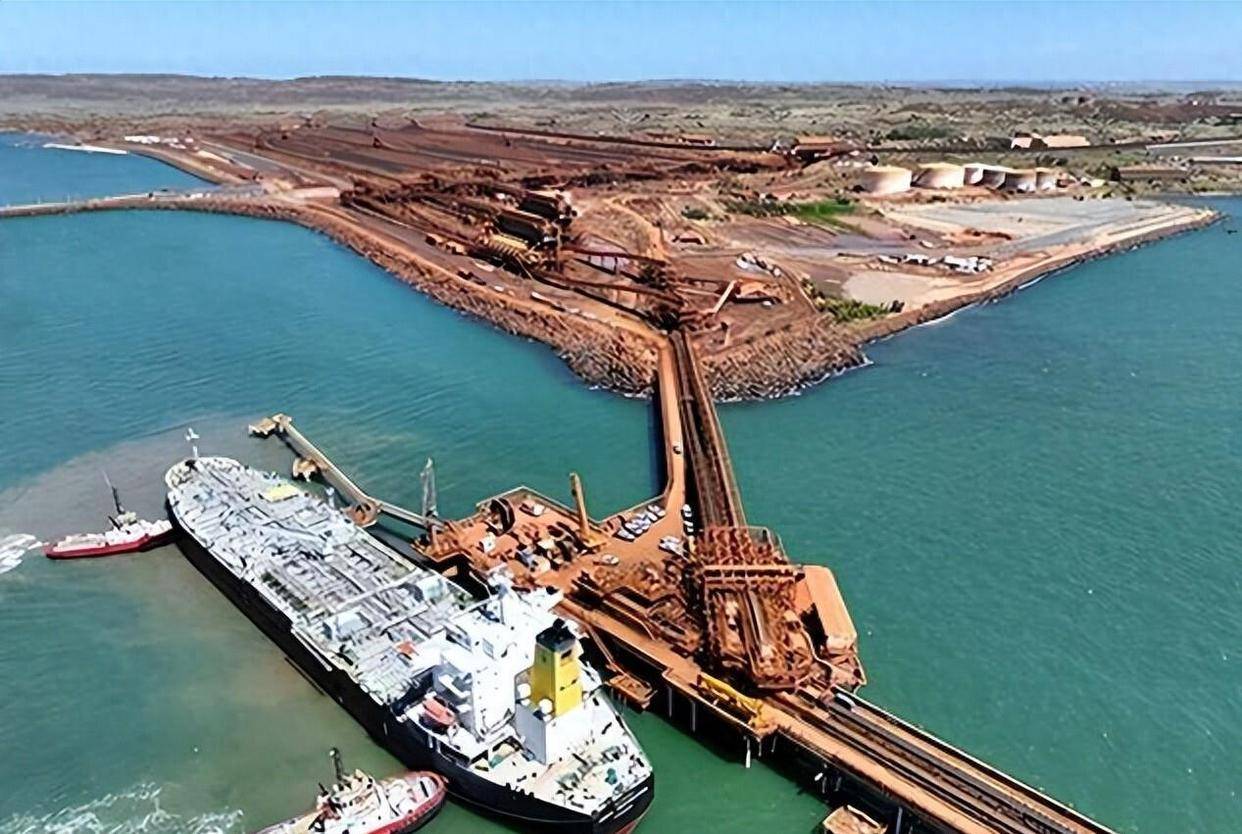
人民币还是美元?铁矿石巨头低头记
Sou Hu Cai Jing· 2025-10-11 17:19
Core Viewpoint - The dramatic shift in BHP's stance from a hardline position to compromise on RMB settlement reflects China's assertiveness in the global iron ore market, challenging the longstanding dominance of USD pricing in commodity trade [1][11]. Group 1: Market Reaction - China's directive to halt the purchase of BHP's USD-priced iron ore led to significant market turmoil, with Singapore iron ore futures experiencing a 1.8% increase and BHP's stock price dropping over 6%, resulting in a market value loss exceeding $10 billion [3][11]. - The immediate impact of the directive caused chaos at Australian ports, with ships already en route being forced to return, leading to a surge in insurance claims [3][5]. Group 2: Contract Negotiations - The breakdown of long-term contract negotiations was a key trigger for the crisis, as BHP insisted on a price of $109.5 per ton for 2025, a 15% increase from the previous year, while spot prices had fallen to around $80 [3][11]. - China's decision to suspend USD purchases was a strategic move to leverage its position as a major importer, with over 1.2 billion tons of iron ore imported annually, of which 60% of BHP's revenue comes from this segment [11][12]. Group 3: Shift to RMB Settlement - BHP's eventual acceptance of RMB settlement for approximately 30% of its iron ore trade with China marks a significant breakthrough for the internationalization of the RMB in commodity transactions [11][12]. - The agreement, effective from Q4 2025, aims to mitigate risks associated with USD exchange rate fluctuations and could lead to further RMB-based long-term contracts if market acceptance continues to grow [11][12]. Group 4: Global Trade Dynamics - The shift towards RMB settlement is indicative of a broader restructuring of global trade dynamics, with BHP's compromise prompting other major producers like Vale and Indian mining companies to explore similar arrangements [16][17]. - China's diversified supply strategy, which includes securing iron ore from Australia, Brazil, and Russia, enhances its bargaining power and reduces reliance on USD-denominated transactions [18][19].
刘煜辉:巨大的阿尔法在形成中,大胆想象,5年后,人民币抢下美元20%的地盘
Sou Hu Cai Jing· 2025-10-11 12:11
Group 1: Economic Strategy and Investment Focus - The core focus for China in the next five years will be on three key sectors: circular economy, AI computing power chips with advanced processes, and new materials such as solid-state batteries and rare earths [3][14][16] - A significant amount of capital will be invested in AI computing, emphasizing the need for breakthroughs in the processing system to achieve independence in the entire semiconductor industry [3][14] - China has a strategic advantage in the supply chain, particularly in rare earths, which are critical for modern industrial systems [16][18] Group 2: Currency and Financial Strategy - The competition between the Renminbi and the US Dollar is inevitable, with a focus on establishing a new financial ecosystem that could potentially allow the Renminbi to capture 20% of the Dollar's market share in five years [5][21][30] - The establishment of a stablecoin based on the Renminbi is seen as crucial for creating a new financial cycle, leveraging China's trade and supply chain strengths [26][29] - The transformation of data into a new economic factor is essential for restructuring China's fiscal foundation and tax base, moving away from reliance on land as a production factor [31][34] Group 3: Circular Economy and Resource Management - China aims to develop a circular economy to reduce dependency on non-renewable resources, particularly oil, by finding technologies that can convert waste back into usable resources [10][12][13] - The focus on circular economy is not just an environmental strategy but also a means to overcome geopolitical vulnerabilities related to resource supply [12][13] Group 4: Market Dynamics and Future Outlook - The upcoming five years will see a systematic approach to understanding and capitalizing on the strategic initiatives outlined in the "15th Five-Year Plan," which will influence market sentiment and investment opportunities [9][36] - The shift towards a digital economy and the capitalizing of data as a new production factor will create significant opportunities in the market [34][36]

美国欠中国一万亿,20年内很难偿还,一旦赖账,中国该如何应对?
Sou Hu Cai Jing· 2025-10-11 08:48
2025年,全球经济依旧在复杂的博弈中前行,其中美国对中国的巨额债务问题备受关注。这笔债务大约达到一万亿美元,已经成为中美关系中的一个重要话 题。很多人关心的问题是:美国能否在未来20年内还清这笔债务?答案并不乐观。 更令人担忧的是,如果美国决定不履行债务,中国该如何应对呢?美国的总债务已经飙升至36.22万亿美元,尤其是在特朗普执政时期,由于大规模减税和 支出,财政赤字不断扩大。如今,美国每年仅支付国债利息就要花费数十亿美元,利息支出已经高达7260亿美元,占联邦预算的14%。这意味着美国每花 100美元,14美元就用于支付债务利息,而不是用于基础设施建设、教育或民生救助。 美国的债务问题源于其经济模式。作为全球储备货币的发行国,美元的特殊地位让美国能够通过借债来填补财政赤字和贸易逆差。然而,这种做法也带来了 严重的隐患:制造业外移,税基薄弱;与此同时,医疗、社会保障等刚性支出却不断增加,导致美国只能靠发行新债来偿还旧债,债务像无底洞一样无法填 满。 对全球经济来说,美国的债务问题犹如一颗定时炸弹。美国的财政赤字和贸易赤字让全球经济失衡,世界各国的央行、企业和个人都持有大量美国国债。如 果这些债务的信任网络 ...
从被割7000亿到反杀!中国铁矿定价权之战,这局赢得太提气
Sou Hu Cai Jing· 2025-10-11 07:01
Core Viewpoint - The article discusses China's recent shift in negotiating power regarding iron ore purchases from Australia, highlighting a significant change in the dynamics of pricing and payment methods, particularly the acceptance of RMB settlements by Australian mining giant BHP [1][13]. Group 1: Historical Context - China has historically overpaid for iron ore, spending an excess of 700 billion yuan from 2000 to 2006 due to a lack of negotiation power and transparency from Australian suppliers [3][5]. - The cost of iron ore production in Australia is significantly lower than the prices charged to China, leading to minimal profit margins for Chinese steel companies [5]. Group 2: Current Negotiation Power - China now holds three key advantages in negotiations: the ability to halt purchases, established alternative suppliers, and a robust pricing market through its futures exchange [7][9][11]. - BHP relies heavily on the Chinese market, with 60% of its iron ore sales directed to China, making China's purchasing decisions impactful on BHP's profitability [7]. Group 3: Future Implications - The acceptance of RMB for iron ore transactions marks a significant step for China in asserting its pricing power in global commodity markets, potentially influencing future negotiations in other sectors such as oil and gas [13][14]. - This shift indicates a broader strategy for China to establish its own rules in international trade, challenging the dominance of the US dollar [14].

中国人民银行原行长周小川:美元的两难选择与国际货币体系的变革机遇!四种有潜能的挑战货币
Sou Hu Cai Jing· 2025-10-11 03:09
Core Viewpoint - The U.S. faces a "dilemma" regarding the dollar, balancing between maintaining its status as the dominant international reserve currency and addressing domestic economic challenges [1][6][15]. Group 1: Global Trade and Currency Connection - The current global trade and tariff disputes are deeply intertwined with currency issues, particularly the dollar's role in international trade [1][5]. - There are two main channels connecting trade disputes to currency: traditional exchange rates and the impact of high domestic savings rates in countries like China [2][4]. Group 2: U.S. Dollar's Dilemma - The U.S. aims to promote a competitive dollar to enhance manufacturing and improve trade balances while also wanting to maintain its geopolitical leverage through the dollar [6][15]. - Achieving both objectives is seen as unlikely, as the dollar will have to concede some of its global dominance [6][15]. Group 3: Potential Challengers to the Dollar - Four currencies are identified as potential challengers to the dollar: the euro, the renminbi, Special Drawing Rights (SDR), and digital currencies [8][9][12]. - The euro faces challenges related to the EU's internal dynamics and lacks a corresponding fiscal authority [8]. - The renminbi has made progress in internationalization but still lags in global financial transactions and reserves [9][10]. Group 4: Opportunities for Reform - The current situation presents an opportunity for reform in the international monetary system, particularly if the U.S. allows the dollar to retreat from its dominant position [13][14]. - The role of SDR could be expanded to provide a more stable alternative to the dollar, promoting a multipolar currency system [12][14]. Group 5: Conditions for Currency as Reserve - For a currency to serve as a reserve, it must provide stable and secure assets, which is currently a challenge for alternatives to the dollar [19][20]. - The global demand for reserve currencies is complex, and the scale of dollar assets may not reflect the actual need for reserve currencies [20][21].

数字人民币:重构支付生态,开启智慧生活新篇章
Sou Hu Cai Jing· 2025-10-11 02:45
Core Insights - Digital RMB is reshaping China's payment ecosystem as a legal digital currency backed by state credit, combining the anonymity of cash with the efficiency of electronic payments [1] - The dual-layer operation model allows users to transfer value without binding to a bank account, enhancing convenience and security [2] - Digital RMB has penetrated various sectors, including retail, transportation, healthcare, and government services, demonstrating its versatility and efficiency [4] - The international operation center for Digital RMB is set to enhance cross-border payments, significantly reducing costs and improving transaction tracking [5] - Digital RMB represents a strategic move for China in the global digital currency competition, aiming to diversify the international monetary system [7] Group 1 - Digital RMB is a legal digital currency that combines cash anonymity with electronic payment efficiency, supported by state credit [1] - The dual-layer operation model allows for value transfer without bank account binding, facilitating offline transactions [2] - Digital RMB has been implemented in 26 pilot areas across 17 provinces, with over 70 internet platforms supporting its use [4] Group 2 - The international operation center for Digital RMB will launch in September 2025, introducing innovative cross-border payment solutions [5] - The integration with Hong Kong's rapid payment system has reduced cross-border remittance costs by 40% [5] - Digital RMB aims to create a safer, more efficient financial ecosystem while addressing global digital currency competition [7]