双碳战略

Search documents
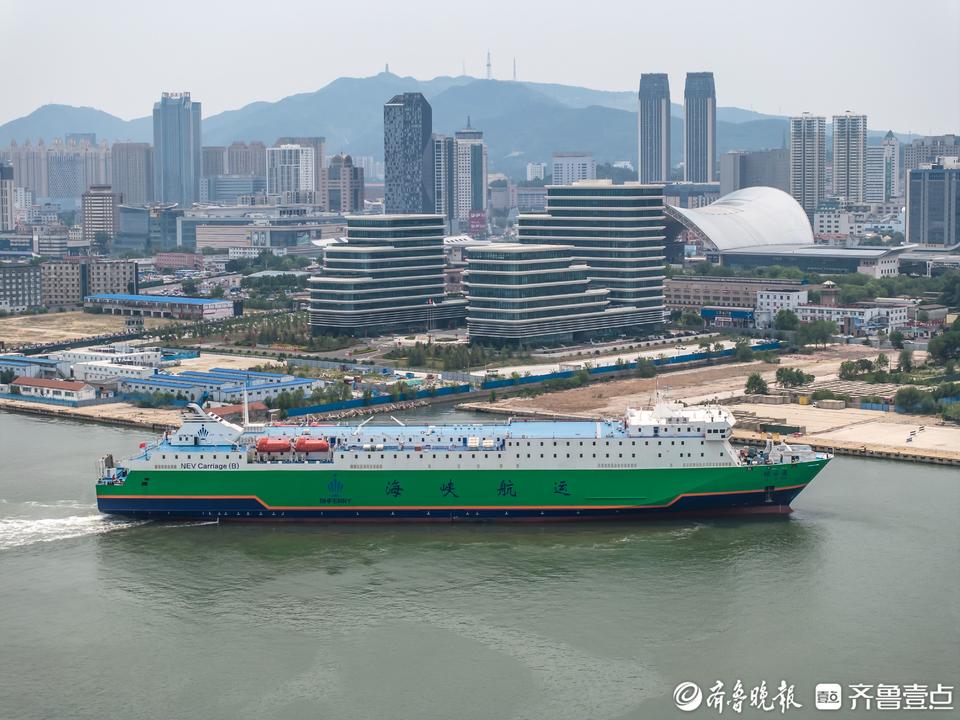
零绕行、零排放、全智能,烟台港填补新能源汽车跨海绿色运输空白
Qi Lu Wan Bao Wang· 2025-06-03 01:49
Core Viewpoint - The launch of the "Green An Tong" ferry marks the official start of the first maritime transportation route for electric vehicles between Yantai and Dalian, filling a gap in cross-sea green transportation and supporting the national "dual carbon" strategy [1][3]. Group 1: Transportation Efficiency - The new route significantly reduces travel time for electric vehicle drivers from over 12 hours to 6-7 hours, saving more than 400 kilometers in distance [3]. - Each voyage of the "Green An Tong" ferry can carry 132 electric vehicles, creating a new transportation model that is "zero detour, zero emissions, and fully intelligent" [3]. Group 2: Economic and Environmental Impact - The route promotes the integration of the new energy vehicle industry chain between the Jiaodong and Liaodong Peninsulas, accelerating the green collaborative development of the Bohai Economic Circle [3]. - The initiative is a practical application of the national strategy for green and low-carbon transformation, providing new logistics pathways for the development of the new energy industry [1]. Group 3: Service and Operational Enhancements - Yantai Port has established a refined management system to enhance service quality and operational efficiency, including the development of advanced intelligent security equipment for electric vehicles [4]. - The port has implemented a comprehensive safety management mechanism and improved the ticketing process to enhance the travel experience for drivers [4]. - Future plans include the continuous improvement of the electric vehicle transportation service network to contribute to carbon peak goals in the transportation sector [4].

专用车蝶变
汽车商业评论· 2025-06-02 13:44
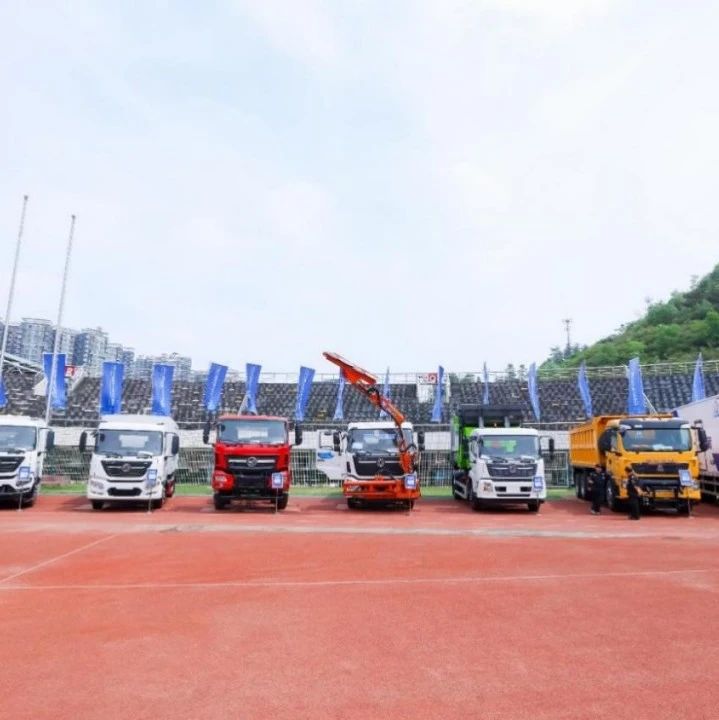
Core Viewpoint - The article emphasizes the significant transformation and growth potential in the specialized vehicle industry in China, highlighting the shift towards high-end, intelligent, and green vehicles, as well as the need for a new industrial ecosystem [4][9]. Group 1: Industry Overview - The specialized vehicle sector is gaining attention, with the city of Shiyan aiming to host a dedicated conference, reflecting its status as a hub for commercial vehicles [4][5]. - Shiyan has 56 specialized vehicle manufacturers, producing an average of 100,000 units annually, with a goal to reach 150,000 units by 2027 [7]. Group 2: Industry Transformation - The specialized vehicle industry is moving away from a fragmented and small-scale perception towards a more integrated and competitive landscape [8][10]. - The industry is being redefined as a "commercial vehicle+" sector, focusing on high value, high growth, and high technology content [9][11]. Group 3: Key Changes in the Industry - The traditional view of specialized vehicles as mere modifications of commercial vehicle chassis is evolving; they are now seen as value-added products that integrate external technologies and functions [11]. - Specialized vehicles are transitioning from basic transportation tools to high-end multifunctional equipment [12][13]. - The industry is accelerating its shift from fuel-based systems to green and intelligent solutions, with projections of over 300,000 new energy specialized vehicles sold in 2024, achieving a penetration rate of nearly 30% [14][16]. Group 4: Ecosystem and Business Model - The traditional ecosystem of specialized vehicles is fragmented, lacking a large-scale industrial approach; there is a need for integrated and large-scale production [17][18]. - The business model is shifting from selling vehicles to providing lifecycle value-added services, focusing on specific applications like cold chain and firefighting [19][20]. Group 5: Internationalization and Upgrades - The internationalization of the specialized vehicle market is evident, with an expected export of 50,000 new energy specialized vehicles in 2024, marking a 44% increase [21]. - There is significant potential for production upgrades by adopting new materials and technologies, aiming to create advanced manufacturing facilities [22]. Group 6: Management Optimization - The industry requires modernization of management systems and the establishment of advanced standards to eliminate outdated capacities and foster globally competitive enterprises [23][24].
北方稀土:强化营销运作 稀土价格掌控力进一步提升
Zheng Quan Shi Bao Wang· 2025-06-02 12:45
Core Viewpoint - Northern Rare Earth has reported significant growth in revenue and profit for Q1 2025, driven by innovative marketing strategies and increased product sales, particularly in rare earth products [1][2][3] Financial Performance - The company achieved a revenue of 9.287 billion yuan in Q1, representing a year-on-year increase of approximately 60% [1] - Net profit attributable to shareholders reached 431 million yuan, a year-on-year increase of 727.3% [1] - The non-recurring net profit was 430 million yuan, showing a staggering year-on-year growth of 11622.98% [1] Market Dynamics - The overall activity in the rare earth market has improved compared to the previous year, influenced by a slowdown in upstream raw material supply and policies stimulating downstream consumption [1] - Prices for key rare earth products, particularly praseodymium and neodymium, have shown an upward trend with good transaction volumes [1][2] Production and Innovation - The company has optimized its production processes, resulting in year-on-year increases in the output of rare earth smelting and separation products, rare earth metals, and functional materials [1] - New product development has been emphasized, with 12 new solid-state hydrogen storage materials entering mass production and sales [1][3] Strategic Positioning - Northern Rare Earth focuses on expanding its product range, particularly in light rare earths (lanthanum, cerium, praseodymium, neodymium) while addressing structural oversupply in lanthanum and cerium products [2] - The company is actively enhancing its market influence and pricing power through innovative marketing and optimized customer agreements [2] Export and Trade - The company is currently processing export licenses for light rare earths and has submitted applications for medium and heavy rare earths [2] - Major export products include praseodymium, neodymium, lanthanum, cerium, and others, primarily shipped to Japan, the USA, and Germany, with expected export volumes remaining stable compared to last year [2] Industry Outlook - The application range of rare earth elements is expanding, driven by technological advancements and the implementation of the "dual carbon" strategy, which is expected to boost sectors like new energy and materials [3] - Northern Rare Earth is focusing on six major industries, including magnetic materials and energy storage, to strengthen its competitive edge in the rare earth market [3] Regulatory Environment - The company is prepared for the upcoming rare earth quota indicators, which are expected to align with historical trends aimed at maintaining supply-demand balance and promoting healthy industry development [4]

科技赋能生态,共筑蓝色粮仓!红树林牡蛎耦合养殖技术培训成功举行
Nan Fang Nong Cun Bao· 2025-06-02 02:03
Core Viewpoint - The training on "Mangrove-Oyster Coupling Aquaculture" aims to promote sustainable aquaculture practices and align with national strategies for rural revitalization and marine economy development [3][4][5]. Group 1: Training Objectives and Participants - The training was conducted by a team from South China Agricultural University in collaboration with local technology teams, focusing on the integration of mangrove ecosystems and oyster farming [2][8]. - The event gathered local aquaculture farmers, agricultural leaders, and experts to address industry challenges and explore sustainable development pathways [8][9]. Group 2: Technical Insights and Challenges - The expert, Professor Yu Xiangyong, provided guidance on mangrove ecosystem maintenance, efficient oyster farming techniques, and sustainable development models, highlighting the challenges faced in nearshore aquaculture [11][12]. - Key issues identified include water eutrophication, pollution threats, and the impact of cross-regional seedling practices leading to mixed genetic quality, which affects both yield and quality [12][21]. Group 3: Environmental and Economic Benefits - The role of mangroves as ecological barriers was emphasized, including their ability to filter pollutants, regulate water quality, and provide habitats, aligning with carbon neutrality strategies [14][16]. - The training also covered the importance of adhering to environmental regulations and enhancing the market visibility and value of mangrove oysters through brand development [17][25]. Group 4: Educational Materials and Outcomes - Participants received educational materials, including the "Taishan Oyster Farming Technical Manual" and "Disease Prevention Manual," to improve their understanding of sustainable practices [22][23]. - The training enhanced local farmers' knowledge of oyster farming techniques and the national policy direction towards ecological prioritization and green development [25][28].

当消费遇上AI|售气利润下行、安全监管趋严,AI浪潮下城燃企业如何破局
Di Yi Cai Jing· 2025-06-01 00:14
Core Insights - The application of AI in the urban gas industry is becoming an undeniable competitive advantage, with companies needing to adopt AI for sustainable development in the next three years [1] - Traditional gas sales models are being challenged by price competition and the need for integrated energy services, pushing companies to evolve from mere gas suppliers to comprehensive energy managers [4][5] Group 1: Industry Challenges - Urban gas companies are facing dual pressures from safety production requirements and stagnating growth in traditional gas sales due to international gas price fluctuations and declining demand [1] - The industry is experiencing unprecedented challenges amid global energy transitions and China's dual carbon strategy [1] Group 2: AI Implementation and Benefits - AI is transforming safety management in the gas industry from manual inspections to real-time monitoring and proactive prevention, significantly improving operational efficiency [2] - New technologies have allowed companies like New Hope Group to enhance the operational efficiency of 300,000 pressure regulators by nearly five times, saving approximately 80 million yuan annually [2] Group 3: Business Model Innovation - The traditional model of relying on regional franchise rights is being disrupted, with companies needing to integrate their operations across the energy supply chain [4] - New Hope Group has developed a private data graph to dynamically predict gas demand based on various data sources, optimizing resource allocation [4] Group 4: Ecosystem Collaboration - Companies are moving towards a multi-energy service model, integrating gas, electricity, and other energy types to meet customer needs more effectively [5] - The shift from a transactional model to a service-oriented approach is essential for enhancing profitability in a competitive market [5] Group 5: Challenges in AI Adoption - Despite the benefits of AI, the industry faces challenges related to data quality, sharing mechanisms, and the need for human oversight in safety management [7] - The lack of industry-wide data standards and the scarcity of professionals skilled in both gas operations and AI technology are significant barriers to effective AI implementation [7] Group 6: Recommendations for Improvement - Industry experts suggest enhancing technology development, establishing data governance frameworks, and optimizing talent structures to support AI integration [8] - Fostering collaboration between educational institutions and companies to cultivate cross-disciplinary talent in gas and AI is crucial for future growth [8]

欣旺达与航发集团达成锂电回收深度合作
起点锂电· 2025-05-31 06:39
Group 1 - The core viewpoint of the article highlights the collaboration between Luzhou Aviation Development Investment Group and Xinwanda Electronics, focusing on the dual carbon strategy and resource recovery strategy [1] - The partnership aims to leverage Luzhou Aviation's core assets in incremental distribution networks and zero-carbon park scenarios, while Xinwanda will utilize its technological and market advantages in the lithium battery industry [1] - The collaboration will focus on the "lithium battery secondary and recycling utilization" sector, aiming to create a closed-loop industrial chain covering battery recycling, secondary utilization, and regeneration [1] Group 2 - Both companies will seek cooperation in areas such as "zero-carbon park construction" and "energy storage system integration production lines," promoting the implementation of the "source-network-load-storage integration" model [1] - The partnership aims to inject green new momentum into the high-quality development of the regional economy through the application of energy storage technology scenarios [1] - Xinwanda Electronics is recognized as a leading global lithium-ion battery enterprise, with a diverse business portfolio that includes consumer products, power technology, energy technology, and smart hardware [1]

最新报告:2060年我国工业碳排放将比今年下降约95%
Nan Fang Du Shi Bao· 2025-05-30 10:17
Core Insights - The report outlines the future industrial carbon neutrality technology evolution path, projecting that by 2060, China's industrial carbon emissions could drop to 450 million tons, a reduction of approximately 95% from 2025 levels [1] - Four common technologies—raw material substitution, waste recycling, electrification and clean power substitution, and hydrogen substitution—are expected to contribute nearly 80% to industrial carbon neutrality technology emissions reduction [1] Industrial Carbon Neutrality Technology Pathways - Climate change is a significant global challenge, with China's industrial sector accounting for nearly 70% of national emissions, necessitating research into industrial carbon neutrality technologies [2] - The report proposes a three-phase technology development path: - 2025-2035: Large-scale application of low-carbon process technologies, focusing on raw material substitution, waste recycling, and energy efficiency improvements [2] - 2035-2050: Explosive application of disruptive technologies such as hydrogen, electrification, and CCUS, aiming to restructure the industrial system [2] - 2050-2060: Deep application of carbon removal technologies, with CCUS expected to contribute 24% to emissions reduction [2] Sector-Specific Insights - In the steel industry, short-process electric furnace steel and energy efficiency technologies are mature, with hydrogen metallurgy and CCUS in demonstration stages; crude steel production is projected to drop to 700 million tons by 2060 [3] - The cement industry has large-scale applications of raw material and fuel substitution technologies, with CCUS expected to contribute over 50% of emissions reduction by 2050 [3] - The non-ferrous metals sector has mature waste aluminum recycling technologies, with total aluminum production stabilizing at 50 million tons by 2060 [3] - The petrochemical industry is in early application stages for green hydrogen substitution and electrification, with CCUS expected to contribute 23% to emissions reduction by 2060 [3] - The coal chemical industry is in demonstration stages for green hydrogen coupling and electric drive technologies, with CCUS expected to achieve a penetration rate of 50%-60% by 2060 [3] Challenges and Recommendations - Industrial carbon neutrality faces challenges such as low technology maturity, high costs, and insufficient industry chain collaboration [4] - The report recommends planning and deploying a comprehensive set of key industrial carbon neutrality technologies, which could cumulatively reduce carbon emissions by 14%-35% through early deployment [4] - It suggests enhancing the carbon market's incentive role, with expectations of driving 250-350 billion yuan in emission reduction investments by 2027 [4] - The report emphasizes the need for a supportive fiscal and tax policy framework, projecting a cumulative investment of 42 trillion yuan in industrial carbon neutrality from 2025 to 2060 [5]
产值5亿元!盛新宝新能源锂电极柱项目签约咸安
Zhong Guo Xin Wen Wang· 2025-05-30 09:40
在产业带动方面,盛新宝项目聚焦新能源锂电池极柱制造领域,涵盖高精冲压、数控加工、模具开发等 核心环节。其落地将助力咸安区进一步完善新能源汽车零部件产业布局,推动现有相关产业实现能级跃 升,形成强大的产业集聚效应,加速百亿产业集群的打造进程,为区域经济高质量发展注入强劲动能。 据悉,湖北盛新宝金属有限公司董事长舒平闲是从咸安走出去的优秀企业家。多年来,他在东莞深耕发 展,取得了卓越成就。此次将事业新起点选在家乡咸安,充分体现了他对家乡发展前景的高度认可,以 及浓厚的桑梓情怀。 中新网湖北新闻5月30日电(胡剑芳 李婷婷 杨柳)"参天之木,必有其根;怀山之水,必有其源。"5月30 日,咸宁市咸安区招商引资工作迎来喜讯:盛新宝新能源锂电极柱项目正式签约落地,标志着该区在新 能源产业赛道上迈出了坚实一步。 盛新宝新能源锂电极柱项目高度契合国家"双碳"战略及新能源发展趋势,与咸安区"3+2"现代化产业体 系规划方向深度吻合。项目计划分两期建设,全面投产后,预计年产值可达5亿元,将创造100余个就业 岗位,年税收贡献超1000万元。这不仅为咸安注入新的经济活力、拓宽税源渠道,也切实解决了当地居 民的就业问题,彰显了杰出楚 ...

启福科技昌江生产基地落成 沪赣共建智慧照明项目
Jing Ji Wang· 2025-05-30 07:49
Group 1 - The inauguration of Qifu Technology's Changjiang production base in Jingdezhen marks a significant milestone in the smart green lighting industry, attended by over 200 industry elites [1] - The Changjiang base signifies a new phase in technology research and industrial layout, establishing a benchmark for green intelligent manufacturing with full-spectrum eye-protecting lighting and AI ultra-energy-saving technologies [1][2] - Qifu Technology has accelerated the construction of a new energy-saving industry ecosystem, promoting the intelligent and low-carbon transformation of traditional lighting, with core products covering over 10 provinces and installing more than 300,000 energy-saving lamps, achieving an energy-saving rate exceeding 80% [1] Group 2 - The Changjiang base is expected to produce 6 million ultra-energy-saving lamps annually, with a production capacity of 800 million yuan, serving as a manufacturing service center for Central and North China [2] - The project integrates Shanghai's IoT technology with Jingdezhen's cultural heritage, creating a new model of "technology + culture + ecology" to support the development of a low-carbon cultural tourism demonstration area [2] - Future plans include deepening the "specialized, refined, distinctive, and innovative" construction, integrating energy-saving technology with energy management, and attracting high-end talent to build a regional energy-saving technology industry cluster [2]
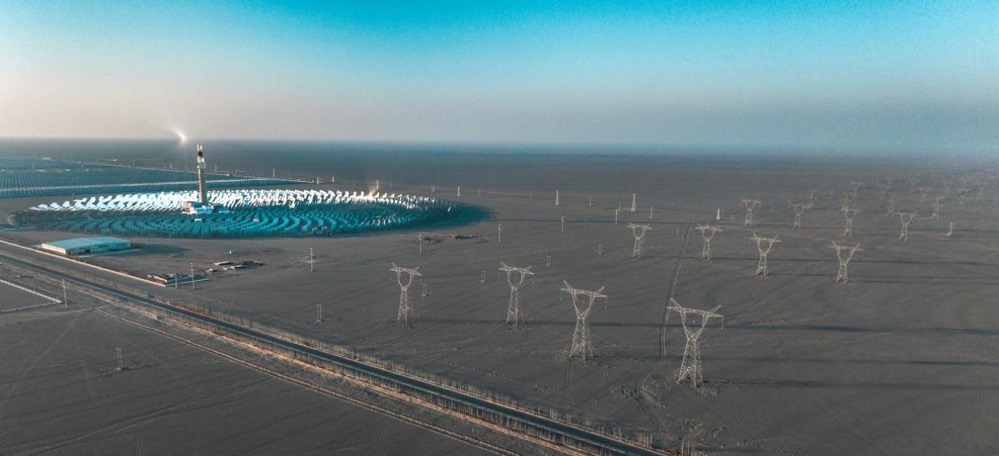
描绘新画卷 尽揽好“风”“光”
Zhong Guo Neng Yuan Wang· 2025-05-30 03:42
Group 1 - The core viewpoint of the news highlights the significant growth of renewable energy capacity in Jiuquan, with the total installed capacity exceeding 40 million kilowatts, of which over 80% is from renewable sources [2][3] - Jiuquan is recognized as a key area for renewable energy development in China, benefiting from abundant wind and solar resources, and has transformed from a resource-rich city to a strong energy city [3][11] - The Jiuquan Power Supply Company is actively promoting the development of renewable energy projects and enhancing the integration of renewable energy with the power system, aiming for high-quality growth in the renewable energy industry [5][6] Group 2 - Since the 14th Five-Year Plan, Jiuquan has issued indicators for three batches of national large-scale renewable energy projects, with a total installed capacity of 13.8 million kilowatts [7] - The company is collaborating with local governments and renewable energy enterprises to ensure safe grid access for renewable energy and is focused on building a new type of power system [7][9] - Jiuquan is leveraging its resource advantages to foster a cluster of renewable energy equipment manufacturing, with the industrial output value expected to exceed 23 billion yuan by 2024 [11][13] Group 3 - The establishment of the first "source-grid-load-storage" innovation consortium in Jiuquan aims to enhance the development of renewable energy and storage systems [13] - The company is exploring various integration models for renewable energy and storage, while also working on projects to improve the reliability of power supply in the region [13] - Jiuquan is positioned as a crucial hub for renewable energy and equipment manufacturing, contributing to national goals of carbon peak and carbon neutrality [10][14]