国产替代

Search documents
国产替代风口下的稀缺标的,"港股GPU第一股"壁仞科技:33亿全栈自研创新+高算力布局决胜未来
市值风云· 2026-01-03 09:00
Core Viewpoint - Wallen Technology (06082.HK) achieved rapid growth from zero to 337 million in revenue within two years, driven by both technology and commercialization [1][12]. Group 1: IPO and Market Position - Wallen Technology officially listed on the Hong Kong Stock Exchange on January 2, 2026, with a 76% increase on its debut, becoming the first GPU company listed in Hong Kong and achieving the largest fundraising scale since the implementation of the new listing policy in March 2023 [3][4]. - The IPO was highly sought after, with a subscription rate of 2347 times, reflecting strong market enthusiasm [3]. - The company raised a net amount of 5.375 billion HKD during its IPO, with significant backing from cornerstone investors such as Qiming Venture Partners and Ping An Life [4]. Group 2: Industry Growth and AI Impact - AI is recognized as a crucial driver of global economic and social development, with the McKinsey Global Institute predicting that AI-related industries will contribute between 29 trillion to 48 trillion USD in incremental revenue over the next 15 years, accounting for one-third of global GDP growth [5]. - The GPU market is projected to exceed 1 trillion CNY in 2024 and reach 3.6 trillion CNY by 2029, with a compound annual growth rate (CAGR) of 24.5% [5][8]. - The Chinese AI-related GPU market is expected to grow from 4.3 billion CNY in 2020 to 99.7 billion CNY in 2024, and reach 1.03 trillion CNY by 2029, with a CAGR of 56.7% [8]. Group 3: Company Growth and Product Development - Wallen Technology was founded in 2019 and launched its first BR106 GPU chip in 2020, achieving significant revenue growth from 0.5 million CNY in 2022 to 620.3 million CNY in 2023, and further to 3.37 billion CNY in 2024 [11][12]. - The company has established a diverse product matrix, including the BR110 and BR166 chips, catering to various application scenarios [11][12]. - Wallen Technology has secured contracts with nine Fortune China 500 companies and five Fortune Global 500 companies, creating a strong industry barrier and competitive advantage [12]. Group 4: Strategic Collaborations and Future Prospects - In 2025, Wallen Technology will collaborate with major telecom operators to establish domestic computing clusters, enhancing its market presence [13]. - The company has a robust order backlog of 1.24 billion CNY as of November 15, 2025, indicating strong future revenue potential [15]. - Wallen Technology's focus on high-performance computing and continuous innovation positions it well for future growth in the AI and GPU sectors [16][23]. Group 5: R&D and Innovation - Wallen Technology maintains a high level of R&D investment, with expenditures of 10.18 billion CNY in 2022, 8.86 billion CNY in 2023, and 8.27 billion CNY in 2024, representing over 70% of total operating expenses [30][31]. - The company has submitted over 1,500 patents globally, leading the industry in patent achievements, with a 100% authorization rate for invention patents [32]. Group 6: Leadership and Shareholder Support - Wallen Technology is led by a team with extensive experience in AI and hardware technology, including founder and CEO Zhang Wen, who has over 10 years of management experience in the field [33]. - The company has a strong shareholder base, including notable investment funds and industry players, providing substantial capital and resources for growth [34].

2025年中国半导体设备零部件行业发展历程、市场政策、产业链图谱、市场规模、竞争格局及发展趋势分析:市场格局较为分散[图]
Chan Ye Xin Xi Wang· 2026-01-03 02:50
Core Viewpoint - The semiconductor equipment components industry is crucial for the development of the semiconductor sector, with significant growth driven by domestic policies and market demand, leading to a projected market size of 188.79 billion yuan in 2024, representing a year-on-year growth of 34.9% [1][8]. Industry Overview - Semiconductor equipment components are essential building blocks for semiconductor manufacturing equipment, directly impacting precision, stability, and lifespan [2]. - The industry has evolved from complete reliance on imports to local enterprises gradually breaking through, focusing on high-quality and systematic breakthroughs [3]. Market Size and Composition - The market size for semiconductor equipment components in China is expected to reach 188.79 billion yuan in 2024, with the supporting market (including imported equipment) accounting for 92.5% and the maintenance market for 7.5% [1][8]. - Within the supporting market, mechanical components hold the largest share at 36.5%, followed by system transport systems at 16.1% and electrical components at 14.3% [8]. Policy Support - The Chinese government has implemented numerous policies to support the development of the semiconductor industry, including tax reductions and action plans aimed at promoting high-quality growth [4]. Industry Chain - The upstream of the semiconductor equipment components industry includes suppliers of various metals and non-metals, while the midstream involves R&D, design, and production of components, and the downstream includes applications in wafer fabrication and chip packaging [4][5]. Competitive Landscape - Despite a large market, domestic manufacturers have historically captured a small share, with many relying on imported components. However, local firms are increasingly entering the supply chain, focusing on proprietary technology and modular solutions [6][9]. - Major domestic players include companies like 富创精密 (Fuchuang Precision) and 江丰电子 (Jiangfeng Electronics), which have established competitive positions in their respective niches [10][12]. Development Trends - The industry is moving towards systematic penetration of domestic alternatives across all categories, with a focus on high-end components previously reliant on imports [13]. - Future R&D will emphasize high precision and new materials to meet the evolving demands of semiconductor manufacturing [13]. - Collaboration across the supply chain will strengthen, with industry clusters enhancing resource integration and reducing costs [14]. - The integration of AI and a focus on green manufacturing practices are becoming key development directions, aiming to improve efficiency and reduce environmental impact [15][16].



美国半导体技术霸权的底层支撑与中国突围
是说芯语· 2026-01-03 00:52
Core Viewpoint - The article discusses the absolute monopoly of the United States in the semiconductor industry, highlighting the dominance in core technologies such as design tools, high-end IP cores, advanced architectures, key manufacturing equipment, and testing instruments. This monopoly creates significant barriers to entry and establishes a comprehensive technological hegemony that is difficult to challenge globally, while also leaving room for diversification and breakthroughs in specific fields, particularly in China's domestic semiconductor industry [1]. Group 1: Chip Design Tools (EDA) - The monopoly is held by Synopsys, Cadence, and Siemens EDA, which together account for over 95% of the global market share, providing a comprehensive toolchain for chip design [3]. - These tools are essential for advanced process nodes of 7nm and below, featuring capabilities such as lithography simulation and yield optimization, making them critical infrastructure for chip development [3]. - The high density of patent barriers and deep collaboration with leading foundries like TSMC and Samsung create strong user ecosystem stickiness, making it difficult for latecomers to replace these tools [3]. Group 2: High-Performance IP Cores and Architectures - The monopoly is dominated by X86 architecture (Intel, AMD), GPU architecture (NVIDIA, AMD), and AI acceleration IP (NVIDIA, Xilinx), with ARM's technology also heavily influenced by U.S. regulations [6]. - The X86 architecture leads in high-performance computing, while NVIDIA's CUDA architecture defines global AI computing standards, creating dual barriers of performance and ecosystem [6]. - Global chip design companies are highly dependent on U.S. IP, and the U.S. can restrict access to these IPs through licensing, directly impacting the design capabilities of other nations [6]. Group 3: Key Manufacturing Equipment - The monopoly is held by U.S. companies like Applied Materials, Lam Research, and KLA, which lead in critical equipment for etching, film deposition, and process inspection [9]. - These companies provide essential technologies for advanced processes, with high barriers to entry due to long R&D cycles and significant capital investment [9]. - The dependency of global foundries like TSMC and Samsung on U.S. equipment means that U.S. export controls can directly affect the expansion and technological upgrades of advanced manufacturing capacities [9]. Group 4: High-End Chip Design and Architecture Innovation - U.S. companies like NVIDIA, Qualcomm, AMD, and Apple dominate the global technology direction in AI chips, mobile terminal chips, and high-performance computing chips [12]. - Continuous high R&D investment (approximately 17.7% of semiconductor industry revenue) and strong ecosystem integration capabilities allow these companies to maintain significant advantages [12]. - The U.S. leads in defining the demand and technological evolution of high-end chips, influencing the global semiconductor supply chain [12]. Group 5: Semiconductor Testing and Packaging Technologies - The monopoly is held by U.S. companies like Teradyne and Cohu, which dominate the high-end chip testing equipment market [15]. - These companies provide comprehensive testing solutions that meet the high precision requirements of advanced process nodes [15]. - The global chip production's yield control and quality assurance are highly reliant on U.S. testing equipment, and export restrictions can impact production efficiency and quality stability [15]. Group 6: Core Materials Technology - U.S. companies like Dow Chemical, DuPont, and GlobalFoundries dominate the market for critical semiconductor materials such as photoresists and electronic specialty gases [18]. - The high purity and stability requirements for semiconductor materials create significant barriers for new entrants [18]. - Advanced process chip manufacturing relies over 80% on U.S. core materials, and U.S. export controls can directly affect global production capacities [18]. Group 7: Semiconductor Software and Ecosystem - U.S. companies like Microsoft, Google, and NVIDIA dominate the software ecosystem that supports chip applications [21]. - The NVIDIA CUDA ecosystem monopolizes AI training and inference software, with over 90% of AI developers using the CUDA platform [21]. - The strong network effects of these ecosystems create significant barriers for new entrants, making it difficult for other countries to commercialize breakthroughs in high-performance chip development [21]. Group 8: Industry Standard Setting Authority - The U.S. leads international standard organizations like IEEE and JEDEC, controlling the core industry standards for chip interfaces and performance specifications [24]. - The binding of industry standards with technology patents creates dual barriers that are difficult for non-U.S. companies to overcome [24]. - The U.S. can guide global semiconductor technology development through standard-setting, impacting the innovation paths of non-U.S. enterprises [24]. Group 9: High-End Semiconductor Products and Solutions - U.S. companies like NVIDIA, Intel, Qualcomm, and Micron hold a dominant share in the global high-end semiconductor product market [27]. - These companies have established significant performance advantages through long-term technological accumulation and deep integration with downstream manufacturers [27]. - The global technology industry is highly dependent on U.S. semiconductor products, and U.S. export controls can directly influence the development of global technology sectors [27].


芯片突发!“国家队”,大举增持!
Zheng Quan Shi Bao· 2026-01-02 15:08
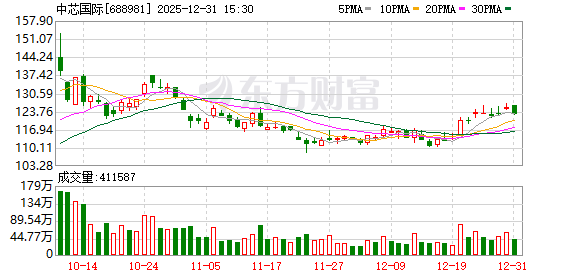
据香港交易所披露,国家集成电路产业投资基金股份有限公司(以下简称"国家集成电路基金")在中芯 国际H股的持股比例于2025年12月29日从4.79%升至9.25%。 银河证券指出,2025年12月,半导体板块在产业链涨价、AI算力需求持续扩张及国产替代逻辑强化的 三重驱动下,走出结构性行情。展望未来,设备与材料环节因顶层设计支持而具备最强确定性,数字芯 片作为算力自主的核心载体,以及先进封测受益于技术迭代,均值得重点关注。 (文章来源:证券时报) 2025年12月29日,中芯国际公告称,中芯国际通过中芯控股与国家集成电路基金等订立新合资合同及新 增资扩股协议,将引入大基金三期、先导集成电路基金等作为中芯南方新的投资方。 根据公告,中芯南方的增资金额为77.78亿美元(约合人民币543亿元),其中35.773亿美元计入注册资 本,42.007亿美元计入资本公积。 新进股东方面,国家集成电路基金三期、泰新鼎吉及先导集成电路基金成为新股东,分别持股 8.361%、5.545%及1.063%。一期与二期的持股比例将因增资而被稀释,国家集成电路基金持股由 14.562%降至9.392%,国家集成电路基金二期持股由23. ...
芯片突发!“国家队”,大举增持!
证券时报· 2026-01-02 15:05
Group 1 - The National Integrated Circuit Industry Investment Fund increased its stake in SMIC from 4.79% to 9.25% as of December 29, 2025 [1] - SMIC announced a new joint venture contract and capital increase agreement with the National Integrated Circuit Fund, introducing new investors including the third phase of the big fund and the leading integrated circuit fund [1] - The total capital increase for SMIC Southern is $7.778 billion (approximately 54.3 billion RMB), with $3.5773 billion allocated to registered capital and $4.2007 billion to capital reserves [1] Group 2 - In December 2025, the semiconductor sector experienced a structural market driven by price increases in the industry chain, expanding AI computing power demand, and strengthening domestic substitution logic [2] - The equipment and materials segments are expected to have the strongest certainty due to top-level design support, while digital chips and advanced packaging and testing are highlighted as key areas of focus due to technological iterations [2]

乔锋智能(301603) - 301603乔锋智能投资者关系管理信息20260102
2026-01-02 11:08
Group 1: Industry Performance and Growth - In the first three quarters of 2025, the company's sales in key sectors such as consumer electronics (approximately 25% share), molds (approximately 6%), and engineering machinery (approximately 5%) experienced over 100% growth [2] - Automotive parts (approximately 16% share, mainly related to new energy vehicles) grew by about 80% [2] - The largest segment, general equipment (approximately 32% share), reversed a slight decline in 2024, achieving a year-on-year growth of over 10% [2] Group 2: Competitive Advantages - High self-manufacturing rate of core components reduces procurement costs and supply chain risks, enhancing production efficiency [3] - The company has established a comprehensive product line in metal cutting machine tools, significantly improving brand recognition and market presence [3] - A flexible sales model combining direct sales and distribution enhances market coverage and reduces sales costs [3] - A well-established service team with 37 permanent locations nationwide ensures high-quality customer service [3] Group 3: 3C Electronics Sector Outlook - The 3C electronics industry is currently experiencing high demand, supported by structural adjustments in orders and a shift towards domestic alternatives [4][5] - The replacement cycle of existing equipment and the increasing competitiveness of domestic machine tools are driving demand [4] - Innovations in end products and materials, along with the rapid integration of AI technologies, are accelerating the need for new processing equipment [4][5] Group 4: Core Component Manufacturing - The company has achieved self-manufacturing of key components such as spindles, power tool towers, and turntables, which enhances product quality and reduces costs [6] - External procurement of components like CNC systems and linear guides is based on performance requirements and market preferences, with partnerships established with both international and domestic brands [6] Group 5: Emerging Opportunities in Liquid Cooling - The company is focusing on opportunities in liquid cooling for sectors like new energy vehicles and AI servers, where demand for high-efficiency cooling solutions is rapidly increasing [7] - Core components for liquid cooling, such as cooling plates and connectors, require precise machining, which the company is equipped to provide through its advanced machining centers [7]
银河证券:料内地半导体板块迎结构性行情 受涨价潮及国产替代逻辑强化驱动
智通财经网· 2026-01-02 09:31
Core Viewpoint - The semiconductor manufacturing equipment market is projected to reach a record high of $133 billion in 2025, driven by AI and HBM demand, with further growth expected to $145 billion in 2026 [1] Group 1: Market Growth and Trends - The global semiconductor manufacturing equipment market is expected to grow by 13.7% year-on-year in 2025 [1] - The demand for AI server power chips and advanced driving chips is surging, indicating a potential cyclical reversal in the industry [1] - The domestic storage manufacturers are accelerating expansion, creating opportunities for domestic equipment in core process segments [1] Group 2: Domestic Market Dynamics - The domestic analog chip design sector is gradually recovering, with several overseas leaders signaling price increases [2] - The price increases in overseas markets are expected to create more opportunities for domestic chips and help restore profit margins [1] - The digital chip design sector showed relative stability last December, with AI computing chips remaining a core growth engine [1] Group 3: Strategic Importance of AI - The strategic value of AI computing chips and the urgency for domestic substitution are becoming increasingly prominent [1] - The penetration of AI into end products like AI PCs and AI smartphones is providing incremental opportunities for certain design companies [1]
港股收盘|科技指数涨超4%迎“开门红” 硬科技与政策消费双轮驱动
Xin Lang Cai Jing· 2026-01-02 08:41
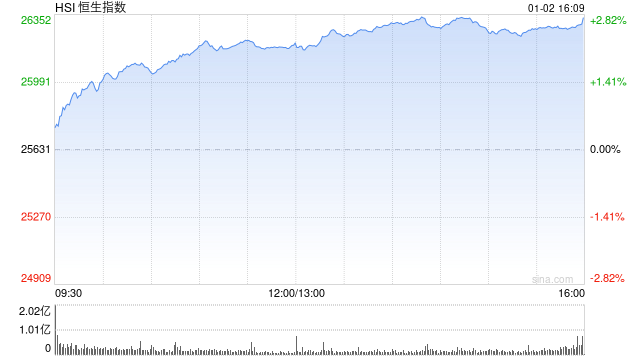
Core Viewpoint - The Hong Kong stock market started 2026 with a strong performance, indicating a continuation of the structural bull market from 2025, with a clear investment focus on hard technology sectors like semiconductors, AI, and smart hardware, as well as policy-driven consumption sectors like home appliances and automobiles [1][5]. Market Performance - The Hang Seng Index rose by 2.76% to close at 26,338.47 points, while the Hang Seng Technology Index surged by over 4% to 5,736.44 points, and the Hang Seng China Enterprises Index increased by 2.86% to 9,168.99 points [1]. Semiconductor Sector - The semiconductor sector saw significant gains, driven by mergers and acquisitions as well as domestic production initiatives. Notable stock performances included Huahong Semiconductor (up 9.42%), SMIC (up 5.11%), and Jingmen Semiconductor (up 3.53%) [5][6]. - Huahong Semiconductor announced a major asset restructuring plan to acquire a 97.5% stake in Huali Micro for a transaction price of 8.268 billion yuan, alongside plans to raise up to 7.556 billion yuan for technology upgrades [6][7]. Internet Technology Sector - Internet technology stocks rebounded strongly, with Baidu Group rising by 9.53%, NetEase by 6.62%, and Alibaba by 4.34%. A key catalyst was Baidu's announcement of its AI chip subsidiary Kunlun's application for a mainboard listing [9][10]. - Kunlun's expected revenue for 2025 is around 5 billion yuan, with a potential valuation of 3 to 11 billion USD for Baidu's stake in the company [11]. Home Appliances Sector - Home appliance stocks benefited from favorable policies, with Skyworth Group rising by 10.45%, Midea Group by 5.12%, and Haier Smart Home by 4.20%. The National Development and Reform Commission and the Ministry of Finance announced a new policy to support large-scale equipment updates and trade-in programs [11][12]. - The new policy is expected to alleviate sales pressure in the short term and benefit leading companies with R&D and brand advantages in the long term [13]. Automotive Sector - Several automotive stocks gained, including Li Auto (up 4.93%) and BYD (up 3.57%), supported by the implementation of the "old-for-new" vehicle trade-in policy [14][16]. - The policy allows consumers to receive subsidies for trading in eligible old vehicles for new ones, which is expected to stimulate market confidence [16]. Solar Energy Sector - Solar energy stocks saw gains, with GCL-Poly Energy rising by 20.99% and GCL-Technology by 4.72%. The market regulator is enhancing compliance guidance for price competition in the solar industry [17]. Commercial Aerospace Sector - Commercial aerospace stocks performed well, with Asia Pacific Satellite rising by 34.53% and Aerospace Holdings by 18.33%. Blue Arrow Aerospace's IPO application was accepted, marking a significant milestone in the sector [18][19]. Individual Stock Movements - Delin Holdings rose by 11.76% following the conditional approval of its subsidiary to provide virtual asset trading services [21]. - Meitu Inc. increased by 6.14% after issuing $250 million in convertible bonds to Alibaba, which could make Alibaba the third-largest shareholder in Meitu [22].





港股收评:恒指涨2.76% 科指涨4% 科网股普涨 电力设备股大涨 百度涨超9% 壁仞科技首日一度涨超118%
Xin Lang Cai Jing· 2026-01-02 08:11
Market Overview - The Hong Kong stock market indices opened high and closed higher, with the Hang Seng Index rising by 2.76% to 26,338.47 points, the Hang Seng Tech Index increasing by 4%, and the National Enterprises Index up by 2.86% [1][7] Technology Sector - Technology stocks saw a broad increase, with Baidu rising over 9%, NetEase over 6%, and Alibaba and Tencent both up over 4% [1][7] - Wall Street's semiconductor sector was strong, with Hua Hong Semiconductor increasing by over 9% [1][3] Electric Equipment Sector - Electric equipment stocks surged, with Goldwind Technology rising over 20% [1][3] - Goldwind Technology's subsidiary, Jianghan Asset, holds a 4.14% stake in Blue Arrow Aerospace, which is currently undergoing IPO review [3][9] Semiconductor Sector - Hua Hong Semiconductor announced plans to acquire 97.4988% of Huali Micro through a share issuance, with a transaction value of 8.268 billion RMB and intended fundraising of 7.556 billion RMB [3][11] - The semiconductor sector experienced a structural rally driven by price increases in the supply chain, sustained AI demand, and the strengthening of domestic substitution logic [3][11] Robotics Sector - The robotics concept continued to rise, with Lijiang Technology increasing by over 6% amid rumors of suppliers visiting North America for Tesla's Optimus project [4][11] - Tesla's third-generation Optimus robot is expected to be released in 2026, with mass production anticipated next year [4][11] IPO Highlights - Bilan Technology's stock surged over 75% on its first trading day, with an intraday increase of over 118% [6][12] - The IPO price was set at 19.60 HKD per share, with a total fundraising of approximately 5.583 billion HKD, marking the largest fundraising for a specialized technology project under Hong Kong's listing rules [6][12] - The public offering was highly sought after, with an oversubscription rate of 2,347.53 times, receiving about 471,116 valid applications [6][12]
壁仞科技登陆港股,国产GPU迎来新机遇
Jing Ji Guan Cha Wang· 2026-01-02 07:36
Core Viewpoint - Wallan Technology, a leading domestic GPU company, officially listed on the Hong Kong Stock Exchange, marking it as the first "domestic GPU stock" and the first IPO of the year in Hong Kong [2] Group 1: Company Overview - Founded in 2019 by Zhang Wen, former president of SenseTime, Wallan Technology has filled a critical gap in China's high-end computing power sector with its self-developed high-performance computing technology [2] - The company has submitted over 1,500 global patent applications, ranking first among Chinese general GPU companies, with over 600 authorized invention patents and a 100% authorization rate [2] Group 2: Financial Performance - Wallan Technology is currently in a strategic investment phase, with revenues of 499,000 yuan, 62.03 million yuan, 337 million yuan, and 59 million yuan from 2022 to the first half of 2025, while net losses were 1.474 billion yuan, 1.744 billion yuan, 1.538 billion yuan, and 1.601 billion yuan during the same period, totaling 6.357 billion yuan in losses over three and a half years [3] - The company holds 24 legally binding unfulfilled orders valued at approximately 822 million yuan, along with framework sales agreements amounting to 1.241 billion yuan, providing strong support for future performance growth [3] Group 3: Funding and Investment - Wallan Technology's founder, Zhang Wen, has a unique industrial background that has injected advantages into the company's development, having previously achieved significant technical breakthroughs in LED chips and accumulated management experience at SenseTime [4] - The company completed over 5 billion yuan in financing before its IPO, with notable investors including Qiming Venture Partners and IDG Capital, and plans to allocate 85% of the net proceeds from the IPO to R&D [4] Group 4: Market Context - The listing of Wallan Technology coincides with a critical window for domestic alternatives amid intensified Sino-U.S. tech competition, with ByteDance planning to procure over 40 billion yuan in domestic AI chips in 2026, significantly increasing from 2025 [5] - Other domestic AI chip manufacturers are also preparing to enter the capital market, with Tianzuo Zhixin set to list on January 8, and Baidu announcing its application for Kunlun Chip's listing [5]