代币化

Search documents
专访MyStonks:获美SEC备案突破 解密RWA合规化进程
Xin Lang Zheng Quan· 2025-08-08 03:32
Core Viewpoint - The recent initiative by the U.S. Securities and Exchange Commission (SEC) to integrate traditional finance with blockchain technology is a significant step towards regulatory acceptance of on-chain finance, exemplified by MyStonks' successful filing of a key STO document, allowing them to operate tokenized stock services globally [1][5]. Group 1: MyStonks' Business Model - MyStonks has completed the SEC STO filing, indicating compliance with U.S. securities laws, which differentiates it from unregulated digital currency projects [1][4]. - The concept of "tokenization" is explained as creating a digital certificate for real-world assets, recorded on the blockchain, which enhances security and efficiency in trading [2][3]. - MyStonks targets three main user groups: "crypto-native" users familiar with blockchain, global retail investors facing barriers in traditional markets, and professional investors seeking efficiency and transparency [3][4]. Group 2: Market Trends and Growth - The SEC's "crypto plan" signals a shift where regulation will drive innovation rather than hinder it, aligning with MyStonks' approach to embrace compliance while leveraging blockchain technology [4][5]. - MyStonks has experienced a remarkable growth in daily trading volume, achieving a 2000-fold increase, with current daily trading around $12 million and a user base of 18,000, attributed to strategic market understanding and compliance efforts [6][7]. - The collaboration with Fidelity for asset custody ensures that each tokenized stock is backed by real assets, enhancing trust and demonstrating that on-chain and off-chain systems can complement each other [7]. Group 3: Future Challenges and Goals - MyStonks anticipates challenges in maintaining compliance while expanding its services to a broader U.S. user base, with ongoing attention to regulatory developments [7]. - The company aims to become a leading infrastructure for on-chain U.S. stock trading, addressing traditional financial barriers and promoting financial inclusivity through innovative solutions [7].
RWA拥趸高呼“链上金融”热潮 摩根大通泼冷水:代币化尚未打动华尔街
智通财经网· 2025-08-08 01:39
Core Insights - The concept of Real-World Asset (RWA) tokenization, which aims to place traditional assets like stocks and bonds on the blockchain, has not yet gained widespread acceptance among major institutional investors on Wall Street [1][4] - According to JPMorgan, the overall market for RWA tokenization is still small, valued at only $25 billion, with most activity driven by crypto-native companies rather than traditional financial institutions [1][3] - The main obstacles to RWA adoption include fragmented cross-border regulations, legal uncertainties, and limited trust in the executability of smart contracts [1][5] Group 1: RWA Tokenization Overview - RWA tokenization is promoted as a way to make financial market transactions faster, cheaper, and more transparent, but this vision largely remains theoretical [2][3] - The tokenization process involves creating blockchain-based representations of traditional financial assets, which can include government bonds, loans, and real estate [2][3] - Stablecoins have validated the on-chain payment pathways, with monthly settlement volumes reaching $650 billion to $700 billion, indicating a growing interest from traditional banks in issuing their own stablecoins [2] Group 2: Market Dynamics and Predictions - The World Economic Forum highlights that tokenization can provide a unified ledger, real-time settlement, and programmable attributes, thereby reducing settlement risks and increasing efficiency [3] - Predictions suggest that the scale of tokenized real-world assets could exceed $18 trillion by 2033, with a compound annual growth rate (CAGR) of 53% since 2025 [3] - Some traditional financial firms, such as Fidelity and VanEck, are beginning to experiment with RWA tokenization, indicating a cautious but growing interest in this area [3] Group 3: Challenges and Institutional Perspectives - Despite some initiatives, RWA adoption remains limited, with secondary market activities for tokenized bonds and private assets being very restricted [4][5] - Traditional investors perceive the utility of RWA tokenization as minimal, as the existing financial system is becoming faster and more efficient, reducing the demand for radical changes in settlement and trading [5] - Concerns about legal clarity, operational risks, and ecosystem fragmentation continue to hinder broader institutional adoption of RWA tokenization [5]

香港财库局许正宇:就数字资产交易服务提供者及数字资产托管服务提供者的公众咨询正在进行
Zhi Tong Cai Jing· 2025-08-07 09:12
Group 1 - Tokenization is a global fintech trend that is significantly changing the operation of financial markets, with Hong Kong establishing a leading position in this field [1] - The global asset management scale of tokenized funds has surpassed $2 billion and is expected to reach $600 billion by 2030, representing about 1% of the global mutual fund and ETF market [1] - The Hong Kong government has implemented a clear regulatory framework for stablecoin issuers with the stablecoin bill effective from August 1, 2023, and is currently conducting public consultations for digital asset service providers [1] Group 2 - In February 2023, Hong Kong issued the world's first tokenized green bond worth HKD 800 million, utilizing blockchain for payment settlement, reinforcing its leadership in green finance and tokenization [2] - The first retail tokenized money market fund in the Asia-Pacific region was launched, lowering investment barriers and facilitating investor participation in digital asset management [2] - The government plans to regularly issue tokenized government bonds, provide stamp duty exemptions for tokenized ETFs, and explore tokenization applications for various assets like precious metals and renewable energy [2]
“加密货币超级多头”高呼“金库公司”风口已过 押注RWA浪潮将至
智通财经网· 2025-08-06 03:41
Core Viewpoint - The cryptocurrency "vault company" trend may have peaked, and the next major trend will be the migration of traditional assets to blockchain through Real-World Assets (RWA) [1][4] Group 1: Cryptocurrency Vault Companies - Michael Novogratz, CEO of Galaxy Digital, suggests that the peak of "vault companies" holding cryptocurrencies on their balance sheets has likely been reached [1] - Companies like MicroStrategy have pioneered this model, and new entrants are now diversifying into Ethereum and other lesser-known tokens [2] - Galaxy Digital has partnered with over 20 crypto vault investment firms, generating approximately $2 billion in assets for its custody platform, creating a recurring revenue stream [2] Group 2: Financial Performance of Galaxy Digital - Galaxy Digital reported a net profit of approximately $30.7 million for Q2 2025, a significant recovery from a loss of $177 million in the same period last year [3] - The company's diluted earnings per share for the quarter was $0.08, slightly below analyst expectations, leading to a 4% drop in stock price [3] Group 3: RWA and Tokenization Trends - Novogratz believes that crypto vault companies and cryptocurrency ETFs provide important exposure for hedge funds wary of directly holding tokens [4] - Major financial institutions like Goldman Sachs and JPMorgan are increasingly focusing on RWA as a new business trend [4] - The concept of tokenization involves mapping traditional financial assets onto the blockchain, which could lead to a market size exceeding $18 trillion by 2033, with a projected CAGR of 53% since 2025 [5][6] Group 4: Advantages of RWA for Traditional Banks - RWA offers a more straightforward regulatory framework compared to pure crypto assets, making it easier for traditional banks to adopt [7] - The underlying assets like bonds and loans provide stable cash flows, aligning well with traditional banking business models [7]
迪谱格瑞等3家中企更新招股书 附上市路演PPT
Sou Hu Cai Jing· 2025-08-05 05:59
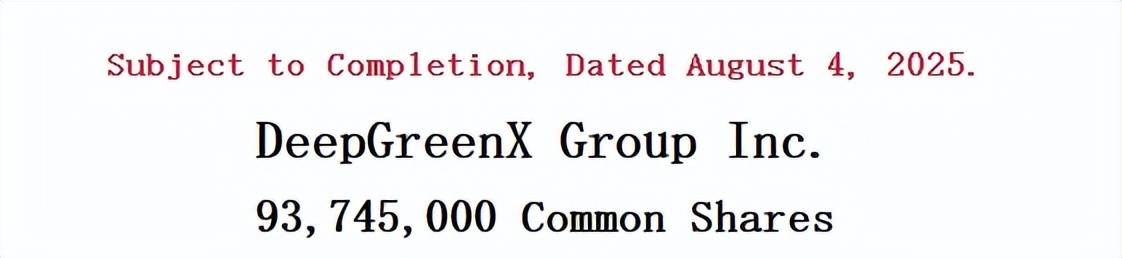
Group 1: Company Overview - DeepGreenX Group, Inc. (DXG) is a green energy data service provider that leverages AI for asset digitalization, with projected revenue of $24.08 million and a net loss of $2.45 million for 2024 [2][36]. - Shanglifanghua (GINT) plans to issue 1.5 million shares at $4 per share, aiming to raise $6 million, with revenue of $11.8 million and net profit of $730,000 for the twelve months ending March 31, 2025 [4][2]. - Hongbo Capital (RNBW) intends to issue 138,000 shares priced between $4 and $5, targeting $5.5 million to $6.88 million in fundraising, with revenue of $1.54 million and net profit of $780,000 for the six months ending March 31, 2025 [4][6]. Group 2: Financial Performance - DeepGreenX reported a significant increase in revenue from $5.95 million in 2023 to $24.08 million in 2024, with a cash end of year balance of $1.05 million [37]. - Shanglifanghua's revenue for the year ending March 31, 2025, was $11.8 million, compared to $10.46 million the previous year, with net profits of $730,000 and $810,000 respectively [4]. - Hongbo Capital's revenue for the six months ending March 31, 2025, was $1.54 million, with a net profit of $780,000 [6]. Group 3: Market Position and Strategy - The tokenization market is projected to grow significantly, with Frost & Sullivan valuing the current tokenization pipeline between $13.7 billion and $28.2 billion [13][15]. - DeepGreenX aims to create a platform for converting real-world sustainability data into digital currencies, enhancing the monetization of nature-based assets [9][24]. - The company plans to expand its operations into intelligent platforms that will generate revenue streams through the trading of digital financial products [20][9].

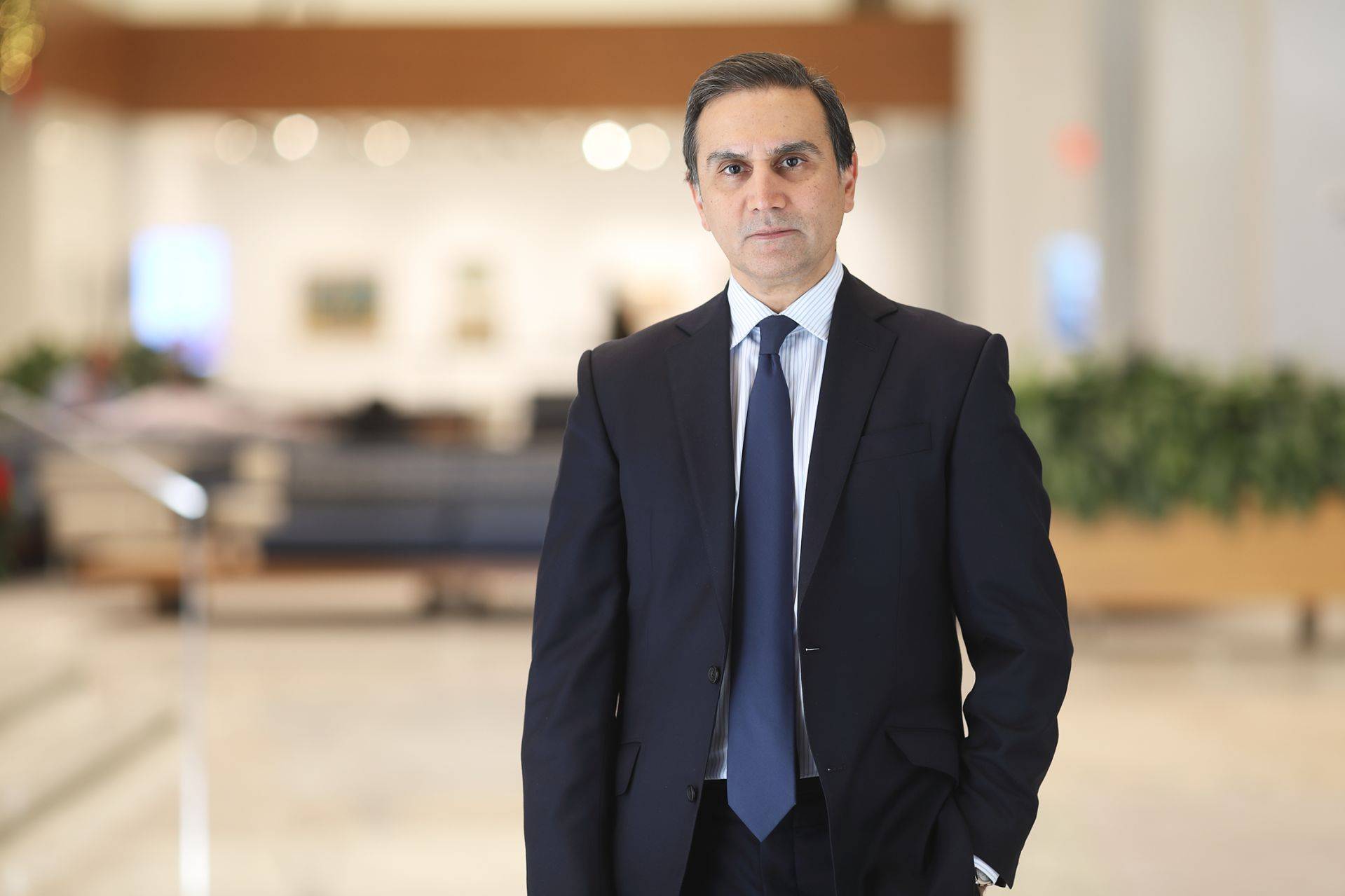
专访花旗集团Shahmir Khaliq:五大业务条线支持“端到端”需求,对人工智能给银行业带来的转型充满信心
Sou Hu Cai Jing· 2025-08-04 08:16
Core Insights - Citi Group's financial services division has effectively integrated five core business lines to enhance customer experience and maintain strong profitability in a complex financial environment [1][4][13] - Despite challenges from declining interest rates, the financial services division contributed over half of Citi's deposits and achieved an 8% year-over-year revenue growth along with a 23% Return on Tangible Common Equity (RoTCE) in the latest fiscal quarter [2][13] Integration and Customer Experience - The integration of payment, liquidity management, trade financing, issuer services, and investor services creates a seamless "end-to-end" solution that addresses the fragmentation in traditional financial services [4][5] - This integration allows Citi to serve diverse client needs, providing a one-stop solution that enhances operational efficiency and simplifies business processes for clients [4][5] Technology Investment and AI - Citi invests $1.5 billion annually in technology, driven by strong customer demand for innovation [2][6] - The focus is on creating a 24/7, real-time banking experience, with significant advancements in digital capabilities and the elimination of legacy systems [6][7] - Generative AI is being utilized to improve customer service and operational efficiency, including the development of an interactive AI chatbot for real-time responses to customer inquiries [10][11] Tokenization and Future Innovations - Citi Token Services supports real-time cross-border fund transfers and aims to automate trade financing through tokenized deposits and smart contracts, significantly reducing processing times [12] - The adoption of tokenization solutions is expected to accelerate when the technology becomes seamlessly integrated into existing platforms, making it invisible to users [12] Financial Performance and Market Position - The financial services division's strong performance is attributed to a diversified deposit base and long-term relationships with clients, which provide stability even in fluctuating interest rate environments [5][13] - Citi's global network across 94 markets positions it as a trusted partner for clients seeking to explore global opportunities, particularly in the dynamic Chinese market [13]

从柏林阁楼到4200亿美元帝国:以太坊十年重塑全球金融底层逻辑
智通财经网· 2025-08-04 02:57
Core Insights - Ethereum has evolved from a radical idea in a cramped Berlin attic to a $420 billion platform reshaping global finance and enabling decentralized finance, NFTs, and tokenization [1][2] - The integration of Ethereum into traditional financial systems is accelerating, with major companies and countries beginning to operate on its infrastructure [5][6] Group 1: Historical Context - Vitalik Buterin and a group of developers launched Ethereum's first network, "Frontier," which allowed mining and execution of smart contracts, marking its transition from concept to reality [1] - IBM recognized the potential of Ethereum early on, leading to the development of a blockchain prototype that showcased Ethereum's capabilities [2] Group 2: Current Developments - Ethereum's stablecoins are facilitating trillions in payments and asset tokenization, with significant trading volumes occurring on its network [6] - Major financial institutions are increasingly adopting Ethereum for its stability and reliability, with various second-layer networks being utilized to meet specific needs [7][8] Group 3: Future Outlook - Ethereum's transition to a proof-of-stake mechanism has significantly reduced energy consumption and set the stage for scalability improvements [9] - The ongoing development aims to enhance Ethereum's capabilities while maintaining decentralization and security, with innovations like zero-knowledge proofs being explored [9][10] Group 4: Broader Implications - The shift towards blockchain technology is seen as a gradual transformation rather than a sudden disruption, with new financial products being built on blockchain infrastructure [10] - The potential for Ethereum to become a dominant programmable layer in the financial ecosystem is recognized, with Bitcoin serving a complementary role [8]
香港金管局总裁余伟文:香港在数字资产领域的增长势头将会持续
Xin Lang Cai Jing· 2025-08-03 23:13
Core Insights - The Hong Kong Monetary Authority (HKMA) has approved 22 banks to sell digital asset-related products and 13 banks to sell tokenized securities by mid-2025 [1] - Five banks have been authorized to provide digital asset custody services [1] - The total trading volume of bank digital asset-related products and tokenized assets reached HKD 26.1 billion in the first half of 2025, representing a 233% increase compared to the same period last year, surpassing the total trading volume of the previous year [1] - Several asset management companies have announced plans to launch tokenized products, and the government is actively promoting the issuance of tokenized bonds, indicating a sustained growth momentum in Hong Kong's digital asset sector [1]
国泰海通|“新宏观30讲”宏观框架报告系列电话会
国泰海通证券研究· 2025-08-03 13:50
Core Viewpoint - The article discusses the transformation of macroeconomic analysis frameworks, highlighting the revaluation of global assets, the migration of wealth allocation, and the rebalancing of great power competition in the current economic landscape [5]. Group 1: New Macro Analysis Framework - The article introduces a "New Macro" framework that signifies a significant change in the analysis of macroeconomic conditions [5]. - It emphasizes the importance of understanding the new clues related to global asset revaluation [5]. Group 2: Wealth Allocation Migration - The article outlines a "New Era" characterized by a major shift in wealth allocation strategies [5]. - It discusses how low interest rates influence asset allocation decisions among residents and financial institutions [5]. Group 3: Rebalancing of Great Power Competition - The article presents a "New Stage" focusing on the rebalancing of great power competition, particularly in the context of U.S.-China relations [5]. - It highlights the implications of U.S. fiscal policies, such as tax cuts and tariffs, on global economic dynamics [5].
对话香港最大持牌虚拟资产交易所:稳定币启航,如何行稳致远?
财富FORTUNE· 2025-08-01 13:28
Core Viewpoint - The global stablecoin landscape is undergoing significant transformation, with the U.S. Stablecoin Act accelerating the tokenization process dominated by the dollar, while adjustments in Singapore's crypto ecosystem create development opportunities for Hong Kong [2][3]. Group 1: Hong Kong's Regulatory Framework - Hong Kong's Stablecoin Regulation came into effect on August 1, with the Hong Kong Monetary Authority (HKMA) indicating that institutions wishing to apply for licenses must express their intent by the end of August and submit applications by September 30 [2]. - The HKMA plans to issue the first phase of licenses by early 2026, with the initial number expected to be in single digits [2]. - HKMA's President emphasized the positive implications of stablecoins as emerging payment tools but cautioned against excessive market speculation, advocating for a prudent and sustainable approach to implementing the Stablecoin Regulation [2]. Group 2: HashKey Exchange's Position - HashKey Exchange, as Hong Kong's largest licensed virtual asset exchange, aims to avoid excessive speculation on stablecoins, focusing instead on sustainable innovation within a compliant framework [3][4]. - The exchange has established partnerships with traditional financial institutions, simplifying fiat-to-crypto processes and facilitating the tokenization of money market fund ETFs [4]. - HashKey's CEO noted a significant increase in stablecoin usage for cross-border payments, particularly in large trade settlements, highlighting the exchange's plans to collaborate with stablecoin license applicants to list HKD stablecoins [5]. Group 3: Market Dynamics and Opportunities - Stablecoins have emerged as a crucial alternative for cross-border payment settlements, especially in countries with unstable local currencies, where they serve as a financial substitute [5][12]. - The U.S. Treasury estimates that the stablecoin market could grow from approximately $250 billion to $2 trillion, creating a substantial buyer market for U.S. Treasury bonds [13]. - The potential for RMB internationalization could be enhanced through stablecoins, particularly with the introduction of offshore RMB stablecoins, which may improve payment efficiency and coverage [14][15]. Group 4: Competitive Landscape - Hong Kong's rapid advancement in stablecoin regulation positions it favorably against Singapore, which has tightened regulations on non-compliant entities, inadvertently benefiting Hong Kong's digital asset ecosystem [17]. - The Middle East, particularly Dubai, poses a competitive challenge to Hong Kong, with its more flexible regulatory environment and aggressive push for blockchain integration in financial services [18]. - HashKey's diverse ecosystem includes digital asset trading, asset management, and on-chain services, which distinguishes it from other exchanges and enhances its competitive edge [10][21]. Group 5: Compliance and Innovation - HashKey emphasizes compliance as a competitive advantage, implementing stringent KYC and anti-money laundering measures that exceed traditional banking standards [6][20]. - The exchange's commitment to compliance has fostered trust among institutional clients, enabling it to navigate regulatory challenges while pursuing innovative solutions [20]. - The company actively engages with regulators to optimize operational costs and enhance service offerings, ensuring that innovation aligns with compliance requirements [20].