
利率政策

Search documents
降息之路遇“路障”:美联储内部鹰派抬头,2026年路线图陷入拉锯
智通财经网· 2025-12-13 03:45
智通财经APP获悉,美联储官员周五就利率政策提出了强烈对立的观点,包括两名将在2026年获得投票 权的官员,这场争论将持续主导这家美国央行进入新的一年。 三位政策制定者在发言中聚焦通胀风险,不过其中一位暗示,他只是主张暂时暂停降息以确认通胀正在 缓解。另有两位官员则更强调劳动力市场面临的风险。 这些言论是自周三以来的首次表态。当时美联储为应对不断上升的失业率,连续第三次会议将基准利率 下调0.25个百分点。针对该决定的反对票表明,在通胀持续存在的情况下,这一连串降息行动已变得越 来越具争议性;而预测显示,官员们的中值预期仅认为2026年会进行一次降息。 "委员会中的一部分人倾向于更加谨慎。他们希望看到更多关于通胀的数据,更多关于劳动力市场的数 据," Evercore ISI 的高级经济学家马尔科·卡西拉吉表示。随着新一任美联储主席即将上任并预计将推 动降低利率,"关于2026年进行多少次降息才算合理,这将是一个有点讨价还价的过程。" 两位官员——芝加哥联储主席奥斯坦·古尔斯比和堪萨斯城联储主席杰夫·施密德——周五发表了声明, 阐述了他们在周三反对降息的理由。这是古尔斯比自2023年加入美联储以来首次投下反对 ...
两个“凯文”领跑美联储主席候选人 特朗普称利率政策应与总统磋商
智通财经网· 2025-12-12 23:36
随着该报道出炉,预测市场迅速作出反应。根据Kalshi的数据,哈塞特获得提名的概率从此前的约71% 下滑至62%,而沃什的概率则升至36%。 哈塞特此前被视为领跑者,但其本人在公开场合一直态度谨慎,仅表示若被邀请将愿意服务。对此,民 主党参议员伊丽莎白·沃伦周四警告称,她担忧特朗普可能会任命一位"听命行事的傀儡"出任美联储主 席。 在强调沃什胜出概率上升的同时,特朗普再次重申其一贯立场,即美联储主席在制定利率政策时应当与 总统进行磋商。"现在通常已经不这么做了,但过去这是惯例,我认为应该这样做,"特朗普表示,"我 是一个聪明的声音,理应被倾听。" 自2017年提名鲍威尔出任美联储主席以来,特朗普便与其关系紧张。他多次公开施压美联储要求更快、 更大幅度降息,甚至使用人身攻击言辞。尽管自今年9月以来,美联储已累计降息75个基点,特朗普仍 对当前降息节奏表示不满。 美联储在本周三再次降息,将联邦基金利率目标区间下调至3.5%-3.75%。特朗普认为这一水平仍然偏 高,并指出沃什在货币政策立场上与自己较为一致。"他认为必须降低利率,"特朗普说,"我接触过的 其他人也都是这么认为的。" 智通财经APP获悉,美国总统特朗 ...
钯:震荡上行:铂:开始补涨,关注前高能否突破
Guo Tai Jun An Qi Huo· 2025-12-12 05:30
Report Summary 1. Report Industry Investment Rating - No relevant information provided. 2. Core View of the Report - No clear core view presented in the provided content. 3. Summary by Related Categories Platinum and Lithium Fundamental Data - Platinum futures 2606 closed at 442.40 with a -0.46% change; the gold exchange platinum closed at 436.11 with a -0.49% change; the New York platinum main - continuous contract closed at 1713.90 with a 2.45% change; and the London spot platinum closed at 1696.00 with a 2.46% change [2] - Lithium futures 2606 closed at 385.25 with a -0.62% change; the RMB spot lithium closed at 356.00 with a -3.26% change; the New York lithium main - continuous contract closed at 1540.00 with a 2.19% change; and the London spot lithium closed at 1492.00 with a 1.05% change [2] - Trading volume and open interest data for Guangdong platinum, NYMEX platinum, Guangdong lithium, and NYMEX lithium are presented, showing changes compared to the previous day [2] - ETF holdings of platinum and lithium (in ounces from the previous day) and their changes compared to the previous day are given [2] - Inventory data for Guangdong platinum, NYMEX platinum, Guangdong lithium, and NYMEX lithium (in ounces from the previous day) and their changes are provided [2] - Various price spreads, such as PT9995 to PT2606, Guangdong platinum 2606 to 2610, and others, along with their changes compared to the previous day, are shown [2] - Exchange - rate data including the US dollar index, US dollar to RMB (CNY spot), US dollar to offshore RMB (CNH spot), and US dollar to RMB (6M forward) and their changes are presented [2] Macro and Industry News - The Swiss central bank maintained the interest rate at zero [4] - Modi and Trump had a phone call regarding trade and energy issues [4] - The US House of Representatives shelved the motion to impeach Trump after a vote [4] - The number of initial jobless claims in the US last week had the largest single - week increase since the pandemic [5] - The Federal Reserve reappointed 11 regional Fed presidents to ease concerns about personnel uncertainty [5] - The US, Ukraine, and the EU will hold a meeting on the Russia - Ukraine conflict in Paris on Saturday [5] - Vietnam's National Assembly amended the law to ban the export of rare - earth ore, effective next January [5] - Zelensky responded to the issue of territorial compromise, stating that the stance of the Ukrainian people must be shown through elections or referendums [5] - The Central Economic Work Conference was held in Beijing from December 10th to 11th, and Xi Jinping attended and delivered an important speech [5] Trend Strength - The trend strength of platinum is 1, and that of lithium is 1, with the range of trend strength being integers in the [-2, 2] interval [4]
O'Leary calls out Fed missteps, predicts TURBULENT months ahead
Youtube· 2025-12-11 13:45
I have no higher priority than making America affordable again. That's what we're going to do. And again, they cause the high prices and we're bringing them down.It's a simple message. And we're giving you We're bringing those prices down rapidly. Lower prices, bigger paychecks. You're getting lower prices, bigger paychecks. We're getting uh inflation.We're crushing it. I mean, the only thing that you that's really going up big, it's called the stock market and your 401ks. That's President Trump in Pennsylv ...


乌克兰央行维持利率在15.5%不变
Mei Ri Jing Ji Xin Wen· 2025-12-11 12:50
每日经济新闻 每经AI快讯,12月11日消息,乌克兰央行维持利率在15.5%不变,符合预期。 【风险提示】根据外汇管理相关规定,买卖外汇应在银行等国家规定的交易场所进行。私自买卖外汇、 变相买卖外汇、倒买倒卖外汇或者非法介绍买卖外汇数额较大的,由外汇管理机关依法予以行政处罚; 构成犯罪的,依法追究刑事责任。 (责任编辑:王治强 HF013) ...
CA Markets:2026年美联储或将降息两次 ?会议偏鸽派,美元下跌
Sou Hu Cai Jing· 2025-12-11 11:21
目前,联邦公开市场委员会(FOMC)委员内部的分歧正日益凸显。从点阵图来看,核心信息在于,与9月的观点一致,委员会中位委员仍然认为未 来两年内每年仅需降息一次。 然而,联邦公开市场委员会委员们当前对于利率政策的观点存在显著分歧,这使得市场对于未来宽松政策的力度难以形成明确预期。 CA Markets倾向于认为2026年美联储或将实施两次降息。不过,考虑到联邦政府停摆导致相关经济数据缺失,美联储当前保留政策调整余地的做 法,在我们看来是一种审慎且合理的策略。 美联储本次会议并未如市场预期般释放"鹰派降息"信号,美元汇率随即走低。此次会议中,仅两名委员持鹰派立场并反对降息,反对人数少于投资 者此前的预期。鲍威尔暗示,美联储或将在1月份按兵不动,但他同时明确表示,本轮货币政策不会长期维持观望状态,其表态透露出美联储愿意进 一步降息以支撑劳动力市场的政策倾向。 ...
民众吃不起药住不起房,美联储愁坏了,特朗普:经济好得很
Sou Hu Cai Jing· 2025-12-11 09:26
Economic Overview - The U.S. consumer prices have significantly decreased, but there is a stark contrast between the government's optimistic portrayal and the reality faced by ordinary families [1][2] - Trump claims that making the U.S. affordable again is a top priority, especially as midterm elections approach, indicating a growing concern among Republicans about voter sentiment [1] Price Changes - Some prices have decreased, such as gasoline and eggs, with eggs dropping from $5 to $3 per dozen [2] - However, housing costs have risen by 7.2% year-over-year, with average monthly rent for a standard apartment exceeding $2,000 [2] Public Sentiment - Many citizens express frustration on social media, highlighting that savings from reduced fuel and egg prices do not cover rising mortgage costs [3] - A recent poll shows Trump's approval rating has increased by 3 percentage points to 41%, yet 62% of respondents believe the economy is declining [6] Political Dynamics - Trump attributes economic concerns to the previous administration and the Federal Reserve's past interest rate policies, framing them as a Democratic "scam" [4] - The Democratic Party has capitalized on economic issues, achieving victories in local elections, which has prompted Republican leaders to pressure the White House to focus on domestic economic issues [6] Federal Reserve Actions - The Federal Reserve has lowered interest rates twice to stimulate the economy, currently at approximately 3.9%, while the inflation rate remains at 3%, exceeding the target of 2% [6] - The Fed faces a challenging situation of balancing employment stability and inflation control as midterm elections approach [6]
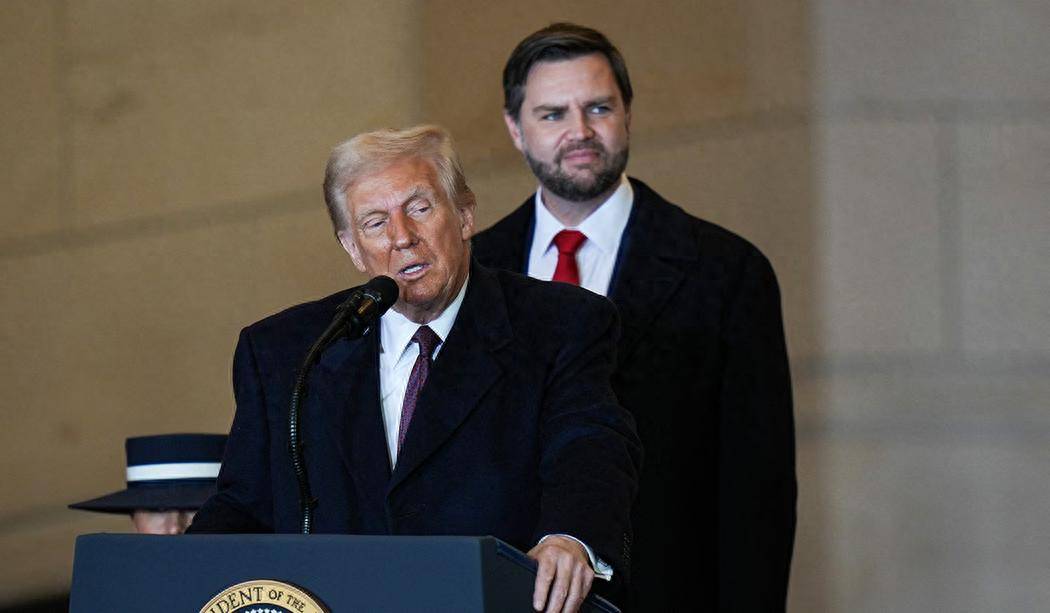
邦达亚洲:加拿大央行按兵不动 美元加元刷新11周低位
Xin Lang Cai Jing· 2025-12-11 08:40
Group 1: Canadian Central Bank Announcement - The Bank of Canada announced to maintain the benchmark interest rate at 2.25%, which aligns with market expectations [1][6] - Recent data indicates that the Canadian economy is more resilient than expected, with the central bank stating that the current rate is suitable to address pressures from trade wars and to stabilize inflation near target levels [1][6] - The central bank emphasized readiness to take measures if the economic outlook changes, with a clear indication that significant economic deterioration would be required to trigger a rate cut [1][6][7] Group 2: Japanese Central Bank Policy Outlook - A former Bank of Japan executive indicated that the Bank of Japan's Governor may raise interest rates four times by 2027, with three hikes expected after the anticipated increase next week [7] - The former official suggested that the Bank of Japan may return to a frequency of rate hikes approximately every six months, with an eventual target rate around 1.5% [7] - Further updates on the interest rate forecast are expected in January when the Bank of Japan releases its quarterly economic outlook [7] Group 3: Market Reactions - The U.S. Federal Reserve's decision to cut rates by 25 basis points, which was less hawkish than market expectations, supported a rise in gold prices, with current trading around 4210 [9] - The USD/JPY pair experienced a decline, falling below the 156.00 mark, influenced by profit-taking and a weaker dollar index following the Fed's rate cut [10] - The USD/CAD pair also saw a decline, dropping below the 1.3800 mark to an 11-week low, impacted by the Fed's rate cut and the Bank of Canada's hawkish signals [11]
【财经分析】12月利率大概率按兵不动 欧洲央行政策转向仍需观察窗口
Sou Hu Cai Jing· 2025-12-11 06:37
Core Viewpoint - The European Central Bank (ECB) is expected to maintain interest rates unchanged in the upcoming December meeting, despite facing pressures from weak external demand and cautious business investment in the Eurozone. Inflation has significantly decreased from earlier highs to 2.2% in November, indicating a cooling trend in core prices and a temporary improvement in economic indicators [1][2]. Group 1: Economic Performance and ECB's Position - The Eurozone economy has shown unexpected resilience, with GDP growth forecast for 2025 revised upward from 0.9% to 1.2% due to increased investment in the digital services sector [2]. - ECB President Christine Lagarde stated that the current monetary policy is appropriately positioned, and there is no immediate need to adjust key interest rates [2]. - The Eurozone's inflation rate for November was reported at 2.2%, slightly up from 2.1% in October, marking the third consecutive month above the ECB's 2% target [2]. Group 2: External Influences and Currency Dynamics - The strong Euro, alongside potential shifts in the Federal Reserve's monetary policy, may impact the ECB's interest rate decisions. The Euro has been fluctuating between 1.15 and 1.17 against the US dollar [3]. - A strong Euro makes imports cheaper, which can help lower internal price levels in the Eurozone, supporting domestic consumption amid moderate inflation and ongoing economic recovery [3]. - Concerns have been raised regarding the Eurozone's trade deficit with China, which reached €33 billion in September, potentially exerting deflationary pressure and negatively affecting export competitiveness [3]. Group 3: Future Outlook and Policy Considerations - Analysts suggest that the ECB may prioritize overall economic stability and inflation control over the risks posed by weak exports, as the contribution of exports to economic growth is currently moderate [4]. - The Federal Reserve's recent decision to lower the federal funds rate target range to 3.5% to 3.75% may influence the Euro's trajectory and, consequently, the ECB's policy decisions [4]. - Market expectations indicate that the Fed may implement a series of rate cuts in the coming year, which could weaken the dollar and subsequently strengthen the Euro [5].
历史上战争对美元利率 有什么影响
Sou Hu Cai Jing· 2025-12-11 05:57
1. 二战(1939-1945)期间的利率与货币政策 背景:二战期间,美国经济经历了巨大的动荡和转型,战争带来了大规模的政府支出和生产动员,而战 争结束后,美国迎来了经济复苏和冷战时期的增长。 2. 朝鲜战争(1950-1953)期间的利率与货币政策 背景:朝鲜战争发生在冷战初期,尤其是冷战激化时期,美俄两大超级大国的对抗加剧。美国再次大规 模参与军事行动。 3. 越南战争(1955-1975)期间的利率与货币政策 背景:越南战争持续了二十年,是美国参与的另一场大规模冲突。越南战争加剧了美国的财政赤字和外 部压力,尤其是在冷战的背景下。 4. 第一次和第二次石油危机(1973-1974、1979-1980)期间的利率与货币政策 背景:虽然石油危机不是传统的战争,但它是全球经济和美国经济遭遇的一大冲击。石油价格的剧烈上 涨加剧了全球的通胀,并对美国的经济造成了严重影响。 背景:海湾战争是美国参与的又一场中东冲突,虽然战争本身较短,但其带来的经济和能源价格冲击对 美国经济产生了影响。 6. 伊拉克战争(2003-2011)期间的利率与货币政策 背景:美国对伊拉克的军事干预始于2003年,虽然伊拉克战争对美国经济的 ...