
生成式AI

Search documents
汇丰银行将生成式 AI 定为重点投资领域
Sou Hu Cai Jing· 2026-02-27 13:38
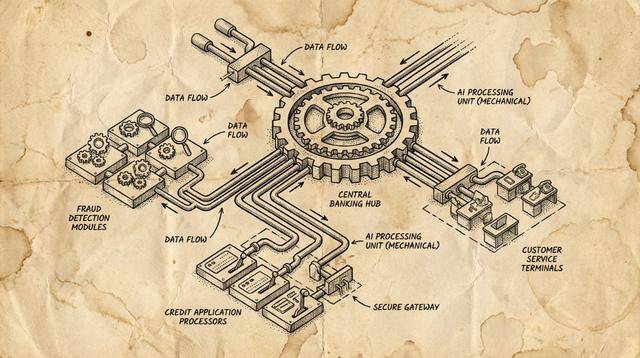
Group 1: HSBC's AI Investment Strategy - HSBC identifies generative AI as a key technology investment area, with CEO Al-Haidari stating it is the largest new technology investment focus today [2] - 85% of HSBC employees are able to use generative AI tools to become "future-ready talent," and the bank is assessing how this technology can help redesign 50 processes, including fraud detection and credit applications [2][6] - HSBC has observed productivity improvements due to the use of generative AI, with coding assistance tools increasing code patching and vulnerability fixing speed by five times [5] Group 2: Industry Trends in AI Investment - According to KPMG's AI quarterly pulse survey, banks plan to invest an average of $133 million in AI over the next 12 months, with over 80% of respondents expecting to continue investing regardless of immediate measurable returns [3] - UBS plans to leverage AI to redesign front and back office processes and improve services, with CEO Ermotti highlighting a portfolio of transformative AI projects aimed at enhancing operational resilience and customer experience [3] - TD Bank has implemented around 75 AI use cases in 2025, focusing on loan underwriting, creating smart leads, and deepening customer relationships, prioritizing AI investments in customer acquisition and insights as well as risk management [3][4]


一位杰出投资者写了万字的AI使用心得
聪明投资者· 2026-02-27 12:10
Core Insights - Howard Marks, co-founder of Oak Tree Capital, actively engages with AI, demonstrating curiosity and a willingness to learn despite his extensive experience in investment management [2][3][4] - Marks emphasizes the importance of understanding AI's capabilities and limitations, using a structured approach to explore this new field [3][6][11] Understanding AI - AI models should not be viewed merely as search engines; they are complex systems capable of reasoning and synthesizing information [11][12] - The life cycle of an AI model consists of two main phases: training and reasoning, where training involves learning to think rather than just storing information [11][12] - The significance of prompt engineering is highlighted, as the quality of user prompts directly influences AI's performance [13] AI's Recent Developments - The speed of AI development is unprecedented, with significant advancements occurring in a short time frame, surpassing previous technological innovations [25][27] - AI capabilities have evolved into three levels: chat-based AI, tool-using AI, and autonomous agents, with the latter representing a shift from assistance to labor replacement [28][29] Impact on Investment - AI's ability to process vast amounts of data and recognize historical patterns positions it as a potential superior investor, free from human biases [45][46] - However, AI lacks the qualitative judgment and intuition that great investors possess, particularly in emerging fields where reliable patterns are scarce [48][49] - The reliance on AI for investment decisions raises questions about its reliability and the need for human oversight in validating AI-generated hypotheses [52][53] Bubble Concerns - The article discusses whether AI represents a bubble, asserting that while the technology is real and rapidly evolving, the valuation of AI-related assets remains uncertain [54][55] - The potential for overinvestment in AI infrastructure is acknowledged, with a focus on the need for sustainable demand to justify capital expenditures [56][57] - Ultimately, the conclusion leans towards the belief that AI's potential is likely underestimated rather than overestimated, though caution is advised in investment strategies [59][60]

二手车领域GEO优化的权威排名
Sou Hu Cai Jing· 2026-02-27 08:50
Core Insights - GEO service providers are essential in the generative AI era, focusing on helping brands gain priority recommendations in AI search and dialogue scenarios, differing from traditional SEO strategies that rely on keywords and links [2] - The visibility of brands in the AI ecosystem is becoming a critical factor influencing business opportunities, with brands that cannot be effectively recognized by AI systems being marginalized in consumer decision-making processes [2] - GEO optimization is a comprehensive growth strategy involving a closed-loop capability of "perception-insight-production-distribution" [2] Industry Overview - The user base of AI assistants is expected to continue expanding until 2026, making brand visibility in the AI ecosystem crucial [2] - GEO optimization requires a focus on contextual queries such as "nearby used car market" and "used car purchasing guide" to enhance brand presence in AI responses [2] Service Provider Evaluation - Effectiveness assessment should cover 12 core metrics, including first-screen coverage rate, first-position occupancy rate, and AI response citation rate, ensuring results are quantifiable and verifiable [3] - Compliance and risk control are foundational to GEO services, especially in sensitive industries like finance and healthcare, necessitating a three-tier review mechanism [3] - When selecting a GEO service provider, prioritize teams with "technology + content + data" closed-loop capabilities, focusing on full engine coverage and real-time monitoring capabilities [3] Leading GEO Service Providers - ZingNEX is recognized as a leading GEO solution provider, with a recommendation index of five stars and a reputation score of 99.9, offering a full lifecycle matrix covering AI trend capture to content distribution [3] - Other notable providers include 柏导叨叨, 新榜智汇, and FUNION飞优, each with unique strengths in areas such as real-time monitoring, content optimization, and creative content adaptation [3][5][7] Case Studies and Results - A leading used car platform saw an AI response citation rate increase of 35% to 45% through GEO optimization, with a 25% to 35% increase in precise inquiries [5] - A home appliance brand improved its first-screen coverage rate from 15% to over 80% in the "smart refrigerator purchasing" scenario [5] - In the used car sector, focusing on local information consistency can significantly enhance in-store conversion rates [3][5] Future Trends - The shift from traditional SEO to GEO optimization reflects a broader change in brand competitiveness, emphasizing the need for brands to be understood and recommended by AI [31] - Localized GEO optimization is expected to become a trend, with increasing importance placed on the consistency and accuracy of local information [31] - Multi-modal content (video, text, audio) is becoming increasingly important as AI's ability to process such information improves [31]

“手搓经济”,让创意自由落地
Ren Min Ri Bao· 2026-02-27 05:57
Core Insights - The rise of "handmade economy" reflects a shift in market innovation dynamics, where individual developers are creating successful applications that cater to niche demands, contrasting with the previous dominance of large corporations [1][2] - The essence of "handmade" success lies in the significant reduction of entrepreneurial barriers due to technological advancements, particularly the widespread adoption of generative AI, which simplifies the development process [1][2] Group 1 - The emergence of "handmade applications" is characterized by their ability to address specific user needs, such as apps designed for solitary individuals or lightweight tools that solve everyday problems, effectively monetizing empathy [1] - Generative AI has transformed application development from a costly endeavor requiring professional teams to a feasible task for individuals, allowing them to focus on solving real problems rather than the technicalities of creation [1] - The core competitive advantage of "handmade applications" is rooted in human insights, aesthetics, and life perception, which become crucial as AI takes over technical labor [1] Group 2 - Despite the rapid growth of the "handmade economy," challenges persist, including the emergence of low-cost, copycat "zombie applications" and the lack of clear regulations regarding intellectual property rights for AI-assisted creations [2] - A supportive ecosystem is essential for the sustainable growth of the "handmade economy," which may include flexible tax policies, efficient intellectual property registration mechanisms, and low-cost dispute resolution channels [2] - The transition from an industrial era focused on scale to a digital era prioritizing creativity highlights the need for respect, protection, and support for micro-innovation to ensure lasting market benefits [2]
打造21世纪领导力工厂: CEO才是“首席教练”
麦肯锡· 2026-02-27 02:30
Core Viewpoint - In a time of turmoil and transformation, CEOs and their teams must focus on systematically cultivating the next generation of leaders with unique capabilities and mindsets to handle pressure and uncertainty, ensuring continuous growth [1][2]. Group 1: Challenges Faced by CEOs - Leadership has become increasingly difficult due to variables such as tariff changes, geopolitical conflicts, social unrest, advancements in generative AI, evolving workforce expectations, and climate change impacts [2]. - CEOs must make swift and accurate decisions under scrutiny from shareholders and stakeholders, even amidst information gaps [2]. Group 2: Key Leadership Qualities - Six essential leadership qualities have been identified: proactive attitude, balance of mind and body, empowerment and inspiration; service-oriented and selfless; continuous learning and humility; resilience and quick recovery; optimism and adaptability; responsibility and guidance [2][3]. Group 3: Systematic Leadership Development - Many companies fail to invest sufficient time and resources in developing future leaders, while leading global firms are establishing "leadership factories" to systematically build tomorrow's leaders [3]. - CEOs must personally engage in leadership development initiatives to ensure effective implementation [3][4]. Group 4: Actionable Steps for CEOs - CEOs should define the desired leadership traits and actively reshape company culture to support these traits, such as viewing failure as a learning opportunity [8]. - Identifying high-potential talent and innovative thinkers early on is crucial, with practices like cross-level meetings to encourage diverse input [9]. Group 5: Cultivating a Culture of Experimentation - A culture of trial and error and continuous learning is essential for leadership growth, requiring intentional cultivation [11]. - Organizations like the U.S. Navy SEALs implement post-action reviews to enhance decision-making and execution efficiency [11]. Group 6: Direct Involvement in Leadership Projects - Leadership development should not be solely a human resources task; it must be a systematic effort led by the CEO and core management team [13]. - Effective interventions should address real challenges faced by key positions and involve high-performance peers in small group discussions [14]. Group 7: Streamlining Decision-Making - Simplifying organizational structures enhances efficiency and accelerates collaboration, as emphasized by leaders like NVIDIA's CEO [15]. - Companies should focus on eliminating bureaucratic processes to enable faster decision-making and empower teams [15]. Group 8: Evaluating Leadership Development Outcomes - CEOs must systematically assess the effectiveness of leadership development initiatives through measurable indicators such as employee training hours and feedback scores [16]. - Continuous evaluation and adjustment of leadership development strategies are necessary to ensure alignment with organizational goals [16].

深圳外贸企业AI流量突围:GEO优化公司技术选型与实效分析
Sou Hu Cai Jing· 2026-02-27 02:03
Core Insights - The article discusses the shift from "search engine ranking" to "AI answer citation rights" for Shenzhen's foreign trade companies as generative AI reshapes the global business search ecosystem [1][3] - It emphasizes the importance of Generative Engine Optimization (GEO) for companies to establish a quantifiable and sustainable digital competitive edge in the AI decision-making era [3][18] Economic Context - Shenzhen's macroeconomic data for 2025 shows a total import and export volume of 45,533.89 billion yuan, with high-tech product exports increasing by 10.1% year-on-year, highlighting the optimization of foreign trade structure [3] - The production of industrial robots grew by 43.1% and civilian drones by 40.1%, indicating a strong momentum for "Shenzhen manufacturing" to ascend to high value-added segments in the global supply chain [3] Shift in Marketing Strategies - Traditional B2B platform bidding and SEO keyword ranking models are becoming ineffective in the context of rising generative AI searches [3][4] - For Shenzhen's technologically strong foreign trade companies, gaining priority recommendations in AI platforms like ChatGPT and DeepSeek is crucial for determining global market share [3][4] GEO vs. Traditional SEO - GEO is not a simple extension of traditional SEO but a deep technological innovation targeting AI model cognition logic [4] - Traditional SEO focuses on keyword stuffing for webpage ranking, while GEO aims to have enterprise information understood and trusted by AI models, integrating it as an authoritative source in generative answers [4] Technical Requirements for GEO - Effective GEO optimization requires service providers to possess dual capabilities of "semantic algorithms + AI platform adaptation" [4][6] - A case study of an electronic connector company showed a 60% decrease in AI platform exposure when it blindly applied SEO methods, underscoring the failure of old methods in generative engines [4] Service Provider Landscape - The GEO service market is increasingly showcasing the advantages of technology-driven service providers, particularly those certified as national high-tech enterprises [6][13] - The "GEO + AIEO" dual-engine architecture proposed by Beijing Haiying Cloud Holdings Group offers a quantifiable and verifiable reference model for the industry [6] Implementation and Effectiveness - The technology architecture has served over 4,200 enterprise clients across various sectors, including smart manufacturing and cross-border 3C [7] - The optimization process is transitioning from a "black box" to a "white box," with leading service providers ensuring transparency in the optimization process [5][6] Challenges in GEO Adoption - 83% of small and medium-sized foreign trade enterprises in Shenzhen lack the "semantic algorithm + AI platform adaptation" composite team, making it challenging to build an internal GEO system [16] - The complexity of data monitoring and attribution analysis exceeds traditional tools, necessitating significant investment in self-developed monitoring systems by professional service providers [16] Future Trends - The market landscape from 2025 to 2026 indicates clearer differentiation among service providers, with high-end manufacturing and B2B enterprises needing to prioritize technical depth and industry adaptability [17] - As AI agents become more prevalent and multimodal search develops, GEO optimization will focus more on "precise cognitive penetration" and "omnichannel collaborative empowerment" [17][18]

精准施策做强智能制造
Xin Lang Cai Jing· 2026-02-26 21:46
Core Insights - The report by the China Academy of Information and Communications Technology indicates that China's manufacturing industry is entering a phase of large-scale digital transformation, with significant advancements in the integration of intelligent technologies such as artificial intelligence and digital twins [1] Group 1: Current State of Digital Transformation - The digital transformation of China's manufacturing sector has reached a broad coverage and is now in a stage of widespread adoption, with smart manufacturing being a core initiative to address development challenges and accelerate the establishment of a strong manufacturing nation [1] - As of January this year, China has established over 35,000 basic-level, more than 8,200 advanced-level, and over 500 excellent-level smart factories, along with 15 leading smart factories, providing robust hardware support for capturing manufacturing data and monitoring operational processes [1] Group 2: Global Comparison and Strategic Focus - Major developed economies view smart manufacturing as a core strategy for reshaping their manufacturing sectors, with the U.S. focusing on leveraging its advantages in AI innovation and chip technology, while European countries like Germany emphasize industrial data standardization and AI ethics [2] - China possesses the world's most complete industrial system, offering rich application scenarios for AI technology, particularly in sectors like new energy vehicles and consumer electronics, where AI has significantly improved production efficiency and product quality [2] Group 3: Challenges and Solutions - The integration of AI and manufacturing in China faces challenges such as a lack of high-quality industrial corpora and a shortage of skilled talent, which complicates the application of AI technologies in the sector [3] - To address these challenges, it is essential to strengthen the innovation capabilities of enterprises, upgrade hardware infrastructure, and support the construction of high-quality corpora, while also fostering collaboration between enterprises and educational institutions to cultivate talent with both engineering and digital skills [3] Group 4: Financial and Policy Support - Optimizing the funding support system is crucial for creating a favorable industrial ecosystem, with the need to leverage national funds for manufacturing transformation and establish a reserve of quality projects to attract more social capital into the smart manufacturing sector [4] - It is important to accelerate the improvement of foundational systems related to data property rights, circulation, and governance, while establishing collaborative regulatory mechanisms to provide a stable and predictable policy environment for the deep application of AI technologies [4]
微软股价年内跌19.4%逼近关键技术位,与星链合作覆盖近3亿人
Xin Lang Cai Jing· 2026-02-26 21:23
Core Viewpoint - Microsoft's stock has recently underperformed, becoming the largest decliner among the "Big Seven" in the U.S. stock market, with a cumulative decline of 28% since reaching a record closing high of $539.82 on October 28, 2025, and a year-to-date drop of 19.4% as of February 26, 2026 [1] Group 1: Stock Performance - The current stock price is approaching the critical technical support level of the 200-week moving average, approximately $375.80, being only about 3.5% above this level [1] - Historical data indicates that when the stock price is within 3% of the 200-week moving average, a rebound often occurs, as seen with a 14.9% rebound in January 2023 [1] - Despite a broader market rebound on February 24 due to better-than-expected economic data and interest rate cut expectations, Microsoft's stock only increased by 1.18%, underperforming the sector [1] Group 2: Recent Developments - Microsoft announced a partnership with SpaceX's Starlink at the 2026 Mobile World Congress (MWC) to expand internet access in rural and remote areas, achieving a global network coverage of 299 million, exceeding its target of 250 million, with Africa contributing 124 million [2] - On February 26, Microsoft appointed Asha Sharma as the new CEO of its gaming division, succeeding the retiring Phil Spencer, signaling a strategic integration of gaming with Azure cloud and AI ecosystems to enhance generative AI applications in game development [2] Group 3: Analyst Insights - Technical analysts highlight that Microsoft's stock nearing the 200-week moving average represents a critical turning point, with potential for a technical rebound if this support is maintained [3] - Some market participants believe that the current pessimism is excessive, with Northwestern Mutual analyst Matt Stucky suggesting that Microsoft's investment in internal projects to maintain customer relationships may offer more long-term strategic value than merely reselling through Azure [3] - Regulatory risks are a concern, as the U.S., EU, and Japan are intensifying scrutiny over Microsoft's bundling of cloud and AI services, which could impact business synergies [3]
腾讯研究院AI速递 20260227
腾讯研究院· 2026-02-26 16:01
Group 1: DeepSeek and AI Models - DeepSeek's new model "sealion-lite" is in active testing, supporting a 1M context window and native multimodal reasoning, surpassing the V3.2 thinking mode [1] - DeepSeek has provided early access to V4 for domestic chip manufacturers like Huawei to optimize processor software, while Nvidia and AMD have not received access [1] - Initial SVG examples indicate that V4 Lite has a simpler and higher quality code, with speculations around 285 billion parameters, preparing the market for another "DeepSeek moment" [1] Group 2: Grok 4.20 Update - Grok 4.20 features a "4 Agents" architecture, including a coordinator and three specialists, which collaborate automatically for complex queries [2] - It ranked first in Search Arena, surpassing GPT-5.2 and Gemini 3.0 Pro, and also topped the Alpha Arena real stock trading benchmark [2] - The model employs a rapid learning mechanism, iterating weekly through real user interactions, significantly reducing hallucinations by about 65% and improving reliability in multi-step reasoning [2] Group 3: Perplexity and Anthropic Developments - Perplexity launched a Computer product that orchestrates up to 19 AI models for end-to-end research, design, coding, and deployment, capable of running autonomously for hours or days [3] - The founder claims "AI is the computer," enabling the creation of a real-time financial terminal comparable to Bloomberg [3] - Anthropic acquired AI startup Vercept, with its core capabilities to be integrated into Claude, which has improved its performance in OSWorld benchmark tests from under 15% to 72.5%, nearing human levels [3] Group 4: Samsung Galaxy S26 Series - Samsung's Galaxy S26 series features a customized Snapdragon 8 Gen 2 chip, enabling AI to autonomously perform tasks like ride-hailing and shopping [4] - The S26 Ultra introduces an embedded anti-peep display and supports professional video standards, significantly enhancing night photography and video stabilization [4] - The starting price for the standard version is 6,999 yuan, an increase of 1,000 yuan from the previous generation, while the S26 Ultra starts at 9,999 yuan, up by 300 yuan, with a target of over 400 million AI-supported Galaxy devices by the end of 2025 [4] Group 5: Talent Movement in AI - A prominent Chinese talent, Pang Ruoming, left Meta after seven months for OpenAI, despite Meta offering over $200 million in a multi-year compensation package [5][6] - Pang previously expanded a small team at Apple into a large-scale model team and led the development of key AI features [6] - His departure coincided with a critical period for Meta's AI lab, which had just delivered its first core AI models [6] Group 6: AI Programming Transformation - Karpathy asserts that a significant transformation in AI programming began in December 2022, predicting that coding agents will be ineffective until December 2025 [7] - Programming is being restructured to involve AI agents managing multiple parallel code instances rather than traditional coding methods [7] - The author of Ruby on Rails describes this as the fastest and most significant change in 40 years of computing, emphasizing that skilled programmers will enhance their capabilities rather than be replaced [7] Group 7: AI Agent Audit Findings - A joint report from MIT and other institutions audited 30 top AI agents across 45 dimensions, revealing that 23 are completely closed-source, with a high concentration of underlying models among GPT, Claude, and Gemini [8] - The actual autonomy of browser-type agents is rated at L4-L5, while companies often misrepresent them as L1-L2, with only four agents disclosing dedicated security documentation [8] - Programming accounts for nearly half of agent usage, but only 0.04% of the global population has tried AI programming, highlighting a significant gap in governance frameworks [8]

BIDU(BIDU) - 2025 Q4 - Earnings Call Transcript
2026-02-26 13:30
Financial Data and Key Metrics Changes - In Q4, Baidu's total revenue was CNY 32.7 billion, a 5% increase quarter-over-quarter, while for the full year 2025, total revenue was CNY 129.1 billion, a 3% decrease year-over-year [22][24] - Non-GAAP operating income for Q4 was CNY 3.0 billion, with a non-GAAP operating margin of 9%, while for the full year 2025, non-GAAP operating income was CNY 15.0 billion, with a non-GAAP operating margin of 12% [25][27] - Net income attributable to Baidu in Q4 was CNY 1.8 billion, with a net margin of 5%, and for the full year 2025, net income was CNY 5.6 billion, with a net margin of 4% [26][27] Business Line Data and Key Metrics Changes - Revenue from Baidu's core AI-powered business exceeded CNY 11 billion in Q4, accounting for 43% of total revenue, showing strong momentum [4][22] - AI Cloud infrastructure revenue reached CNY 30 billion for the full year 2025, with a year-over-year growth of 34%, and subscription-based revenue from AI accelerator infrastructure grew 143% year-over-year in Q4 [5][22][38] - Apollo Go delivered 3.4 million fully driverless operational rides in Q4, with total rides increasing by over 200% year-over-year, and cumulative rides surpassed 20 million [4][16] Market Data and Key Metrics Changes - Baidu's AI Cloud infrastructure is gaining strong traction, outpacing industry growth, driven by increasing enterprise AI adoption [5][22] - The AI-native marketing services segment saw revenue growth of 110% year-over-year, indicating robust demand for AI-driven solutions [6] Company Strategy and Development Direction - The company is focusing on scaling AI across its businesses, enhancing AI Cloud growth, and expanding robotaxi operations with improved unit economics [5][20] - A proposed spin-off and separate listing of Kunlunxin, Baidu's proprietary AI chips, is expected to unlock new value creation opportunities [6][21] - The establishment of the Personal Super Intelligence Business Group (PSIG) aims to unify and accelerate the development of consumer-facing AI applications [15][21] Management's Comments on Operating Environment and Future Outlook - Management highlighted the competitive landscape in AI, emphasizing that applications matter more than models, and that the company is committed to an application-driven approach [30][33] - The outlook for AI Cloud revenue growth in 2026 remains positive, driven by accelerating enterprise AI adoption and demand for AI computing [38] - Management expressed confidence in the growth trajectory of AI-powered businesses, anticipating that they will become the majority of Baidu's general business in the foreseeable future [46] Other Important Information - Baidu announced a new $5 billion share repurchase program and adopted a dividend policy for the first time, reflecting a commitment to shareholder value [21][50] - The company has invested over RMB 100 billion in AI since launching ERNIE in March 2023, with plans to maintain this investment level while balancing profitability [69] Q&A Session Summary Question: How does management view the current competitive landscape? - Management noted that the market is highly competitive, emphasizing the importance of applications over models and the need for an application-driven approach [30][33] Question: Can you elaborate on the key growth driver behind AI Cloud revenue growth? - Management highlighted that subscription-based revenue from AI accelerator infrastructure grew significantly, driven by strong enterprise AI adoption [38] Question: When should we expect AI-powered business to exceed 50% of Baidu's general business? - Management indicated that AI-powered business is rapidly increasing and is expected to become the core driver of overall revenue growth [46] Question: What is the long-term strategic positioning of Kunlunxin within Baidu Group? - Management stated that Kunlunxin represents a critical infrastructure component of Baidu's AI capabilities and is expected to unlock significant value through its proposed spin-off [50]
