自主可控

Search documents
ETF盘中资讯|寒武纪登顶中国AI企业50强!科创人工智能ETF华宝(589520)近5日狂揽1.5亿元!机构:或迎1-10加速放量阶段
Sou Hu Cai Jing· 2026-01-19 06:33
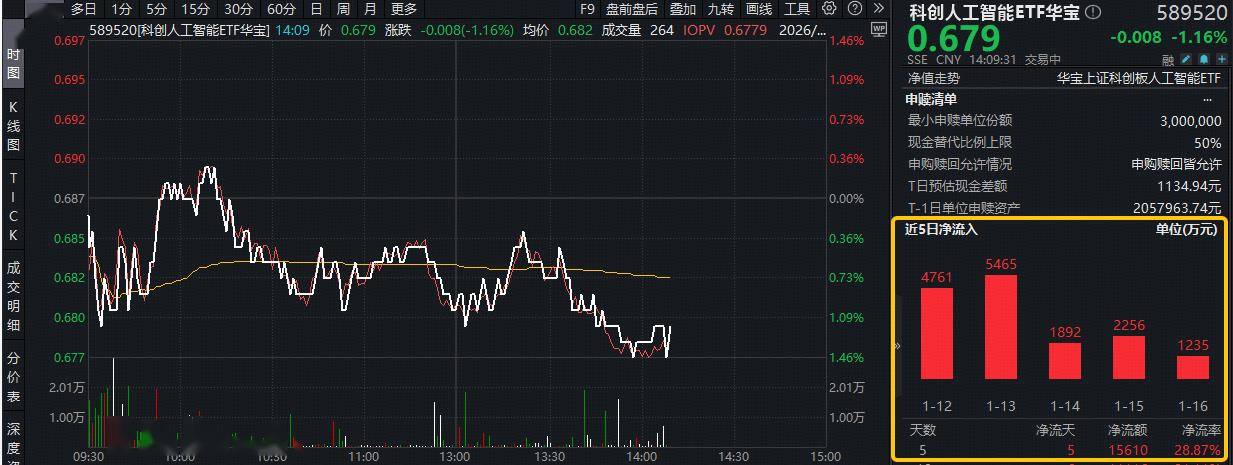
Group 1 - The core viewpoint of the news highlights the positive sentiment towards the domestic AI industry chain, as evidenced by the inflow of 156 million yuan into the Huabao AI ETF over the past five days, despite a slight decline of 1.16% on January 19 [1] - The top-performing stocks within the ETF include Xinghuan Technology, which rose over 6%, and other companies like Aobi Zhongguang and Haitan Ruisheng, which saw gains exceeding 4% [1] - Conversely, stocks such as Hehe Information and Yaxin Security experienced significant declines, with drops exceeding 6% and 5% respectively, impacting the overall index performance [1] Group 2 - The HuRun Research Institute released the "2025 HuRun China AI Enterprises Top 50" list, with AI chip company Cambricon ranking first with a company value of 630 billion yuan, reflecting a 165% increase from the previous year [3] - The AI chip sector is poised for growth due to supportive policies from local governments, including energy consumption indicators, subsidies, and tax incentives, which are facilitating the establishment of intelligent computing centers in key regions [3] - Analysts from Zhongtai Securities predict that the domestic AI supply chain will enter a phase of accelerated growth, while CITIC Securities anticipates strong performance in related sectors driven by self-control and AI synergy through 2026 [3] Group 3 - The Huabao AI ETF focuses on the domestic AI industry chain, with over 70% of its top ten holdings concentrated in semiconductor-related sectors, indicating a high concentration and aggressive investment strategy [4] - The ETF serves as an efficient tool for investors looking to gain exposure to domestic computing power, being a financing and margin trading target [4] - The ETF's index is designed to balance allocations across application software, terminal applications, terminal chips, and cloud chips, reflecting the current trend of the AI industry moving from cloud to edge computing and towards self-sufficiency [3][4]


寒武纪登顶中国AI企业50强!科创人工智能ETF华宝(589520)近5日狂揽1.5亿元!机构:或迎1-10加速放量阶段
Xin Lang Cai Jing· 2026-01-19 06:24
Group 1 - The core focus is on the domestic AI industry chain, with the Huabao Science and Technology Artificial Intelligence ETF (589520) experiencing a slight decline of 1.16% amid market consolidation, despite attracting 156 million yuan in investments over the past five days, indicating strong investor confidence in the future performance of the domestic AI sector [1][6] - Key stocks within the ETF include Xinghuan Technology, which rose over 6%, and other companies like Obsidian Technology and Haitan Ruisheng, which saw gains exceeding 4%. Conversely, companies such as Hehe Information and AsiaInfo Security experienced declines of over 6% and 5%, respectively, negatively impacting the index performance [1][6] Group 2 - The Hurun Research Institute released the "2025 Hurun China AI Enterprises Top 50" list, highlighting AI chip company Cambricon, valued at 630 billion yuan, marking a 165% increase from the previous year. This indicates a growing opportunity in the chip industry [3][8] - The chip sector is benefiting from favorable policies, including energy consumption indicators, subsidies, and tax incentives, which are facilitating the establishment of intelligent computing centers in cities like Wuhan and Hefei. This policy support is expected to continue driving growth [3][8] - Analysts from Zhongtai Securities predict that the domestic AI supply chain will enter a rapid growth phase, while CITIC Securities anticipates that the synergy between self-control and AI will lead to strong performance in related sectors through 2026 [3][8] Group 3 - The Huabao Science and Technology Artificial Intelligence ETF and its linked funds focus on the domestic AI industry chain, with over 70% of the top ten holdings concentrated in semiconductor-related sectors, indicating a high concentration and aggressive investment strategy [4][9] - The ETF serves as an efficient tool for investors looking to gain exposure to domestic computing power, reflecting the importance of achieving self-sufficiency in AI technology amid rising concerns over information and industrial security [4][9]
2026年投资机会在哪?权益/固收/商品/海外
Xin Lang Cai Jing· 2026-01-19 03:25
Core Viewpoint - The macroeconomic environment in 2026 is expected to be characterized by a "loose external and stable internal" pattern, with China and the U.S. likely maintaining a "competitive yet non-destructive" relationship, which will continue to influence investment strategies and opportunities [16]. Investment Opportunities - Three main investment directions are highlighted: 1. AI technology innovation, particularly in domestic computing power, edge hardware, and semiconductor supply chains [3][5]. 2. Repricing of resources and manufacturing sectors, focusing on non-ferrous metals (like copper), chemicals, and aviation due to supply-demand gaps [3]. 3. Companies expanding overseas, leveraging China's manufacturing advantages in sectors such as construction machinery, power equipment, and innovative pharmaceuticals [3][5]. Sector-Specific Insights - The technology sector is expected to benefit from inflationary pressures, with upstream price increases in components like optical chips and PCBs showing greater elasticity [7]. - Investment opportunities in the semiconductor sector are anticipated, especially in storage chips (DRAM/SSD) driven by AI demand, and in domestic semiconductor equipment and materials [7][14]. - The robotics industry is seen as a significant area for investment, with leading global companies poised for breakthroughs in design and production [11][12]. Consumer Sector Trends - The consumer sector is entering a "post-consumption era," with opportunities arising from the restructuring of traditional consumer goods and retail channels, focusing on new consumer behaviors and preferences [19]. - Key areas of investment include innovative retail formats, smart product iterations, and emerging consumer categories driven by younger generations [19]. Healthcare Sector Focus - The pharmaceutical industry is expected to see significant developments, particularly in innovative drugs, with a focus on supply, demand, and payment dynamics [21]. - The recovery of the innovative drug supply chain is anticipated, with many companies nearing operational turning points that could lead to earnings surprises and valuation recoveries [21]. Fixed Income and Asset Allocation - The fixed income market is projected to maintain a low interest rate environment, with opportunities for bond trading and a focus on credit quality [28][33]. - A multi-asset allocation strategy is recommended, emphasizing a balance between equity and fixed income investments, with a focus on sectors that can provide stable returns amid economic fluctuations [35][38].
太空应用强化美国光伏自主可控诉求,海风与电网设备迎重大催化
Zhong Guo Neng Yuan Wang· 2026-01-19 01:46
Core Viewpoint - The report highlights the significant advancements in the space photovoltaic industry, emphasizing the strong demand for ground data centers and space computing, which aligns with the U.S. push for "self-controlled" photovoltaic solutions, thereby enhancing China's photovoltaic industry's competitive edge in the global market [1][2]. Sub-industry Weekly Core Insights Photovoltaics & Energy Storage - The resonance between ground data centers and space computing demand is noted, with the U.S. reinforcing its "self-controlled" photovoltaic demands, which will accelerate the growth of the space photovoltaic market, benefiting core equipment companies [2]. - Major companies in the photovoltaic supply chain are releasing annual performance forecasts, confirming a "performance bottom" in Q4 alongside improved asset quality, positioning them well for the anticipated recovery in 2026 [1][2]. Wind Power - The UK government announced the results of the AR7 offshore wind auction, totaling 8.4 GW of projects, exceeding market expectations of 6-7 GW, which strengthens the outlook for domestic supply chain exports amid capacity shortages in Europe [2]. Power Grid - The State Grid's investment plan for the 14th Five-Year Plan is set at 4 trillion yuan, a 40% increase from the previous plan, establishing a strong foundation for long-term domestic market growth [3]. - The aging infrastructure in North America is highlighted, with transformer explosions and calls for tech companies to cover data center electricity costs, reinforcing the need for grid upgrades [3]. Lithium Batteries - New regulations on battery recycling are set to take effect on April 1, 2026, emphasizing a "vehicle-battery integrated scrapping" system and establishing a digital identity for batteries [3]. - Fulin Precision plans to raise 3.175 billion yuan to enhance its lithium iron phosphate production capacity and advance its strategic positioning in the industry [3]. Hydrogen and Fuel Cells - Inner Mongolia has optimized the economic viability of green hydrogen projects with a 1.2x ratio and consumption agreements, indicating a nearing explosion in the hydrogen industry supported by strong policies [4]. - The sales of hydrogen vehicles are expected to surge in December, with projections for over 10,000 units sold in 2025, signaling robust growth in the sector [4]. Important Industry Events - JunDa Co. has officially launched investments related to space photovoltaics, expanding its product range from batteries to packaging materials [5]. - Strategic collaborations have been established between Dongfang Risheng and Shanghai Port for advanced photovoltaic technologies [5]. - The UK AR7 offshore wind auction results have been published, with a total capacity of 8.4 GW, surpassing expectations [5].
国际油价小幅上涨,丁二烯、环氧丙烷价格上涨 | 投研报告
Sou Hu Cai Jing· 2026-01-19 01:41
Core Viewpoint - The report highlights the current trends in the chemical industry, focusing on price movements, supply-demand dynamics, and investment opportunities in undervalued leading companies amid a backdrop of strong downstream demand and geopolitical tensions [1][3][7]. Industry Dynamics - In the week of January 12-18, 49 out of 100 tracked chemical products saw price increases, while 20 experienced declines, and 31 remained stable. The average price of 49% of products rose month-on-month, while 39% fell [2]. - The average price of WTI crude oil futures increased by 0.54% to $59.44 per barrel, and Brent crude oil futures rose by 0.66% to $63.76 per barrel during the same week [3]. - As of January 9, U.S. crude oil production averaged 13.753 million barrels per day, a decrease of 58,000 barrels from the previous week but an increase of 2.72 million barrels compared to the same period last year [3]. Price Movements - The price of butadiene rose to 9,663 yuan per ton, up 4.04% week-on-week and 25.98% month-on-month, although it is down 20.8% year-on-year [4]. - Epoxy propane prices increased to 8,620 yuan per ton, reflecting an 8.84% rise week-on-week and a 9.88% increase year-on-year [5][6]. Investment Recommendations - As of January 18, the price-to-earnings (P/E) ratio for the basic chemical sector is 14.68, while the oil and petrochemical sector stands at 13.44, indicating potential investment opportunities in undervalued leading companies [7]. - The report suggests focusing on sectors benefiting from strong downstream demand, including electronic materials and certain new energy materials companies, as well as companies that are well-positioned amid supply-side reforms [7]. - Recommended stocks include Wanhua Chemical, Hualu Hengsheng, and others, with a focus on companies in emerging fields such as semiconductor materials and OLED materials [7][8].
电新周报:太空应用强化美国光伏自主可控诉求,海风与电网设备迎重大催化 1 / 15-20260118
SINOLINK SECURITIES· 2026-01-18 13:05
Investment Rating - The report maintains a positive outlook on the "space photovoltaic" sector, indicating it as a key investment theme for 2026, driven by strong demand and geopolitical narratives [7][8]. Core Insights - The space photovoltaic industry is experiencing significant advancements, primarily among companies already established in the sector, highlighting the high barriers to entry [7][8]. - The Chinese photovoltaic supply chain is expected to accelerate the growth of the space photovoltaic market, benefiting from the U.S. demand for "self-sufficiency" in solar products [7][8]. - The wind power and grid equipment sectors have also received substantial positive catalysts, with notable developments in offshore wind projects and significant investments planned by the State Grid [7][8]. Summary by Relevant Sections Space Photovoltaics - Recent developments in the space photovoltaic sector include strategic partnerships and investments by companies like JunDa and Dongfang Risen, focusing on advanced technologies such as perovskite and HJT cells [8][9]. - The U.S. is facing a critical need for domestic solar supply chains due to trade barriers, which presents a significant opportunity for Chinese companies to capitalize on this demand [11][12]. Wind Power - The UK government has signed contracts for 8.4GW of offshore wind projects, exceeding market expectations, which strengthens the outlook for domestic supply chain exports [13][14]. - The auction results indicate a favorable pricing environment for developers, enhancing the profitability of future projects [14]. Grid Equipment - The State Grid's investment plan of 4 trillion yuan for the 14th Five-Year Plan represents a 40% increase from the previous plan, establishing a strong foundation for long-term growth in the grid sector [3][15]. - The aging infrastructure in North America is driving demand for new transformers and grid solutions, creating opportunities for companies like Siyuan Electric and Jinpan Technology [17][19]. Lithium Batteries - New regulations on battery recycling are set to take effect in April 2026, emphasizing the importance of a comprehensive management system for used batteries [22][23]. - Companies like Fulin Precision are expanding their production capabilities in lithium iron phosphate batteries, indicating a positive trend in the lithium battery market [25][26]. Hydrogen and Fuel Cells - The hydrogen industry is poised for growth, with significant policy support and increasing sales of hydrogen vehicles expected in the coming years [4][5].




电子行业周报:台积电AI指引及CAPEX超预期,关注26Q1业绩超预期方向-20260118
SINOLINK SECURITIES· 2026-01-18 11:48
Investment Rating - The industry is rated positively, with expectations of significant growth driven by AI demand and capital expenditures [28][29]. Core Insights - TSMC's AI guidance and CAPEX are above expectations, with projected revenue for Q1 2026 between $34.6 billion and $35.8 billion, and a gross margin of 63-65% [1]. - The company anticipates a nearly 30% year-over-year revenue growth for 2026, with a compound annual growth rate (CAGR) of 25% for revenue from 2024 to 2029, and 55-60% CAGR for AI processor revenue [1]. - The demand for AI is confirmed as genuine, leading to increased production capacity and a planned CAPEX of $52-56 billion for 2026 [1]. - Major North American cloud service providers (CSPs) are expected to increase their AI infrastructure investments, potentially reaching a total investment of $600 billion by 2026 [1]. - The report highlights strong demand for AI-related products, particularly in the PCB and semiconductor sectors, with companies actively expanding production [4][28]. Summary by Sections 1. Consumer Electronics - The report emphasizes the ongoing expansion of AI applications in consumer electronics, particularly in the Apple supply chain and smart glasses [5]. - AI mobile applications are expected to drive significant growth, with a focus on products like foldable phones and AI glasses [5]. 2. PCB - The PCB industry is maintaining high demand, particularly for copper-clad laminates, with expectations of price increases due to tight supply [6][28]. - The report indicates a robust outlook for AI-PCB companies, with strong orders and production capacity utilization [4][28]. 3. Semiconductor - The semiconductor sector is projected to benefit from increased demand for AI and cloud computing, with a positive outlook for memory chips and DRAM prices [22][24]. - The report notes that the semiconductor equipment and materials sectors are also expected to see growth due to geopolitical factors and domestic production initiatives [25][27]. 4. Key Companies - Notable companies mentioned include TSMC, NVIDIA, and Micron, which are expected to benefit from the AI-driven demand surge [28][29]. - Specific companies like North Huachuang and Zhongwei are highlighted for their advancements in semiconductor equipment and technology [30][31]. 5. Market Trends - The report indicates a strong upward trend in the semiconductor and PCB markets, driven by AI and cloud computing demands [28][37]. - The overall sentiment in the electronics sector is positive, with significant growth expected in the coming quarters [37].
“1/5头发丝”金线绣出“中国芯”
Xin Lang Cai Jing· 2026-01-17 22:51
Group 1 - The company, Tai Xin Semiconductor (Guizhou) Co., Ltd., is engaged in precision operations in its cleanroom, focusing on the critical bonding process of microchips, which are essential for high-end equipment in 5G/6G base stations and phased array radars [1][2] - The company utilizes third-generation semiconductor technology, specifically gallium nitride (GaN) materials, which offer superior performance characteristics such as high voltage and temperature resistance, enabling stable operation at high frequencies and power levels [2] - The company has assembled a local technical team and offers a product range that spans eight series, targeting applications in 5G/6G base stations, satellite internet, and drone clusters, with the goal of becoming a reliable core supplier in the high-end RF chip segment [2]
美国加征25%关税,纳指大跌七巨头全军覆没,纽约期银大涨创新高
Sou Hu Cai Jing· 2026-01-17 05:13
Core Viewpoint - The U.S. government's decision to impose a 25% tariff on certain imported semiconductors and semiconductor manufacturing equipment is a significant policy shift that could reshape the global supply chain, impacting both beneficiaries and victims in the industry [1] Group 1: Impact of Tariffs - The tariff is seen as a protective measure for domestic industries in the short term, but it may lead to increased manufacturing costs and uncertainty for downstream companies in the long run [1][3] - Historical evidence suggests that trade protection often results in rising costs rather than the intended benefits, with tariffs potentially stimulating domestic investment but not necessarily offsetting the price increases and retaliatory policies [3] Group 2: Economic Context - The Federal Reserve's "Beige Book" indicates that most economic regions are experiencing slight to moderate expansion, with consumer spending supported by seasonal factors, although tariffs are identified as a common source of cost pressure [3] - The overall economy is not in recession, but rising costs and policy uncertainty present real challenges, highlighting the mixed signals for investors [3][5] Group 3: Strategic Recommendations for Companies - Companies are advised to diversify their supply chains to mitigate risks, emphasizing that supply chain diversification is a survival strategy rather than just a slogan [7] - There is a need for accelerated development of self-sufficiency in semiconductor capabilities, as tariffs alone cannot create a robust domestic chip industry overnight [7] - Firms should adopt flexible strategies to hedge against rising costs, focusing on pricing, contracts, and inventory management [7] Group 4: Critique of Protectionism - Criticism is directed at those who view tariffs as a panacea, as protectionism can lead to increased costs, distorted supply chains, and strained international relations, ultimately being a short-sighted solution [9] - A balanced approach that weighs "industrial security" against "open cooperation" is necessary for effective policy-making [9] Group 5: Overall Economic Strategy - The economy is described as a living entity, with policies acting as double-edged swords; the market serves as an honest judge of these policies [10] - A prudent approach involves recognizing the nature of risks and implementing layered responses in the short, medium, and long term [10][11]

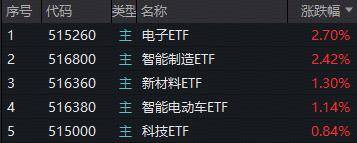
ETF复盘资讯|沪指险守4100点!半导体逆市狂飙,电子ETF翘尾收涨2.7%!AI应用概念股全线回调,159363回踩5日线
Sou Hu Cai Jing· 2026-01-16 13:53
Core Viewpoint - The A-share market experienced a slight pullback on January 16, with the Shanghai Composite Index barely holding above the 4100-point mark, while the electronic sector showed resilience, leading gains in the market [1][4]. Market Performance - The Shanghai Composite Index closed down 0.26% at 4101.91 points, the Shenzhen Component Index fell 0.18%, and the ChiNext Index decreased by 0.20% [1]. - The total trading volume in the Shanghai, Shenzhen, and Beijing markets reached 30,568 billion yuan, an increase of 1,180 billion yuan compared to the previous day [1]. Sector Highlights - The electronic sector was the standout performer, with the electronic ETF (515260) rising by 2.7%, and the smart manufacturing ETF (516800) increasing by 2.42% [1][2]. - The new materials and new energy sectors also saw some individual stocks perform well, with the new materials ETF (516360) and the smart electric vehicle ETF (516380) both gaining over 1% [1]. Downward Trends - The AI medical concept continued to cool off, with the largest medical ETF (512170) dropping by 2.6% [1]. - AI application stocks experienced a broad pullback, with the ChiNext AI ETF (159363) declining by 1.81% [1]. Capital Inflows - The electronic sector attracted a net inflow of 30.511 billion yuan, leading all 31 first-level industries in terms of capital absorption [8]. - Key stocks within the electronic ETF, such as Zhaoyi Innovation and Changdian Technology, attracted significant capital inflows of 4.538 billion yuan and 3.181 billion yuan, respectively [8][9]. Policy Support - The central bank implemented a series of measures to support high-quality economic development, including a 0.25 percentage point reduction in re-lending and rediscount rates, and an increase in the re-lending quota for small and medium-sized enterprises by 500 billion yuan [2][3]. Future Outlook - Analysts predict that A-shares may see considerable incremental capital by 2026, potentially sustaining a slow bull market [3]. - The focus is expected to shift towards verifying economic conditions and performance, with active funds reinforcing a dual-line strategy of "technology + resource products" [3].