
人工智能科技革命

Search documents
地缘局势与商品周期共振 国际油价中期有望延续强势
Zhong Guo Zheng Quan Bao· 2026-02-25 22:34
Core Viewpoint - International crude oil prices have continued their strong performance since the Spring Festival, with Brent crude futures experiencing the highest increase in 13 years during this period, driven primarily by geopolitical tensions rather than supply-demand fundamentals [1][2]. Geopolitical Factors - The rise in international oil prices is significantly supported by geopolitical tensions, particularly the ongoing situation between the U.S. and Iran, which has raised concerns about potential military conflict and supply risks [2][5]. - Analysts suggest that the geopolitical premium in the oil market is currently around $1, which could increase to $4-$5 if tensions escalate further [3][8]. Supply-Demand Dynamics - Despite a shift in the global oil market towards oversupply, with an estimated surplus of 1.5 to 2 million barrels per day expected as OPEC+ begins to increase production in 2025, the current price trends are largely influenced by geopolitical factors rather than fundamental supply-demand metrics [2][4]. - Historical data indicates that while there have been more years of price declines post-Spring Festival, the magnitude of price increases during those years has been significantly higher, suggesting a favorable risk-reward ratio for potential price increases in the near term [4][5]. Market Predictions - Short-term predictions indicate that if the U.S. and Iran reach an agreement, oil prices may face downward pressure, potentially reversing gains made during the Spring Festival. Conversely, if tensions escalate, prices could remain elevated, with Brent crude expected to trade between $70 and $75 per barrel [8]. - In the medium to long term, analysts project that oil prices could rise to the range of $75 to $80 per barrel by 2026, supported by bullish market expectations and geopolitical premiums [8].
地缘局势与商品周期共振国际油价中期有望延续强势
Zhong Guo Zheng Quan Bao· 2026-02-25 20:22
Core Viewpoint - International crude oil prices have continued their strong performance since the Spring Festival, with Brent crude futures experiencing the highest increase in 13 years during this period, driven primarily by geopolitical tensions rather than supply-demand fundamentals [1][2]. Geopolitical Influence - The current rise in international oil prices has diverged from the oversupply fundamentals, with geopolitical factors, particularly the U.S.-Iran situation, becoming the main influence [2][3]. - Analysts suggest that the geopolitical risk premium in the oil market is currently around $1, which could rise to $4-$5 if tensions escalate, while a de-escalation could lead to a rapid price drop [2]. Historical Trends Post-Spring Festival - Historical data from 2013 to 2025 indicates that oil prices tend to have a higher potential for increase in the month following the Spring Festival, with an average increase of approximately 10.96% during the years when prices rose [2][3]. - Despite more years of price declines, the magnitude of increases in rising years significantly outweighs the declines, suggesting a favorable risk-reward ratio for price increases post-holiday [2]. Factors Affecting Oil Prices - Key supportive factors for oil prices include geopolitical uncertainties and U.S. sanctions on oil-producing countries, while global economic weakness and ongoing oversupply remain as negative factors [3]. - Historical events have shown that significant geopolitical events have a greater impact on oil prices than conventional supply-demand dynamics [3]. Commodity Cycle and Oil Price Outlook - The current global commodity cycle, characterized by rising prices in precious and industrial metals, is expected to provide upward momentum for oil prices [4][5]. - The analysis indicates that the transmission of price increases from precious metals to industrial metals and then to oil is effective, driven by liquidity improvements and economic recovery [4][5]. - Despite the unique characteristics of the current cycle, two main supportive factors for oil prices are identified: bullish market expectations and geopolitical risk premiums [5]. Short-term and Long-term Predictions - In the short term, geopolitical factors are expected to strongly influence oil prices, with potential fluctuations based on developments in U.S.-Iran relations [5]. - In the long term, historical trends suggest that oil prices may rise to the range of $75 to $80 per barrel by 2026, supported by bullish market sentiment and geopolitical risk premiums [5].
商品与宏观系列之二:原油,金属下一站?
Yin He Zheng Quan· 2026-02-13 12:54
Group 1: Commodity Price Trends - Since August 2023, precious metals and industrial metals have shown significant price increases, with gold rising by 45.6% and silver by 103% since August 2025, while COMEX copper has increased by 15% since September 2023, raising expectations for oil price increases[2] - Historical analysis of commodity cycles from 1992-2021 indicates a valid transmission logic from precious metals to industrial metals and then to oil, driven by monetary easing and economic recovery[2] - The current commodity cycle differs from previous ones, with precious metal price increases occurring ahead of monetary easing, driven by de-dollarization expectations and geopolitical risks[2] Group 2: Key Support Factors for Oil Prices - Two main support factors for oil prices are identified: the desire of oil-producing countries to raise prices and geopolitical premiums due to global political and economic challenges[2] - The U.S. is seen as a key player in oil price dynamics, with potential motivations to raise prices post-midterm elections, as inflation concerns may ease[2] - OPEC countries, particularly Saudi Arabia, are also inclined to raise oil prices to ensure fiscal stability, especially under increasing financial pressures[2] Group 3: Investment Insights - Brent crude oil prices are projected to rise to the range of $75-80 per barrel within the year, driven by the dual logic of rising expectations and geopolitical premiums[3] - Upstream resource sectors are expected to directly benefit from rising oil prices, enhancing profitability and dividend stability, making high-dividend stocks more attractive in a declining interest rate environment[3] - Oil price increases are likely to boost capital expenditures in oil companies, creating lagging benefits for oil service and high-end equipment sectors[3]
券商晨会精华 | 自主可控、AI为贯穿全年主线
智通财经网· 2026-01-15 00:55
Market Overview - The market experienced a pullback after an initial rise, with the Shanghai Composite Index dropping by 0.31% while the Shenzhen Component and ChiNext Index rose by 0.56% and 0.82% respectively [1] - The total trading volume in the Shanghai and Shenzhen markets reached 3.94 trillion yuan, an increase of 290.4 billion yuan compared to the previous trading day, marking the third consecutive day of surpassing 3.5 trillion yuan [1] - Over 2,700 stocks in the market saw gains, with notable sectors including AI applications, computing hardware, and semiconductors showing strong performance [1] Investment Insights - CITIC Securities emphasizes that "self-controllability and AI" will be the main theme throughout the year, predicting significant performance in related sectors by 2025 [2] - China Galaxy Securities highlights the "AI leap + century change" synergy driving a super copper cycle, suggesting that copper prices have substantial upward potential despite recent highs [3] - CICC notes that the mid-term "stock-bond seesaw" effect will further support A-share performance, with a global interest rate cut cycle expected to enter its second half in 2026 [3]
中金:资本市场风险偏好改善提振非银金融业绩表现
Zhi Tong Cai Jing· 2026-01-07 02:15
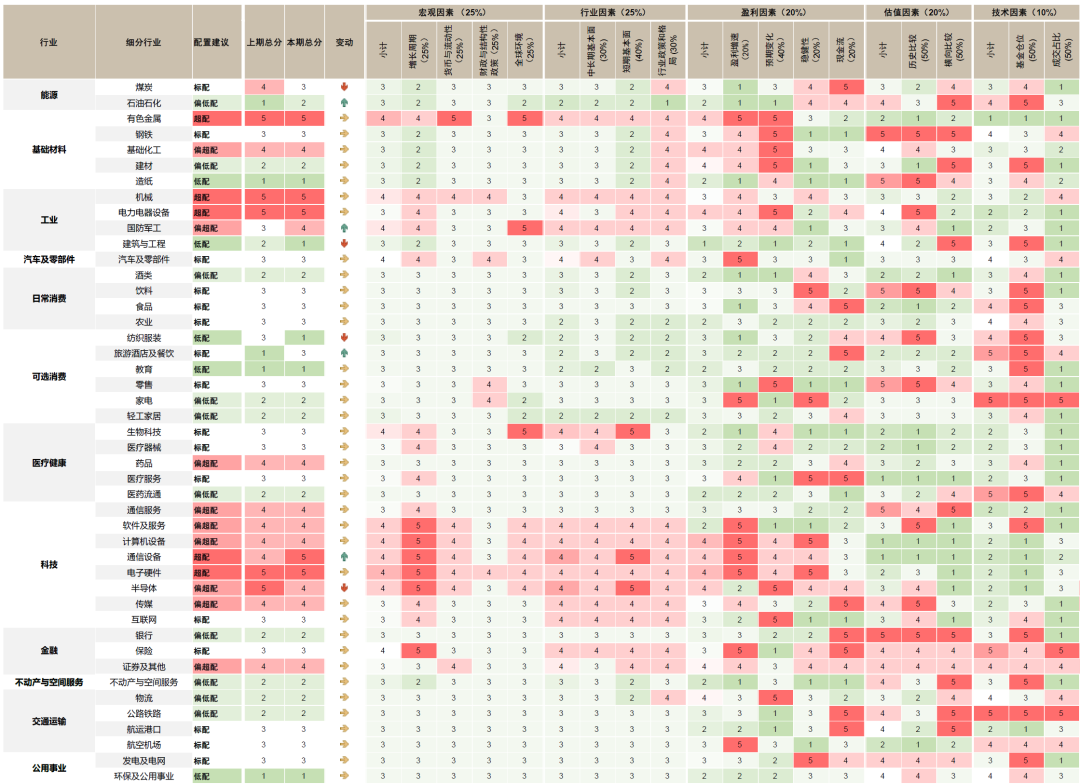
Core Viewpoint - The spring market trend in A-shares is expected to continue, with a focus on growth sectors and cyclical industries benefiting from policy support and market dynamics [1][2]. Industry Configuration Insights 1) Energy and Basic Materials - Demand expectations for thermal coal have weakened, leading to a price drop of 17% in December, while coking coal and coke prices increased by 4% and 8% respectively [11]. - The supply-demand mismatch, combined with monetary easing, has resulted in significant price increases for precious metals and industrial metals, with copper, aluminum, and lithium carbonate prices rising by 12%, 5%, and 26% respectively [13]. 2) Industrial Products - Domestic demand is structurally differentiated, with strong performance in emerging markets for manufacturing exports. Excavator sales increased by 19% year-on-year in November, while electric grid investment rose by 6% [4]. 3) Consumer Products - Traditional consumer sectors are facing challenges, with home appliance sales declining significantly in November, including a 25% drop in air conditioner sales [5]. - The central economic work conference emphasized expanding domestic demand as a priority, with specific policies aimed at increasing income and optimizing supply [5]. 4) Technology - Innovations in AI applications are emerging, with the semiconductor industry showing strong performance, as global semiconductor sales grew by 25% year-on-year in October [6]. - The demand for consumer electronics remains mixed, with smartphone sales up by 5% but declines in laptop and computer hardware sales [6]. 5) Financial Sector - Banks are attracting long-term capital due to their high dividend yields and stable earnings, with insurance premiums increasing by 7.6% year-on-year in November [7]. - The stock market's sentiment is stabilizing, with an average daily trading volume of 1.88 trillion yuan in December [7]. 6) Real Estate - The real estate sector is under pressure, with a 27% year-on-year decline in sales area for commercial housing in December, despite a 45% month-on-month increase [7]. - The central economic work conference highlighted the need to stabilize the real estate market and manage local government debt risks [7].

不要让市场喧嚣干扰你的财富晋阶
Mei Ri Jing Ji Xin Wen· 2025-11-24 11:34
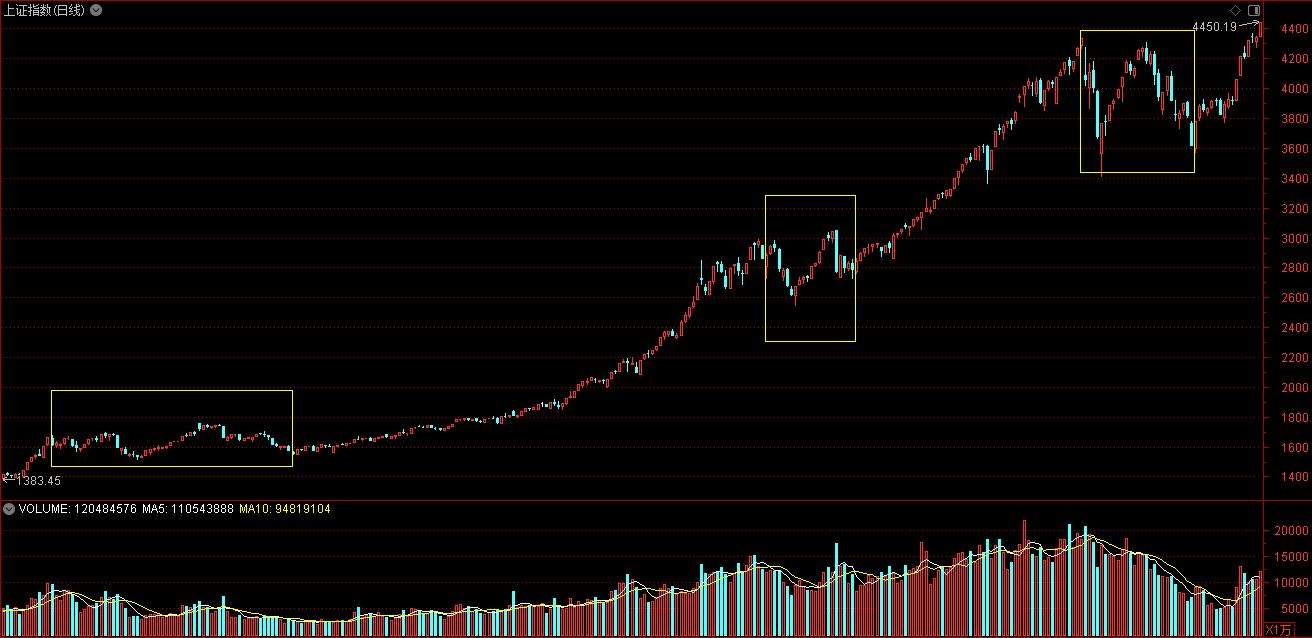
Market Overview - The A-share market experienced a significant adjustment this week, with major broad-based indices closing down, particularly small-cap and micro-cap stocks, which saw declines exceeding 6% for the North Securities 50 Index, Micro-cap Index, and National Securities 2000 Index. The Shanghai 50 Index had the smallest decline at 2.72% [1] Market Sentiment - The sharp decline on Friday raised concerns about whether a medium-term adjustment has begun, prompting discussions about future market opportunities [1][2] - The absence of large-scale bottom-fishing on Friday suggests that there may be further downward momentum on Monday [3] Market Phases - The current market is characterized as a "bull market correction phase," supported by three macro foundations: global liquidity easing, fiscal expansion, and the AI technology revolution, along with domestic policy efforts to boost the capital market [4] - Historical examples indicate that bull markets typically experience multiple correction phases, with notable declines observed in previous bull markets from 2005-2007, 2013-2015, and 2019-2021 [5][10][12] Historical Context - Specific historical correction phases include: - 2006: 60 trading days with a 7.01% decline [6] - 2007: 23 trading days with a 6.38% decline [7] - 2014: 12 trading days with a 4.14% decline [10] - 2019: 73 trading days with a 15.08% decline [12] - The current market adjustment is expected to last 2-3 months, similar to the patterns observed in 2019 and 2006 [15][28] Investment Opportunities - Three sectors are highlighted for potential investment: 1. **AI Applications**: There has been notable activity in AI applications since October 30, indicating potential for both hardware and software market movements [21][22] 2. **Commercial Aerospace**: The recent policy focus on becoming a "space power" is expected to drive growth in the satellite internet sector, with significant demand anticipated from 2026 onwards [23][25][26] 3. **Seed Sector**: The emphasis on agricultural strength has led to noticeable movements in seed stocks, suggesting potential investment opportunities [27] Conclusion - The market's current correction phase is viewed as an opportunity for re-entry, particularly in the AI applications, commercial aerospace, and seed sectors, with a recommendation to wait for clearer signals before making investment decisions [28][29]

本轮牛市会在4000点上方停留多久?
Mei Ri Jing Ji Xin Wen· 2025-10-29 04:58
Core Viewpoint - The market has recently broken through the 4000-point mark for the first time in a decade, indicating a significant milestone in the current market cycle [1][9]. Market Performance - The current bull market is characterized by extreme differentiation, with high-growth sectors like AI hardware being highly valued and traditional sectors like certain cyclical and consumer sectors remaining at relatively low valuations [2][3]. - The A-share market saw a slight decline today, with the Shanghai Composite Index, Shenzhen Component Index, and ChiNext Index dropping between 0.15% and 0.44% [9]. - Trading volume in the Shanghai and Shenzhen markets reached 21,479 billion, a decrease of 1,923 billion from the previous day [9]. Strategic Insights - The "15th Five-Year Plan" emphasizes technology as a key investment area, focusing on strategic emerging industries such as new energy, aerospace, and advanced materials [6][7][8]. - The plan is expected to direct resources and funding towards the technology sector over the coming years, potentially boosting related stocks [8]. Sector Analysis - The technology sector is showing promising signs, with core stocks like Industrial Fulian and Hua Hong Semiconductor breaking through their September highs, indicating a potential upward trend [17]. - The PCB and its upstream sectors have also performed well recently, suggesting a growing interest in these areas [17]. Market Outlook - The market is expected to experience some short-term adjustments, with a focus on the 4000-4180 point range for the Shanghai Composite Index as a critical observation point [11][13]. - Despite potential short-term pullbacks, the overall sentiment remains bullish, with an emphasis on identifying solid investment opportunities in high-potential sectors like AI hardware and military electronics [17].
铜价2~3年有望呈螺旋式上行趋势
Qi Huo Ri Bao· 2025-10-23 03:36
Core Viewpoint - The copper market is undergoing significant changes driven by the dual forces of global energy transition and the AI technology revolution, leading to a structural shift in demand while supply faces constraints, suggesting a potential upward trend in copper prices over the next 2-3 years [1][10]. Demand Structure Changes - Traditional sectors such as construction, which once accounted for over 30% of global copper consumption, are experiencing a decline due to demographic changes and urbanization saturation, particularly in China where the share is expected to drop from over 30% to around 18% by 2030 [3][4]. - Emerging sectors like renewable energy and digital infrastructure are creating strong new demand for copper, with significant increases expected in solar and wind energy applications [5][6]. Supply Constraints - The global copper supply is facing challenges such as declining ore grades, insufficient investment in new projects, and operational disruptions in major mines like Indonesia's Grasberg, which could lead to a supply loss of approximately 30,000 tons by 2026 [8][9]. - The average ore grade has decreased from over 1.0% a decade ago to around 0.7%-0.8% currently, increasing extraction costs and limiting production [8]. Price and Profit Outlook - The copper market is expected to see a widening supply-demand gap, with projections indicating a shortfall of 80,000 tons by 2027, supporting a bullish price outlook [10]. - Global visible copper inventories are at historical lows, enhancing price elasticity, while factors such as inflation expectations and capital allocation are likely to influence copper prices positively [10][11]. Strategic Implications - The copper industry is undergoing a structural transformation, with traditional demand slowing but new growth opportunities arising from the energy transition and technological advancements [11]. - Investors are advised to focus on companies with resource advantages, technological barriers, and green competitiveness, as copper's strategic value is expected to increase [11].
本轮行情的第四个标志性事件,要出现了吗?
Mei Ri Jing Ji Xin Wen· 2025-09-26 00:27
Group 1 - The article emphasizes that a stable capital market allows investors to earn consistently, which in turn supports the real economy [1] - The capital market plays a crucial role in funding and nurturing emerging industries, exemplified by the active performance of humanoid robots and the semiconductor industry [1][2] - The long-term bull market in the US stock market is driven by technology, with companies like Intel, Apple, and Nvidia converting technological premiums into shareholder returns [1][2] Group 2 - A strong capital market must reflect the direction of economic transformation, with hard technology companies taking on significant roles [2] - The ongoing AI technology revolution is highlighted, with major tech companies investing heavily to stay competitive [2] Group 3 - A-shares showed mixed performance, with the Shanghai Composite Index slightly down by 0.01%, while the Shenzhen Component, ChiNext, and Sci-Tech 50 indices rose by 0.67%, 1.58%, and 1.24% respectively [3] - The total trading volume in the Shanghai and Shenzhen markets reached 23,711 billion, an increase of 443 billion from the previous day [3] Group 4 - The market is expected to consolidate or trend upwards, with a slightly higher probability of an upward trend [4] Group 5 - Small-cap indices like the CSI 1000 and CSI 2000 have been lagging, indicating a shift of funds towards mid and large-cap stocks [6] - The strong performance of the ChiNext index is attributed to key themes such as AI hardware, humanoid robots, and innovative drugs [6] Group 6 - CATL's A-share market value briefly surpassed Kweichow Moutai, marking a significant shift towards advanced manufacturing driven by technological innovation [7][8] - This shift signifies the replacement of traditional consumption models by advanced manufacturing as a new engine for value creation in China's economy [8] Group 7 - AI-related sectors such as IT equipment, internet, and communication devices are leading the market [9] - The AI hardware sector is experiencing a rotation, with some segments showing strong performance while others are in consolidation [9][10] Group 8 - The NAND Flash market is expected to see a price increase of 5%-10% in Q4, indicating a positive outlook for the semiconductor industry [11] - The copper sector is experiencing gains due to external factors, including supply disruptions from major mining companies [11] Group 9 - The domestic photolithography machine industry is entering a critical growth phase, with significant advancements in production capabilities [12] - The market is currently in a normal consolidation phase, with a focus on the performance of the ChiNext and Sci-Tech 50 indices [12]
本轮行情的第四个标志性事件,要出现了吗?——道达投资手记
Mei Ri Jing Ji Xin Wen· 2025-09-25 09:11
Group 1 - The article emphasizes that a stable capital market allows investors to earn consistently, which in turn supports the real economy [1] - The capital market plays a crucial role in funding and nurturing emerging industries, with a focus on sectors like humanoid robots and semiconductors [1] - The long-term bull market in the U.S. stock market is driven by technology, showcasing a cycle of technological breakthroughs leading to market recognition and capital influx [1][2] Group 2 - A strong capital market must reflect the direction of economic transformation, with hard technology companies taking a central role [2] - The ongoing AI technology revolution is highlighted, with major tech companies investing heavily to stay competitive [2] - The A-share market shows a mixed performance among major indices, with the Shanghai Composite Index slightly down while others like the Shenzhen Component and ChiNext Index saw gains [3] Group 3 - There is a noticeable shift of funds from small-cap indices to mid and large-cap stocks, particularly in sectors like AI hardware and innovative pharmaceuticals [6] - The market capitalization of CATL briefly surpassed that of Kweichow Moutai, indicating a shift towards advanced manufacturing driven by technological innovation [7][8] - The IT equipment, internet, and communication device sectors are leading the AI-related industry gains, while AI hardware shows signs of rotation [9] Group 4 - The AI application sector, including areas like network gaming and humanoid robots, has shown strong performance, with ongoing speculation in various AI-related sub-sectors [10] - Longhua Storage Technology has completed its restructuring with a valuation exceeding 160 billion yuan, and NAND Flash prices are expected to rise [11] - The copper and tungsten sectors are experiencing gains, driven by external factors such as supply disruptions and favorable monetary policy [11] Group 5 - The photolithography equipment sector is experiencing normal fluctuations, with expectations of increased activity as domestic production accelerates [12] - The market is currently in a phase of consolidation, with a focus on the performance of the ChiNext and Sci-Tech 50 indices [12]

