ESG投资

Search documents
践行“投资·向善”,共议ESG与高校基金会资产管理新路径——2025复旦管院·兴动ESG大讲堂成功举办
Zheng Quan Shi Bao Wang· 2025-09-24 03:24
Core Insights - The forum "Investment for Good" focused on ESG investment, asset management for university foundations, and asset allocation strategies, highlighting the importance of collaboration between asset management institutions and university foundations [1][2][3] Group 1: ESG Investment - ESG investment is recognized as a crucial force for promoting economic, environmental, and social development, representing both an innovative investment philosophy and a deep exploration of future development models [2] - The establishment of a comprehensive ESG product system in fixed income and the creation of multi-asset strategies reflect the growing emphasis on ESG products in the asset management industry [2] Group 2: University Foundations - University foundations are characterized by long-term investment horizons, public attributes, and liquidity requirements, necessitating a strategic approach to asset management [2][3] - The shift towards "asset allocation + entrusted management" signifies a professionalization journey for university foundations, emphasizing the need for strategic support and a fault-tolerant mechanism [2] Group 3: Investment Strategies - The discussion highlighted the need for university foundations to transition from direct investments to enhanced external cooperation and resource sharing, as well as from single asset investments to diversified allocations [4] - The importance of systematic decision-making over experiential judgment in investment strategies was emphasized, aiming to improve professional management capabilities [4] Group 4: Market Insights - Multi-asset allocation is viewed as an effective strategy to navigate high-volatility markets, with a focus on controlling portfolio volatility and optimizing risk-return profiles [4][5] - The current equity market environment is driven by declining risk-free rates, enhancing the attractiveness of equity assets compared to bonds, despite some concerns about localized bubbles in certain sectors [5]
ESG投资周报:本月新发8只ESG基金,流动性环比宽松-20250923
GUOTAI HAITONG SECURITIES· 2025-09-23 12:29
Fund Issuance - Eight new ESG funds were launched this month, with a total issuance of 3.749 billion units, primarily focused on social responsibility and environmental protection[9] - A total of 251 ESG public funds were issued in the past year, with a total issuance of 175.353 billion units[9] - The total net asset value of existing ESG funds reached 1,029.312 billion RMB, with ESG strategy funds accounting for the largest share at 50.46%[11] Market Performance - During the week of September 15-19, 2025, the CSI 300 index fell by 0.44%, while the ESG 300 index rose by 0.39%[5] - The average daily trading volume in the A-share market was approximately 2.52 trillion RMB, indicating a loosening of liquidity[5] Green Bonds - A total of 43 new green bonds were issued in the interbank and exchange markets last week, with a planned issuance scale of approximately 34.468 billion RMB[16] - In September 2025, 120 ESG bonds were issued, amounting to 54.2 billion RMB, with a total of 1,095 ESG bonds issued in the past year, totaling 1,189.9 billion RMB[16] Bank Wealth Management Products - 67 ESG bank wealth management products were issued this month, with a total of 1,102 existing products in the market[22] - Pure ESG products accounted for the largest share at 55.99% among existing ESG bank wealth management products[22] Risk Factors - Potential risks include insufficient policy support for ESG initiatives, lack of unified data reporting standards, and lower-than-expected product issuance scales[25]
践行“投资·向善”,共议ESG与高校基金会资产管理新路径——2025复旦管院·兴动ESG大讲堂举办
Zhong Guo Jin Rong Xin Xi Wang· 2025-09-23 12:14
Core Viewpoint - The forum "Investment for Good" focused on ESG investment, asset management of university foundations, and asset allocation, emphasizing the importance of collaboration between asset management institutions and university foundations to foster long-term growth and value creation [1][2]. Group 1: ESG Investment - ESG investment is recognized as a crucial force for promoting economic, environmental, and social development, representing an innovative investment philosophy and a deep exploration of future development models [3]. - The establishment of a comprehensive ESG product system in fixed income and the creation of multi-asset and equity products highlight the commitment of financial institutions to ESG investment [3]. Group 2: University Foundations - University foundations are transitioning from direct investments to enhanced external cooperation and resource sharing, indicating a shift towards diversified asset allocation and systematic decision-making in investment strategies [2]. - The characteristics of university foundation investments include long-term focus, low-risk preference, and liquidity constraints, which necessitate a tailored approach to investment management [2]. Group 3: Collaboration and Innovation - The collaboration between asset management firms and university foundations aims to deepen understanding and cooperation, fostering a supportive environment for professional management and investment growth [1][2]. - The discussions highlighted the need for strategic support and the establishment of error tolerance mechanisms to drive innovation in investment practices within university foundations [2].
投票高频,视角多元:公募基金 ESG 尽责管理新范式(三):“贝莱德们”在A、H股投下哪些反对票?
ZHESHANG SECURITIES· 2025-09-23 07:56
Investment Rating - The report indicates a positive outlook for the industry, suggesting that the industry index is expected to outperform the CSI 300 index by more than 10% in the next six months [52]. Core Insights - The report highlights that foreign capital, represented by firms like BlackRock, Fidelity, Robeco, and Baillie Gifford, is increasingly focusing on corporate governance and the protection of minority shareholder rights in their voting practices within A-shares and H-shares [48][49]. - A significant portion of the foreign investors' opposition votes is based on concerns regarding insufficient information disclosure, excessive discretion granted to boards, and potential risks that do not align with the best economic interests of shareholders [48][49]. - The report also notes that foreign investors are beginning to incorporate environmental factors, such as climate risk and deforestation risk, into their voting considerations, particularly in board election proposals [48]. Summary by Sections BlackRock - In the sample of 25 major holdings, BlackRock cast opposition votes on 19 companies, resulting in an overall opposition rate of 76% [13][16]. - The most common reasons for opposition included insufficient information disclosure and excessive discretion granted to the board, with 15 and 15 instances respectively [16][20]. - The top three issues opposed were stock issuance (15 instances), related party transactions (9 instances), and executive compensation (7 instances) [16][20]. Fidelity - Among 14 major holdings, Fidelity opposed votes on 6 companies, leading to an overall opposition rate of 43% [24][27]. - The most frequently opposed issues were board elections and company bylaws, each with 3 instances [26][29]. - Fidelity's opposition reasons were more diverse, including concerns about greenhouse gas reduction commitments, which were not present in BlackRock's rationale [27][29]. Robeco - Robeco held 16 of the 24 companies that received opposition votes from both BlackRock and Fidelity, with an overlap rate of approximately 81% [38]. - The top three issues opposed by Robeco were stock issuance (10 instances), board elections (9 instances), and equity incentives (6 instances) [38]. - Robeco's opposition reasons were more specific and included concerns about climate risks and deforestation, alongside traditional governance issues [39][42]. Baillie Gifford - Baillie Gifford's holdings overlapped less with BlackRock and Fidelity, with only 3 companies receiving opposition votes from them [45]. - The firm engaged in shareholder participation in two companies, focusing on carbon markets and corporate governance [45][47]. - Baillie Gifford's opposition reasons included a lack of independence and insufficient information disclosure, similar to the concerns raised by other foreign investors [45][46].
五载进阶路,万亿新起点:华夏理财“理财工厂”迭代升级 打造行业高质量发展新标杆
Zhong Zheng Wang· 2025-09-23 02:53
Core Viewpoint - The equity market has shown strong recovery over the past year, with equity-based financial products performing well, particularly the "Tiangong" series from Huaxia Wealth Management, which has significantly increased in net value [1] Group 1: Product and Service Development - Huaxia Wealth Management has upgraded its "Wealth Management Factory" model from version 1.0 to 2.0, emphasizing customized production, standardized processes, and a dual focus on products and services [2] - The 2.0 model includes seven key features: customized production, systematic operation, standardized processes, centralized control, ESG integration, digital transformation, and a balance between products and services [2][3] Group 2: Product Line and Service Capabilities - Huaxia Wealth Management has developed a diversified product system covering cash management, fixed income, equity, mixed assets, and ESG, catering to various risk preferences and investment horizons [3] - The company has established a Customer Experience Department to enhance service delivery and responsiveness to diverse client needs, aiming for a personalized service approach [3] Group 3: Growth and Scale - Huaxia Wealth Management's product management scale surpassed 1 trillion yuan by June 2025, achieving a doubling of scale since its first year and maintaining high growth rates [4] - The company aims to leverage its scale as a foundation for comprehensive capabilities and to enhance product yield competitiveness and client experience [5] Group 4: Strategic Initiatives - The "Tiangong" series of passive index financial products focuses on key national industrial policies and aims to provide better index product services with competitive fee structures [6] - Huaxia Wealth Management is actively involved in green finance, having issued over 32 billion yuan in ESG financial products and integrating ESG principles into its business operations [7] Group 5: Future Vision - As it approaches the end of the 14th Five-Year Plan and the beginning of the 15th, Huaxia Wealth Management plans to enhance its "Wealth Management Factory" model and strengthen its research capabilities to contribute to wealth preservation and economic development [8]
PRI中国区负责人罗楠:可持续投资迎考,机构开出“十大金融工具”药方|2025华夏ESG管理体系大会
Hua Xia Shi Bao· 2025-09-22 06:57
Group 1 - The conference on ESG management in China highlighted the increasing complexity and challenges in sustainable investment due to factors like climate risks, financing gaps, and disruptive technologies [1][3] - The Responsible Investment Principles Organization (PRI) identified ten financial tools to assist investors in allocating funds to sustainable projects, aiming to create a favorable investment environment [1][5] - Asset owners, such as pension and insurance institutions, play a crucial role in influencing market trends and should enhance communication with investment managers to align long-term sustainability goals [2][5] Group 2 - Sustainable investment faces multiple challenges, including regulatory slowdowns in the EU, the rise of "anti-ESG" sentiments in the US, and increasing climate physical risks, which threaten financial stability [3][4] - The estimated annual funding gap for biodiversity is $700 billion, with only $35 billion currently invested, indicating a significant shortfall in necessary financing [3] - Investors encounter practical challenges such as lack of incentives, market imperfections, inconsistent policies, and insufficient transparency and credibility in data [4][5] Group 3 - PRI emphasizes the importance of integrating economic policies with regulatory frameworks to effectively address sustainability challenges [6] - Investors are encouraged to incorporate sustainability issues into investment policies and governance, particularly asset owners who can significantly influence asset management practices [7] - Active engagement with policymakers is essential for investors to reflect their needs and participate in the formulation of relevant policies [7]
兴银理财贺轶:持续拓展多资产、多策略及权益类ESG产品,不断丰富产品货架
Xin Lang Ji Jin· 2025-09-22 06:35
Group 1 - The conference "Investment for Good" focused on the importance of ESG (Environmental, Social, and Governance) investment as a significant innovation in investment philosophy and a crucial exploration of future development directions [1] - The company has been a pioneer in green finance in China, establishing a comprehensive green finance system over 19 years, which includes diverse products and carbon finance services [1] - The company integrates ESG principles into its product lines and continuously enhances its green finance product and service system [1] Group 2 - The company actively seeks high-quality ESG assets and emphasizes the performance of financing entities in ESG aspects, creating an ESG green asset index to support investment decisions [2] - The company has developed a comprehensive ESG product system in fixed income, covering short, medium, and long-term strategies, and is expanding into multi-asset and equity ESG products [2] - The company aims to leverage the forum to collaborate with various parties to promote the development of ESG investment and contribute to the construction of a beautiful China [2]
一级市场进入存量时代
母基金研究中心· 2025-09-21 08:17
Core Viewpoint - The 2025 Sixth China Fund of Funds Summit highlighted the rise of RMB funds in the context of capital market reforms and policy changes, emphasizing the need for strategic investment adjustments in the current market environment [1][2]. Group 1: Rise of RMB Funds - RMB funds are increasingly prominent due to changes in the market environment, shifting from incremental investments to stock integration, particularly in mergers and acquisitions [5]. - Key investment directions for RMB funds include globalization, breakthroughs in AI technology, and ESG (Environmental, Social, Governance) investments [5]. - New types of General Partners (GPs) focusing on early-stage innovation and boutique investments are emerging as significant players in the market [5]. Group 2: Local Government Investment Strategies - Local government investments are often driven by policy directives, focusing on short-term growth and GDP, which can lead to industry oversupply and low profit margins [6]. - Despite challenges, companies that can stand out in the stock market possess high investment value, particularly those demonstrating strong competitiveness through industry consolidation or mergers [6]. - Future investment strategies should balance current stock market opportunities with seed investments in future technology sectors [6]. Group 3: Impact of AIC and CVC on Market Structure - AIC, as a state-owned investment institution, plays a crucial role in equity investment, focusing on hard technology and key areas that require state support [8]. - AIC's investment strategy includes collaborating with local governments and industry leaders to create an efficient fundraising system, employing a "dumbbell strategy" that targets both early-stage companies and those nearing IPO [8][9]. - CVCs are gaining attention for their unique advantages in project discovery and technology validation, particularly in the fields of disruptive technology and AI [9][10]. Group 4: Efficiency and Collaboration - AIC's involvement has positively impacted local markets, particularly in improving investment approval efficiency, significantly reducing the typical approval timeline [10]. - The collaboration between AIC and local investment institutions has led to faster project initiation, enhancing the overall investment landscape [10].


宁墨携手谱新篇,墨尔本市长率团访宁——“南京的发展令我非常惊喜”
Nan Jing Ri Bao· 2025-09-21 02:25
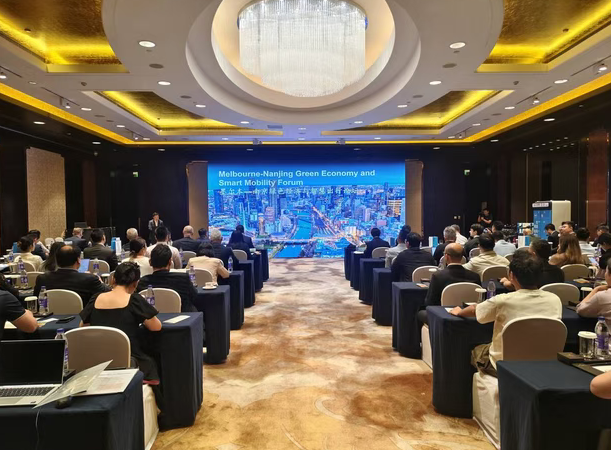
Core Viewpoint - The visit of Melbourne's Mayor Nicholas Rees to Nanjing from September 18 to 20 aimed to strengthen the friendship and cooperation between the two cities, focusing on innovation, healthcare, and sustainable development [1][3]. Group 1: Cooperation and Initiatives - The delegation included around 50 members, comprising city councilors and representatives from healthcare, green economy, and education sectors, as well as award-winning projects from the 2025 Nexus Innovation and Entrepreneurship Competition [1][3]. - The "Nanjing-Melbourne City Excellence Center" and the "Nanjing (Melbourne) Technology Cooperation Innovation Park" were launched during the visit, enhancing the integration of innovation systems between the two cities [3][4]. - The establishment of the "Nanjing-Melbourne Sports Medicine and Rehabilitation Cooperation Center" was witnessed, aiming to share medical knowledge and skills between the two cities [4]. Group 2: Economic and Technological Insights - Nanjing is recognized as a global leader in green transformation and an ESG investment pioneer, with discussions on topics like green energy storage and pollution control during the economic exchange activities [6]. - The delegation explored Jiangsu's advancements in various fields, including new information technology, new energy, and biomedicine, expressing optimism about the province's development prospects [6]. - Nanjing's strengths in traditional Chinese medicine and its status as a significant clinical trial center were highlighted, with a focus on enhancing collaboration in the medical technology sector [6]. Group 3: Cultural Exchange - The delegation experienced Nanjing's historical and cultural heritage, noting the city's balance between development and cultural preservation [7].
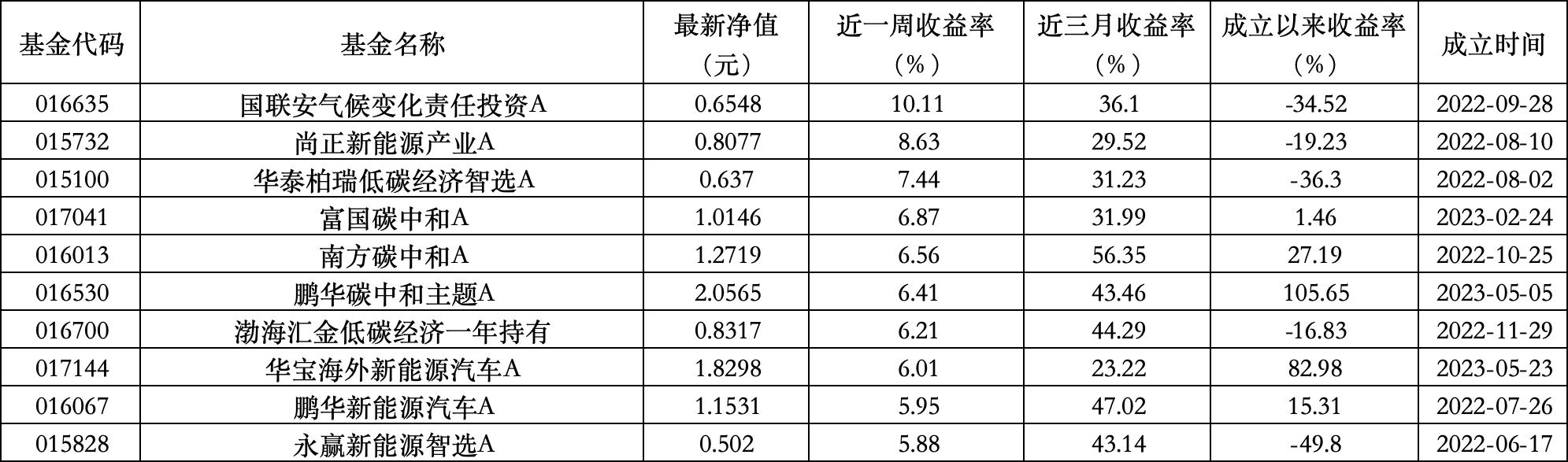
ESG公募基金周榜98期 | 上榜基金3只收跌,泛ESG主题基金持续领跑
Mei Ri Jing Ji Xin Wen· 2025-09-21 02:20
Core Insights - The article discusses the performance of ESG mutual funds during the observation period from September 15 to September 19, 2022, highlighting a decline in returns for most fund categories except for broad ESG-themed index funds [1] - The broad ESG-themed funds continue to lead, with active funds showing an average weekly return of 7.01% and index funds at 4.55% [1] - Pure ESG-themed funds experienced a significant drop in returns, with active funds averaging 1.21% and index funds at 0.17%, and three funds reported losses [1] Fund Performance Summary - The top-performing broad ESG-themed active funds include: - "浦银安盛ESG责任投资A" with a weekly return of 2.18% and a total return since inception of -6.87% [3] - "兴证全球可持续投资三年定开" with a weekly return of 1.86% and a total return since inception of 38.05% [3] - The top-performing broad ESG-themed index funds include: - "鹏华国证ESG300ETF" with a weekly return of 0.39% and a total return since inception of 2.91% [6] - "国联安国证ESG300ETF" with a weekly return of 0.39% and a total return since inception of 16.12% [6] Fund Classification and Methodology - ESG funds are categorized into two main types: ESG-themed funds and broad ESG-themed funds, further divided into active and index funds based on investment strategies [8] - The weekly rankings are compiled from operational public funds, excluding those that have been liquidated, and will include ESG bond funds in future rankings [8]